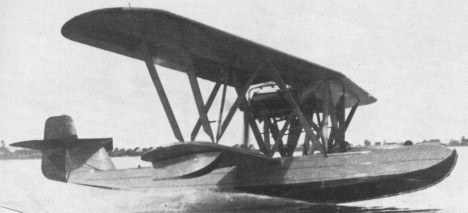
In 1926 Fokker built another flying boat, the B.III long range reconnaissance aircraft. However, it was not succesful. Even after installing a cabin to adapt it for civil use, he was unable to find a buyer.
In 1926 Fokker built another flying boat, the B.III long range reconnaissance aircraft. However, it was not succesful. Even after installing a cabin to adapt it for civil use, he was unable to find a buyer.
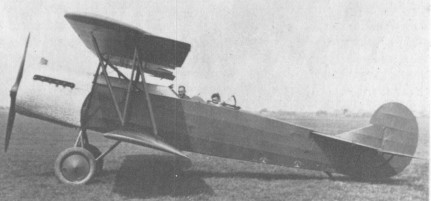
The C V series of 1924, was to have different engines, ranging from 250 to 730 hp, and five different sets of wings (C.V A, B and C having successively larger area) during its production life. The C.V-A was the prototype of the series.
With steel tube and fabric fuselage and wooden wings, it was derived from the C.IV and the prototype flew in May 1924 and about 90 had been built by 1926 including C.V W floatplanes.
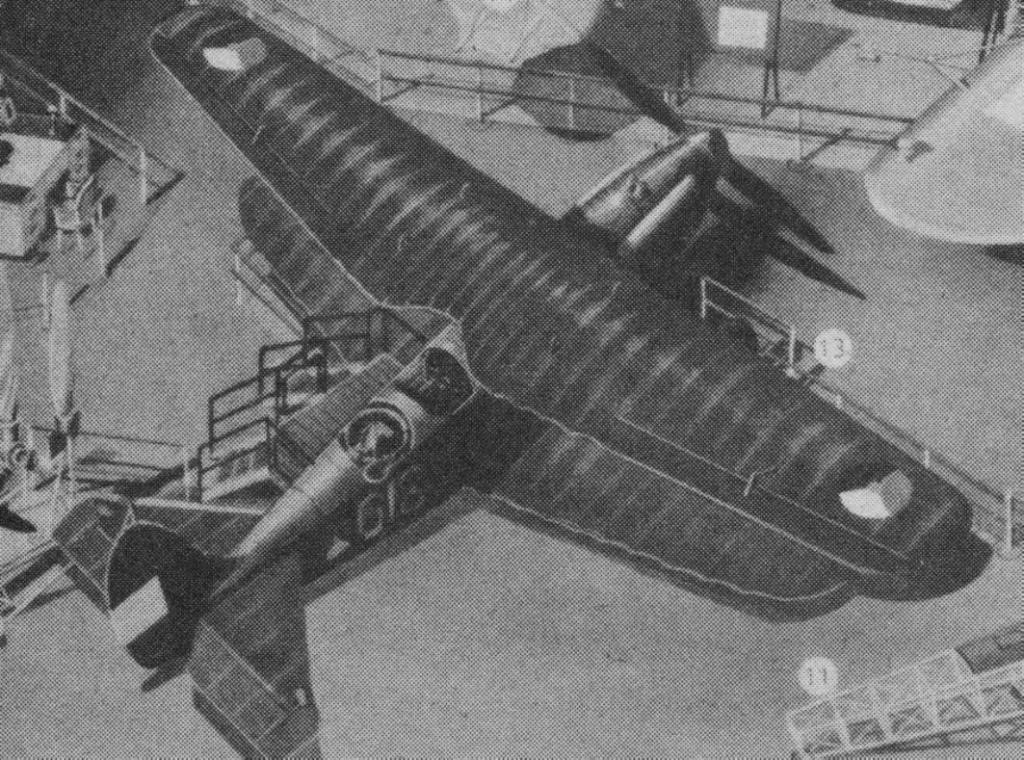
The Naval Air Service ordered six C.VC. They could be fitted with wheels or floats as required.
In 1926 production switched to the C.V D with tapered sesquiplane wings with V struts, and the C.V E with larger wings with N-struts. In general the D was used as a two-¬seat fighter with a wing span of 12.5m and the E as a reconnaissance bomber with a wing span of 15.3m
The C.VD of the Aviation Department had a 450 hp Hispano engine.
A batch of C.VD were delivered to the Dutch Army Air Service in 1925-37, first powered with a 450 hp Hispano-Suiza and later re-engined with the 540 hp Rolls-Royce Kestrel II-B.
The C VE of 1926 had a 450 hp Bristol Jupiter radial engine as supplied to Sweden’s Flygvapen.
Though the C.VW seaplane type proved unsatisfactory in Holland, Sweden converted C.Vs into seaplanes and were very satisfied with them.
A C.V exported to Japan for evaluation.
Another version of the C.V aircraft was designated C. VI and had a 350 hp Hispano engine.
More than 1000 of these basic mod¬els were made in the Netherlands, Italy, Denmark, Norway, Hungary and Switzerland, the last sub types being His¬pano engined models built at EKW and Dor¬nier in Switzerland until 1936, and 730 hp Pegasus engined Dutch, Danish and Swedish versions. Most of these were still in service in early 1940.
CVs with various engines were delivered to the Dutch Aviation Depart¬ment, Naval Air Service and Royal Dutch East Indies Army, and to Bolivia, China, Denmark, Finland, Hungary, Italy, Japan, Norway, Sweden and Switzerland. The air¬craft was manufactured under license in five countries.
The Hungarian Royal Air Force acquired 76 Fokker C.V, mostly built under licence by Manfred Weiss (WM).
WM improved the Fokker C.V which resulted in the WM-16 Budapest, with 18 built in two variants.
Officine Ferroviarie Meridionaii in 1925, obtained rights to build Fokker aircraft under license, including the C.V., which was fitted with an Italian-built Jupiter engine and known as the Ro.1.
Span: usually 12.5 or 15.3 m (41 ft or 50 ft 2in)
Length: typically 9.14 9.75 (30 ft to 32 ft)
Gross weight: 1900 2268 kg (4190 5000 lb)
Maximum speed: typically 240 km/h (150 mph)
C.V A
C.V-B
C.V-C
C.V-D
Engine: 450 hp Hispano
Wing span: 12.5m
C.V-E
Engine: 450 hp Bristol Jupiter
Wing span: 15.3m
C.V W
Undercarriage: floats
Span: usually 12.5 or 15.3 m (41 ft or 50 ft 2in)
Length: typically 9.14 9.75 (30 ft to 32 ft)
Gross weight: 1900 2268 kg (4190 5000 lb)
Maximum speed: typically 240 km/h (150 mph)
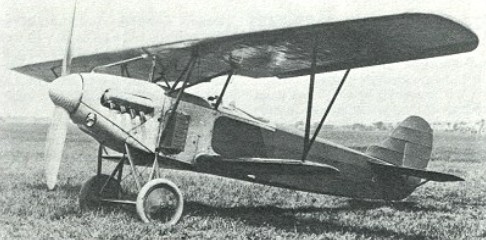
The D XIII single seat fighter was essentially a re-engined and more powerful variant of the D XI developed for the German Reichswehr and powered by a 570hp Napier Lion XI 12-cylinder water-cooled engine.
This first flew on September 12, 1924, pow¬ered by a 425 hp Napier Lion 12 eylinder liquid cooled engine, over which twin 7.92mm LMG 08/15 machine guns were mounted clandestine German Jagdlehrstaffel (fighter training squadron) at Lipezk in the USSR, ordered on their behalf by the Russians.
On 16 July 1925, the production model was used to establish a series of world records for speed and load with 250 kg (551 lb) and 500¬kg (1102 lb) payloads.
Production was, in the event, restricted to 50 aircraft ordered by Hugo Stinnes for the clandestine Reichswehr air training centre at Lipetsk, where they arrived in the summer of 1925. The D XIIIs continued in use at Lipetsk until 1933, when the centre was closed and the 30 surviving fighters of this type (which included two replacements) were handed to the Soviet government.
Span: 11.00 m (36 ft 1.5in)
Length: 7.90 m (25 ft 11 in)
Height: 2.90 m / 9 ft 6 in
Wing area: 21.47 sq.m / 231.10 sq ft
Empty weight: 1220 kg / 2690 lb
Max takeoff weight: 1650 kg (3638 lb)
Maximum speed: 257 km/h (160 mph).
Range: 600 km / 373 miles
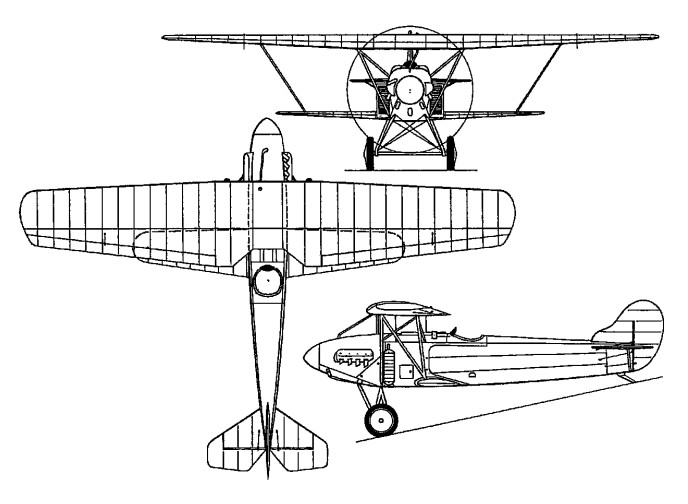
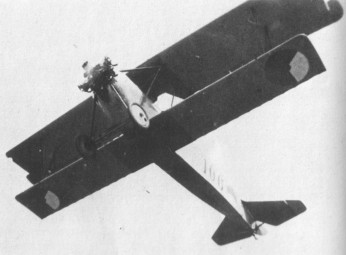
Designed as a replacement for the S.IV basic trainer, the Fokker S.IX was suitable also for aerobatic training. The S.IX was built in two versions. The first, designated S.IX/1, was powered by an Armstrong Siddeley Genet Major radial engine.
First flown in 1937, the type was used by the Netherlands army air force from 1938 to 1940 as a standard basic trainer, and a number of S.IX/1s were built by the Dutch manufacturer Kromhout. The Aviation Department ordered 40 S.IX, which at first were fitted with 125 h.p. Le Rhone-Oberursel engines. In 1926-1927 these were replaced by 148 h.p. Armstrong-Siddeley Mongoose engines. The first batch of 20 was delivered but for one, and a number escaped to France in May 1940.
The second version, designated S.IX/2 was powered by a 125kW Menasco Buccaneer inline engine. A total of 27 S.IX/2s was ordered for the Netherlands navy air force, but only 15 had been delivered when production was terminated by the German invasion. Army orders for the S.IX/1 totalled 24, but there is some uncertainty about whether or not all of these were built and delivered, for, according to Fokker records, only 20 were completed.
Like many lightplanes used in service training schools, in the desperate circumstances which existed at the time of the German invasion the S.IXs were called upon to carry out roles for which they had never been intended, and S.IXs of both services were in use for liaison and evacuation duties until the end of Dutch resistance.
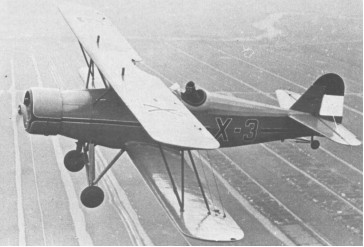
Fokker built three S.IX/1s after World War II had ended, these being powered by Kromhout-built Genet Major engines.
S.IX/1
Engine: 1 x Armstrong Siddeley Genet Major radial, 123kW
Max take-off weight: 975 kg / 2150 lb
Empty weight: 695 kg / 1532 lb
Wingspan: 9.55 m / 31 ft 4 in
Length: 7.65 m / 25 ft 1 in
Height: 2.90 m / 9 ft 6 in
Wing area: 23.00 sq.m / 247.57 sq ft
Max. speed: 185 km/h / 115 mph
Cruise speed: 150 km/h / 93 mph
Ceiling: 4300 m / 14100 ft
Range: 710 km / 441 miles
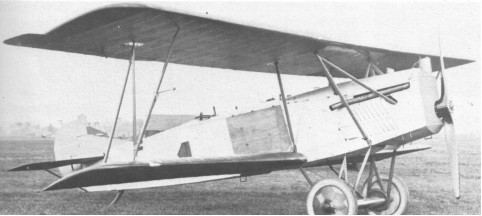
First flown in 1922, this two seat biplane was one of the first completely new products of the Fokker company after its post war move from Germany to Holland.
Stemming from the C.1 prototype, it was built with two sizes of wing, which could be exchanged in about an hour. The small wings were used on the C.IV A and DC.1 fighters and the large on the more numerous C.IV B, C and seaplane W. Some dozens were used by the Dutch and other air forces.
The prototype C.IV had a 400 hp Liberty engine. The C.IV was built as a successor to the C.I, being more spacious and able to transport more equipment. The C.IVA fighter-scout had less wing span, whilst the C.IVB and the C. IVC scouts had a greater span. Fokker manufactured 139 C.IVs and a number were also built in Spain.
The C.IV was a float-plane. The C.IV was a great success, and was used in America (where it was known as the CO-4), Argentine, Italy, Holland and the Dutch East Indies, Russia and Spain.
The C.IV was built in Madrid by Jorge Loring, under license from Fokker.
Span: 12.25 m (40 ft)
Length: 9.14 m (30 ft)
Gross weight: 1950 kg (4300 lb)
Maximum speed: 233 kph (146 mph).
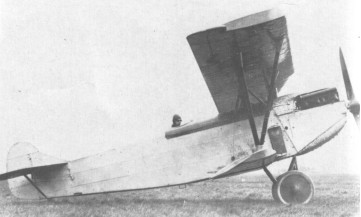
The evaluation of three modified D XI fighters by the US Army Air Service prompted the design of the D XII tailored specifically to the USAAS specification. Designed from the outset for the 385hp V-1150 (Curtiss D-12) water-cooled engine and having fabric instead of plywood covered wings.
The D XII had no design commonality with the preceding D XI, but was of similar mixed construction and, initially, retained the sesquiplane configuration of its predecessor, the upper wing having some degree of leading-edge sweepback and overhung ailerons.
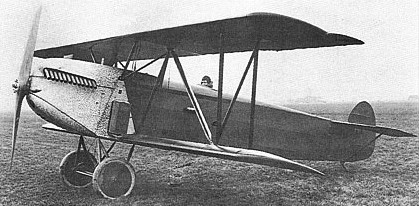
Flown for the first time on 21 August 1924, it was not accepted by the USAAC, as unsatisfactory characteristics displayed during initial trials necessitated major re-design, the sweepback being eliminated from the upper wing and a longer-span lower wing being introduced. Greater torsional rigidity was achieved by replacing the splayed V-type interplane struts with N-type struts and attaching these by single large-section struts to the top of the cabane strut system. At the same time, the small fixed tailfin was eliminated.
The D XII still proved unacceptable to the USAAS and further development was abandoned after three were built.
Engine: 385hp V-1150 (Curtiss D-12)
Max take-off weight: 1400 kg / 3086 lb
Empty weight: 998 kg / 2200 lb
Wingspan: 11.00 m / 36 ft 1 in
Length: 6.74 m / 22 ft 1 in
Height: 2.77 m / 9 ft 1 in
Wing area: 21.83 sq.m / 234.98 sq ft
Max. speed: 250 km/h / 155 mph
Cruise speed: 220 km/h / 137 mph
Range: 1100 km / 684 miles
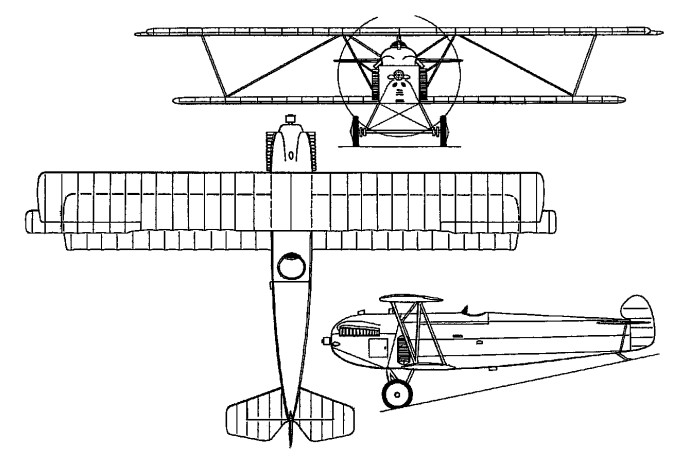
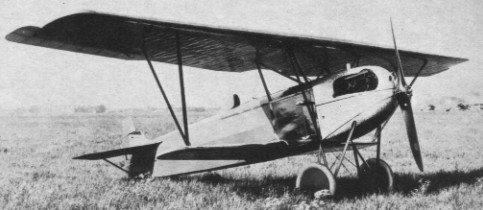
The D.IX was used as the design basis for the D.XI, a single bay, unequal¬ span biplane of sesquiplane configuration. Powered by the 300 hp Hispano Suiza 8Fb eight-cylinder liquid-¬cooled engine of the D.IX, it was armed with two forward firing 7.92mm LMG 08/15 machine guns mounted in the engine cowling in front of the cockpit. The D XI had a fabric-covered steel-tube fuselage and plywood covered wooden wings and first flew on May 5, 1923.
One hundred and twenty-five were ordered by the Soviet government, and a further 50 were ordered on behalf of Germany’s Reichswehr by the financier Hugo Stinnes for the clandestine German air training centre, which, in 1924, was being established at Lipetsk, north of Voronezh, in the Soviet Union. In the event, the German order was cancelled and, in 1925, these 50 D XIs were sold to Romania.
At the beginning of 1924, three were supplied to the USAAC at McCook Field and tested as PW 7s with the 440 hp Curtiss D 12 (V-1150) engine. The first of these had standard plywood-covered wings with V-type interplane struts, and the second and third had fabric wing skinning and N-type strutting.
Two were supplied to Switzerland in 1925 for evaluation by that country’s Fliegertruppe.
A total of 177 D.XIs were built, the others going to the Argentine.
Span: 11.60 m (38 ft 0.75in)
Length: 7.00 m (22 ft 11.5in)
Height: 3.20 m / 10 ft 6 in
Wing area: 21.80 sq.m / 234.65 sq ft
Empty weight: 865 kg / 1907 lb
Gross weight: 1250 kg (2756 lb)
Maxi¬mum speed: 225 km/h (140 mph).
Range: 440 km / 273 miles
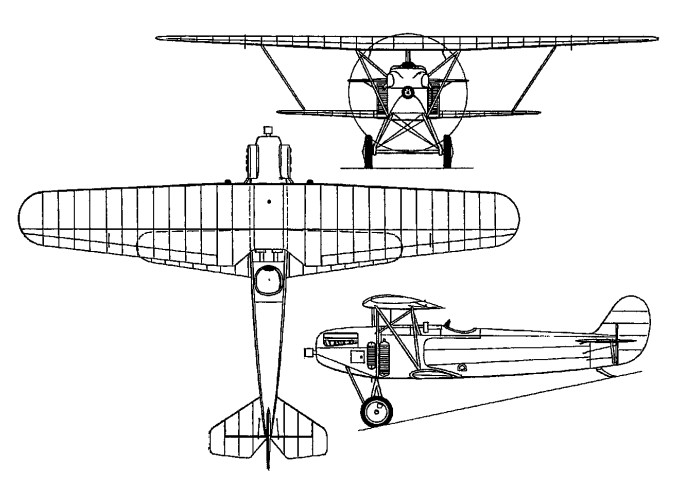
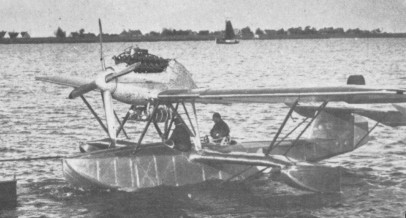
The light B.II reconnaissance seaplane made its maiden flight on December 15th, 1923. With its Rolls-Royce Eagle VIII engine of 360 hp a cruising speed of 175 kph was reached.
The B.II could be operated from warships, and one example was tested by the Naval Air Service.
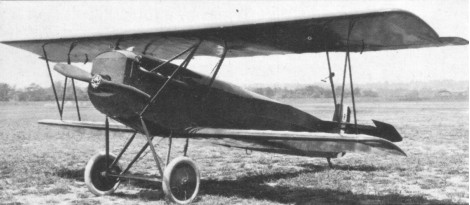
After the Armistice in 1918, Anthony Fokker returned to Holland and began to develop a new series of fighter designs originating from the D.VII of First World War. The first to appear, in prototype form only, was the D.IX, powered by a 300 hp Wright Hispano engine and was armed with two machine guns, flown for the first time in 1921, maximum speed was 220 kph. The prototype had a streamlined fuel tank built around the wheel axle, (like the C.I), but this tank was later removed upon delivery as PW 6 to the US Army Air Services. The sole prototype of the DI X was purchased for evaluation by the US Army Air Service and shipped to the USA in 1922, being assigned the designation PW-6. As evaluated by the USAAS, the aerofoil-section fuel tank was deleted, but the PW-6 was not considered to offer a sufficient advance over the D VII to warrant further development.
Of typical Fokker construction in employing a welded steel-tube fuselage and wooden wings each having two box spars, the D IX featured an aerofoil-shaped fuel tank between the main wheels as first tested by the V 36. Only one was built.
The D.IX was used as the design basis for the D.XI.
Max take-off weight: 1253 kg / 2762 lb
Empty weight: 874 kg / 1927 lb
Wingspan: 8.99 m / 29 ft 6 in
Length: 7.09 m / 23 ft 3 in
Height: 2.74 m / 8 ft 12 in
Wing area: 22 sq.m / 236.81 sq ft
Max. speed: 223 km/h / 139 mph
Cruise speed: 188 km/h / 117 mph
Range: 471 km / 293 miles
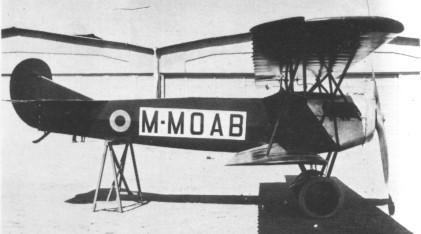
The Spanish C.III was a C.I with a Hispano Suiza engine. The C.IIIs were used for advanced training.

