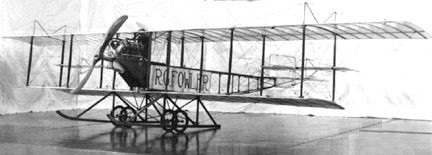
Four or five 1912 Fowler-Gage were built for exhibition pilots Robert Fowler (aka Fowler-Gage with 80hp Hall-Scott A-3, occasionally on floats), Roy Francis, Phil Parmalee, and J Clifford Turpin.
The design was carried forward to the twin-prop Patterson-Francis.
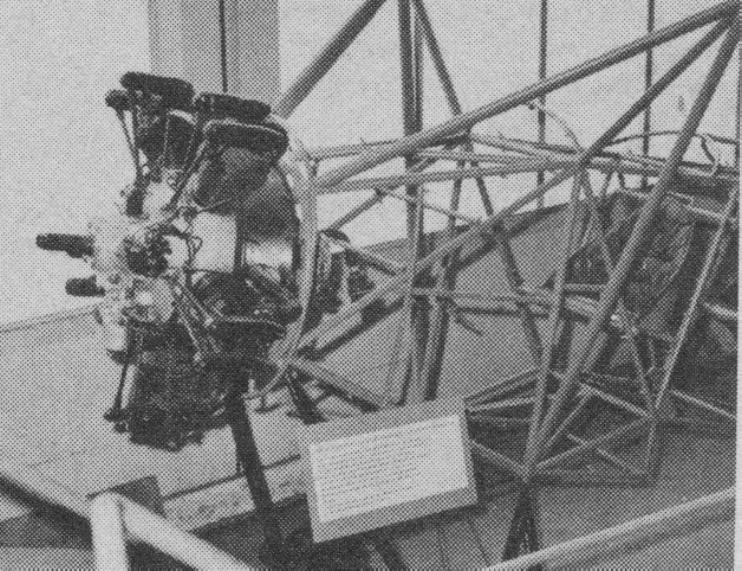
The Fowler-Gage was donated to Smithsonian in 1950 and restored for display by NASM in 1988.
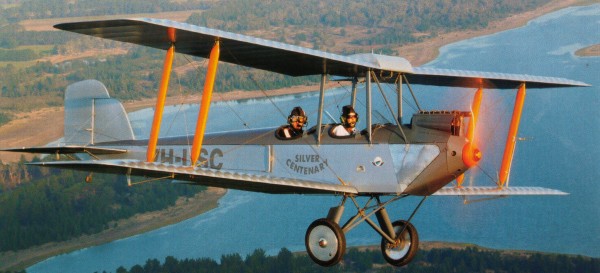
The Silver Centenary first flew on 1 July 1930, and recorded approximately 50 hours of flight, mainly between Beverley and the Maylands Airfield, Australia. Built in the back of the town of Beverley’s Electric Supply powerhouse. The fuselage layout was similar to the DH60 Gipsy Moth, but the construction was to be of Ford’s own design. The Oregon longerons and struts, with steel gusset plates, were covered with ply, which was lightened by cutouts and lightening holes. Aluminium cowls were fitted forward of the fireproof steel bulkhead, and along the top decking to the rear of the cockpits, beyond that point fabric was used over closely-spaced formers and stringers. Fabric formed the secondary covering on the fuselage, and was used exclusively on wings and tail unit. Dual control was fitted, and provision made for the installation of lighting and radio equipment. After the fuselage structure had been completed, and the assembly of one wing commenced, Tom Shackles, a local butcher, became a partner in the project. The aerofoil section was built to follow Ford’s chalk-lofting ideas and had a high leading-edge camber, which gave the wing excellent stall characteristics, and which was later the subject of a patent. Another design feature incorporated was the contrary wing sweep lower wings forward and the upper to the rear. This was later believed to be the reason for its great reluctance to spin. Instruments, spruce and dope, were all bought from LASCo, but late delivery of this material often caused delays in construction, however the majority of the components Selby hand-made himself. All the metal fittings for the aircraft were hand-made including the steel-tube centre section and interplane struts, faired with sheet tinplate, steel elevator-control horns, strut-attachment brackets, aileron bellcranks and pushrods. Initially the undercarriage, with rubber cord shock absorbers, utilised a pair of motorcycle wheels, with fittings procured from W.G. Blanch of Armadale, who had used them on a light, plane of his own. One of Selby’s major hurdles for the original project was finding the right power plant for his aircraft. A three-cylinder Anzani radial engine was purchased for £25 soon after construction began, but, after fitting, it was found to give insufficient power. As luck would have it, participants C D Pratt and D. Guthrie in the 1929 Centenary East – West Air Race crashed their Gipsy Moth VH-UKX in the Baandee lakes (East of Kellerberrin 110 miles from Berverley) and Selby was able to purchase the Gipsy 1 engine for £175. A broken valve rocker, a magneto mounting pad, and two engine feet were replaced, and the engine was then satisfactorily mounted on Silver Centenary, together with a new Gipsy propeller purchased from LASGo. News of the engine purchase was printed in a Sydney newspaper and this caught the eye of the Controller of Civil Aviation Board, (CAB) H. C. Brinsmead. He dispatched one of his inspectors (J A ‘Jim’ Collopy) to Perth to take a look at the aircraft’s construction. In his letter of November 1929 Inspector Collopy noted that no formal plans were available for the project. And as most of the fabric covering had been completed prior to his inspection, this made it difficult for Inspector Collopy to see all the critical sections. He found that the partners were not conversant with terms such as ‘centre of gravity’, or ‘centre of pressure’, nor had they any knowledge of stressing or material testing. However, notwithstanding their limited aerodynamic knowledge, he did note that Selby and Torn had conducted a terrific job, and if limited to non-aerobatic flight, there should be no chance of structural failure. He only found a few areas that he felt needed a design enhancement. On advice from the inspector, Selby discarded the undercarriage as too light, and one on the lines of the Gipsy Moth substituted, using standard aero-wheels and LASGo-made oleo legs, and strengthened the centre section spars. Tom Shackles and Selby decided to call the aircraft the Silver Centenary because of its silver colour, and the fact that 1929 would be the Centenary year of the foundation of Western Australia. Selby then again attempted to register the Silver Centenary. In the belief that he would receive a Certificate of Airworthiness (C of A), Selby even painted the British mark G-AU on the fuselage (which he later converted to the Australian mark VH-U) but the C of A was not granted. They needed a complete set of drawings and data for CAB use. However during the first inspection, not a single drawing, sketch, or diagram was available. The application for registration was filed on 11 December, and they were notified on 20 January 1930 that, due to doubt as to its aerodynamic stability and structural strength, it was not then proposed to register it. A further inspection on 5 April, by Tom Johnson, resulted in a few modifications being required by CAB, and these were carried out within two weeks by the builders, except for the new undercarriage, as the oleo legs had not arrived from LASCo. Selby requested permission for Captain C H Nesbitt of Western Air Services to test fly the machine, and on 1 July 1930 after part of the wall of the powerhouse was removed, the Silver Centenary was wheeled down the road to Benson’s paddock in Beverley, to conduct the first flight. Captain Nesbitt had a successful 30 minute flight. He then conducted four more joyflights with Selby, Tom and their sisters (who had helped in the fabric covering). On July 4 1930, Captain Nesbitt and Selby flew in company with a Gipsy Moth to Northam, with the intention of a rendezvous with Amy Johnson and Major de Havilland, escorting them on their way to Perth; however the latter were delayed at Kalgoorlie. They continued on to the Maylands airport and received a huge reception from the awaiting crowd. (Amy Johnson later inspected the aircraft at Maylands, and commented very favourably on its appearance) Following the death of Capt Nesbitt in October 1930 (in a crash of a DH Puss Moth, ironically after a structural failure) Warren Penny then conducted many of the flights and even instructed Ford in it. He was concerned with the lack of registration (the aircraft was still classed as experimental) and contacted Brinsmead the Controller of CAB who subsequently grounded the aircraft at Maylands. Captain F S Briggs of the Shell Company finally received permission in September 1931 to fly the Silver Centenary back to Beverley and was very complimentary of her performance. An unusual characteristic of this unique aircraft was the ability to fly itself out of a spin. There are various theories for this, one of which is the very slight forward sweep of the main planes. The final cross country flight was to an airshow in Narrogin in December 1931, on the last occasion that permission was granted to fly the Silver Centenary away from Beverley. The C of A was never forthcoming due to the lack of detailed plans, so it was hung from the Powerhouse roof until after Selby died in a car accident in 1963. On 6 January 1964, Brian and Graham Ford (Selby’s sons) removed it from 32 years of storage, and over a period of time made general repairs. They cleaned and re-painted the Silver Centenary and even ran the Gipsy engine, but did not fly it. In 1967 it was housed as the centre piece of a memorial to Selby in the newly built Beverley Aeronautical Museum. The aircraft is so significant in the history of Beverley it even appears on the town’s crest. Upon purchasing the Silver Centenary from his grandmother’s estate in the late 1990s, Rod Edwards set out to see if it would be possible to restore it to flying condition. With the advent of the ‘experimental’ category, the task has been made a little easier. After 76 years the VH-USC mark was finally secured. The fact that the Silver Centenary was reported to fly so well encouraged Rod Edwards to closely follow the original design, although some small modifications were necessary to provide a safety margin. Many of the original components were in ‘as new’ condition and retained in the restoration.
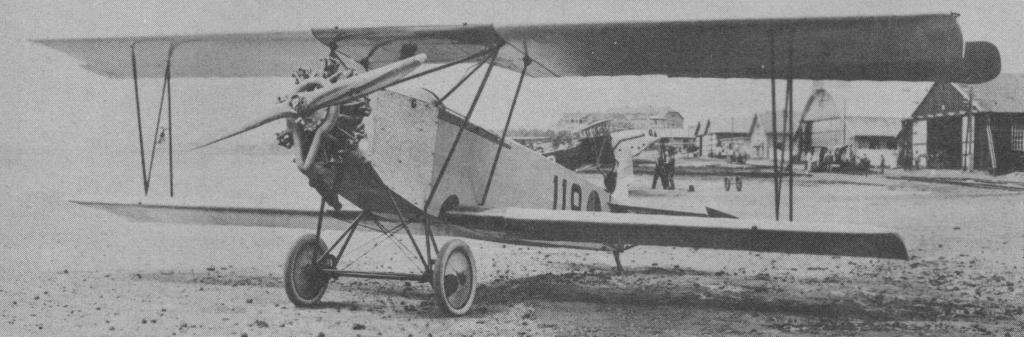
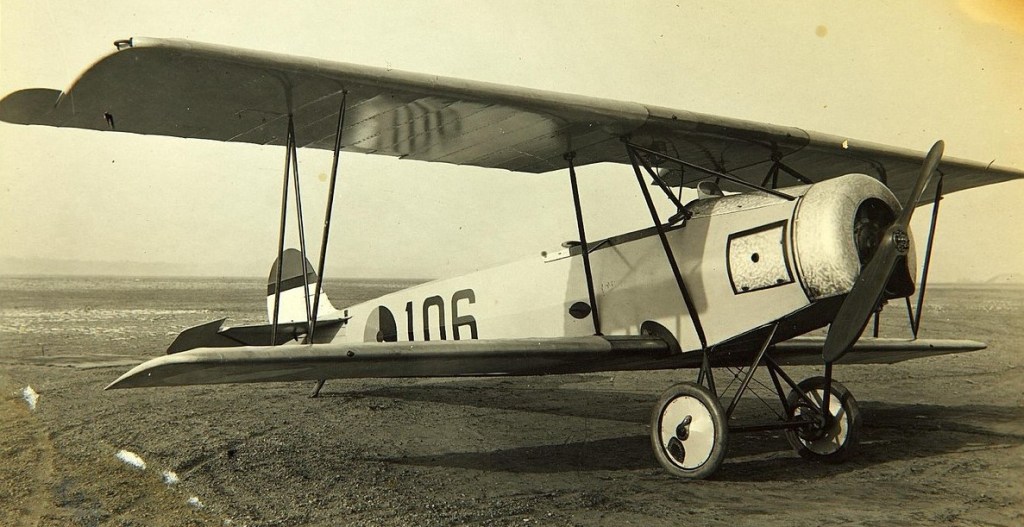
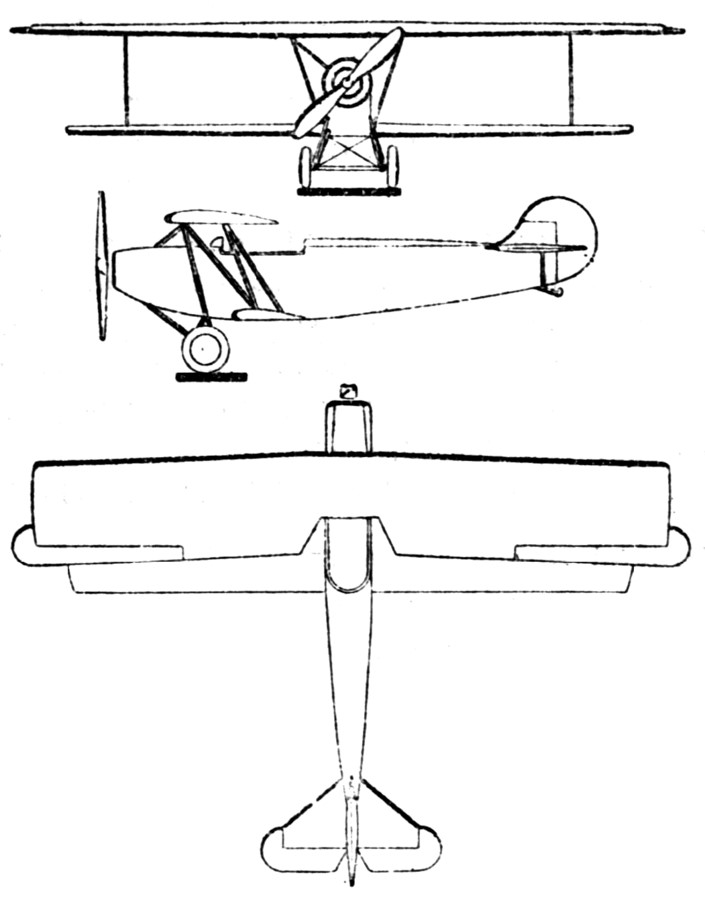
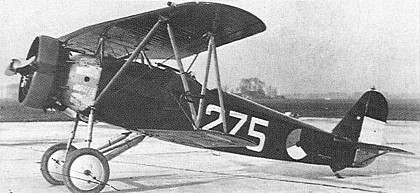
The Fokker S.IV was a military trainer aircraft produced in the Netherlands in the mid-1920s. It was a conventional, single-bay biplane with staggered wings of unequal span braced with N-struts, essentially a radial-engined development of the S.III. The pilot and instructor sat in tandem, open cockpits and the undercarriage was of fixed, tailskid type with a cross-axle between the main units.
The Royal Netherlands Army Aviation Group purchased 30 examples and used them right up to the German invasion of the Netherlands in 1940. On 14 May that year, a few surviving S.IVs escaped to France alongside some S.IX trainers, but never flew again.
The S.IV could be powered by a variety of engines in the 75–97 kW (100–130 hp) range, including 110 hp (82 kW) Siemens-Halske Sh 11, 110 hp (82 kW) Le Rhône 9J, 130 hp (97 kW) Bristol Lucifer, 130 hp (97 kW) Armstrong-Siddeley Mongoose, 110 hp (82 kW) Oberursel UR.II or the 130 hp (97 kW) Clerget 9B.
Fokker S.IV Powerplant: 1 × Le Rhône 9J, 82 kW (110 hp) Propeller: 2-bladed fixed pitch Wingspan: 11.17 m (36 ft 8 in) Wing area: 27.55 m2 (296.5 sq ft) Length: 8.55 m (28 ft 1 in) Height: 3.15 m (10 ft 4 in) Empty weight: 650 kg (1,433 lb) Gross weight: 1,000 kg (2,205 lb) Maximum speed: 160 km/h (99 mph, 86 kn) Stall speed: 65 km/h (40 mph, 35 kn) Service ceiling: 4,000 m (13,000 ft) Time to altitude: 1,000 m (3,300 ft) in 6 minutes Wing loading: 36.29 kg/m2 (7.43 lb/sq ft) Power/mass: 0.0830 kW/kg (0.0505 hp/lb) Crew: 2
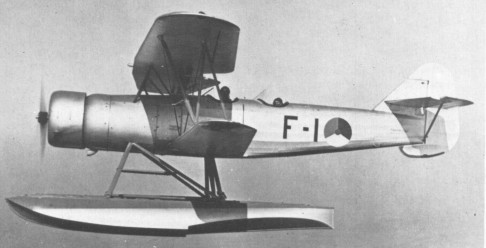
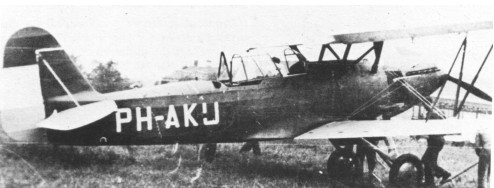
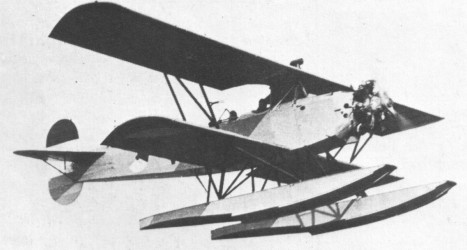
The prototype XIVW. This two‑seater floatplane was designed for the Naval Air Service as a successor to the C.VIIW and 24 were delivered before the outbreak of World War Two.
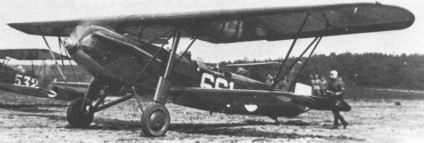
This two seat biplane had wooden wings, and fuselage of welded steel tube covered with fabric. Owing to the prolonged success of the C.V family the C.X did not fly until 1934. The C.X was considerably devel-oped over the three years to 1937. Early batches were for the East Indies Army Air Service, followed by modified machines for the home LVA (Luchtvaart¬afdeling) with tailwheels and braked main wheels and the last 15 having enclosed cock-pits. All Dutch aircraft had a 650 hp Rolls¬Royce Kestrel V imported from Britain, and were armed with two 7.92 mm syn¬chronized machine guns with a third aimed by the observer. Underwing racks could carry two 175 kg (385 1b) or four 100 kg (22 1¬lb) bombs. Provision was made for army co¬operation radio, camera and other optional equipment. Ten were still serviceable on May 10, 1940, and saw immediate action in the sub¬sequent three days.
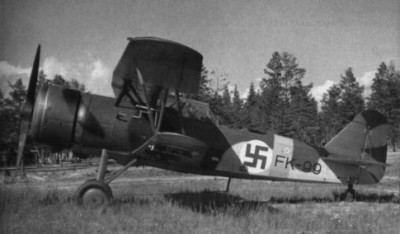
Finland imported four examples with the 835 hp Bristol Pegasus XXI radial, which despite considerably greater warload increased maximum speed to 343 km/h (212 mph). Four C.X’s had been purchased as “pattern” aircraft in 1934 along with a manufacturing license and the Ilmavoimat had ordered a further 20 from VL, who built the C.X aircraft over the last half of 1934 through to mid-1935. A further 20 were built through 1935 and early 1936 but with the move of VL to Tampere and the startup of Fokker D.XXI and Bristol Blenheim manufacturing, production was discontinued as the emphasis was placed on the construction of more modern aircraft. In early 1938, the Ilmavoimat briefly considered resurrecting the C.X for the Army Co-operation role. After an initial review, the aircraft was not considered further.
Valtion Lentokonetehdas (VL), the state owned factory at Tampere, Finland, built 35 Pegasus engined C.Xs and 93 D.XXIs under license from 1937 to 1944. The last five were built in 1942.
The last C.X crashed on January 25th, 1958.
Span: 12.0 m (39 ft 4 in) Length: 9.2 m (30 ft 2 in) Gross weight: 2250 kg (4960 lb) Maximum speed: 320 kph (199 mph)
Valtion Lentokonetehdas (VL) C.X Engine: Bristol Pegasus XXI, 835 hp Maximum speed: 211 mph Range: 522 miles Service ceiling: 27,230 ft Armament: 2 x 7.9 mm machine guns fixed on top of the front fuselage / 1 x 7.9 mm machine gun rear cockpit Bombload: Underwing racks for two 385lb (175kg) or four 221lb (100kg) bombs
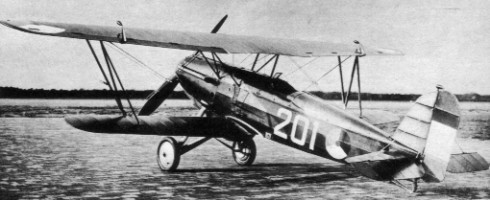
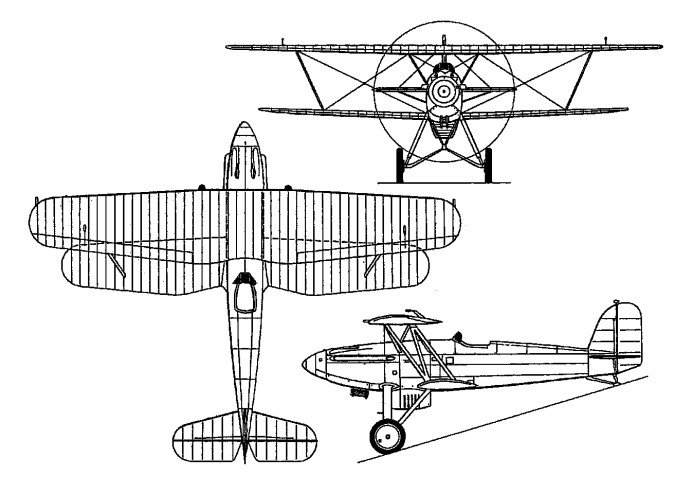
The D.XVII was the last biplane to be built by Fokker, and the first design to be executed under the guidance of Mr Beeling. The first flight in 1931 of another D.XVI prototype, fitted with a Curtiss Conqueror V-1570 engine, was with the object of finding a D.VII replacement for the Dutch East Indies army air service, but no orders were forthcoming. In 1932 it reappeared, with some modifications, as a new prototype designated D.XVII. With a number of aerodynamic refinements while retaining the basic structure of the earlier fighter and its armament of two 7.92mm M.36 machine guns, ten production examples were ordered by the LVA. The 595 hp Rolls-Royce Kestrel IIS 12-cylinder liquid-cooled engine was selected as the standard power plant and deliveries commencing in October 1932.
The ninth and tenth aircraft were respectively and temporarily powered by the 790hp Lorraine-Dietrich Petrel 12Hfrs and the 690 hp Hispano-Suiza 12Xbrs, both eventually reverting to standard Kestrel-engined configuration. The Conqueror-engined prototype was shipped to the Netherlands East Indies for KNIL evaluation, being shipped back to Holland in 1936 after a crash, and then being rebuilt and delivered to the LVA. Relegated to the fighter training role prior to World War II, the seven surviving D XVII fighters saw some limited operational use during the Wehrmacht invasion of the Netherlands.
Max take-off weight: 1480 kg / 3263 lb Empty weight: 1070 kg / 2359 lb Wingspan: 9.60 m / 31 ft 6 in Length: 7.25 m / 23 ft 9 in Height: 3.10 m / 10 ft 2 in Wing area: 20.00 sq.m / 215.28 sq ft Maximum speed: 335 km/h (208 mph) at 4000m Range: 600 km / 373 miles
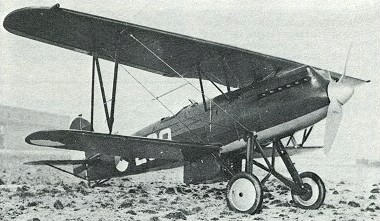
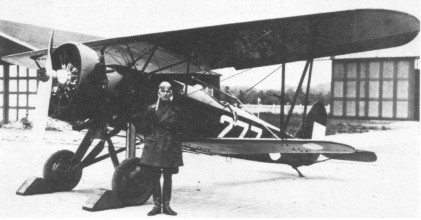
Since the Luchtvaar¬tafdeling (Netherlands air force) had rejected the D.XI and D.XIII designs, by the late 1920s it was in desperate need of a more modern fighter to replace the now ageing D.VIIs. In 1928 the D.XVI was developed from a Fokker design (D.XV/D.XVa). It first flew in 1929, powered by a 450 hp Armstrong/Siddeley Jaguar engine. The D XVI single-seat unequal-span biplane was powered by a 460hp Armstrong Siddeley Jaguar 14-cylinder air-cooled radial fitted with Townend rings and flew for the first time in 1929. Possessing a fabric-covered, welded, steel-tube fuselage and ply-and-fabric-covered wooden wings, it was armed with two synchronised 7.92mm machine guns in the upper front fuselage.
The D XVI was ordered by the LVA, 14 aircraft being delivered to that service, these having split-axle undercarriages rather than the crossaxle type of the prototype. At first the D.XVI s 460 hp Jaguar engine usually seized up after a few hours. This problem became so widespread that the air¬craft were only permitted to fly in the vicinity of their own field, and long climbs were forbid¬den. Finally the factory (technical services) located at Soesterberg reduced away the pistons and solved the problem, though the D.XVI now used ten litres of oil per hour. Of the 15 ordered by the Aviation Department, five crashed within a short space of time and the other ten flew without mishap. One D XVI was subsequently re-engined with a Bristol Mercury radial for aerobatic display purposes. Four Jupiter engined D.XVIs were sold to Hungary, and one was built for Italy but later sold to China. Another was fitted with a Curtiss Conqueror engine for the Royal Dutch East Indies Army, and a further D XVI was built with a Curtiss V-1570 Conqueror 12-cylinder water-cooled engine to meet a KNIL (Koninklijk Nederlandslndisch Leger) requirement, although no production order was placed for this version.
Max take-off weight: 1400 kg / 3086 lb Empty weight: 990 kg / 2183 lb Wingspan: 9.40 m / 30 ft 10 in Length: 7.20 m / 23 ft 7 in Height: 2.70 m / 8 ft 10 in Wing area: 18.50 sq.m / 199.13 sq ft Max. speed: 330 km/h / 205 mph Range: 640 km / 398 miles
The C.IX was a heavier version of the C.VE. Five were delivered to the Aviation Department and one to Switzerland. The naval scout seaplane C.XIW appeared in 1935.