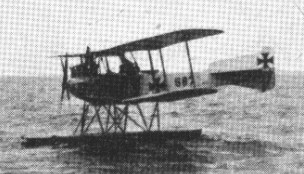
Friedrichschafen FF.33
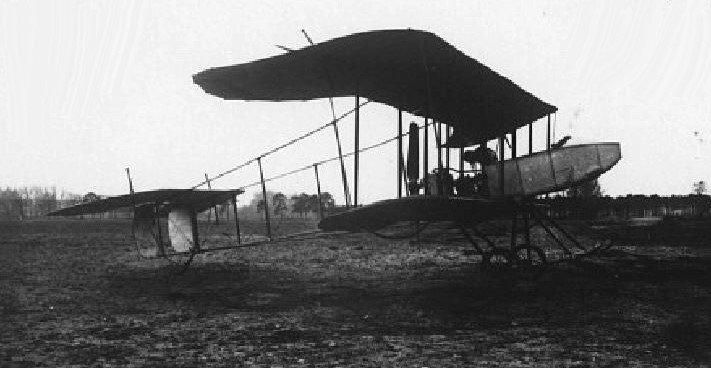
A Farman copy but with Zanonia-shaped upper wing, designed by the young (15) Ernst Friedemeyer. It was built by Flugzeug-Baugesellschaft Osnabrück, Germany, in 1911. It was not very successful, and was destroyed in 1912.
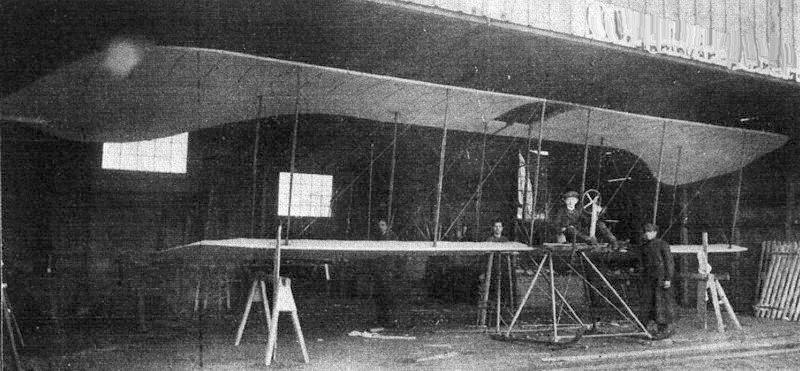
A biplane with Zanonia-inspired upper wings and short lower wings. One of two similar machines built at the Niederreinische Flugzeuganstalt, Hilsmann & Co in Holten, Germany. Made short flights.
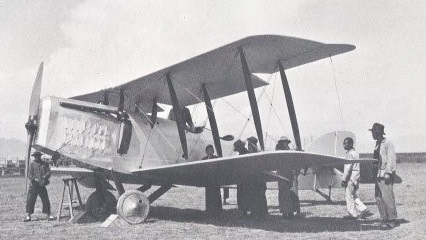
In 1924-25 Governor Yen, the Chinese Governor of Shansi Province, asked Fresson to establish an aircraft factory at Tai Yuan Fu, within the walls of the local Arsenal. This was in an area surrounded by warring local factions and was not particularly safe area to work.
Fresson began designing the Fr.FBI based on the Armstrong-Whitworth FK.8 design and ordered materials from the Aircraft Disposal Company in London. The design was drawn up in Shanghai and construction began in the spring of 1924.
The Fresson design called for two separate cockpits behind the main wings and had a revised Centre of Gravity. He was assisted in the build by a German aero engineer, and English maths expert who worked on the stress aspects and a Chinese carpenter called Loh.
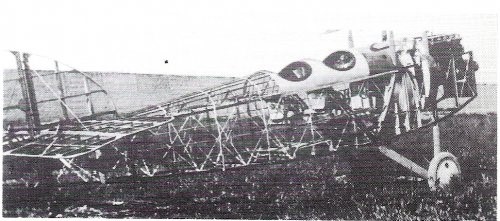
Although built in the Arsenal confines, a separate airfield was built six miles north with an 800 metre runway for testing.
After several successful flights, passengers were carried. There was no further production of the type due to Civil unrest and Fresson returned to Britain to found Highland Airways in Britain.
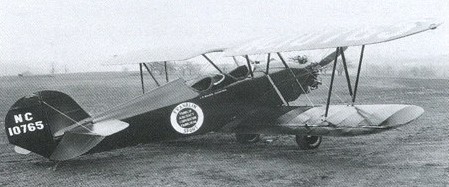
Nine Model A were followed by a Model B (70hp LeBlond) and six Sport 90s (90hp Lambert), ending in 1933.
In 1929 Jos P. Bauer designed the Model A tandem-seat biplane (55hp Velie). This led to Franklin Aircraft, at Franklin, PA. Nine Model A were followed by a Model B.
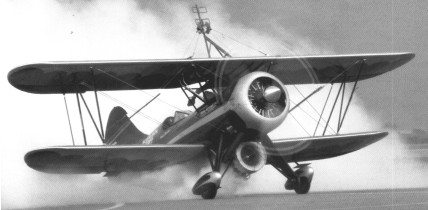
Jimmy Franklin first conceived it, built it, and then flew it. He first debuted the Jet Waco in 1999, and quickly made it one of the air show world’s most popular acts of all time.
The Franklin 1937 UPF-7 Waco bi¬plane that has a conventional radial engine and a 2200-lb-thrust jet unit from a Cessna Citation bolted between the main gear. Warm the Pratt & Whitney R-985 piston engine up well, test the smoke system a few times for good crowd effect, pretend to take off in the normal fashion by pointing the nose into wind up the runway, then give it the gas: full noise but across the runway and straight up.
Jimmy Franklin put his Waco into a routine of loops and rolls, with son Kyle Franklin as wing walker, in pure jaw dropping entertainment. With over 4,500 lbs of thrust and 2,000 horsepower, Jimmy performed stunts that no one has ever attempted in this type of aeroplane.
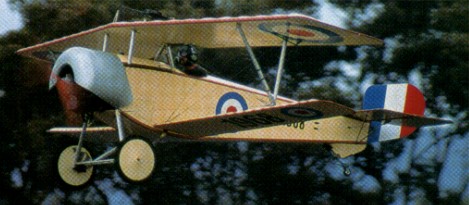
A 75% scale replica of a Nieuport 11 circa 1999. Based in Australia. Built by Peter Frank.
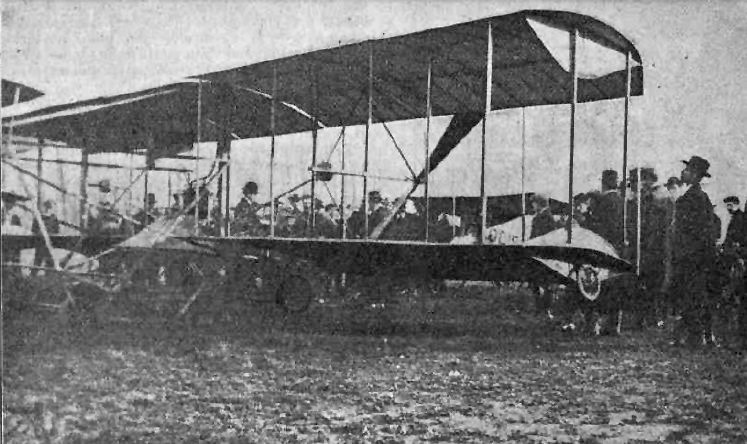
This twin-propeller pusher was built by Guido Moncher and his mechanic Nino Franchini in Italy. The latter made some short flights in it at Milan in January 1910.
A Grumman Ag-Cat conversion.
Engines: P&WAC PT6A-34, 750 hp.
Seats: 1.
Wing loading: 18.52 lb/sq.ft.
Pwr loading: 8.1 lb/hp.
Max TO wt: 6075 lb.
Empty wt: 2807 lb.
Equipped useful load: 3231 lb.
Payload max fuel: 2751 lb.
Hopper cap: 300 USG.
75% cruise: 113 kt.
Working speed: 96 kt.
Working endurance: 2.5 hr.
Stall: 51 kt.
ROC: 2000 fpm.
Min field length: 900 ft.
Fuel cap: 276/480 lb.
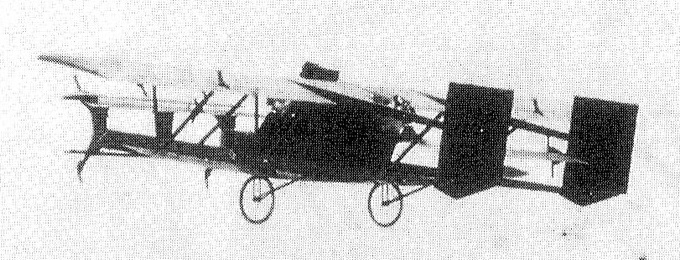
The one and only model of the Frabjous Corporation’s BiSkiLi.

