Gallaudet D-4

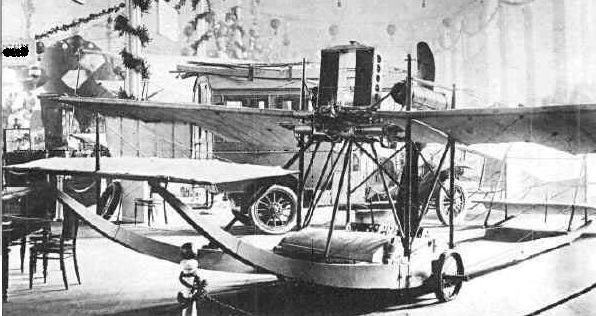
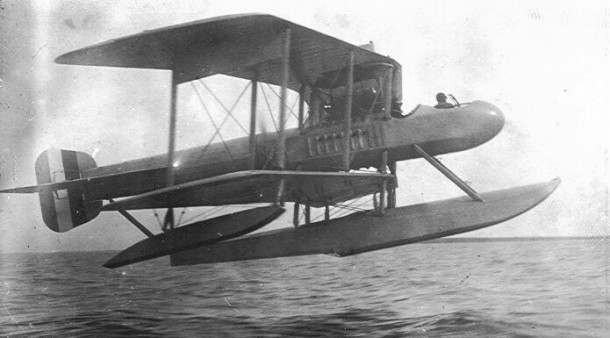
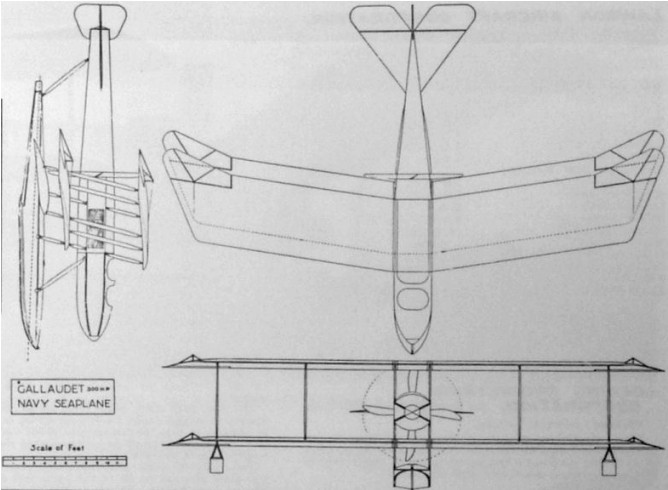
In an effort to produce an aircraft with the best possible forward visibility for the observer, Gallaudet developed the D-2 into the D-4, which placed the observer in the nose, followed by the pilot, with the propeller attached to a ring that circled the fuselage behind the wings. The four blades spun around the fuselage just behind the pilot.

Power for the D-4 was a 360-hp Liberty L-12 engine buried within the fuselage, just behind the pilot. A large pontoon was mounted below the fuselage, and small outboard floats were mounted near the tips of the swept-back wings.

Two D-4 were built for the Navy (A2653, A2654). The prototype crashed during flight testing on 19 July 1918, but the second was accepted by the U.S. Navy. No further aircraft were built, as Gallaudet turned their attention to constructing Curtiss HS-2L flying boats.
Engine: 1 × Liberty L-12, 360 hp ( kW) each
Wingspan: 46 ft 5 in ( m)
Wing area: 260 sq.ft ( sq.m)
Length: 33 ft 6 in ( m)
Height: 11 ft 8 in ( m)
Empty weight: 4,228 lb ( kg)
Gross weight: 5,440 lb ( kg)
Maximum speed: 119 mph ( km/h)
Range: 390 miles (628 km)
Endurance: 3 hr 30 min
Service ceiling: 14,000 ft
Crew: 2 (pilot, observer)
Armament: None
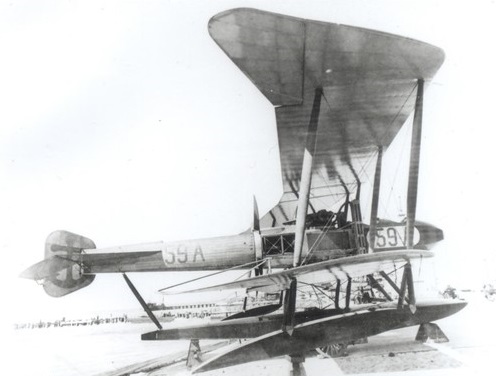
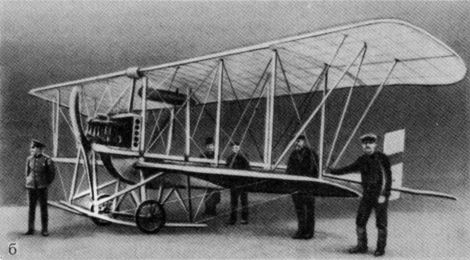
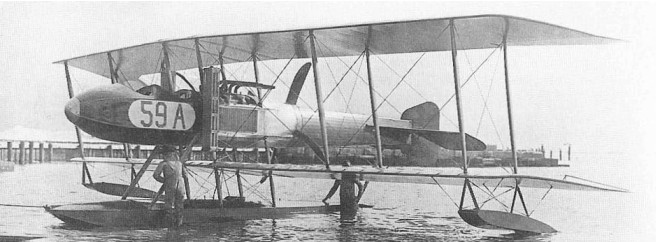
Gallaudet D-1 / D-2

D-1

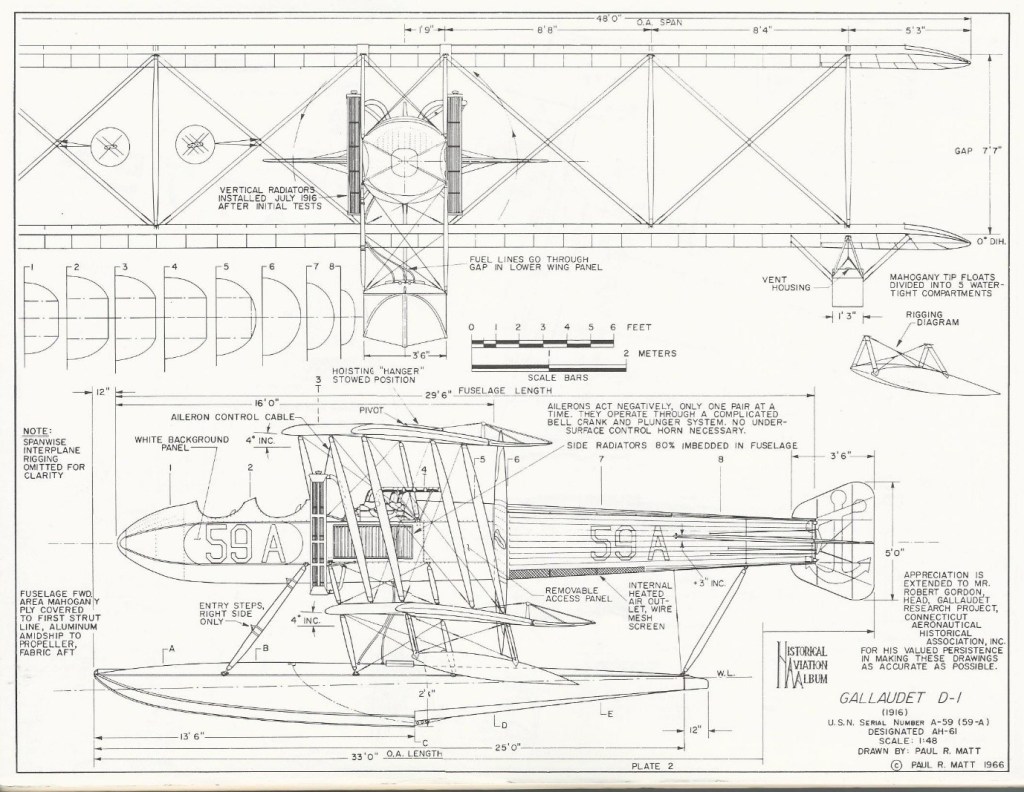
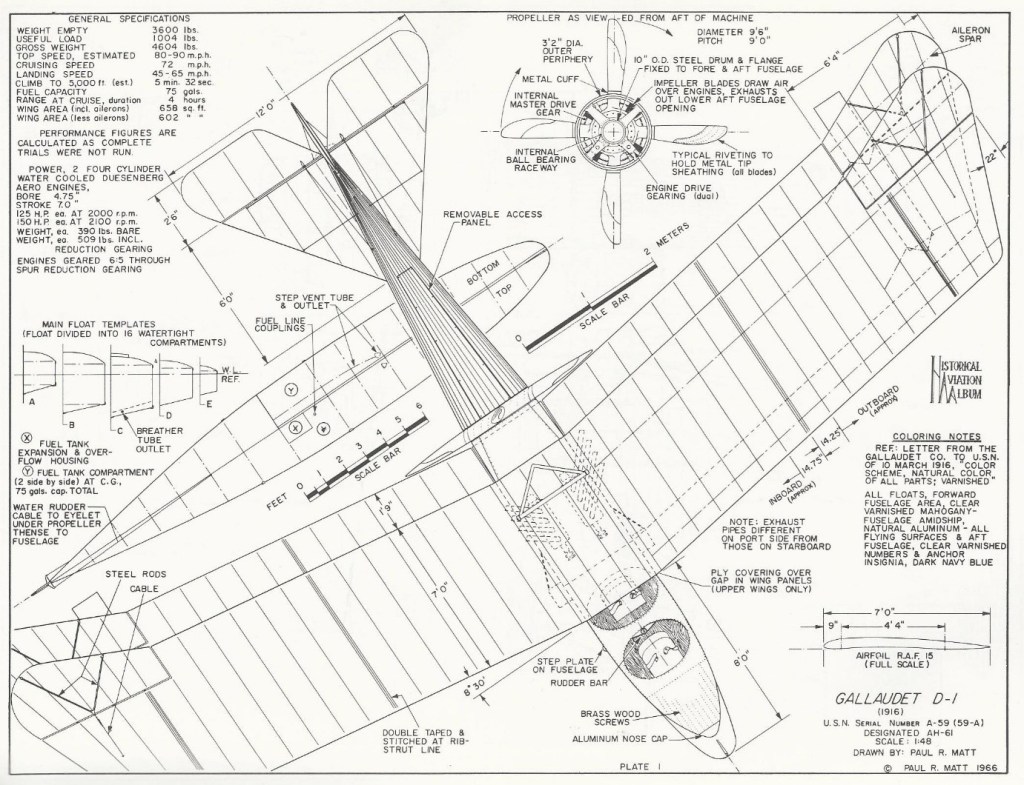
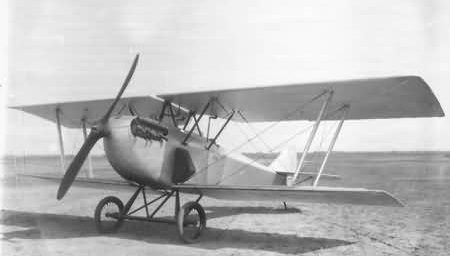
In response to a requirement by the U.S. Navy for light floatplanes capable of being launched off catapults by ships underway, the Gallaudet Aircraft company began development of the “D-4”, based on the earlier Gallaudet D-1. The D-1 (A59) was powered by two 150 hp Duesenberg engines mounted side by side, and first flown on 17 July 1916. Following delivery of the D-1 in January 1917, the firm reorganized as Gallaudet Aircraft Corporation, and moved to Greenwich, Rhode Island.

Despite numerous mechanical difficulties the Army bought four of the improved D-2 version.

In an effort to produce an aircraft with the best possible forward visibility for the observer, Gallaudet developed the D-2 into the D-4.

D-1
Wingspan: 48 ft
Length: 33 ft
Gross weight: 4,604 lb
Max speed: 90 mph

Gakkel-III / Гаккель-III

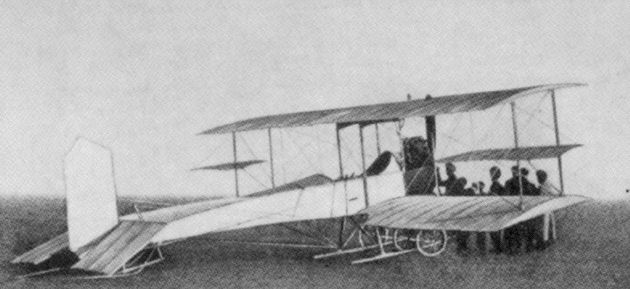
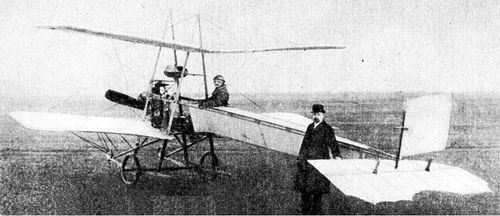
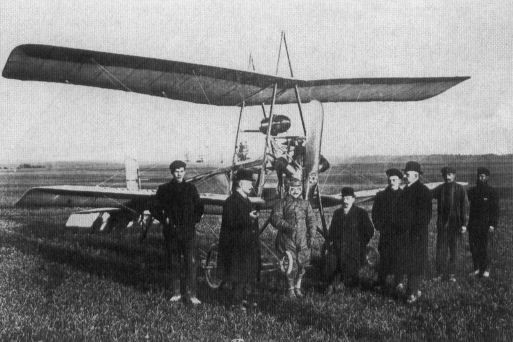
The Gakkel-III (Гаккель-III) is the second Russian airplane flown. Although recognized by the All Russian Aero-Club as the first aeroplane of Russian design to fly – on May 24, 1910 at Gatchina airfield (Гатчинский аэродром) – it was actually the second aeroplane of Russian design flying; Kudashev in Kiev was the first flying a day before. The most important recognition feature of this aircraft is wing structure without interplane struts.

Span: 24’7″
Length: 24’7″
Weight loaded: 1235 lb
Speed: 50 mph