2010: Medan, Propinsi Sumatera Utara, Indonesia
Power pack builder
2010: Medan, Propinsi Sumatera Utara, Indonesia
Power pack builder
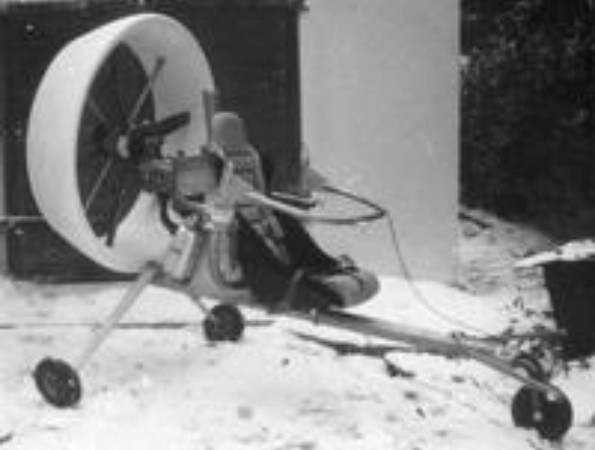
One of the first engine powered parachute wing vehicle was designed in Poland in mid-eighties, by aeronautical engineers: Marek Debski Ph.D. and Andrzej Komor Ph.D. The power unit consisted of the KFM piston engine and two counter-rotating over-ducted propellers. The idea of counter-rotating was to eliminate possible gyro effects. The power unit was mounted on a vehicle’s carriage. All the structure are easily demounted and packed into a car luggage compartment for transport purposes.
Parafan
Engine: KFM
Cruise: 24 kt / 28 mph / 45 kmh
Empty Weight: 100 kg / 220 lbs
MTOW Weight: 200 kg / 441 lbs
Climb Ratio: 400 ft/min / 2 m/s
Glide Ratio: 4
Take-off distance (50ft obstacle): 130 ft / 40 m
Landing distance (50ft obstacle): 100 ft / 30 m
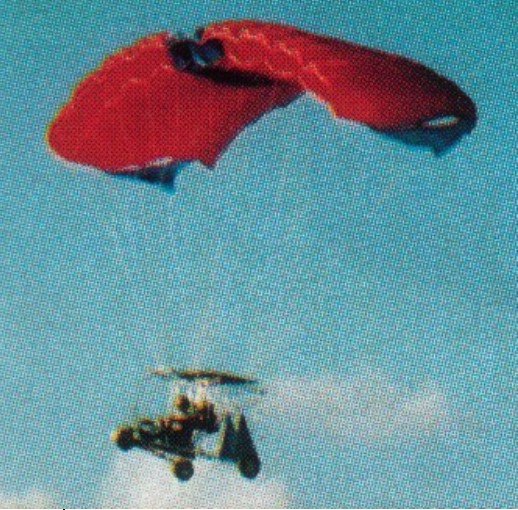
The trike airframe is controlled with a rudder and throttle. It uses only two hand-controlled levers.
Paradise-Flyer M430
Engine: Rotax 4447, 40 hp
Height: 5.5 ft
Length: 10 ft
Wing span: 36 ft
Wing area: 430 sq.ft
Empty weight: 220 lb
Gross weight: 465 lb
Fuel capacity: 5 USG
Cruise: 26 mph
Range: 50-52 sm
Rate of climb: 500 fpm
Takeoff dist: 150 ft
Landing dist: 50 ft
Service ceiling: 7000 ft
Seats: 1
Paradise-Flyer M500
Engine: Rotax 503, 50 hp
Height: 5.5 ft
Length: 10.5 ft
Wing span: 39 ft
Wing area: 500 sq.ft
Empty weight: 230 lb
Gross weight: 540 lb
Fuel capacity: 5 USG
Cruise: 26 mph
Range: 50 sm
Rate of climb: 600 fpm
Takeoff dist: 150 ft
Landing dist: 50 ft
Service ceiling: 7000 ft
Seats: 1
1998: 3510 County Rd. 63 Rosharon, TX 77583, USA.
Paraglider trike builder
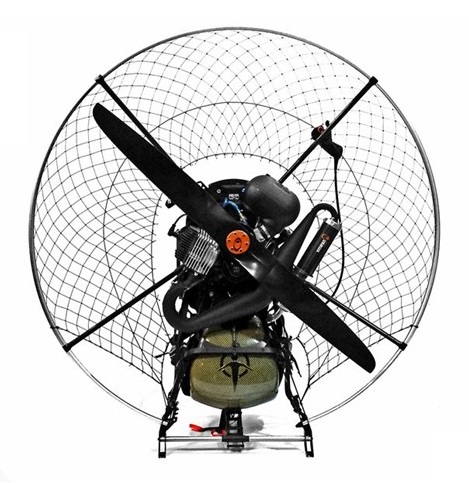
The Blackbird was designed to improve the function, performance and ergonomics of paramotors. Many hundreds of hours of design and analysis, numerous prototypes and over 50hrs of test flying were dedicated to refining the final product.
The Blackbird seat-back allow the pilot to fly comfortably reclined without compromising take off performance and also allows the incorporation of an optional rigid foot rest. Aerodynamics are improved by moving the fuel tank away from the prop and into a more streamlined position during cruise. Ground handling versatility is also improved allowing better ground stability and compact storage.

The Blackbird features a Carbon/Kevlar back support, Apco SLT harness, Powder coated aluminium lazer cut frame, Carbon fibre spokes, Vittorazi V-throttle and an 11.5 lt carbon/kevlar reinforced composite fuel tank (2.5- 3 hrs endurance).
The cage diameter is 1450mm, and total frame & engine/prop weight is 25kg.
The motor is a Moster 185cc SILENT or PLUS with two piece carbon prop. The thrust with a standard 1.3m carbon prop (Vittorazi) is 75kgs.
The Blackbird sold for $8,450.00 in 2017 from Christchurch, NZ.
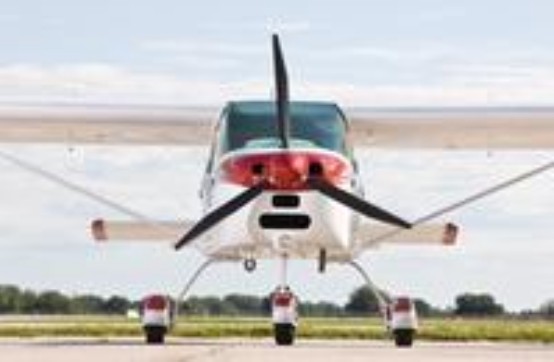
The Paradise P-1 complies with all aspects of the Light Sport Aircraft (LSA) ASTM standards, that specify the design and performance requirements of the two types of LSA aircraft. Special Light Sport Aircraft (SLSA) and Experimental Light Sport Aircraft (ELSA). Easy to service and maintain and if registered as an E-LSA can have even the annual inspection made by the owner. 2009 Price: US$108300
The P-1 is constructed using 4130 steel tube frame welded and is covered with aviation grade aluminum. Powered by a 100 HP Rotax 912 ULS, it offers short field take off and landing performance, with excellent climbing rate and cruise speed. The cowling can be removed by one person making it easy to access every component for inspection and maintenance
It is a high wing, two seat, side by side aircraft similar to a Cessna 150, but that is where the similarity ends.
The combination of its wing design and large moving horizontal tail (stabilator) produces a very gentle yet stable aircraft with a good stall characteristic. This, coupled with the ruggedness of its landing gear, dual control system, and a wide range of optional, makes it an excellent trainer. Taxiing is easy with the pedal steered nose gear and large hydraulic brake system.
The large cabin width (43.3 inches), panel mounted yoke, unhindered floor space providing lots of leg room, with, the standard leather upholstery can accommodate two large occupants in plush comfort.
The behind the seat baggage space (largest of its category), with 75 lbs of load capacity and over 18 cubic ft of available space can carry a lot of luggage, including 2 golf bags plus a cooler or perhaps your fishing and camping gear. No hotel, remove the seat, place a sleeping bag for a 6 ft + person to sleep in comfort.
The inherent “nose down” level flight characteristic, offers a superb ahead and all around visibility.
2009 Paradise P-1
Engine: Rotax 912 ULS, 100 hp
Propeller: 3-blade Warp Drive
Gross weight: 599 kg / 1320 lb
Empty weight, std: 370 kg / 815 lb
Useful load, std: 505 lb
Usable fuel, std: 26 USG
Vne: 125 kt
Best rate of climb, SL, two passengers: 800 fpm / 4 m/s
Best rate of climb, SL, one passenger: 1000 fpm
Max cruise speed: 105 kt
Stall: 35 kt / 40 mph / 64 kmh
Range: 630 nm
Takeoff ground roll, one passenger: 260 ft
Landing over 50 ft. obstacle: 760 ft
Glide Ratio: 13/1

Super Breeze 25
Paraglider circa 1997/8.
Wing area: 25.5 sq.m
Certification: Afnor
Pilot weight: 65-90 kg
No. of cells: 46
Wing span: 10.3 m
Aspect ratio: 4.19
Price (1998) 4730000 Lr
Super Breeze 28
Paraglider circa 1997/8.
Wing area: 28.5 sq.m
Certification: Afnor
Pilot weight: 85-110 kg
No. of cells: 50
Wing span: 10.6 m
Aspect ratio: 4.76
Price (1998) 473000 Lr
Breeze 27
Paraglider circa 1997/8.
Wing area: 27 sq.m
Certification: Afnor
Pilot weight: 80-104 kg
No. of cells: 27
Wing span: 9.7 m
Aspect ratio: 3.5
Price (1998) 4345000 Lr
Breeze 29
Paraglider circa 1997/8.
Wing area: 29.5 sq.m
Certification: Afnor
Pilot weight: 85-115 kg
No. of cells: 28
Wing span: 10.1 m
Aspect ratio: 3.5
Price (1998) 4565000 Lr
Bingo 27
Paraglider circa 1997/8.
Wing area: 25.5 sq.m
Certification: Afnor
Pilot weight: 60-95 kg
No. of cells: 23
Wing span: 9.1 m
Aspect ratio: 3.25
Price (1998) 2800000 Lr
Bingo 29
Paraglider circa 1997/8.
Wing area: 27.6 sq.m
Pilot weight: 80-115 kg
No. of cells: 25
Wing span: 9.5 m
Aspect ratio: 3.27
Price (1998) 2900000 Lr
Big Bang G
Paraglider circa 1997/8.
Wing area: 31.56 sq.m
Pilot weight: 90-120 kg
No. of cells: 50
Wing span: 10.8 m
Aspect ratio: 3.51
Price (1998) 5610000 Lr
Big Bang M
Paraglider circa 1997/8.
Wing area: 29.26 sq.m
Certification: Afnor
Pilot weight: 85-105 kg
No. of cells: 48
Wing span: 10.45 m
Aspect ratio: 3.73
Price (1998) 5500000 Lr

