The one-off Surrey AL.1 G-AALP was a side-by-side trainer designed by Joe Bewsher and powered by a 95 hp Salmson A.C.7 radial engine. It was built by Surry Flying Services at Croydon in 1929 and registered to F.J.Grant for a couple of years before returning to its maker.
The biplane was unused at Croydon for several years before being sold to Bertram Arden in May 1938 and kept at Honiton Clyst, Devon. It was noted still intact there in early 1974.
Engine: Salmson AC.7 Wingspan: 28.09 ft Length: 20.00 ft.
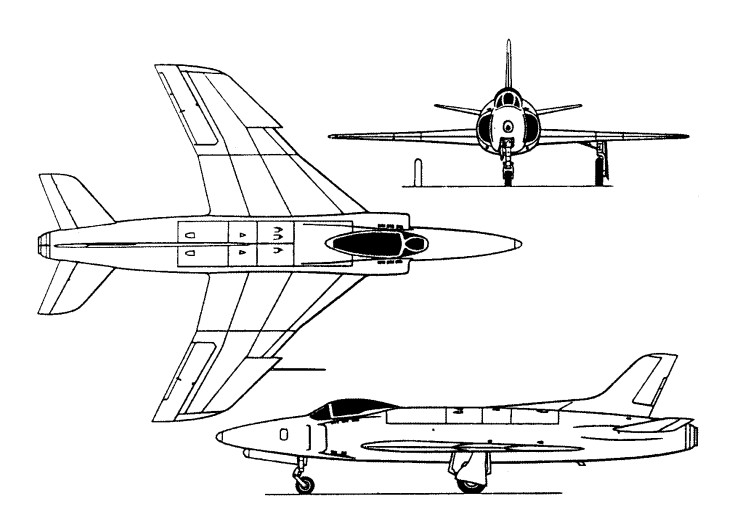
The Sparrow I was designed by R.J. Mitchell and built by Supermarine at Woolston, Southampton, for the 1924 Lympne light aircraft trials. It was a two-seat biplane powered by a 35 hp (26 kW) Blackburne Thrush piston engine, with dual controls.
The Sparrow I (registered G-EBJP) first flew on 11 September 1924. The Thrush, a three-cylinder radial engine proved to be extremely unreliable and the Sparrow was eliminated from the light aircraft trial due to engine failure. In the Grosvenor Trophy Race at Lympne Aerodrome on 14 October 1924, it came fourth with a speed of 62.08 mph (99.91 km/h).
The aircraft was rebuilt for the 1926 Lympne Trials as a parasol monoplane (and redesignated the Sparrow II) and re-engined with a 32 hp (24 kW) Bristol Cherub III engine. During the trials the Sparrow force landed near Beachy Head on 12 September 1926, again being eliminated from the competition, which was won by the Hawker Cygnet.
After use for testing wing sections, the aircraft was sold to the Halton Aero Club, remaining in existence until 1933.
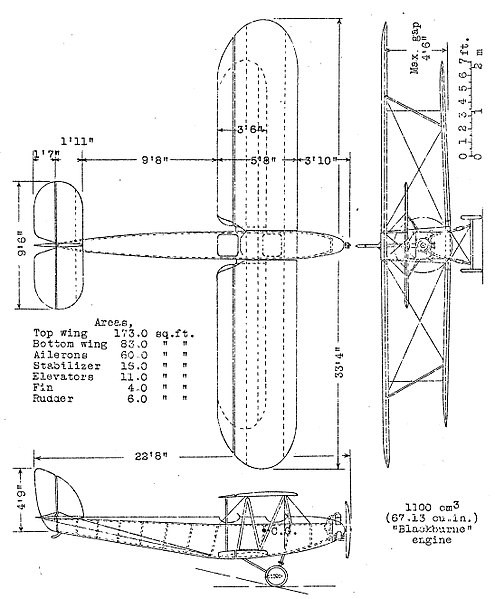
Sparrow I Powerplant: 1 × Blackburne Thrush, 35 hp (26 kW) Propeller: 2-bladed fixed-pitch Wingspan: 33 ft 4 in (10.16 m) Wing area: 256 sq ft (23.8 m2) Airfoil: root: NACA; tip: NACA Length: 22 ft 8 in (6.91 m) Height: 7 ft 5 in (2.26 m) Empty weight: 215 lb (98 kg) Gross weight: 390 lb (177 kg) Maximum speed: 116 mph (187 km/h, 101 kn) Service ceiling: 3,350 ft (1,020 m) Seats: 2
Supermarine Sparrow I 3-view drawing from NACA-TM-289
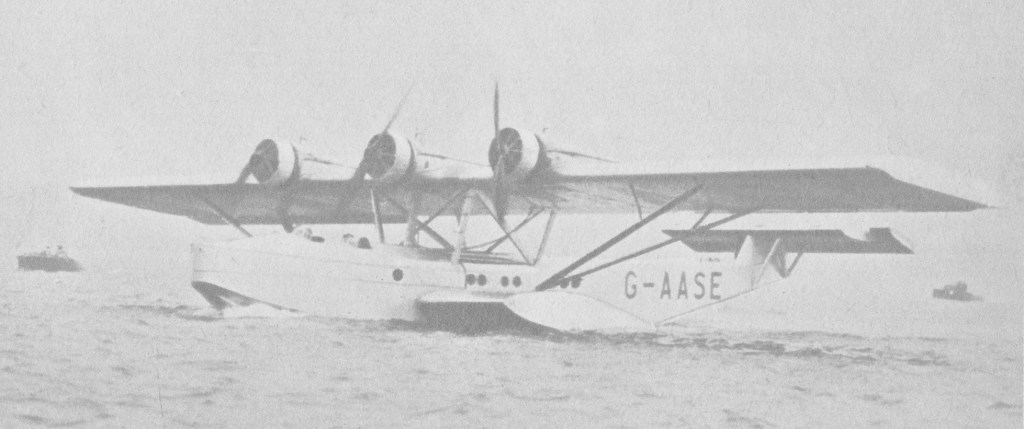
The Supermarine Air Yacht was a three Jaguar engines, all metal luxury passenger carrying flying boat designed and built in 1930 for the Hon. Arthur Guinness for pleasure flights around the Mediterranean. It carried a crew of four and six passengers, and was to replace his Supermarine Solent, but was rejected by Guinness.
The Air Yacht was first flown in February 1930. The only one built, G-AASE, was then sold to Mrs J.J.James who named it ‘Windward III’.
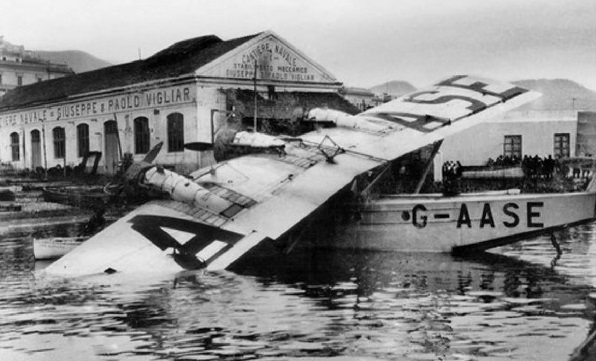
The aircraft crashed on 25 January 1933 near Positano in the Gulf of Salerno with no casualties, The wreckage was taken to Giuseppe & Paolo Vigliar shipyard, Salerno. and was later scrapped.
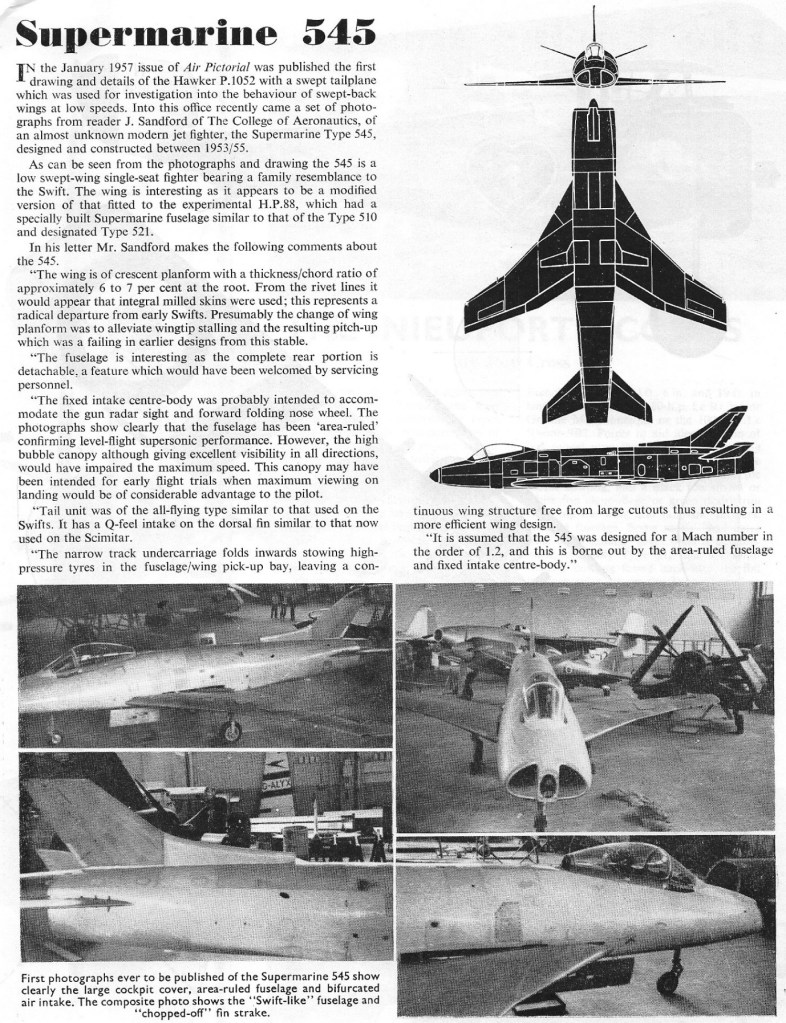
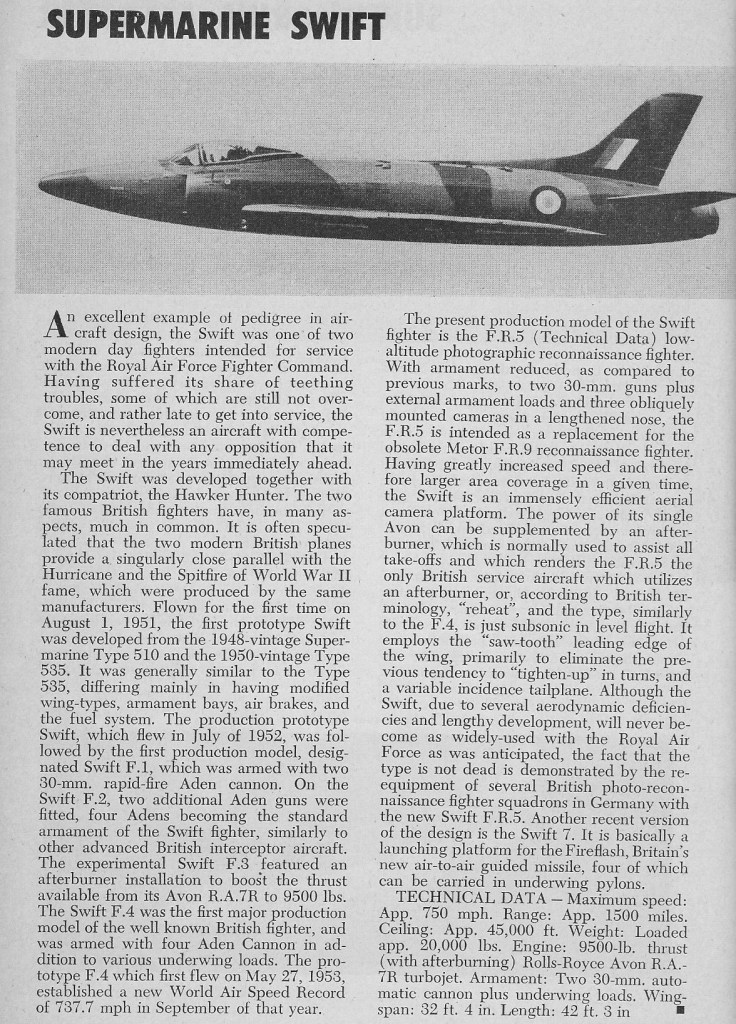
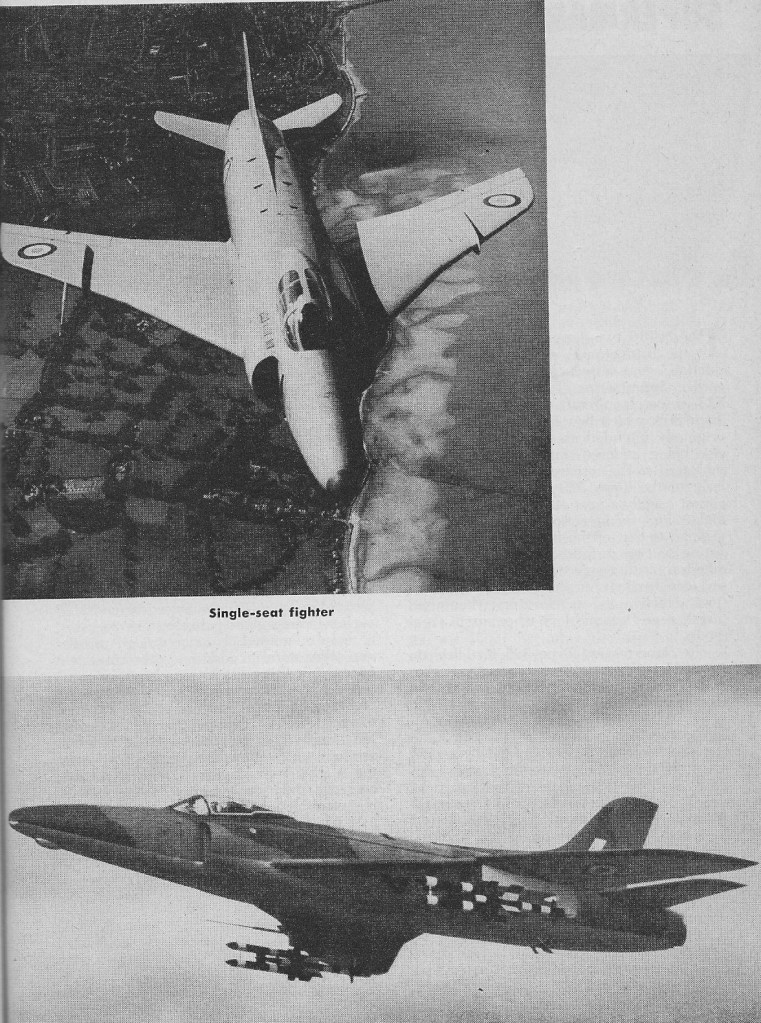
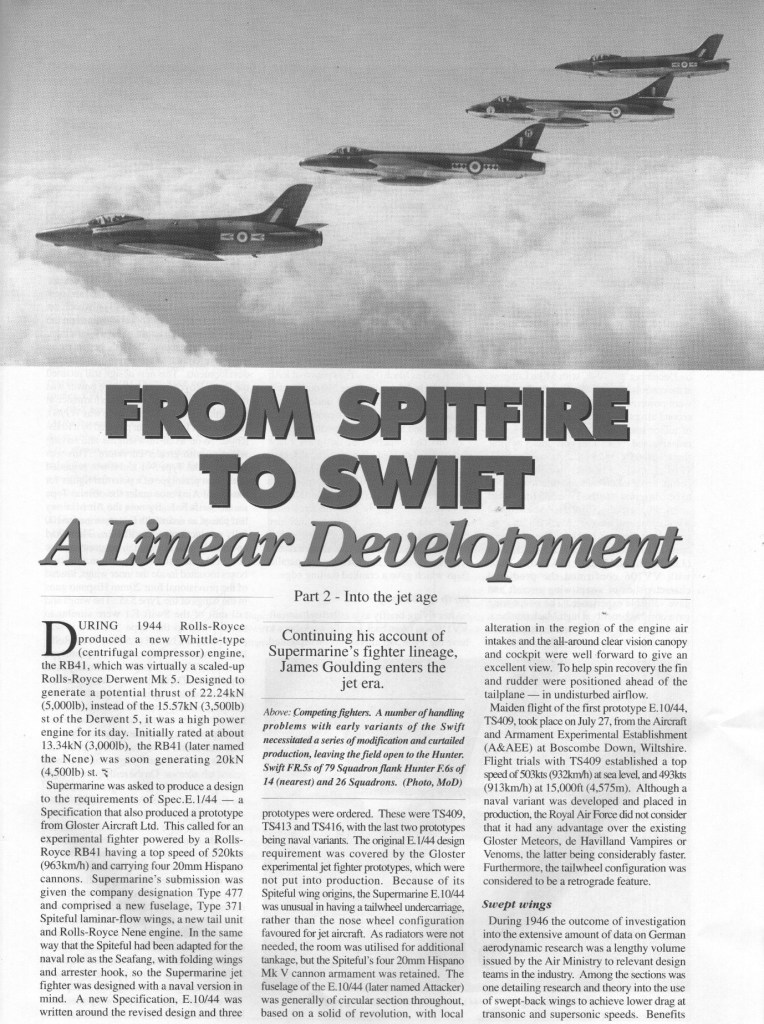
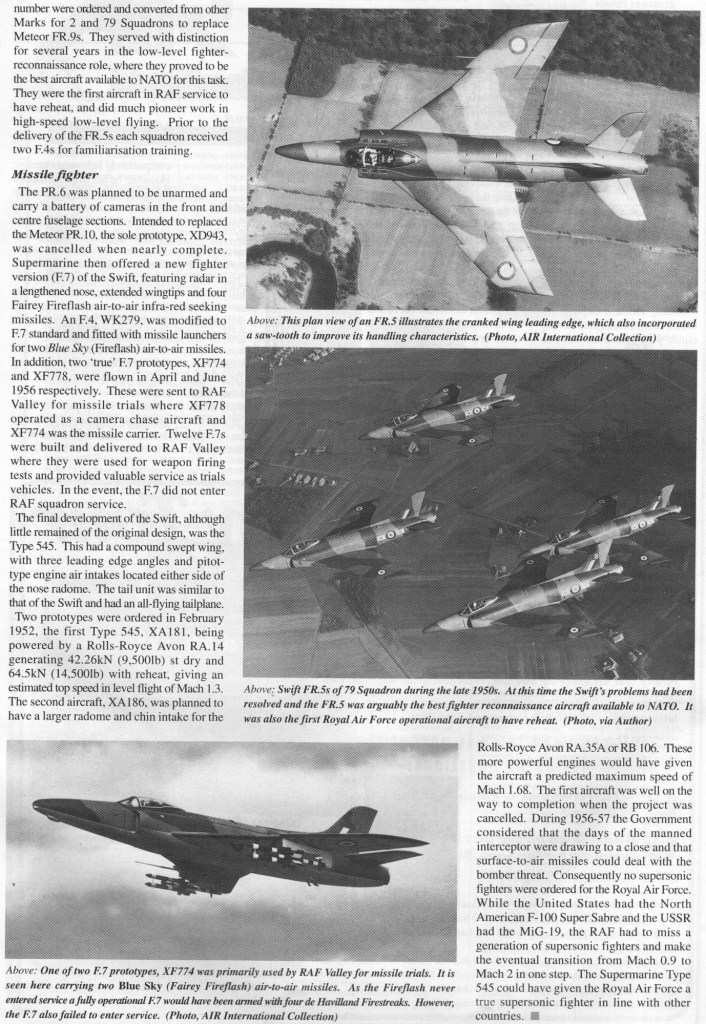
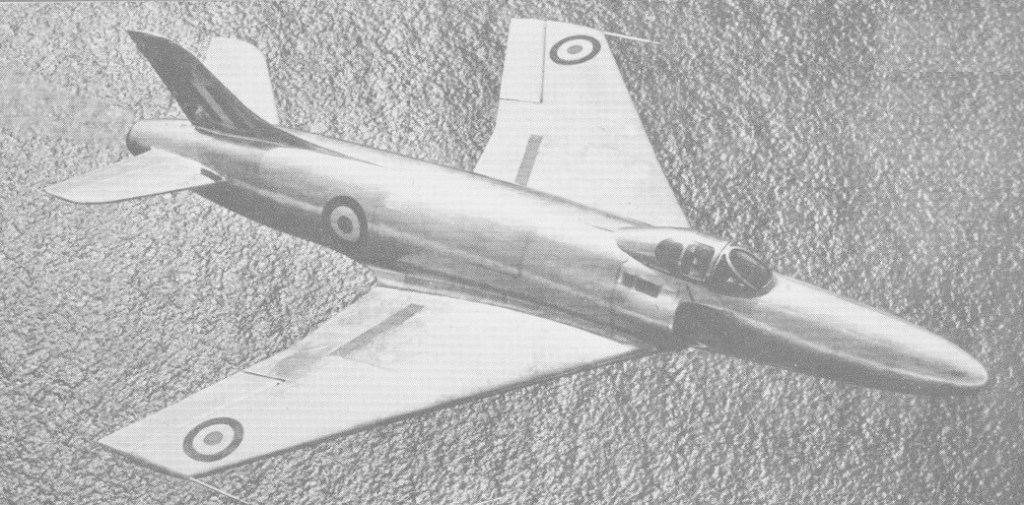
The Swift was a single-seat swept-wing fighter powered by a Rolls-Royce Avon axial-flow turbojet engine. During development the engine was changed from the Rolls-Royce Nene to the slimmer Avon. It was too late to change the fuselage, which was fatter than necessary. Flown for the first time in prototype form on 1 August 1951, the Swift appears to have proceeded fairly smoothly through its development period.
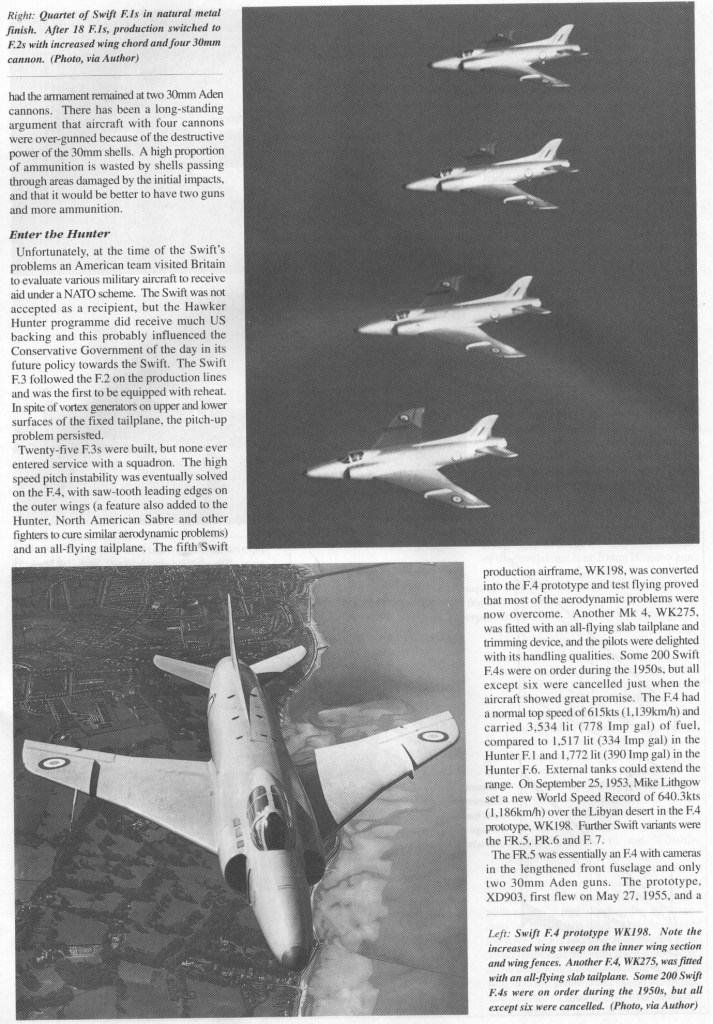
On 10 July 1952 the prototype established an international point-to-point record between London and Brussels, covering 320km in 18 minutes 3.3 seconds, representing a speed of 1,071.7km/h. Mike Lithgow piloted the prototype Swift F.Mk 4 to 1183.5 km/h (735,4 mph) over a 3 km course at Idris, Libya, of 24 September 1953. Subsequent runs were spoilt by a failed afterburner. This accomplishment was extremely short-lived, the record standing for just three days before it succumbed to a US Navy Douglas F4D-1 Skyray.
WK198 in Libya
Record holding Swift WK198 was the third production Swift F.Mk 1 and was converted as the prototype F.Mk 4. This introduced a variable-incidence tailplane to counter pitch-up problems encountered with earlier machines.
WK198 F.Mk 4
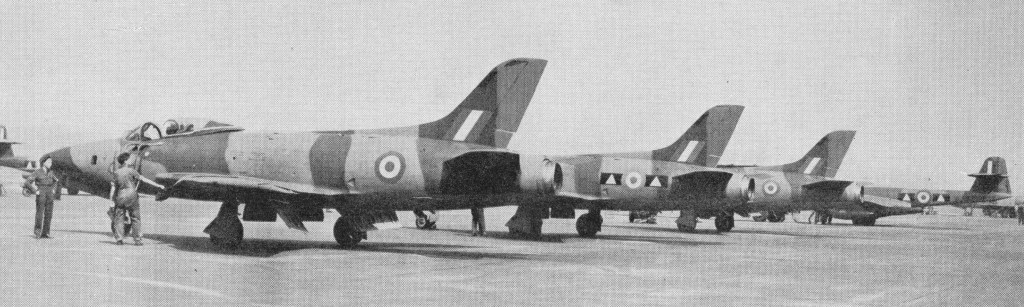
Deliveries to the Royal Air Force got under way during February 1954, the first examples of the Swift F.Mk.1 being assigned to the Air Fighting Development Squadron for operational trials. Shortly after this the type began to enter operational service with No. 56 Squadron, but the pure fighter variant was destined to enjoy only a very brief career, those examples of the Swift F.Mk 1 and Swift F.Mk 2 which equipped No. 56 being retired in March of the following year, largely as a result of the type’s poor all-round qualities. Subsequently, most of the remaining Swift F.Mk 2 and Swift F.Mk 3 production examples were passed directly from storage to technical schools, where they served as instructional airframes.
The RAF received a total of about 60 Swift F.1s, F.2s and F.3s, with an Avon RA.7 turbojet engine and two 30mm Aden cannon; four Aden cannon and a new wing planform with compound leading-edge taper; and with an Avon RA.7R engine with afterburner and changes to the rear fuselage respectively. These versions were not used operationally.
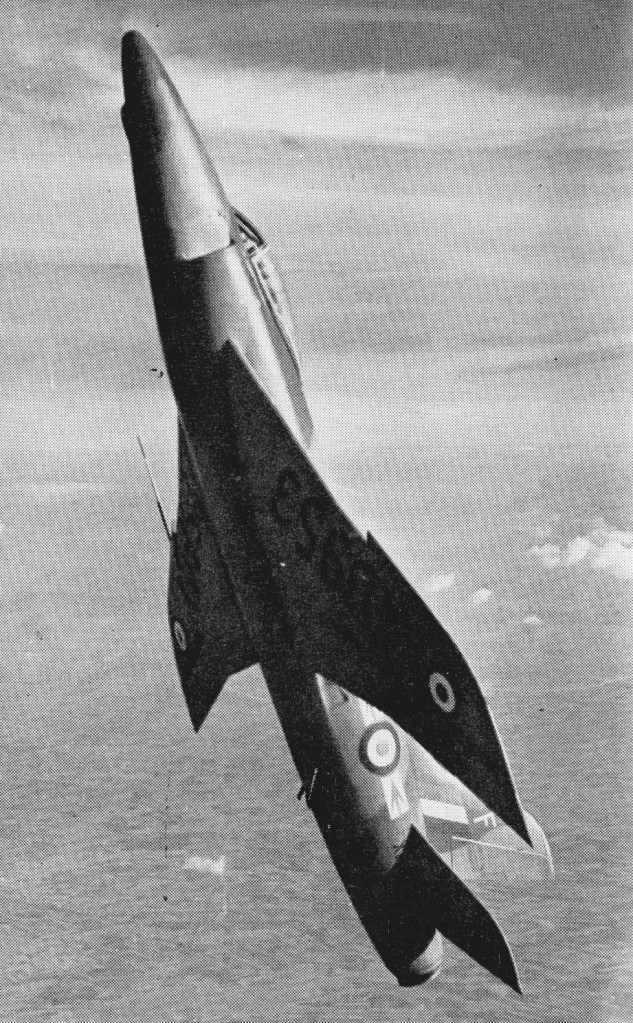
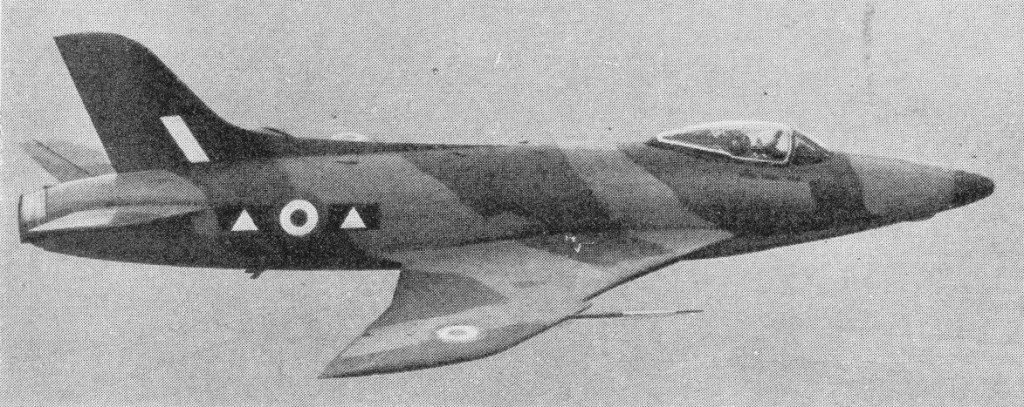
The Swift F.4 had an all-moving tail of increased area which finally cured the Swift’s pitch-up problems, and an afterburning Rolls-Royce Avon.
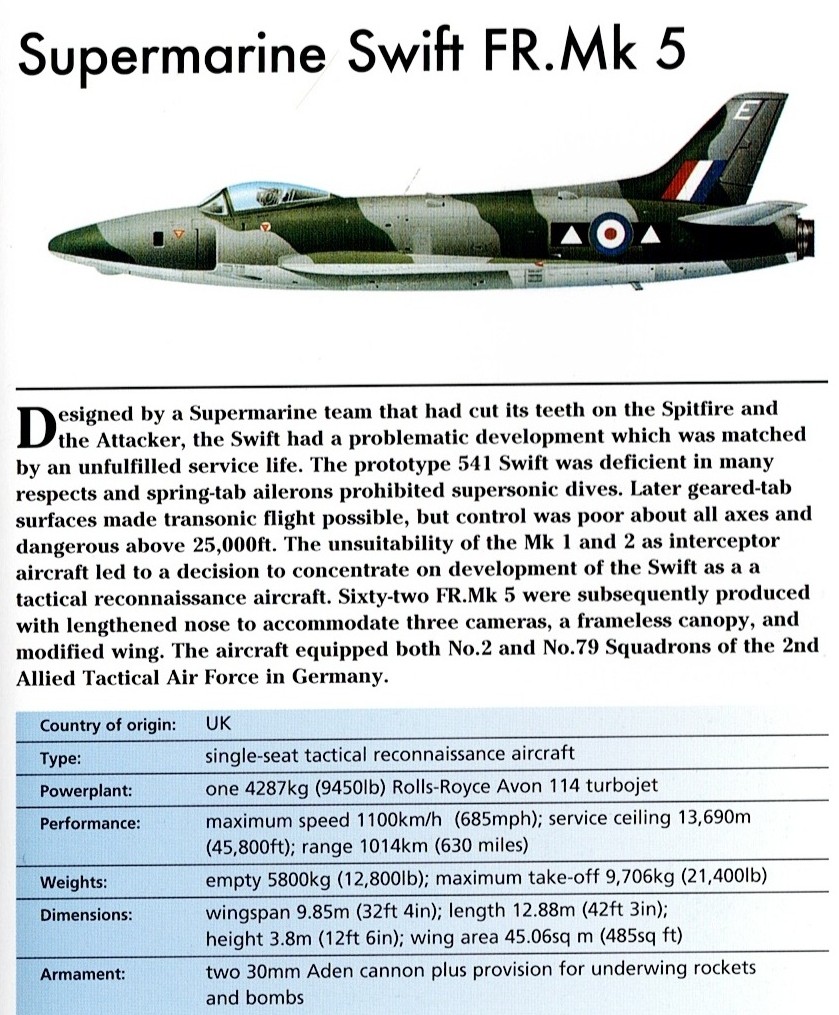
Only the FR.5 was used for any length of time and was a fighter-reconnaissance aircraft with a longer nose to accommodate 3 F95 camera- 1 facing forward & 2 facing sideways. AG45 gun camera was also fitted.
Swift FR.5
Deliveries began in 1956. Sixty were flown by the RAF; one further aircraft ordered crashed on delivery and several others were not completed.
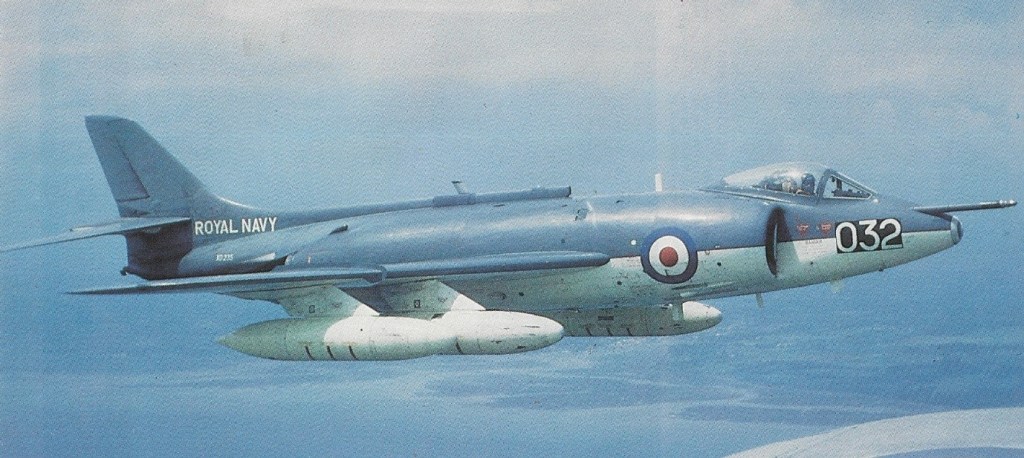
All production was stopped in February 1955 after the 176th production machine had been completed. The final 35 aircraft were converted to the tactical reconnaissance FR Mk.5, this serving with Nos 2 and 79 Squadrons from Gütersloh, West Germany. Introduced by No.2 Squadron during February 1956, the Swift FR.Mk 5 remained operational until early in 1961 when re-equipment with the Hunter FR.Mk 10 was completed. The only other noteworthy Swift derivative was the Swift F.Mk 7 which equipped the Guided Weapons Development Squadron at Valley during the late 1950s, being employed on trials work in connection with the Fairey Fireflash guided missile. Following a single prototype, 12 examples of the Swift F.Mk 7 were completed from F Mk 4s, and one of these remained in an airworthy state until about the mid-1960s, at one time taking part in a series of trials relating to braking efficiency on wet runways.
Despite more and more modifications, it was all too late. The performance of the aircraft had been so degraded by the constant increase in weight that its intended role as an interceptor could not be fulfilled. Reheat had to be employed for take off, climb and combat, which resulted in an endurance of but 25min and a combat radius of barely 50 miles, or virtually nil if a bad weather recovery was needed. Having been plagued with problems and incidents and being clearly unsuited for its intended role as a day fighter, the aircraft was withdrawn from use by 56 Sqn during March 1955, after barely a year of service. The squadron was re-equipped with the Hunter during the following May.
Only a relatively small number of the 175 or so that were eventually completed actually attaining operational service with the Royal Air Force.
Swift F.Mk.1 Engine: 1 x Avon RA.7 turbojet Armament: two 30mm Aden cannon
Swift F.Mk 2 Engine: 1 x Avon RA.7 turbojet Armament: four 30mm Aden cannon
Swift F.Mk 3 Engine: 1 x Avon RA.7 turbojet Armament: four 30mm Aden cannon
Swift F.4 Engine: 1 x Rolls-Royce Avon RA.7R with afterburner.
Swift FR.5 Engine: 1 x 4287-kg (9,450-lb) afterburning thrust Rolls-Royce Avon Mk 114 turbojet Maximum speed 1102 km/h (685 mph) at sea level Initial climb rate 4468 m (14,660 ft) per minute Service ceiling 13960 m (45,800 ft) Range 1014 km (630 miles) Empty weight 6094 kg (13,435 lb) Maximum take-off 9831 kg (21,673 lb) Wingspan 9.85 m (32 ft 4 in) Length 12.90 m (42 ft 3.5 in) Height 4.00 m (13 ft 2 in) Wing area 30.44 sq.m (327.7 sq ft) Armament: two 30-mm Aden cannon Crew: 1
Swift F.Mk 7 Engine: 1 x Rolls-Royce Avon RA.7R with afterburner.