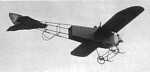
Designed and built by Dajoigny and Beaussart in France in 1911.
Dajoigny’s and Beaussart’s second design, put out under their firm name SVA (Societe des Vehicules Aeriennes). Note 4-legged undercarriage.
Span: 19’8″
Designed and built by Dajoigny and Beaussart in France in 1911.
Dajoigny’s and Beaussart’s second design, put out under their firm name SVA (Societe des Vehicules Aeriennes). Note 4-legged undercarriage.
Span: 19’8″
Dajoigny and Beaussart produced their second and third design under their firm name SVA (Societe des Vehicules Aeriennes).
The Sutton Airedale was built by Mr Sutton in 1920/1 and first flown at Weeton, UK, on 15 February 1931.
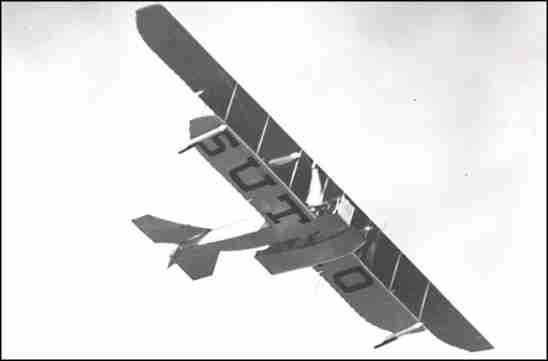
Assisted by Waldo Waterman, California millionaire Adolf Gilbert Sutro designed and built this machine in San Francisco, and, powered by a Hall-Scott 60 hp engine, it flew quite successfully.
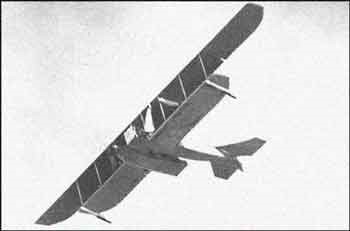
Reportedly it was used to set several international records, including a speed record of 51 mph in 1913.
Engine: Hall-Scott 60 hp
Upper span: 45 ft
Lower span: 33 ft
Length: 25 ft
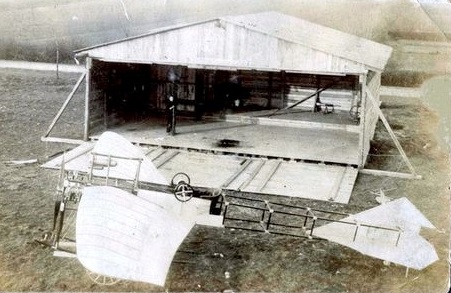
Joseph Suwelack built this airplane after he had managed to acquire a motor in Dresden. On 12 March 1910, Josef Suwelack continued his flight tests in Dornau with the new flying machine, a monoplane, with 8.8 m span and a length of 8.9 m. This machine was powered by a 36 HP engine and had weight with pilot 300 kg. Before departure, the machine was placed on a 18 m long rail track, and by a rope with a 600 kg weight in the 8 m high tower was connected. Because of the falling weight of the apparatus was moved over the rails and obtained by the gravity of the weight of the necessary airspeed.

Inspired by the experiments of Graf von Zeppelin, Heinrich Suter of Arbon, Switzerland, built an airship of 40 metres length. The Paris-made, cigar-shaped, 5-chamber envelope had a reported volume of 1000 m³. The movements of the LTA/HTA craft were carried out by propellers, while the balloon was used only to lift the machine and aeronaut. On a wooden pole under the balloon hung by a ball joint, was the actual flying machine, which enabled a free, independent movement of the two parts. Suter’s connection of a balloon with a flying machine was based on the principles of Ingenieur Kreß of Vienna. In Gustav Adolf Saurer, the founder of the “Ersten Schweizerischen Velociped-Fabrik Arbon”, Suter found the perfect construction partner. Inside the metal structure that connected to the ball joint, he built a velo-drive. Pedals drove outside of the “cage”, mounted and by hand, a pivotable double propeller. In this way, Suter believed to be able to control the occurrence of different air currents, while the position of the steering sail could also be altered manually. On April 19, 1901, from the purpose-built shed at the Hotel “du Lac” the inflated airship was pulled to the shore of Lake Constance. Many curious onlookers as well as journalists were in attendance to witness the spectacular event. At first everything went according to plan – Suter increased the pressure on the pedals and circled the steerable airship over Steinacherbucht bay. Suddenly the wind shifted, and at low altitude drove it into the branches of a tree on the Steinach shore, ending the maiden voyage. As for Suter, he lacked the funds to conduct further tests and the project was terminated shortly thereafter.
The Sussex University Gas Balloon Sardinia was registered G-AWOK constructor number SARD.1.
It was later withdrawn from use.
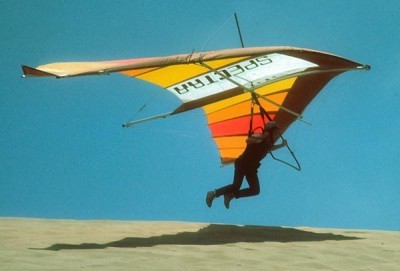
Suspended Animation produced the 1978 Zodiac which was similar to the Seagull Aircraft Seahawk. The Zodiac was designed and manufactured originally by Suspended Animation, Concord, CA, USA by John Reisig in 1978 and later improved by Carlos T. Miralles in 1979. Suspended Animation started out as a dealership and evolved into Spectra Aircraft.
Suspended Animation produced a similar design to the Seagull Aircraft Seagull III called the Tempest.
Suspended Animation was John Reisigs’ retail operation and a Seagull Aircraft dealer before manufacturing his own hang glider designs. Designs were similar to the Seagull Aircraft Seagull III called the Tempest, and Suspended Animation also produced the Zodiac which was similar to the Seagull Aircraft Seahawk.

