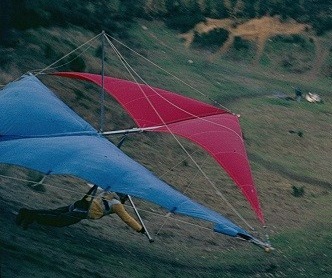
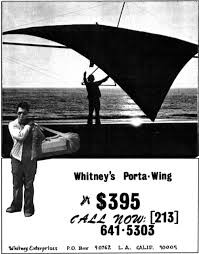
This hang glider was one to be scared to be directly underneath on a hillside. The flight performance of the Porta-wing was not impressive. With the cabled leading edge it is suspected that low angles of attack may have caused it to dip resulting in sail deflation. As a precaution a cable could have been added from the king post as was done later on the trailing edge for all flexwings.
Mods have been suggested toward keeping LE sail region formed positively during negative gust events and during low AoA dynamics. Segmenting tubes for short pack has been centuries old. The airfoil was not patentable as it was in public domain. Ancient kiting has had cable leading edge in public domain. Solve the challenges of deformation of the airfoil in LE region under low AoA and/or gust events.
As far as known the Porta-Wing had no sail battens. The cabled leading edge could be built up using water pipe insulation that might help reduce the oscillation/vibration. This would still allow the short pack capability. With an anti-dip cable on the L/E and reflex lines, wide keel pocket, battens and a more rounded L/E the Porta -Wing might have a new lease of life.
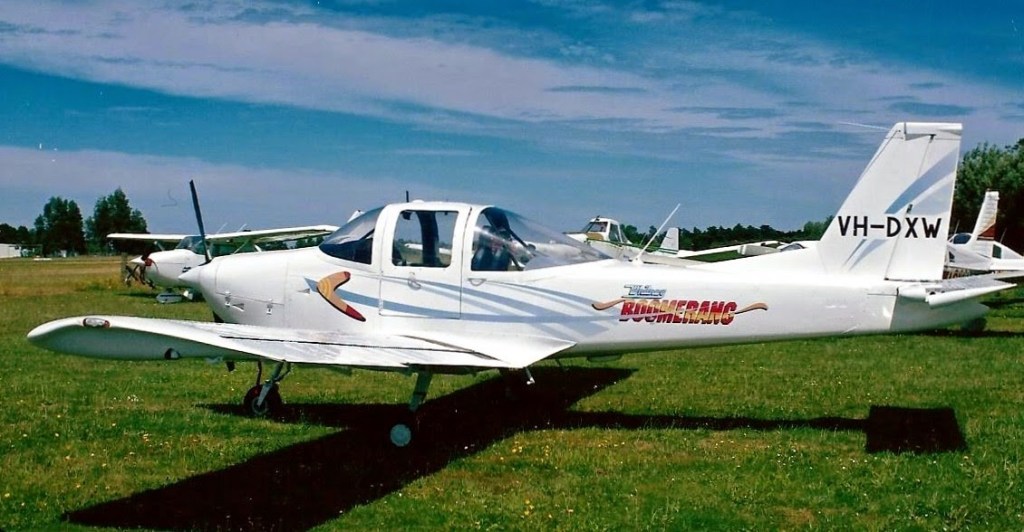
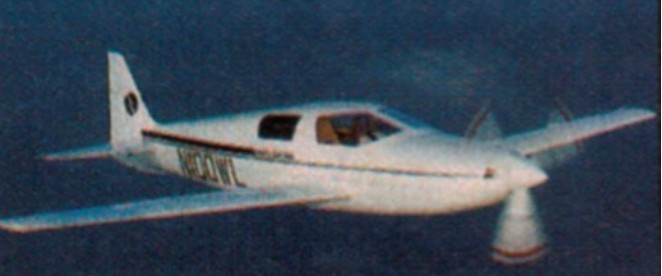
The ‘official’ first flight of the Whitney Boomerang was at manufacturer Dean Wilson Aviation’s Kingaroy Queensland on 16 July 2006. The real first flight was conducted a couple of days earlier.
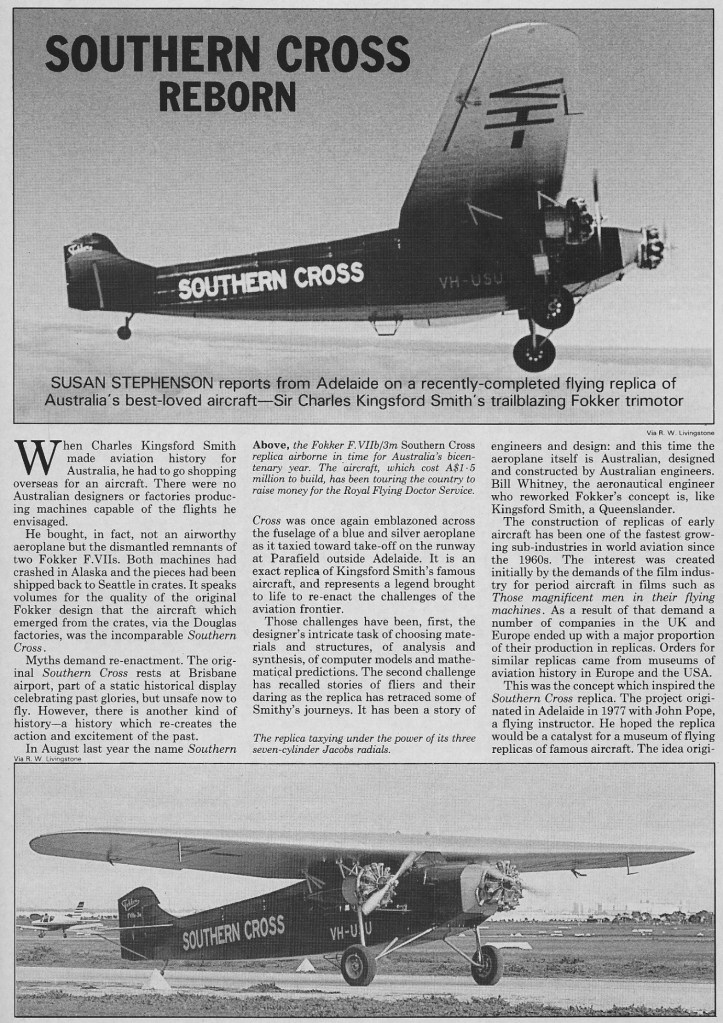
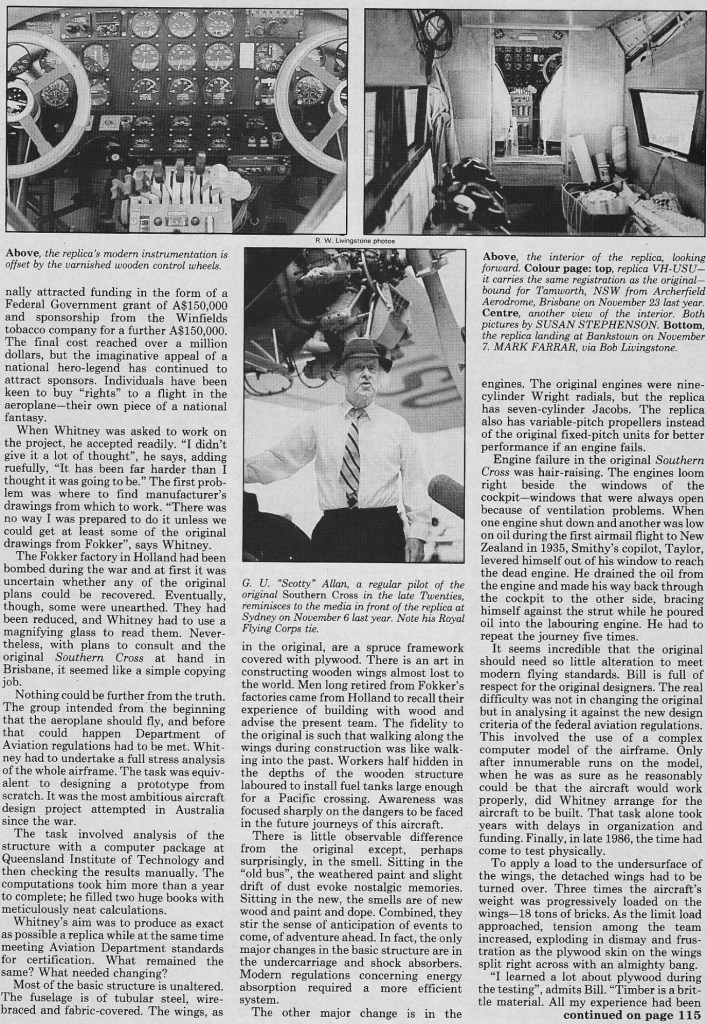
The Whitney Boomerang was designed by C W (Bill) Whitney and gained FAA23 certification on December the 18th 2007 – the fifth Australian designed aircraft to do so.
A distinctive feature of the fuselage is a 4130 tubular steel frame cockpit cage tested to withstand 12g forward loads, that also provides roll-over and side intrusion protection.
It is powered by a Lycoming O-235-N2C engine and a McCauley 1A135/JCM7147 propeller. MCTOW is 825kg.
It went into production as the DW200 Whitney Boomerang with Dean Wilson Aviation’s Queensland Aviation Manufacturing division at Kingaroy, Queensland in 2006 and first flew that July. It was hoped that it would be a replacement for the Piper PA-38 Tomahawk and the Cessna 152. It was demonstrated on numerous occasions and even made the flight to NZ arriving at Kerikeri on 03-10-2008.
New Zealand Type Acceptance was been granted to the Dean-Wilson DW200 Series (also known as the Whitney Boomerang) on 24-10-2008 based on the FAA and CASA type certificates. The application for New Zealand type acceptance of the Model DW200 was from the manufacturer, dated 7 October 2008.
Ardmore NZ January 2009
The new Boomerang made an ‘official’ first flight on 16 July 2006. The first real flight was a few days earlier.
Following the gaining of its NZ certification VH-DXW returned across the Tasman Sea to Australia.
The launch customer was Minovation Flying Training at Jandakot, Perth and then with Flight One at Archerfield, Brisbane. Foreign interest faded after a burst of initial interest and an order for 10 aircraft from India.
2007
Due to lack of sales the assets of the collapsed Dean-Wilson Aviation company at Kingaroy were offered for sale. On 27-05-2011 an advert in the “Australian” newspaper invite expression of interest in acquiring the assets of the Companies manufacturing the Whitney Boomerang. This included the type certificate, plant and equipment, parts and tooling and the hangar housing the facility at Kingaroy.
Engine: Lycoming O-235, 115 hp / 86 kW MTOW: 750 kg / 1653 lb Cruise: 95 kt / 176 kph Load: +4.0 / -2.2 g
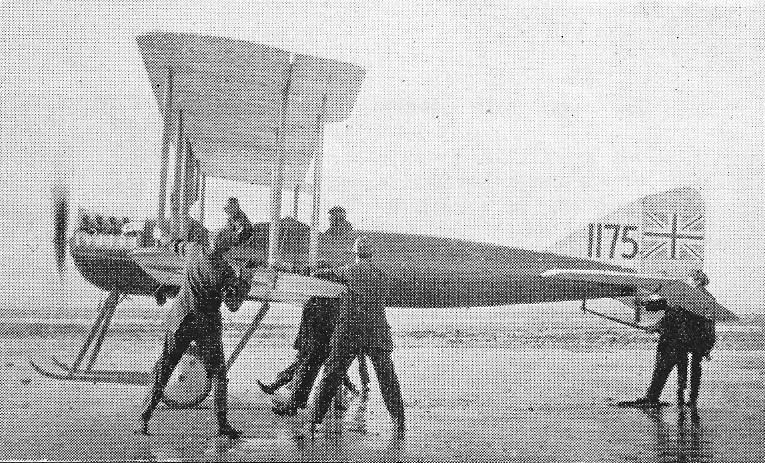
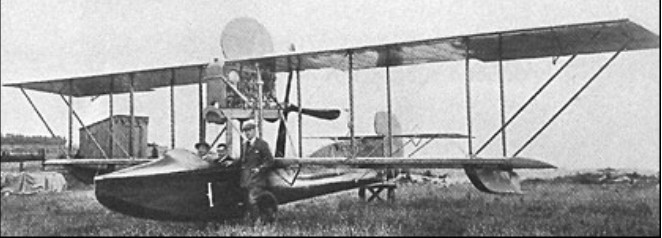
The Bognor Bloater gained its nickname from the scaley effect created by copper wire-stitching the cedar plywood covered monococque fuselage.
The 1915 Bognor Bloater tractor biplane is believed to have been the first aircraft in production with a monocoque fuselage. Twelve were ordered for the RNAS, but only 10 were delivered.
Based at Bognor, Sussex. Acquired U.K. rights to products of Curtiss Aeroplane Company. Built Short S.38 trainers under subcontract in 1914. About 1910 had designed and built an unsuccessful aircraft with wings covered in sheet aluminium. Registered 1912 as private company; designed and built one- and two-engined flying-boats for the Admiralty in 1914.