The 1937 White-Kremsreiter W-K Special, NX18219, was a single place open cockpit monoplane powered by an 85hp Schilberg engine.
Author: Terry
White-Kremsreiter
(Benjamin) White-(Hans) Kremsreiter
Milwaukee WI.
USA
Aircraft builder circa 1937
Whitehead Aircraft Comet

At the end of 1916, the Whitehead Aircraft Company completed, at its Richmond, Surrey, works, a small single-seat fighting scout. Not unlike the Camel in general appearance – and perhaps inspired by the Sopwith type, for the production of which Whitehead was a major contractor – the aircraft was a compact single-bay biplane, with ailerons on all four wings. The fuselage was faired to a near-circular cross section and the engine was an 80hp Le Rhone nine-cylinder rotary. The name Comet was bestowed upon the fighter by its manufacturer, although it was also known within the works as the Boyle Scout, in an allusion to its principal designer, Edwin Boyle. It is not clear if it was designed by T. Navarro, who left Whitehead Aircraft to work on another scout project at Thomas Lowe & Sons, or if the designer was the then 23 year old Edwin Boyle. If it was known in the works as the Boyle Scout, that does suggest Boyle.
No details of the planned armament appear to have survived, nor of any flight testing, although the Comet was reported to have flown.
Whitehead Aircraft Ltd
UK
Established at Richmond, Surrey, built Airco D.H.9 and RAF B.E.2a and B.E.2b under subcontract during First World War. Was a major supplier of Sopwith Pups. Built a prototype only of own-design Comet single-seat scout.
Whitehead 1903 Triplane
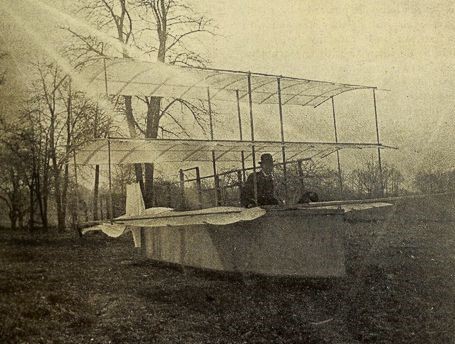
Whitehead’s airplanes are notoriously undocumented. There seems to have been a development from a triplane glider to a powered version either with a single tractor propeller or two tractor propellers running in opposite directions. The triplane could be flown without or with the body. The triplane glider with body attached, was later flown without the body. The proposed twin-propeller tractor version of the triplane with body may or may not have been built or flown.
Whitehead Number 21

Circa 1901, the Number 21 was a single place open cockpit mid-wing monoplane, reportedly had an acetylene gas-powered motor. Silk-covered, twin-tractor powered glider with a birdlike appearance (one of some two dozen Whitehead designs) was claimed by Whitehead, and his many supporters, to have attained powered flight two years before the Wright brothers, on 21 November 1901, but there apparently is no grounded substantiation.
A replica of this craft was built by Otto Timm, for the 1938 film, “Men With Wings,” and another by Andy Kosch in 1986.
Whitehead 1911
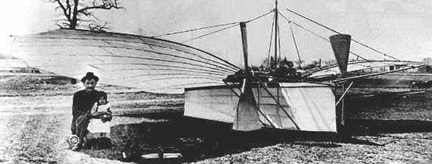
A single place multi-rotor type consisting of an open, tubular framework, carrying two rows of 6′ lifting screws on either side of the central frame.
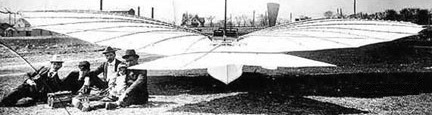
Probably the vehicle was powered with Whitehead’s own engine, fuelled by acetylene.
Whitehead is claimed to have achieved powered flight with this monoplane at Fairfield, Connecticut on August 14, 1901 – more than two years before the Wright brothers’ first flight at Kitty Hawk. In 1968 the state of Connecticut officially recognized Whitehead as the “Father of Connecticut Aviation”.
In the Fairfield field, Gustave Whitehead, taking control of an aircraft of his own design, a 21-horsepower monoplane-type model with 12 horsepower, managed to fly over no less than 850 meters at an altitude of about 15 meters, in the presence of a few witnesses, including a journalist.
Whitehead / Weisskopf
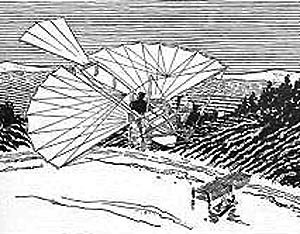
Gustav Whitehead, born Gustav Albin Weisskopf, was an aviation pioneer who immigrated from Bavaria, Germany to the United States. Whitehead is claimed to have achieved powered flight with this monoplane at Fairfield, Connecticut on August 14, 1901 – more than two years before the Wright brothers’ first flight at Kitty Hawk. In 1968 the state of Connecticut officially recognized Whitehead as the “Father of Connecticut Aviation”.
Gustave Whitehead (Gustav Weisskopf)
Bridgeport CT.
USA
Airplane builder circa 1901-11 of some two dozen Whitehead designs.
White Aircraft PT-7
The 1939 White Aircraft PT-7 two place open cockpit biplane was a planned primary trainer for CPTP with acquisition of rights to the 1930 Verville AT, but production never got under way.
The “PT” was White’s designation, not the military’s (actual PT-7 was a Mohawk product).
Engine: Warner Super Scarab, 200 hp
Wingspan: 31′ 0″
Length: 24′ 3″
Seats: 2
White Aircraft Gull
The 1939 White Aircraft Gull was a design modified from Argonaut. A four place cabin, high wing monoplane amphibian, one was built powered by a 160hp Menasco pusher engine.
The project was shelved when a market failed to materialise.

