Back to Folkerts SK-1
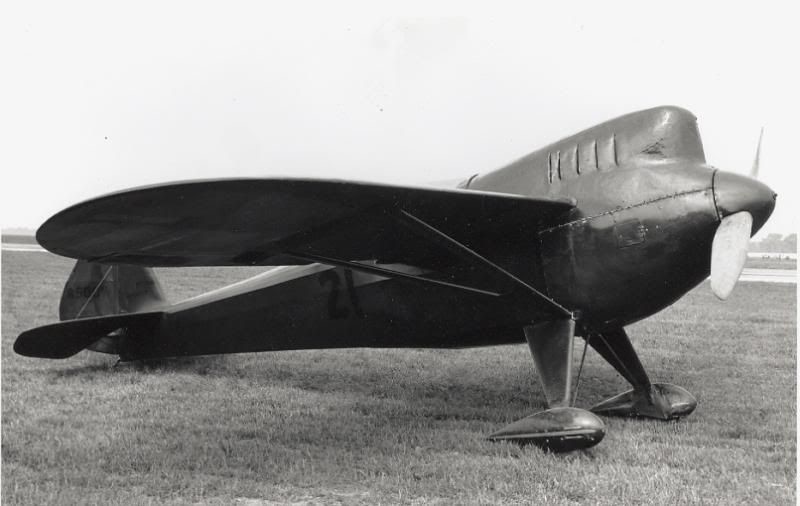
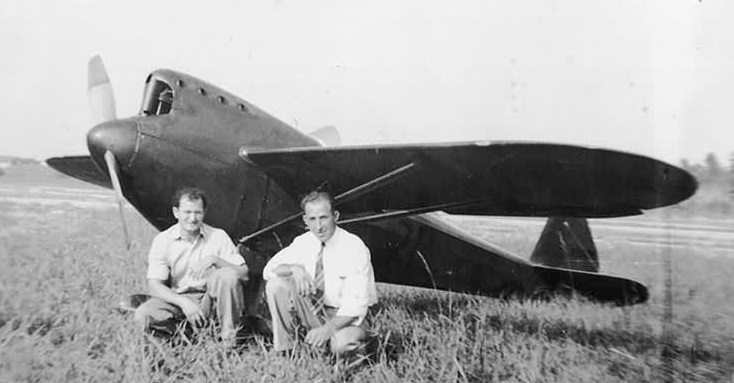
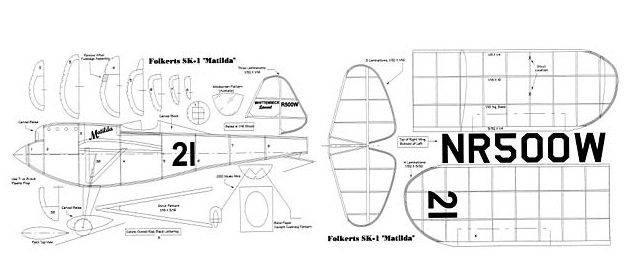
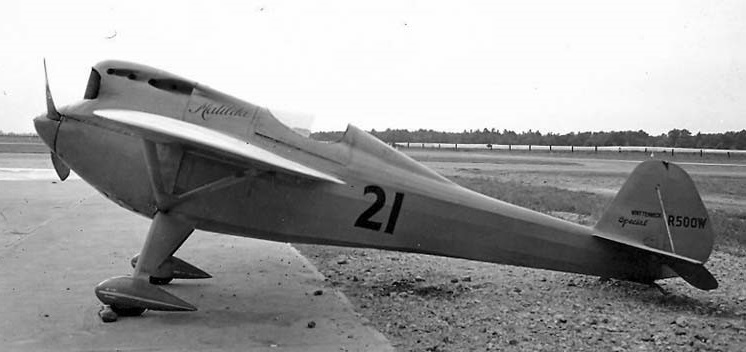
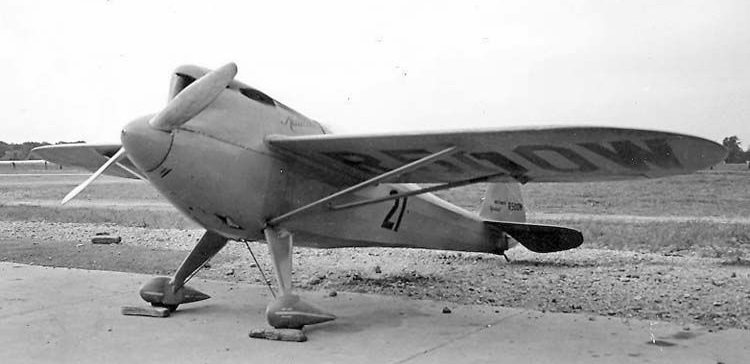
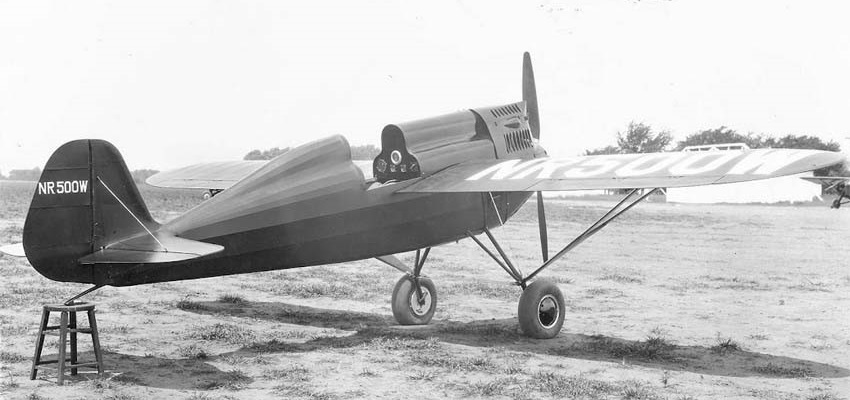
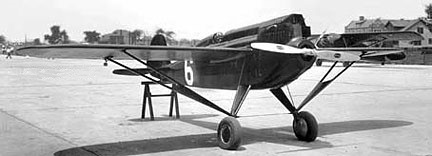
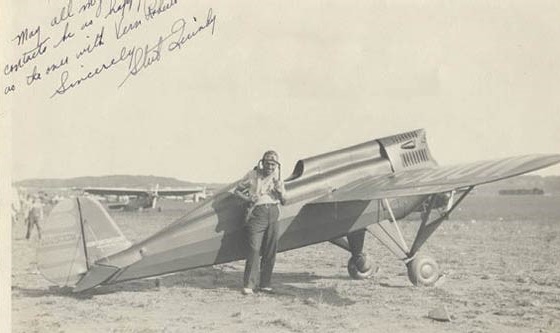
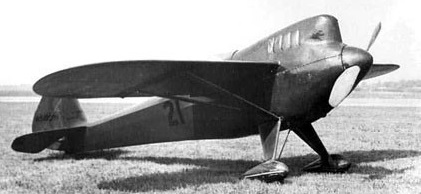
Clayton Folkerts designed the “Mono Special” NX/NR500W while working for the Mono-Aircraft Corporation. The aircraft was a strut-braced mid-winged conventional geared aircraft with a slender tapered tail and undersized wheels and fairings.
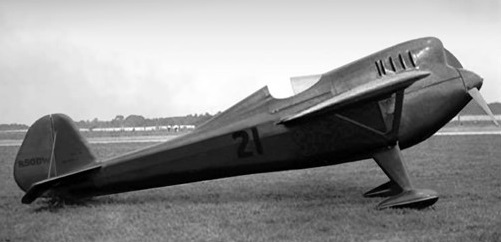
In 1930, for the American Cirrus Derby, pilot John Livingston was hired, but Stub Quimby flew in his place after an illness. The team did not win any earnings. In the 1930 National Air Races, Quimby placed fourth in the 650 Cubic inch class at 142 mph.
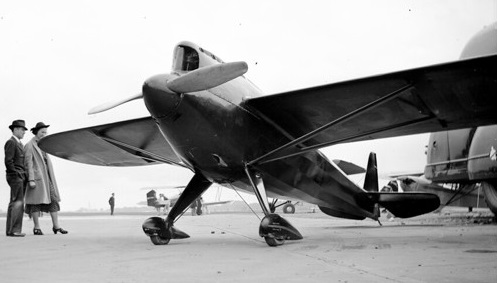
In the 1933 American Air Races, the aircraft was renamed the Folkerts SK-1, with modified lift struts and addition of wheel pants. The aircraft won first place twice in the 350 cubic inch class, and third in the 500 cubic inch class piloted by Harold Neumann, and fifth piloted by Marcellus King. During the 1933 International Air Races, Roy Ligget and Roy Hosler won two fifths and one fourth at a speed of 170 mph.
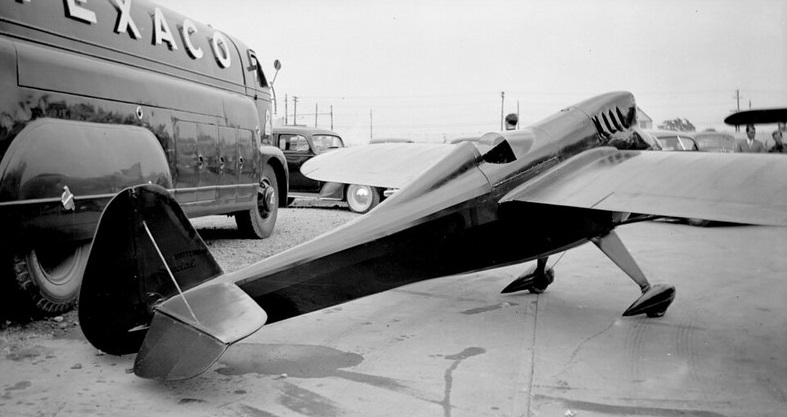
In the 1934 Pan American Air Races, the aircraft was renamed “Matilda”. In the 1935 National Air Races, with a modified headrest fairing, the aircraft raced as the “Fordon-Neumann Special” and placed second at 187 mph.
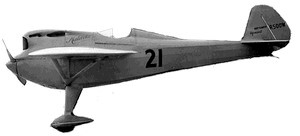
In the 1937 National Air Races, the aircraft raced as the “Hardwick-Whittenbeck Special”
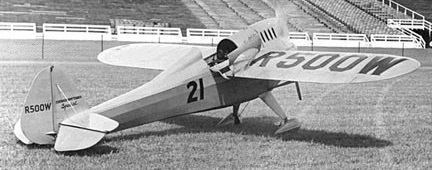
Engine: 1 × American Cirrus Hi-Drive Mk III, 110hp
Maximum speed: 162 kn; 301 km/h (187 mph)
Seats: 1
Greenwood MO, Lincoln NB and Miami OK.
USA
Airplane builder circa 1933.

The Whittemore-Hamm L-2 and L-3 built in 1917 were fabric-covered, laminated-wood fuselage trainers developed for Army interest, of which there was none. With two seats and open cockpit, one each was built, the L-2 sold to the Boston Post.
L-2 / L-3
Engine: Hall-Scott A-7, 100 hp
Wingspan: 36′ 5″
Length: 25′ 6″
Max speed: 75 mph
Stall: 45 mph
Seats: 2
(Harris) Whittemore- Hamm Co
Saugus MA.
USA
Airplane builder circa 1917.
A single-seat monoplane with enclosed cockpit.
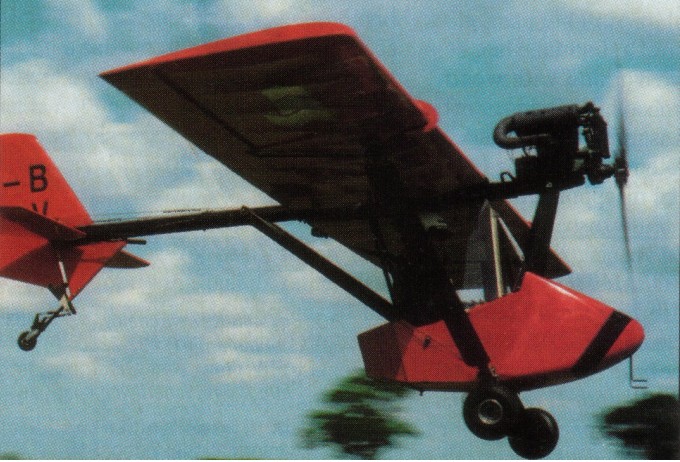
The MW-7 is a scratch-built only, single seat, aerobatic microlight. Designed in 1986, the wing area was too small for the UK ultralight category. Construction is tube and fabric. The wings can be folded. Designed to meet British section PPL-A requirements in accordance with ARB paper 98 aerobatic requirements.
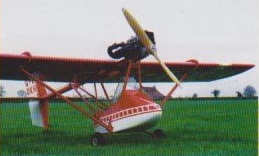
By 1998 ten examples had flown.
Plans were being sold be the Vintage Ultralight Association.
Engine: Rotax 503, 52 hp
HP range: 52-65
Length: 15 ft
Wing span: 22 ft
Wing area: 88 sq.ft
Empty weight: 320 lb
Gross weight: 600 lb
Fuel capacity: 5-10 USG
Vne: 110 mph
Cruise: 55 mph
Stall: 35 mph
Rate of climb: 800 fpm
Takeoff dist: 150 ft
Landing dist: 125 ft
Service ceiling: 15,000 ft
Seats: 1
Landing gear: tailwheel
LSA: yes
Engine: Rotax 503, 50 hp
Wing span: 6.70 m
Wing area: 8.20 sq.m
MAUW: 273 kg
Empty weight: 145 kg
Max speed: 185 kph
Cruise speed: 120 kph
Minimum speed: 65 kph
Climb rate: 5.1 m/s
Seats: 1
Plan price (1998): £60
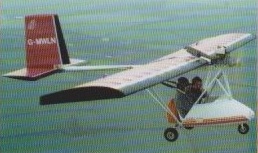
A two-seat version of the MW5, the MW6T Merlin seats two in tandem, and the MW6S Fatboy Flyer seats two side by side. Both are tube and fabric.
Engine: Rotax 503, 50 hp
Wing span: 9.98 m
Wing area: 15.24 sq.m
MAUW: 390 kg
Empty weight: 190 kg
Max speed: 148 kph
Cruise speed: 102 kph
Minimum speed: 56 kph
Climb rate: 2.5 m/s
Seats: 2
Certification: PFA
Plan price (1998): £65

A single-seat monoplane ultralight, kits were available but by 1998 plans only were sold.
Engine: Rotax 447, 42 hp
Wing span: 8.54 m
Wing area: 11.2 sq.m
MAUW: 285 kg
Empty weight: 145 kg
Max speed: 148 kph
Cruise speed: 102 kph
Minimum speed: 56 kph
Climb rate: 3.0 m/s
Seats: 1
Certification: PFA
Plan price (1998): £65
1998 Markets plans to build MW.5 Sorcerer single-seat monoplane, MW.6 Merlin two-seat monoplane, MW.7 single-seat aerobatic monoplane, and MW.8 single-seat monoplane with enclosed cockpit.
1998:
Appletree Cottage
Churchfield Rd
Clayton
DN5 7BZ Doncaster
United Kingdom

