An Australian aviator, Burt Hinkler (1892-1933) made the first solo flight from Britain to Australia in 1928. He made the flight in a single-engined Avro Avian in fifteen and a half days. After the flight, which broke 5 aviation records, the Australian government gave him a grant of £2000 and made him an honourary squadron leader.
Hinkler was born at Bundaberg, Queensland, Australia, and was named Herbert John Louis Hinkler. He was educated at Bundaberg. In 1911, he went to Britain where he worked as an aircraft engineer. He joined the Royal Naval Air Service in 1914.
In 1920 he made the first non-stop flight from London to Turin, in Italy, taking 9 hr 30 min. later he flew an Avro Avian 1930 km on a non-stop flight from Britain to Russia, breaking the world distance record for light aircraft. In 1931 he made a round-trip flight from London to the West Indies, on to Brazil and Africa, and back to London. In 1933 he tried to break the flying speed record from Britain to Australia. He crashed in Italy and died.
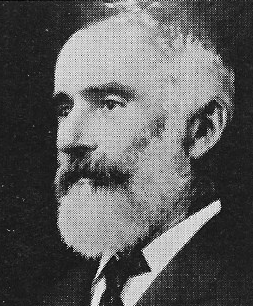
Lawrence Hargrave (1850-1915), was a pioneer in aviation and conducted many experiments into the principles of flight. His work in Australia laid the foundation for the development of modern aircraft. When he began his research in the 1880s, most people believed that it was impossible for machines to fly through the sir.
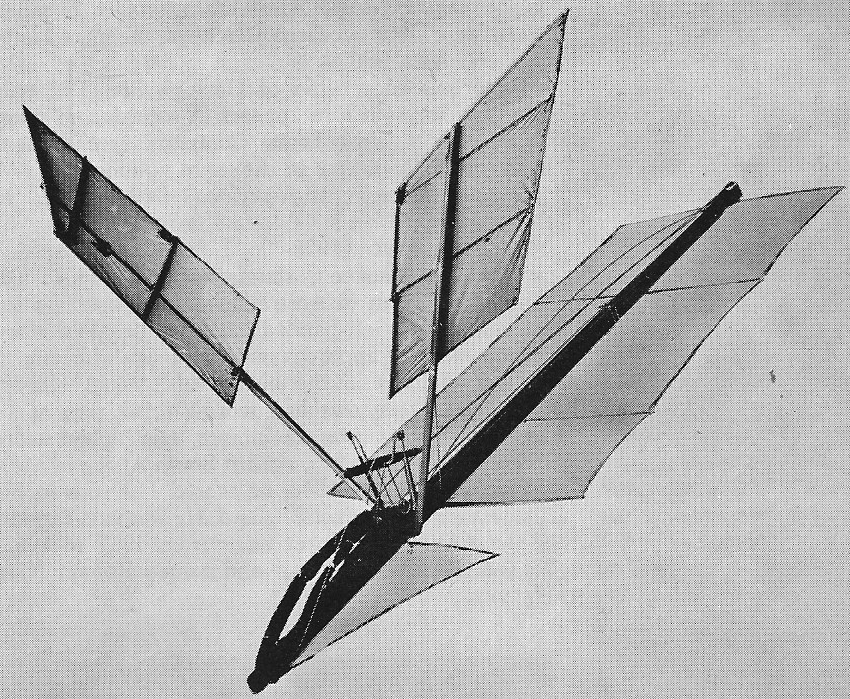
In 1893, Hargrave became interested in the way birds are sometimes lifted off the ground by the motion of the air above their wings. He experimented with kites, and discovered that a kite with a curved, convex upper surface pulled twice as hard as one with a flat surface. He went on to construct box kites, and at Stanwell Park, in New South Wales, Australia, in 1894, four box kites lifted him 5.3m above the ground.
Lawrence Hargrave, centre, flew his kites at Stanwell Park, NSW, in November 1894.
He built many models, usually of a small size and of simple construction. At first he concentrated on designing and testing model aeroplanes that were propelled by flapping wings. In 1890, he constructed a flapping wing model driven by compressed air that flew 112m. That model is now in the Museum of Applied Arts and Sciences in Sydney, Australia.
Hargrave also experimented with various methods of propelling aircraft. He built models powered by elastic bands, clockwork, compressed air, steam, and internal combustion engines. He invented a rotary engine driven by compressed air and later by steam. Similar engines driven by petrol powered many early aeroplanes. Hargrave was born at Greenwich, near London, and was educated at Queen Elizabeth’s Grammer School at Kirkby Lonsdale, in Westmorland. In 1866, he emigrated to Australia, and worked as an engineer with a shipping company. In the 1870s, he joined a series of expeditions to New Guinea. In 1877, he was elected a member of the Royal Society of New South Wales. In 1879, he became an assistant astronomical observer at the Sydney observatory. Five years later he resigned from this post to devote himself into the principles of aeronautics.
Hargraves also experimented with such things as water skis and hydroplanes.
Edwards was born in Fremantle, Western Australia, in 1914. He landed in Britain in 1936 and by May 1941, was commanding No.105 Squadron of the RAF.
During a daylight raid on the German port of Bremen on 4 July 1941, he led his formation overland at extremely low altitude, carrying away telegraph wires, passing under high tension cables, and flying through a balloon barrage. Near the target, every aircraft was hit and four were destroyed. Edwards pressed home the attack and withdrew the surviving aircraft without further loss.
After the war he held several appointments with the RAF until his retirement in 1963.
John Duigan (1882-1951) was born at Terang, Victoria, Australia, and later trained as a pilot and engineer in London.
Duigan designed and built the first Australian made aeroplane. He flew it on 16 July 1910, for a distance of 9m / 28 ft. He made 26 more flights in the aircraft, which was a biplane powered by a 20 hp engine built in Melbourne, Australia.
Paul Brickhill was born in 1916 in Melbourne, Australia. He served as a fighter pilot in World War II and was shot down.
As an author, Brickhill wrote ‘The Dam Busters’ (1951’0, which was later filmed. It was based on the RAF raids on the Mohne and Eder dams in May 1943. The book accounts the preparation of the special bombd usrd in the raid, the training for the attack, and the aircrews.
Other works include ‘Reach for the Sky’ (1954), a biography of sir-ace Douglas Bader, who flew despite he handicap of having artificial legs.
Pioneer pilot Born in 1915, Nancy Bird became the youngest woman in the British Empire to obtain a commercial pilot’s licence. She received the licence in 1934 at the age of 19.
Born in Kew, New South Wales, Australia, she had her first flying lesson from Charles Kingsford Smith in 1932 at age 17. She obtained her A Class flying licence the same year.
While operating a charter service, she assisted the Far West Scheme by flying nurses and patients. During World War II, she commanded the Woman’s Air Training Corps.
RAF Commander Born in 1910, at Toowoomba, Queensland, Australia, Bennett became an air vice marshal in the Royal Air Force in 1943. At that time, he was the youngest RSF officer to hold this rank.
He was educated at Brisbane Grammer School.
In 1938, he made a record crossing of the Atlantic Ocean. He also made the first non-stop flight from Britain to South Africa and from Britain to Canada. During World War II, he became area officer commanding the Pathfinder Force of the Royal Air Force Bomber Command.
Richard Pearce flew on 31 March 1903 near Temuka, New Zealand, after he had enlisted the help of Timaru engineer Cecil Wood to help with his lightweight motor. Wood had already been the first person in New Zealand to construct an aircraft motor that was three times lighter for its power output than similar car engines at the time.
Reich Marshal Herman Goring and General Adolf Galland
Hermann Goering was born in Rosenheim, Barvia in 1893, the fourth child of Dr. Heinrich Goering and Fanny Tiefenbrunn. Heinrich was a career diplomat in south-west Africa but returned to Germany for his birth. His parents returned to Africa leaving the new infant son with family for the next three years. The possessor of a raw native cunning rather than any great intellect, Goering was popular in moneyed social circles. Naturally egotistical and almost comically vain, the fame he attracted with his fighter pilot exploits during the First World War only served to convince Goering further of his own greatness. A talented pilot, he flew several missions with Manfred von Richthofen and later earned the Pour le Merite, Germany’s highest military decoration. By the war’s end, Goering was one of the most famous soldiers in Germany. His picture appeared in countless newspapers, he was profiled in several national magazines and a series of commerative postcards. By 1919, the flying aces were no longer in demand, Gangs of Bolsheviks roamed the city streets often heckling and sometimes attacking returned soldiers in uniform. Goering almost lost one of his prized medals in a Munich street scuffle. Disillusioned with Germany, the 26 year old Goering managed to secure a number of lucrative positions, working as a stunt pilot in Stockholm and an aircraft advisor to the Danish government. During this time he met and married Carin von Kantzow, from Sweden. During 1922 he met Adolf Hitler and saw the new National Socialist German Workers Party as a means to achieving personal power.
Adolf Hitler and Herman Goering
Goering quickly played a pivotal role in raising the Nazi profile and in the early years the Nazi party needed Hermann Goering far more than he needed it. As Minister for Economic Affairs, he gifted himself with the state-owned Hermann Goering Works – a stolen industrial complex employing some 700,000 workers (mostly from concentration camps) and with a capital base of more than 400 million Marks. His lavish lifestyle was largely funded by money he extracted illegally from German-owned industries under his control. Goering also directed the forced labour programs in the occupied territories under which hundreds of thousands of people were brutalised, starved and eventually killed. Georing survived a serious morphine addiction (which had arisen from treatment for an injury received during the Beer Hall Putsch) and the death of his wife from tuberculosis in 1931. His second wife was actress Emmy Sonnemann. The pressure of running the Luftwaffe took further toll on Goering.
At Nuremberg, Hermann Goering was found guilty of war crimes and crimes against humanity and was sentenced to be executed by hanging on 15 December 1946. Two hours before the scheduled execution he was found dead of cyanide poisoning. Goering’s body was cremated in Munich and his ashes, together with those of nine other high-ranking Nazi also executed on the same day were transported to a remote country road outside the city. There, in driving rain, the combined ashes were unceremoniously dumped in the road.