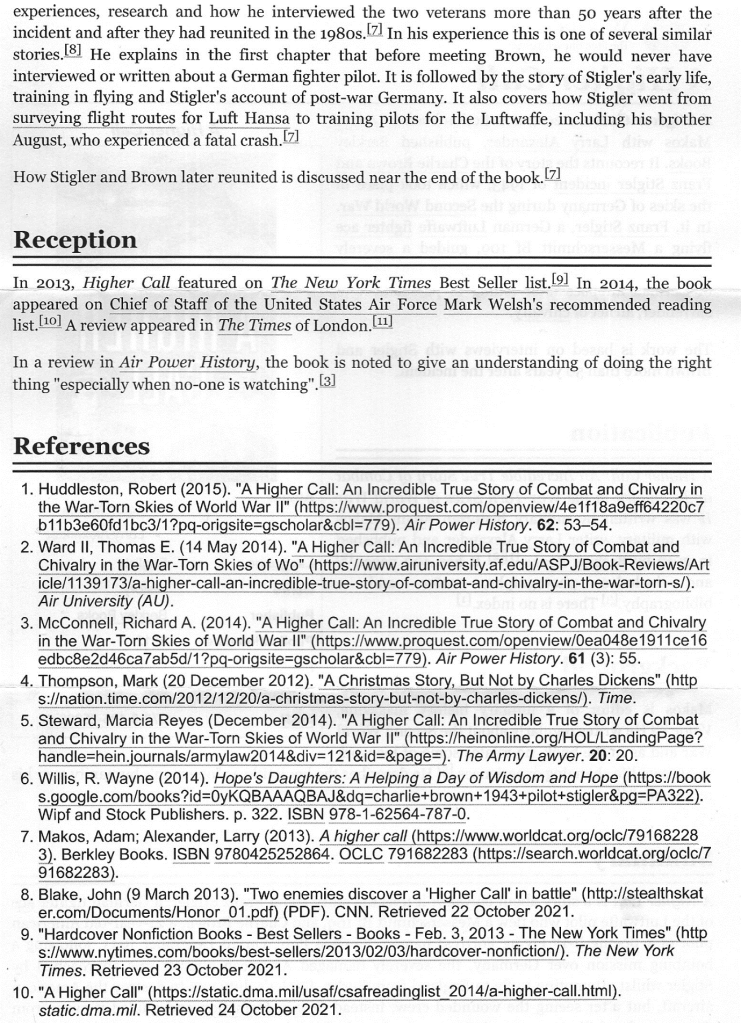
Back to Airbus A340
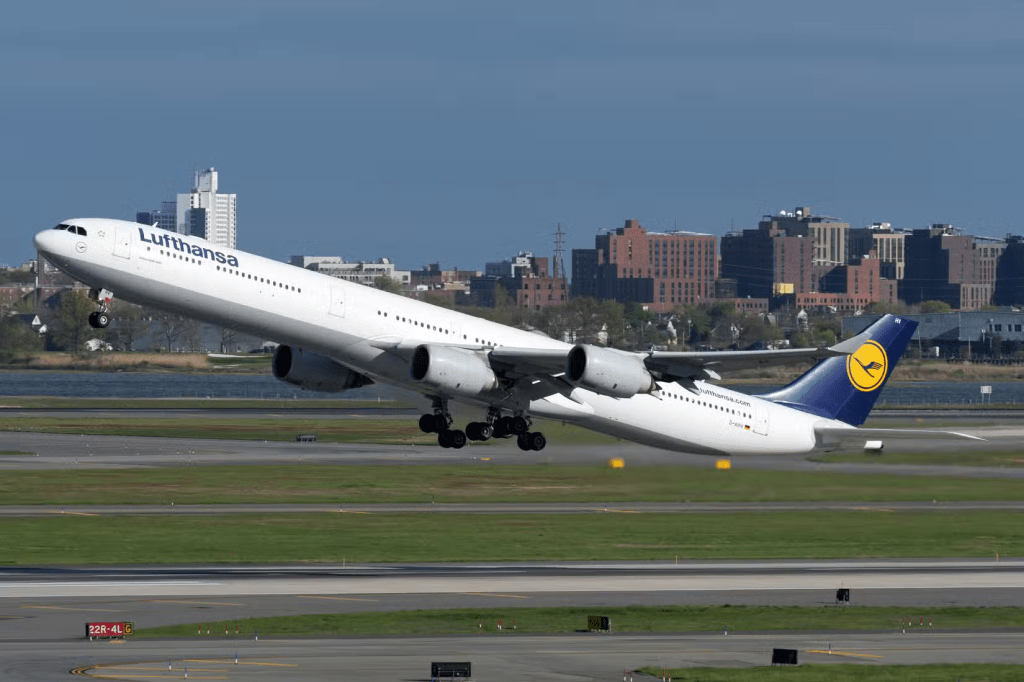

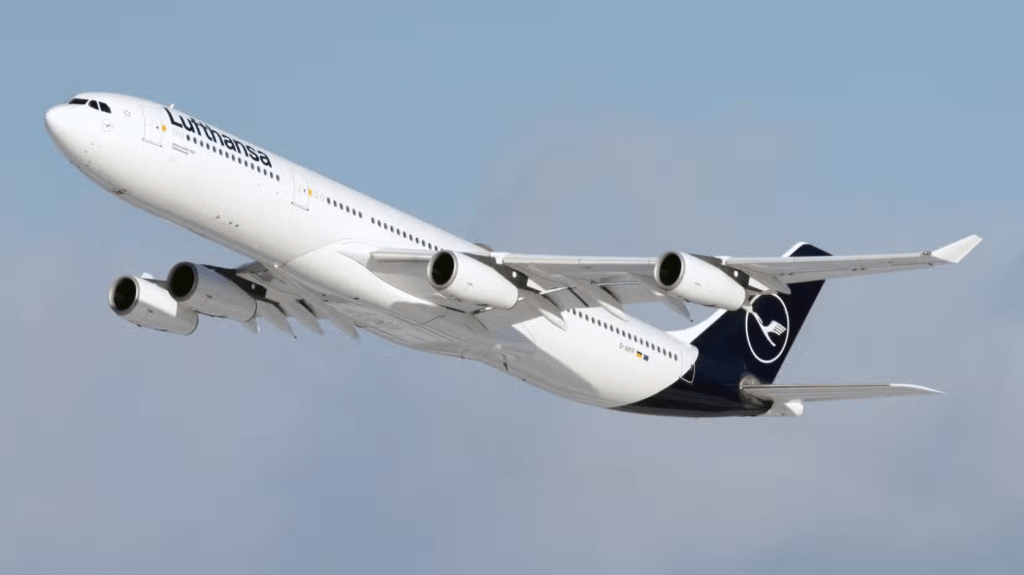
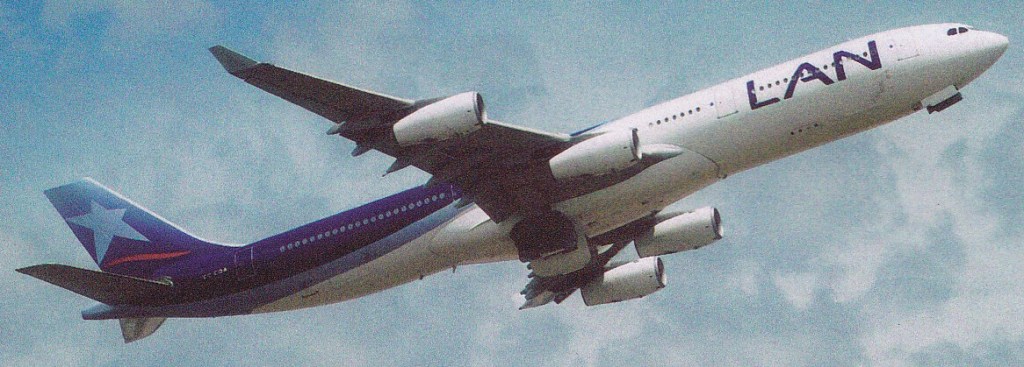
Back to Airbus A340
Possible MiG-9 / I-301 development aircraft?

Daher took over Quest Aircraft in 2019.

Cirrus first began development of the Vision Jet in the early 2000s. The Cirrus founders, the Klapmeier brothers, started the program in their offsite Duluth, Minnesota, facility. It was officially revealed to the public in June 2006 at the Cirrus Owners and Pilots Association meeting.
The first prototype of the Cirrus Vision Jet conducted its maiden flight in July 2008. However, Cirrus ran into difficulties financing the continued testing and development program of the light business jet, especially in 2009 during the height of the Great Recession.
However, after the slow development process in the early 2010s, a new Cirrus investor provided enough financing to complete the development of the aircraft. It was officially certified by the Federal Aviation Administration (FAA) in October 2016. Deliveries of the aircraft began later that same year.
The Vision Jet is a low-wing-configured aircraft with retractable tricycle landing gear. The aircraft’s airframe is also made entirely out of composite materials. It utilizes a single turbofan engine that rests on the top of the fuselage near the rear of the aircraft. Because of the unique engine configuration, the aircraft utilizes a V-tail.
The small cabin can fit up to seven total occupants in three rows. However, the third row is small and typically can only accommodate two adults or three children. Passengers enter the cabin through a clamshell door on the left-hand side of the fuselage.
Additionally, the Vision Jet is powered by the Garmin G3000 avionics suite, including the Garmin Emergency Autoland System. The Vision Jet also features the Cirrus Airframe Parachute System (CAPS).
Vision Jet
Engine: 1 x Williams FJ33 turbofan, 1,850 lb thrust
Wingspan: 38 feet 9 inches
Length: 30 feet 11 inches
Height: 10 feet 11 inches
Gross weight: 6,000 lb
Maximum speed: 311 knots (358 mph)
Range: 600 nm (690 miles)
Service ceiling: 31,000 feet

The Akaflieg Braunschweig SB-8 is an experimental, single-seat, high performance glider built in Germany in the 1960s, constructed largely from glass fibre skin over built up balsa wood structure. Two were built; the second of which was later fitted with a high aspect ratio (30:1) wing, becoming the Akaflieg Braunschweig SB-9 Stratus.
The Akaflieg Braunschweig or Akademische Fliegergruppe Braunschweig (English: The Brunswick Academic Flying Group) is one of fourteen German undergraduate student flying groups sponsored by their home technical university. Several have designed and built aircraft, often technically advanced and leading the development of gliders in particular. The Brunswick students had been exploring the use of GRP in a series of related gliders, beginning with the SB-6. From the SB-8 to the SB-10, wingspan and aspect ratio were progressively increased. The aspect ratio was increased from 23 to 36.6, resulting in aeroelastic problems.
The SB-8 is similar to the SB-7, which also had an aspect ratio of 23. It performed well but had difficult handling characteristics, attributed to its Eppler aerofoil section. The SB-8 has an 18 m (59 ft 1 in) wingspan, a two-piece wing of Wortmann FX 62 profile with an unswept leading edge, a slightly tapered center section, and more strongly tapered outer sections. It is built around a box beam, with balsa ribs and a torsion shell of glass fibre laid over balsa. The wing is shoulder mounted at 1.5° dihedral, with Schempp-Hirth airbrakes at mid-chord midway along the center section and ailerons on the outer panels. Both SB-8 built have camber flaps on the inboard wing panel and ailerons which are coupled to the flaps (flaperons) on the outboard panels.
The fuselage of the SB-8 is built with a fibreglass skin, over a balsa shell, with balsa vertical frames and two pine plywood main formers in the region between the wings. The nose is pointed and slightly drooped, with a short, single piece, canopy just ahead of the wings, tapering gently aft to a straight tapered balsa/GRP T-tail unit. The tailplane carries a conventional single-piece elevator and the rudder is fabric covered. On the ground the SB-8 is supported by a retractable, unsprang monowheel undercarriage, assisted by a tail bumper.
The first flight was made from Brunswick airport on 25 April 1967; testing confirmed that the glass fibre structure was too flexible and at high speeds the SB-8 exhibited wing flutter, limiting its maximum permitted speed to 170 km/h (105.6 mph; 91.8 kn). The low wing loading also limited its smooth air cross country speed as there was no provision for ballast. Later, removable steel tubes filled with lead pellets were added to the wing roots of the SB-8 V1 to increase wing loading. A second aircraft, SB-8 V2, was therefore built with a stiffened, heavier wing and provision for water ballast, which addressed both aero-elasticity and wing loading problems, allowing the glider to fly safely, without flutter, at 200 km/h (124.3 mph; 108.0 kn).
The SB-8 V2 had shown that glass-fibre wings could be made stiff enough to avoid aeroelastic flutter problems and that the higher aspect ratio produced the expected improvement in glide angle. It was natural for the next Akaflieg Braunschweig design to have a wing of greater span, replacing the wing of the SB-8 V2 airframe with a four-panel wing of similar construction but 22 m (72 ft 2 in) span. At the time of its first flight in January 1969 the SB-9 had probably the greatest span of any glider then flying, though the 22 m (72 ft 2 in)-span Holighaus Nimbus 1 flew only three days later. The increase in aspect ratio over the SB-8 increased the measured best glide ratio from 40:1 to 46:1 and decreased the measured minimum sink rate from 0.61 m/s (120.08 ft/min) to 0.51 m/s (100.39 ft/min). The new wing took advantage of the flexibility of glass fibre to implement elastic flaps. The intention was to avoid the interruption to the wing profile at the hinge, particularly on the critical upper surface, and leakage through it by bending the upper surface instead. This method had been used earlier in the wooden-winged HKS-1 glider of 1953.
Both SB-8s competed at the German National Championships of 1968, Wolfgang Beduhn finishing fifth in the V1 and Helmut Treiber seventh in the V2. The V2 went on to become the SB-9, but the V1 remained in regular use at Brunswick until 1989. It remained airworthy after that, though flown less often, and was still on the German Civil Aircraft register in 2010.
The SB-9 was used by the Akaflieg students in competitions between 1969 and 1971. It also gave them the opportunity to film and study the alarming motions of the wing when fluttering, recording their observations on film in slow motion and in the air. Two antisymmetric, odd, sine-like lateral displacement modes were observed at 90 km/h (55.9 mph; 48.6 kn). The fundamental mode was seen, at a frequency of 3.3 Hz but at 140 km/h (87.0 mph; 75.6 kn) the wing oscillated at 5.8 Hz in a second harmonic mode. During these largely vertical excursions, the wing also twisted and its overall motion excited vibrations in the rear fuselage and tail unit. The flutter problems were addressed by mass-balancing, the ailerons, and by a span reduction to 21 m (68 ft 11 in).
Neil Armstrong was given the opportunity to fly the SB-8 large sailplane, innovative for its use of structural composite materials.
The career of the SB-9 ended in 1972, when it was decided to use its wing on the SB-10 two-seater, a new design with a very different fuselage and the span increased still further with an 8.7 m (28t ft 7 in) centre section.
Variants
SB-8 V1
Original aircraft, empty weight of 260 kg (570 lb) and a maximum take-off weight of 365 kg (805 lb).[3] Flutter restricted maximum permitted speed to 170 km/h (110 mph; 92 kn).
SB-8 V2
Stiffened wing, weights increased by 40 kg (88 lb). Provision for water ballast, maximum permitted speed increased to 200 km/h (120 mph; 110 kn)
SB-9 Stratus
The SB-8V2 was modified with a four-part wing of 22 m (72 ft 2 in) span, fitted with elastic flaps. SB-9 Stratus was first flown in January 1969. It is Empty weight, 325 kg (717 lb), maximum in flight weight, ballasted, 421 kg (928 lb). Flutter problems were tackled with a span reduction to 21 m (68 ft 11 in) and mass-balancing the ailerons.
Crew: 1
Length: 7.505 m (24 ft 7 in)
Wingspan: 18 m (59 ft 1 in)
Wing area: 14.1 sq.m (152 sq ft)
Aspect ratio: 23
Airfoil: root:Wortmann FX 62-K-153, mid:Wortmann FX 62-K-131, tip:Wortmann FX 60-126
Empty weight: 301 kg (664 lb)
Gross weight: 403 kg (888 lb)
Max takeoff weight: 451 kg (994 lb)
Never exceed speed: 200 km/h (120 mph, 110 kn)
Maximum glide ratio: 41.6 at 85 km/h (53 mph; 46 kn)
Rate of sink: 0.61 m/s (120 ft/min) at 88 km/h (55 mph; 48 kn) at 27.7 kg/m2 (5.7 lb/sq ft) and 385 kg (849 lb)
Wing loading: 28.6 kg/m2 (5.9 lb/sq ft)
The Continental CD-170 engine burns Jet A-1, Jet A, and diesel fuel.
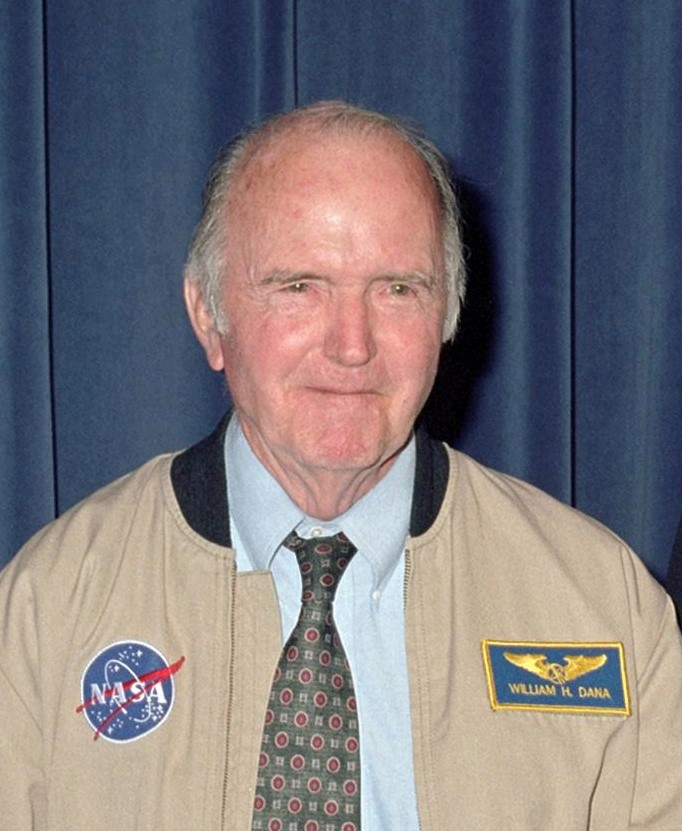
NASA Test Pilot
William Harvey Dana (3 November 1930 – 6 May 2014)

William Harvey Dana was born 3 November 1930 at Pasadena, California, the first of two children of Harvey Drexler Dana, a geologist, and Rose Frances Jourdan Dana. Dana grew up in Bakersfield, California. He graduated from Bakersfield High School in 1948.

Bill Dana received an appointment as a cadet at the United States Military Academy, West Point, New York. He graduated 1952 and was commissioned as a second lieutenant in the United States Air Force. Lieutenant Dana served until 1956.
In 1958, Dana earned a Master of Science degree in Aeronautical Engineering from the University of California, Los Angeles, California.
On 1 October 1958, Dana began his 40-year career at the NASA High-Speed Flight Station, Edwards Air Force Base, California, as an Aeronautical Research Engineer. (This was the day that the National Aeronautics and Space Administration was established, making Dana the first new employee to be hired by NASA.) He was assigned to work on an X-15 performance simulator, and also to the North American XF-107 stability research program.
In September 1959, Bill Dana transferred to the Flight Operations Branch. One of his early projects was the North American Aviation JF-100C variable stability research aircraft.

In 1962 Bill Dana married Miss Judi Miller. They would have four children, Sidney, Matt, Janet, and Leslie.
Dana made his first flight in the North American Aviation X-15 hypersonic research rocket-plane on 4 November 1965. He reached a maximum speed of Mach 4.22, and a peak altitude of 80,200 feet (24,445 meters). He made a total of sixteen flights in the X-15s. Dana’s highest speed was Mach 5.34, 4 August 1966, and his highest altitude, 306,900 feet, (93,543 meters), on 1 November 1966. On 24 October 1968, Dana flew the final X-15 flight of the NASA X-15 Hypersonic Research Program.

Bill Dana also flew NASA’s experimental “lifting body” aircraft. On 27 February 1970, he flew the Northrop HL-10 lifting body to 90,030 feet (27,441 meters), the highest altitude reached during its flight test program.


He made the first flight of the Northrop M2-F3, 2 June 1970.
On 23 September 1975, Bill Dana made the final powered flight of the Martin Marietta X-24B lifting body aircraft.

Bill Dana was assigned as the Chief Pilot of the NASA Dryden Flight Research Center, and in 1986, became the Assistant Chief Flight Operations Division at Dryden.

Dana stopped test flying after 1993, when he was appointed Chief Engineer, NASA Dryden Flight Research Center. In 1997, he was awarded the NASA Distinguished Service Medal. He retired from NASA in 1998.
Bill Dana flew more than 8,000 hours in over 60 different aircraft types.

In 2000, NASA awarded Dana its Milton O. Thompson Lifetime Achievement Award, and on 23 August 2005, he was presented NASA’s Civilian Astronaut wings for his two X-15 flights above 50 miles.
William Harvey Dana died at Phoenix, Arizona, 6 May 2014, at the age of 83 years. He was buried at the Joshua Memorial Park in Lancaster, California.