In July 2010, 82 year-old Arnold Ebneter of Woodinville, Washington State, flew his home-made lightweight airplane, the E-1, non-stop from Everett, Washington State, to Fredericksburg, Virginia – a journey of 2327 mi / 3746 km – in 18 hours 27 minutes,
Author: Terry
Hess, Rudolf
WW2 pilot
On 10 May 1941, the Nazi party’s deputy leader Rudolf Hess flew himself by Messerschmitt Me 110 from Germany to Scotland with a ‘peace offer’ for Churchill’s government. The offer was rejected – it would have amounted to a virtual capitulation in the longer term – and Hess was arrested.
Hess had acted on his own. He had lost power in the Nazi leadership and planned his flight to restore it.
Hess was tried at Nuremberg War Crimes Tribunal after Germany’s final defeat, and sentenced to life imprisonment. He died in Spandau prison in August 1987, at the age of 93.
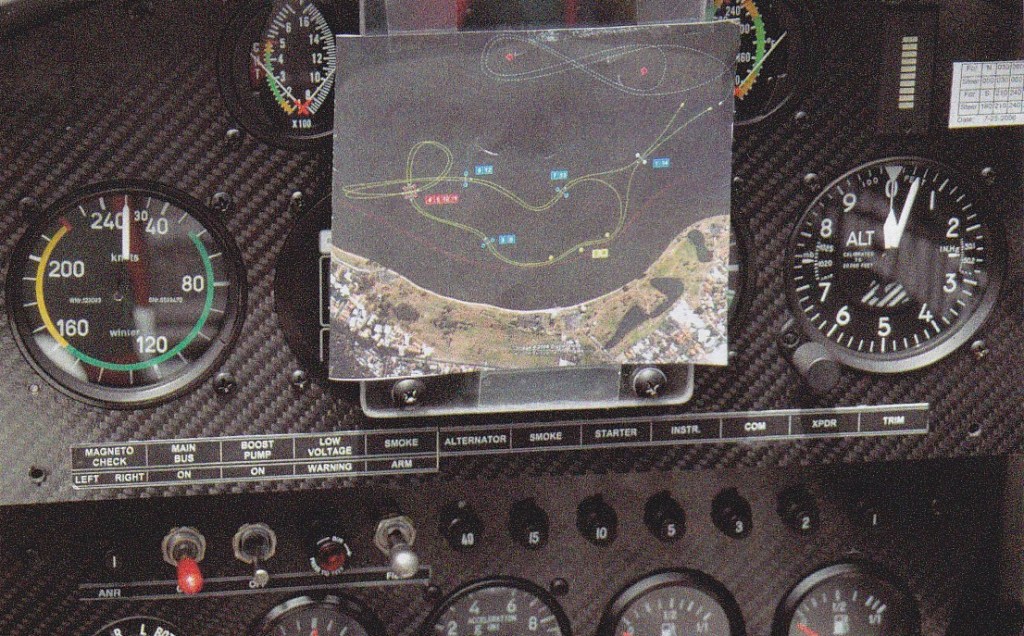
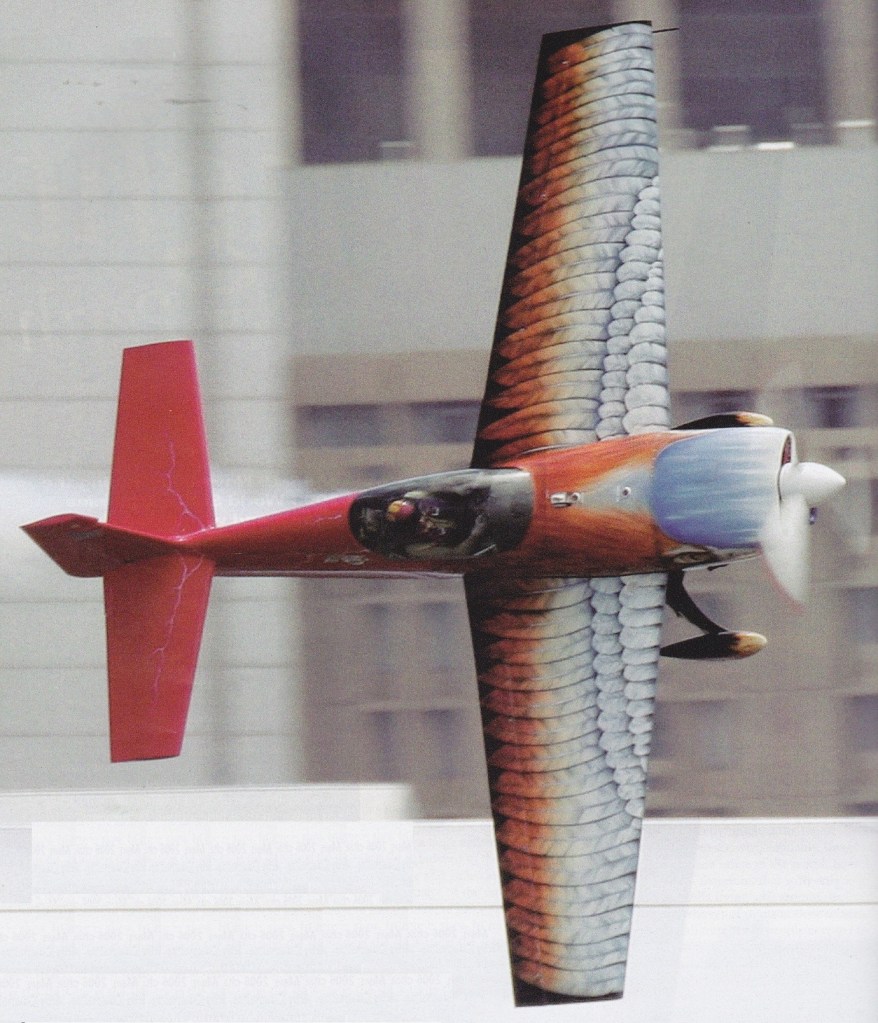
Extra EA 300 / Extra 330 Gallery
Back to Extra EA 300 / Extra 330
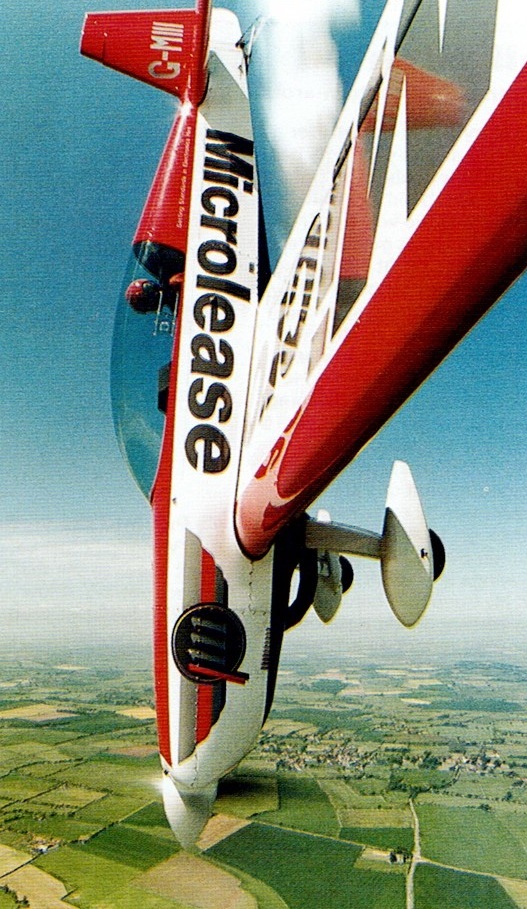
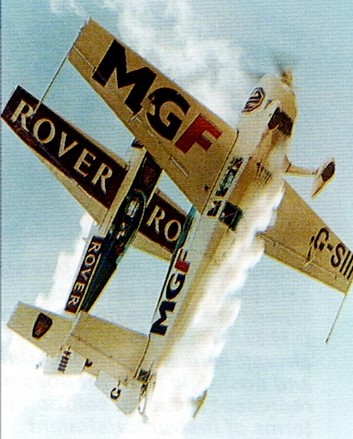
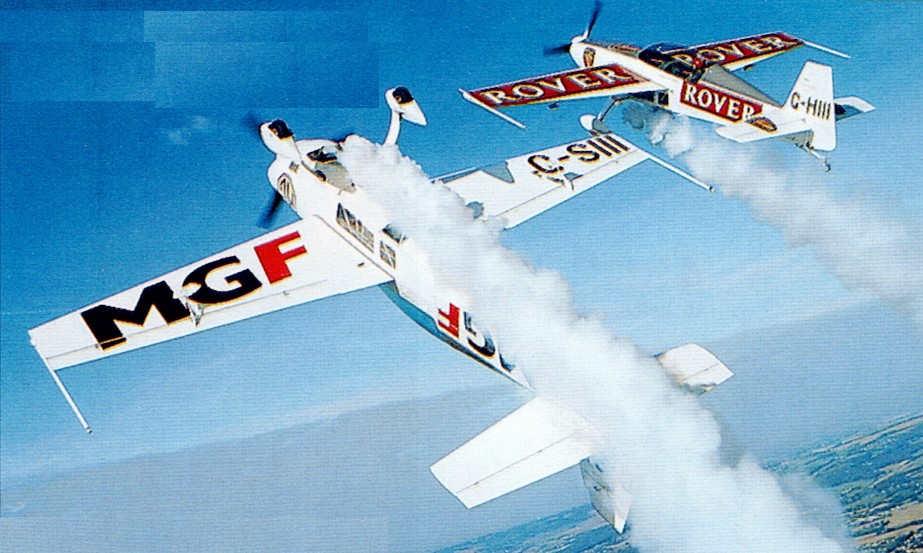



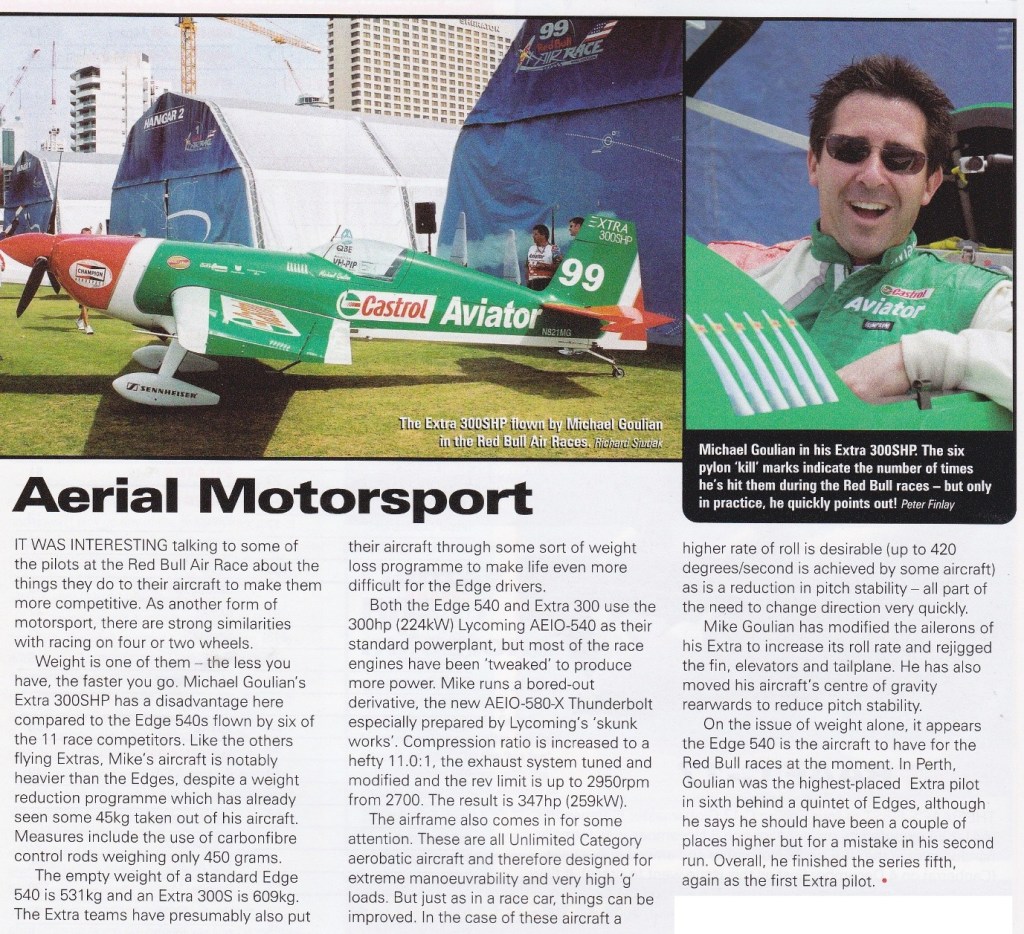
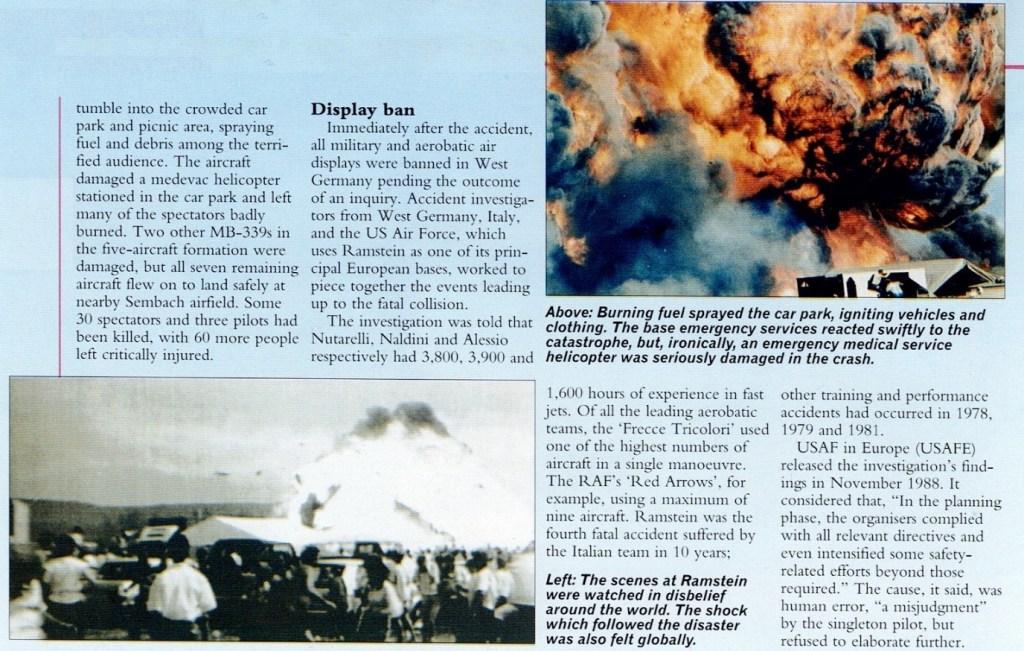
Catastrope at Ramstein


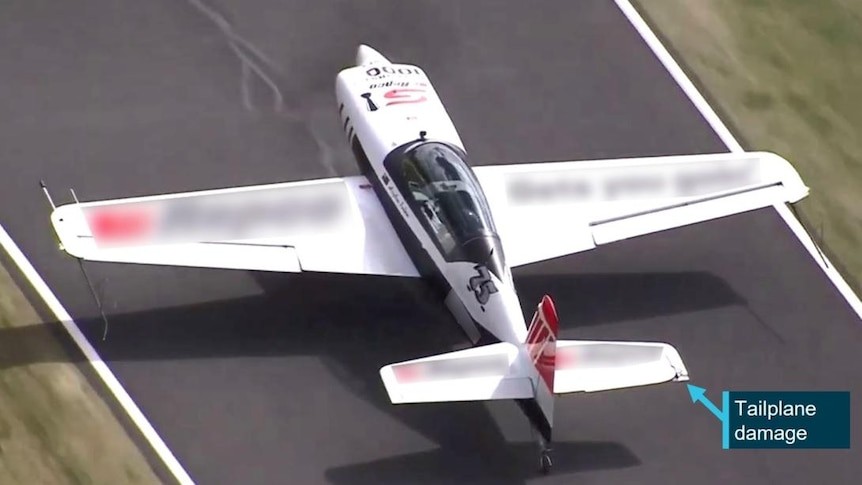
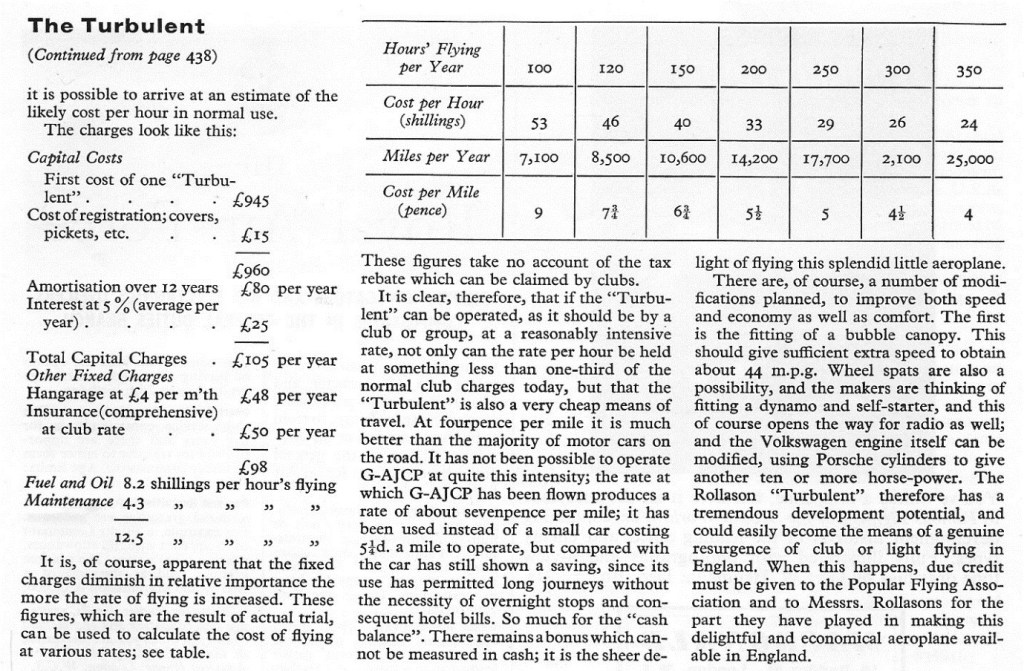
Druine D.31 Turbulent Article


Baker Super Cat Gallery
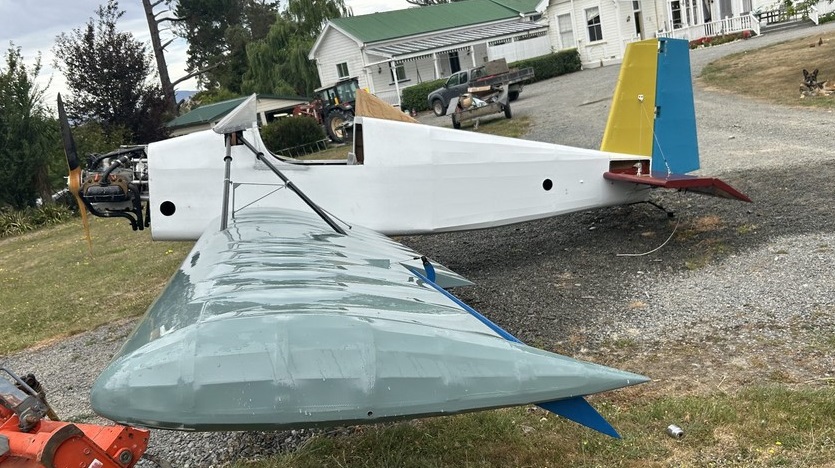

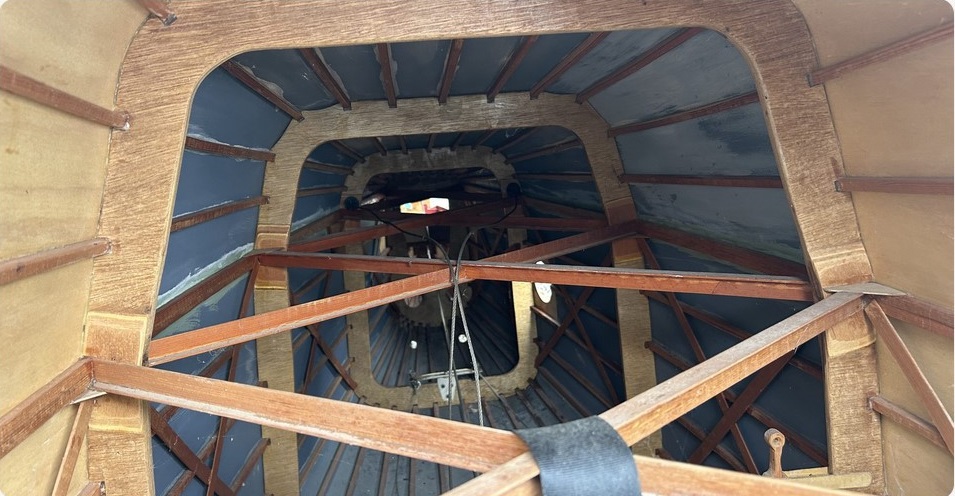


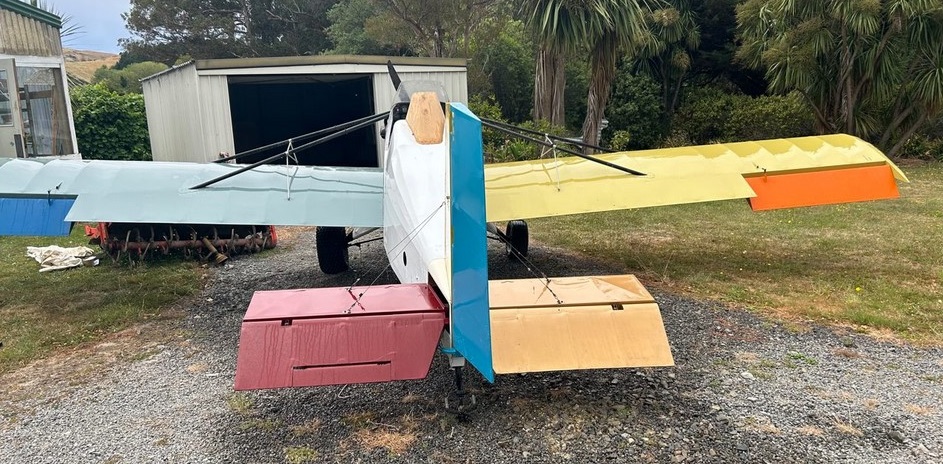

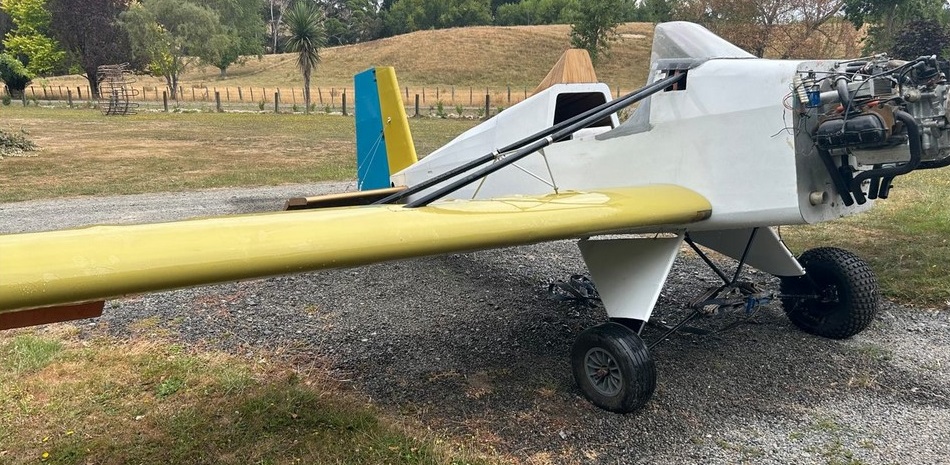
Baker Super Cat


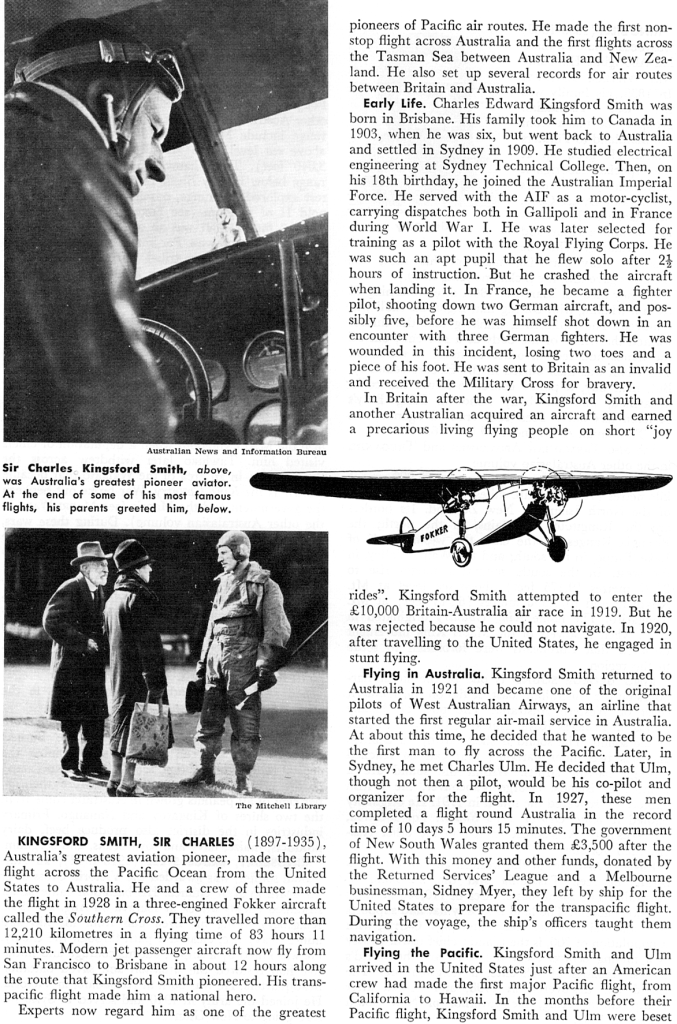
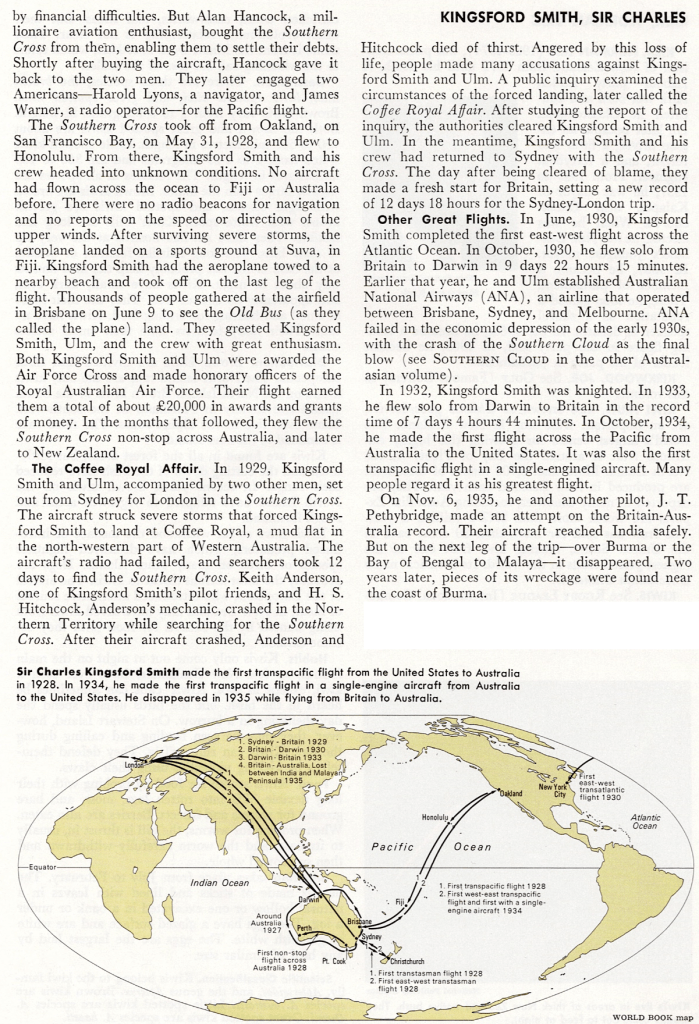
Kingsford-Smith Article
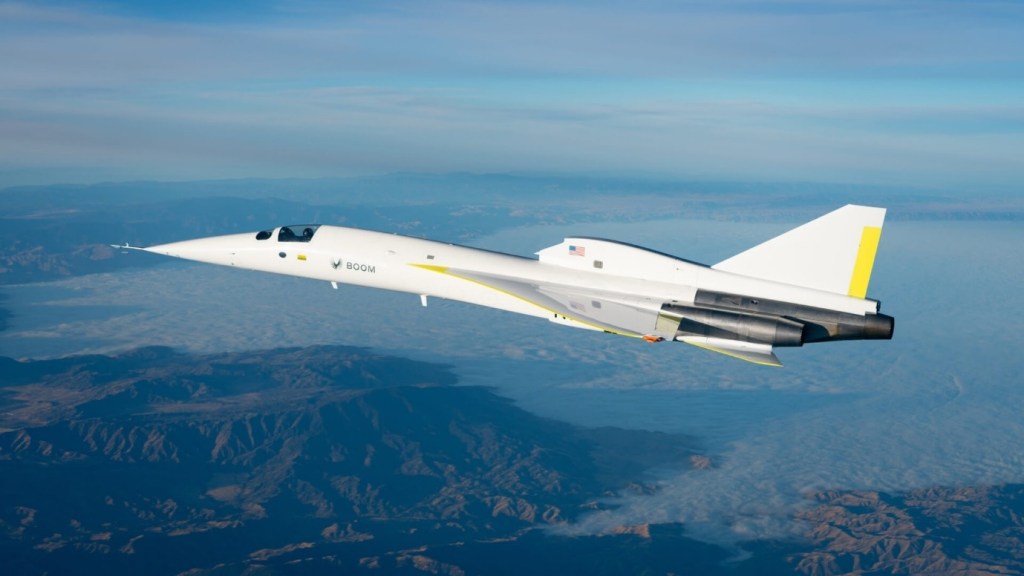
Boom XB-1

The XB-1 jet, the company’s prototype, was designed to bring back supersonic travel in a more efficient and accessible way, aiming to halve flight time from the traditional eight hours to just 3.5 hours.
After starting its tests in March 2024, the XB-1 reached a record speed of Mach 0.87 and reaching 27,716 feet of altitude during its ninth test flight.
Modifications to the vibration system made after the previous flight helped make the jet’s progress safer and more efficient.
The test pilot is Tristan Brandenburg.

After years of testing and refinement, a pilot flying the aerospace company’s XB-1 scale prototype finally broke the sound barrier during a livestream event—not once, not twice, but three times.
XB-1 took off from the runway at Mojave Air & Space Port near Barstow, California at about 11:21 AM EST. From there, Boom Supersonic’s Chief Test Pilot Tristan “Geppetto” Brandenburg ascended in the experimental plane to an altitude of 34,000 ft before turning left and beginning its supersonic test. After successfully achieving Mach 1.1 at 11:32 PM EST, Brandenburg continued XB-1 on its deceleration and descent path. At one point, however, XB-1 briefly broke the sound barrier once again.
“Alright, knock it off, knock it off,” someone in Boom Supersonic’s flight control room could be heard joking during the livestream.
XB-1 surpassed Mach 1 yet again a few minutes later before landing 11:54 PM EST after a total flight time of 33.49 minutes.
Tuesday’s success comes less than a year after the demonstrator aircraft’s debut flight on March 22, 2024. The XB-1 conducted another 10 flights prior to today’s Mach 1 breakthrough. Its most recent took place on January 10, when Brandenburg topped out at Mach 0.95 at an altitude of 29,481 ft (575 knots true airspeed, or roughly 661 mph).
At almost 63-feet-long, the XB-1 is about one-third the size of Overture, Boom Supersonic’s proposed commercial jet.
XB-1’s first flight was originally scheduled for 2021, but required pushbacks to address various engineering and design concerns.
Bentley
By 1931, during the Great Depression, Bentley was having financial difficulties. When funds ran out in 1931, the receivers were negotiating with D.Napier & Sons Ltd for the sale of the remains of Bentley. However, Rolls-Royce put in a secret bid through a Liechtenstein company, and secured Bentley Motors for £125,256. For this, Rolls-Royce got the factory equipment, a number of incomplete car chassis, and the services of Walter Bentley for three years.

