The F.X and its variants were developed and built in the Factory at Hasbrouck Heights under the guidance of the chief designer, Mr Alfred Gassner. In April 1927 the first F.X made its debut. Western Air was first to buy, with an order for three of these 12 seat airliners.
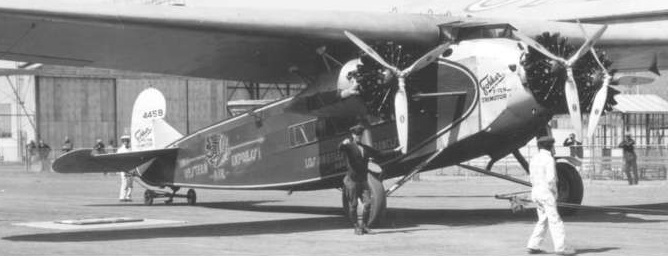
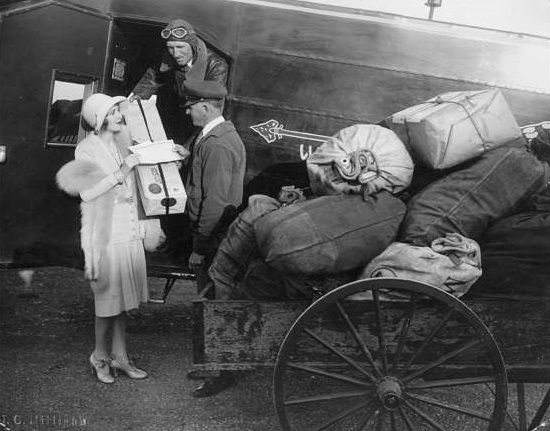
Fokker F-10 Western Air Express 1928.
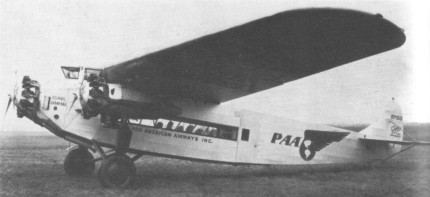
The Fokker F.XA was a bigger version of the 12 seater F.X airliner. It had seats for 14 passengers and was used on American routes. Pan American Airways flew F.XAs between Key West and Havana, Cuba, a route which included 100 miles over the sea.
Fokker F-10 monoplane operated by Western Air Express.
The US Army used obtained one as the C 5 in 1927 and one flew with the USMC as the RA 4, also in 1927.
USA Antony Fokker’s Atlantic Aircraft Corporation was reorganized on September 16,1925, inheriting premises at Hasbrouck Heights, Teterboro, and the orderbook for the Noorduyn-designed Universal. Factory at Passaic, New Jersey, opened 1927. Glendale, West Virginia, factory opened August 1928. General Motors Corporation acquired a 40 pe cent holding May 1929; Fokker resigned July 1931. Improved Super Universal six-seater introduced 1927; 123 built. Three-engined 12-passenger F.10 flown April 1927; 65 built, first three for Western Air Express, forerunner of TWA. Followed by 59 14-seat F.IOAs. Fokker 32, first US four-engined airliner, flown 1929, having 32 seats and powered by two pairs of Pratt & Whitney Hornet engines in tandem with tractor and pusher propellers; ten built. Military designs included 1929 0-27 observation aircraft, of which 14 built.
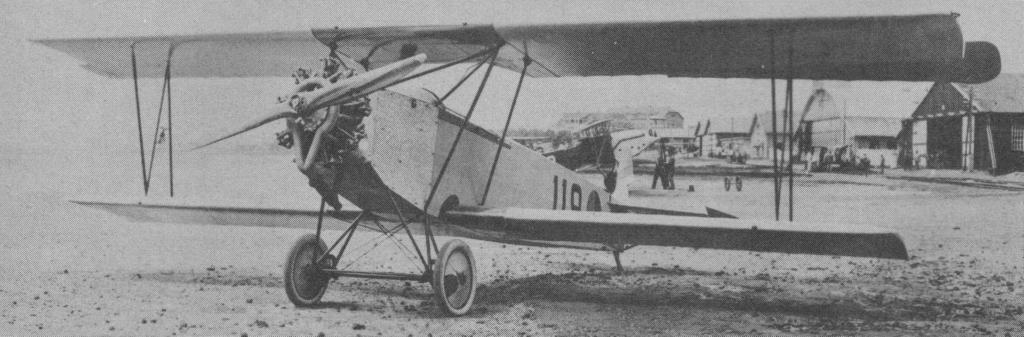
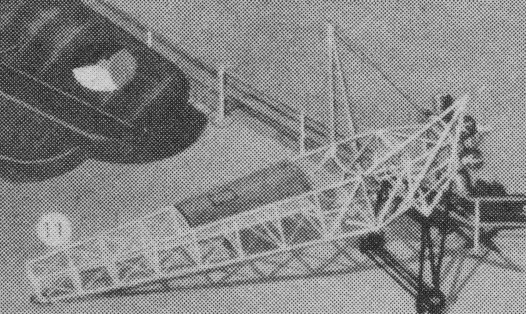
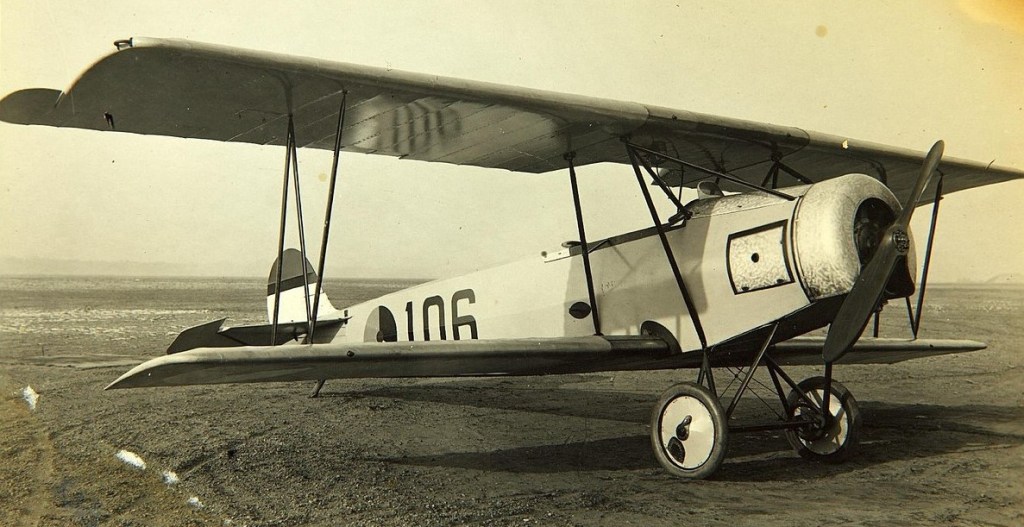
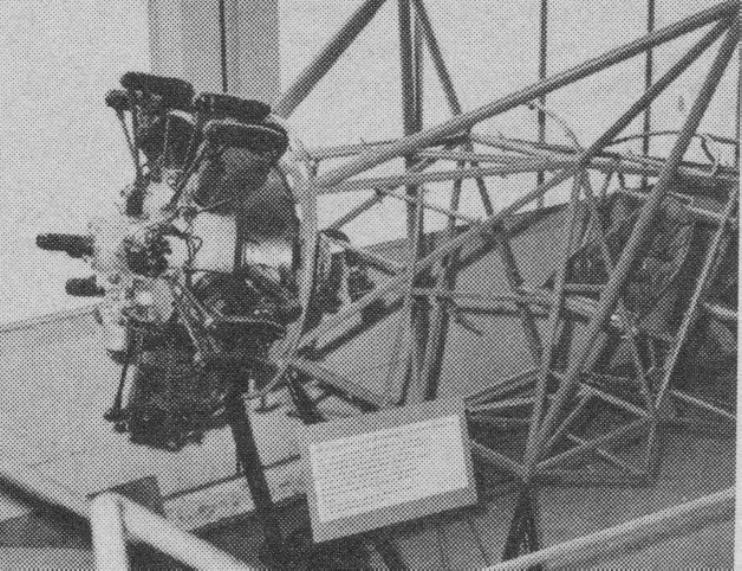
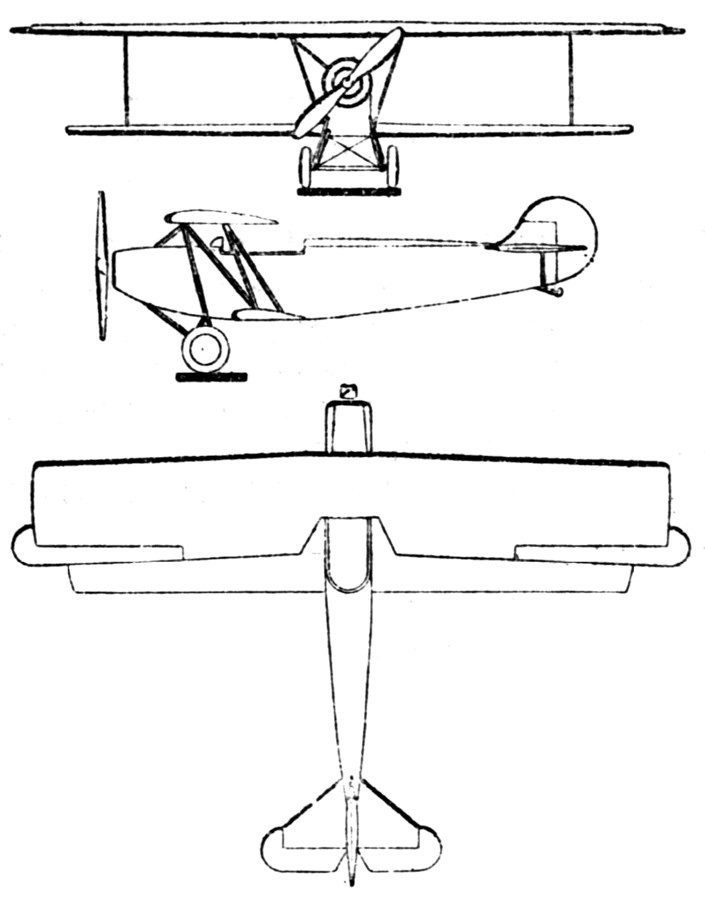
The Fokker S.IV was a military trainer aircraft produced in the Netherlands in the mid-1920s. It was a conventional, single-bay biplane with staggered wings of unequal span braced with N-struts, essentially a radial-engined development of the S.III. The pilot and instructor sat in tandem, open cockpits and the undercarriage was of fixed, tailskid type with a cross-axle between the main units.
The Royal Netherlands Army Aviation Group purchased 30 examples and used them right up to the German invasion of the Netherlands in 1940. On 14 May that year, a few surviving S.IVs escaped to France alongside some S.IX trainers, but never flew again.
The S.IV could be powered by a variety of engines in the 75–97 kW (100–130 hp) range, including 110 hp (82 kW) Siemens-Halske Sh 11, 110 hp (82 kW) Le Rhône 9J, 130 hp (97 kW) Bristol Lucifer, 130 hp (97 kW) Armstrong-Siddeley Mongoose, 110 hp (82 kW) Oberursel UR.II or the 130 hp (97 kW) Clerget 9B.
Fokker S.IV Powerplant: 1 × Le Rhône 9J, 82 kW (110 hp) Propeller: 2-bladed fixed pitch Wingspan: 11.17 m (36 ft 8 in) Wing area: 27.55 m2 (296.5 sq ft) Length: 8.55 m (28 ft 1 in) Height: 3.15 m (10 ft 4 in) Empty weight: 650 kg (1,433 lb) Gross weight: 1,000 kg (2,205 lb) Maximum speed: 160 km/h (99 mph, 86 kn) Stall speed: 65 km/h (40 mph, 35 kn) Service ceiling: 4,000 m (13,000 ft) Time to altitude: 1,000 m (3,300 ft) in 6 minutes Wing loading: 36.29 kg/m2 (7.43 lb/sq ft) Power/mass: 0.0830 kW/kg (0.0505 hp/lb) Crew: 2
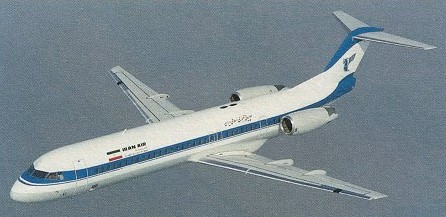
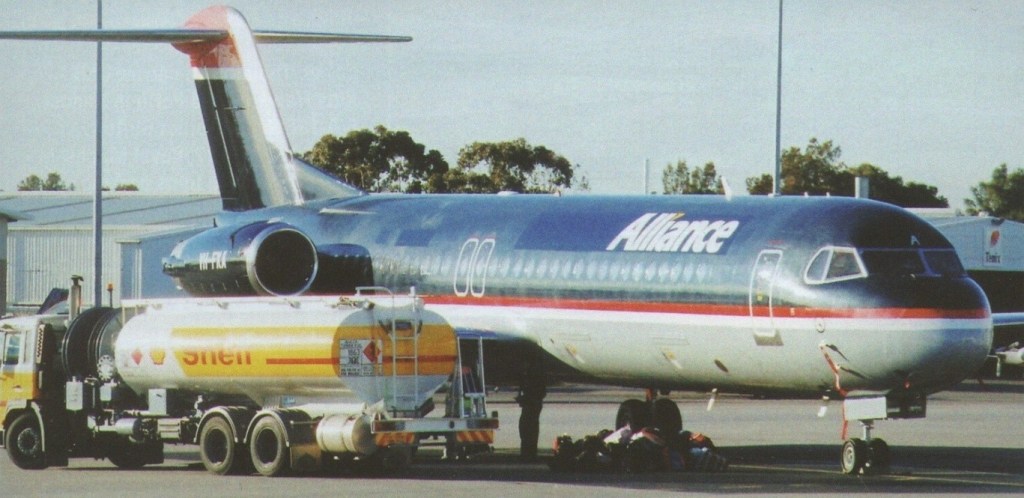
When Fokker announced a successor to the F27 in November 1983, they also launched a similar follow-on to the Fellowship jet airliner. Derived from the proven F28 Mk 4000 airframe, the new aircraft was designated the Fokker 100 roughly reflecting the number of passenger seats offered. Re-engined with new-technology fuel-efficient Rolls-Royce Tay turbofans and with a longer fuselage and redesigned and extended wings, other features include modernised systems incorporating a ‘glass cockpit’ and a revised cabin interior. Production is shared with Deutsche Airbus, Shorts, Grumman, Rolls-Royce and Dowty Rotol, with assembly and flight testing carried out by Fokker at Schiphol. IPTN of Indonesia also supply components.
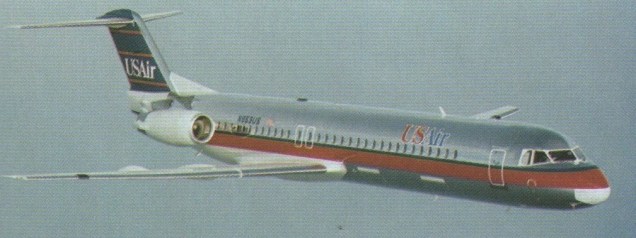
The F100 flight test programme involved two prototypes, the first making its maiden flight on 30 November 1986 followed by the second on 25 February 1987. Certification of the Tay 620-15 powered version was achieved in November 1987 and first customer delivery was made to Swissair in February 1988. The uprated Tay 650 version, ordered by US Air was certificated in July 1989 and delivered to the airline the same month. By mid-1991 Fokker had received orders for 232 F100s and had delivered 70. Options available on Tay 650 aircraft from 1993 include a higher gross weight of 45810kg and an integral wing centre-section fuel tank giving improvements in range between 160 and 450km. Another option available from 1994 will be a quick-change version equipped with a cargo door 3.4 by 1.9m installed on the port side of the fuselage ahead of the wing, together with a specially designed cabin interior. Conversion time (by three men) is claimed to be 20 minutes, enabling 88 passengers to be carried by day and an 11,500kg payload by night over 2800 km.
On 24 July 1989 USAir was the launch customer for the Fokker 100.
Rekkof Restart was formed with intention of restarting production of the Fokker 50 and 100, having bought tooling and rented the production factory in 1998.
Engine: 2 x Rolls-Royce Tay 650-15 turbofans, 6849kg Max take-off weight: 43090 kg / 94998 lb Empty weight: 24375 kg / 53738 lb Wingspan: 28.0 m / 91 ft 10 in Length: 35.5 m / 116 ft 6 in Height: 8.5 m / 27 ft 11 in Wing area: 93.5 sq.m / 1006.42 sq ft Cruise speed: 837 km/h / 520 mph Ceiling; 10670 m / 35000 ft Range: 2956 km / 1837 miles Passengers: 107
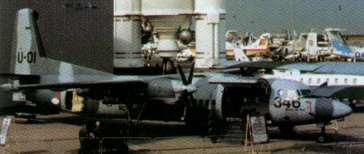
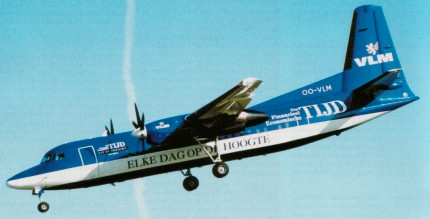
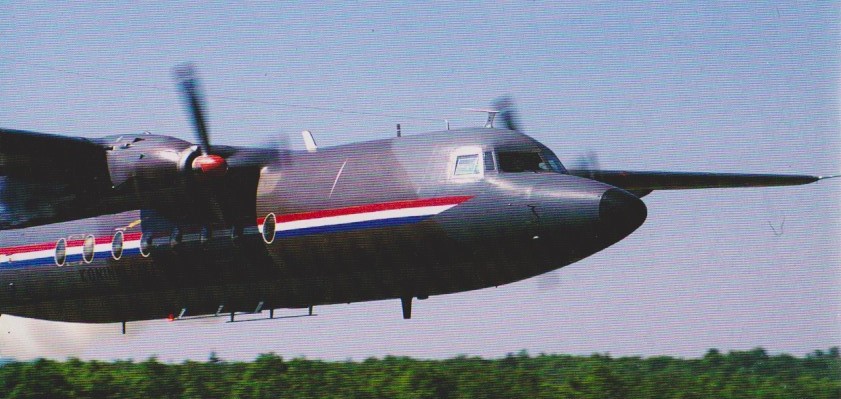
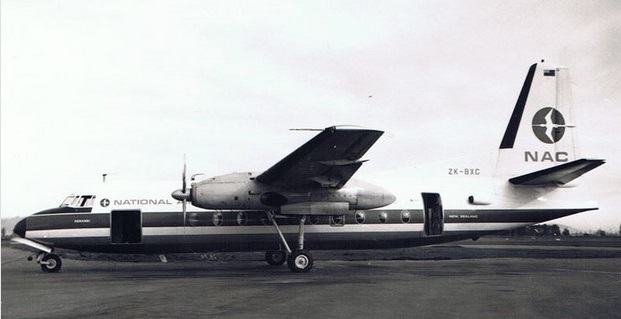
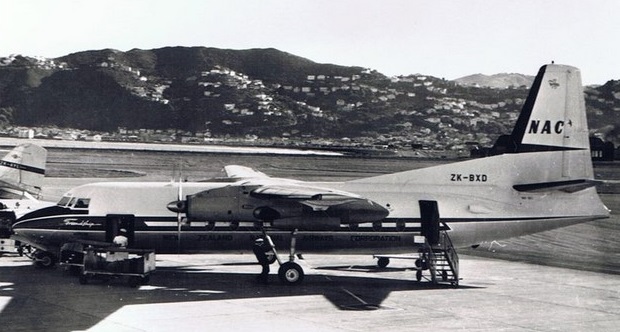
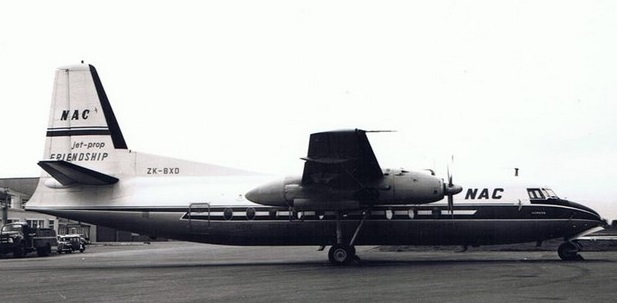
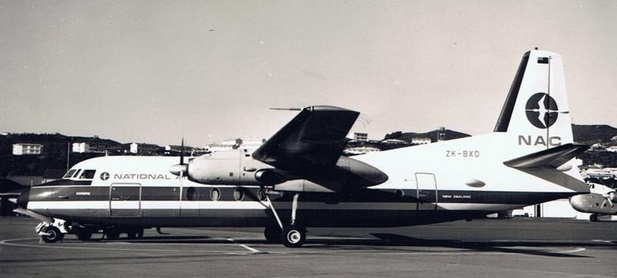
During celebrations held in November 1983 to mark the 25th anniversary of the F27 entering airline service, Fokker announced the launch of a 50-seat follow-on to be known as the Fokker 50. Based on the F27 airframe, but fitted with more fuel-efficient Canadian-built P&W 125B turboprops engines, 12 foot diameter, six-bladed DowtyRotol ‘quiet’ propellers, improved aerodynamics, a redesigned cockpit incorporating digital avionics CRT “glass” cockpit and a new cabin interior, the external differences include extra windows, twin-nosewheel landing gear and upturned wingtips. Much use is made of lighter composite materials, and F50 commonality with the F27 is only 20%.
Production is shared with Dassault, Fuji Heavy Industries, Deutsche Airbus, SABCA, Dowty Rotol and Pratt & Whitney Canada with final assembly, systems integration and flight test carried out by Fokker at Schiphol. The first two prototypes were conversions of F27 airframes, with the first (PH-OSO), flying on 28 December 1985 followed by (PH-OSI) on 30 April 1986. The first production aircraft (PH-DMO) flew on 13 February 1987 and first delivery made (to DLT), on 7 August 1987. By mid-1991 Fokker held firm orders from 18 customers for 132 Fokker 50s, and had delivered 116. The standard production variant was the 46/50-seat Fokker 50-100 and the 1998 build rate was 30 aircraft per year. Four maritime/surveillance versions of the PW124-powered Fokker 50 supersed the F.27 Maritime models. The Maritime Mk.2 is the standard unarmed maritime patrol version for coastal surveillance and SAR, while the Maritime Enforcer Mk.2 is similar but has provision for external stores to allow ASW/ASV missions to be flown. Both variants are fitted with a Litton APS-140(V) or APS-504(V)5 360o scan search radar. The Enforcer also has a sonobuoy processing system. Intended for border surveillance and stand-off reconnaissance, the Sentinel Mk.2 has a Motorola APS-135(V) slide-looking airborne radar (Slar) under the fuselage. Other systems include a Doppler moving target indicator, a Litton/Itek long-range oblique photography (Lorop) system, and an optional computerised intelligence gathering system. The Kingbird Mk.2 is an AEW version.
Rekkof Restart was formed with intention of restarting production of the Fokker 50 and 100, having bought tooling and rented the production factory in 1998.
Engines: 2 x Pratt & Whitney Canada PW125B turboprops, 1864kW Max take-off weight: 18990 kg / 41866 lb Empty weight: 12570 kg / 27712 lb Wingspan: 29.0 m / 95 ft 2 in Length: 25.2 m / 82 ft 8 in Height: 8.3 m / 27 ft 3 in Wing area: 70.0 sq.m / 753.47 sq ft Cruise speed: 522 km/h / 324 mph Ceiling: 7620 m / 25000 ft Range: 2630 km / 1634 miles Passengers: 46-58
Maritime Enforcer Mk.2 Engine: 2 x PW124 turboprop. Installed thrust: 3200 kW. Span: 29 m. Length: 23.56 m. Wing area: 70 sq.m. Empty wt: 14,100 kg. MTOW: 21,545 kg. Warload: 3930 kg. Max speed: 480 kph. Initial ROC: 390 m / min. Ceiling: 7620 m. T/O run: 1525 m. Ldg run: 560 m. Fuel internal: 9322 lt. Range: 6820 km. Endurance: 14.4 hr. Air refuel: No.
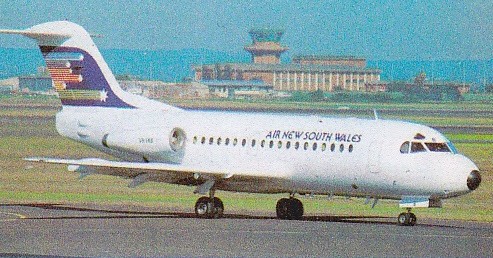
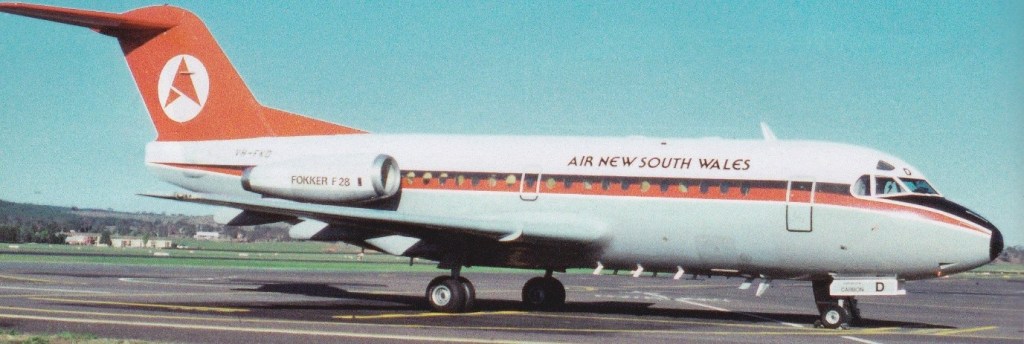
First details of the new Fokker F28 Fellowship were released in April 1962, and, with financial backing from the Netherlands government and risk-sharing support from MBB in West Germany and Shorts in the UK, a decision was made in 1964 to begin development and production of this new airliner.
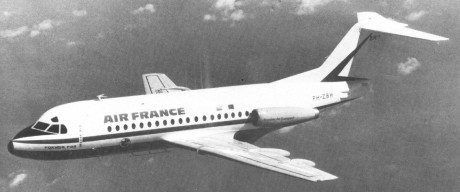
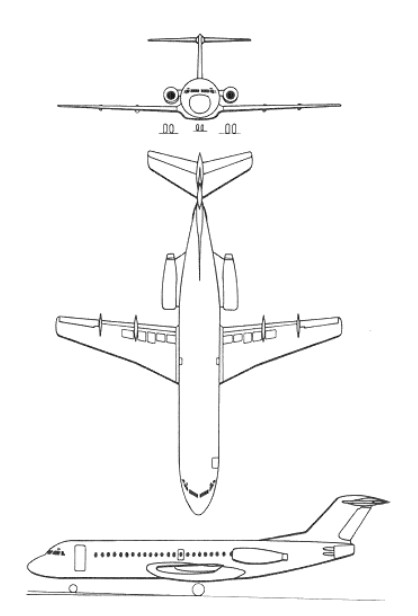
A cantilever low/mid-wing monoplane configuration with a circular-section fuselage, a T-tail unit with swept surfaces and retractable tricycle landing gear, the F28 was designed for two Rolls-Royce RB183 turbofan engines. Highly manoeuvrable in flight, it is designed for STOL with a wing sweepback of only 16 degrees for good handling at low speed, leading-edge slats and double-slotted flaps. There are no thrust-reversers; instead, the F 28 has powerful air brakes which, uniquely, form the tail end of the fuselage, and highly effective wheel brakes. The first of three prototypes made its maiden flight on 9 May 1967, and certification and delivery of the first production aircraft was achieved on 24 February 1969. This initial F28 Mk 1000 short-fuselage version could seat 55 to 65 passengers and was powered by two 4468kg thrust RB183-2 Mk 555-15 turbofans. It was available optionally as the F28 Mk 1000C for all-cargo or mixed passenger/cargo operations with a large cargo door incorporated in the port side of the forward fuselage, aft of the standard passenger door. Production was shared by Fokker-VFW of the Netherlands in association with MBB and VFW Fokker in Germany and Short Brothers in Great Britain. Shorts of Belfast designed the rear fuselage, MBB of West Germany the pods for the Rolls-Royce Spey turbofan engines, and Fokker’s German partner VFW, the tail and other fuselage sections.
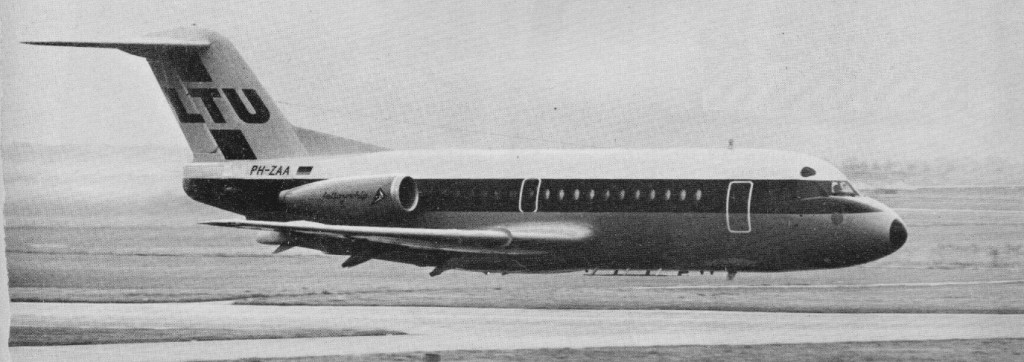
Fourth F-28 the day after its first flight
The fourth built, the first to be delivered, Fellowship A-4, went to Lufttransport Unternehmen L.T.U. of Dusseldorf, Germany.
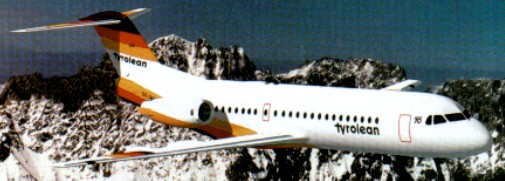
This aircraft can take off from 6,000-foot long runways, or at altitudes as high as 15,000 feet. The generally similar F28 Mk 2000 differed only in having the fuselage lengthened by 2.21m to accommodate a maximum of 79 passengers. Later production versions were the F28 Mk 3000 and F28 Mk 4000 with the fuselage lengths of the Mks 1000 and 2000 respectively. The Mk 3000 is similar to the Mk 4000 with a short fuselage and seating for 65. The Mk 4000 is a long-fuselage version with high-density seating for up to 85. The F28 Mk 3000 was offered with a 15-seat executive interior, and the F28 Mk 4000 has maximum seating capacity for 85 passengers. Sales reached 241 before the Fellowship gave way to the Fokker 100 on the production line in 1987. The Mk 6000 is a long version with slatted wings and seating for up to 79 passengers. In mid-1991 Fokker stated that over 200 F28s were still in service and at least half of these were expected to be hush-kitted to Category 3 standard beginning in 1994, enabling them to continue in service for another 15 years.
Engine: 2 x Rolls-Royce “Spey 555-15”, 43.8kN Max take-off weight: 24720 kg / 54499 lb Empty weight: 14100 kg / 31085 lb Wingspan: 23.6 m / 77 ft 5 in Length: 27.4 m / 89 ft 11 in Height: 8.5 m / 27 ft 11 in Wing area: 76.5 sq.m / 823.44 sq ft Max. speed: M0.76 Cruise speed: 849 km/h / 528 mph Range w/max.fuel: 1990 km / 1237 miles Range w/max.payload: 1043 km / 648 miles Crew: 2 Passengers: 40-65
Fokker F 28 Fellowship Mk. 4000 Engine : 2 x Rolls Royce RB 183-2 Spey Mk 555-15H, 43851 N / 4470 kp Length : 97.146 ft / 29.61 m Height: 27.789 ft / 8.47 m Wingspan : 82.251 ft / 25.07 m Wing area : 850.356 sq.ft / 79.0 sq.m Max take off weight : 71001.0 lb / 32200.0 kg Weight empty : 37743.0 lb / 17117.0 kg Fuel capacity: 2,558–3,430 gals Cruising speed : 423 kts / 783 km/h Cruising altitude : 31988 ft / 9750 m Service ceiling: 35,000 ft Wing loading : 83.64 lb/sq.ft / 408.0 kg/sq.m Range : 2230 nm / 4130 km Range (max. weight) : 1010 nm / 1870 km Takeoff distance: 5,217 ft. Landing distance: 3,166 ft. Threshold speed: 127 mph; Crew : 2 Payload : 85 Pax.