Folland Fo.141 Gnat

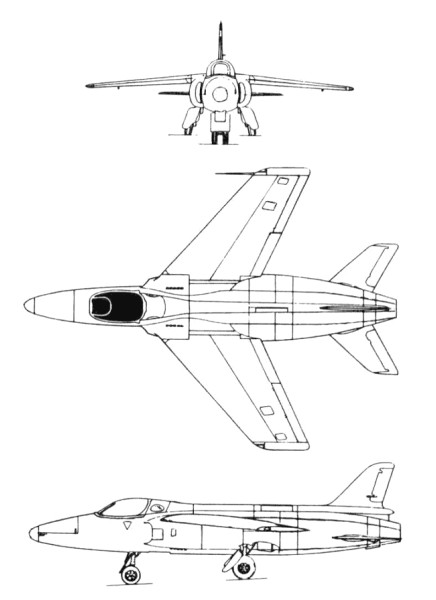
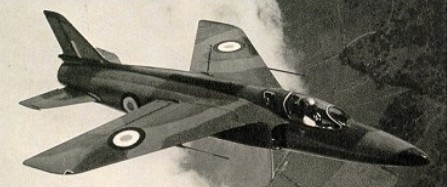
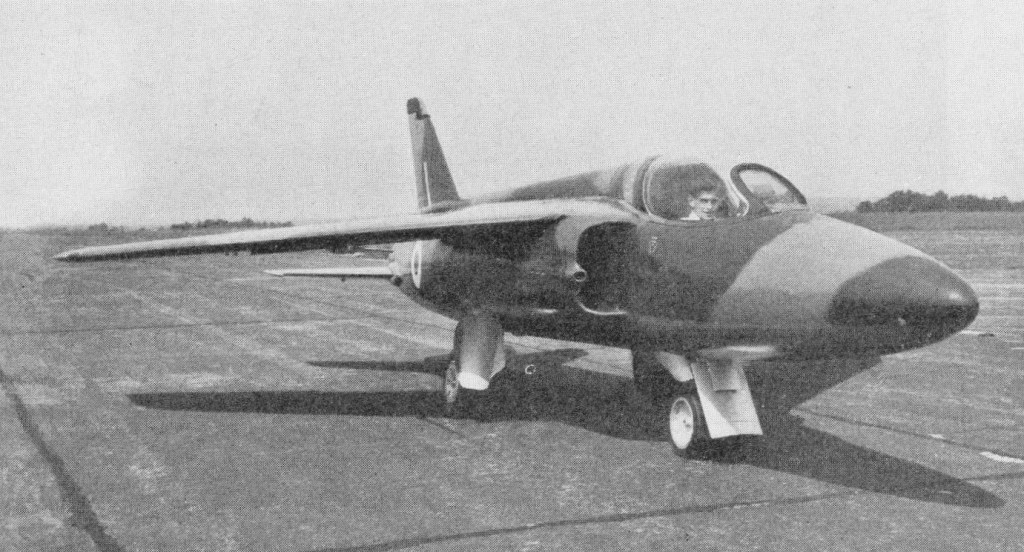
Developed from the Fo 139 Midge, the Fo 141 Gnat was designed as a light fighter. The shoulder wing is swept back at 40 degrees. All tail surfaces are swept with a one-piece tailplane low-set on the fuselage. Ailerons are on the inner wings and can be drooped to act as flaps. The wheel fairing doors act as air-brakes when the undercarriage is partially lowered in flight. The tricycle undercarriage has single main wheels and twin nose wheels, all retracting rearwards into the fuselage.

Folland Fo 141 Gnat Article

The private-venture prototype Gnat G-39-2, piloted by Folland’s chief test pilot, Squadron Leader E. A. Tennant, first flew at the Airplane & Armament Experimental Establishment at Boscombe Down on 18 July 1955. The aircraft was powered by a newly developed 1490kg thrust Bristol Orpheus turbojet.
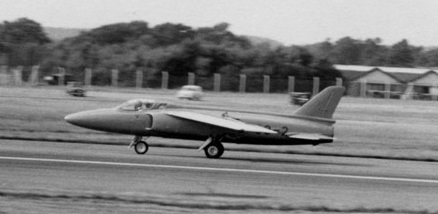
Folland Gnat Prototype G-39-2 on take off run in 1955

The Gnat, being developed in parallel with the Midge, was an improved version of the original fighter design, differentiated by larger air intakes for the Bristol Orpheus engine (the Midge had an Armstrong Siddeley Viper engine), a slightly larger wing, and provision for a 30 mm ADEN cannon in each intake lip.

A more powerful version, rated at 1814kg thrust, was installed on 30 August for the Gnat’s debut at that year’s SBAC flying display and exhibition at Farnborough.

Six development aircraft were ordered by the Ministry of Supply in August 1955, the first flying on 26 May 1956, and these were used for a variety of trials at Boscombe Down, including firing of the 30mm ADEN cannon, one of which was fitted in the lip of each intake. Evaluation in the ground-attack role was undertaken in Aden, in competition with a modified Hawker Hunter.

Although the Royal Air Force had lost interest in the Gnat as a fighter, the Finnish air force took delivery of 13 aircraft in 1958-59. The Finnish Air Force received the first of its 13 Gnats (11 fighters and 2 photo-reconnaissance planes) on 30 July 1958. It was soon found to be a problematic aircraft in service and required a lot of ground maintenance. In early 1957 a licence agreement was reached to allow Valmet to build the Gnat at Tampere in Finland, although in the end none was built.

On 31 July 1958, the Finnish Air Force Major Lauri Pekuri, a World War II fighter ace, broke the sound barrier for the first time in Finland at Lake Luonetjärvi with a Folland Gnat.
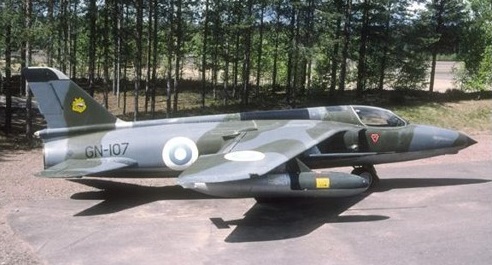
Folland Gnat Finnish Air Force

Gnat F.1 proved initially problematic in the Finnish harsh conditions. Finland was the first operational user of Gnat F.1, and the plane had still many issues yet unresolved. All Gnats were grounded for half a year on 26 August 1958 after the destruction of GN-102 due to a technical design error on hydraulic system, and the aircraft soon became the subject of severe criticism. Three other aircraft were also destroyed in other accidents, with two pilots ejecting and one being killed. Once the initial problems were ironed out, the plane proved to be extremely manouevreable and have good performance in the air, but also to be very maintenance intensive. The availability of spare parts was always an issue, and its maintenance a challenge to the conscript mechanics. The Gnats were removed from active service in 1972 when the Häme Wing moved to Rovaniemi, and when the new Saab 35 Drakens were brought into use.
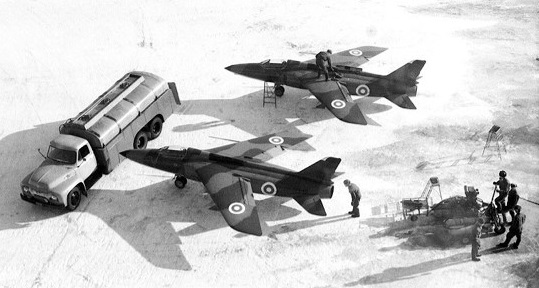
Two Finnish Gnats on the ground

The Finnish Air Force serial codes for Folland Gnat were GN-100 to GN-113 and its usual nickname Nutikka (“Stubby”). Several Finnish Gnat F.1s still survive either as museum pieces or memorials. One airframe, GN-113, is in private ownership.
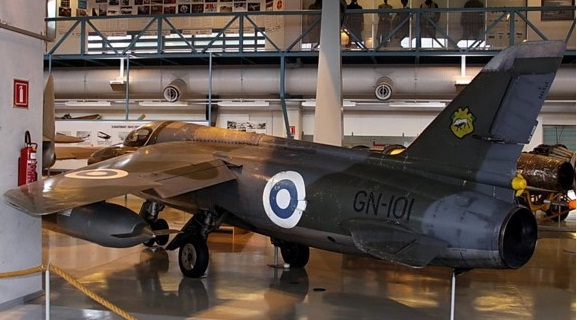
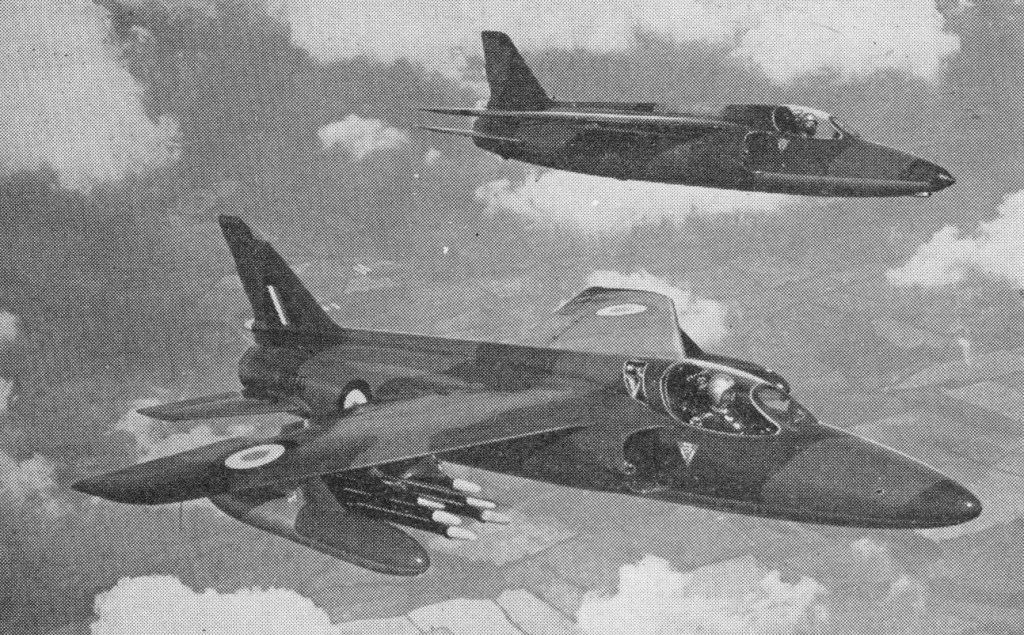
Folland Gnat Mk.1 (GN-101) K-SIM 04

The Yugoslav government also bought two but the major export order was from India: 40 airframes in various stages of completion were supplied from the UK, and licence-production was undertaken by Hindustan Aeronautics Ltd at Bangalore, local production accounting for 175 aircraft. The Gnat entered Indian Air Force service in the spring of 1958, when the Gnat Handling Flight was first formed, and ultimately eight squadrons were equipped.

The Indian Air Force (IAF) operated the Folland Gnat jet fighter from 1958, with over 200 aircraft being license built by Hindustan Aeronautics Limited (HAL). The aircraft proved successful in combat in both the 1965 and the 1971 War with Pakistan, both in the low-level air superiority role and for short range ground attack missions, while being inexpensive to build and operate, came to be called the Gnat Mk 2.
In the words of Late Air Cmde Jasjit Singh, “The Gnat was a very unforgiving aircraft and had the poorest safety track record in the IAF, despite having only Average plus pilots posted to it.” In his book, Indian Air Force: The Case for Indigenisation, Air Cmde Singh said, “It is not surprising the RAF never used it.”

The Gnat aircraft had a peculiar design with the ailerons also doubling as flaps, drooping 15 degrees from a normal aileron position with undercarriage in down position. The raising and lowering of the undercarriage made the ailerons (flaps) go up and down from their normal position. This involved excessive change in attitude and required proper handling by the pilot. All the pilots were briefed repeatedly on this aspect to control the excessive pitch-up after raising of the undercarriage after take-off. Not surprisingly, there were a few incidents because of this peculiar nature of the aircraft.
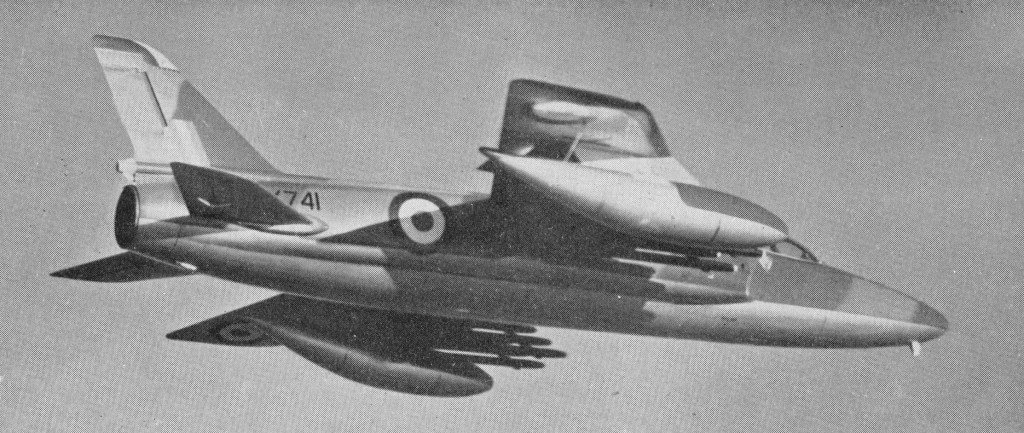
Although the RAF had not selected the Gnat for service in a front-line role, it did have a requirement for an unarmed, two-seat advanced trainer to replace the de Havilland Vampire T.Mk 11 and to follow the Hunting Jet Provost sections of the all-through jet training programme. Folland undertook a private-venture investigation of the changes necessary to install a second seat and to bring the landing speed down to less than 185km/h. The most significant of these changes was a new wing, increased in area by 3.72sq.m and with additional fuel capacity, which reduced the fuel storage requirement in the fuselage, making room for additional equipment. This became the Folland Fo 144 Gnat
Gallery

Fo 141
Engine: Bristol Siddeley Orpheus 701, 4520 lb
Wing span: 22 ft 2 in
Wing area: 135.5 sq.ft
Length: 29 ft 9 in
Height: 8 ft 10 in
MTOW: 8885 lb
Fuel capacity: 300 gal
External fuel: 2 x 66 gal drop tanks
Wheel track: 4 ft 1 in
Wheelbase: 7 ft 9 in
Max speed: 695 mph / M0.98 at 20,000 ft
Max ROC: 20,000 fpm
Service ceiling: 50,000 ft +
Max endurance: 2 hr 30 min
Armament: 2 x 30mm Aden cannon
Bombload: 2 x 500 lb bomb or 12 air-ground rockets
Folland Fo.139 Midge

The Midge and Gnat were designed by W.E.W. “Teddy” Petter. Petter had grown suspicious of the trend towards bigger and more expensive combat aircraft, and he felt that a small, simple fighter would offer the advantages of low purchase and operational costs. New lightweight turbojet engines were being developed that would be able to power such small fighters.

Petter became managing director of Folland Aircraft and in 1951, using company funds, he began work on his lightweight fighter concept, which was designated the “Fo-141 Gnat”. The Gnat was to be powered by a Bristol BE-22 Saturn turbojet with 3,800 lbf (16.9 kN 1,724 kgp) thrust. However, the Saturn was cancelled, and so Petter’s unarmed proof-of-concept demonstrator for the Gnat was powered by the less powerful Armstrong Siddeley Viper 101 with 1,640 lbf (7.3 kN / 744 kgp) thrust.

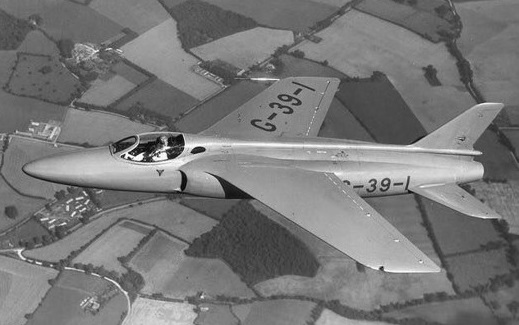
The Midge features hydraulically powered “flaperons”, main gear that could be used as airbrakes, and a one-piece canopy that hinged over an inner armoured windscreen.

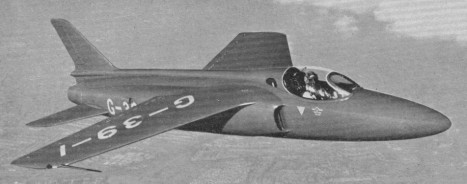
The demonstrator was designated Fo-139 “Midge”. The Midge, serial number G-39-1, first flew on 11 August 1954 from Boscombe Down, Wiltshire, with Teddy Tennant at the controls.

Despite the low powered engine, the little jet could break Mach 1 in a dive and was very agile. The wings contains no guns, undercarriage or fuel tanks.

The Midge was evaluated by pilots from Canada, India, Jordan, New Zealand, and the US Air Force, and had performed a total of 220 flights when it was destroyed in a fatal crash on 26 September 1955, with a Swiss pilot at the controls. However, the Midge had demonstrated that Petter’s lightweight fighter concept had much going for it. Folland went on to develop a full-scale Gnat prototype, also using company funds.

Original film footage of the Midge can be seen in the 1956 British science fiction film “Satellite in the Sky”. The Midge portrays a fictional jet fighter used to test an experimental rocket fuel.

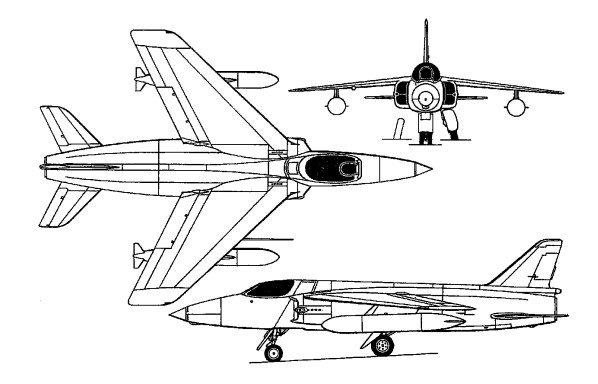
Fo.139
Engine: 1 x Armstrong Siddeley Viper 101, 1,640 lbf / 744kg
Max take-off weight: 2041 kg / 4500 lb
Wingspan: 6.3 m / 20 ft 8 in
Length: 8.76 m / 28 ft 9 in
Height: 2.82 m / 9 ft 3 in
Wing area: 11.61 sq.m / 124.97 sq ft
Sweep back: 40 deg
Aspect ratio 3.3.
Undercarriage track: 5 ft.1 in.
Max. speed: 966 km/h / 600 mph
Service ceiling: 12190 m / 40000 ft
Crew: 1

Folland

Folland Aircraft Ltd had its foundations in February 1936 at Hamble, Hampshire, when British Marine Aircraft Ltd was formed with the intention of producing the Sikorsky S-42A flying-boat under licence. This scheme came to nothing and in May 1937 the company underwent a complete reorganisation and change of name. H. P. Folland, formerly chief designer of the Gloster Aircraft Company, became managing director, and the firm initially undertook sub-contract work.

Undertook subcontract work on Bristol Blenheim and Beaufort, de Havilland Mosquito and Hornet, Short Sunderland and Supermarine Spitfire, among others.

Henry Folland, Gloster’s chief designer, would leave Gloster when it was taken over by Hawker to form
Folland Aircraft. His most successful aircraft design of all time, the Folland Gnat jet trainer (449 built).

First original design was Fo 108 engine testbed aircraft, 12 built to Specification 43/37. Further subcontract participation in Comet, Sea Vixen, Britannia, Hunter, and HS 748 programs.

Lightweight fighter designed by W. E. W. Petter flown initially as Fo 139 Midge, then as Fo 141 Gnat with Bristol Orpheus engine. Sold to Finnish and Indian Air Forces as fighter aircraft and developed as Fo 144 Gnat T.1 trainer for the RAF.
Became Hamble Division, Hawker Siddeley Aviation, in 1959.
Avro, de Havilland and Folland joined Hawker Siddeley Aviation in 1965.

Fokker and von Daum 1910 Eindecker

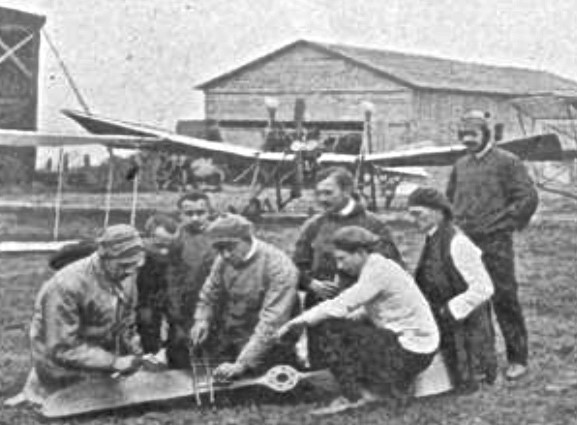
This monoplane was built at the “Erste Deutsche Automobil-Fachschule, Abteilung Flugtechnik” at Zalbach near Mainz, Germany, where Anthony Fokker was student. Depending on whose research you trust, this monoplane was either designed and built by Fokker and another student, Franz von Daum, with help from the engineers of the school, or taken over as an unfinished project by Fokker and von Daum. The monoplane which was finished in October 1910, with von Daum bringing most of the money and a 50 hp Argus engine. It was tested by Fokker, and first hop made in December 1910. Later, von Daum damaged it beyond repair. Again, depending on who you trust, Fokker and von Daum decided to build a new monoplane, this time designed with much help from Goedecker and built at the Goedecker plant, this machine being the first Fokker Spinne, or the machine was finished at the Goedecker plant and actually became the first “Spinne”.

Fokker F.XIV / C-14 / C-15

C-14

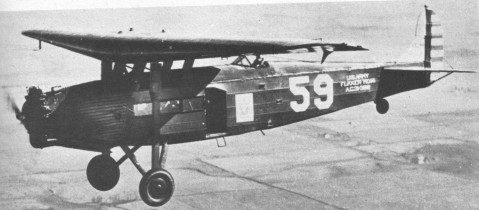
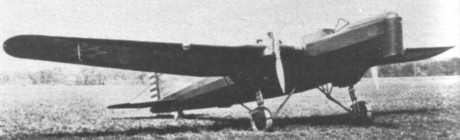
The Fokker F.XIV of 1929 was built at the New Jersey factory as a seven/nine-passenger transport. Fuselage and wings were of normal Fokker design, although the upper fuselage decking was of corrugated duralumin. The major differences between this and other Fokker transports was that it had a parasol-type wing carried on struts above the fuselage, and a pilot’s open cockpit behind the passenger cabin and beneath a cut-out in the wing trailing edge.

The F.XIVA was a modified version with closed cockpit in front of the wing.
The C-14 version was a US Army freighter aircraft.

Engines: 1 x Wright R-1750-3 radial piston engine, 391kW
Max take-off weight: 3266 kg / 7200 lb
Empty weight: 1971 kg / 4345 lb
Wingspan: 18.11 m / 59 ft 5 in
Length: 13.18 m / 43 ft 3 in
Height: 3.76 m / 12 ft 4 in
Wing area: 51.19 sq.m / 551.00 sq ft
Cruise speed: 187 km/h / 116 mph
Ceiling: 4420 m / 14500 ft
Range: 1110 km / 690 miles
Passengers: 9

Fokker F.XXXII / YC-20

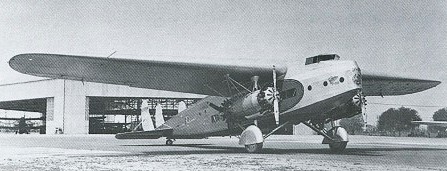
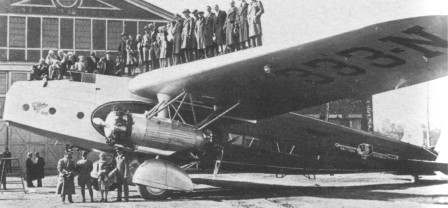
The 32-seat F-32 was a Fokker Aircraft built in the US in 1934. No F-32’s ever landed in The Netherlands. It was a 4 engined aircraft, the engines mounted in tandem under the wing, 2 pusher engines and 2 tractor. Its four 525 h.p. Wasp engines were later replaced by 575 h.p. Hornets.

The F.XXXII was designed for Universal Air Lines, which had ordered five, but after an accident with the prototype, they cancelled their order.
The sleeping cabin of the largest Fokker craft ever built; the F.XXXII. As a night-liner it could accommodate 16 passengers, but in ¬normal configuration it seated 32. Hence the designation F.XXXII.
Five where built for Western Air Express where they flew for several years and the Army Airforce tested a cargo variant called YC 20. No orders where placed however. Fokker himself used a F-32 in the US as private aircraft.
Ten were built in total.

Engines: 4 Pratt & Whitney Hornet aircooled 9 cilinder engines/ 4 Pratt & Whitney Wasp engines
Wingspan: 30.18 m
Length: 21.28 m
Height: 5.03 m
weight: 10.985 kg
Cruise speed: 198 kph
Max speed: 250 kph
Ceiling: 4115 m
range 1191 km
Crew: 2/3
Passengers: 32

Fokker Super Universal

The Super Universal was an enlarged Universal with an enclosed cockpit and improved undercarriage, built in 1927.
The Japan Air Transport Company imported ten Super Universal aircraft in 1929. Later the type was built under license by the Japanese Nakajima Company, the first Japanese built machine being delivered in March 1931. A total of 47 was built up to October 1936.