Back to Ford Tri-motor
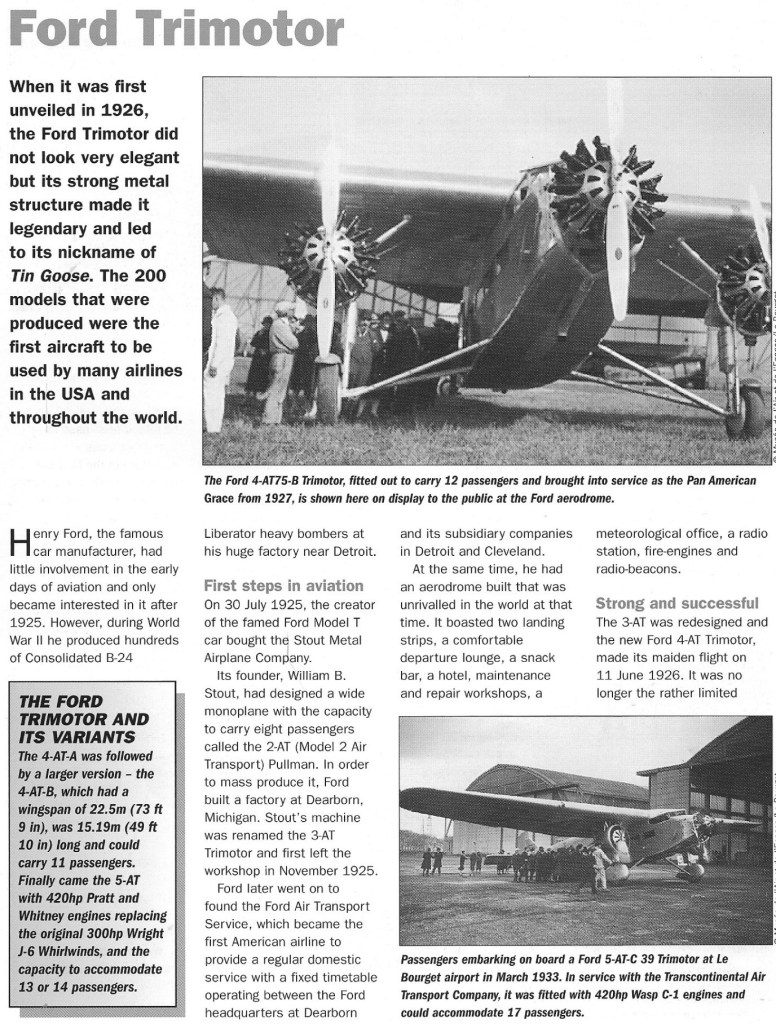
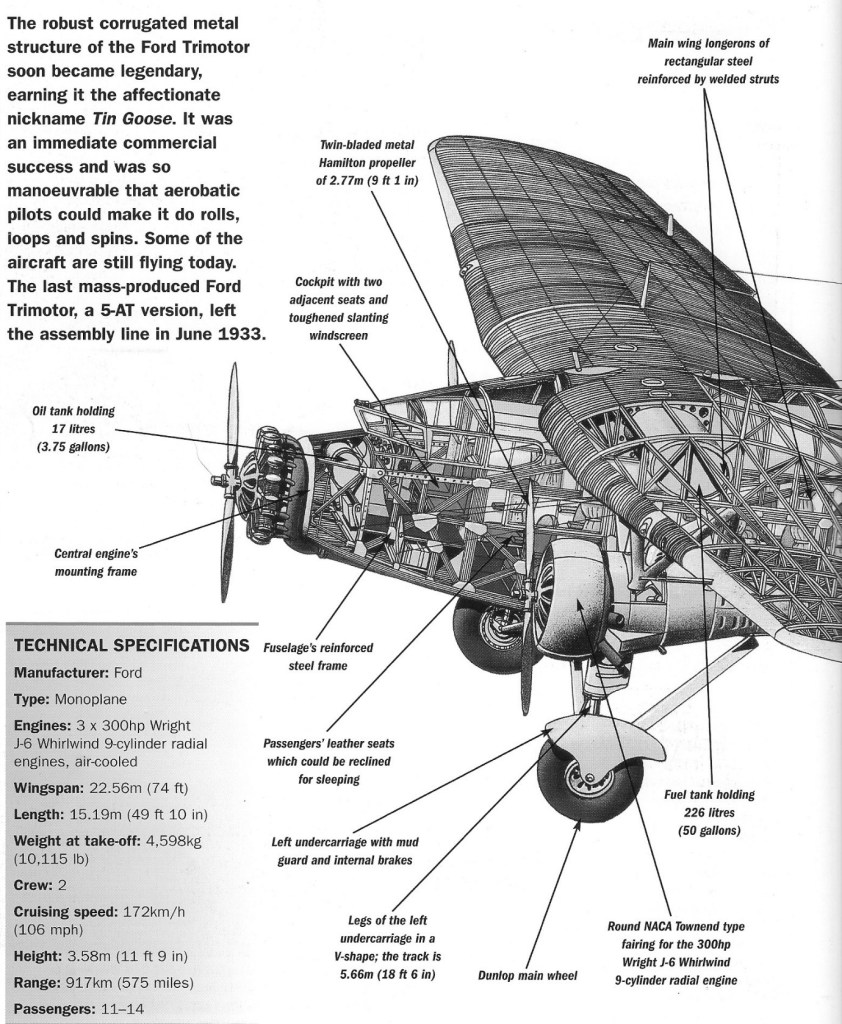
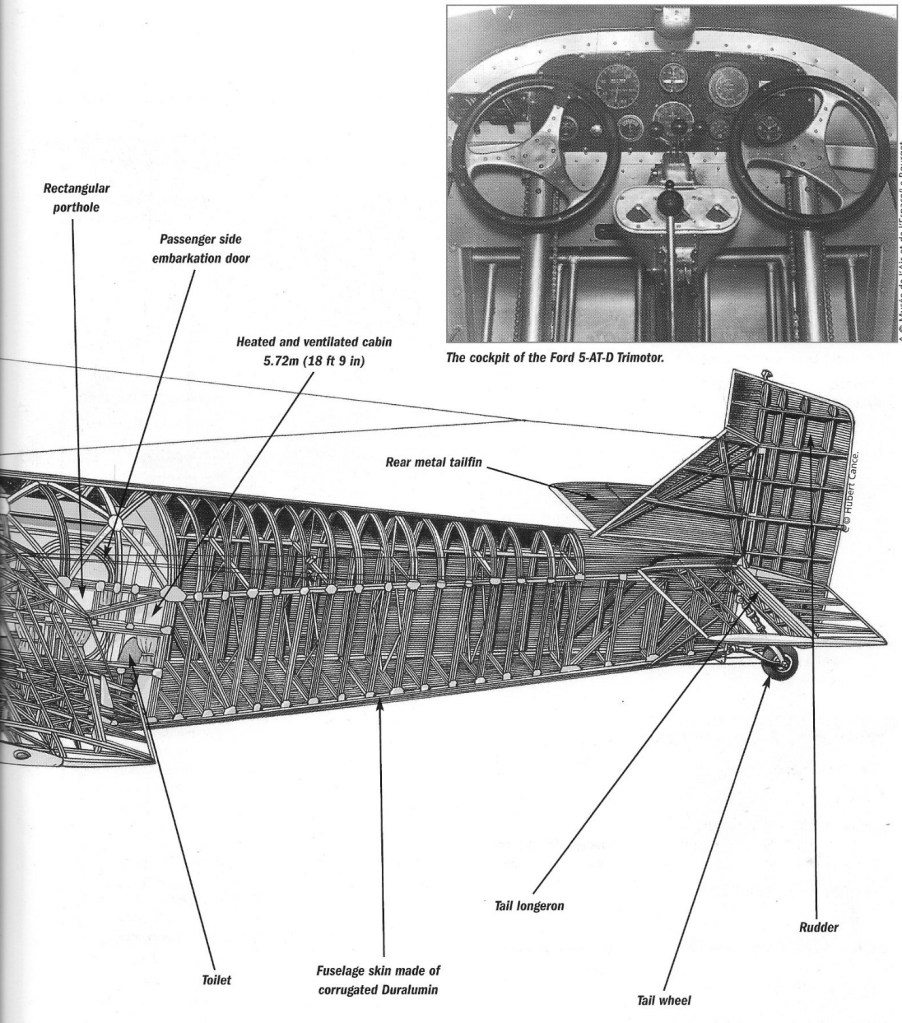
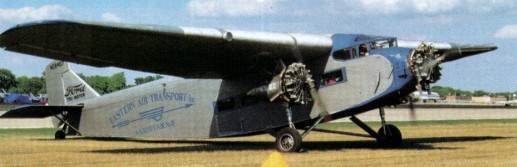
The original Stout Metal Airplane Company was purchased in 1925 by Henry Ford and the new division of the Ford Motor Company produced three versions of the Tri-Motor monoplane. The Tri-Motor’s fuselage was constructed from a series of transverse duralumin bulkheads covered with corrugated metal skin. One engine was mounted in the nose, while the other two were suspended underneath the wings.
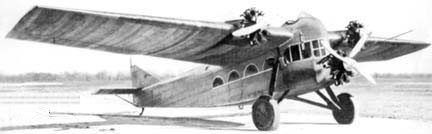
In 1926 Ford told Stout to build him a tri-motor. Stout rushed through his Model 3-AT and the resulting Model 3-AT was a crude and unimpressive lash-up. It may have flown only once before it was destroyed in a fire on the ground, which also destroyed the factory at Ford Airport, on 17 January 1926. Ford and Stout had a violent argument which ended in Stout being fired. In February 1926 Ford decided to proceed with an improved air¬craft, the Model 4-AT, whose design was based on that of the Model 3-AT but differed in almost all details and especially in the engine installations, cockpit, landing gear and fuselage. The small engineering team was headed by Harold Hicks and Tom Towle. The first of the successful Ford tri-motors, NC1492, was flown for the first time on 11 June 1926.

The wing was recessed so that the three spars significantly reduced headroom in the cabin. Each spar was a Warren-braced truss assembled mainly by riveting, and the ribs were likewise built up from rolled strip and sections. The wing suffered a certain amount of cracking after flying over 5,000 hours. The wing was made in three parts, the rectangular centre section being integral with the fuselage. The latter was a capacious box. The three engines, which in the Model 4-AT were 149-kW (200-hp) Wright J-4 Whirl-winds driving two-blade metal propellers, were uncowled and in most Fords not even provided with cooling airflow baffles or fairings. In the Model 3-AT the nose engine had been mounted low to balance the thrust lines of the two wing-mounted engines, but in the Model 4-AT the centre engine was mounted exactly on the nose and the other pair brought down so that all thrust lines were at the same level, the wing engines now being carried on the front of separate strut-mounted nacelles well below the wing. The wing engines had short stub exhausts or, from 1927, an exhaust manifold leading to a short pipe on the outboard side of the nacelle. The nose engine, however, sent its gas through a pipe running (in most versions) half way back to the tail, surrounded by a muff open at the front so that, in cold weather, heated fresh air could be admitted to the cabin. The movable control surfaces, as well as the fixed tail, were metal-skinned. The extreme nose and the top and bottom of the fuselage were often skinned with smooth metal sheet.
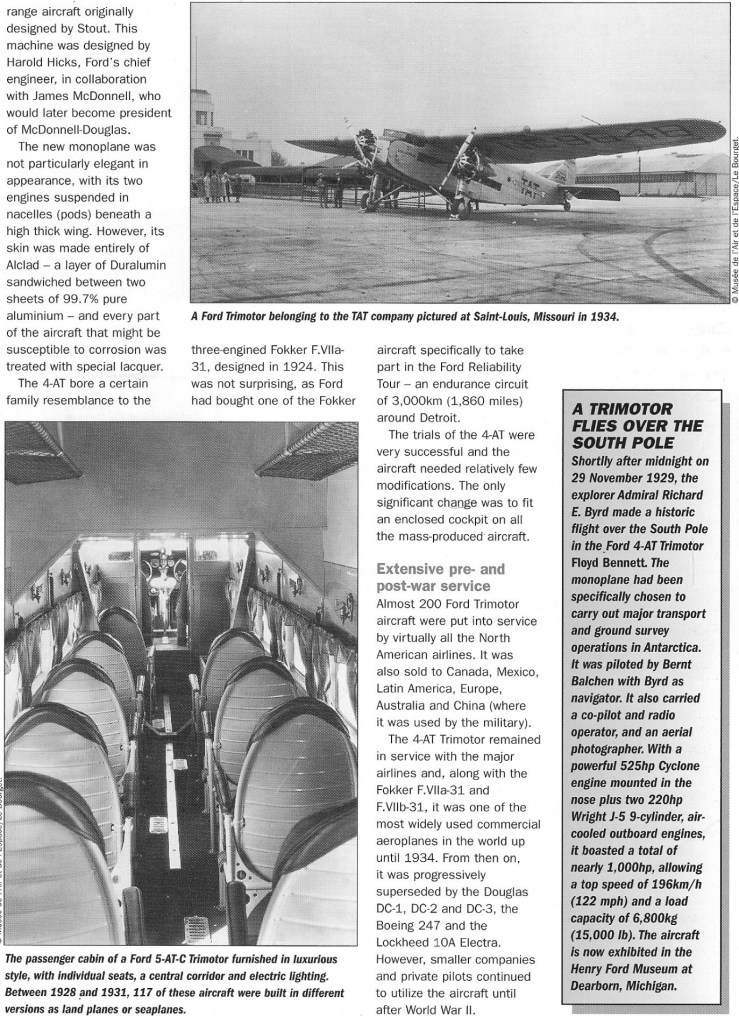
From the first Model 4-AT, the skin material used was Alclad, duralumin coated with non-corrosive pure aluminium, spray coated in varnish. All the Fords had an oval entrance door on the right side, used for passengers, cargo and also by the two pilots. In the Model 4-AT the latter had the usual open cockpit, a feature of which was a sharply angled Vee windshield with glass panes that were not vertical but sloped outwards from bottom to top, to give a better view for landing. Panels in the windshield could be slid open in really bad weather. The Model 4-AT had four passenger seats on each side of a central aisle, and was available with a lavatory at the rear. Light personal baggage could be placed in a typical suspended-mesh rack along each side of the cabin above the windows, level with the bottoms of the wing spars. In a few Model 4-ATs further baggage and mail was stowed in drop-down lockers between the spars at the inner end of each outer wing panel, though this was really a feature of later models. Other features were wheel brakes, which enabled a tailwheel to be used instead of a skid, and an electrical system with the battery charged by a generator on the nose engine. This system served navigation lights and, in most air¬craft, leading-edge landing lamps and two-way radio. On the other hand, the Fords adhered to the old practice of running the tail control cables along the outside of the fuselage from large rocker arms on the sides of the nose.
One of the first customers was Stout Air Services to fly schedules from Detroit to Chicago and other cities in the Great Lakes region.
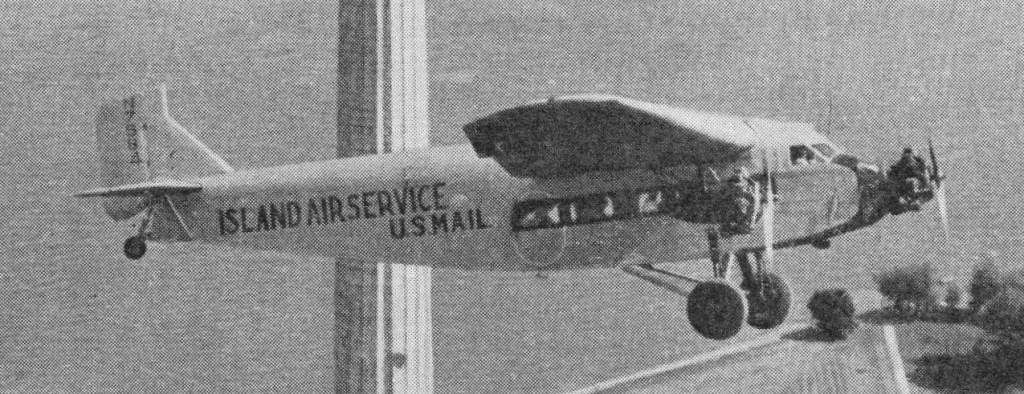
Thirty-seven of the 1928 4-AT-B were built, powered by three 220hp Wright J-5, under certificate 2-10 (later replaced by 87). One went to the AAC as C-3 (NC3444 / 28-348), 7 as C-3A/-9 (29-220-226), 1 as -4, and 4 as C-4A. All C-3A were later converted to C-9 repowered with 300hp Wright R-975s. Several civil models were converted to 4-AT-E in 1930-31.
One 4-AT-C was built, NC7862, in 1928 (ATC 2-11). Sold to Sunbeam Air Transport, it crashed on 1 December 1928.
The 1928 4-AT-D (ATC 2-322) was a special long-wing model with three 220hp Wright J-5. Sold for $48,000, the one built went to Grand Canyon scenic flights as NC5578, then to Ecuador in 1945 as HC-SBC. There was also one conversion from a 4-AT-B, NC7583, and reportedly one other, NC7586.
Four (A8457, A8598-8599) from civil 5-AT-C went to the USN/USMC as JR-3/RR-3. (ATC 2-240) and (ATC 2-242) for 15 passengers with 420hp Wasp as 5-AT-C Special (A8840).
Twenty-five of the 1929 4-AT-E (ATC 132) were built, selling for $42,000. Some were 4-AT-B conversions. Seven went to the AAC as C-3A, and two to USN as JR. One as the XJR-1 (A7526) and five production model as the JR-2 (A8273-8274), re-designated as RR-2 later.

The single 4-AT-F (ATC 441) built, 9656, in 1931, went to Spain with three eventual registrations: EC-BAB, EC-RRA, and EC-WIO.
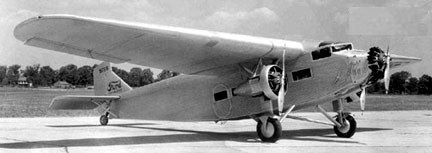
Subsequent Fords had an enclosed cockpit with sliding side windows, and various other refinements, and almost all were more powerful. As listed in the separate variants section, there were almost as many sub-types as there were aircraft built, partly because there were numerous rebuilds and conversions. The initial Model 4-AT-A eight-seater entered service with Ford’s own air service on 2 August 1926. Ford Airport at Dearborn had by this time become the first in the world with paved runways and full electric lighting, and later Ford not only made other improvements to the buildings but also set up one of the world’s first training schools for commercial flight crews.
Though the Model 4-AT had been the biggest all-metal aircraft then built in the USA, and possibly in the world, it was rightly judged too small and the Model 4-AT-B of 1927 had a span increased from 20.97m (68ft l0in) to 22.53m (73ft 11in), matching the greater power of 164-kW (220-hp) J-6 Whirlwind engines. Though the fuselage was almost the same as before, the seating limit went up to 12. There followed various sub-types of Model 4-AT, differing chiefly in engine arrangement. Almost all the Fords were originally built with spatted main wheels, and their modern image did much to promote sales.

When the Ford was a new and very modern aircraft, most had Wright engines in the 149/164-kW (200/220-hp) bracket, but production of this Model 4-AT family came to an end (except for the single Model 4-AT-F) in 1929. By this time the much more powerful, and further enlarged, Model 5-AT family was selling even better than its predecessors, and output of Model 5-ATs reached a remarkable four per week in 1929, before the Wall Street crash.
Thanks to the use of the Pratt & Whitney Wasp engine, the Model 5-AT was a much more capable aircraft. First flown in mid-1928, the Model 5-AT had a further enlarged wing, the fuselage deepened to give more headroom under the wing, Townend-ring cowled wing engines (often a cowled nose engine also), and a structure strengthened for operation at greater weights.
The 1929 5-AT-A (ATC 2-32, 2-282) sold for $65,000. Three were built, one to P&W Co [NX/NC6926], and two to Northwest Airlines [NX/NC7416, NC7739].
The 1929 5-AT-B (ATC 156) had 17-19 passengers and sold for $55,000. Forty-two were built, of which one went to the AAC as C-4. C/n 11, started with PAA in 1929, and ended up at the San Diego Air Museum in 1982. It had 13 US and Central American registrations: NC9637 / NM22 / XA-BCC / AN-AJJ / HI3 / NX1629M / N1629M / XB-KUI / XA-HIL / N1629M / N9637 / N76GC / N9637.
ATC 2-12 was for modification to 14passengers with 420hp P&W Wasp C.
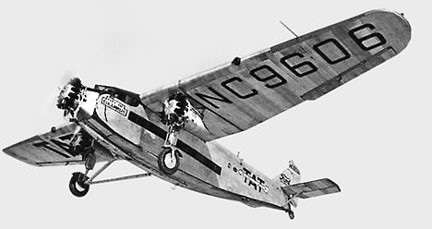
The 1930 5-AT-C (ATC 165) was an improved 5-AT-B as “De-Luxe Club Model” with increased performance, cowlings and wheel pants options. Selling for $55,000-68,000, fifty-one were built. One, NX9652, was heavily modified in April 1931 as XB-906-01 for AAC five place bomber evaluation, built at the firm’s expense and using what was mainly a Model 5-A T-D airframe (but with a redesigned vertical tail). First flown on 27 June 1931, it crashed during dive testing at the factory on 19 September 1931. There were guns above and below at the rear and a bombardier’s station under the cockpit.

Four went to the USN/USMC as JR-3/RR-4. (ATC 2-240) and (ATC 2-242) for 15 passengers with 420hp Wasp as 5-AT-C Special.
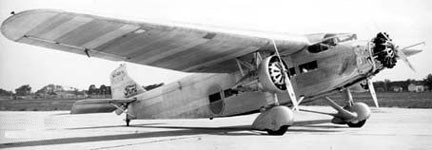
Tri-motors nos 69, 74 and 75 (NC410H, NC414H, NC415H) were all of the 1930 Model 5-AT-CS (ATC 296, 2-518) type with twin floats for water-based operation, sold for $68,000.

In 1930 one 5-AT-C, NX/NC420H, was modified with one 450hp P&W + two 220hp Wright J-5 mounted on the leading edge of the wings as a 5-AT-E. It was restored as a 5-AT-C in 1930.
Twenty 1931 5-AT-D (ATC 409) were sold for $50,000. Four went to the AAC as C-4A, and two to the USN/USMC as RR-5.
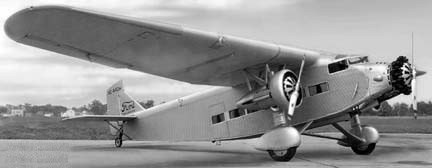
The single 1935 5-AT-DS built, (ATC 2-504) NC/NR9657, was powered by three 450hp P&W Wasp.
The 1929 6-AT-A (ATC 173, 2-97) was as a 5-AT-C with 16 passenger seats and three 300hp Wright J-6. Selling for $50,000, or $92,650 on floats, 2 were built. One, NC8485, was converted first to a 7-AT, then 5-AT-C. One went to Colonial Air Transport as NC8486. Both went to China in 1936.
No fewer than 117 Model 5-AT were built in 1929-31, many were built with the wing baggage/mail lockers, and others were thus equipped as a modification. The cabin could be equipped to seat up to 17, with eight seats on the right and nine on the left, even with a rear lavatory. Northwest Airlines took delivery of the 5-AT in September 1927, costing $55,000 each.
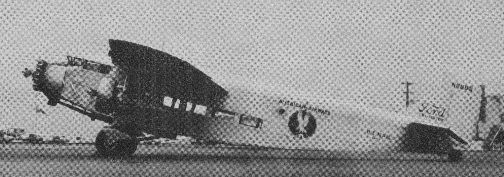
The sole 6-AT-S (ATC 2-80), built in 1929 with 12 passenger seats and on Brewster floats, went to Canada as a forest sprayer (G-CYWZ / CF-BEP). Converted to a landplane, Ford 6-ATS-Special Trimotor CF-BEP was acquired by Grant McConachie from the RCAF in March 1937 and on 5 July 1937 pioneered airmail service from Edmonton to Whitehorse. In March 1939, when part of the Yukon Southern Air Transport fleet, CF-BEP was hit by a RCAF Hurricane at Vancouver airport. The collision severely damaged the Trimotor but subsequently Yukon Southern won damages of $52,000 from the Crown and obtained a further $5200 from the insurance.
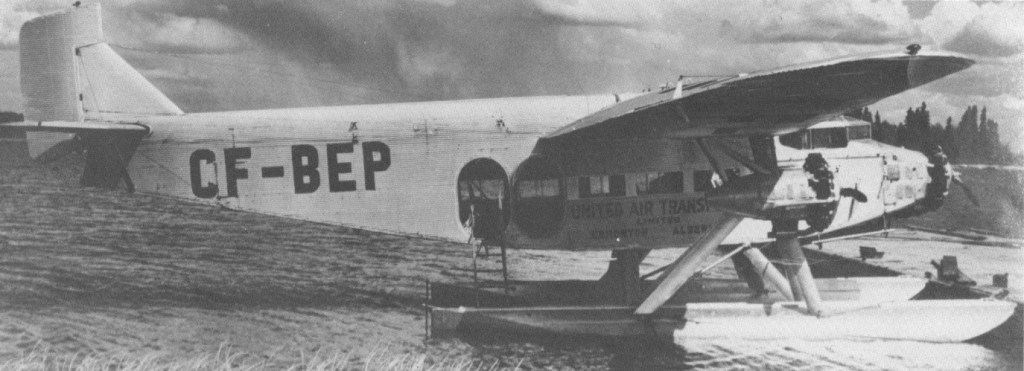
One 7-AT (ATC 246) was built, in 1929 as NC8485, as a 16 passenger 6-AT-A with one 420hp P&W Wasp + two 300hp Wright J-6. It was modified with three 300hp Wright J-6 for entry in the 1929-30 National Air Tours (p: Myron Zeller). Final conversion was to 5-AT-C with three 450hp Wasp and delivered to American Airlines in 1931. Exported to China in 1936.
In 1930 one 4-AT-B (X/NC7585/NC423H) was converted to the 9-AT-A (ATC 307) powered by three 300hp P&W Wasp Jr. Sold for $40,000 it went to Honduras in 1934.
In 1931 temporarily designated 4-AT-G, the 14 place 11-AT (ATC 441) was powered by three 225hp Packard DR-980 diesel engines. The one built (NC/NX/NR8404) was modified in 1934 to -AT-B with 220hp Wright J-5 engines. It crashed in March 1937 and was sent to Parks Air College for rebuilding, which proved infeasible due to the extent of damage.
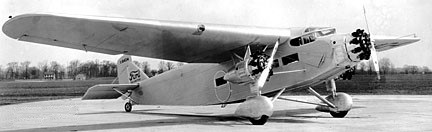
In 1931 one 5-AT-D was modified as the eight place 13-A (ATC 431) powered by one 575hp / 429-kW Wright Cyclone and two 300hp Wright J-6. It was converted for the 1931 National Air Tour, then converted back to a 16-place 5-AT-D in 1932 (under ATC 209), and sold to Panagra (NX/NC433H).
Total population of all Ford tri-motors from 1926-33 was 198, plus a few special-purpose modifications and experiments.

Variants:
7-AT-A – rebuild of Model 6-AT-A with a nose-mounted 313-kW (420-hp) Wasp radial.
9-AT – conversion of Model 4-AT-B with 224-kW (300-hp) Wasp J union radials; 1 converted.
11-AT – one Model 4-AT-E rebuilt with 168-kW (225-hp) Packard DR-980 diesels.
13-A – powered by one 575hp / 429-kW Wright Cyclone and two 300hp Wright J-6
C-3 – US Army no, 28-348, based on Model 4-AT-B.
C-3A – US Army nos 29-220/226, seven aircraft with 175-kW (235-hp) R-790-3 Whirlwind radials.
C-4 – US Army no, 29-219, basically a Model 4-AT-B for military service.
C-4A – US Army nos 31-401/404, four aircraft based on the Model 5-AT-D with 336-kW (450-hp) R-1340-11 radials.
C-9 – redesignation of all seven C-3As after the installation of 224-kW (300-hp) R-975-1 radials.
XJR-1 – US Navy no, A7526, based on Model 4-AT.
JR-2 – US Navy nos A8273/8274, two aircraft based on the Model 4-AT-E for the US Marine Corps.
JR-3 – US Navy nos A8457 and A8598/8599, three aircraft based on the Model 5-AT-C.
RR-2 – redesignation of JR-2.
RR-3 – redesignation of JR-3.
RR-4 – additional Model 5-AT-C with US Navy no, A8840.
RR-5 – US Navy nos 9205/9206, two aircraft based on the Model 5-AT-D, one of them delivered to the
US Marine Corps
XB-906-1 single prototype 1NX96521 for a bomber version with internal racks and two gunners positions; crashed on 19 September 1931 killing Ford’s chief test pilot, Leroy Manning.
Specifications:
Engines: 3 x 313kW Pratt & Whitney R-1340-C1 or SC1 Wasp radial
Max take-off weight: 6123 kg / 13499 lb
Wingspan: 23.72 m / 77 ft 10 in
Length: 15.32 m / 50 ft 3 in
Height: 3.86 m / 12 ft 8 in
Wing area: 77.57 sq.m / 834.96 sq ft
Max. speed: 241 km/h / 150 mph
Ceiling: 5640 m / 18500 ft
Range: 885 km / 550 miles
Crew: 1-2
Passengers: 17
3-AT
1 built 1924
Engines: 3 x Wright J-4, 200hp
4-AT
Engines: 3 x 149-kW (200-hp) Wright J-4 Whirl¬winds
Propellers: two-blade metal
Wingspan: 20.97m (68ft l0in)
Length: 49 ft 10 in (15.2 m)
Height: 12 ft 8 in (3.86 m)
Max TO wt: 10,130 lb (4590 kg)
Max level speed: 134 mph (214 kph).
Pax cap: 8.
4-AT-A
1926 (ATC 2-9 issued in 1927)
6 / 14 built
Engines: 3 x Wright J-4, 220hp
Wingspan: 74’0″
Length: 49’10”
Useful load: 3961 lb
Max speed: 114 mph
Cruise speed: 95 mph
Stall: 55 mph
Range: 520 mi
Passengers: 12-15
4-AT-A / XC-3
1926 (ATC 2-9 issued in 1927)
7 conversions / 1 as AAC XC-3
Engines: 3 x Wright J-5, 220hp
Wingspan: 74’0″
Length: 49’10”
Passengers: 12-15
4-AT-A / XJR-1
1 USN conversion
Engines: 2 x Wright J-5, 220hp / 1 x P&W, 450hp
Wingspan: 74’0″
Length: 49’10”
Passengers: 12-15
4-AT-B
Engines: 3 x 164-kW (220-hp) J-6 Whirlwind
Wingspan: 22.53m (73ft 11in)
Passengers: 12.
Crew: 2
35 built.
4-AT-B / C-3
1928
Engines: 3 x 220hp Wright J-5
Wingspan: 73’11”
Length: 50’0″
Speed: 130 mph
No built: 1
4-AT-B / C-3A / C-9
Engines: 3 x 175-kW (235-hp) R-790-3 Whirlwind radials.
No built: 7
5-AT-B
1929 (ATC 156)
Engines: 3 x P&W Wasp, 450hp
Wingspan: 77’10”
Length: 49’10”
Useful load: c.5500 lb
Max speed: 142 mph
Cruise speed: 122 mph
Stall: 62 mph
Range: 600 mi
Seats: 17-19
C-4 / 5-AT-B
ATC 2-12
Engines: 3 x P&W Wasp C, 420hp
Wingspan: 77’10”
Length: 49’10”
Speed: 145 mph
Seats: 14
No built: 1 (29-219)
C-4
Engines: 3 x 220hp Wright J-5
No built: 1
C-4A
Engines: 336-kW (450-hp) R-1340-11 radials.
No built: 4 (31-401-404)
C-4B
1932
Engines: 475hp R-1340-7.
No built: 1 conversion.
4-AT-C
Engines: 1 x 298-kW (400-hp) Wasp, 2 x 220hp Wright J-5
Seats: 15
1 built, NC7862
4-AT-D
Engines: 3 x J-4 Whirlwind
Engines: 2 x J-5 Whirlwind and 1 x 298-kW (300-hp) J-6-9 Whirlwind
Engines: 3 x J-6-9 Whirlwind
Wingspan: 78′ 0″
3 built
4-AT-E / JR-2 / RR-2 / C-3A
Engines: 3 x 298-kW (300-hp) J-6 Whirlwind
Wingspan: 74’0″
Length: 49’10”
Useful load: 3630 lb
Max speed: 130 mph
Cruise speed: 110 mph
Stall: 58 mph
Range: 670 mi
Seats: 12-14
24 built.
4-AT-F
Engine: 3 x Wright J-6, 300hp
Wingspan: 74’0″
Length: 49’10”
Useful load: 4071 lb
Max speed: 138 mph
Cruise speed: 113 mph
Stall: 59 mph
Range: 540 mi
1 built
Seats: 14
5-AT
Engines: 3 x Pratt & Whitney Wasp, 420 hp
Passengers 17
Cruise: 110 mph.
Range: 500 miles
Cost September 1927: US$55,000
5-AT-A
Engines: 3 x P&W Wasp A/C, 313-kW (420-hp)
Wingspan: 77’10”
Length: 49’10”
Seats: 14
3 built
5-AT-B
Engines: 3 x 425 hp Whirlwinds
Gross weight: 13,250 lbs
Empty weight: 7,800 lbs
Top speed: 140 mph
Cruise speed: 115 mph
Landing speed: 60 mph
Range: 500 nm
Service ceiling: 20,000 ft.
Passengers 13
5-AT-B
Engines: three 313-kW (420-hp) Pratt & Whitney Wasp C-1 or SC-1 radial
Max speed: 259 km/h (161 mph)
Cruising speed 198 km/h (123 mph)
Normal range 708 km (440 miles).
Empty weight (typical, as built) 3447 kg (7,600 lb)
Max takeoff weight 5738kg (12,650 lb).
Wingspan 23.72m (77ft l0in)
Length 15.3m (50ft 3 in)
Height (tail down) 3.66m (l2ft)
Wing area 77.57sq.m (835sqft).
Crew two side-by-side
Passengers, 15 (later) 13 plus steward, or 1520 kg (3,350 lb) cargo.
42 built.
5-AT-B
1929 (ATC 156)
Engines: 3 x P&W Wasp, 450hp
Wingspan: 77’10”
Length: 49’10”
Useful load: c.5500 lb
Max speed: 142 mph
Cruise speed: 122 mph
Stall: 62 mph
Range: 600 mi
Seats: 17-19
5-AT-C / XB-906 / JR-3 / RR-4
ATC 165
Engines: 3 x P&W Wasp, 450hp
Wingspan: 77’10”
Length: 50’3″
Useful load: 6000 lb
Max speed: 152 mph
Cruise speed: 130 mph
Stall: 65 mph
Seats 17
48 built
5-AT-C Special
ATC 2-240 / ATC 2-242
Engines: 3 x P&W Wasp, 420hp
Wingspan: 77’10”
Length: 50’3″
Seats 15
1 built
5-AT-CS
Engines: 3 x P&W Wasp, 450hp
Wingspan: 77’10”
Length: 51’4″
Useful load: 4825 lb
Max speed: 130 mph
Cruise speed: 104 mph
Stall: 64 mph
Range: 500 mi
Seats: 16
Undercarriage: twin floats
No built: 3
5-AT-D / C-4A / RR-5
Engines: 3 x 336-kW (450-hp) Wasp SC radials
Wing span: 77’10”
Length: 50’3″
Useful load: 5660 lb
Max speed: 150 mph
Cruise speed: 122 mph
Stall: 64 mph
Range: 475-625 mi
Seats: 16
20 built.
5-AT-DS
Engines: 3 x 450hp P&W Wasp
Seats: 13
5-AT-E
Wingspan: 77’10”
Length: 51’4″
Engines: 1x 450hp P&W + 2 x 220hp Wright J-5
6-AT-A
Engines: 3 x 300hp Wright J-6
Wingspan: 77’10”
Length: 50’6″
Useful load: 5096 lb
Max speed: 130 mph
Cruise speed: 108 mph
Stall: 62 mph
Range: 475 mi
Passengers: 16
6-AT-S
Passengers: 12
Undercarriage: Brewster floats
7-AT
Passengers: 16
Engines: one 420hp P&W Wasp + two 300hp Wright J-6
Wing span: 77’10”
Length: 50’3″
Useful load: 5630 lb
Max speed: 134 mph
Cruise speed: 112 mph
Stall: 63 mph
Range: 560 mi
7-AT-A
Engines: 2 x J-6 Whirlwind, 300hp and 1 x 313-kW (420-hp) Wasp radial.
Wing span: 77’10”
Length: 50’3″
Useful load: 5630 lb
Max speed: 134 mph
Cruise speed: 112 mph
Stall: 63 mph
Range: 560 mi
9-AT-A
Engines: 3 x P&W Wasp Junior, 224-kW / 300-hp
Wingspan: 74’0″
Length: 49’10”
Useful load: 3267 lb
Max speed: 135 mph
Cruise speed: 115 mph
Stall: 58 mph
Range: 570 mi
Seats: 12
11-AT / 4-AT-G
Engines: 3 x Packard DR-980 diesels, 168-kW / 225-hp
Seats: 14
11-AT-B
Engines: 3 x Wright J-5, 220hp
13-A
Engines: one Wright Cyclone, 575hp / 429-kW & two Wright J-6, 300hp
Wingspan: 77’10”
Length: 50’3″
Useful load: 5315 b
Max speed: 150 mph
Cruise speed: 122 mph
Stall: 62 mph
Range: 550-680 mi
Seats: 8
C-9
1930
Engines: 3 x 224-kW (300-hp) R-975-1 radials.
Speed: 131 mph
7 conversions (29-220-226)
X-B-906
Bomber experiment
Engines: three 500hp P&W Wasp
Wingspan: 77’10”
Length: 50’3″
Useful load: 5792 lb
Max speed: 156 mph
Cruise speed: 135 mph
Stall: 66 mph
Seats: 5
Henry Ford provided backing for William Stout’s Stout Metal Airplane Company, maker of the 2-AT single-engined eight passenger airliner. Ford purchased Stout in 1925 and provided premises at Dearborne where Stout designed the first Ford 3-AT Tri-Motor, a modified 2-AT with three Wright J-4 engines. Howard Hicks replaced Stout and developed the 4-AT, 78 of which were built. The larger 5-AT, with three 420 hp Pratt & Whitney Wasps, was introduced in 1928, the last “Tin Goose” being built in June 1933.
In 1941 Ford built a new factory and airfield at Willow Run, Michigan, where 5,107 Consolidated B-24E/H/J/L heavy bombers were built. A production run of 5,168 B-24Ns was cancelled at the end of the war. XC-109 bulk fuel tanker prototype converted from B-24E. A Ford factory at Iron Mountain, Michigan made 4,190 Waco CG- 4A gliders.
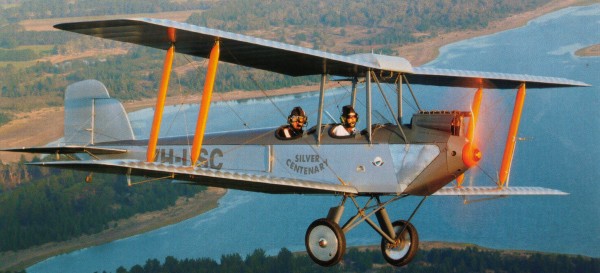
The Silver Centenary first flew on 1 July 1930, and recorded approximately 50 hours of flight, mainly between Beverley and the Maylands Airfield, Australia. Built in the back of the town of Beverley’s Electric Supply powerhouse.
The fuselage layout was similar to the DH60 Gipsy Moth, but the construction was to be of Ford’s own design. The Oregon longerons and struts, with steel gusset plates, were covered with ply, which was lightened by cutouts and lightening holes. Aluminium cowls were fitted forward of the fireproof steel bulkhead, and along the top decking to the rear of the cockpits, beyond that point fabric was used over closely-spaced formers and stringers. Fabric formed the secondary covering on the fuselage, and was used exclusively on wings and tail unit. Dual control was fitted, and provision made for the installation of lighting and radio equipment. After the fuselage structure had been completed, and the assembly of one wing commenced, Tom Shackles, a local butcher, became a partner in the project. The aerofoil section was built to follow Ford’s chalk-lofting ideas and had a high leading-edge camber, which gave the wing excellent stall characteristics, and which was later the subject of a patent. Another design feature incorporated was the contrary wing sweep lower wings forward and the upper to the rear. This was later believed to be the reason for its great reluctance to spin.
Instruments, spruce and dope, were all bought from LASCo, but late delivery of this material often caused delays in construction, however the majority of the components Selby hand-made himself.
All the metal fittings for the aircraft were hand-made including the steel-tube centre section and interplane struts, faired with sheet tinplate, steel elevator-control horns, strut-attachment brackets, aileron bellcranks and pushrods.
Initially the undercarriage, with rubber cord shock absorbers, utilised a pair of motorcycle wheels, with fittings procured from W.G. Blanch of Armadale, who had used them on a light, plane of his own.
One of Selby’s major hurdles for the original project was finding the right power plant for his aircraft. A three-cylinder Anzani radial engine was purchased for £25 soon after construction began, but, after fitting, it was found to give insufficient power. As luck would have it, participants C D Pratt and D. Guthrie in the 1929 Centenary East – West Air Race crashed their Gipsy Moth VH-UKX in the Baandee lakes (East of Kellerberrin 110 miles from Berverley) and Selby was able to purchase the Gipsy 1 engine for £175. A broken valve rocker, a magneto mounting pad, and two engine feet were replaced, and the engine was then satisfactorily mounted on Silver Centenary, together with a new Gipsy propeller purchased from LASGo.
News of the engine purchase was printed in a Sydney newspaper and this caught the eye of the Controller of Civil Aviation Board, (CAB) H. C. Brinsmead. He dispatched one of his inspectors (J A ‘Jim’ Collopy) to Perth to take a look at the aircraft’s construction.
In his letter of November 1929 Inspector Collopy noted that no formal plans were available for the project. And as most of the fabric covering had been completed prior to his inspection, this made it difficult for Inspector Collopy to see all the critical sections. He found that the partners were not conversant with terms such as ‘centre of gravity’, or ‘centre of pressure’, nor had they any knowledge of stressing or material testing. However, notwithstanding their limited aerodynamic knowledge, he did note that Selby and Torn had conducted a terrific job, and if limited to non-aerobatic flight, there should be no chance of structural failure. He only found a few areas that he felt needed a design enhancement.
On advice from the inspector, Selby discarded the undercarriage as too light, and one on the lines of the Gipsy Moth substituted, using standard aero-wheels and LASGo-made oleo legs, and strengthened the centre section spars.
Tom Shackles and Selby decided to call the aircraft the Silver Centenary because of its silver colour, and the fact that 1929 would be the Centenary year of the foundation of Western Australia. Selby then again attempted to register the Silver Centenary. In the belief that he would receive a Certificate of Airworthiness (C of A), Selby even painted the British mark G-AU on the fuselage (which he later converted to the Australian mark VH-U) but the C of A was not granted. They needed a complete set of drawings and data for CAB use. However during the first inspection, not a single drawing, sketch, or diagram was available. The application for registration was filed on 11 December, and they were notified on 20 January 1930 that, due to doubt as to its
aerodynamic stability and structural strength, it was not then proposed to register it. A further inspection on 5 April, by Tom Johnson, resulted in a few modifications being required by CAB, and these were carried out within two weeks by the builders, except for the new undercarriage, as the oleo legs had not arrived from LASCo.
Selby requested permission for Captain C H Nesbitt of Western Air Services to test fly the machine, and on 1 July 1930 after part of the wall of the powerhouse was removed, the Silver Centenary was wheeled down the road to Benson’s paddock in Beverley, to conduct the first flight.
Captain Nesbitt had a successful 30 minute flight. He then conducted four more joyflights with Selby, Tom and their sisters (who had helped in the fabric covering).
On July 4 1930, Captain Nesbitt and Selby flew in company with a Gipsy Moth to Northam, with the intention of a rendezvous with Amy Johnson and Major de Havilland, escorting them on their way to Perth; however the latter were delayed at Kalgoorlie. They continued on to the Maylands airport and received a huge reception from the awaiting crowd. (Amy Johnson later inspected the aircraft at Maylands, and commented very favourably on its appearance) Following the death of Capt Nesbitt in October 1930 (in a crash of a DH Puss Moth, ironically after a structural failure) Warren Penny then conducted many of the flights and even instructed Ford in it. He was concerned with the lack of registration (the aircraft was still classed as experimental) and contacted Brinsmead the Controller of CAB who subsequently grounded the aircraft at Maylands.
Captain F S Briggs of the Shell Company finally received permission in September 1931 to fly the Silver Centenary back to Beverley and was very complimentary of her performance. An unusual characteristic of this unique aircraft was the ability to fly itself out of a spin. There are various theories for this, one of which is the very slight forward sweep of the main planes.
The final cross country flight was to an airshow in Narrogin in December 1931, on the last occasion that permission was granted to fly the Silver Centenary away from Beverley.
The C of A was never forthcoming due to the lack of detailed plans, so it was hung from the Powerhouse roof until after Selby died in a car accident in 1963.
On 6 January 1964, Brian and Graham Ford (Selby’s sons) removed it from 32 years of storage, and over a period of time made general repairs. They cleaned and re-painted the Silver Centenary and even ran the Gipsy engine, but did not fly it. In 1967 it was housed as the centre piece of a memorial to Selby in the newly built Beverley Aeronautical Museum. The aircraft is so significant in the history of Beverley it even appears on the town’s crest.
Upon purchasing the Silver Centenary from his grandmother’s estate in the late 1990s, Rod Edwards set out to see if it would be possible to restore it to flying condition. With the advent of the ‘experimental’ category, the task has been made a little easier. After 76 years the VH-USC mark was finally secured.
The fact that the Silver Centenary was reported to fly so well encouraged Rod Edwards to closely follow the original design, although some small modifications were necessary to provide a safety margin. Many of the original components were in ‘as new’ condition and retained in the restoration.
Engine: 85 hp Gipsy 1, four-cylinder.
Wing span: 30′ 4″
Length: 24′
Height: 8′ 9′
Empty weight: 1100 lbs
Fuel cap: 26 Imp gal.
Selby Ford was an engineer-in- charge of the Beverley Electric Supply powerhouse. He was born in 1901 in Perth, and commenced work at the powerhouse owned and operated by his father, soon after leaving school, and after his father’s death, he took over the role completely. His aviation interests were inspired by a joyflight in a biplane in 1919 piloted by West Australian aviation pioneer Major Norman Brearley. Nine years later he decided he would build his own aeroplane. With his only knowledge of aerodynamics and aircraft design gained from reading aircraft publications, Ford developed his design concept from photographs of other aircraft. He started the project – a two seat bi-plane – with rough chalk plans on the powerhouse floor on 24 May 1928.
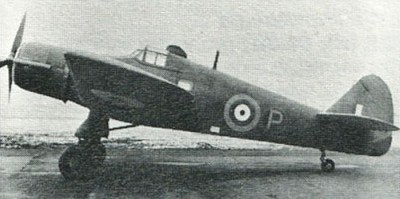
After the foundation of Folland Aircraft Ltd a series of projects beginning with Fo.101 remained paper designs only, and the firm’s first real aircraft was the Folland Fo.108, designed to meet Specification 43/37 for an engine testbed. Percival and General Aircraft also tendered, but Folland won the contract for a batch of 12 (P1774-85).
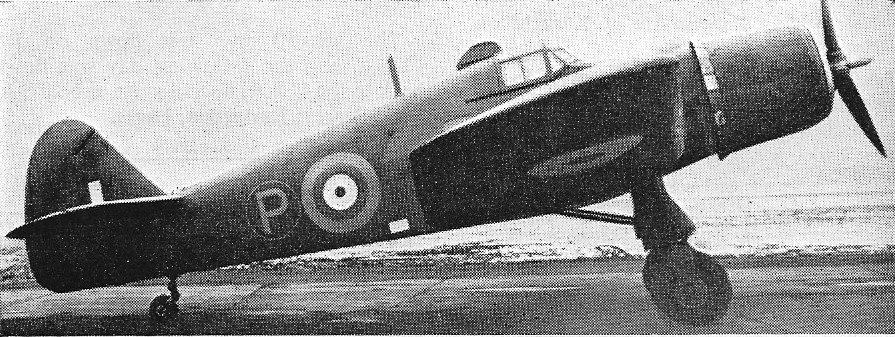
A large, single-engined, low-wing monoplane with fixed landing gear, the Folland 43/37 accommodated a pilot and two observers in a large cabin with complete instrumentation for monitoring engine performance in flight. Construction was mixed, the semi-monocoque fuselage of light alloy while the wings and tail were plywood-covered. Split trailing-edge flaps and automatic wingtip slots were fitted.
The first was delivered in 1940, and the first recorded loss was on 28 April 1944 when the eighth aircraft crashed on take-off from Heston during Bristol Centaurus IV tests. Centaurus Is and IVs rapidly disposed of three more Folland 43/37s in only three weeks, the third, first and second aircraft being lost on 28 August and 14 and 18 September 1944 respectively. The sixth aircraft was also lost on 14 September while fitted with a Sabre I. The only other recorded fates are two struck off charge in 1945: the eleventh on 5 March after testing the Hercules XI and the fifth on 27 March after Rolls-Royce Griffon tests.
The testbed aircraft engine installations included differing versions of the Napier Sabre, Bristol Hercules and Centaurus, and Rolls-Royce Griffon. The fifth aircraft was used later by de Havilland for propeller tests.
43/37
Engine: 1 x Centaurus
Max take-off weight: 6800 kg / 14992 lb
Wingspan: 17.68 m / 58 ft 0 in
Length: 13.21 m / 43 ft 4 in
Height: 4.95 m / 16 ft 3 in
Wing area: 54.63 sq.m / 588.03 sq ft
Max. speed: 470 km/h / 292 mph
Cruise speed: 430 km/h / 267 mph
Back to Folland Fo.144 Gnat


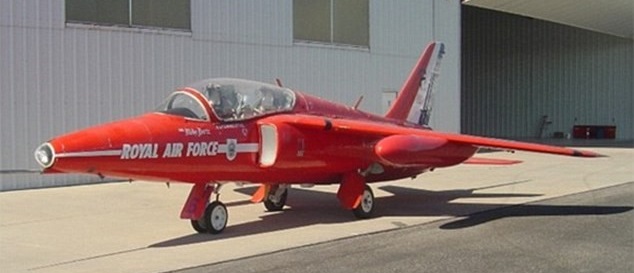
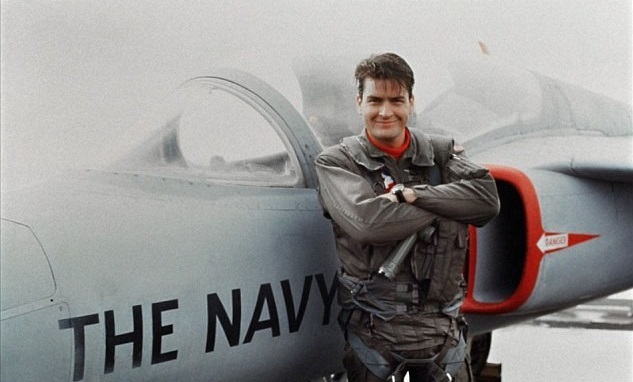
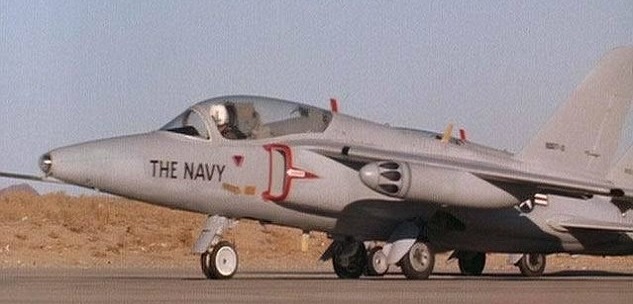


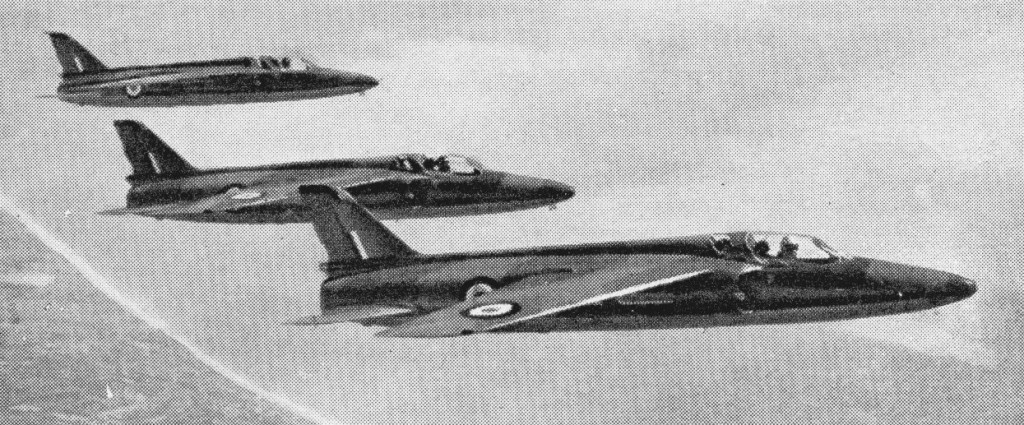
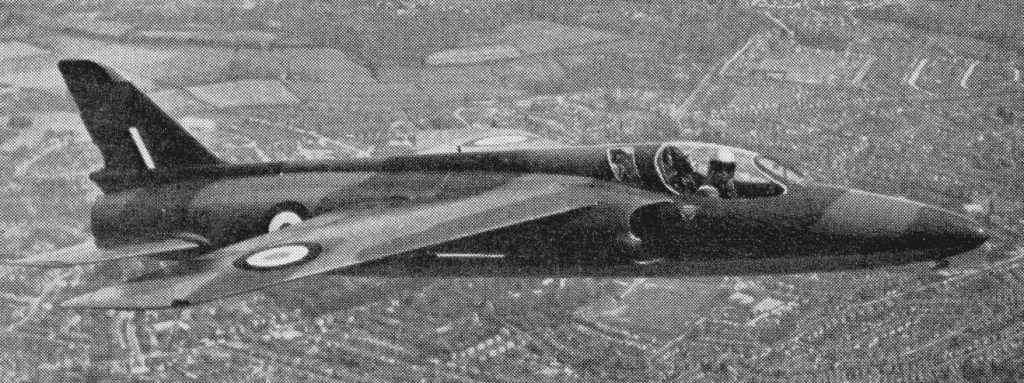
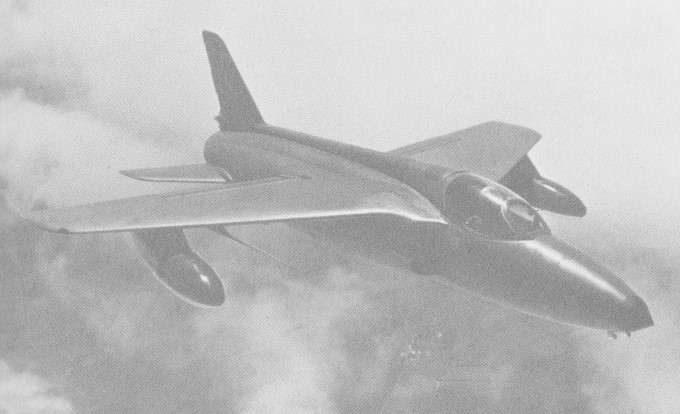
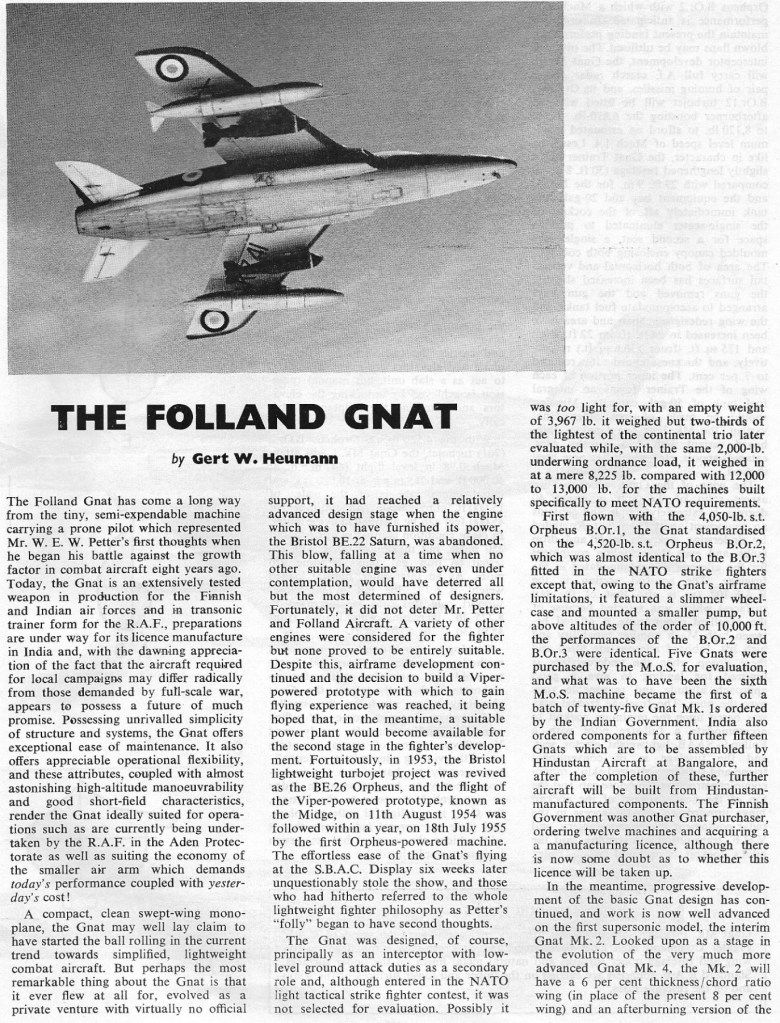
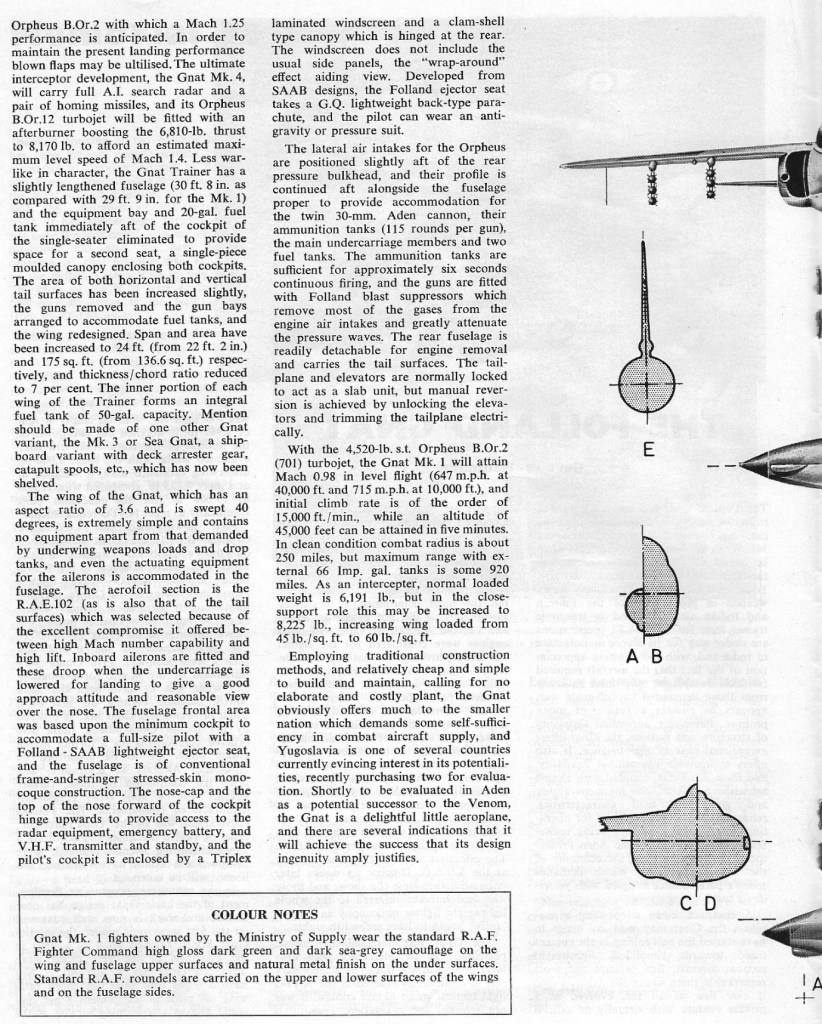
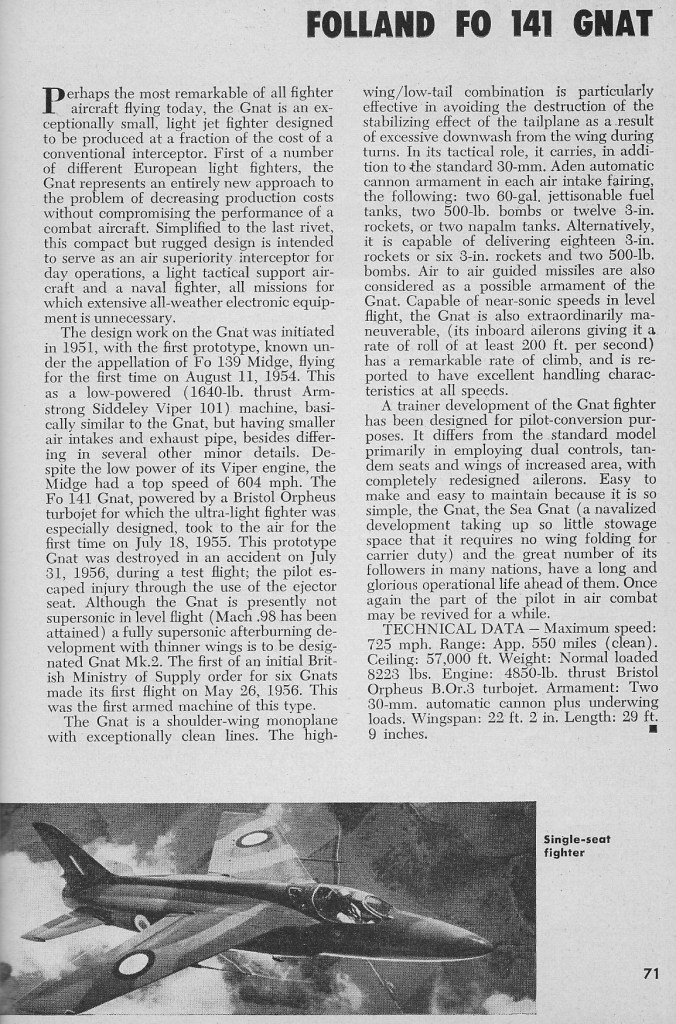
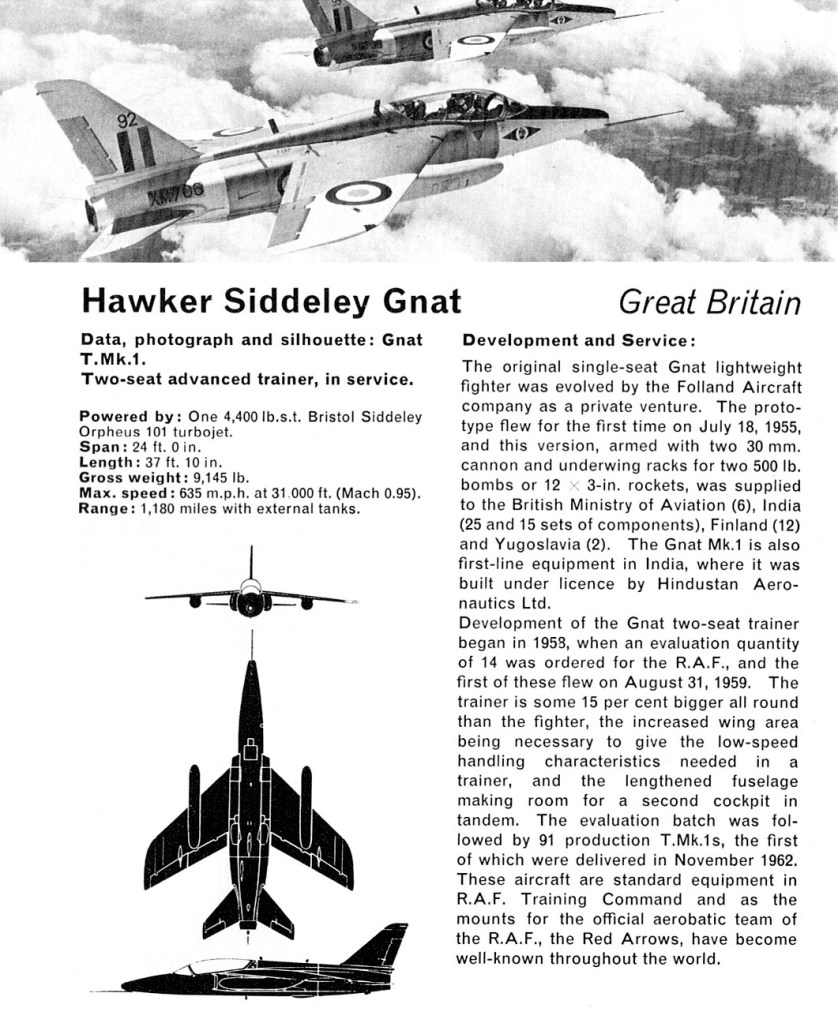
Although the RAF had not selected the Fo 141 Gnat for service in a front-line role, it did have a requirement for an unarmed, two-seat advanced trainer to replace the de Havilland Vampire T.Mk 11. Folland had already considered a training version of the Gnat as a private venture, and this was shown to be able to meet Air Ministry requirements including a 100 knot (185 kph) landing speed.
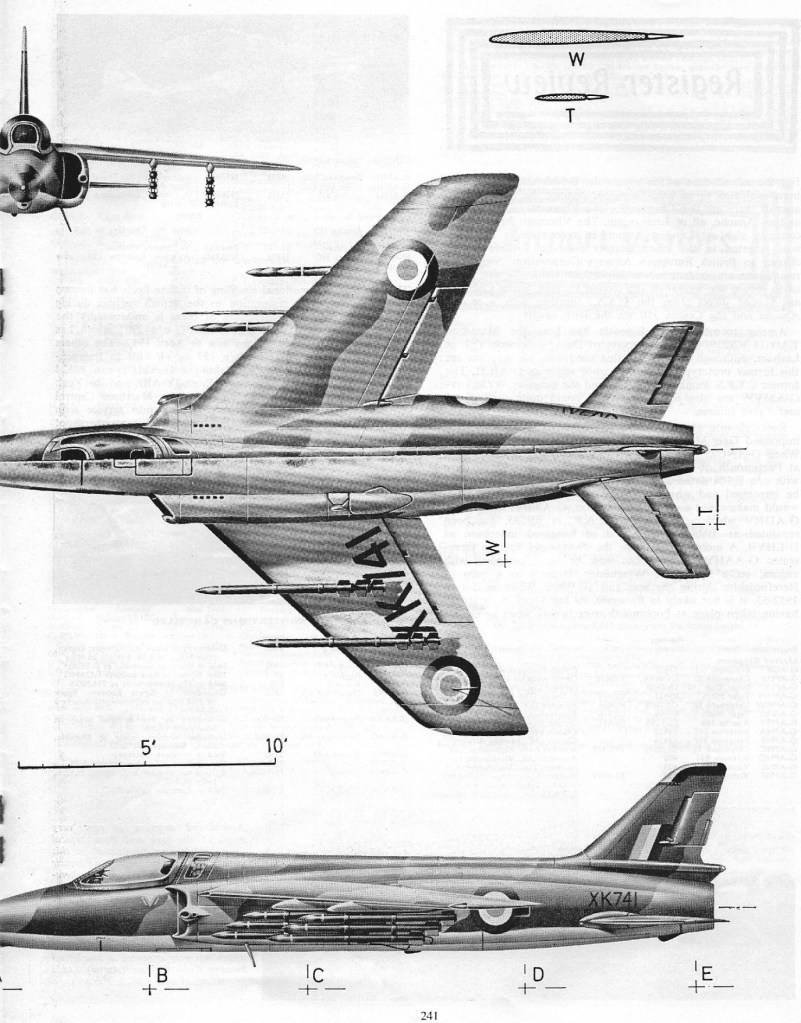
To make the Gnat a two-seater, it was necessary to remove the standard fixed gun armament of two 30 mm ADEN cannon located in the cheek intake fairings, and relocate the fuel tanks, but no major structural alterations were required. The most significant change was a new wing, increased in area by 3.72sq.m and with additional fuel capacity, which reduced the fuel storage requirement in the fuselage, making room for additional equipment. The forward fuselage was increased slightly in length, the tail surfaces enlarged, and outboard ailerons and conventional inboard flaps replaced the inboard ailerons of the fighter version. Power was to be supplied by a 1919kg thrust Orpheus 100.
Follands had already designed and built a new wing for a proposed development of the Gnat fighter for naval use, with improved low speed performance. By adopting the simpler and more efficient construction of this wing, which was reduced in thickness from the eight per cent t/c ratio of the original Gnat, to a mean value of seven per cent, while retaining the symmetrical R.A.E. 102 (mod.) section, Follands were able to offer a larger area for the trainer to give the necessary reduction in landing speed without a major weight penalty. It had the additional facility of increased fuel capacity.
A Ministry of Supply design study contract was awarded to Specification T.185D in the autumn of 1956 and a prototype contract was negotiated during 1957.
Apart from performance, one of the main requirements was for the inclusion of an advanced level of equipment, comparable to that in operational aircraft under development although not then in service. This included new flight and navigational instrument presentation to OR.946, provision of engine anti icing, centralised failure warning system, installation of liquid oxygen facilities and many other very advanced items.
The OR.946 flight instrumentation occupied space on the instrument panel than in the earlier Gnat by the deletion of the gun sight and bullet proof windscreen framing. OR.946 concentrates all essential flight information on two display units occupying the entire centre of the panel. On the left is the roller blind F.4 attitude indicator, which takes the place of the normal artificial horizon, and provides a non toppling reference in all flight conditions, while on the right is the Mk.1 display unit for TACAN and other navigational equipment.
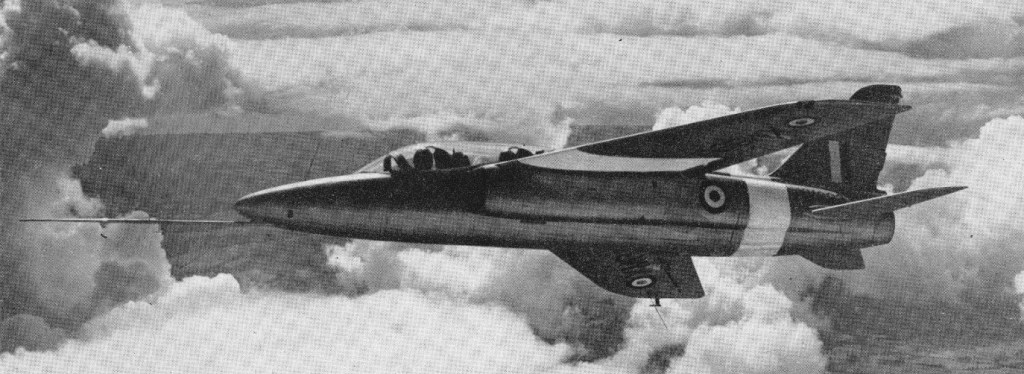
Additional space for the “black boxes” making up the Gnat T.l’s sophisticated equipment, including TACAN, ILS and the Air Data Computer, was found by enlarging the spine fairing of the original fighter behind the cockpit canopy. The canopy itself, as well as the windscreen, was completely new, the former being of the aft hinged clamshell type, blown from a single piece of Perspex. To protect the rear occupant in case of canopy jettison, the Gnat trainer has an additional internal windscreen over the duplicated instrument panel.
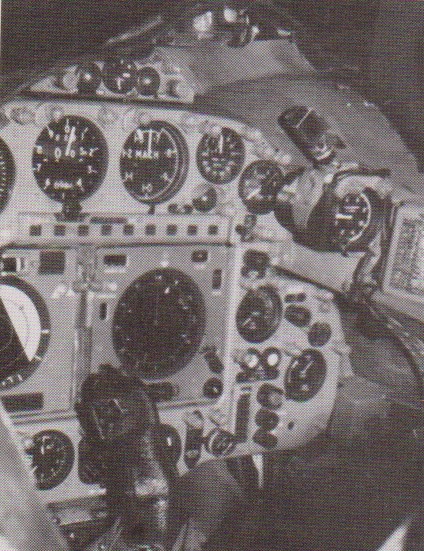
An ejection escape system was developed specially for the trainer by Folland, using two of the company’s own lightweight seats. Work on these was started by Folland in 1953, using a SAAB type seat layout as the original basis, but development had since continued entirely independently. The Mk. 4GT1 (front) and 4GT2 (rear) ejection seats in the Gnat have 80 ft/sec (24.4 m/sec) telescopic guns for adequate fin clearance at all airspeeds, and are cleared for use down to runway level at speeds of 90 650 knots (106 1204 km/h). They are used in conjunction with GQ Mk 35 back type parachutes, plus Type X personal survival packs in the seat pans, and have 6 ft (1.82 m) diameter drogues for man stabilisation if ejection takes place above 10,000 ft (3050 m). An extractor ‘chute on the seat helps immediate separation, with a drogue sock pulled off by a static line as the seat leaves the aircraft. After initiation by face blind or seat pan handle, operation of the seats is fully automatic.
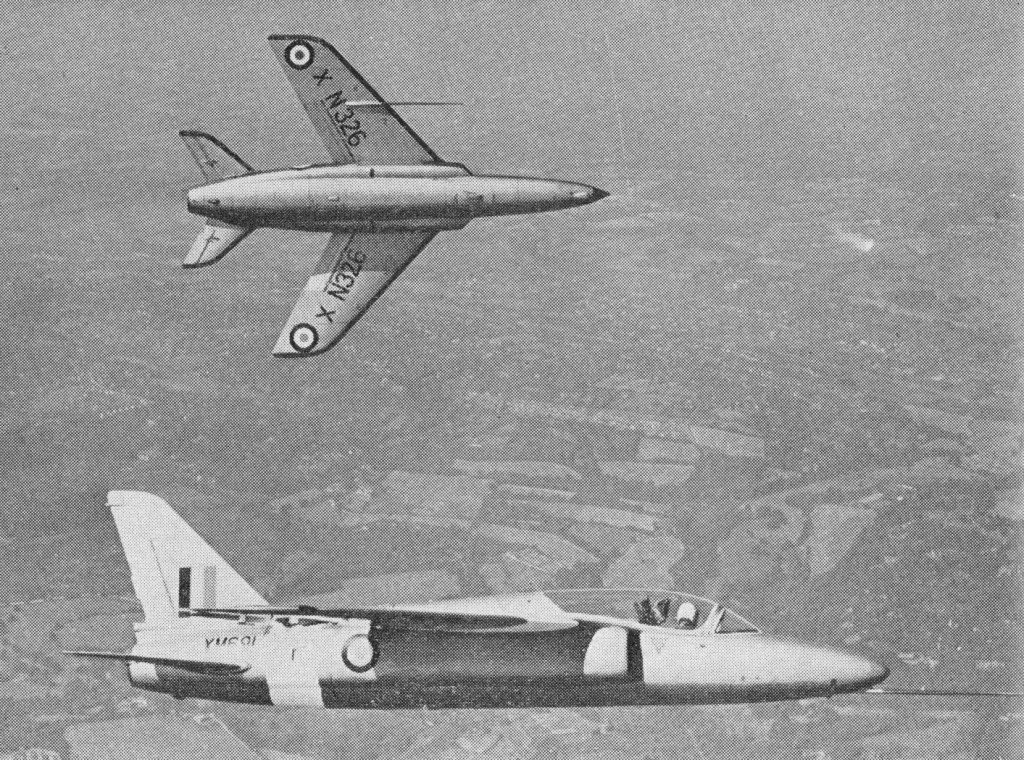
Engine installation was not changed from the original Gnat except that a slightly de rated Bristol Siddeley Orpheus was adopted in the interests of improved fuel economy and longer overhaul times. Secondary modifications provided intake anti¬-icing from hot air tapped from the engine compressor through to the entry guide vanes and bullet, and drive for a larger electric generator. In its standard RAF form, the Gnat trainer was powered by an Orpheus 101 developing 4230 lb (1920 kg) thrust for take off, but it is offered in addition with the higher powered (4,720 lb (2135 kg) Orpheus 501 if extra altitude performance is required. A Gnat trainer (XM698) has also flown with the fighter engine, which is the Orpheus 701, with a similar thrust to the 500 series.
Following the finalisation of the design, a contract for fourteen development aircraft to spec T.185P was placed 7 January 1958, and the first prototype Fo.144 Gnat trainer made its initial flight in the hands of Sqdn. Ldr. E. A. Termant on August 31, 1959 from Chilbolton airfield. The first eight of these aircraft were mainly employed for per¬formance testing and development of the various systems, including improved longitudinal control. The Ministry did not at first place a production order as they were concerned about the size and ability of the company to take on a large order. Following the take-over of Folland by Hawker Siddeley Aviation (becoming the Hamble division), after successful evaluation by the various official bodies concerned, a production order was placed in July 1960 for thirty aircraft for use as advanced trainers, and an additional twenty were ordered a year later. A further order for forty one followed in March, 1962. These were being turned out at the requested rate of four per month. The last Gnat T.1 for the RAF was delivered in May 1965.The Gnat trainer was then being offered on the overseas sales market.
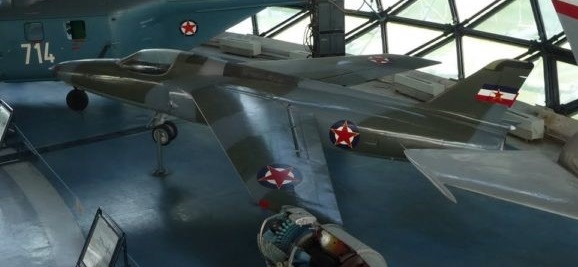
Yugoslavia ordered two Gnat F.1s for evaluation; the first aircraft flew on 7 June 1958 and both were delivered to Yugoslavia by rail. The aircraft were flown by the flight test centre but no further aircraft were ordered. One aircraft was destroyed in a crash in October 1958 while the other is preserved and on display in Serbia.
Hydraulic power is used as the primary means of operating ailerons and the all flying tailplane, with manual reversion in case of failure of the hydraulic system. Compared with the original Gnat, which had combined inboard ailerons and flaps, the trainer has a conventional flap and outboard aileron arrangement. The ailerons have automatic control stops which just about halve their range of movement to eight per cent at speeds above 150 knots IAS (278 km/h) to limit the rate of roll and prevent inertia coupling.
Effective longitudinal control results from the hydraulic¬ally powered flying tailplane, which like the ailerons has spring¬feel. A “Q” gearing mechanism reduces the amount of tailplane movement for a given stick displacement as speed increases, which improves handling at high indicated airspeeds, but the stick force per g is still very light above 400 knots (741 km/h). Tailplane trimming is via an electric actuator and thumb switch on the control column. In the event of hydraulic failure, the rear portion of the tailplane may be unlocked to act as elevators, with tailplane trimming still available from a stand by electric motor in the Hobson unit. Stick forces in manual are apparently not heavy, but because of the small size of the elevators, their effectiveness is only about one fifth of that of the tailplane. Speed is then restricted to 400 knots (741 kph) or M0.85.
The Orpheus 101 was up rated to 4,400 lb (1995 kg.) thrust to improve the high altitude performance.
With its simple and rugged structure designed for a minimum fatigue life of 5,000 hours and characterised by the absence of complicated castings and forgings, the Gnat is not difficult to build or maintain.
It became clear, however, that no production order would be placed while Folland remained outside the major manufacturing groupings which the government favoured; thus the company was taken over by Hawker Siddeley Aviation, becoming its Hamble Division.
Contracts for 30, 20 and 41 aircraft were awarded in February 1960, July 1961 and March 1962 respectively.
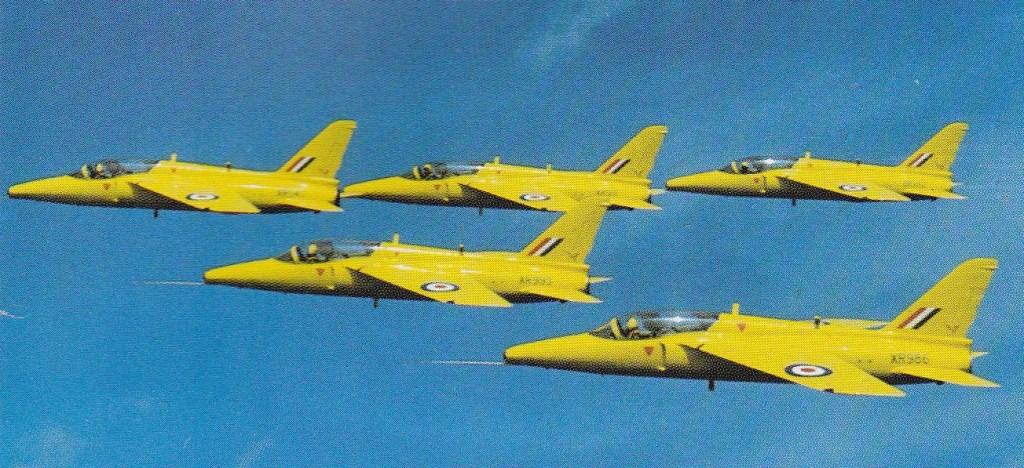
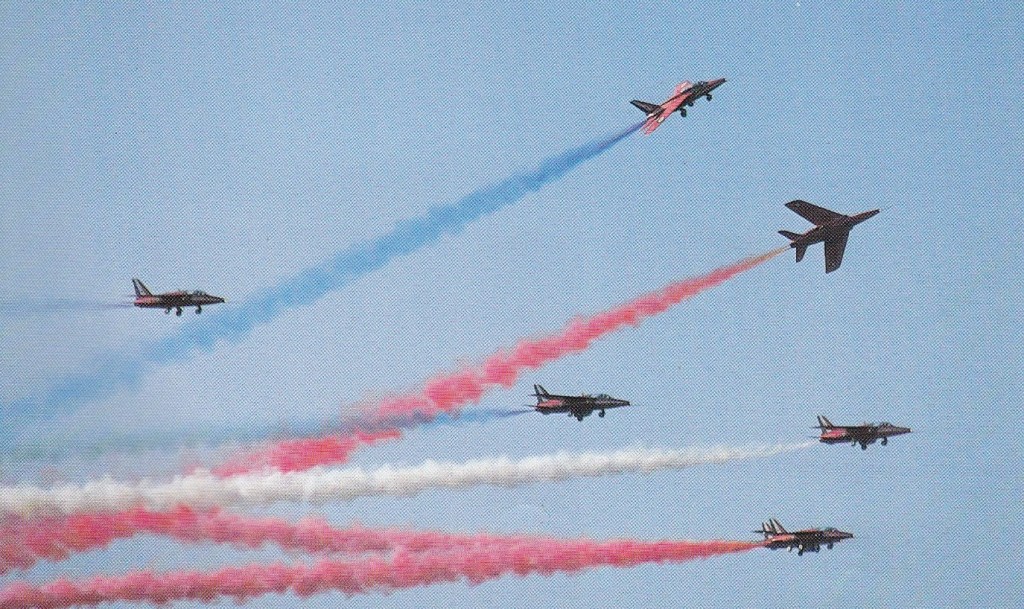
The last production Gnat T.Mk 1 flew on 9 April 1965 and was delivered to the RAF on 14 May, in the all-red scheme of the Red Arrows team. The Central Flying School, then at Little Rissington, first introduced the type in February 1962 but the major operator was No. 4 Flying Training School at Valley, which took its first aircraft on strength in November 1962 and which, in 1964, introduced the Gnat to the formation aerobatic scene, operating five all-yellow Gnats known as the Yellowjacks.
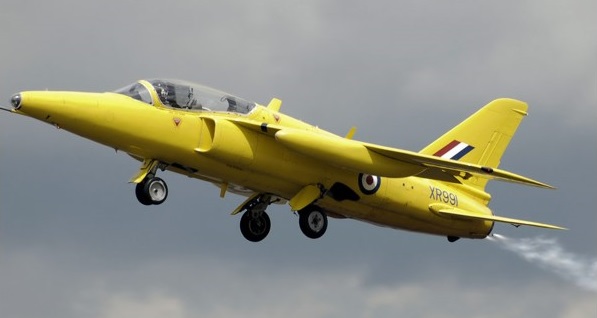
The team reformed as the Red Arrows in 1965, under the control of the Central Flying School, and its Gnats were withdrawn finally at the end of the 1979 display season, to be replaced in 1980 by the British Aerospace Hawk T.Mk 1. No. 4 FTS retired its Gnats on 24 November 1978.
Once pilots graduated from basic training on the BAC Jet Provost and gained their wings they were selected for one of three streams: fast jet, multi-engined, or helicopter. Those selected for fast jets were posted to RAF Valley for advanced training on the Gnat T.1, typically 70 hours of flying. Students would then move on to operational training using the Hawker Hunter, followed by a posting to an operational conversion unit for the type of aircraft to be flown.
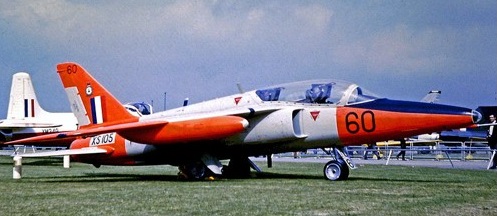
Following the introduction of the Hawker Siddeley Hawk into the training role as a replacement the Gnats were withdrawn from service. The largest operator 4 FTS retired its last Gnat in November 1978. Most of the retired Gnats were delivered to No. 1 School of Technical Training at RAF Halton and other training establishments to be used as ground training airframes. When the RAF had no need for the Gnats as training airframes they were sold off. Many were bought by private operators and are still flying in 2014.
Including licence built models, India received 238 plus 79 similar Ajeets. The first 13 aircraft for the Indian Air Force (IAF) were assembled at Hamble-le-Rice, they were followed by partly completed aircraft and then sub-assemblies as Hindustan Aircraft slowly took over first assembly, and then production of the aircraft. The first flight of an Indian Air Force Gnat was in the United Kingdom on 11 January 1958, it was delivered to India in the hold of a C-119, and accepted by the Air Force on 30 January 1958. The first Gnat squadron was the No. 23 (Cheetah), which converted from Vampire FB.52 on 18 March 1960 using six Folland-built Gnats. The first aircraft built from Indian-built parts first flew in May 1962. The last Indian-built Gnat F.1 was delivered on 31 January 1974.
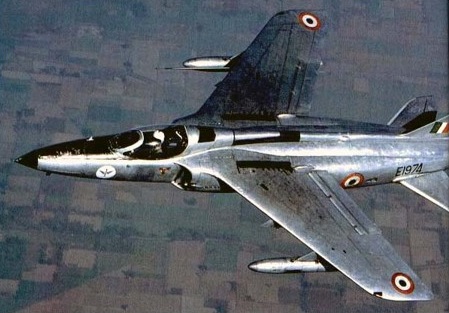
The Gnat is credited by many independent and Indian sources as having shot down seven Pakistani Canadair Sabres in the 1965 war, while two Gnats were downed by PAF fighters. During the initial phase of the 1965 war, an IAF Gnat, piloted by Squadron Leader Brij Pal Singh Sikand, mistakenly landed at an abandoned Pakistani airstrip at Pasrur and was captured by the PAF. Two Lockheed F-104 Starfighters claimed to have forced the Gnat down. This Gnat is displayed as a war trophy in the Pakistan Air Force Museum, Karachi. After the ceasefire, one Pakistani Cessna O-1 was shot down on 16 December 1965 by a Gnat.
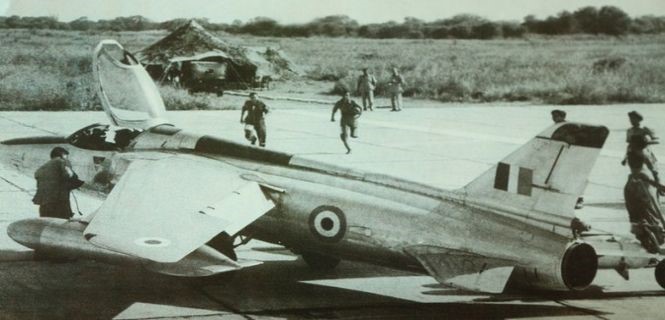
The Gnats were used again by India in the Indo-Pakistani War of 1971 against Pakistan. The most notable action was the Battle of Boyra where the first dogfights over East Pakistan (Bangladesh) took place. The Indian Air Force (IAF) Gnats downed two PAF Canadair Sabres in minutes and badly damaged one. The Pakistan Air Force claims that one Gnat was shot down, which was proved incorrect. Another notable dogfight involving a Gnat was over Srinagar airfield where a lone Indian pilot held out against six Sabres, scoring hits on two of the Sabres in the process, before being shot down. Gnat pilot Nirmal Jit Singh Sekhon was posthumously honoured with the Param Vir Chakra (India’s highest gallantry award), becoming the only member of the IAF to be given the award.
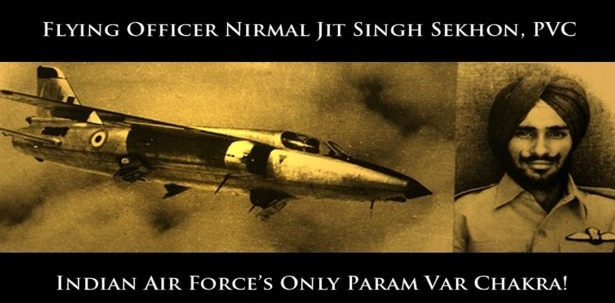
By the end of 1971, the Gnat proved to be a frustrating opponent for the larger, heavier and older Sabre. The Gnat was referred to as a “Sabre Slayer” by the IAF since most of its combat “kills” during the two wars were against Sabres. The Canadair Sabre Mk 6 was widely regarded as the best dogfighter of its era. Tactics called for Gnats taking on the Sabres in the vertical arena, where the Sabres were at a disadvantage. As the Gnat was lightweight and compact in shape, it was hard to see, especially at the low levels where most dogfights took place. Apart from air defence operations, they performed multiple roles in the Bangladesh Liberation War, including anti-shipping operations, ground attack, bomber/transport escort and close air support.
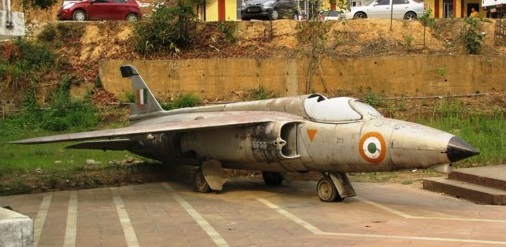
The IAF was impressed by the Gnat’s performance in the two wars, but the aircraft had problems including hydraulics and unreliable control systems. To address these issues, the IAF issued a requirement for an improved “Gnat II” in 1972, at first specifying that the new version was to be optimized as an interceptor, but then expanding the specification to include the ground-attack role. Over 175 of the Hindustan Aeronautics Limited-built licensed version, the Ajeet (“Unconquerable”), were produced in Bangalore. Several Gnats remain in use in private hands. Some IAF Gnats, one of which had participated in the 1971 war in East Pakistan (present day Bangladesh), were presented to the Bangladesh Air Force.
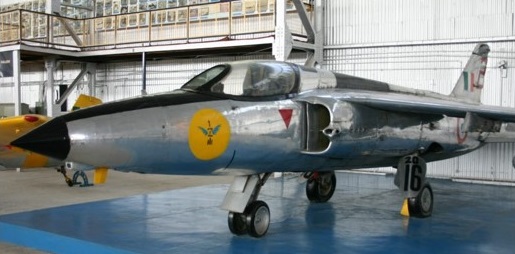
Folland Gnat Mk. 1
Engine: 1 x 4,230 lbs.t. (1919 kgp) Bristol Siddeley Orpheus 101
Wingspan, 24 ft. (7.33 m)
Length, 31 ft. 9 in. (9.7 m)
Height, 10 ft. (3.06 m)
Wing area, 175 sq. ft. (16.26 sq m)
Empty weight, 5,639 lb. (2 559 kg)
Crew weight, 360 lb. (163 kg)
Internal fuel, 265 Imp.ga1 (1200 litres)
AVTAG, 2,040 lb. (926 kg)
Gross weight, clean, 8,039 lb. (3 648 kg)
External fuel tanks, 118 gal. (536 litres), 908 lb. (412 kg)
Overload gross weight, 9,107 lb. (4 133 kg)
Max level speed: 610 kts EAS (1130 km/h) at sea level (Mach 0.93).
Max speed, 36,000 ft. (11 000 m), M= 0.95
Max speed, 636 mph (1024 kph) at 31,000ft (9 500 m)
Max dive speed, M 1.15
Cruise, 470 mph (756 kph)
Initial climb, 7,620 fpm (38.7 m/sec)
Climb to 26,000 ft. (8 000 m), 4 min. 40 sec.
Climb to 40,000 ft (12,000 m), 7 min 30 sec.
Service ceiling, 48,000 ft (14 600m)
Stalling speed, 115 mph (185 kph)
Take off distance to 50 ft (15 m), 2,550 ft (775 m)
Landing distance from 50 ft (15 m), brake parachute, dry surface, 2,210 ft (705 m)
Max range, internal fuel, 600 nm (1100 km)
Range with external fuel, 1,000 nm (1 850 km).
Armament: 2 x 30mm Aden cannon.
Crew: 1-2