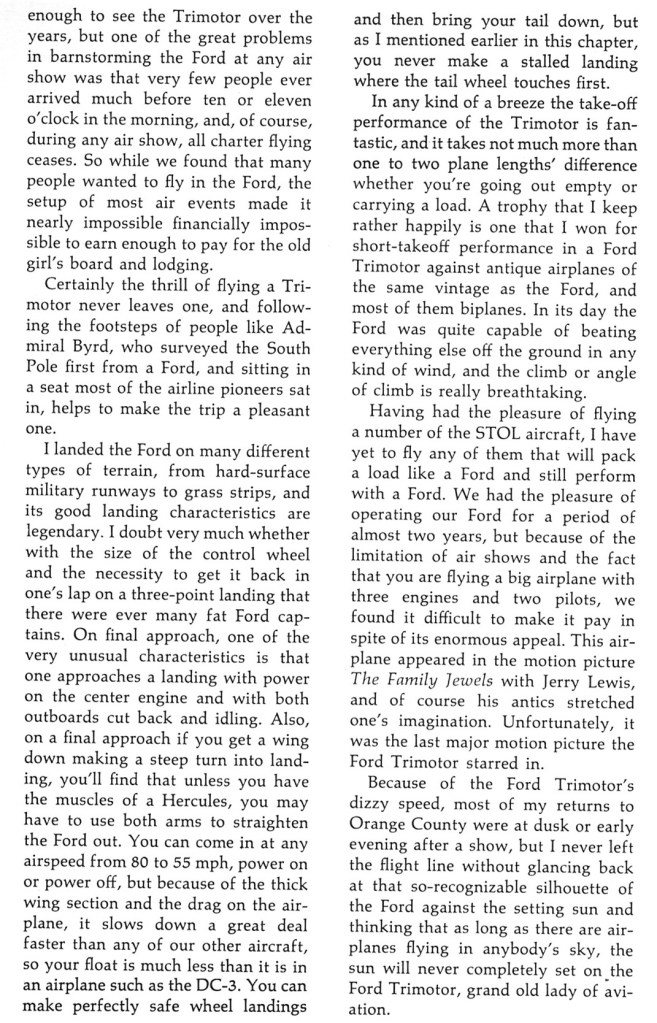
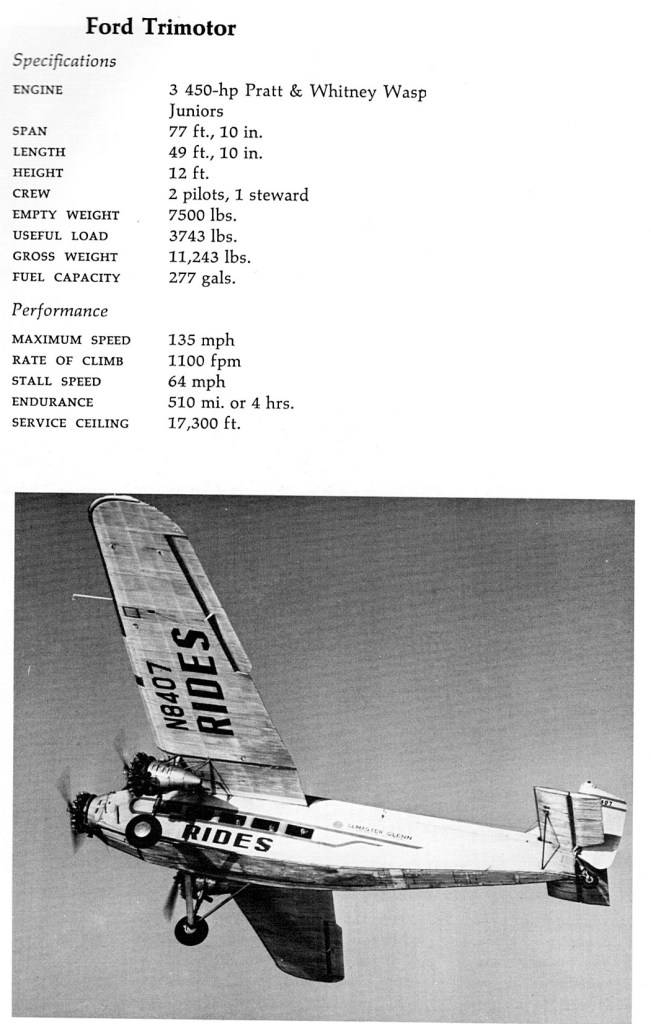
Edsel Ford was born in 1893, the son of automobile pioneer Henry Ford. Edsel worked part time in the Ford factory where, in 1909, he met a Ford employee, Charles Van Auken, who had bought construction drawings for a Bleriot XI monoplane. Knowing that Edsel was deeply interested in aviation, his father asked several Ford employees to help Van Auken build the airplane.
Author: Terry
Ford O-145
The 1927 Ford O-145 was a 36 hp, four-cylinder horizontally opposed air-cooled aero engine. With 143.1ci, it weighed 118 lb.
The only recorded use for flight was in the Ford Flivver lightplanes.
Henry Ford never pursued the idea of offering an aviation engine, although his models T and A auto motors were quite popular among home-builders in the ’20s.
Ford Executive
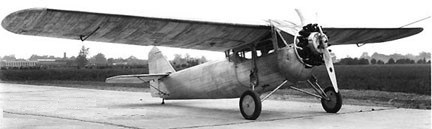
Designed by William Stout, Ford’s planned all-metal entry for the executive market was good for only one test flight. Piloted by Edward Hamilton, NX1085 proved to be tail-heavy to the extreme and was reportedly scrapped later that year.
Engine: 225hp Wright J-5
Wingspan: 45’0″
Gross weight: 3700 lb
Seats: 5
Ford 15-P
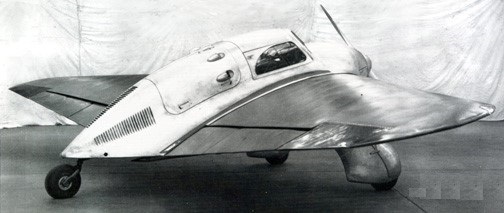
Designed by Henry Karcher the 1932 Ford 15-P was a tailless delta-wing experiment with rear-mounted motor, and a driveshaft running between the seats. Metal-clad fuselage, fabric-covered wings; full-panted gear. One was built, NX999E (some photos show NC402 which was a dummy registration), which made a few short test flights, but was damaged in an accident, and placed in storage. Although the license for this “flying wing” project was briefly renewed in 1936, there is no company record of further development.
15-P
Engine: Ford V-8, 115hp
Wingspan: 34’0″
Length: 14’0″
Range: 500
Seats: 2
Ford 14-A
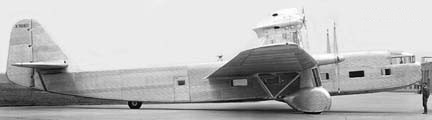
The 1930 10-A design study only went as far as a wind-tunnel model with four engines, two of them pylon-mounted in a tractor-pusher configuration. The design continued in the 12-A of 1931. The 12-A was a modified 10-A design with three engines (planned for 1000hp Hispano-Suiza + two 575hp P&W Hornet). Not built, but design elements went into the 14-A.
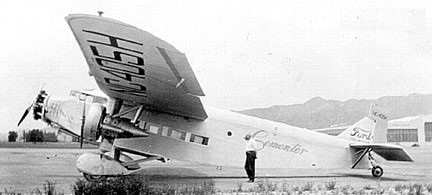
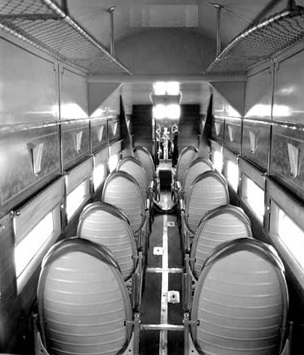
The 1932 Ford 14-A, NX9660, involved elements from the 10-A and 12-A designs, and was the last of the Ford Tri-Motors. Pullman-style seats converted into berths in the four main, climate-controlled, eight-passenger compartments. Wing motors, with four-blade propellers, were buried, and the third was pylon-mounted atop the fuselage; compressed air starters.
It was completed by Stout Metal but never flew and was cut up in 1933.
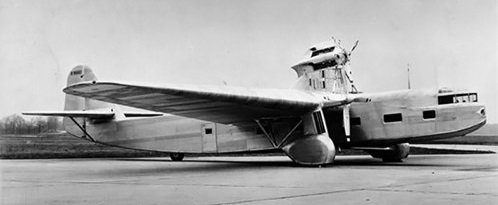
Engines: 2 x 715hp/533-kW Hispano-Suiza, 1 x 1,100-hp/820-kW Hispano-Suiza
Wing span: 110’0″ / 33.5 m
Length: 80’10” / 24.4 m
Seats: 40
Ford Fliver
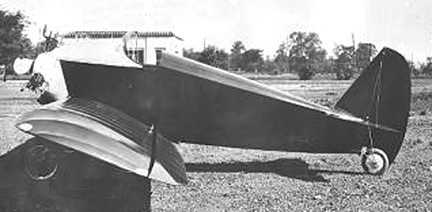
Ford demanded a one man airplane that would fit in his office. Otto Koppen took the measurements and locked himself up with one of Ford’s master craftsmen. The result was the 1926 Ford Flivver. The #1 unregistered Fliver single place open cockpit low wing monoplane was powered by a 36 hp Anzani, featured full-span combination flap/aileron, and cost $498 (original estimate).
The Fliver was flown only by two people; one was Charles Lindbergh, who saw it in Ford’s hangar during his triumphal tour of the United States.
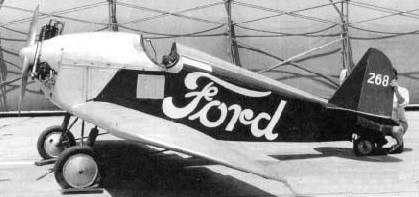
Koppen designed a second Flivver, registered N268, a different craft in spite of its superficial resemblance to the first. In front was a Ford-developed 2-cylinder motor, created to break a world record in the 1,100 pound class. The 960 miles from Dearborn, Michigan to TitusAlle, Florida on 55 gallons of fuel. Unfortunately, the following day the pilot took it out for a short flight that turned out to be his, and the airplane’s, last. The engine quit and the airplane went into the ocean. It floated ashore the next day; matchsticks that had been stuck in the fuel vents to prevent condensation, were still in place.
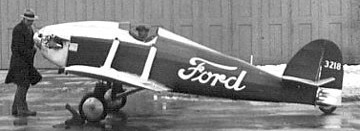
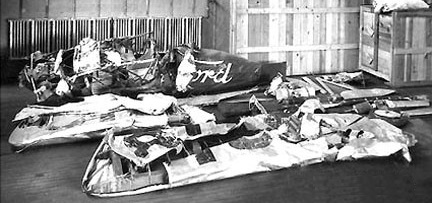
Both the #3 and #4 were registered N3218, and were powered with Ford motors. On 25 February 1928, #3 crashed in Florida, killing test pilot Harry Brooks and Henry Ford was so shaken by the tragedy that he ordered further production of small planes halted.
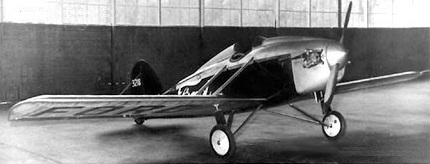
The wreckage of #3 was either restored or used as basis for restoration as #4 for display in the Ford Museum.
1
Engine: 36hp Anzani
Wingspan: 21’9″
Length: 15’6″
Max speed: 85-95 mph
Cruise speed: 80 mph
Stall: 30 mph
Ford 8AT Gallery
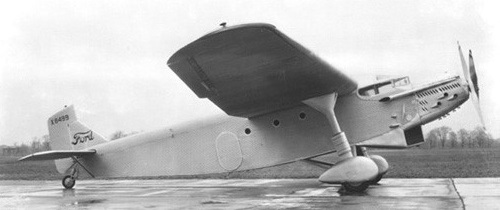
Ford 8AT
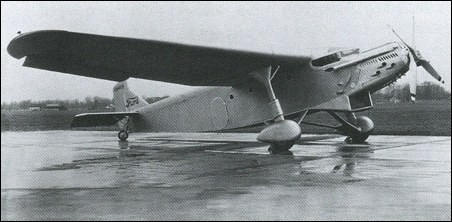
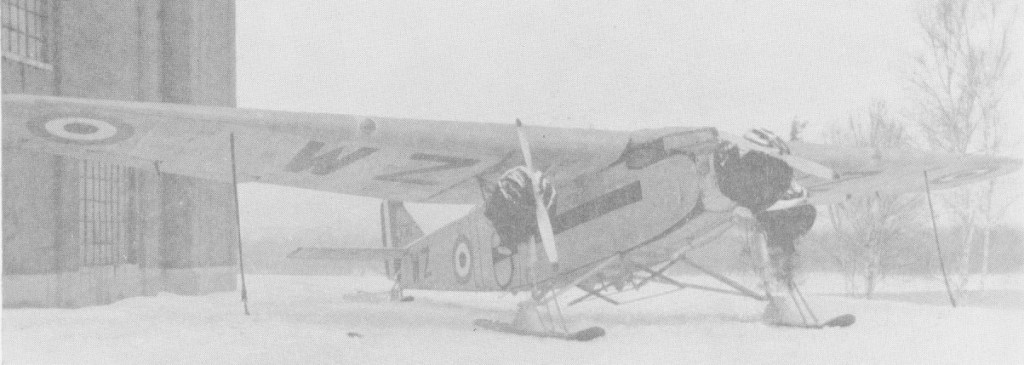
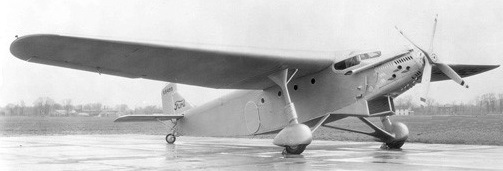
The 8AT variant (ATC 2-485) of 1931 was a single Model 5-AT-C converted as a freighter without the wing-mounted engines, seating 13. First flown on 30 July 1929 power was a 575hp P&W Hornet A and also tried were the Hornet B, 575hp Wright Cyclone, 715hp inline Hispano-Suiza, and 535hp Bristol Jupiter.
The one built was operated as a two place cargo Express with the Hispano-Suiza engine as N8499. It was refitted with a 700hp Wright Cyclone GR (2-485) in 1934 for Pacific Alaska Airways with the new registration NX/NC8499, moving to Colombia in 1938.
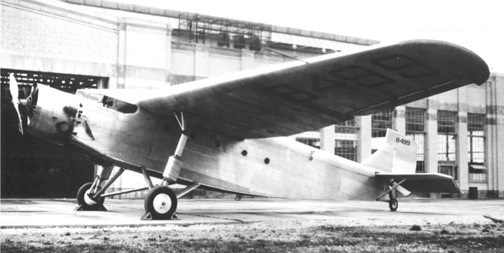
AT-S Freighter
Engine: 715hp Hispano-Suiza
Useful load: 4900 lb
Max speed: 135 mph
Cruise speed: 110 mph
Seats: 2
Ford Tri-Motor Gallery
Back to Ford Tri-Motor