1980: Harmon Engineering Co., Rt.1, Box 186, Howe, TX 75059, USA.
LSA builder
1980: Harmon Engineering Co., Rt.1, Box 186, Howe, TX 75059, USA.
LSA builder
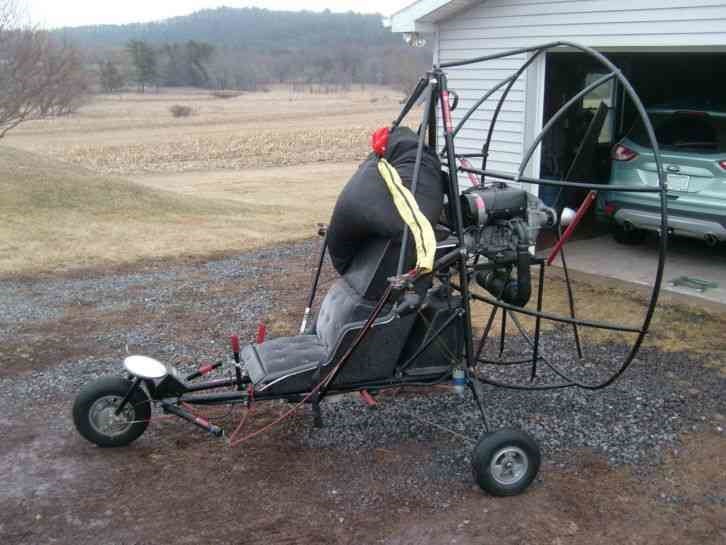
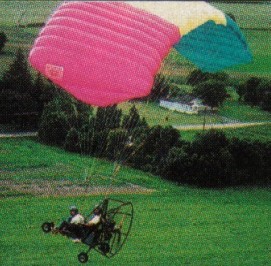
Introduced in 1988, the Harmening High Flyer powered parachute was designed to comply with the US FAR 103 Ultralight Vehicles rules, including the category’s maximum empty weight of 254 lb (115 kg). The aircraft has a standard empty weight of 247 lb (112 kg). The aircraft was designed to be a single-place or optionally two-seater. The base model High Flyer features an MK Superfit rip-stop nylon parachute-style high-wing, tricycle landing gear and a single 45 hp (34 kW) 2si 460-F engine in pusher configuration. Variants use other engines.
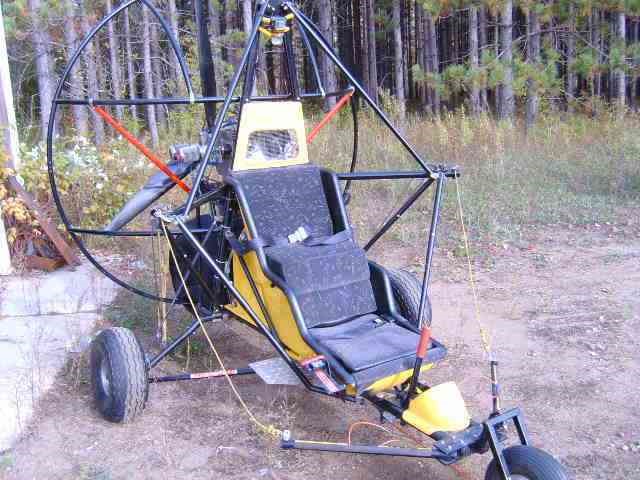
The aircraft is built from a combination of bolted 6061-T6 aluminium, welded 4130 steel tubing and mild steel. In flight steering is accomplished via foot pedals that actuate the canopy brakes, creating roll and yaw. On the ground the aircraft has lever-controlled nosewheel steering. The main landing gear incorporates sprung steel suspension. The aircraft was factory supplied in the form of an assembly kit that required 30–40 hours to complete.
All kits were manufactured in the USA, and includes the engine and 3 blade propeller. FAR 103 legal, the High Flyer Standard converts from single to two place in 10 minutes.
By 1998 the company reported that 75 kits had been sold and 75 aircraft were completed and flying, the cost in 2001 was US$9,500.
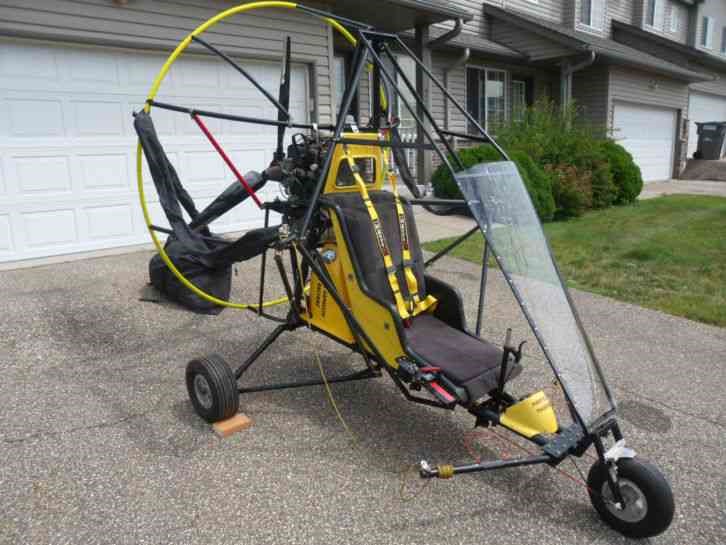
The production by Harmening’s High Flyers of Genoa, Illinois, USA, ended when the company went out of business in circa 2008.
Variants:
High Flyer
Base model
Engine: 2si 460-F, 45 hp (34 kW)
Cost 2001: US$9,500
High Flyer Standard
Engine: Rotax 503, 50 hp (37 kW)
Height: 6.7 ft
Length: 10 ft
Empty weight: 247 lb
Gross weight: 687 lb
Fuel capacity: 5 USG
Cruise: 26 mph
Range: 20 sm
Rate of climb: 450 fpm
Takeoff dist: 50-150 ft
Landing dist: 20-50 ft
Service ceiling: 10,000 ft
Cost 2000: US$9,395
Completed and flown: 25 by early 2000
High Flyer Deluxe
Larger fuel tank
Engine: Rotax 503 50 hp (37 kW) engine
Cost 2000: US$9,895
Completed and flown: 25 by early 2000
High Flyer Premiere
Engine: HKS 700E, 60 hp (45 kW)
Cost 2000: US$14,980
Completed and flown: 30 by early 2000
High Flyer Executive
Engine: Hirth 2706, 65 hp (48 kW)
Wingspan: 39 ft (12 m)
Wing area: 550 sq ft (51 m2)
Length: 10 ft 0 in (3.05 m)
Carriage Height: 7 ft 0 in (2.13 m)
Empty weight: 280 lb (127 kg)
Gross weight: 830 lb (376 kg)
Fuel capacity: 9 U.S. gallons (34 L; 7.5 imp gal)
Cruise speed: 26 mph (42 km/h; 23 kn)
Rate of climb: 1,000 ft/min (5.1 m/s)
Crew: one
Capacity: optionally one passenger, if second seat fitted
Cost 2000: US$11,999
Completed and flown: 30 by early 2000
High Five
Engine: Rotax 582, 64 hp (48 kW)
Cost 2005: US$12,250
Completed and flown: 10 by early 2005
1989: 15487 State Route 72 Genoa, IL 60135, USA.
Trike builder
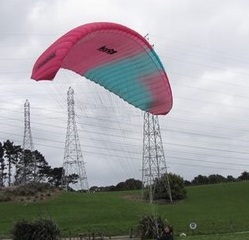
A design from 1993, this was designed as a beginner wing.
Sirocco M
Pilot weight: 65-92 kgs
Don Harkness was the first Australian who designed and developed a type-approved aircraft engine. The engine was the Harkness Hornet, first built in 1928 and later installed in two locally built aircraft types, the Genair and the Wonga.
The Harker Hawk PFA 003-10004 is a single-engined aircraft registered G-BDNE. An original design by Don Hawker, the Harker Hawk was started in 1973. A two seat low wing monoplane with slightly swept-back wings, it had a tail wheel undercarriage. Powered by a Continental A65, construction of PFA.03010004 was underway during 1974.
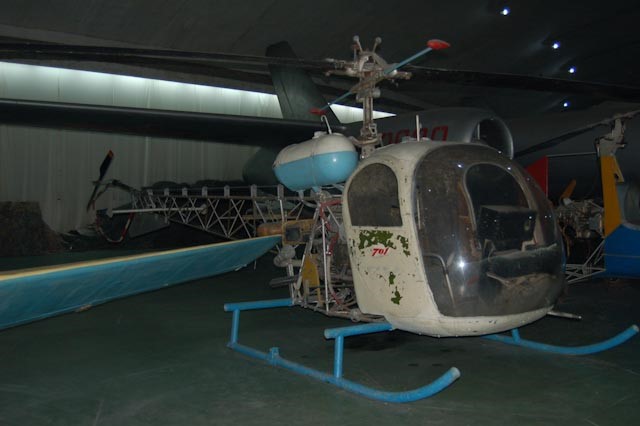
The Harbin Type 701 prototype was a reverse-engineered Bell 47G (Sioux) copy.
It was not put in production.
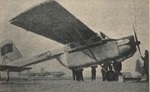
The Drepeau Rouge 1 is a five passenger, one pilot aircraft from China, with a 450kg useful load.
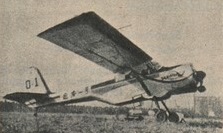
The Harbin Yun An 1 was constructed by professors and students, and is a version of the Drepeau Rouge 1.
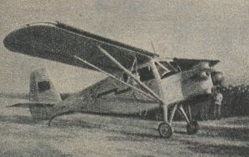
The 1958 Kiang No.1 was a one-off model. Built in 130 days by the Kharbin Institute. The three-seat Kiang-2 was intended for agricultural use.
Max speed: 100 mph
Range: 416 mi
To/Ldg dist: 80 yda
Payload: 484 lb
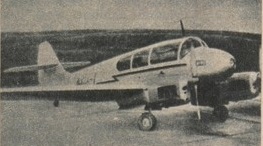
The Harbin Songhuajiang-1 (松花江一号) was a Chinese unlicensed copy of the Aero Ae 45S produced in 1959.
Built at the Weijian State-owned Machinery Factory, Harbin, it first flew on 29 September 1959.
Engines: 2 x Walter Minor 4-III, 104 hp
Propeller: two-blade
Wingspan: 40ft 4,25in
Length: 28ft 1,8in
Maximum Take-off Weight: 3527 lb
Crew: 1 + 5
Maximum Speed: 170.3 mph
Range: 500.2 mi

