Harper, Arthur Frederic Monnier

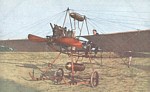
Monnier Harper – 1912

(Arthur) Monnier Harper was born 17-8-1888 in Belfast and was a violin virtuoso, making his public debut at the age of eleven. Probably in 1904 he settled with his mother and brother in Brussels, and at the age of sixteen played in the orchestra of the Ostende Kurhaus. In the following years he performed as a soloist in France, The Netherlands, England, Northern Ireland and Belgium. Monnier Harper also played with the Residentie Orchestra of The Hague during one season (probably 1913-14).

In 1911 he settled in Scheveningen, being appointed Dutch representative of the Weston Hurlin Co., a supplier of aircraft components and founder of flying schools. The Dutch aviation pioneer Adriaan Mulder had been his flying instructor.

Louis Blériot, in his Type XI monoplane, flew across the English Channel from Les Baraques, near Calais, to Northfall Meadow at Dover on Sunday, 25 July 1909, winning the Daily Mail challenge prize of £1,000. Monnier Harper was inspired.

Lodewijk Muns, writing on the NMI website, notes that 1909 was also the year of the first flight over Dutch territory.

It wasn’t by Monnier Harper.
De Dordrechtsche Courant, 17 August 1909, page 2:
‘On Friday on the heath at Vaassenschenweg, Messrs Elbe Rieciel and Arthur Monnier Harper, violinists from Apeldoorn, tried out their homemade flying machine.

‘At first, the machine quite often refused to budge, but with some helpful hands it finally began to move beyond this earthly vale of tears.

‘However, the unevenness of the terrain made the colossus waver and with a thump it smashed into the hillside, crushing the two bicycles which provided the forward momentum.

‘Fortunately, the two pilots were unhurt.

Arthur Monnier Harper died 1-1-1916.
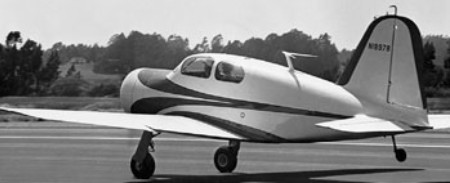
Harlow PJC-2 / UC-80

The Harlow Engineering Corp. of Alhambra, California, began production of the Harlow PJC-2 in 1938. In the following year, the company changed its name to the Harlow Aircraft Co. The Model PJC-2 was a fourseat cabin-monoplane of all metal construction and was fitted with retractable landing gear. The Harlow was under development for three years and submitted to over a year of flight testing before it was placed on the market. Production was continued in small numbers until 1941.

Seats 4.
Gross wt. 2,600 lb
Empty wt. 1,700 lb
Engine 145-hp Warner Super-Scarab seven-cylinder radial.
Top speed 150 mph
Cruise 135 mph
Landing speed 53 mph
Initial climb rate 660 fpm
Range 500 miles
Ceiling 15,500 ft

Harlow

Formed 1938 to develop the Harlow PJC-2 four-seat allmetal cabin monoplane, which remained in production until December 1941. Four were delivered to the USAAF as UC-80s. A PC-5A two-seat trainer version was developed in 1939 and assembled under license 1941-1942 by Hindustan Aeronautics Ltd. After America’s entry into Second World War, Harlow Engineering undertook military contract work.

Harlan Dove

Harlan, who had rented a shed to Max Schüler, took over the semifinished student model in 1910. His chief architect Karl Grulich improved it, finished it – and Harlan came out with it. This Harlan-Eindecker became a successful aircraft. On 29 December 1910, Grulich thus flew his aircraft license number 46. By the end of the year 1911 several versions of this pattern were built and sold. At the end of 1913, the Harlan works had three aircraft sheds, but in the spring of 1914 Harlan was financially deadlocked. He sold his company.

At the beginning of 1914, the “Bussard-Flugzeug-Werke GmbH” emerged from the sale of the remains of the Harlan-Flugzeugwerke GmbH and had its small workshop and flying school in the shed.

Harlan-Flugzeugwerke GmbH

Harlan, who had rented a shed to Max Schüler, took over the semifinished student model in 1910.

At the end of 1913, the Harlan works had three aircraft sheds, but in the spring of 1914 Harlan was financially deadlocked. He sold his company.

At the beginning of 1914, the “Bussard-Flugzeug-Werke GmbH” emerged from the sale of the remains of the Harlan-Flugzeugwerke GmbH and had its small workshop and flying school in the shed.

Harmon Rocket HR-2 Rocket II / Rocket III

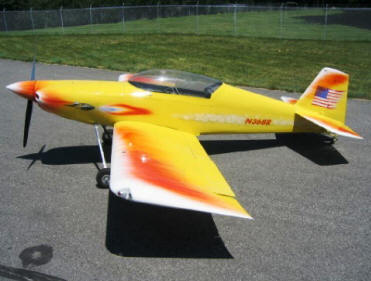
The Rocket II is a modified Van’s two place RV-4.
The kit to build a Rocket II from John Harmon is an extension of RV-4 kit which is purchased from Van’s.
With the intended use of bigger engines the altered fuselage is wider and the length 18 inches longer.
The modified wing was tested by an independent engineering facility. A unique modification is titanium for the gear legs which provide a difference in feel when landing and also doesn’t shimmy during ground operations.
The HR2 is not a quickbuild kit as many builders of the Rocket prefer to be more involved in the aircraft building process and express a preference of some minor fitting and trimming. An economy cruise speed of 215 mph at 55 is average for a Rocket II with a LYC.10-540 -C4B5/250 hp. 2575 rpm. while there is one Rocket that has a 340+ horsepower and can cruise at 275 mph.

Harmon Rocket II
Engine: LYC. 10-540-C4B5/250 hp. 2575 rpm.
Propeller: Hartzel 80 in. dia.
Span: 21 ft. 10 in.
Length: 21 ft. 6 in.
Height: 5 ft. 7 in.
Wing Area: 109 sq. ft.
Wheel Track: 6 ft. 6 in.
Empty Weight: 1200 lbs.
Gross Weight: 2000 lbs.
Useful Load: 800 lbs
Power Loading: 5.9 lbs/hp.
Wing Loading: 16.4 lbs/sq. ft.
Fuel Capacity: 42 USgal.
Seats: 2
Cruise Speed 75%: 230 mph.
Econ. Cruise 55%: 215 mph.
Vne: 275 mph.
Rate of Climb (gross): 3100 fpm.
Stall: 55 mph.

Harmon Rocket III
Engine: LYC.10-540-400hp.
Propeller: Hartzel 78 in. 3 Blade
Span: 20 Ft.
Length: 21 Ft. 6 in.
Height: 5 Ft. 6 in.
Wing Area: 99 sq. ft.
Empty Weight: 1080 lbs
Gross Weight: 1800 lbs
Useful Load: 720 lbs.
Power Loading: 4.5 lbs/hp.
Wing Loading: 18 lbs/sq.ft.
Fuel Capacity: 47 USgal.
Seats: 1
Cruise Speed 75%: 260 mph
Econ. Cruise 55%: 230 mph
Vne: 310 mph
Rate of Climb (gross): 3600 fpm.
Stall: 58 mph.

Harmon Mr America

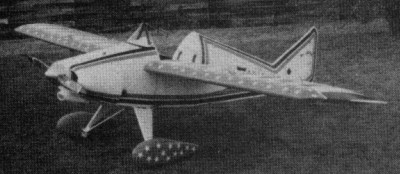
Harmon chose the long-established combination of a welded steel-tube fuselage and tail surfaces, with wood spar and rib wings. In addition, the wing may be easily removed for storage and towing. The entire aircraft can be built with hand tools except for the use of a welding rig. Mr. America’s powerplant is a nearly stock 1600-cc Volkswagen engine bored to 1650. The engine develops an honest 60 hp, to pro¬duce what is said to be rapid acceleration on takeoff to around 800 fpm at 90 mph during initial climb.

Gross Wt. 630 lb
Empty Wt. 430 lb
Fuel capacity 9 USG
Wingspan 19’8”
Length 15’2”
Engine 60 to 70-hp Volkswagen.
Top speed 125 mph
Cruise 110 mph.
Stall 48 mph.
Climb rate 800 ft
Ceiling 12,000 ft
Takeoff run 200 ft
Landing roll 300 ft
Range 400 miles

Harmon Der Donnerschlag

The translation of this open-cockpit sport plane’s name is “The Thunderclap” It was the airframe of this plane which was used as the foundation for “Mr. America.” Both share similar wings, fuselage, tail unit and landing gear. The wings are a wire-braced, shoulder type with two simple beam spars. As with the Mr. America, seating is for one, behind a modified Volkswagen engine turning a two-blade wooden prop.

Gross Wt. 600 lb
Empty Wt. 350 lb
Fuel capacity 10 USG
Wingspan 19’6”
Length 14’6”
Engine 73-hp Volkswagen
Top speed 120 mph
Cruise speed 110 mph.
Stall speed 55 mph
Climb rate 800 fpm
Ceiling 10,000 ft
Takeoff run 130 ft
Landing roll 250 ft
Range 500 mile