Hawker Hoopoe

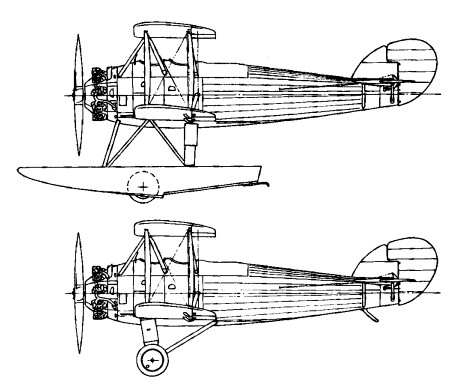
The Specification 21/26, issued by the Air Ministry’s Directorate of Technical. Development (DTD) on September 30, 1926, called for a “Single Seater Fighter Ship¬-plane for use from HM ships” fitted with a land undercarriage which could be replaced by floats, and vice versa, within half an hour. The aircraft, which was to have an all metal structure but could be fabric covered, was to be suitable for launch from a catapult and for taking off from and alighting on the deck of an aircraft carrier. It was to have a good degree of positive stability about all axes in both configurations, and tail incidence had to be adjustable in flight to enable the aircraft to fly horizontally at all speeds without attention from the pilot.
It was to be “highly controllable” at all speeds, and especially close to stalling speed, with no tendency to ‘hunt’ in a steep dive. Control had to be adequate to stop an incipient spin when the machine was stalled. A high degree of manoeuvrability in the air and on the ground or water was desired, and it had to respond quickly to the controls while not being tiring to fly. The ailerons were to have the minimum of yawing effect.
As a seaplane, the machine was to have good static stability in the water, and when under tow or running under its own power it was to be stable about all axes at all speeds.
Engines specified were the air cooled Bristol Mercury radial giving 550hp at 2,000rpm or the water cooled Rolls Royce Falcon X giving 480hp at 2,300rpm. The installation had to allow for rapid and easy removal of the engine. The cowling, which also had to be easily removable, had to be finished “to prevent the reflection of light which might betray the presence of the aircraft to the enemy or dazzle the pilot”. A metal propeller was specified.
There was to be tankage for 74 gallons of fuel, plus an easily removed 20 gallon auxiliary tank and a gravity tank of sufficient capacity to allow half an hour’s flight at full power at ground level. An 11 gallon oil tank was to be provided if the Mercury engine was used, or an 81/2 gallon oil tank and a 21/2 gallon reserve water tank for the Falcon.
Alternative exhaust systems for day or night flying were required, and were to be easily changed. The night flying system had to provide adequate silencing and flame damping, while the daytime system was to be “of minimum weight”. Additional equipment to be carried during the acceptance flights weighed 5581b and included a Vickers 0.5in gun and 300 rounds, a Vickers 0.303in gun and 600 rounds, a rocket launching (R/L) tube and six bombs, and flotation gear. A second 0.303in gun with 600 rounds was to be provided for if the 0.5in gun was not available in time.
Minimum performance requirements with this load, using the Mercury, called for a horizontal speed of 132kt (152mph) at 10,000ft and a service ceiling of 23,000ft. With the Falcon X the figures were 127kt (146mph) at 10,000ft and 22,000ft. The length of run to take¬off was not to exceed 47ft in a relative wind of 28kt (32mph), and the aircraft was to become airborne at a speed of 55mph when catapulted in still air. The suitability for launching from a catapult or alighting on the deck of an aircraft carrier was “of first importance”, and the aircraft had to be capable of taking off from a turret or cruiser platform.
For fighting, the pilot was to have the best possible view in all directions, and a good view forward and downwards was required for carrier landings. A clear, unobstructed view forward over the machine’s centreline was needed to enable him to sight the fixed guns, the installation of which was to dispense with blast tubes. There was also to be provision for the fitting of a G.3 aerial camera as near to the sights as practicable, and standard clips were to be fitted to allow the new “light carrier” to be installed to carry four 20 lb bombs, sufficient clearance being provided to enable the bombs to be released in a very steep dive.
Despite the emphasis placed on the machine’s naval use, it was stressed that: “The aircraft is to be designed primarily as a landplane fighter and qualities required for this work are not to be sacrificed in order to improve its characteristics when equipped with the float alighting gear”. A padded head support was to be provided to prevent injury to the pilot during catapult launch acceleration.
A limit of 35ft was put on the wing span, the overall length was restricted to 23ft, the height was not to exceed 14ft 9in. Quick and easy removal and erection of the wings was specified, with the ability to remove the wing structure completely in ten minutes and replace it in fifteen minutes.
The contractor was required to provide a full size mock up of his proposed aircraft before constructional work was begun, to enable the Director of Technical Development to examine and approve the layout. This mock up had to include “all parts and components which are likely to interfere with the all round view of the pilot”, and was to show the internal arrangement of the cockpit. Scale model floats for official water tank tests were also to be provided, along with specimens of ribs, a section of wing, and a length of spar.
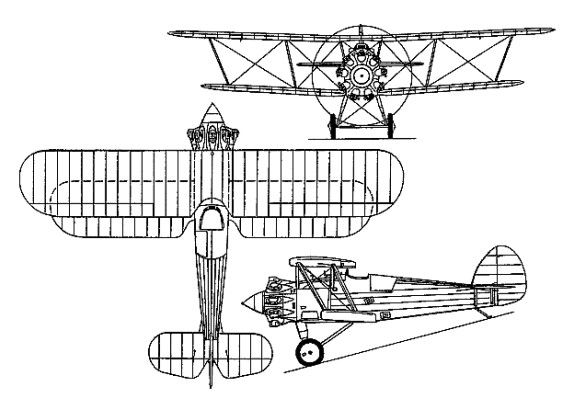
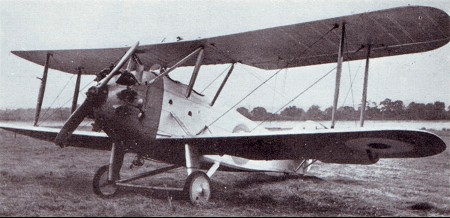
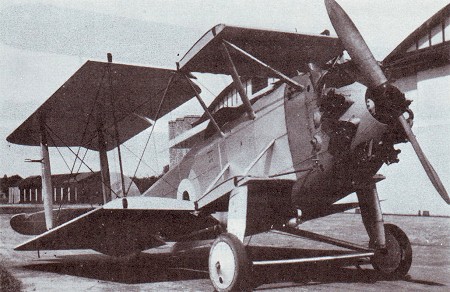
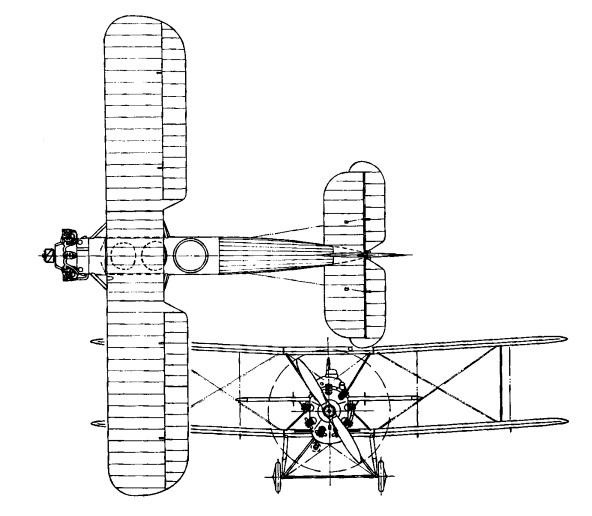
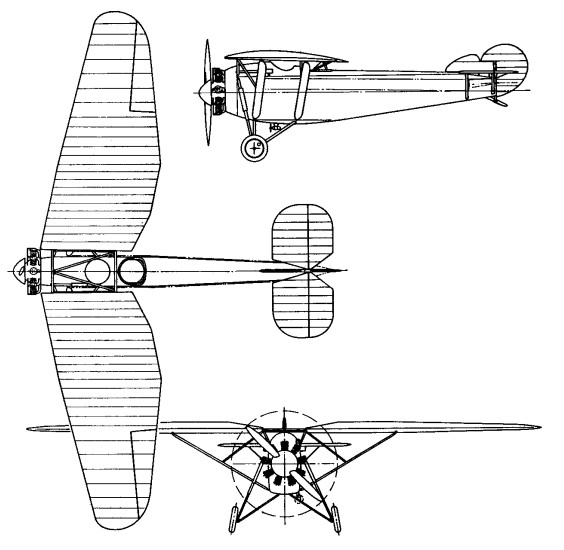
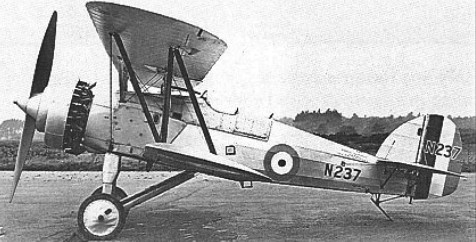
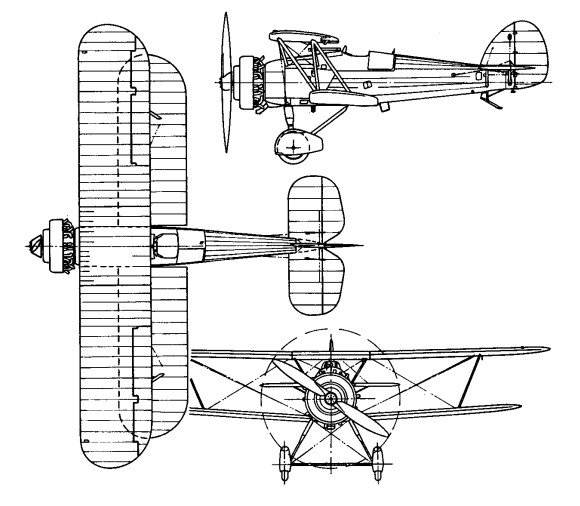
The Hoopoe, flown for the first time in 1928, was a two-bay staggered all-metal biplane powered by a 450hp Bristol Mercury II ninecylinder radial. Found to be seriously underpowered when first tested as a float fighter in 1929, the Hoopoe prototype was re-engined with a 520hp Mercury VI. Subsequently returned to the manufacturer after official handling trials at Felixstowe, the Hoopoe was fitted with a new single-bay wing cellule, a 400hp 14- cylinder two-row Armstrong Siddeley Jaguar V engine, and reverted to a wheel undercarriage for a further service assessment at Martlesham Heath. Various structural refinements were introduced and the Hoopoe was once again re-engined, this time with a 560hp Armstrong Siddeley Panther III. The prototype of the Nimrod fleet fighter had meanwhile commenced flight test, however, and thus interest in the Hoopoe had become no more than academic by mid-1930.
None of the aircraft tendered to Specification 21/26 won a production contract.

Engine: 560hp Armstrong Siddeley Panther III
Max take-off weight: 1761 kg / 3882 lb
Empty weight: 1270 kg / 2800 lb
Wingspan: 10.11 m / 33 ft 2 in
Length: 7.47 m / 24 ft 6 in
Wing area: 26.80 sq.m / 288.47 sq ft
Max. speed: 315 km/h / 196 mph
Hoopee II

Hawker Hawfinch

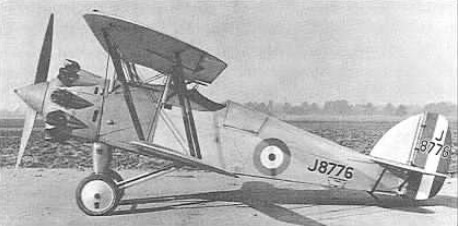
Designed by Sydney Camm as a potential successor to the RAF’s ageing Siskin fighter, the Hawfinch was built to Specification F.9/26, being one of nine contenders for RAF orders. Constructed in 1927 as a private venture, it was entered in the F9/26 competition at Martlesham Heath against the officially sponsored Annstrong Whitworth Starling, Boulton¬Paul Partridge, Gloster Goldfinch and Hawker Hawfinch.
Flown for the the first time in March 1927, the Hawfinch was of fabric-skinned metal construction, with an armament of twin synchronised 7.7mm Vickers guns and powered by a supercharged nine-cylinder Bristol Jupiter VII radial of 450hp (which replaced a Jupiter VI shortly after the commencement of flight testing).
Because of the closeness of the competition between the Bulldog and the Hawfinch the British Government ordered a single Bulldog II for further trials. The Bulldog II had a longer rear fuselage to overcome the spin deficiency of the prototype. First flown on January 21, 1928, the Bulldog II was tested against the Hawfinch at Martlesham, but the competition proved so close that a final decision was reserved until service pilots could assess both types. Eventually the decision was based on the ease of maintenance and here the Bulldog, with its single bay wings as against the twin bay wings of the Hawfinch, won.
The Hawfinch prototype subsequently participated in various experimental programmes, during one of which the original two-bay wing cellules was replaced with single-bay cellules, other tests being conducted with a twin-float undercarriage.

Max take-off weight: 1320 kg / 2910 lb
Empty weight: 873 kg / 1925 lb
Wingspan: 10.21 m / 33 ft 6 in
Length: 7.21 m / 23 ft 8 in
Height: 2.84 m / 9 ft 4 in
Wing area: 27.31 sq.m / 293.96 sq ft
Max. speed: 275 km/h / 171 mph

Hawker Cygnet

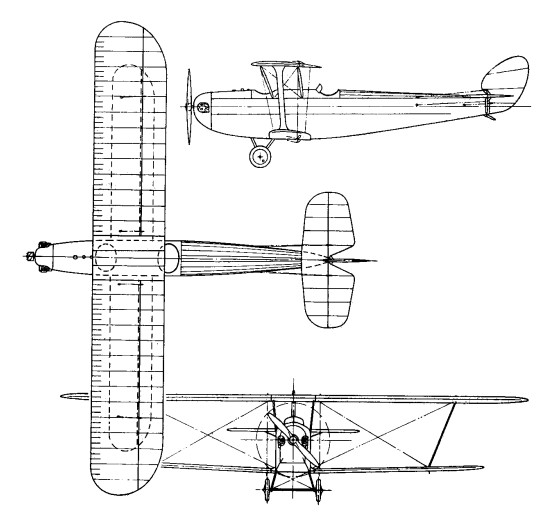
The Hawker Cygnet was Sydney Camm’s first design for Hawkers, and it was the company’s entry for the Light Aeroplane Competition organised by the Royal Aero Club in 1924, for which the Air Ministry offered prizes to the value of £3,000.

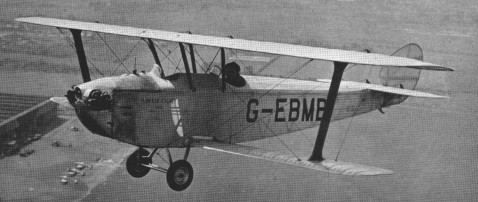
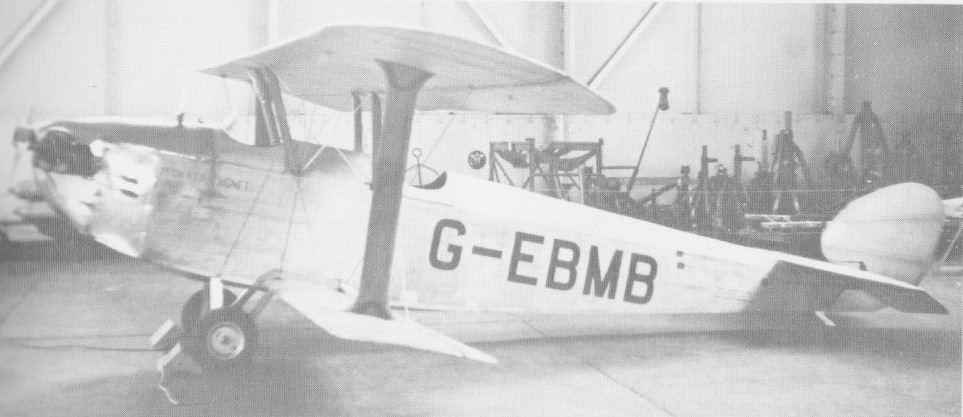
Two Cygnets, G EBMB and G EBJH, were built for the competition, with entry numbers 14 and 15. These were powered by 34 hp British Anzani and 34 hp ABC Scorpion engines respectively. It had drooping ailerons which can be wound down as flaps. But for valve trouble, No 14 might have won first prize, but the two Cygnets finished in 3rd and 4th places.

The next year EBMB won the 100 mile International Handicap Race at the R.Ae.C’s Lympne meeting, and in 1926 the Lympne Light Plane Competition brought the two Cygnets together once more, both now re engined with the 34 hp Bristol Cherub, and EBJH now belonging to the R.A.E. Aero Club. Flying as No. 6, EBMB, in the bands of P. W.S. Bulman, won the Daily Mail’s £3,000 first prize. EBJH came second.

Following appearances at a number of subsequent events, including the 1927 Bournemouth Easter Meeting, EBMB was put into storage by Hawkers. After the Second War the Cygnet was completely restored, and from 1949 onwards it flew at several Royal Aeronautical Society Garden Parties.

EBMB, 1972, went on permanent display at the Royal Air Force Museum, Hendon.

Engine: 1 x Bristol Cherab III, 25kW / 36 hp
Max take-off weight: 431 kg / 950 lb
Empty weight: 169 kg / 373 lb
Wingspan: 8.53 m / 27 ft 12 in
Length: 6.22 m / 20 ft 5 in
Height: 1.78 m / 5 ft 10 in
Wing area: 15.33 sq.m / 165.01 sq ft
Max. speed: 132 km/h / 82 mph
Ceiling: 2715 m / 8900 ft
Seats: 2

Hawker

Sopwith started World War 1 building aircraft in a shed at Brooklands in Kingston and ended with an output of 90 ships a week at Kingston alone. Overnight it ended, so the busi¬ness had to liquidate and the Sopwith Company ended. Sopwith wanted to stay in aviation and couldn’t start a company with the same name. So he called the new company the Hawker Company, with a capital of 20,000 pounds.

In 1921 former Sopwith test pilot Harry Hawker took over the premises of the former Sopwith Aviation Company. Although he died that same year in a crash, the reestablished company began building a series of military aircraft, beginning with a single Duiker monoplane, followed by the Woodcock fighter.

Harry George Hawker, an Australian pioneer in aviation, won fame as a pilot and aircraft engineer during World War I. he founded the Hawker Engineering company, which became part of the Hawker Siddeley group; a leading British aircraft manufacturing company.

Hawker was born at South Brighton (near Moorabbin), in Victoria, Australia. He learned to fly in Britain in 1912, and soon became a leading test pilot. He was killed in an aeroplane crash near London in 1921.

Under the design leadership of Sydney Camm (later Sir), produced such aircraft as the Tomtit trainer biplane and the Horsley bomber/torpedo- bomber, Mk 1 versions of which were the last allwooden aircraft built by the company. Best known of all H. G. Hawker products were the Hart/Demon/Audax/Osprey two-seaters and the Fury single-seat fighter; all had entered production before the company reorganized and the name was changed to Hawker Aircraft Ltd. in 1933.
Following 1933, the concentrated on fighters, and the first production Hurricane, a monoplane development of the Fury, first entered service in late 1937. The Typhoon, initially none too successful, proved effective as a fighter-bomber and saw the peak of its development in the Tempest, Fury and Sea Fury which served with RAF and Fleet Air Arm during late 1940s and early 1950s, and with foreign air arms well into the 1960s. In early postwar period Hawker developed the Sea Hawk shipboard fighter, progressing to the Hunter, the single Mk 3 version of which, produced by modification of the original prototype, gained the world speed record at 1,170.96km/h in 1953. Such was the success of the Hunter that refurbished aircraft were later exported. Hawker’s greatest innovation was in the field of VTOL fighters, first with the experimental P.1127 Kestrel, which led to the Hawker Siddeley Harrier.

Scottish Aviation, British Aircraft Corp, and Hawker Siddeley Aviation joined British Aerospace in 1978.

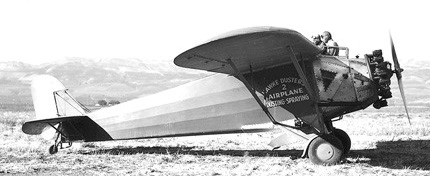
Hawke Dusters Duster / SJ

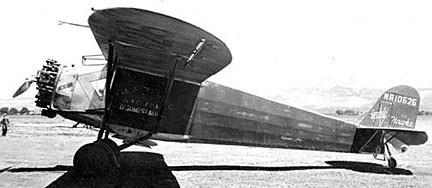
Hawke Duster NR10626

Designed by H Sherman Tharpe the Duster was modified from his 1929 Sierra BLW design and claimed to be the first airplane specifically designed as a duster (overlooking the Huff-Daland ag planes).

Hawke SJ

A single place monoplane, three were built: NR10609, NR10626 and NR10627.

Hawke SJ

NR10626 was scrapped in 1945 and the others were destroyed in crashes 1937 and 1945.

Engine: 220hp Wright J-5
Wingspan: 42’0″
Length: 30’6″
Useful load: 1225 lb
Hopper capacity: 1000 lb