Back to Hawker Tomtit
Back to Hawker Tomtit
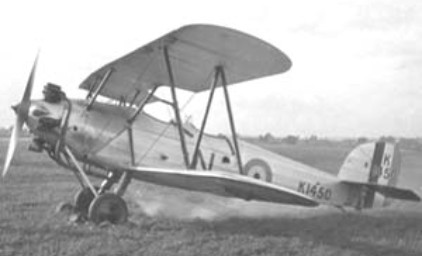
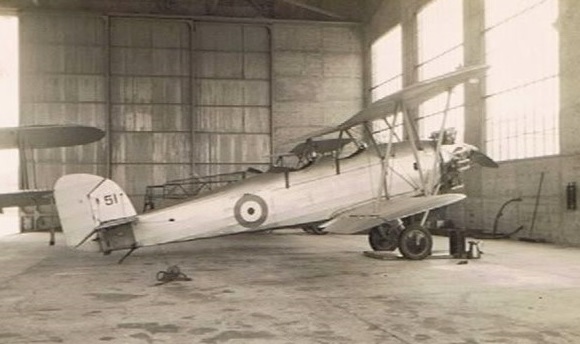
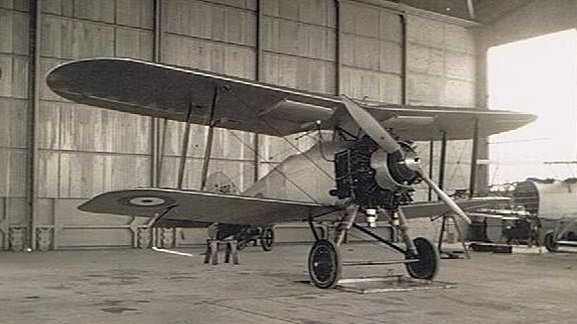
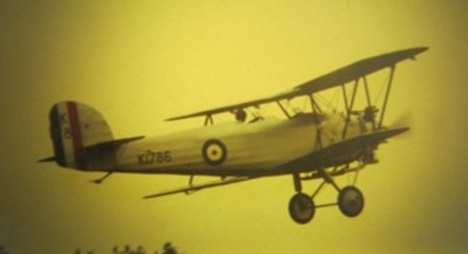
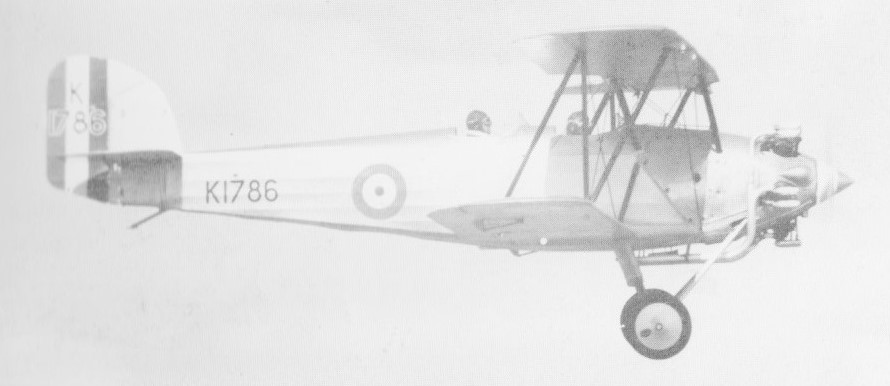
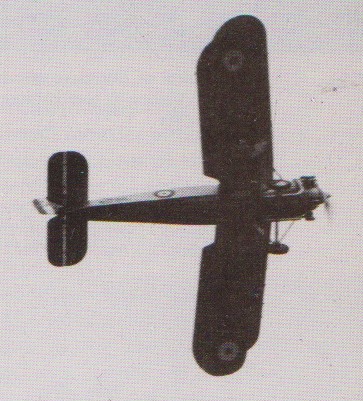
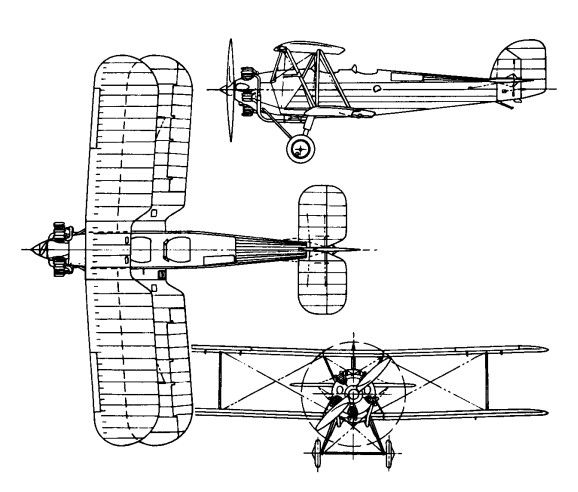
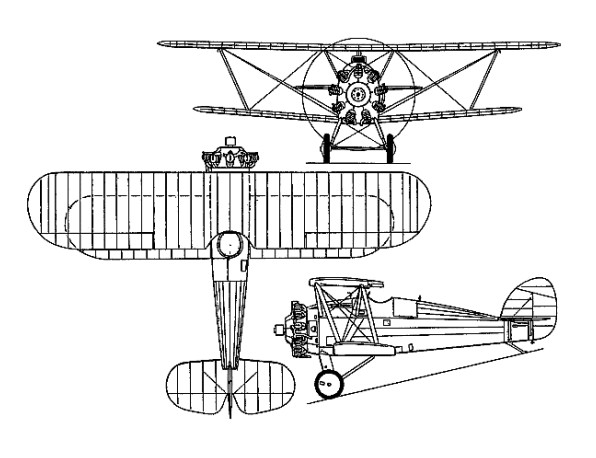
The type was designed in 1928, a two-¬seater trainer biplane with a 130 hp Armstrong Siddeley Mongoose III engine with five cylinders, a top speed estimated at 120 miles an hour and a cruising speed of between 85 and 90 miles an hour. As a replacement for the Avro 504N for RAF pilot training, 25 were supplied to the RAF between 1929 and 1931. The last, K1786, was delivered in January 1931. They entered service with No.3 FTS at Grantham and the CFS at Wittering but the type were relegated to communications tasks from 1935. Six Tomtits were used for communications duties during the war and two, as G-ABII and G-AFTA survived post-war. G-ABII was written off in 1948.
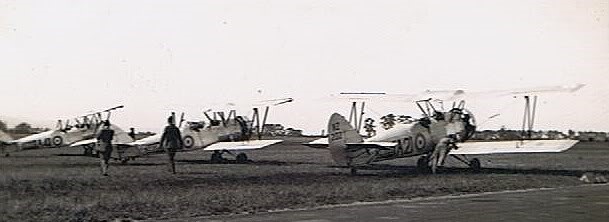
A total of 36 were built for the RAF, for civil registration and for export to Canada and New Zealand. The last Tomtits left the RAF in 1938. Civil and ex-RAF Tomtits were fitted with a variety of engines, including the ADC Cirrus Hermes and Wolseley Aquarius and were used by several aero clubs up to the out-break of the war.
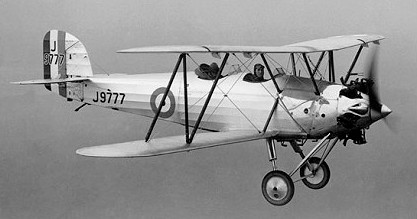
Engine: 1 x Armtrong Siddeley Mongoose IIIC, 112kW / 150 hp
Max take-off weight: 794 kg / 1750 lb
Empty weight: 499 kg / 1100 lb
Wingspan: 8.71 m / 28 ft 7 in
Length: 7.21 m / 23 ft 8 in
Height: 2.54 m / 8 ft 4 in
Wing area: 22.09 sq.m / 237.77 sq ft
Max. speed: 200 km/h / 124 mph
Ceiling: 5945 m / 19500 ft
Crew: 2
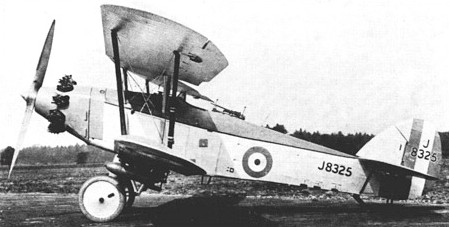
1927
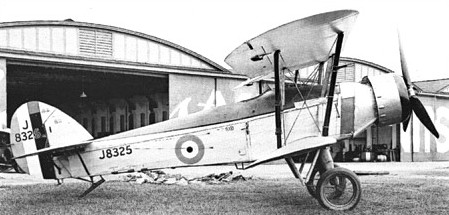
Engine: 1 x 583hp Bristol Jupiter 9-cylinder air-cooled radial engine
Max take-off weight: 2568 kg / 5662 lb
Empty weight: 1488 kg / 3280 lb
Wingspan: 14.10 m / 46 ft 3 in
Length: 9.02 m / 29 ft 7 in
Height: 4.06 m / 13 ft 4 in
Wing area: 46.15 sq.m / 496.75 sq ft
Max. Speed: 217 km/h / 135 mph
Ceiling: 6096 m / 20000 ft
Crew: 2
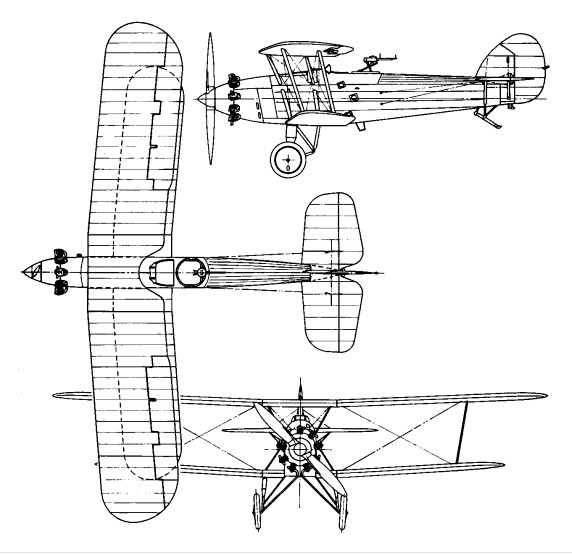
Basically Hawker Horsleys with their 665 hp Rolls Royce Condor engines replaced by 800 hp Armstrong Siddeley Leopard IIs, two Dantorps were ordered from Hawkers by the Danish Government in 1930, pending licenced production by the Danish Naval Dockyard factory at Copenhagen. Both aircraft were to have alternative wheel and float undercarriages. Of composite wood and metal construction, the Dantorp differed from the Horsley in having a third crew member between the pilot and observer/gunner.
The first aircraft, 201, made its first flight at Brooklands on September 19, 1932, piloted by “Gerry” Sayer. The second machine, 202, flew shortly afterwards and, in November 1932, was tested on its float undercarriage at Felixstowe. Before delivery both aircraft were re engined with the 805 hp Leopard IIIA.
Licensed production of the type was not taken up, however, though the two Hawker built originals flew extensively with the Royal Danish Naval Air Service from 1933 onwards.
Engine: Armstrong Siddeley Leopard II, 800 hp.
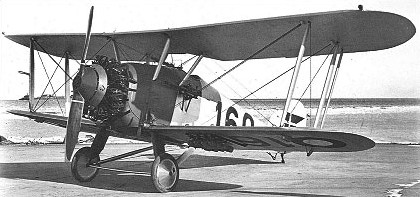
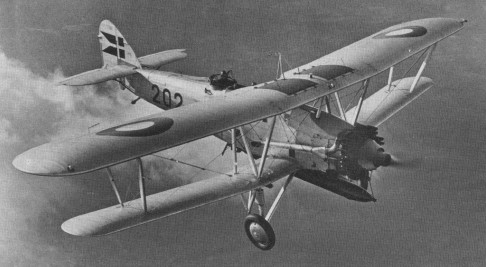
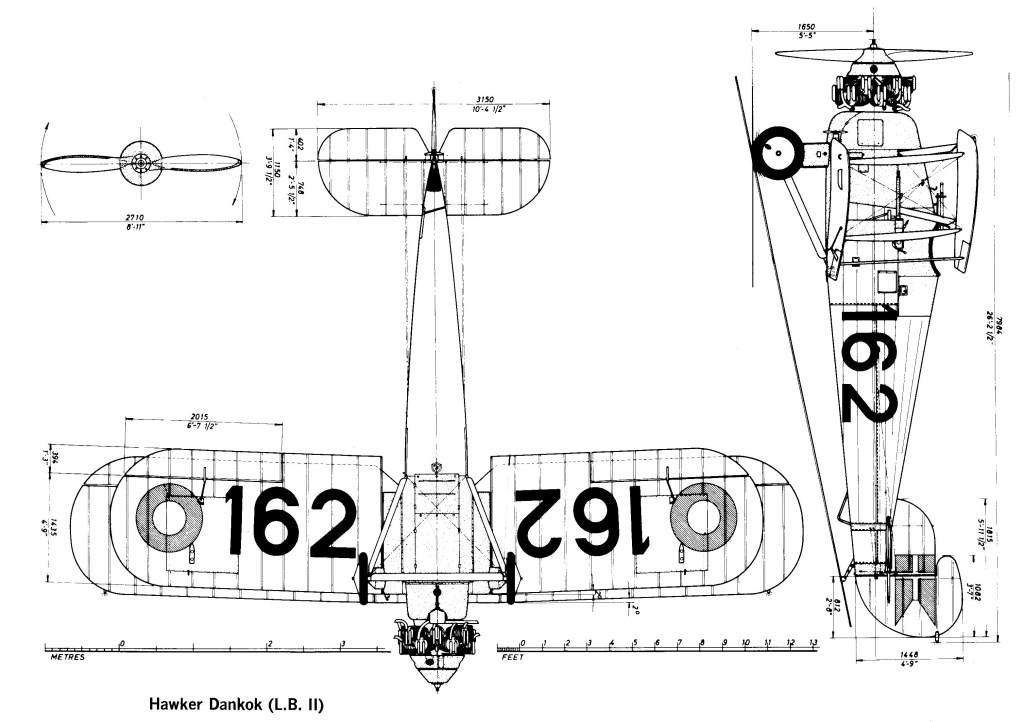
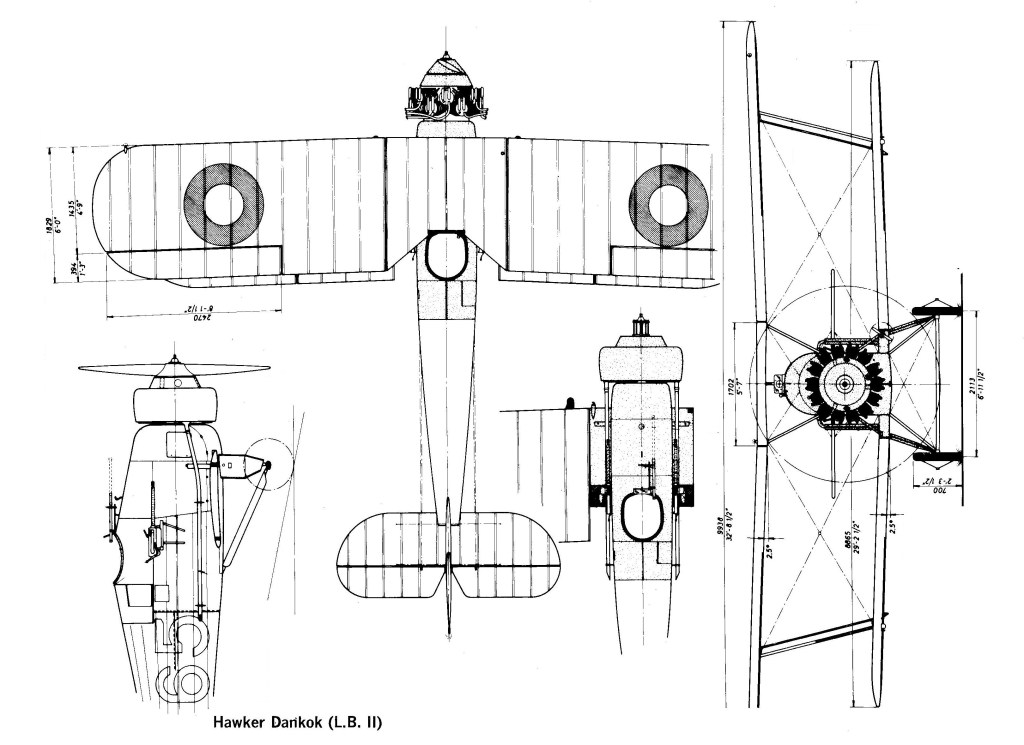
Based on the Woodcock II and designed by Sydney Camm, the Danecock was developed to meet a requirement of the Danish Naval Air Service, or Marine Flyvevaesenets. By comparison with the Woodcock II, the Danecock (Dankok) had unequal span wings, a slightly lengthened fuselage, a 385hp Armstrong Siddeley Jaguar IV engine and an armament of two 7.7mm Madsen machine guns. The first of three Danecocks ordered from the parent company was flown on 15 December 1925, and the licence manufacture of a further 12 was undertaken by the naval dockyard (Orlogsvaerftet) during 1927-28. They were fitted with 2 blade Danish Orlogsvaerftet wooden propellors.
With serials 155-165, they served from January 1926 until the German occupation in April 1940 as the Hawker Dankok (LB.II for Land Biplane Type 2). A single Dankok (165) was experimentally fitted with a streamlined ownsend Ring which raised the top speed from 235 kph/148mph to 245 kph/152mph.
Max take-off weight: 1381 kg / 3045 lb
Empty weight: 965 kg / 2127 lb
Wingspan: 9.92 m / 32 ft 7 in
Length: 7.96 m / 26 ft 1 in
Wing area: 31.59 sq.m / 340.03 sq ft
Max. speed: 233 km/h / 145 mph
Cruise speed: 169 km/h / 105 mph
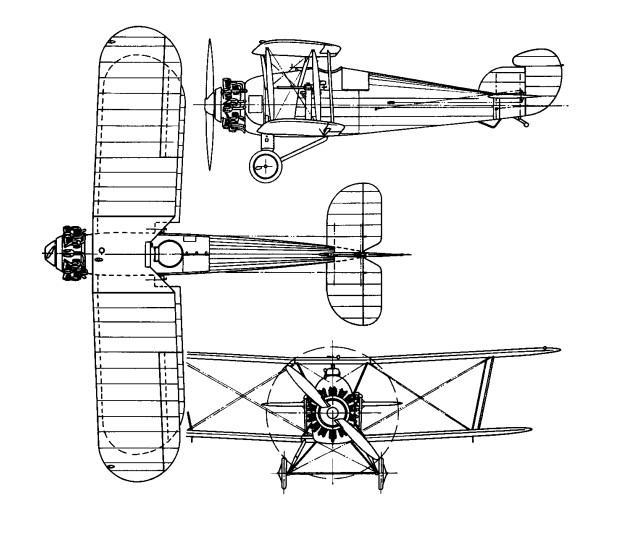
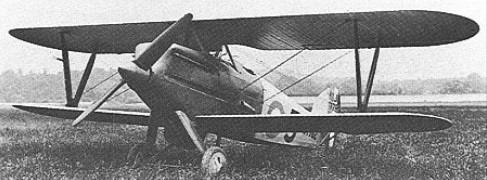
Representing an attempt to design the smallest and lightest practical airframe around the most powerful available engine suitable for fighter installation, the Hornbill was built to Specification 7/24 and flown in late summer 1925. Of mixed construction, with a duralumin-skinned steel tube forward fuselage and fabric-covered rear fuselage, wings and tail surfaces, the Hornbill was at first powered by an 826hp Rolls-Royce Condor III eight-cylinder water-cooled inline engine with twin radiators under the lower wing. In May 1926, it flew with a 698hp Condor IV and a single ventral radiator. It possessed an armament of one 7.7mm Vickers Mk 2 machine gun. The Hornbill was the fastest armed aircraft to have been tested by the RAF when it commenced service evaluation at Martlesham Heath in late 1925, but rate of climb and service ceiling were poor and some handling aspects unsatisfactory. No production order materialised.
Max take-off weight: 1732 kg / 3818 lb
Empty weight: 1349 kg / 2974 lb
Wingspan: 9.45 m / 31 ft 0 in
Length: 8.11 m / 26 ft 7 in
Height: 2.95 m / 9 ft 8 in
Wing area: 29.49 sq.m / 317.43 sq ft
Max. speed: 301 km/h / 187 mph
Cruise speed: 220 km/h / 137 mph
Ceiling: 6920 m / 22700 ft
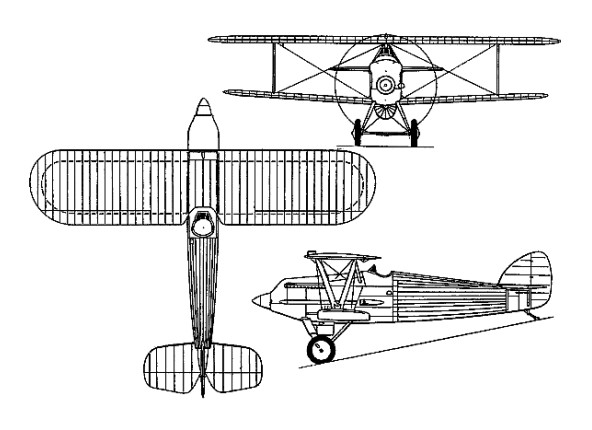
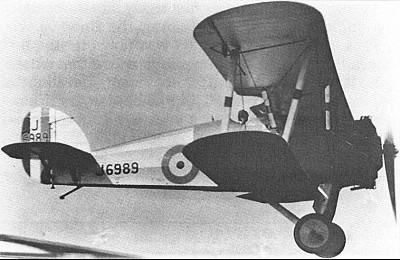
Built as a private venture, the Heron single-seat fighter was the first of the Hawker company’s fighters to have a predominantly metal structure. A single-bay biplane with provision for two 7.7mm synchronised Vickers guns, the Heron was built up of round steel and aluminium tubing bolted together (rather than welded) and braced by high-tensile wires.
The prototype, initially flown early in 1925, was highly praised during official trials at Martlesham Heath in 1926 but was subsequently returned to the manufacturer by which it was flown until mid-1928.
Take-off weight: 1418 kg / 3126 lb
Empty weight: 962 kg / 2121 lb
Wingspan: 9.70 m / 31 ft 10 in
Length: 6.78 m / 22 ft 3 in
Height: 2.97 m / 9 ft 9 in
Wing area: 27.03 sq.m / 290.95 sq ft
Max. speed: 251 km/h / 156 mph
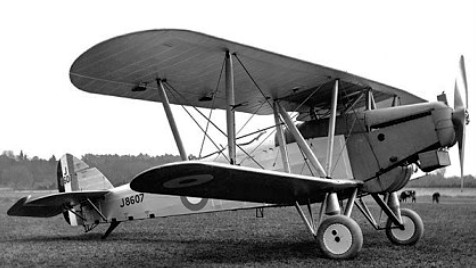
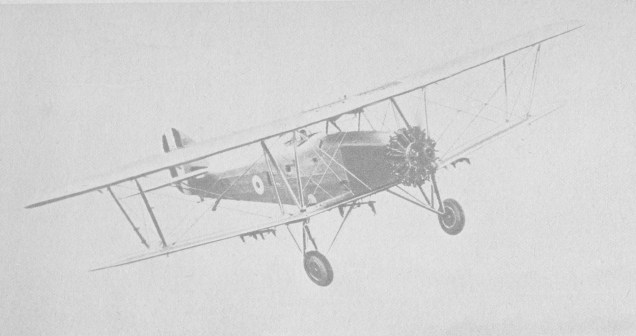
The Horsley was produced for the RAF as a bomber and torpedo bomber, entering service in these roles in 1927 and 1928 respectively after severe competitive tests against the Westland Yeovil, Bristol Berkeley and Handley Page Handcross. The Greek Naval Air Service also received six in 1928, and it was licence-built in Denmark as the Dantorp (military designation H.M.III). In total 121 Horsleys were built, most powered by 499kW Rolls-Royce Condor IIIA geared engines and with all-metal airframes, although early production aircraft were of wooden and then mixed construction. Apart from its speed and climb, it possessed the manoeuvrability of a scout and the aerodynamic design was such that the machine could be flown ‘hands off’ for periods. Day or night operations were possible.
In 1926 a proposal was made that the RAF should attempt a non-stop flight to India. This would not only be operationally significant, but enormously prestigious to the service if successful. It would at the same time establish a new world long-distance record. The chosen vehicle for this attempt was the Hawker Horsley, then entering RAF service as a day and torpedo-bomber.
A production example was modified with strengthened landing gear to carry the additional weight of an extra 3,955 litres of fuel accommodated in new wing and fuselage tanks, an overload of nearly 200% of the structure weight. On 20 May 1927 Flt Lieut C. R. Carr and Flt Lieut L. E. M. Gillman took off for India, only to be forced down in the Persian Gulf after completing 5,504km: a new long-distance record that was beaten in less than 24 hours when Charles Lindbergh landed at Paris after his 5,778km solo flight across the North Atlantic.
The Horsley made three long-distance flights. The first was carried out by Flt Lt Carr as pilot and Flt Lt Gillman as navigator, who had expected to cover more than 6,440km from Cranwell to India. However during 20-21 May 1927 they covered a distance of 5,502km, landing short near Bandar Abbas on the Persian Gulf because of problems with the oil system. A second effort by Carr and Flt Lt Mackworth ended after one hour’s flying; while a third attempt by Carr and Fl Officer Dearth ended in Austria, alighting in the River Danube.
Engine: 1 x Rolls-Royce Condor IIIA, 496kW / 666 hp
Max take-off weight: 3538 kg / 7800 lb
Empty weight: 2159 kg / 4760 lb
Wingspan: 17.21 m / 56 ft 6 in
Length: 11.84 m / 38 ft 10 in
Height: 4.17 m / 13 ft 8 in
Wing area: 64.38 sq.m / 692.98 sq ft
Max. speed: 201 km/h / 125 mph
Ceiling: 4265 m / 14000 ft
Armament: 2 x 7.7mm machine-guns, 680kg of bombs
Crew: 2
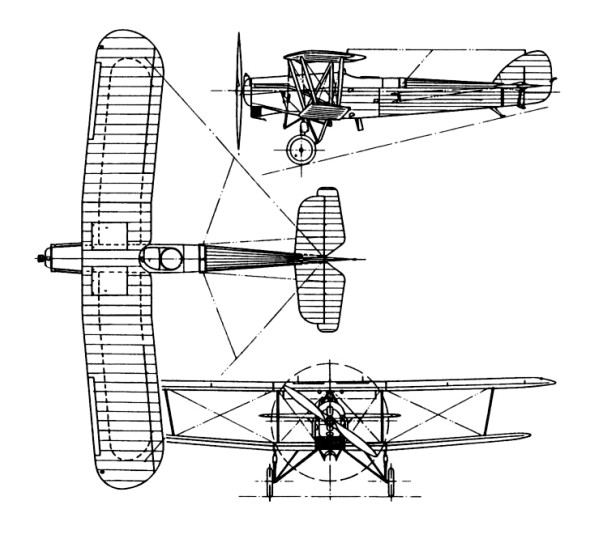
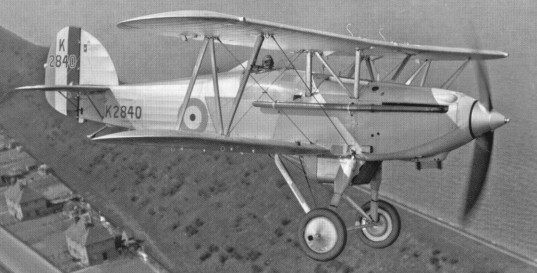
The Nimrod was basically the FAA version of the Fury single-seat interceptor fighter. In general arrangement and construction it was almost identical to the Fury and was fitted with a 440kW Rolls-Royce Kestrel IIS supercharged engine (later replaced by the Kestrel V on Mk IIs). It was, of course, strengthened for catapulting and carried more comprehensive equipment and extra fuel.
The Nimrod embodied the Hawker-patented system of metal construction, all but the first three stainless steel Mk IIs being built of ordinary steel and duralumin. Apart from simplicity of construction, this system allowed maintenance and repairs, if necessary, to be undertaken by unskilled labour and with the simplest of materials.
Armament comprised two forward-firing Vickers machine-guns, plus optional light bombs; equipment included a wireless, oxygen apparatus, hoisting gear and electrical equipment.
A total of 54 Mk Is and 27 Mk IIs were produced for the FAA, plus some for export to Japan, Denmark and Portugal.
Nimrod Mk II
Engine: 1 x Rolls-Royce Kestrel VFP, 453kW
Max take-off weight: 1841 kg / 4059 lb
Empty weight: 1413 kg / 3115 lb
Wingspan: 10.23 m / 33 ft 7 in
Length: 8.09 m / 26 ft 7 in
Height: 3.00 m / 9 ft 10 in
Wing area: 27.96 sq.m / 300.96 sq ft
Wing loading: 13.53 lb/sq.ft / 66.00 kg/sq.m
Max. Speed: 168 kts / 311 km/h / 193 mph
Cruise speed: 100 kts / 185 km/h / 115 mph
Service Ceiling: 8535 m / 28000 ft
Endurance: 2 h
Armament: 2 x 7.7mm machine-guns, 4 x 9kg bombs
Crew: 1
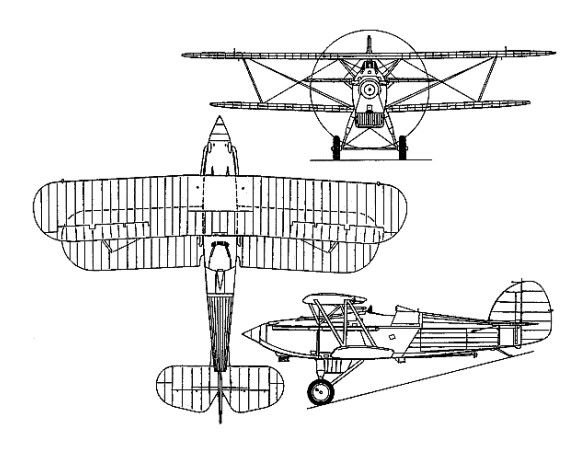
Hawker went on to develop a Kestrel engined fleet fighter which first flew as the Norn in 1930 and went into production as the Nimrod.

