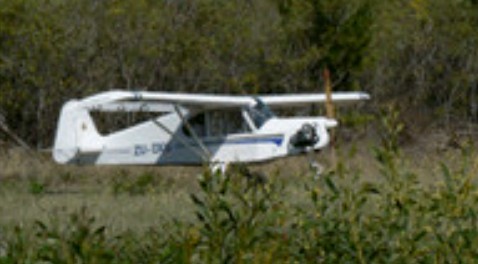
Midwest Microlights HM-81 Tomcat Tourer / The Baron / Waspair Tomcat

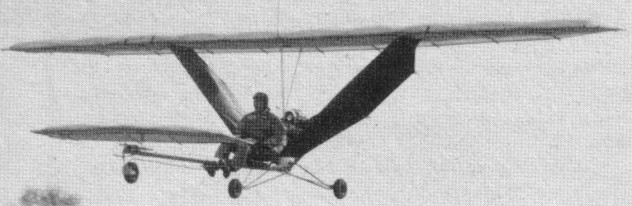
Single seat single engined high wing mono¬plane with additional dihedral wings; unconventional three axis control. main wing has unswept leading and trailing edges, and constant chord; no tall, canard wing. Pitch control by fully flying canard; yaw/roll control by control surfaces on dihedral wings; control inputs through stick for pitch/yaw/roll. Main wing braced from below by dihedral wings. Wing profile; double surface. Undercarriage has three wheels in tricycle formation; rubber suspension on main wheels. Push right go-right nosewheel steering independent from yaw control. No brakes. Aluminium tube framework, without pod. Engine mounted below main wing driving pusher propeller. Tubing in 6061T6 aluminium, anodized. Stainless steel cables. Dacron wing covering.

Waspair Tomcat Article

Robin Haynes, founder and president of the Waspair Corporation which originally produced the Tomcat, de¬signed this unique machine at the end of 1979. It only became the Tomcat after a succession of names, the first production models having been sold under the name The Baron.

At Oshkosh in 1981 the HM 81 won the EAA prize for the most outstanding new design. The aerodynamic configuration of this machine is very unusual and warrants some supplementary explanation. The Tomcat is made up of three lifting elements: the main wing (67% of the total lift), the two inclined structural wings angled at 45O and with 15O sweepback, (18% of the lift) and the canard (15% of the total lift). The main wing is fixed and devoid of control surfaces, while the inclined wings, Which he called dihedral wings, are two fixed surfaces carrying elevons, like a V tail. The canard angle of attack can be altered to control pitch, all control being by a single stick which acts as a mixer on the elevons and the canard.

At the beginning of 1982, Waspair Cor¬poration offered the standard version of the Tomcat fitted with the twin cylinder 430D 30hp engine and direct drive; with the 430R and 2/1 reduction drive, the machine was called the Tomcat Sport. However, by the end of 1982, the latter had become the standard version. Also appearing at the beginning of 1982 was a Tourer version for the heavier pilot with a heavy duty airframe and the Cuyuna 430R. It is this model on which the company is now concentrating and at the Sun ‘n’ Fun in Lakeland, in March 1983, the maker was marketing it as the standard version. In kit form it costs $4695 and pre built it costs an extra $1150.

Engine: Cuyuna 430R, 30 hp at 5500 rpm.
Propeller diameter and pitch 54 x 36 inch, 1.37 x 0. 91 m.
V belt reduction, ratio 2.0/1.
Max static thrust 250 lb, 113 kg.
Power per unit area 0.17 hp/sq.ft, 1.8hp/sq.m.
Fuel capacity 5.0 US gal, 4.2 Imp gal, 18.9 litre.
Length overall 12.0 ft, 3.66 m.
Height overall 10.0ft, 3.05m.
Wing span 30.0ft, 9.14m.
Chord at root 4.0ft, 1.22 m.
Chord at tip 3.0 ft, 0.91 m.
Main wing dihedral 0 deg.
Main¬ wing sweepback 0 deg.
Canard span 8.0ft, 2.43m.
Canard chord 3.0ft, 0.91m.
Total wing area 175 sq.ft, 16.3sq.m.
Main wing area 125 sq.ft, 11.6 sq.m.
Canard area 25 sq.ft, 2.3 sq.m.
Total dihedral wing area 25 sq.ft, 2.3 sq.m.
Main wing aspect ratio 7.2/1.
Wheelbase 7.0ft, 2.13 m.
Nosewheel diameter overall 10 inch, 25 cm.
Main wheels diameter overall 10 inch, 25 cm.
Optional floats, length 11.0 sq.ft, 3.35 m.
Optional skis, length 3.0 ft, 0.91 m.
Empty weight 235 lb, 107 kg.
Max take off weight 595 lb, 270 kg.
Payload 360 lb, 163 kg .
Max wing loading 3.40 lb/sq.ft, 16.6 kg/sq.m.
Max power loading 19.8 lb/hp, 9.0kg/hp.
Load factors +6.0, 4.0 design; +8.0, 6.0 ulti¬mate.
Max level speed 60 mph, 97 kph.
Never exceed speed 65 mph, 105 kph.
Max cruising speed 45 mph, 72 kph.
Economic cruising speed 40mph, 64kph.
Stalling speed 27 mph, 43 kph.
Max climb rate at sea level 800 ft/min, 4.1 m/s.
Min sink rate 250 ft/min at 30 mph, 1.3 m/s at 48 kph.
Best glide ratio with power off 8/1 at 30 mph, 48 kph.
Take off distance 90 ft, 27 m.
Landing distance 125 ft, 38 m.
Service ceiling 15,000 ft, 4570 m.
Range at average cruising speed 125 mile, 201 km.

MidWest Engines

1998:
Hanger SE 38
Gloucestshire Airport
GL51 6SR
Staverton
UK

1998

The company was founded by Diamond Aircraft Industries and partners. The products are reciprocating engines and Wankel engines. The Wankel aero-engines are developed from the MidWest AE series engines developed at Staverton by MidWest, a UK firm that was bought by Diamond.

It was in 2017 that China-based Wanfeng Aviation Industry acquired full ownership of the Austria-based Diamond Aircraft Group. Wanfeng’s acquisition also included Diamond’s sister company and diesel aerospace engine maker Austro Engine.

Microwings Cubby / Tri-Cubby

The Cubby is 75% of the original J-3 Piper cub. With modern materials and technology the performance has been improved, and the Cubby uses automotive fuel as opposed to AVGAS.

The Cubby can be registered as a three axis micro-light or a non type certified light aircraft. The Cubby was available in tri-gear or tail dragger. The 2009 Price was dependable on the choice of engine. The option to have the Cubby interchangeable between tri-gear and tail dragger was also available on request as an option.

The factory is up to CAA standards. All upgrade and changes requested by CAA has been done and communicated to all Cubby owners. All correspondence of changes and upgrades are posted to Cubby owners with a newsletter.

Tri-Cubby

There were 26 flying in South Africa and 3 on order. The Cubby was available in kit form, fast built and basic kit, or as ready to fly or fully built but without engine, radio and instruments.

Cubby
Stall: 40 kt / 46 mph / 74 kmh
Cruise: 74 kt / 85 mph / 137 kmh
VNE: 113 kt / 130 mph / 209 kmh
Empty Weight: 260 kg / 573 lbs
MTOW Weight: 500 kg / 1102 lbs
Climb Ratio: 1200 ft/min / 6 m/s
Take-off distance (50ft obstacle): 660 ft / 200 m
Landing distance (50ft obstacle): 820 ft / 250 m

Tri-cubby
Stall: 45 kt / 52 mph / 83 kmh
Cruise: 100 kt / 115 mph / 185 kmh
VNE: 130 kt / 150 mph / 241 kmh
Empty Weight: 260 kg / 573 lbs
MTOW Weight: 500 kg / 1102 lbs
Climb Ratio: 1200 ft/min / 6 m/s
Glide Ratio: 10:1
Take-off distance (50ft obstacle): 330 ft / 100 m
Landing distance (50ft obstacle): 490 ft / 150 m

Turbomeca Éclair

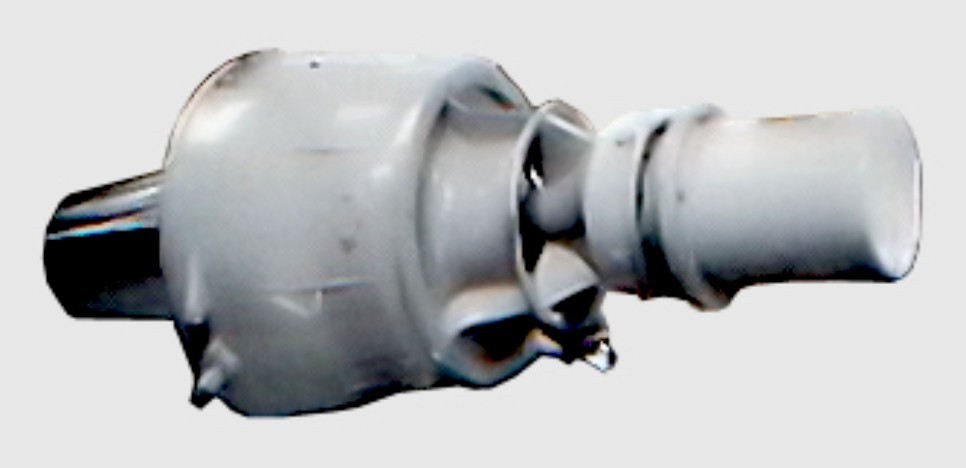
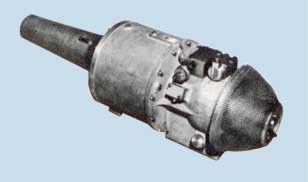
The initial Microturbo product offering was the “Noelle” starter turbine, which led to a number of starter / APUs such as the “Emeraude”, “Espandon”, and “Saphir”. The Emeraude led to the company’s first turbojet, the small and simple Eclair, intended for self-launching sailplanes.

Based on the gas generator section of the Microturbo Emeraude starter and APU for Concorde prototypes, the Eclair is an ultra-small single-shaft turbojet designed to power pilot-less drones and for use in sailplanes.

The engine is also capable of in-flight starting to provide powered flight in an emergency. Initial installation was in the Fauvel Aile Volante AV 45-01R single-seat tailless self-launching sailplane which first flew with the Eclair 012-01 in late 1967.

Height: 12.7 in / 312 mm
Width, including accessories: 19.9 in / 501 mm
Length overall: 23.9 in / 607 mm
Weight: 77 lb / 35 kg
TO pwr 47 000 rpm: 176 lb / 80 kg
Fuel at TO pwr: 198 lb/hr / 90 kg/hr

Turbomeca TRS-18 Turbojet

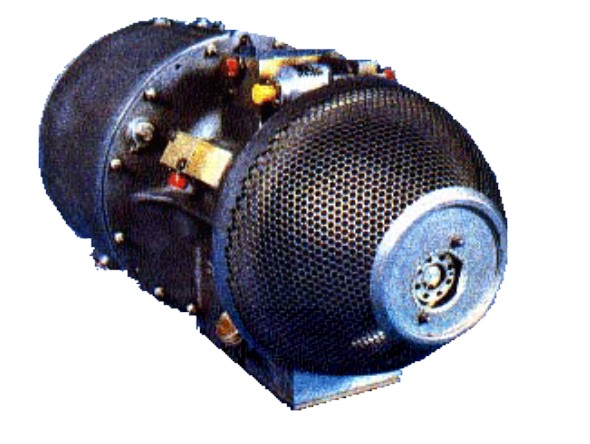
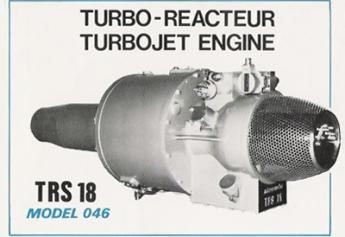
The Microturbo TRS 18 is a small, low thrust turbojet designed and built in France in the 1970s. It was installed on both manned and unmanned aircraft.

The TRS 18 was originally designed for self-launching motor gliders but was adapted to power conventional ultralight aircraft and unmanned vehicles (RPV). It was originally designed and developed by Sermel, a competitor company to Microturbo which the latter took over in 1971. It is a simple, low thrust, reverse flow single shaft engine with a centrifugal compressor and axial turbine. It is built in three modules: an intake section containing starter and lubrication systems; a centre section with compressor and turbine on ball bearings; and an aft section with the folded combustion chambers and tail-pipe.

Early microjets developed 200 lbs thrust, while the newer TRS 18-1 engine develops 325 lbs thrust with nearly identical in dimension & weight.

It gained its US Federal Aviation Administration type certificate E13CE on 25 May 1976.

TRS 18-046

Variants:

TRS 18-046
Production version, primarily intended for manned applications with full self start provision, oil lubrication and temperature and pressure transducers.

TRS 18-056
Cut down gas generator or core engine version, fuel lubricated and only 62% the weight of the 18-046 version but the same thrust; intended for RPVs.

TRS 18-075
Intended respectively for the Flight Refuelling ASAT target drone. Includes an engine driven alternator and fuel and oil lubrication pumps. Dry weight as 18-046. Take-off thrust increased to 1.15 kN (260 lb st) and maximum continuous thrust to 1.10 kN (247 lb st).

TRS 18-076
Intended for the Meteor-Mirach 100. Includes an engine driven alternator and fuel and oil lubrication pumps. Dry weight as 18-046. Take-off thrust increased to 1.15 kN (260 lb st) and maximum continuous thrust to 1.10 kN (247 lb st).

Applications:

Manned

Bede BD-5J
Caproni Vizzola A-21SJ
Chagnes Microstar (version of Rutan VariViggen)
EFF Prometheus 19
EFF Prometheus 12
Microjet 200
NASA AD-1 slew wing

Unmanned

Flight Refuelling ASAT
France-engins Mitsoubac
Meteor-Mirach 100

Specifications:

Microturbo TRS 18-1
Thrust: 325 lbs
Max Running Altitude: 30,000 ft.
Weight : 84.88 lbs.
Length : 27 in.
Diameter: 13 in.
Fuel Types: Jet A, JP4-JP5
Oil Types: MIL-L-23699
Fuel Consumption (Max Power): 283 lbs./hr.

TRS 18-046
Type: Single shaft centrifugal turbojet.
Length: 650 mm (25.59 in)
Diameter: 325 mm (12.80 in) wide × 350 mm (13.78 in) high.
Dry weight: 37 kg (81.6 lb) dry, basic, no jet pipe.
Compressor: Centifugal; one piece with diffuser and straightener vanes.
Combustors: Folded, with ten spill type burners.
Turbine: Axial.
Fuel type: Electric pump.
Oil system: Submerged pump in tank on front underside; filter and pressure transducer on upper side. Closed circuit with high pressure supply to rotor and gearbox bearings.
Maximum thrust: Take-off 1.10 kN (247 lb st). Maximum continuous 1.00 kN (225 lb st).
Specific fuel consumption: 35 mg/N/s (1.24 lb/h/lb st).
Maximum altitude: 9000 m

Microturbo / Turbomeca S.A.

Turbomeca was founded August 29, 1938 by Joseph Szydlowski and André Planiol following their patent of a supercharger in 1937. Hispano-Suiza ordered a demonstrator to equip its 12 Y engine, used among others on the MS 405 C1.

Turbomeca changed rapidly from an artisanal production to an industrial one benefiting from the politics of re-armament. This is shown by the production figures of the following three years: 18 compressor in 1938, 300 in 1939 and 1200 in 1940. Although the factory at Mézières-sur-Seine was only really operational in June 1940, the government advised the move to the south of France due to the German advance. During the same month, Turbomeca had relocated in newly requisitioned workshop in Saint-Pé-de-Bigorre near the Hispano-Suiza engine factory in Tarbes. The buildings were found to be too small and in 1941 a place is bought in Bordes near Pau. Between the autumn of 1941 and June 1942 Turbomeca moved. In November 1942, Szydlowski fled to Switzerland. Between October 1942 and 1944, the production stale and the workforce went from about 300 to about 50.

From 1950, Turbomeca produced the tiny centrifugal flow Palas turbojet, producing 1.6 kN (353 lbf). The Palas was also produced by Blackburn and General Aircraft in the UK and Continental in the USA. From 1957, it manufactured the Bastan turboprop for the Aérospatiale N 262 airliner. Blackburn had a licence for producing other Turbomeca designs.

Rolls-Royce Turbomeca Limited was established in 1968 to develop the Adour jet engine for the Anglo-French SEPECAT Jaguar. The company went on to develop the RTM322 turboshaft, which powers Westland WAH-64, and some models of the AgustaWestland EH101 and NHI NH90.

In 2001 Turbomeca and Rolls-Royce won a $1 billion USD contract to equip 399 German, French and Dutch NH90 helicopters with their RTM322 engines.

SNECMA Group acquired the company in September 2001.

Headquarters: Bordes, France
Revenue (2006): € 870 million
Employees (2006): 5,178

As of 2012, Turbomeca turbines power civil, parapublic and defence helicopters for all the leading helicopter manufacturers (mainly Eurocopter, but also AgustaWestland, Sikorsky, NHI, Kamov, HAL).

Engines of Microturbo:

Palas
SG 18
TRS 18
TRS 25
TRI 40
TRI 60
TRI 80
J403
Cougar
Eclair
Eclair II
Lynx