Apollo Ultralight Aircraft

Apollo Ultralight Aircraft is a Hungarian aircraft manufacturer based in Eger. The privately held company specializes in the design and manufacture of ultralight aircraft, gyroplanes and ultralight trikes, in the form of kits for amateur construction and ready-to-fly aircraft for the European Fédération Aéronautique Internationale microlight and the American light-sport aircraft categories.

The company produced a wide variety of aircraft including five ultralight trike models, the Delta Jet, Jet Star, Monsoon, Racer GT, C15D Toples and the Classic. Apollo also makes a single fixed wing microlight, the Fox which is a copy of the Denney Kitfox and a gyroplane, the Gyro AG1.

The company has an American distributor, Apollo Aircraft, which has completed US Federal Aviation Administration light-sport aircraft certification for the Fox fixed wing microlight as well as the Delta Jet, Jet Star and Monsoon trikes.

Apollo exhibited at AERO Friedrichshafen in 2013 as well as the Al Ain airshow in the United Arab Emirates.

APEV

APEV (Association pour la Promotion des Echelles Volantes, English: Association for the Promotion of Flying Ladders) is a French aircraft manufacturer, founded by Daniel Dalby in 1997 and based in Peynier. The organization specializes in the design and manufacture of very light and inexpensive homebuilt aircraft.

The original design, the Pouchel, was based upon the 1930s Henri Mignet-designed Mignet Pou-du-Ciel (Flying Flea), but constructed using three commercial household aluminium ladders to save construction time, cost and weight.

Further designs followed these, including the two seat Bipouchel and the Pouchel Classic.

Apco Aviation

APCO has been involved in the paragliding industry from the very beginning. Anatoly Cohn, the company’s owner and founder, started in hang gliding, designing and building gliders from 1976 with Agur Gliders until 1982 when he founded APCO. He quickly realized that paragliding was the direction for sport flying and concentrated on developing quality gliders at a competitive price. Since that time the company has steadily grown, employing 60 people in 1996 and producing thousands of paragliders, harnesses and parachute reserve systems every year.

PO Box 2124
Holon 58121
Israel

The first paraglider produced by APCO was the 7 or 9 cell System K, staring in 1986. By 1996, a mere ten years later, APCO was producing an average of 3 new models a year and had already picked up 6 world records on its wings. A trend which was to continue into the next decade. By the beginning of 2006 APCO had brought out more than 40 models of paragliders and now has 11 world records set on APCO wings.
Apco produced over 2000 wings in 1997.
1998: Chalamish St .7, Industrial Park, ISR-389000 Caesarea, Israel.

Anzani

Société des Moteurs Anzani

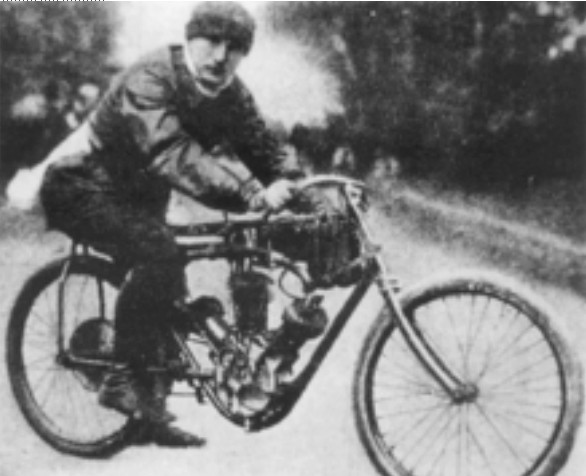
Alessandro Anzani in 1906, on his Fan type-engined motorbike

Anzani was an engine manufacturer founded by the Italian Alessandro Anzani (1877–1956), which produced proprietary engines for aircraft, cars, boats, and motorcycles in factories in Britain, France and Italy.

From his native Italy, Anzani moved to France where he became involved in cycle racing. He moved on to motorcycles and designed and built a record breaking lightweight engine. In 1907, he set up a small workshop in Paris with three staff and while they were building his engines, he designed a hydrofoil powered by one of his engines and propellers. The original Anzani Moteurs d’Aviation was situated at 112 Boulevard de Courbevoie, Courbevoie, Paris.

He supplied one of his engines to Enrico Forlanini and developed it further into a three-cylinder, air-cooled, radial engine ideal for the new aeroplanes. One of the early engines, the 25 hp Anzani W-3 or Fan type, was supplied to Louis Blériot who used it on his successful crossing of the English Channel in 1909.

Demand for the engines continued to grow and the original Paris workshop was replaced by a new factory at Courbevoie, Paris, and one in London was also added as well as licensed production by other makers. Another factory at Monza, Italy was added in 1914.

In 1920, Anzani turned to motor racing and built a small car with one of his 750 cc two-cylinder engines, air-cooled of course, which won several competitions. They also made a 1098 cc cyclecar between 1923 and 1924, as used in the T.B. Sports cyclecar.

On his 50th birthday in 1927, Anzani decided to sell his factories in Paris and London, keeping only the Monza works for sentimental reasons, and managed by Natale Baccanti.

Antonov

The first aircraft designed by Oleg Konstantinovich Antonov (1924) was OKA-1 glider, followed 1926-1929 by OKA- 3 to 7. He continued to build gliders during and after the war. The An-2 “workhorse” biplane of 1946 (when Antonov Aviation Scientific-Technical Complex organization was founded), was used for passenger, freight, exploration, ambulance, and agricultural work; fitted with wheels, skis, or floats and license-built in Poland and China.
At the Antonov Construction Bureau there lived a Ultralight Aircraft Department known for its creations: hang gliders Slavutich-UT, Sport-5 and trike T-2. These have been created according to aircraft requirements. The people working in the Department were able both to compute endurance of anything and to test a hang glider in CAGI wind-tunnel. In late 80s there started a co-operative trend and ITACO-CENTER co-operative was organised at the Ultralight Aircraft Department. This co-operative started to produce sports hang gliders C-14 and C-15, and about 150 of them were manufactured. Almost all members of USSR hang gliding national team used these hang gliders and attempts were made to sell these machines to the Western states and their certification in Germany was almost completed.
In 1991 specialists of the Ultralight Aircraft Department organised Limited Liability Association Aeros and starting from November, began to manufacture new wings: sports hang glider Stalker-14 and wings for trike Stranger which became Aeros’ “business cards” for the few next years.

Antoni

ITALY
Societa Italiana Brevetti Antoni completed in 1923 an experimental aircraft with variable-camber wing using patents and designs of Ing Guido Antoni. Firm was wound up shortly afterwards. Antoni, an inventor in several fields, was first associated with aviation in 1912.

Antoinette

Antoinette was a French manufacturer of light gasoline engines. Antoinette also became a builder of aeroplanes, most notably the record-breaking monoplanes flown by Hubert Latham and René Labouchère. Based in Puteaux, the Antoinette concern was in operation between 1903 and 1912. The company operated a flying school at Chalons for which it built one of the earliest flight simulators.

Antoinette Article

Antoinette began as a private venture led by the engineer Léon Levavasseur and financed by Jules Gastambide, who owned an electricity generating station in Algeria. While on holiday with Gastambide and his family in 1902, Levavasseur expressed his interest in the emerging field of aviation and proposed the development of light, powerful engines for use in aircraft. Levavasseur then suggested to Gastambide’s daughter, Antoinette, that the engines should be named after her. Gastambide financed the venture. Levavasseur patented the V8 engine configuration that year. By 1904, most of the prize-winning speedboats in Europe were powered with Antoinette engines. During this time, he designed engines of various configurations of up to thirty-two cylinders.

Antoinette was incorporated in 1906, with Gastambide as president and Levavasseur as technical director. Aviation pioneer Louis Blériot was the vice-president . Antoinette displayed an automobile with a 7.2 L (439 cu in), 32 horsepower (24 kW) V8 engine in the 1906 Paris Salon de l’Automobile of that year.

The company’s primary business was the sale of engines to aircraft builders. Their engines were used in the Santos-Dumont 14-bis of 1906, Paul Cornu’s rudimentary helicopter of 1907, the Voisin biplane that was modified and piloted by Henri Farman who used it to complete Europe’s first 1 kilometer circular flight in January 1908, and other significant pioneer aircraft.

The Farman-Voisin biplane was powered by a water-cooled Antoinette V8 engine which developed 50 horsepower (37 kW) at 1,400 rpm. It used an early form of direct gasoline injection and weighed only 190 pounds in working order, including the water-filled cooling system. The engine block was cast aluminium, holding removable steel cylinders. Levavasseur’s Antoinette engines often included advanced features, including direct fuel injection and evaporative engine cooling.

Levavasseur experimented with the construction of aircraft and in 1906 the Antoinette company was contracted to build an aircraft for Captain Ferdinand Ferber. In 1908 Blériot tried to dissuade the directors of Antoinette from becoming aircraft manufacturers, fearing that they would begin competing against him for customers. Blériot left the company when his advice was ignored.

In early 1909, the Antoinette company worked with the French Army at Camp Châlons near Mourmelon-le-Grand to establish the first military aircraft trials, a flight school and a workshop. The school included the Antoinette Trainer – a rudimentary flight simulator that comprised a half-barrel mounted on a universal joint, with flight controls, pulleys, and stub-wings (poles) to allow the pilot to maintain balance while instructors applied external forces.

One of their earliest pupils was the adventurer Hubert Latham. Within months of learning to fly Latham became the company’s principal instructor. His pupils in 1909 included Marie Marvingt, who became the first woman to fly combat missions as a bomber pilot and established air ambulance services throughout the world, and Infante Alfonso, Duke of Galliera, cousin of King Alfonso XIII of Spain and the first Spanish military pilot.

In the spring of 1909, Latham made several impressive flights. This convinced Levavasseur that Latham could cross the English Channel in an Antoinette aircraft and win the Daily Mail prize for doing so. Latham made two attempts to cross the English Channel in July 1909, both of which were unsuccessful due to engine failure while over the Channel. Between Latham’s attempts, former Antoinette vice-president Blériot successfully crossed the Channel in his own aircraftusing a simpler and more reliable 25 hp (19 kW) air-cooled Anzani W3 engine and a more efficient Chauvière propeller.

Latham’s efforts to promote Antoinette products were more successful at the Grande Semaine d’Aviation de la Champagne on 22–29 August 1909 at Reims, France, where he won the altitude prize, finished second in the speed competition, took third place in the Gordon Bennett Cup for aeroplanes, and, in the Grand Prix event, trying to fly the longest distance around the circuit in a single uninterrupted flight, he won second prize in one aircraft (an Antoinette IV) and fifth prize in another (an Antoinette VII).
At the 1910 Gordon Bennett Trophy race at Belmont Park in the United States, Latham flew an Antoinette VII with a 100 horsepower (75 kW) V16 engine.

Levavasseur left the Antoinette company in November 1909, shortly after Gastambide. Gastambide and Levavasseur returned to the company in March 1910, Gastambide as president of the board and managing director and Lavavasseur as technical director. After Levavasseur’s return, he designed the Antoinette military monoplane, a streamlined monoplane with cantilever wings, which was ultimately rejected by the military. The Antoinette company went bankrupt shortly afterward.


ANT / Central Aero-Hydrodynamic Institute / TsAGI

USSR, Moscow.
Founded by Bolshevik government December 1,1918 under Prof N. E. Zhukovskii; based on Moscow Technical University’s pre-Revolution research organization. Departments for study of propellers, aero engines, aeronautical construction materials, flight testing, etc. Separate flight test center for Soviet Air Force established 1920; alternative centers for aero engines 1930 and materials 1932. Zhukovskii died 1921; succeeded by S. A. Chaplygin (1921-1941), N. I. Kharlamov, M. N. Shulzhenko and (since early 1960s) V. M. Myasischchev.

In 1924, Pavel Sukhoi joined the Central Aero and Hydrodynamic Institute, or TsAGI, eventually becoming a bureau design leader under Andrei N. Tupolev.

The creation of the BOK practically coincided with the restructuring of the experimental building in the USSR. The 27 of August of 1931 the TsKB and TsAGI were merged into one organization which was named TsKB-TsAGI and controlled directly by the OGPU. ES Paufler was appointed by the control structure and SV Ilyushin as technical director.

After collaborating in the design of the ANT 25, Sukhoi was responsible for the design, in 1932, of one of the world’s first single seat low wing cantilever monoplane fighters to embody such innovations as a. fully enclosed cockpit and a retractable undercarriage. This aircraft, the ANT 31, or 1 14, flew in October 1933, and series production of an improved version, the 1 14bis which first flew on February 14, 1934, was, in fact, ordered but cancelled two years later when it was found impossible to eradicate some of the fighter’s shortcomings.

New facility built 1931 at Stakhanov, Moscow; continued until 1939. Most aircraft designs before Second World War carried ANT designations, other designers also employed, some eventually heading their own bureaus, e.g. Petlyakov and Sukhoi.

Aircraft with TsAGI designations included Komta twin-engined 10-passenger triplane of 1922; 1- EA to 5-EA and A-4 to A-15 series of helicopters and autogyros from various designers between 1928-1940; and TsAGI-44 (MTB-2) four-engined flying-boat bomber, redesignated from ANT-44 after arrest of Tupolev in 1936.
After Second World War TsAGI became purely research center and moved to new premises at Zhukovskaya, near Ramenskoye. New facilities since provided for new Hydrodynamic Institute at Novosibirsk.