UK
Founded in London late 1916, subsidiary of established joinery company, R. Cattle Ltd. Aircraft and components built during 1918 under license. Produced in 1919, at Northolt, Middlesex, small biplane trainers designed by J. S. Fletcher, the company manager. Original designations were CF, later changed to Centaur. The Centaur IV (C.F.4) was a three-seat Renault-engined tourer. The next model was the Centaur Ha (C.F.2A) a twin-engined commercial transport biplane with Beardmore engines. Two were built, equipped with seats for six/seven passengers or to carry half a ton of mail or freight.
Manufacturer
Centrala Industriala Aeronautica Romana / CIAR
Romania
Authority responsible since 1968 for all Romanian aircraft production. Major factories are IRMA at Bucharest and ICA at Brasov; also produces, in collaboration with Yugoslavia, the Orao twin-jet fighter/ground-attack aircraft.
Centml de Projiectare Si Consulting Pentru SA / CPCA SA
Romania
Centml de Projiectare Si Consulting Pentru Aviatie SA or Aviation Design and Consulting Center. Established 1991. First flew ADC-XO two-seat ultralight 1997 and DK-10 Dracula two-seat lightplane 1998. ADC-H1 two-seat light piston-engined helicopter expected to fly 1999.
Celier Aviation

Celier Aviation is an aircraft manufacturer, founded by Raphael Celier in France in 1993. The company was moved to Piotrków Trybunalski, Poland in 2006 and Safi, Malta in 2017. The company specializes in the design and manufacture of autogyros available in kit form and also as fully assembled aircraft.
The company established its reputation with the two-seat side-by-side configuration Celier Xenon 2 series of autogyros. By 2011 over 100 of these were flying. Celier subsequently developed a tandem-seat design, the Kiss, but it was not produced in large numbers. By 2014 the company was offering only the Xenon 4, a development of the Xenon 2.
The company also developed the XeWing, a fixed wing light aircraft using the fuselage and engine of the Xenon 2, but mounting a folding strut-braced parasol wing in place of the autogyro’s main rotor. The design was shown at AERO Friedrichshafen in 2009, but was never offered for sale and it is unlikely it was ever developed beyond a single prototype.
Celair (Pty) Ltd
South Africa
Developed Eagle 300 six-seat STOL cabin lightplane (first flown 1990); program later offered for sale. Also developed Celstar CG-1 composites aerobatic glider.
Ceita
In 1911 a monoplane was designed and built by Ceita in France.
CEI
1995-7: 345 Woodside Way, Auburn, CA 95603, USA.
Markets kits to construct the Free Spirit Mk II two-seat low-wing monoplane, originally developed by Cabrinha as the Free Spirit Mk I and first flown 1986.
Cayley, Sir George
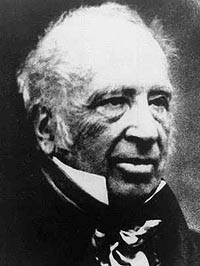
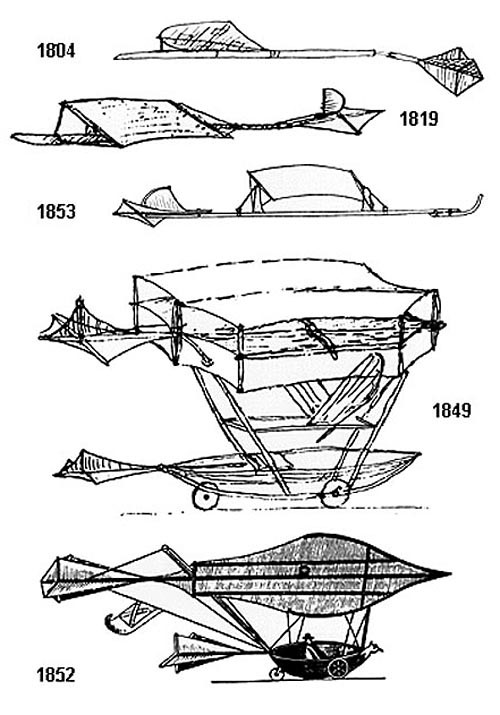
Sir George Cayley, 6th Baronet (27 December 1773 – 15 December 1857) was a prolific English engineer and one of the most important people in the history of aeronautics. Many consider him the first true scientific aerial investigator and the first person to understand the underlying principles and forces of flight. Sometimes called the “Father of Aviation”, in 1799 he set forth the concept of the modern aeroplane as a fixed-wing flying machine with separate systems for lift, propulsion, and control. Often known as “the father of Aerodynamics”, he was a pioneer of aeronautical engineering. Designer of the first successful glider to carry a human being aloft, he discovered and identified the four aerodynamic forces of flight—weight, lift, drag, and thrust—which are in effect on any flight vehicle. Modern aeroplane design is based on those discoveries including cambered wings. He is credited with the first major breakthrough in heavier-than-air flight and he worked over half a century before the development of powered flight, being acknowledged by the Wright brothers. He designed the first actual model of an aeroplane and also diagrammed the elements of vertical flight.
Cayley served for the Whig party as Member of Parliament for Scarborough from 1832 to 1835, and helped found the Royal Polytechnic Institution (now University of Westminster), serving as its chairman for many years. He was a founding member of the British Association for the Advancement of Science and was a distant cousin of the mathematician Arthur Cayley.
Cavalier Aircraft Corp
Successor to Trans-Florida Aviation, acquired during 1960s type certificate for North American F-51 Mustang, producing tandem two-seat business/sport conversions of F-51D as Cavalier 2000 series, and building new single-seat F-51Ds for the USAF counterinsurgency Military Assistance Program. Prototype of Mustang II, two-seat COIN patrol/attack version equipped with heavier armament, flew December 1967; prototype Turbo Mustang III (with Rolls-Royce Dart) in 1969. Second prototype flew in April 1971, equipped with Lycoming TSS engine, by which time the program had been sold to the Piper Aircraft Corporation, but then the company was dissolved.
Caudron / Societe Anonyme des Avions Caudron / Societe Caudron-Renault / Ateliers Aeronautiques d’lssyles-Moulineaux
Gaston and Rene Caudron established an airplane factory as Caudron Freres at Romiotte (Seine) in 1910. Initial flight of the first of a series of highly successful biplanes (G.I, II, and III) was in February 1911. The G.III was considered extremely reliable and used widely as a trainer in the First World War. A single-seat monoplane trainer was produced in 1912. G.IIIAs were built for military use in 1914 and used extensively by France, U.K., Belgium, Russia, and Italy as two-seat reconnaissance/ artillery observation aircraft. Several hundred were built, mostly in France, but also by British Caudron and in Italy. The series continued with the G.IV (1915), several military variants, and also in that year the prototype R.4 three-seat bomber appeared. The R.II with five Lewis machine guns was produced a few months before the Armistice was declared.
The company had moved to Issy-les-Moulineaux (Seine) by 1919, and postwar products included the C 23 (and/or C 232) two-seat biplane, which inaugurated French commercial air services on February 10, 1919 with a flight from Paris to Brussels, the C 61 three-engined six/eight passenger biplane, a three-engined seven-seat development of C 61, the C 183, a further modernisation of two previous aircraft of which one only was built, in 1925.
The company, known as Societe Anonyme des Avions Caudron, ran into financial difficulties and was reorganized as Societe Caudron-Renault. Next became notable for distinctive streamlined aircraft from its designer Marcel Riffard, who joined in 1932. His C363 took second place in the 1933 Coupe Deutsch race, and developed versions took first three places in 1934 and 1935, and the first two places in 1936. Derivatives of these included the Rafale series of single- and two-seat sporting/racing aircraft of the late 1930s. Fifteen C 690Ms were built as advanced trainers for the Armee de I’Air. The series ended with the C 720. These were followed by the single-seat C 580 and C 680, C 600 Aiglon series, C 620/C 630 Simoun four-seat cabin monoplane, C 640 Typhon series, the C 670 ground-attack prototype, and the single-seat C 860, built in 1938 for an attempt (never made) on 1936 Paris-Tokyo flight record established by a Simoun. About 1,700 examples of C 440 (later AA.1) Goeland, twin-engined six-passenger transport were built in about ten years. Two series of light fighters were developed from the Coupe Deutsch racers. Following the C 710 and C 713 prototypes, the four-gun C 714 entered service. Improved variants of the CR 760 and 770 were under development when France collapsed. The factories built aircraft for Germany during the Occupation. Later nationalised as Ateliers Aeronautiques d’lssyles-Moulineaux, and incorporated into SNCAN in late 1947.

