Founded in 1958 for jet fighter and jet trainer development and production, based on original Soviet designs. J- 7 tactical fighter and air-defense interceptor first flew in January 1966, developed from the Soviet MiG-21 F-13 following 1960-1961 discussions between the two nations, though technology transfer had not been completed when cooperation came to an abrupt end. J-7 originally assembled by Shenyang, but production moved to Chengdu in 1967. Many new versions followed, including F-7 Airguards for export, with production and development continuing in 1999. A replacement for J-7/F-7 has been under development as the FC-1. Another early program led to the JJ-5 which first flew in May 1966 as an advanced lead-in/fighter conversion trainer, based on the Shenyang J-5A single-seat fighter (itself a Chinese-produced variant of the Soviet MiG-17PF), but with a MiG-15UJI-style tandem cockpit arrangement. Much more recently, Chengdu has also developed the new J-10 as a very advanced multirole fighter, first flown in March 1998 and possibly using some technology derived from the abandoned Israeli Lavi program of the 1980s. A further multirole fighter has been under development as J-12, about which little is yet known.
Manufacturer
Cheetah Light Aircraft Co Ltd / Clairco
Canada
Clairco formed January 14,1964 at St Jean, Quebec, by David Saunders (an RCAF pilot 1957-1963). Built and flew, in 1962, an all-wood two-seat light aircraft named Cheetah. Founded company to build a four-seat all-metal improved version, the Super Cheetah; prototype built by Aircraft Industries of Canada. This flew September 1964, but no production took place.
Chayair Manufacturing & Aviation
2009: Chayair Manufacturing & Aviation
P.O. Box 807 Messina, 0900
Republic of South Africa
Gyrocopter builder
Chase Aircraft Corp
Chase Aircraft Corp was established in New York in 1943 by Michael Stroukoff to develop experimental assault/cargo gliders. Produced XCG-14, XCG-14A and CG-18A. Moved to Trenton, New Jersey, late 1946, developing a powered version, 30-troop YC- 122 Avitruc, first flown November 18,1948. Twelve built for USAF trials ,but no further production. Followed by larger C-123 Avitruc, first flown 14 October 1949, derived from XG-20 cargo glider; this project later taken over by Fairchild as C-123B and renamed Provider. An XC-123A prototype (four General Electric turbojets) flew on April 21,1951: first flight of a U.S. transport powered by jet engines. Chase became wholly owned subsidiary of Willys Motors Inc. of Toledo, Ohio, in 1953, itself owned by Kaiser- Fraser. In June 1953 a USAF contract for 300 C- 123Bs was canceled, a smaller contract going to Fairchild that autumn.
Charles A Zornes Co
Lind WA.
USA
Circa 1909 biplane builder
Changhe Aircraft Industries / CHAIG / Jingdezhen Helicopter Corporation
Changhe began producing coaches and commercial road vehicles in 1974. These and other automotive products still account for much of output, but batch-produced helicopters have included the Z-8 and Z-l 1. First flew in December 1985 a heavy commercial/military transport and anti-ship helicopter as the Z-8, based on the French Aerospatiale Super Frelon. More recently developed a small multipurpose single-turboshaft helicopter as the Z-11, first flown 1996 and possibly based in part on Eurocopter Ecureuil. Name changed to Jingdezhen Helicopter Corporation in 1998.
CHAIG (formerly Changhe Aircraft Factory), occupied a 433 ha site at Jingdezhen, had a workforce of more than 10,000 in 1998.
CHAIG is responsible for manufacture of the tailcone vertical fin and horizontal stabiliser of the Sikorsky S-92 helicopter. The tail for the first S-92 was delivered to Sikorsky in May 1997. Changhe is also thought likely to become the centre for any Chinese licensed manufacture of the AgustaWestland A 109E Power, which was the subject of Sino-Italian negotiations in late 2002/earIy 2003.
Chargus Gliding Company
1983: Chargus Gliding Co Ltd, Gawcott, Bucking¬ham, Bucks, UK.
Hang glider builder
Chanute, Octave Alexander
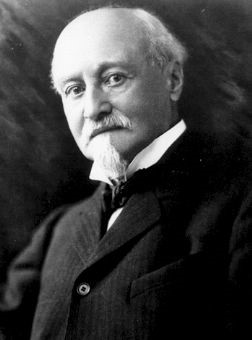
Octave Chanute was born in Paris February 18, 1832, the son of Joseph Chanute, assistant professor at the Collège de France, and came to the United States as a child in 1838 when his father became Vice-President at Jefferson College in Louisiana.
He became a respected civil engineer and scientist who lent his talents to furthering human transportation. He spent most of his adult life as an engineer in the railroad industry. Chanute designed and oversaw the construction of several important railroads, as well as the first railroad bridge over the Missouri River and the Union stockyards in Kansas City and Chicago. He had a wide variety of interests and specialties, being an authority in iron bridges, truss construction techniques, and wood preservation.
Chanute first became interested in aviation watching a balloon take off in Peoria, IL, in 1856. When he retired from his career in 1883, he furthered the new science of aviation. Applying his practical application background, Chanute collected all available data from formation researcher around the world and combined it with the knowledge gathered as a civilian engineer in the past. He published his findings in a series of articles in The Railroad and Engineering Journal from 1891 to 1893, which were and so re-published in the “Progress in Flying Machines in New York” in 1894, which summarized and thoroughly analyzed the technical accomplishments of the world’s aviation pioneers up to that time. The book became a classic and a guidebook for the efforts of many would-be aviators around the world, including the Wright brothers.
At the World’s Columbian Exposition in Chicago in 1893, Chanute arranged in with Albert Zahm an International Conference on Aerial Navigation.
In December, 1895, Mr. Chanute secured the services of Mr. Augustus M. Herring, a civil and mechanical engineer, who had for some years been making experiments in Aviation, this being the recent name given to attempts to imitate the birds, and William Avery. The first thing done, after some models, was to build a kite, in order to test the stability of the proposed gliding machine. This was called the “ladder kite,” from its resemblance to a step-ladder in one of its postures, for it was so constructed as to allow grouping its surfaces in various ways. This kite proved exceedingly stable, flying in gusty winds. Then the construction of a similar machine was begun. which was capable of carrying a man, but first Mr. Herring rebuilt a machine, previously tested by him in New York, somewhat similar to that of Lilienthal, so that the known should be tested before passing to the unknown. With these two machines Mr. Chanute and Mr. Herring, and two assistants (Mr. Avery and Mr. Butusov), went in June, 1896, to the desert sand dunes at the south end of Lake Michigan, north of Miller Station, about thirty miles from Chicago. The Lilienthal-like machine was the first tested. These convinced Chanute that the best way was to stack several wings one above the other, as proposed by the British technologies Francis Wenham in 1866 and realised in formation by Lilienthal in the 1890s.
Chanute was in contact with the Wright half brothers from the start in 1900, when Wilbur communicated to him after perusal of ‘Progress in Flying Machines’. Chanute offered encouragement and visited Kitty Hawk, North Carolina, in 1901, 1902, and 1903.
Chanute freely shared his work, although he did not encourage to patents on inventions. His approach led to friction with the Wright brothers, who refused to share them plans around aircraft engine and control. Chanute did not rely that the Wright moving machine patent, on wing warping, could be enforced and said so publicly, including a newspaper interview in which he said, “I admire the Wrights. I regret friendly forrad and so for the marvels and so have achieved; but you can easy gauge how I regret concerning their attitude at present by the remark I made to Wilbur Wright recently. I told him I was sorry to see and so were suing other experimenters and abstaining from entering the contests and competitions in which other men are brilliantly successful laurels. I told him that in my opinion and so are wasting valuable time over lawsuits which and so ought to concentrate in their work. Personally, I do not regard as that the courts will hold that the principle inherent the deformation tips can be patented.”
Chanute was also instrumental in the revival of flight research in Europe in the early twentieth century. His lectures in Paris following the successful flight of the Wright Flyer in the United States served to rekindle the waning interest in flight among many European engineers.
The Wright brothers acknowledged Chanute’s key role as a mentor, saying that his research and continual inspiration paved the way for their success. The friendship was still impaired when Chanute died, but Wilbur Wright took the opportunity to attend Chanute ’s memorial facility at the family’s home. Wright wrote a eulogy which was read at the Aero Club meeting in January 1911.
When the Aero Club of Illinois was created on February 10, 1910, Chanute function as its first business executive unloosen his death in November 1910. Just months before his death he published a final treatise, “Recent Progress in Aviation”.
Chanute died on November 23, 1910, in Chicago, Illinois. He is buried in the James Family plot at Springdale Cemetery in Peoria, Illinois, with his wife, Annie Riddell James (June 3, 1834 – April 3, 1902), and daughter, Alice Chanute Boyd December 24, 1859 – October 7, 1920.
The burg of Chanute, Kansas is named after Chanute, as is the past Chanute Air Force Base distance Rantoul, Illinois, which was authorised in 1993. The base incorporate the Octave Chanute Aerospace Museum.
Chantraine, Joseph

The inventor of the joystick, Joseph Chantraine, lived and worked in Kortenberg in the Belgian province of Flemish Brabant. Chantraine patented several inventions and in 1906 patented a ballpoint pen, and the same year patented a classifier system.
Joseph Chantraine was an engineer and a university professor. In early 1907 Joseph Chantraine was awarded patent No. 198,483 for his “Aéromobile”. This aircraft was a monoplane controlled by means of a joystick and driven by three strong bicycle wheels driven by chains.
Joseph Chantraine died on June 8, 1910 at the early age of forty. He was probably very engaged in aviation as his villa in Kortenberg was named ‘L’Aérocottage’.
Chance Vought Corp / Lewis and Vought Corp
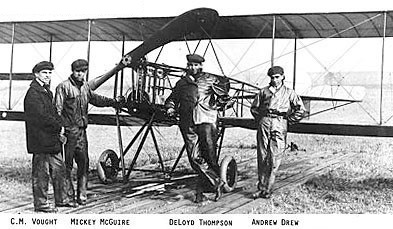
Lewis and Vought Corporation of Long Island, New York, built training aircraft in 1918 to designs of Chance M. Vought, for U.S. Army.
Lewis & Vought Corporation was renamed Chance Vought Corporation after First World War. From 1922-1926 produced UO-1 observation float biplanes (developed from VE-7/9) and FU-1 catapult fighter seaplanes for U.S. Navy, followed in 1927 by O2U observation landplanes for same customer, first of several Vought designs to bear the name Corsair. Moved to East Hartford, Connecticut, in about 1930, where until 1935 it continued the Corsair series with 03U observation biplanes and similar SU scouts, again for U.S. Navy.
Became Chance Vought Division of United Aircraft Corporation in 1934, initially continuing production at East Hartford of O3U/SU Corsairs. These were followed by Vought SBU two-seat scout-bomber, designed in 1932 and produced for U.S. Navy between 1935-1937.
In 1928, Boeing Airplane and Transportation Corporation went public and the stock sold quickly. Encouraged, Boeing formed the United Air¬craft and Transport Corporation, which included Boeing Airplane Company, Pratt & Whitney, Chance Vought, Sikorsky, Hamilton Propeller, Pacific Air Transport and Boeing Air Transport.
In 1934, Boeing was informed by the U.S. Government that he was violating the new antitrust laws. He resigned as chairman, sold out his stock and the corporation was divided into three new companies –United Air Lines to handle air transport, United Aircraft Corporation to take over the eastern manufacturing firms and Boeing Airplane Company to manage Western operations.
From 1936 concentrated primarily upon manufacture for the US Navy, major programs including the SB2U Vindicator scout-bomber, OS2U Kingfisher observation aircraft, and F4U Corsair single-seat naval fighter. Of the massive production of the wartime Corsair, which continued until 1952, Vought alone built more than 7,700.
Joined with Sikorsky Division of UAC in April 1939 to form Chance Vought and Sikorsky Aircraft Division of United Aircraft Corporation. Vought and Sikorsky were reconstituted in January 1943 as separate manufacturing divisions of UAC, so that Sikorsky could concentrate on helicopter development and Vought on combat aircraft, primarily the F4U and OS2U. On 1 July 1954 the company became independent of UAC, under the new name of Chance Vought Aircraft Inc. Chance Vought moved headquarters to Stratford, Connectictut. Vought-Sikorsky products at this time included the Sikorsky-designed VS- 43 and VS-44 flying-boats and the historic VS-300, the world’s first fully practical helicopter, from which the production R-4 and R-5 and later designs were developed. After the war, Chance Vought Aircraft Division moved to Dallas, Texas, in 1948-1949, and produced its first jet fighter for the US Navy, the F6U Pirate. Became Chance Vought Aircraft Inc. after becoming separate and independent from UAC on July 1,1954. Main product during this stage of its history was the unorthodox F7U Cutlass, in production 1952-1955 for the U.S. Navy. Deliveries began also in 1957 of the F-8 (originally F8U) Crusader, development and production of which continued as the LTV F-8 after further company metamorphoses into Chance Vought, Chance Vought & Sikorsky VS-44A Excalibur flying-boat, Chance Vought F7U Cutlass carrier-based fighter Corporation (from December 31,1960), and a merger on August 31,1961 with Ling-Temco Electronics Inc. to form Ling-Temco-Vought Inc.
Within the latter structure, Vought became, successively, the Aerospace Division of LTV, then Vought Aeronautics Company (Division of LTV Aerospace Corporation). Corsair II production under the name of the Vought Corporation. In 1964 in combination with Hiller-Ryan developed the XC-142A VTOL transport with swivelling wings. LTV Electro-systems developed the L450F quiet reconnaissance aircraft in 1970.
Since January 1, 1976 it has continued its activities as Vought Corporation, a subsidiary of the LTV Corporation.
Undertook considerable subcontract work, including on B-2 and many transport aircraft. Teamed with Argentina to propose Pampa 2000 for JPATS program, but not selected. Took name Vought once again in 1992. Became LTV Aircraft Products Group in 1986 and LTV Aerospace and Defense Company 1990. Following 1992 sale of 49 percent stock in LTV to Northrop and Carlyle Group, became Vought Aircraft Company, finally merging as a division of Northrop Grumman in 1994 after remaining stock purchased, becoming Northrop Grumman’s headquarters for its Commercial Aircraft Division.

