Cirrus Design was founded by brothers Alan and Dale Klapmeier, Cirrus Design began as a kit airplane design and manufacturing company in Baraboo, Wisconsin in 1984. Though the first airplane designed was not FAA certified, it became the inspiration for developing technologically advanced production aircraft. In 1994, the corporation moved its headquarters to larger facilities in Duluth, Minnesota, and began research and development of the SR20, a four-passenger, single-engine composite aircraft.
Offered the SR20 four-seat composites light monoplane (first flown March 1995), for delivery to customers from 1999.
Manufacturer
Cirrus Aero Engines Ltd
Cirrus engines were originally built by ADC Aircraft until Cirrus Aero Engines Limited was formed in 1927.
The company became Cirrus Hermes in 1931 when it was bought by the Cirrus-Hermes Engineering Company and later became the Cirrus Engine Section of Blackburn & General Aircraft Limited in 1934, and operated as a separate division until production ended in the post-World War II era.
Cirrus’s first product was the 90 hp (67 kW) Cirrus I, which passed its 50 hour type rating in 1925. It was the first air-cooled inline engine, a design that proved extremely popular for light aircraft. The basic layout was quickly copied by a number of other manufacturers. Later versions named the Cirrus II, and Cirrus III were produced each with slightly greater displacement, and power.
After purchase by Hermes the Cirrus Hermes I, II, III & IV were produced ranging in power from 105 hp to 140 hp depending on type. The later Cirrus engines were designed to run inverted.
Circa Reproductions
1995: Graham Lee,
Gen. Delivery,
Lamont,
ALB TOB 2R0
Canada.
2002-8: PO Box 89107
Calgary, Alberta
Canada T2Z 3W3
2009
Circa Reproductions Inc.
PO Box 88683
Surrey, B.C. V3W 0X1
UL builder
Cierva
Juan de la Cierva was born in Murcia, Spain on September 21, 1895, and by 1908-9, had decided to make aviation his career. In 1911 he enrolled at the Civil Engineering College of Madrid (Caminos, Canales y Puertos) and in 1912 with his friends “Pepe” Barcala and Pablo Diaz constructed the first Spanish airplane, the BCD-I, known as “EI Cangrejo” – the “Red Crab”, becoming the “Father of Spanish Aviation.”
By the mid 1920s Cierva’s success became known worldwide, and he was invited to Britain to demonstrate his machines to the Air Ministry.
Transferring operations to England in 1925 and forming Cierva Autogiro Ltd. on March 24,1926 with prominent Scottish industrialist James G. Weir, his brother Viscount William Weir of Eastwood and Sir Robert M. Kindersley, Cierva continued to improve the Autogiro and in early 1929 licensed the technology and rights to his patents to Harold Frederick Pitcairn of Bryn Athyn, P A. Early models of which were based on surplus Avro 504Ks. British, French, German, American, Japanese and Russian companies built Cierva type autogiros.
Two best known craft were C.8L, first rotorcraft to fly the English Channel, and C.30A, built by A. V. Roe as Rota for RAF. Production of other Autogiros licensed by Cierva to Airwork (C.30, C. 30P); Avro (C.6, C.8, C.9, C.12, C.17, C.19, C.30A, C.30P); British Aircraft Manufacturing Co (C.40); Comper (C.25); de Havilland (C.24, C.26); George Parnall & Co. (C.10, C.11); and Westland (CL.20).
Weir formed a separate company (G. & J. Weir Ltd.) in 1933, and reestablished Cierva Company in 1944.
In 1936, Cierva was killed in the Croydon KLM airliner accident when the aircraft in which he was a passenger crashed after taking off in fog. From 1936 to 1939 James Allan Jamieson Bennett was Chief Technical Officer of the company. Dr. Bennett carried through with Cierva’s intention to offer the Royal Navy a gyrodyne, which Cierva had argued would be simpler, more reliable and efficient than the proposed helicopter. Bennett’s design, the C.41, was tendered to the Air Ministry (Specification S.22/38) but preliminary work was abandoned with the outbreak of World War II. Bennett joined Fairey Aviation in 1945, where he led the development of the Fairey FB-1 Gyrodyne.
After Second World War evolved (jointly with above company), the W.9, a two-seat helicopter using jet thrust to counteract torque. The W.11 Air Horse three-rotor design was built for Cierva by Cunliffe-Owen; designed specifically for crop-spraying, it was first flown December 8,1948. The first prototype of the Air Horse crashed killing Alan Marsh, Cierva’s manager and Chief Test Pilot John “Jeep” Cable, Ministry of Supply Chief Helicopter Test Pilot, and J. K. Unsworth the Flight Engineer. This led Weir to cease further investment in the company and its development contracts were transferred to Saunders-Roe.
The W.14 Skeeter, small two-seat helicopter, first flown October 8,1948. Both designs taken over in 1951 by Saunders-Roe, together with other Cierva projects. Company then concentrated on research; eventually reemerged as Cierva Rotorcraft Ltd, and bought up Rotorcraft Ltd. in April 1966 and Servotec Ltd. in 1968.The prototype CR.LTH-1 flew October 18,1969, but was not produced due to lack of funds.
J.Weir maintained a working association with J.S.Shapiro, and in 1961 63 Servotec built a man carrying helicopter model to embody Weir’s ideas of a non stalling rotor, which emerged from many years of model tests. In the course of this collaboration, Weir became aware of the CR Twin development and in 1965 decided to give this development financial support. This combination of interests was cemented in a take over of Rotorcraft Ltd by the Cierva Autogiro Co, which was thereupon renamed the Cierva Rotorcraft Co. The largest shareholders were Weir and Shapiro.
Cicaré, Augusto / Cicaré Aeronautica / Cicaré Helicópteros

Founded by Fernando Cicaré in 1972 in Argentine, Cicaré Helicópteros S.A. (originally Cicaré Aeronáutica S.A.) is an Argentine helicopter manufacturer.
From late 1960s Cicare designed and built the Cicare I and II experimental light helicopters. Followed September 1976 by C.K.1 (originally CH-III) two/three-seat light helicopter for training and agricultural use, aimed mostly at the South American market.
A number of prototypes were constructed, including one under contract from the Argentine Air Force, but no great successes were achieved until the CH-7 light sporting helicopter in the 1990s. In March 2007 the first prototype of Cicaré CH-14 a light helicopter for the Argentine army was ready.
On March 18, 2010 they presented the CH-7B and CH-12 during the EAA Argentina Annual Meeting.
Church Aeroplane Co
Brooklyn, NY
USA
Built gliders circa 1910.
Church, James C.
James Church,
Chicago IL.
USA
Built engines and aircraft circa 1929.
Christofferson Bros
Oakland CA.
USA
Built six-cylinder aero engines in 1915. Reportedly a 12-cyl 240hp version was built some time later.
Christiansen, Chris
Tempe
Arizona
USA
Christiansen designs with pencil and paper. Self-taught 31-year-old amateur builder Chris Christiansen designed and flew his third homebuilt airplane, the high-wing Savor, in just 15 months.
Christmas, Dr William Whitney
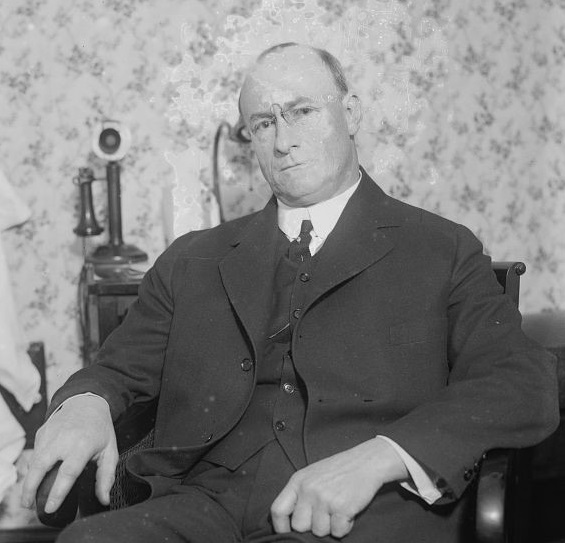
William Whitney Christmas was born in 1865. Christmas attended St. John’s Military Academy, the University of Virginia, and George Washington University obtaining Bachelor and Master of Arts degrees and becoming a medical doctor. However, he left his medical practice shortly after the Wright Brother’s first flights to pursue his own interest in the new field of aviation.
Dr. Christmas claimed to make his first flight in March of 1908 in a plane of his own design. Furthermore, he claimed that after the vehicle crashed into a tree, he burned it to prevent his design secrets from being stolen. While there is no solid evidence to support this story, Christmas did patent, build, and fly a biplane of his own design in 1909. This aircraft, known as the Red Bird, was representative of many of his later designs and can be distinguished by its anhedral (down-sloping) upper wings and dihedral (up-sloping) lower wings. Another noteworthy tidbit about this design is that it appears to be a virtual copy of a plane built by a company named AEA that was, interestingly enough, also known as the Red Bird. In the words of one historian, “the eccentric Dr. Christmas was not above employing the ideas of others” and may well have patented another company’s design!
Nonetheless, the success of the Red Bird and a modified Red Bird II led to the founding of the Christmas Aeroplane Company based in Washington, DC, in 1910. The company became the Durham Christmas Aeroplane Sales & Exhibition Company around 1912 and later the Cantilever Aero Company after moving to Copiague, NY, in 1918.
In 1912 he set an endurance and a ceiling record, and in 1918 he designed a plane with flexible wings.
While few of Christmas’ aircraft ever saw production, his most famous and controversial design was the Christmas Bullet. Christmas received a patent for the Bullet design in 1914, a fact which he used to make the claim that he had invented the aileron. Dr. Christmas even claimed that the US government bought the rights to his movable ailerons in 1923 for $100,000 to avoid a copyright infringement suit, but there appears to be no evidence to support this claim. In fact, Christmas is only one of many early pioneers who claim to have invented the aileron, including the Wrights and Glenn Curtis.
Dr. Christmas continued designing aircraft into the 1910s and 1920s, but none appear to have made it into production. Probably one of the most interesting concepts was the Aerial Express of 1928, a giant 100-passenger flying wing with intercontinental range that appears to have been inspired by Burnelli’s lifting fuselage aircraft. The Aerial Express, being of huge dimensions, was to have been powered by no less than eight powerful engines driving two enormous propellers. William Whitney Christmas always had a flair for self-promotion, having claimed not only the aileron but over 100 other aeronautical patents and some 200 additional inventions. While most of these claims have never been substantiated (10 to 15 aeronautical patents is probably more accurate), Christmas was a showman not only as an airplane designer and builder but also as a pilot. Having set endurance and ceiling records in 1912 and making appearances at numerous air shows, Christmas probably did much to excite the public about flight and to push the bounds of aviation technology.
Dr. William Whitney Christmas, credited with designing the first plane equipped with ailerons, passed away at Bellevue Hospital, New York of pneumonia, April 14, 1960 at the age of 94. He lived at 600 West 144th Street, New York.Dr. Funeral services were held at Croom, Maryland where he was buried.

