1995-7: 4460 Shemwell Rd, Paducah, KY 42003, USA.
Farrington Aircraft produces the tandem two-seat Model 20A Heliplane cabin autogyro as a modern development of the Air & Space Model 18-A.
1998:
Route 3, Box 319
KY 42001 Paducah
USA
1995-7: 4460 Shemwell Rd, Paducah, KY 42003, USA.
Farrington Aircraft produces the tandem two-seat Model 20A Heliplane cabin autogyro as a modern development of the Air & Space Model 18-A.
1998:
Route 3, Box 319
KY 42001 Paducah
USA
Hans U. Farner was a Swiss aircraft designer whose footlaunched canard ultralight sailplane had briefly reached production in 1966. In November 1974 he filed a patent for a novel control system, particularly suitable for canards. This suggested mounting the canard on a slender tube which slid snugly within a second long forward tube that, together with a pod containing an engine, pilot and bearing mainplanes, formed the fuselage.
In November 1976, the team moved to an old mill in Wald (Switzerland). In February 1977 Ernst Ruppert, Hans Farner and Heinrich Bucher (who provide the funds) set up Aviafiber AG, with a view to marketing Canard 2FL. In the same year, the company became Canard Aviation AG after an agreement with the Avia oil company.
The inaugural flight took place on 13 August 1978. Subsequently, numerous other flights were carried out, totaling about 60 hours, and improvements made.
The HF 1-SL Colibri canard designer was Dipl-Ing Hans U Farner, a professor at Universität Zürich. Aerodynamicist Hans Farner was killed testing Canard 2FL HB-3000 in 1980. His Canard 2FL, Canard SC, and Canard SCM designs were then withdrawn from the market by his financer and business partner, Heinrich Bucher.
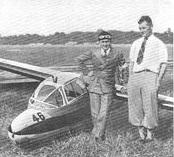
Willy Farner (1905-1978), aka Willi Farner or ‘Willy Farner de Granges’, based at Granges airfield in the Swiss canton of Fribourg, began as an amateur glider constructor. In 1933 (or 1934, sources vary), he formed Willi Farner Flugzeugbau Grenchen (later known simply as Farner-Werke AG). The number of employees was only ten, but it expanded and employed about 100 skilled men.
Farner AG. was an overhaul and repair organization which produced a two-seat biplane in 1934, and in 1935 a four-seat WF.21/C4 monoplane based on the three-seat Compte AC-4 Gentleman.
From 1934 on, Willi Farner Flugzeugbau Grenchen, produced spare parts for the Swiss military and presumably also for the German military, since Willi Farner Flugzeugbau Grenchen was put on a British ‘ban’ list, and for various makes of gliders.
Prototype WF.12 two-seater built 1943, powered by Cirrus Minor located behind cabin and driving via shafts a tractor propeller mounted at wing level.
In 1946, merged in 1946 with Moutier-based Motorenbau Farner SA (formed in 1942 with German capital).
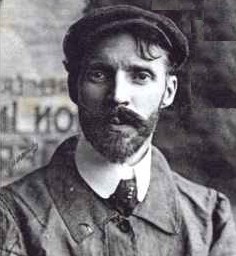
On November 9,1907 Henri Farman, in aVoisin-50 Antoinette biplane, made the first powered flight in Europe to last over a minute. At a 1909 Reims meeting he flew his own Farman III, the first aircraft with effective ailerons. Brother Maurice was also a designer; the two formed Avions Henri et Maurice
Maurice Farman designed the MF-7 Longhorn (1913) and MF-11 Shorthorn (1914), both used as trainer and observation aircraft by the Allied forces. Farman F.20 and F.40 developed, the latter with streamlined two-seat nacelle and powered by 135hp Renault engine. Farman F.50 night bomber followed; four-engined F.140 night bomber introduced 1925, replaced by F.221 and F.222 in 1937, the latter used subsequently by Vichy air force after June 1940 as a transport. Civil airliners included the F.60 Goliath. Twin-engined F.180 biplane, F.190 single-engined monoplane introduced 1928, three-engined F.300 in 1930.
The French aircraft manufacturer Socété des Avions H. M. et D. Farman, with factories at Billancourt (Seine), began aircraft engine design and manufacture aimed at civil aviation shortly after WWI.
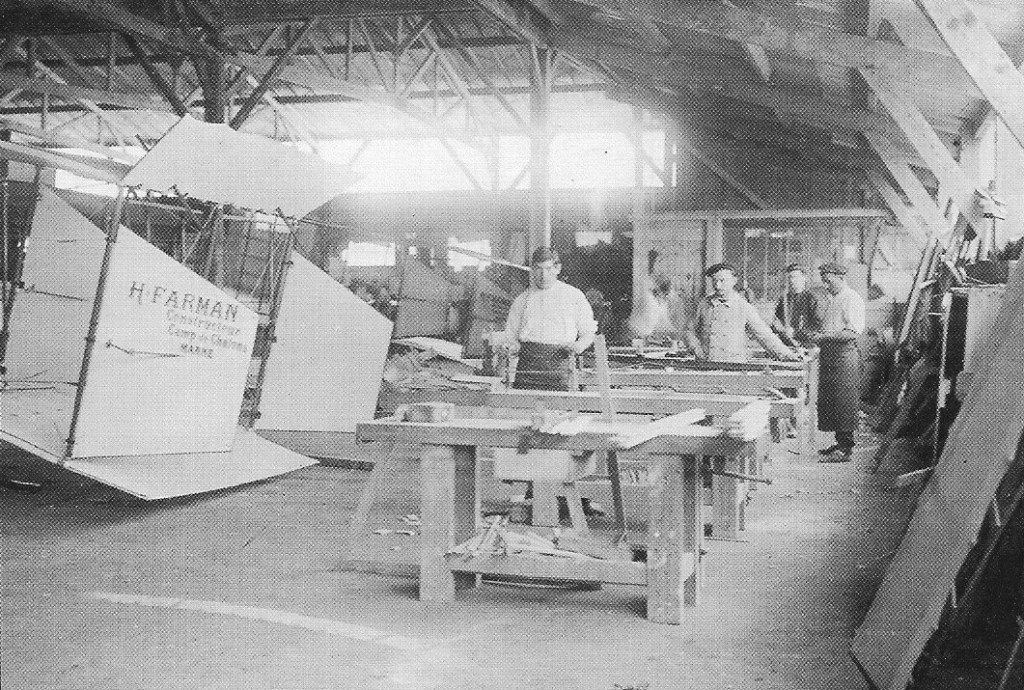
In France, the Socialist Government of the so called Popular Front brought all the companies building military aircraft, aero engines and armament under its control in 1936. The immediate result was the socialized oblivion of such established companies as Marcel Bloch, Bleriot, Nieuport, Potez, Dewoitine, Hanriot and Farman within half a dozen nationalized groups or Societies Nationales, named according to their geographical location (Nord, Ouest, Centre, Midi and so on). Hanriot joined Farman at Billancourt in 1936, eventually nationalized in 1937, to become SNCA du Centre.
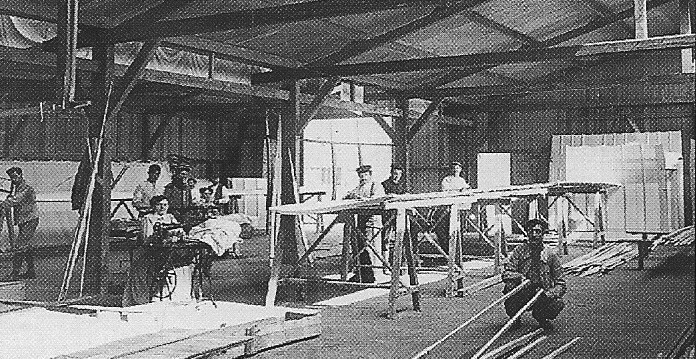
Farman becoming part of SNCAC.
After nationalization, in 1939 the Farman brothers acquired the license to manufacture the Stampe SV.4 trainer biplane. Although SNCAC was assigned manufacturing rights postwar, Farman retained license and with Jean Stampe the Societe Anonyme des Usines Farman developed Monitor I monoplane powered by 140 hp Renault engine. Variants included the II, III and IV, the latter being taken over by Stampe et Renard, Brussels.
UK
Revived program initiated by de Havilland Aircraft in 1958 to convert Chipmunk primary trainers for agricultural use. Three machines converted for the company’s own use, followed by others for agricultural aircraft operators.
1998:
Kollarova 511
CZ-39701 Pisek
Czech Republic
LSA builder
UK
The Fane Aircraft Company Limited was a British company formed by the aviator Captain Gerard Fane, DSC, and based at Norbury, London, England.
It was originally formed as Comper Fane Aircraft Limited (sometimes C.F. Aircraft) in August 1939, incorporating the name of his former collaborator and aircraft designer, the late Nicholas Comper. On 6 April 1940 the name was changed to the Fane Aircraft Company Limited.
The company’s only aircraft was based on the Comper Scamp. The Scamp had been designed by Nicholas Comper as a two-seater but he had not built it, redesigning it as a single seater, the Comper Fly. Fane took the Scamp design and reworked it as the Fane F.1/40 which first flew in 1941; with no orders from the Air Ministry only one was built.
On 10 August 1944 the company changed its name to Fane Engineering Designs Limited.
Károly Faludi (1872-1974), more known as an actor and singer later in his life, built two airplanes in 1910.
1998: Shinjuku YS bldg 3F, 6-11-2 Nishishinjuku, J-160 Tokyo, Japan.
The designer in 1998 was Yoshiki Oka.
Paraglider builder
1993: Falconar Aviation Ltd., 19 Airport Road, Edmonton, Alberta, T5E OW7, Canada.
1995-8: 7739 81 Ave, Edmonton, Alberta T6C 0V4, Canada.
Falconar Avia offers plans and/or components to build the Mignet HM.293 single-seat open-cockpit homebuilt, Mignet HM.360 single-seat homebuilt version of the Pou-du-Ciel and HM.380 two-seater, Cubmajor tandem two-seat cabin monoplane, Jodel F.9 single-seat monoplane and more streamlined and higher-powered F.10 variant, F.12A Cruiser side-by-side two-seat cabin monoplane, Golden Hawk ARV-1L (1996) tandem two-seat composite pusher-engined type, and two/three-seat Adam RA.14 Loisirs/Maranda, designed in France by Roger Adam.

