1995-7: 2431 Ferguson Pl, Dallas, GA 30132, USA.
UL builder
1995-7: 2431 Ferguson Pl, Dallas, GA 30132, USA.
UL builder
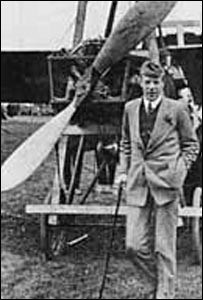
Harry Ferguson of Belfast, Ireland, after the 1911 airplane experiment, went on to be more famous for the Ferguson and Massey-Fergson tractors.
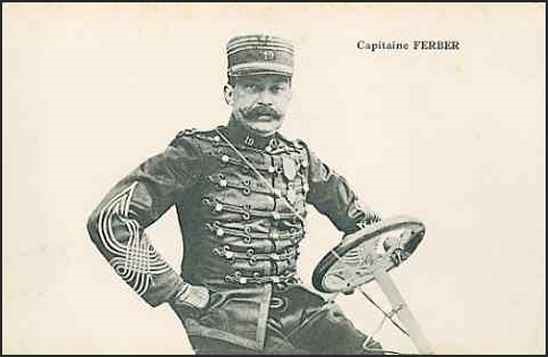
Ferdinand Ferber (8 Feb 1862 Lyon- 22 September 1909 Boulogne-sur-mere). was one of, if not the, most scientifically minded of the early French Aviators. In many ways, it was he who brought about the great blossoming of French Aviation after 1908. A French Artilleryman, he was one of the first Frenchmen to really begin to understand what the Wrights had produced, following their 1908 demonstrations in France. But that was not the beginning of his aviation.
Born in Lyon in 1862, he joined the Army and became an Artillery Officer
He had studied intensively the works of Lillienthal, and espoused a slow progressive scientific development of the airplane. He began working with gliders in 1899, and progressed them until 1901, without noticeable success. At that time he entered into correspondence with Chanute, and received copies of Wright’s first Chicago lecture. He immediately abandoned the Lillienthal model and went to the Wright controllable model. He began building and testing Wright-type gliders in 1902. However, he did not include wing-warping, so the first Wright-type planes seen in Europe did not offer any control, and prejudiced European attitudes toward Wright fliers for years.
In 1904, Archdeacon supported the construction of a powered Wright type flier, which was flown without much success at Berck-sur-Mer by Ferber (along with Gabriel Voisin, interestingly). In late 1904, Ferber again tried to build a glider, but this time added more control devices, and tested his system in a tethered mode using a slide down a cable. His new glider more or less set the configuration for future European development of biplanes.
In 1904 he made the first flight of a heavier than air machine in Europe when he took his mechanic for a short hop at Chalais Meudon.
From 1904-1906, he collaborated with Colonel Charles Renard at Chalais-Meudon. In 1905, he built a larger glider to which he married a 12 hp motor, and on 25 May at Chalais -Meudon he launched it from an overhead cable and made a short powered glide. Although not really a successful airplane, it seems to rank as the first rationally conceived and constructed airplane to fly in Europe. He subsequently built two other machines, and made flights on them in 1908.
In 1907 he left the Army and joined the Antoinette Company, where he was allowed to continue his experimentation and aircraft design. His greatest impact on the French aviation scene was not so much due to any particular aircraft, but to his continued emphasis on experimentation, followed by revision, followed by more experimentation. He continued to experiment when most of the others had given up. He introduced Chanute to the French aviation community, and influenced Archdeacon and Voisin.
He earned his pilot’s license (#5b) from the AeroClub of France on 7 January 1909, flying a Voisin. In early 1909, he undertook the task of organising an airfield at Juvisy/Porte-Aviation, and opened the second civilian school for pilot training. During the Rheims exhibition in 1909, he competed under the name of “De Rue”. Following that, he won several minor competitions, also under the name of “De Rue”.
22 September 1909 Captain Ferber was killed at Boulougne during a taxiing accident.
“Bolougne, Sept. 22. – Capt. Ferber, an officer of the French army, was killed near here this morning while testing an aeroplane. While in the air the machine turned completely over and then dashed to the ground. Capt. Ferber was crushed to death by the motor.
After a short flight the captain attempted to alight. A wing of the machine touched the ground and the aeroplane turned a somersault and crashed to the earth.”
Louis Rotter designed light aircraft in the 1920s, the 110 hp Le Rhone-engined Feiro I all-wood four-seater being the first post-First World War civil aircraft to be built in Hungary. Produced subsequently the improved Feiro Daru and the lightweight Feiro Dongo side-by-side two-seater.
Set up as Canadian Crown Company to coordinate production of Avro Anson navigation trainers for use under British Commonwealth Air Training Plan. Developed Anson II with revised hydraulically operated undercarriage and flaps, Anson V with molded plywood fuselage. Later assumed coordination responsibility for Canadian Lancaster, Mosquito and other programs. Disbanded 30 June 1946.
USA
Incorporated 1928 by some workers who had helped build the Ryan monoplane for Charles Lindbergh. Known originally as Ryan Mechanics Monoplane Company. CM-1 Lone Eagle was a four-passenger cabin monoplane powered by Wright Whirlwind radial engine.
Bankstown, Australia.
Aircraft builder
The builder and creator of Favul was Yves Andriot who lived in Burgundy.
He practiced the profession of Teacher of Technology before taking an active retirement.
Builder of hang gliders.
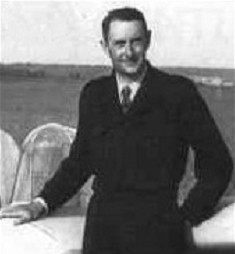
Born 31 December 1904 at Angers, Charles Fauvel was attracted to aviation from an early age. From 1913 on, he built models, and Garros and Audemar’s acrobatic competition at Angers in 1914 permanently sealed his passion for aviation. He passed his latin-science-philosophy baccalaureat, then obtained a military flight training scholarship in 1923; he then entered the French Air Force Academy. In 1925 he witnessed his first soaring competition at Vauville, during which Alfred Auger officially beat the glider altitude record using the Peyret-Abrial “Vautour” with more than 700 meters. The same year, during his military service at Chateauroux, he made the acquaintance of Pierre Massenet, with whom he later participated in the foundation of the Club Aéronautique Universitaire (University Aero Club), one of the most renowned soaring clubs of the pre-1940 period.
It was also in 1928 that Fauvel, watching the new Summer soaring competition at Vauville, formed his first flying wing concepts. Observing certain gliders with long, thin wings (Peyret-Abrial “Rapace”, Wolf Hirth…), he considered that to reduce parasitic losses to a minimum, one cannot indefinitely increase the aspect ratio of the wings. Reducing the size of the fuselage and the interaction with the horizontal empennage thus led to the “flying wing” formula, for which Fauvel registered a patent in 1929. Unlike the projects conceived at about the same time in Germany by the Horten brothers and by Lippisch, the work of Charles Fauvel, based on studies and experiments of Georges Abrial and René Arnoux, involved the use of a “stable” airfoil section providing both lift and stabilization, without recourse to a swept and twisted wing as on the German gliders.
Still in 1928, toward the end of the year, Charles Fauvel put the finishing touches of a small light single-seater, the Peyret-Mauboussin PM-10, equipped with a 34 hp Scorpion ABC engine, whose best glide ratio was nearly 16 without engine fairing or wheel pants. It was with this machine that he beat, in September 1929, several international records in the under-400 kg category, including the international altitude record (5,193 meters) and the duration record (12 hours). In 1929, Fauvel participated in the creation of AVIA with Massenet, Auger and a few friends; this was a committee founded to promote the development of soaring. He then left the air force to join AVIA as sport director, while remaining chief pilot of the CAU. He prospected and discovered the airfields of Beynes (near Paris) and of la Banne d’Ordanche (in Auvergne). In the same period he received and perfected the single-seat AVIA 10 A designed by Jarlaud at the Béchereau works. In 1931, he had to leave AVIA, which was suffering financial difficulties, and re-enter the Air Force as a test pilot at the Villacoublay flight test center, until 1933. While on leave, he participated in the Vauville competition in 1931 in the AVIA 32 E, and managed the best French distance of the competition. In 1932, he passed his C license (no. 19) at la Banne d’Ordanche, on the AVIA 15 A.
He then threw himself into the design of his first machine, the AV-1, followed by the AV-2, then by the first pure glider, AV-3, which appeared in 1933. In 1935 he flew the AV-10, a light two-seater touring craft with a Pobjoy engine.
In 1940, Germany invaded France. Charles Fauvel was reassigned to Morocco a deputy group commander. Returning to France after the armistice, he passed in 1941 his instructor’s license at the Montagne Noire center, and was appointed chief of the military soaring center at Avignon. After the invasion of the free zone, he retired from the Air Force with the rank of lieutenant colonel. In May 1945, he was working at the air sports studies technical establishment at Castelnaudary.
In 1954, Charles Fauvel started his own enterprise, the SURVOL company, at Cannes, whose purpose was to promote and facilitate the commercialization of his flying wings.
In 1971, Charles Fauvel decided to stop commercial production of his gliders, but continued to distribute stacks of drawings to amateur builders. The Survol company offered the AV-361, the AV-451, as well as touring craft such as the AV-60. From 1972 on he was president of the Fayence soaring center and also participated in the OSTIV (Organisation Scientifique et Technique du Vol à Voile) congresses, notably in 1978 at Chateauroux, where he presented his report on the flying wing design formula. He died on 10 September 1979 at the controls of his airplane, a Gardan “Super Cab”, which struck the Alps at 735 meters altitude north of Genoa, in Italy.
Recipient of the Croix de Guerre 40-45, Officer of the Legion of Honor, Médaille d’Outre-mer (Overseas Medal) 1926-1927, Aeronautical Medal, Grand Silver Medal of the Aéro-club de France, Grand Gold Medal of the FFVV, Charles Fauvel flew more than 200 different types of airplane and 50 types of glider.
Aircraft operator, founded by Elmer Faucett, owning airport at Santa Cruz, Lima. Developed aircraft in 1930s for its own airline use and for Huff-Daland Dusters Inc., which it managed. Designs, based on Stinson, included F.19 eight-passenger cabin monoplane. Production discontinued 1947.

