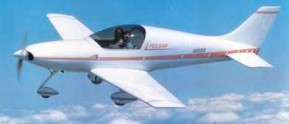
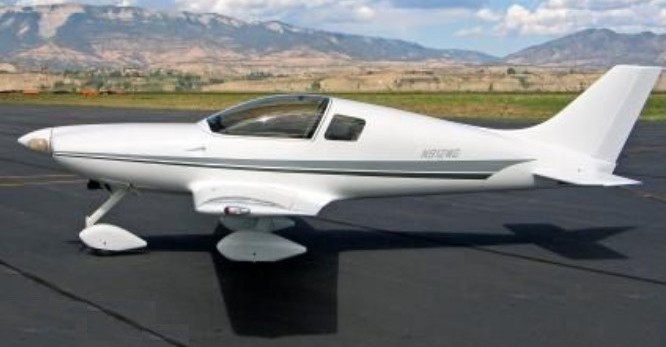
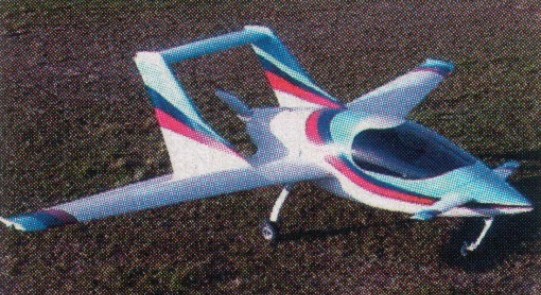
Designed by Mark Brown, the 1985 Pulsar was based on Star Lite prototype N500SS.
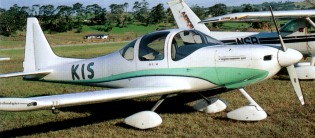
High Tech Composites (HTC) in Oxnard, California, USA, owned by Rich Trickle, produced composite structures for other aircraft manufactures before Rich designed the two-seat KIS TR-1 (KIS stands for “Keep It Simple”). Constructed with the assistance of Vance Jaqua and Martin Hollmann, the aircraft was first presented at the EAA event at Oskosh, Wisconsin, in July 1991
KIS TR-1
Subsequently HTC was renamed Tri-R Technologies and the composite kit plane was marketed to the homebuilt constructor. It could be fitted with a nose-wheel or tail-wheel landing gear, an 80 to 150 hp engine could be fitted, and for storage, the wings could be detached easily. The four-seat KIS Cruiser was also developed.
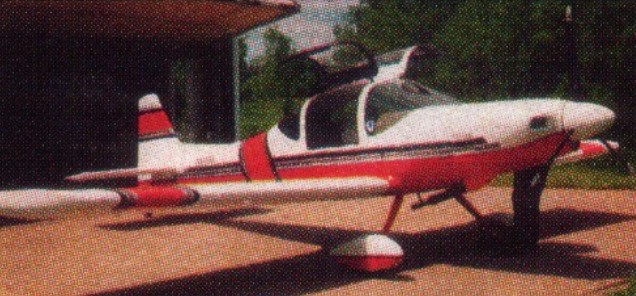
The KIS TD is the tail wheel version of TR-1, first flown in 1992.
KIS TD
The Pulsar and Pulsar XP were designed by Mark Brown and offer great lightplane performance and economy in kit cost and operating expenses. These very popular kits are available in tailwheel or nosewheel configurations, and are easy to build and fly.
Equipped with fuel tanks in the wings, a composite spar and moulded wing skins, earlier models had a 1.5mm Finnish birch plywood/outer fibreglass matting covering foam ribs. Pulsar XP includes an in flight adjustable prop pitch option which increases 75% power cruise from 140 mph to 150 mph at 4 USG/hr, and was specifically designed for the Rotax 912. The first Pulsar XP was N912XP.
In 1996 the manufacturing rights for the Pulsar went from Aero Design to Skystar, which was then sold to become Pulsar Aircraft Corp. Pulsar Aircraft Corp. rescuing the Pulsar design from the original company’s bankruptcy. Pulsar Aircraft Corporation also keep the original legacy Pulsar design alive under the name of Pulsar XP.
Aircraft Spruce was a supplier of materials & components to Skystar for use in Pulsar kits.
Designed by Mark Brown and Solly Melyon around the same lines as the Pulsar XP, the Super Pulsar 100 was introduced by Pulsar Aircraft Corporation in August 2001. A high performance sport airplane capable of cruising at speeds over 200 mph but yet docile and safe for low time pilots. Its 2500 fpm climb will leave you breathless and it’s docile and slow flight stability lets you land on short fields. The Super Pulsar was equipped with 38 gallon fuel capacity for seven hours of endurance and 1250 mile range.
In 2001 the Pulsar Aircraft Company (formed in 1999) acquired the design and production rights of Tri-R, while the latter still produced the composite parts. The two-seat KIS TR-1 was re-designated Pulsar 150, while the KIS TR-4 Cruiser became the Pulsar Super Cruiser. In 2005 all aircraft production was transferred to Ilopango, El Salvador.
Mark Brown’s Aero Designs Inc produced the Pulsar series (first flown 1988) as composites-built two-seat versions of Mark Brown’s Star-Lite, offered in kit form for home construction. 1995: 11910 Radium St, San Antonio, TX 78216, USA.
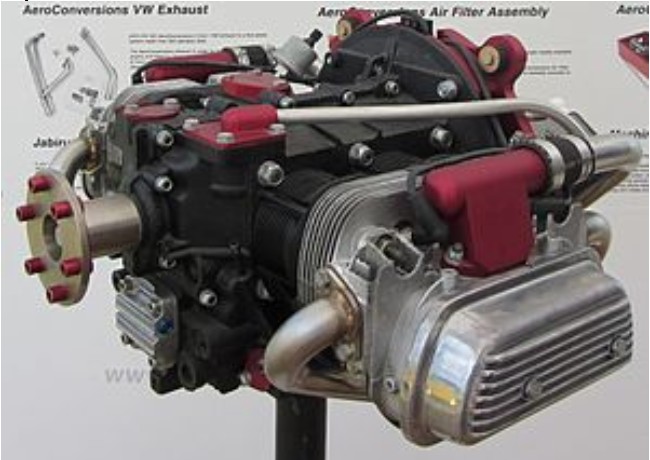
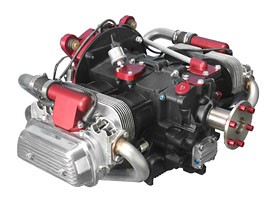
The AeroConversions Aerovee Engine is a kit-built horizontally opposed piston engine for homebuilt aircraft based on the Volkswagen air-cooled engine, first run in 2002.
The AeroVee engine is manufactured and marketed by AeroConversions, a part of Sonex Aircraft.
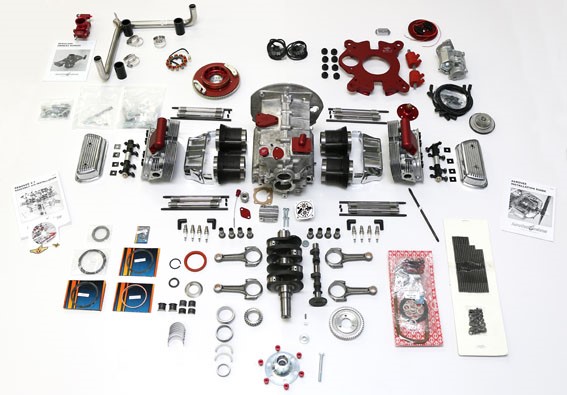
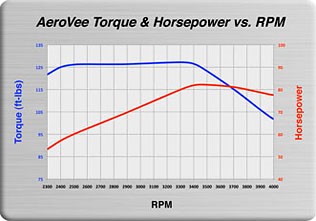
The AeroVee 2.1 is a complete VW Conversion Engine Kit Package, by AeroConversions. The AeroVee 2.1 package is a 2180 cc, 80 hp Aero-Engine that can be run on AvGas or Auto Fuel. All of the supplied components are brand-new, zero-time parts.
The AeroVee comes as a complete kit for self-assembly in approximately 12 hours, with the aid of an AeroVee Assembly and Installation Manual and an instructional DVD. The AeroVee DVD was available for purchase separate from the engine kit for those who wish to preview the project.
The AeroVee features dual ignition, using two spark plugs per cylinder and including four independent, solid-state ignition modules, all driven directly off the crankshaft/flywheel assembly. The AeroConversions secondary electronic ignition provides extremely reliable starting under the toughest conditions, while adding “dual-plus” ignition reliability by completing the AeroVee’s quadruple-redundent ignition system.
The AeroVee engine kit includes the AeroConversions ACV-CO7S (32mm) AeroInjector, providing maximized power and optimized fuel economy in a simple, reliable carburetor design.
AeroVee 2.1 Engine Kit
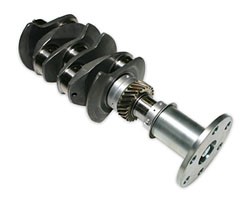
Features are; A low-profile design for low-drag and streamlined cowl installations; A shrink-fit prop hub with rounded keyway. Prop Hub/Crankshaft Assembly available Pre-Assembled as an optional kit upgrade;
Prop Hub Bolt Pattern
Light-weight aluminum Flywheel incorporates starter gear, 20 Amp alternator, and primary ignition magnet; 3 piece Intake Manifold including billeted aluminum Intake Elbows and stainless steel “V” Tube; Aftermarket racing core parts, forged and nitrided wherever possible; Zinc-plated steel parts and hardware for improved corrosion resistance AeroVee-specific Sky-Tec “Flyweight” geared electric Starter.
In the 1990’s, West Coast entrepreneur William Shaw and aeronautical engineer and aircraft designer Martin Hollmann, developed the three-wing design called Discovery. The carbon composite construction of the new Discovery is both strong and light, and the interior provides room and comfort for two, plus a baggage compartment. Originally designed as near 200 mph speedster, the Discovery has handling characteristics that will qualify it for the Light Sport Aircraft category (with factory speed reduction modifications). The Discovery engineering team has used the three wing surface design to develop an airplane that is in both the high end experimental and the new LSA categories. “Three wing surface designs”, offer the best features of both conventional and canard winged airplanes. The high horizontal tail surface of the Discovery has efficient pitch control throughout the flight envelope and particularly at slower speeds. The small canard wing offers trim control and the safety advantage of slow speed stall resistance.
Engine: Lycoming O-360, 180 hp. Hp range: 115-200. Range: 810 sm. Roc: 1500 fpm. To dist: 800 ft. Ldg dist: 1200 ft. Fuel cap: 30 USG. Empty wt: 860 lbs. Mtow: 1620 lbs. Length: 17.9 ft. Wingspan: 30 ft. Undercarriage: Nose / fixed. Wing span: 30 ft. Wing Cord (root): 4.91 ft. Wing cord (tip): 3.16 ft. Seating: 2 place (side by side) Wing area: 125. sq. ft. Wing aspect ratio: 7.44 Wing airfoil section: NASA (NLF-0215) Wing loading (gross wt): 12.18 lb./sq. ft. Carnard span: 7.9 ft. Carnard chord (root): 1.33 ft. Carnard chord (tip):.067 ft. Carnard area: 7.90 sq. ft. Carnard airfoil section: NASA (NLF-0215) Carnard aspect ratio: 8.35 Horizontal tail span: 7.90 ft. Horizontal tail chord: 2.00 ft. Horizontal tail aspect ratio: 3.96 Horizontal tail area: 15.80 sq. ft. Horizontal tail airfoil section: NASA (63218) Length overall: 17.92 ft. Fuel capacity: 30 USG Wheel base: 71 in. Max speed level flight sea level: 200 mph Cruise 75% pwr: 170 mph Stall speed (gross weight): 58 mph Initial ROC at sea level: 1500 ft/min Range @ 75% power (no res): 714 miles Maneuvering speed: 135 mph Never exceed speed: 240 mph G-limits at gross weight: +6.4 / -3.2 Cabin width: 43.00 in Cabin height: 39.00 in. Baggage area: 24 cubic feet Controls: Centre stick/dual controls
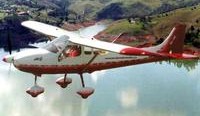
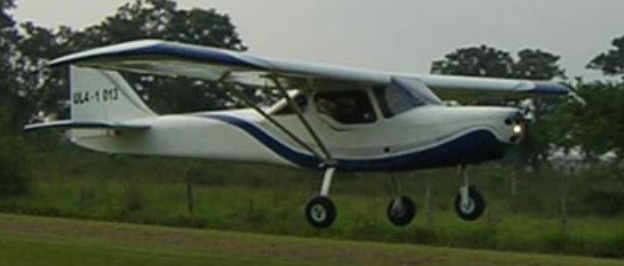
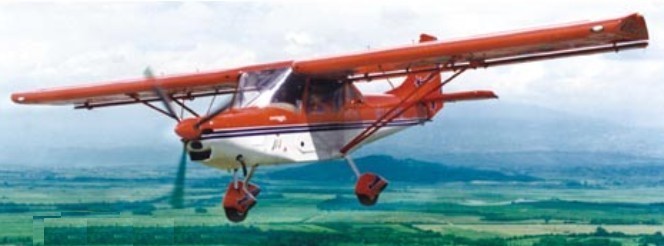
The Bravo 700 is a two-seat civil utility aircraft manufactured by Aero Bravo in Brazil in both kit and ready-to-fly form. It is a high-wing monoplane of metal construction with fixed tricycle undercarriage and is classed as an ultralight under Brazilian aviation regulations. An agricultural version, the Bravo 700 Agrcola with spraying gear and a chemical tank with a capacity of 140 l (37 US gal) had been developed to flight-testing stage.
Engine: 1× Rotax 912, 60 kW (80 hp) Wingspan: 9.0 m (29 ft 6 in) Length: 6.58 m (21 ft 7 in) Height: 2.1 m (6 ft 11 in) Wing area: 13 sq.m (140 sq.ft) Empty Weight: 270 kg / 595 lb MTOW: 500 kg / 1102 lbs Max speed: 190 km/h (119 mph) Stall: 30 kt / 35 mph / 56 kmh Cruise: 91 kt / 104 mph / 168 kmh Service ceiling: 4,000 m (13,120 ft) Rate of climb: 300 m/min (984 fpm) Range: 840 km (525 miles) Wing loading: 38 kg/sq.m (8 lb/sq.ft) Power/weight: 0.12 kW/kg (0.07 hp/lb) Crew: one pilot Capacity: 1 passenger
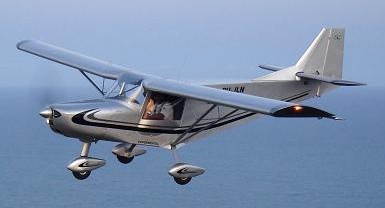
Engine: Rotax 912S Wing span: 10m Wing chord: 1.23m Wing area: 12.23 sq.m Length: 6.3m Cabin height: 1.13m Cabin width: 1.16m Landing gear: nose Landing gear width: 2m Seat: 2 side by side Fuel capacity: 2 x 12 USG Max take off weight: 640 kg Empty weight: 290 kg Useful load: 350 kg Load factor: +6/-3 G Vne: 156 mph / 251 kph Top speed: 124 mph / 200 kph Cruise speed: 118 mph / 190 kph Stall (flaps): 35 mph / 56 kph Stall (no flaps): 40 mph / 64 kph ROC: 1102 fpm / 5.6 m/s Range: 1050 miles / 650 km Endurance: 5 hr 30 min Service ceiling: 12,000+ ft / 3658+ m Take off roll: 115 ft / 35 m Landing roll: 197 ft / 60 m