Air-Tech Skylark

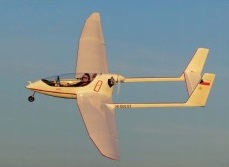
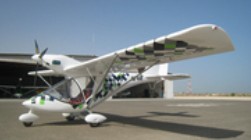
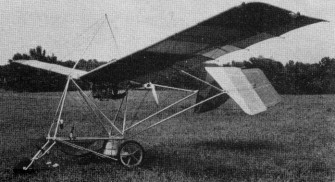
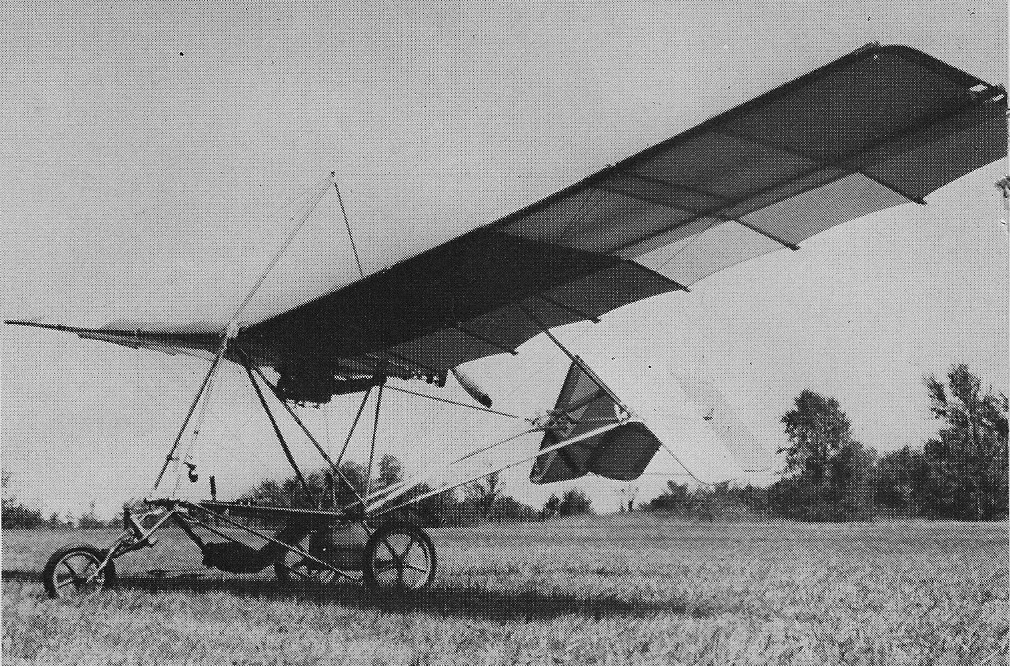
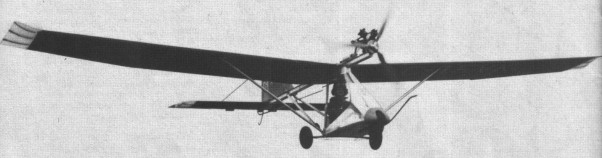
The Skylark is high-wing with a forward engine mounted on a cantilever beam fuselage. The forward-swept wing is rectangular with a tapered trapezoidal tip, and is supported by a single strut. Tail surfaces are classic, and tricycle landing gear is used. The engine and propeller are well forward of the cockpit. The forward-swept wing and under-wing cockpit location produce good visibility; pilot weight has minimal effect on the aircraft’s center of gravity; and the ideal spanwise lift distribution inhibits stalling of the wingtips, ensures against spinning and signals approaching stall by buffeting of the tail surfaces. Two people can easily disassemble the Skylark. By removing three bolts, the horizontal tail surfaces can be folded up against the fin. Each wing can be detached by removing only four bolts. The Skylark wing profile was designed by NASA using technology specially for use in slow-flying aircraft. Features in¬clude low drag in the range of useful air¬speeds, low stall speed, and mild stall characteristics (which are fully exploited by the forward-swept wing to produce a “spinproof” design). Aluminium sheet, extruded tubes and angles, all of general-aviation proven 2024 alloy are used throughout. Airtech uses modern adhesive bonding technology, along with blind and solid rivets. High-strength PVC foam, stamped aluminum ribs, silky-smooth Teflon bellcrank bearings, aluminum pushrods with spherical couplings, “Ceconite 7600 Process” aircraft fabric, precision molded fiberglass fairings, molded plexiglas windscreen all combine to satisfy the most demanding aviators. The standard airspeed indicator, altimeter, tachometer and toe-operated disk brakes are as comforting to the pilot as the contoured seat designed for those up to 6 feet, 6 inches, with “stick-and-rudder” controls. The Skylark uses the Konig SD-570 four-cylinder radial. Using a 2.8:1 reduction drive, the Skylark’s engine turns its 72-inch propeller at only 1500 rpm during takeoff; the result is exceptional static thrust and the virtual elimination of propeller noise.

Engine: Koenig SD-570 4-cyl radial two-stroke
Reduction: 2.8:1
Prop: 72 in
Airsport s.r.o Song LW / E-Song / Electric Aircraft Corporation ElectraFlyer-ULS

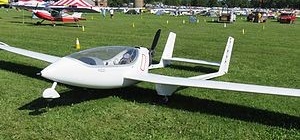
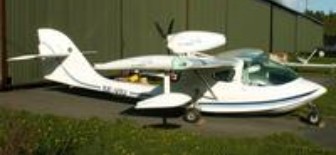
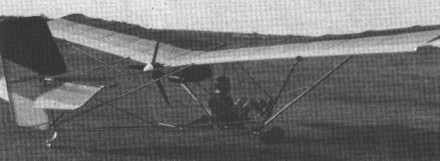
The Airsport Song is a Czech ultralight aircraft, designed by Marek Ivanov to comply with the LTF-L 120 kg, US FAR 103 Ultralight Vehicles and English SSDR categories. It features a cantilever low-wing, twin-booms, a single seat enclosed cockpit, fixed tricycle landing gear and a single engine in pusher configuration. The Song has been produced in both a twin–tail and inverted V-tail layout. In most configurations, the Song includes a Galaxy GRS 3/270 ballistic parachute rescue system.

The Song is made from composites. Its polyhedral wing comes in two optional spans: 7.5 m (24.6 ft) (with flaperons) and 11.2 m (36.7 ft) (with ailerons and either spoilers or flaps). Standard engines available are the 20.5 hp (15 kW) Bailey V5 four-stroke and the 35 hp (26 kW) Verner JCV 360 four-stroke powerplant.

Randall Fishman of Electric Aircraft Corporation produces an electric-powered version of the Song, the Electric Aircraft Corporation ElectraFlyer-ULS.

Song SW-V
Engine: 1 × Bailey V5 Single Cylinder, 15.3 kW (20.5 hp)
Wingspan: 11.2 m (36 ft 9 in)
Wing area: 10.5 m2 (113 sq ft)
Length: 5.9 m (19 ft 4 in)
Empty weight: 110 kg (243 lb)
Gross weight: 220 kg (485 lb)
Fuel capacity: 25 litres (5.5 imp gal; 6.6 US gal)
Maximum speed: 201 km/h (125 mph, 109 kn)
Cruise speed: 80 km/h (50 mph, 43 kn)
Stall speed: 50 km/h (31 mph, 27 kn)
Never exceed speed: 140 km/h (87 mph, 76 kn)
Rate of climb: 1.5 m/s (300 ft/min) with Bailey V5, (5 m/s with Verner JCV 360)
Crew: one

Airsport s.r.o

Airsport sro is a privately held company Czech aircraft manufacturer based in Zbraslavice. The company specializes in the design and manufacture of microlight aircraft and motorgliders in the form of kits for amateur construction and ready-to-fly aircraft for the European Fédération Aéronautique Internationale microlight category.

The company had three designs in production as of 2015, all constructed from composite materials. The Airsport Sonet is a light touring aircraft derived from the Airsport Sonata motorglider. The Airsport Song is a single-seat motorglider, with a twin-boom and inverted V-tail layout.

Airo Aviation Airo 5

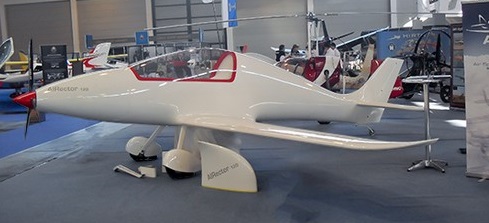
AIRO5 is a two-seat, single-engine, low-wing all-composite aeroplane. The fuselage is made mainly of carbon fibre laminate with sandwich construction. The wing is equipped with slotted flaps, electrically adjustable to 20° for take-off and 45° for landing. The wing is a monospar construction with a sandwich skin composed of two layers of fibreglass and foam. Control surfaces and Empennage is of the same construction.

The undercarriage is three-wheel with a steerable front wheel and braked main wheels.

The main carriage legs consist of a laminate spring. Integrated fuel tanks (2 x 50 litres) are located in the wing leading edges. The plane may be equipped with a towing device for sail planes towing with maximum take-off weight of 650 kg. AIRO5 may be equipped with removable wing extensions (optional).

Airo 5 UL
Stall: 35 kt / 40 mph / 65 kmh
Cruise: 119 kt / 137 mph / 220 kmh
VNE: 146 kt / 168 mph / 270 kmh
Empty Weight: 292 kg / 644 lbs
MTOW Weight: 472 kg / 1041 lbs
Take-off distance (50ft obstacle): 490 ft / 150 m
Landing distance (50ft obstacle): 490 ft / 150 m

Airo 5 LSA
Stall: 35 kt / 40 mph / 64 kmh
Cruise: 117 kt / 135 mph / 217 kmh
VNE: 146 kt / 168 mph / 270 kmh
Empty Weight: 293 kg / 645 lbs
MTOW Weight: 600 kg / 1323 lbs
Take-off distance (50ft obstacle): 1610 ft / 490 m
Landing distance (50ft obstacle): 1610 ft / 490 m

Airo Aviation Airo 1

The AIRO1 UL is a light sport aircraft designed for sport/leisure flying, touring, training and aerial photography. With two seats side-by-side and ULSA certified, main structure is made of aluminium and steel with three-wheeled, shock-absorbed landing gear.

It is a high wing, single engine aircraft mounting powered by a Rotax 912, 4 stroke, 4 cylinders horizontally opposed with 2 constant depression carburettors. A two or three-bladed propeller is driven via an integrated gear box.

Airo 1 UL
Stall: 35 kt / 40 mph / 65 kmh
Cruise: 81 kt / 93 mph / 150 kmh
VNE: 89 kt / 102 mph / 164 kmh
Empty Weight: 297 kg / 655 lbs
MTOW Weight: 472 kg / 1041 lbs
Take-off distance (50ft obstacle): 490 ft / 150 m
Landing distance (50ft obstacle): 490 ft / 150 m

Airo1 LSA
Stall: 35 kt / 40 mph / 64 kmh
Cruise: 83 kt / 95 mph / 153 kmh
VNE: 109 kt / 125 mph / 201 kmh
Empty Weight: 297 kg / 655 lbs
MTOW Weight: 600 kg / 1323 lbs
Take-off distance (50ft obstacle): 1610 ft / 490 m
Landing distance (50ft obstacle): 1610 ft / 490 m

Airmax Seamax

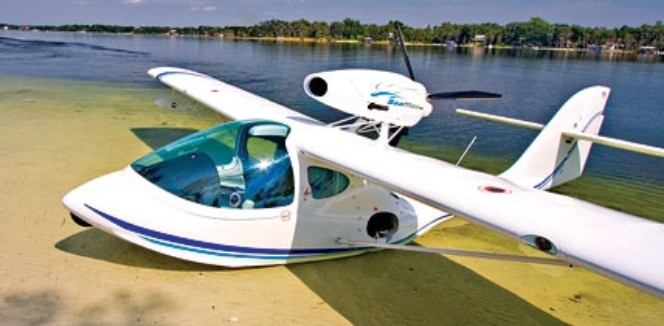
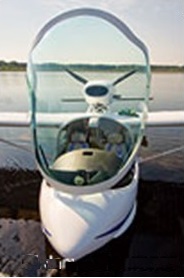
The SeaMax amphibian LSA / Ultralight take off and landing performance is equally good on grass, tarmac and sea. With electrically controlled landing gear retraction, flaps and trim rudders. The cabin is ergonomically designed with a panorama view due to the wing position behind the pilot.

This Brazilian-built all-composite amphibian is Rotax powered. Base price 2012: US$150,000.

Stall: 31 kt / 36 mph / 58 kmh
Cruise: 113 kt / 130 mph / 209 kmh
VNE: 139 kt / 160 mph / 257 kmh
Empty Weight: 300 kg / 661 lbs
MTOW Weight: 520 kg / 1146 lbs
Climb Ratio: 1000 ft/min / 5 m/s
Endurance: 6h
Range: 540nm

Airmass Sunburst

Terry Toetze, a graduate of Southern Illinois University with a degree in Industrial Technology, worked on the plans, sketches and designs from John C. Massey and the two created the first Sunburst. The first model was a learning platform and needed a few changes and a second machine turned out to be the prototype for the production model.

Airmass Sunburst Article

The single seater Sunburst stick operates differentially, working spoilers to control the roll and, together with the rudder bar through a mixer, operating the elevons of the inverted V tail as elevators or rudders. The nosewheel of the tricycle undercar¬riage on the Sunburst is steered by the rudder bar. The Cuyuna 430RR twin cylinder in line engine of 429 cc, drives a pusher propeller through a reduction gear and has dual ignition. It is situated under the wing, in line with the centre of gravity, over the pilot’s head. John Massey of Airmass flew one of these machines in the 1982 London Paris, finishing in 18th place.

Supplied in kit form, the Sunburst is estimated by Airmass Incorporated to require around 30 h for completion.
Single seat single engined high wing mono¬plane with conventional three axis control. Wing has unswept leading and trailing edges, and constant chord; inverted V tail. Pitch/yaw control by elevon; roll control by one third¬ span spoilers; control inputs through stick for pitch/roll and pedals for yaw. Wing braced from above by kingpost and cables, from below by cables; wing profile; 90% double surface. Undercarriage has three wheels in tricycle formation; bungee suspen¬sion on nosewheel and glass fibre suspension on main wheels. Push right go right nose¬wheel steering connected to yaw control. Optional brake. Aluminium tube framework with optional pod. Engine mounted below wing driving pusher propeller. Tubing from blue anodized 6061T6 aluminium, rigging is stainless steel with vinyl coating, wing cover¬ing is Dacron.
First year built: 1980. Units delivered to June 1981: 6. Price 1982: $4,645 (with engine) Includes ASI, altimeter, 30-hp engine with reduction drive.

Engine: Cuyuna 430RR, 30 hp
Static thrust, 170 lb
Wingspan: 36 ft
Wing area: 156 sq.ft
Aspect ratio: 8.3
Overall length: 16ft
Empty weight: 185lb
Usable payload (include fuel), 240 lb
Max pilot weight: 240 lb
Wing loading, 2.5 lb
L/D power-off glide ratio, 12:1
Cruise speed (85% power), 50 mph
Stall speed, 23 mph
Approach speed, 30 mph
Flair speed, 25 mph
Liftoff speed, 28 mph
Takeoff roll distance, 75 ft
Rate of climb, 600 fpm
Fuel capacity, 5 gal
Range at cruise, 100 mi