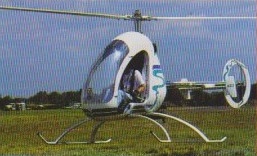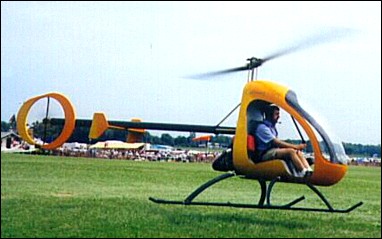
American Sport Copter UltraSport 496 / Light’s American Sportscopter UltraSport 496

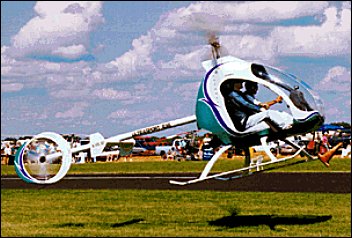
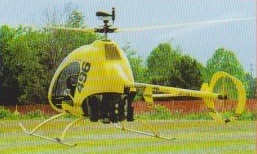
A two seat partially enclosed helicopter. Composite body, main rotor and shrouded tail rotor. Useable as a trainer, either experimental or ultralight. Includes full dual controls, doors, electric start. Infinite life composite rotor blades and fuselage. High inertia blades for excellent autorotation. An 8′ wide landing gear. Floor mounted cyclic now standard. Quick build kit. Meets 51% build rule. Dual controls standard. Plans or Kits delivered within 4-6 weeks of receiving order in 2009.
The Ultrasport 496 two-seater which commenced flight testing (N496AS) in July 1995, has a wider cabin than the 331 and uses a 95hp Hirth F.30 engine. The Ultrasport helicopter kits are manufactured in Taiwan. Deliveries began in April 1997.
The Ultrasport 496RT announced in 2002 uses a 84.6kW Rotax 914 turbocharged engine with electric start and quadruple carburettors.
Prices in 2003 were: 496 US$62,900; 496RT US$77,900.
An unmanned surveillance prototype named Vigilante 496 (first flight February 1998) was developed by Science Applications International Corporation. The Vigilante 496 prototype (N496UV) evaluated as optionally piloted vehicle (OPV) by US Navy during first and second quarters of 1998.
Engine: Hirth F 30, 115 hp
Rotor span: 7.00 m
Blade area: 0.170 sq.m
MAUW: 514 kg
Empty weight: 245 kg
Fuel capacity: 60 lt
Max speed: 167 kph
Cruise speed: 112 kph
Minimum speed: 0 kph
Climb rate: 4 m/s
Seats: 2
Fuel consumption: 25 lt/hr

Engine: One 85.8kW Hirth F30 quad-carburettor / electric start
Main rotor diameter: 7.01m
Tail rotor diameter: 0.76m
Length rotor blades folded: 6.02m
Height: 2.49m
Take-off weight: 512kg
Empty weight: 256kg
Never-exceed speed: 167km/h
Max cruising speed: 113km/h
Max rate of climb: 305m/min
Hovering ceiling, IGE: 3290m
Hovering ceiling, OGE: 2135m
Range: 240km
Endurance: 3h
Fuel capacity: 61 lt

Engine: 105 hp Hirth H-30, Quad carb, Dual CDI
Transmission 11:1 helical spur (2 stage)
Rotor blades diameter: Composite 23 ft
Roror blade chord: 7 in composite
Tail rotor diameter: 30in
Cruise: 69 mph
Top Speed: 104 mph
Empty Weight: 575 lbs
Useful Load: 605 lbs
Gross Weight: 1,180 lbs
Width: 6 ft 6 in
Height 8 ft 2 in
Length (w/blades folded): 19 ft 9 in

Engine: Hirth Gober, 120 hp
Disk span: 23 ft
Seats: 2
Landing gear: skids
Endurance: 2.5 hr
Weight empty: 600 lbs
Gross: 1180 lbs
Speed max: 103 kts
Cruise: 93 kts

Engine: 75.0kW Hirth H3QE
American Sport Copter UltraSport 331 / Light’s American Sportcopter Ultrasport 331

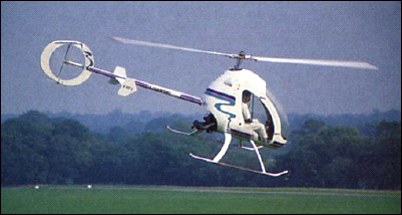
The Ultrasport 331 is a larger version of the 254 falling within the American Experimental category (FAR Part 21.191g), with increased range and higher gross weight. Features include 10 gallon tank, doors, bigger instrument panel, electric starter. The performance as the 254, and the floor mounted cyclic is standard. Optional floats are available. Meeting the 51% rule, a quick build kit requires 80 hours assembly.
The two-blade composites construction main rotor has tip weights for momentum conservation and an 8 deg linear twist and infinite life. Equipped with a shielded two-blade tail rotor, and tailplane with tins at tip, the tail rotor drive is carried in narrow streamlined tailboom. A centrifugal sprag clutch for starting engages the rotors at 2,000 engine rpm and automatically disengages in the event of engine failure.
The flying controls are conventional collective, cyclic and yaw pedals. A floor-mounted cyclic option has been available since 1998; early models had a top-mounted stick.
The prototype 331 (N331UV) first flew December 1993.
The single seat 331 is powered by one 48.5kW Hirth 2706 dual-carburettor two-stroke engine with electric starter or Hirth H32 of same power in 331H; 12:1 planetary transmission. Fuel capacity 38 litres.
In late 2002, it was announced that Huzbou Taixing Aviation Technology of Huzhou, China was producing helicopters from kits, including examples of Ultrasports.
A single-seat ultralight helicopter, the Ultrasport 331H uses the 48.5kW Hirth H32 added to range in 2003.
The Ultrasport 331 was available for US$37,900 in 2003.

Engine: Hirth 2706, 65 hp
Rotor span: 6.40 m
Blade area: 0.170 sq.m
MAUW: 295 kg
Empty weight: 150 kg
Fuel capacity: 38 lt
Max speed: 167 kph
Cruise speed: 105 kph
Minimum speed: 0 kph
Climb rate: 4 m/s
Seats: 1
Fuel consumption: 14 lt/hr

Engine: Hirth 2703, 55 hp.
Disk span: 21 ft.
Length: 16.67 ft.
Height: 7.5 ft.
Weight empty: 330 lbs.
Gross: 680 lbs.
Fuel cap: 10 USG.
Speed max: 104 mph.
Cruise: 63 mph.
Range: 150 sm.
ROC: 1000 fpm.
Service ceiling: 12,000 ft.
Endurance: 2.5 hr.
Seats: 1.
Landing gear: skids.

Engine: 65hp Hirth 2706 Dual carb, Dual CDI.
Transmission 12:1 Planetary
Rotor Blades: Composite 21′ diameter, 7″ chord,
Tail rotor: composite 30′ diameter.
Empty Weight: 330 lbs
Useful Load 320 lbs
Gross Weight: 650 lbs
Fuel capacity: 10 USG
Width 6 ft 6 in
Height 8 ft 2 in
Length 19 ft 2 in (w/blades off)
Cruise: 65mph
Top Speed: 104 mph
Range: 150 sm
ROC: 1000 fpm
Service ceiling: 12,000 ft
Kit price: US$34,850 (2008)

Ultrasport 331
Main rotor diameter: 6.4m
Tail rotor diameter: 0.76m
Length with rotor blades folded: 5.84m
Height: 2.39m
Take-off weight: 294kg
Empty weight: 150kg
Max level speed: 167km/h
Cruising speed: 101km/h
Max rate of climb: 305m/min
Hovering ceiling, IGE: 3290m
Hovering ceiling, OGE: 2135m
Range with normal fuel at 100km/h: 241km

Ultrasport 331H
Engine: 48.5kW Hirth H32

American Sport Copter UltraSport 254 / Light’s American Sportscopter UltraSport 254

American Sportscopter (ASI) was formed in 1990 to produce an ultralight helicopter to FAR Part 103, which was designated Ultrasport 254. Design objective of 254 was basic weight not to exceed 115kg (254 lb) in order to comply with FAR Pt 103.
First flown on 24 July 1993 and publicly displayed at Oshkosh that year, it is a single-seater with a semi-enclosed composite fuselage structure, skid undercarriage and a tubular tailboom with tailplane and twin fins and a tail rotor enclosed in a large circular shroud. Two prototypes were built and tested.
The two-blade composites construction main rotor has tip weights for momentum conservation in the event of an engine failure, an 8 deg linear twist and infinite life. The tail rotor drive is carried in a narrow streamlined tailboom. A centrifugal sprag clutch for starting engages rotors at 2,000 engine rpm and automatically disengages in the event of engine failure.
Fitted with a 5 US gallon tank, and the 8 foot wide landing gear stressed for landings at up to 2.5g, and has optional floats (weight 18kg). A quick build kit requires 80 hours to assembly. An overhead control stick operates with same movements as joysticks. A floor-mounted cyclic option has available since 1998.
It is powered by a 55hp Hirth 2703 engine mounted behind the cockpit rear bulkhead. In 2003 the engine used was the 41.0kW Hirth 27G3 dual-carburettor two-stroke engine with pull starter and 12:1 planetary transmission. Normal fuel capacity 19 litres.
The Ultrasport 254 was available in 2003 for US$34,900.

Engine: 55 hp Hirth 2703 522cc.
Transmission: 12:1 planetary.
Speed max: 63 mph.
Cruise: 63 mph.
Range: 70 sm.
ROC: 1000 fpm.
Rotor blades: Composite 21’, 6.7” chord, metal tail rotor 40”.
Fuel cap: 5 USG.
Weight empty: 252 lbs.
Gross: 525 lbs.
Height: 7.5 ft.
Length: 16.67 ft.
Seats: 1.
Landing gear: skids.

Engines: 55hp Hirth 2703, 65hp Hirth 2706 is optional. Dual carb,Dual CDI.
Transmission 12:1 Planetary
Rotor Blades: Composite 21′ diameter, 7″ chord
Composite tail rotor 30′ diameter.
Cruise 63 mph
Top Speed 63 mph
Empty Weight 252 lbs
Useful Load 273 lbs
Gross Weight 525 lbs
Width 8′
Height 7’10”
Length 19’2″

Ultrasport 254
Main rotor diameter: 6.4m
Tail rotor diameter: 0.76m
Length with rotor blades folded: 5.84m
Height: 2.39m
Take-off weight: 238kg
Empty weight: 114kg
Max level speed: 101km/h
Max rate of climb: 305m/min
Hovering ceiling, IGE: 3290m
Hovering ceiling, OGE: 2135m
Range with normal fuel at 100km/h: 120km

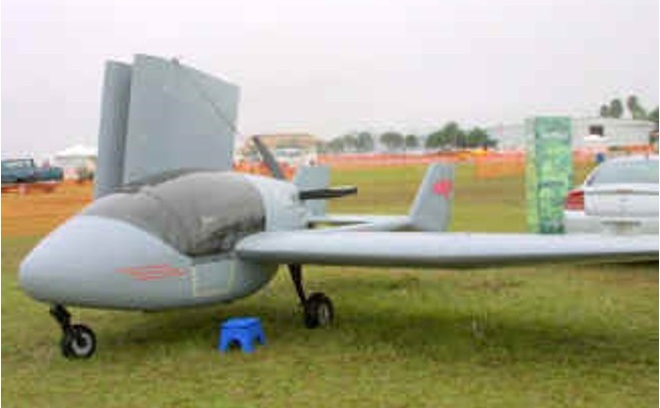
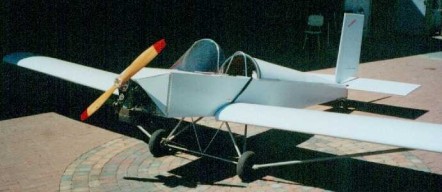
Sadler Vampire / Sadler A-22 Piranha / Wedgetail Vampire

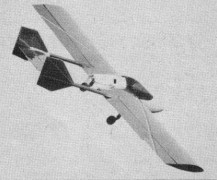
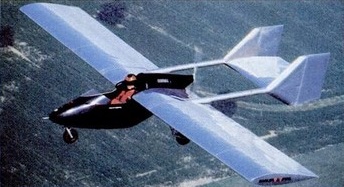
Single seat single engined mid wing mono¬plane with conventional three axis. Wing has unswept leading and trailing edges, and constant chord; two fin tail. Pitch control by elevator on tail; yaw control by fin mounted rudders; roll control by full span spoilers; control inputs through stick for pitch/roll, pedals for yaw. Cantilever wing; wing profile NACA 633 218A; double surface. Undercarriage has three wheels in tricycle formation; with tailskid; no suspension on any wheels. Push right go right nosewheel steering connected to yaw control. Brakes on main wheels. Aluminium steel tube framework, partially enclosed. Engine mounted at wing height driving pusher propeller. 6061 T6 aluminium tubes, 2024 alclad skin and glass flibre pod.
The prototype of the Sadler Vampire was unveiled at Oshkosh in August 1982, where it was announced as likely to be on sale during 1983.

The price with a 20 hp engine was $7950 in 1983.

The quiet operation of the prototype was mainly due to the use of a reconnaissance and target drone engine of Israeli manufacture. The aircraft’s use of an aluminium riveted skin for the tail surfaces and the wing with ribs of pressed aluminium may not be unusual in general aviation but is very rare in the ultralight world. The profile of the wing is NACA 633 218A and is laminar. Beneath the spoilers, running the full span of the wings at the trailing edge, are four position hinged flaps.
American Microflight intend only to sell their Sadler Vampire ready to fly.
Option of KFM 107 engine.
In 1983 Ultra Light Aircraft Corporation (ULAC) was setting up a production facility for the American Microf¬light Sadler Vampire, for which ULAC has acquired the Europe/Africa licence.

Bill Sadler had his Sadler Vampire at the 2008 U.S. Sport Aviation Exposition. Sadler announced the introduction of the plane into the lightsport aircraft category at Airventure 2007, at that time it was planned that the craft would be powered by the 100 HP Rotax 912 S.

Sadler Aircraft Corp, previously known as American Microlight Inc, developed A-22 Piranha lightly armed surveillance version of its microlight, also being developed by TUSAS. Tusas Aerospace Industries Inc in Turkey developed the TG-X1 Bat very light single-seat attack / surveillance aircraft (first flown February 1997, based on U.S. Sadler A-22 Piranha).

The Vampire was available and fully built at Wedgetail Aircraft factory at Camden in NSW, Australia, circa 2019.

Engine: NGL WAE 34, 26 hp
Poly V belt reduction, ratio 2.0/1
Power per unit area 0.20 hp/sq.ft, 2.35 hp/sq.m
Fuel capac¬ity 5.0 US gal, 4.2 Imp gal, 18.9 litre in main tank
Length overall 18.1 ft, 5.51 m
Height overall 4.8ft, 1.42m
Wing span 30.1 ft, 9.40m
Constant chord 5.0ft, 1.52m
Sweepback 0 degs
Total wing area 128sq.ft, 11.9sq.m
Wing aspect ratio 7.4/1
Nosewheel diameter overall 10 inch, 256mm
Main wheels diameter overall 10 inch, 250mm
Empty weight 220 lb, 100kg
Max take off weight 450 lb, 204kg
Payload 230 lb, 104kg
Max wing loading 3.5 lb/sq.ft, 17.1 kg/sq.m
Max power loading 17.3 lb/hp, 7.8 kg/hp
Max level speed 85mph, 137kph
Max cruising speed 55 mph, 88 kph
Stalling speed 25 mph, 40kph
Take off distance 300 ft, 91 m
Landing distance 200 ft, 61 m

Engine: Solo 210 (210 cc) 20 hp
Static thrust: 130 lb
Empty wt: 250 lb
Wing span: 30 ft
Wing area: 125 sq.ft
Height: 4 ft 8 in
Length: 17 ft 6 in
Fuel cap; 4.5 USG
Construction: Aluminium, Fibreglass
Max wt: 500 lb
Stall: 25 mph
Max speed: 63 mph
Vne: 85 mph
Climb rate: 350 fpm @ 45 mph
Design limit: +6, -6g
Glide ratio: 12-1
Wing loading: 4 lbs/sq.ft
Power loading: 25 lbs/hp

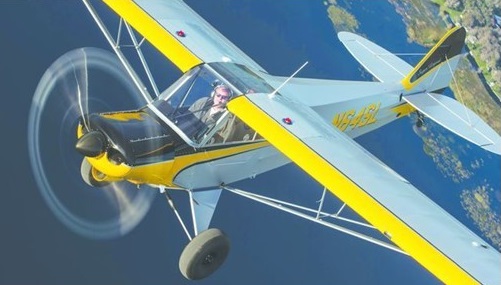
American Legend Aircraft Legend Cub

Legend Cub AL3C-100

American Legend had 11 new registrations in the US during 2012. The Super Legend and new Legend Smart Cub (with a Garmin G3X system) were the most popular. Texas Star kit versions were also offered.

The Super Legend sports flaps, many carbon-fiber components and a 115 hp Lycoming IO-233-LSA multi-fuel engine. Continental O-200 (100 hp) and Jabiru 3300A (120 hp) versions were also offered. Price 2012: US$124,900 (open-cowl Legend Cub); US$128,900 (closed-cowl Cub); US$146,900 (Super Legend).

Gallery

Versions:
AL3C-100
Super Legend
Legend Smart Cub
Texas Star

Specifications:

Legend Cub AL3C-100
Piper J-3 replica
Engine: Continental O-200-D, 100 hp
Wingspan: 35’6″
Length: 22’5″
Empty Weight: 386 kg / 850 lbs
MTOW Weight: 600 kg / 1323 lbs
Stall: 30 kt / 34 mph / 55 kmh
Cruise: 83 kt / 95 mph / 153 kmh
VNE: 96 kt / 110 mph / 177 kmh
ROC: 500 ft/min / 3 m/s
Range: 315 mi
Ceiling: 15,000′
Take-off distance (50ft obstacle): 350 ft / 107 m
Landing distance (50ft obstacle): 350 ft / 107 m
Base price 2016: $136,900

Legend Cub AL3C
Piper J-3 replica
Engine: Jibaru 120hp

AL11C-100
2004 Piper PA-11 replica
Engine: 100hp Continental O-200

AL11J-120
2004 Piper PA-11 replica
Engine: 120hp Jabiru 3300A

American Homebuilts John Doe

A STOL utility aircraft (LSA) with interchangeable flaps and ailerons, as well as elevators and rudder, and an 18 cu.ft cargo area. First fown in 1994.

The man who designed this airplane was named Steve Nussbaum, he flew out of the airport I worked at, Galt airport 10C. I remember on a good day he could get one of these off the ground in 88 ft. He also designed the ribs to be replaceable in the field if they ever broke during a forced landing.
Ted Domski

Engine: Continental IO-240, 125 hp
Wing span: 30.6 ft
Wing area: 130.6 sq.ft
Fuel capacity: 26 USG
Empty weight: 850 lb
Gross weight: 1400 lb
Height: 6.5 ft
Length: 20.8 ft
Top speed: 140 mph
Cruise: 117 mph
Stall: 30 mph
Range: 500 sm
Takeoff dist: 100 ft
Landing dist: 125 ft
Service ceiling: 12,500 ft
Seats: 2 tandem
Landing gear: tailwheel

Cruise: 100 mph
Stall: 30 mph
Range: 490 sm
Rate of climb: 1000 fpm
Takeoff dist: 120 ft
Landing dist: 120 ft
Engine: Continental O-200, 100 hp
HP range: 100-125
Fuel capacity: 26 USG
Empty weight: 771 lb
Gross weight: 1320 lb
Length: 21.9 ft
Wing span: 30.6 ft
Wing area: 130.5 sq.ft
Seats: 2 tandem
Cockpit width: 28 in
Landing gear: tailwheel

Ameri-Can Ultralights Euraka

Of pre-manufactured sub-assemblies, with wings, tail empennage and fuselage all pre-built, ready for bolt-on, the kit arrives pre-fabricated and pre-painted white. The wings are built around a single deep spar. There are 26 foam ribs in each 12 foot long wing. When this assembly has been built, it is covered in full-span panels of pre-painted (white) aluminum skins, durable and UV-resistant. The resultant wing weighs less than 35 pounds. It is attached to the fuselage with just a few bolts, and in about 5 minutes. This airplane can be easily assembled in the field, and allows for trailer transport.
The purchaser assembles pre-built components with the supplied aircraft-grade bolts and nuts. This means that wrenches are the only tools required to assemble this aircraft kit.
It was designed to fly with a Hirth F-33 25hp engine, with electric start, or alternately, the Zenoah GB25 22hp engine with pull start can be used. Higher horsepower engines are not recommended.
First flown in August 1997, by July 2003 the Eureka had been withdrawn from the market due to lack of resources.

Engine: Hirth F33, 25hp
HP Range: 22-26
Wing Span: 26 ft
Wing Area: 104 sq.ft.
Height: 5.0 ft
Length: 14.5 ft
Empty Weight: 230 lb
Gross Weight: 460 lb
Fuel Capacity: 5 USG
Top Speed: 63 mph
Cruise: 55 mph
Endurance: 1.5 hours
Stall: 27 mph
Rate of Climb: 500 fpm
Takeoff Distance: 300 ft
Landing Distance: 250 ft
Service Ceiling: 10,000 ft
Seats: 1
Landing Gear: Tailwheel
Bldg. Materials: Aluminum, Foam
Airframe Cost: $5000 (2009)

Engine: Zenoah G25B, 22hp
HP Range: 22-26
Wing Span: 26 ft
Wing Area: 104 sq.ft.
Height: 5.0 ft
Length: 14.5 ft
Empty Weight: 238 lb
Gross Weight: 460 lb
Fuel Capacity: 5 USG
Top Speed: 63 mph
Cruise: 55 mph
Endurance: 1.6 hours
Stall: 27 mph
Rate of Climb: 450 fpm
Takeoff Distance: 350 ft
Landing Distance: 250 ft
Service Ceiling: 10,000 ft
Seats: 1
Landing Gear: Tailwheel
Bldg. Materials: Aluminum, Foam
Airframe Cost: $5000 (2009)

Engine: Cuyuna, 22 hp
HP range: 22-25
Wing span: 26 ft
Wing area: 104 sq.ft
Length: 14.5 ft
Height: 5 ft
MTOW: 460 lb
Empty wt: 250 lb
Fuel cap: 5 USG
Top speed: 63 mph
Cruise: 60 mph
Stall: 27 mph
Range: 150 sm
ROC: 350 fpm
TO dist: 400 ft
Ldg dist: 250 ft
Service ceiling: 7000 ft
Seats: 1
Undercarriage: tailwheel
Take-off distance (50ft obstacle): 300 ft / 91 m
Landing distance (50ft obstacle): 250 ft / 76 m