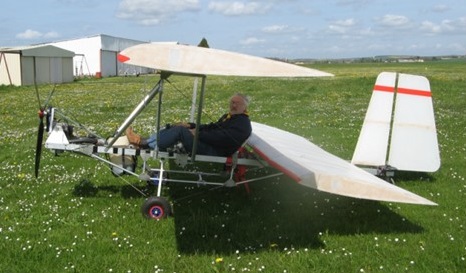
APEV Pouchel / Pouchelec / Scoutchel

Pouchel Classic

The original design, the Pouchel, was based upon the 1930s Henri Mignet-designed Mignet Pou-du-Ciel (Flying Flea), but constructed using three commercial household aluminium ladders to save construction time, cost and weight. The aircraft first flew on 14 March 1999 and 120 sets of plans were quickly sold.

When the ladder manufacturer no longer wanted to sell ladders for aircraft construction, due to liability concerns, Dalby redesigned the aircraft to use aeronautical rectangular aluminium tubing instead, which resulted in a lighter and cheaper aircraft, the Pouchel II.
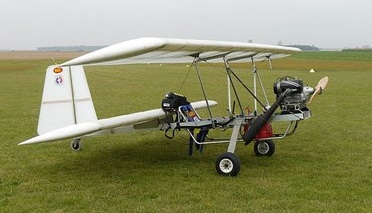
Pouchel II

The Pouchel II replaced the original APEV Pouchel in production. The original Pouchel was constructed using three commercially available aluminium ladders, hence APEV is the Association pour la Promotion des Echelles Volantes, or in English, Association for the Promotion of Flying Ladders. Later the ladder manufacturer grew concerned about liability and refused to supply any more ladders. The Pouchel was then re-designed to use aeronautical rectangular aluminium tubing in place of the original ladders and the new aircraft was designated the Pouchel II. The Pouchel series are all derivatives of the classic 1930s Henri Mignet-designed Mignet Pou-du-Ciel (Flying Flea).

The Pouchel II features a cantilever rear wing with a strut-braced parasol front wing, a single-seat open cockpit without a windshield, fixed conventional landing gear and a single engine in tractor configuration. The aircraft is made from bolted-together aluminium tubing, with its flying surfaces covered in Dacron sailcloth. Its 6 m (19.7 ft) span front wing and 4 m (13.1 ft) span rear have a combined area of 12 m2 (130 sq ft) and both employ NACA 23112 airfoils. The prototype used a 40 hp (30 kW) Rotax 447 two-stroke powerplant, but the 35 hp (26 kW) Rotax 377 is also recommended. The 28 hp (21 kW) Hirth F-33 has also been fitted.

The Pouchel II sold for €4,000 in 2003. The APEV Pouchel II was supplied as plans or as a kit for amateur construction, but is no longer available. It has been replaced in production by the APEV Pouchel Light.

The Pouchel II was further refined into the Pouchel Light and an electric powered version, the Pouchelec.

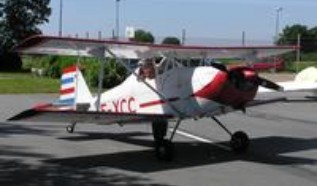
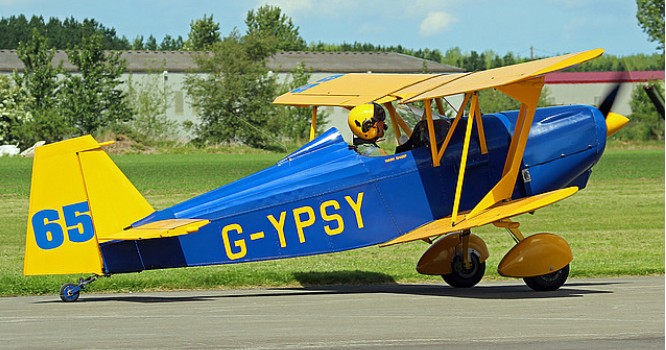
Supplied as plans or as a kit for amateur construction, the Pouchel Classic is derived from the APEV Pouchel and features a cantilever rear wing and a strut-braced front parasol wing, a single-seat open cockpit, fixed conventional landing gear and a single engine in tractor configuration.

The Pouchel Classic differs from the earlier Pouchel in that it has a newly designed wooden fuselage to replace the aluminum ladder and rectangular tube design of the Pouchel and the Pouchel II. The Pouchel Classic’s fuselage is also longer. Its 6 m (19.7 ft) span front wing and 4 m (13.1 ft) span rear wing have a combined area of 12 m2 (130 sq ft) and employ NACA 23112 airfoils. Flying surfaces are covered in Dacron sailcloth. Standard engines recommended are the 35 hp (26 kW) Rotax 377 or the 40 hp (30 kW) Rotax 447 two-stroke powerplants. The Pouchel Classic kit sold for €5,000 in 2011.
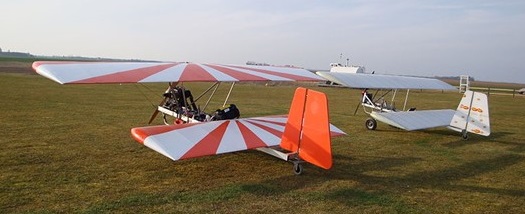
A gasoline powered Pouchel (foreground) and a Pouchelec (background)

Gallery

Pouchel
Seats: one

Pouchel II
Engine: 1 × Hirth F-33, 21 kW (28 hp)
Propeller: 2-bladed wooden
Upper wingspan: 6 m (19 ft 8 in)
Lower wingspan: 4 m (13 ft 1 in)
Wing area: 12 sq.m (130 sq ft)
Airfoil: NACA 23112
Empty weight: 150 kg (331 lb)
Gross weight: 275 kg (606 lb)
Fuel capacity: 12 litres (2.6 imp gal; 3.2 US gal)
Cruise speed: 90 km/h (56 mph; 49 kn)
Stall speed: 40 km/h (25 mph; 22 kn)
Never exceed speed: 120 km/h (75 mph; 65 kn)
g limits: +4/-2
Rate of climb: 2.5 m/s (490 ft/min)
Wing loading: 18.75 kg/m2 (3.84 lb/sq ft)
Crew: one

Pouchel Classic
Engine: 1 × Rotax 447, 30 kW (40 hp)
Upper wingspan: 6 m (19 ft 8 in)
Lower wingspan: 4 m (13 ft 1 in)
Wing area: 12 sq.m (130 sq ft) total
Airfoil: NACA 23112
Empty weight: 150 kg (331 lb)
Gross weight: 250 kg (551 lb)
Fuel capacity: 30 litres (6.6 imp gal; 7.9 US gal)
Cruise speed: 90 km/h (56 mph; 49 kn)
Stall speed: 40 km/h (25 mph; 22 kn)
Never exceed speed: 120 km/h (75 mph; 65 kn)
g limits: +4/-2
Rate of climb: 3 m/s (590 ft/min)
Wing loading: 20.8 kg/m2 (4.3 lb/sq ft)
Crew: one

Pouchel Light
Crew: one

Pouchelec
Engine: electric
Crew: one

Scoutchel
Crew: one

APEV

APEV (Association pour la Promotion des Echelles Volantes, English: Association for the Promotion of Flying Ladders) is a French aircraft manufacturer, founded by Daniel Dalby in 1997 and based in Peynier. The organization specializes in the design and manufacture of very light and inexpensive homebuilt aircraft.

The original design, the Pouchel, was based upon the 1930s Henri Mignet-designed Mignet Pou-du-Ciel (Flying Flea), but constructed using three commercial household aluminium ladders to save construction time, cost and weight.

Further designs followed these, including the two seat Bipouchel and the Pouchel Classic.

Anglin J-6 Karatoo

Designed by Jesse Anglin. Centre mounted joystick, rudder pedals, tailwheel steerable through rudder pedals. By 1995, marketed by Norman Aviation and Australian Aviation Works.

Engine: Subaru EA-81, 71 hp.
HP range: 71-90.
Wing span: 33 ft.
Wing area: 169 sq.ft.
Weight empty: 630 lbs.
Gross: 1058 lbs.
Fuel cap: 10 USG.
Height: 5.5 ft.
Length: 19 ft.
Speed max: 100 mph.
Cruise: 90 mph.
Range: 360 sm.
Stall: 38 mph.
ROC: 500 fpm.
Take-off dist: 200 ft.
Landing dist: 350 ft.
Service ceiling: 10,000 ft.
Seats: 2.
Landing gear: tail wheel.

Norman Aviation International Inc. J-6 Karatoo
Stall: 33 kt / 38 mph / 61 kmh
Cruise: 78 kt / 90 mph / 145 kmh
VNE: 87 kt / 100 mph / 161 kmh
Empty Weight: 249 kg / 550 lbs
MTOW Weight: 476 kg / 1050 lbs
Climb Ratio: 500 ft/min / 3 m/s
Take-off distance (50ft obstacle): 200 ft / 61 m
Landing distance (50ft obstacle): 350 ft / 107 m

Karatoo C
Engine: 105 hp.
HP range: 85-115.
Wing span: 33 ft.
Wing area: 148.5 sq.ft.
Height: 6.25 ft.
Length: 20.5 ft.
Gross: 1300 lbs.
Weight empty: 700 lbs.
Fuel cap: 16 USG.
Speed max: 110 mph.
Cruise: 95 mph.
Range: 500 sm.
Stall: 36 mph.
ROC: 1000 fpm.
Take-off dist: 300 ft.
Landing dist: 250 ft.
Service ceiling: 10,000 ft.
Seats: 2.
Landing gear: tail wheel.

Anglin J-4 Sportster / Skyseeker Aircraft J-4 Sportster

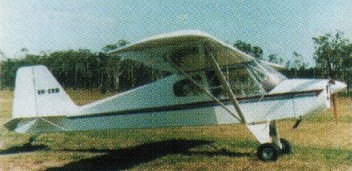
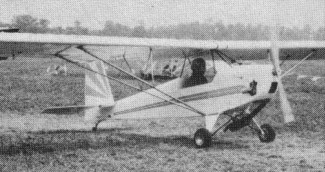
Centre mounted joy stick, rudder pedals, tailwheel steerable through rudder pedals. The Skyseeker J-3 Kitten and J-4 Sportster were to be manufactured in Canada by Modern Aviation Canada Inc.

Empty wt: 240 lbs.
Wing span: 29 ft.
Wing area: 121 sq.ft.
Height: 5 ft ’3 in.
Length: 16 ft 3 in.
Fuel cap; 5 USG.
Engine: Rotax 277 (268 cc) 28 hp.
Static thrust: 210 lbs.
Max wt: 540 lbs.
Stall: 25 mph.
Max speed: 63 mph.
Vne: 120 mph.
Climb rate: 800 fpm @ 45 mph.
Design limit: +6, -4g.
Glide ratio: 12-1.
Wing loading: 4.46 lbs/sq.ft.
Power loading: 20.0 lbs/hp.

Anglin J-3 Kitten / Skyseeker Aircraft J-3 Kitten

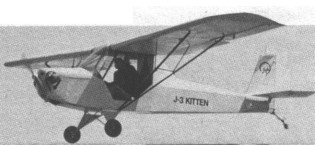
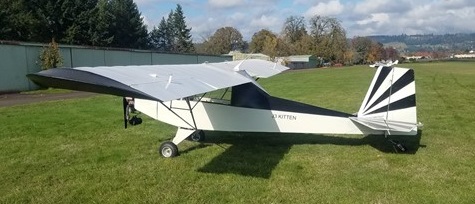
Centre mounted joy stick, rudder pedals, tailwheel steerable through rudder pedals. The Skyseeker J-3 Kitten and J-4 Sportster were to be manufactured in Canada by Modern Aviation Canada Inc. One of the first Canadian production Kittens was bought in 1985.

J3 Kitten

Engine: Rotax 277 (268 cc) 28 hp.
Static thrust: 210 lbs.
Wing span: 30 ft 6 in.
Wing area: 126 sq.ft.
Height: 5 ft 3 in.
Length: 16 ft 3in.
Max wt: 550 lbs.
Empty wt: 250 lbs.
Fuel cap; 5 USG.
Stall: 25 mph.
Max speed: 63 mph.
Vne: 120 mph.
Climb rate: 700 fpm @ 45 mph.
Design limit: +6, -4g.
Glide ratio: 12-1.
Wing loading: 4.47 lbs/sq.ft.
Power loading: 19.64 lbs/hp.

Andrews A.1 Special

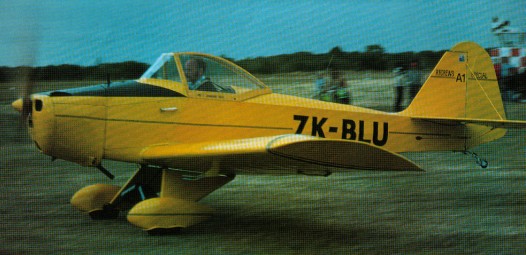
The idea was for an aircraft of low initial cost and low operating cost to enable the many young people of the day to follow up their Private Pilot Licence with a modestly priced 200 hours needed for their Commercial Licence. That was the original concept of the Andrews A.1 and the whole philosophy of its design. The structural design of the A.1 was heavily influenced by the limitations of small production lines and the need to be built in workshops which normally catered for maintenance with the addition of some simple tooling.
This aircraft, of which there is only one in existence (ZK-BLU), was the pioneer post-war homebuilt in New Zealand. It was built to Certificate of Airworthiness standard during the 1950’s by a CAD aeronautical engineer, Mr Cliff Andrews, although it later flew under a Permit to Fly. It first flew in 1957 but was largely inactive until 1973 when it was restored by Mr Andrews and sold to Alan Rowe of Lower Hutt. The aircraft’s construction employs a welded tube fuselage and tailgroup, and wings constructed of two wooden spars with a Warren-girder metal truss structure between. The whole airframe is fabric-covered.

Engine: Continental A65, 65 hp.
Span: 24 ft 0 in
Wing area: 115.5 sq.ft
Length: l9 ft 0 in
Height: 5 ft 7 in
Empty weight: 700 lb
MAUW: 950lb
Max speed: 102 mph at SL
Cruise: 94 mph.
ROC: 450 fpm.
Range: 270 miles.

Andreasson BA-4 / Crosby Aviation Ltd BA-4B

Designed by Björn Andreasson as a homebuilt in 1944 as the single-seat biplane BA-4 was built at Malmo Aviation’s plant at Bulltofta, Sweden.

In 1966 it was designated as the BA-4B c/n 1 registered SE-XBS and was powered by a Continental O-200-A.

The rights to the design were sold to Peter J.C. Phillips who formed Crosby Aviation Ltd to market kits and plans of the BA-4B. The prototype was imported to the UK in 1968 as G-AWPZ.

Andreasson BA-4B

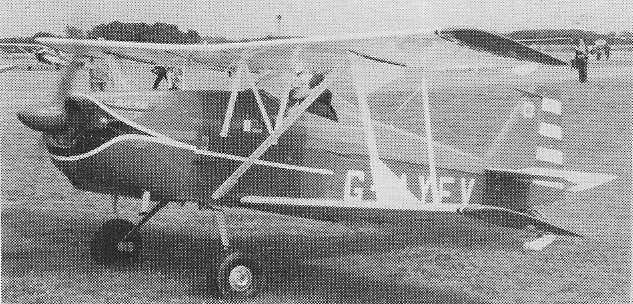
Three aircraft were laid down for initial sales at Knutsford, Cheshire, UK, and all were completed, including G-AYFU, V and W.

Crosby Aviation built G-AYFV

Crosby Aviation offered two versions: the BA-4B with a Rolls-Royce/Continental O-200-A; and the Super BA-4B with a Rolls-Royce/Continental O-240-A.

Gallery

BA-4B
Engine: Rolls-Royce/Continental O-200-A
Wingspan: 18.06 ft
Length: 15.04 ft
Empty Weight: 330 kg / 728 lbs
MTOW Weight: 450 kg / 992 lbs
Stall: 52 kt / 60 mph / 96 kmh
Cruise: 113 kt / 130 mph / 210 kmh
VNE: 130 kt / 149 mph / 240 kmh
Take-off distance (50ft obstacle): 890 ft / 270 m
Landing distance (50ft obstacle): 1530 ft / 465 m

Super BA-4B
Engine: Rolls-Royce/Continental O-240-A
Wingspan: 18.06 ft
Length: 15.06 ft

ANB ANB-M / ANB-I

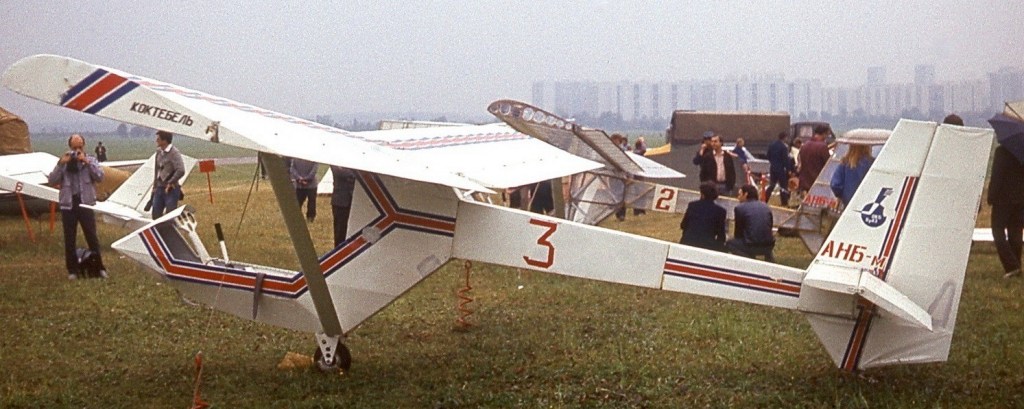
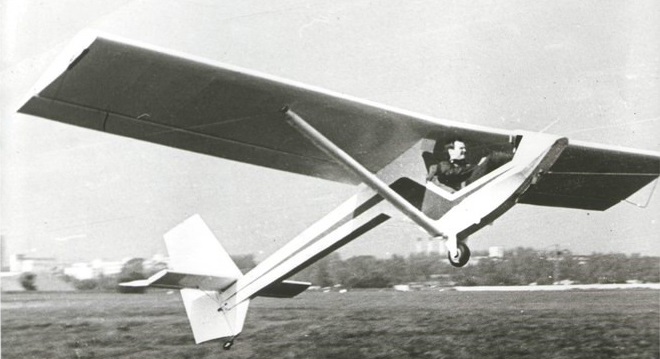
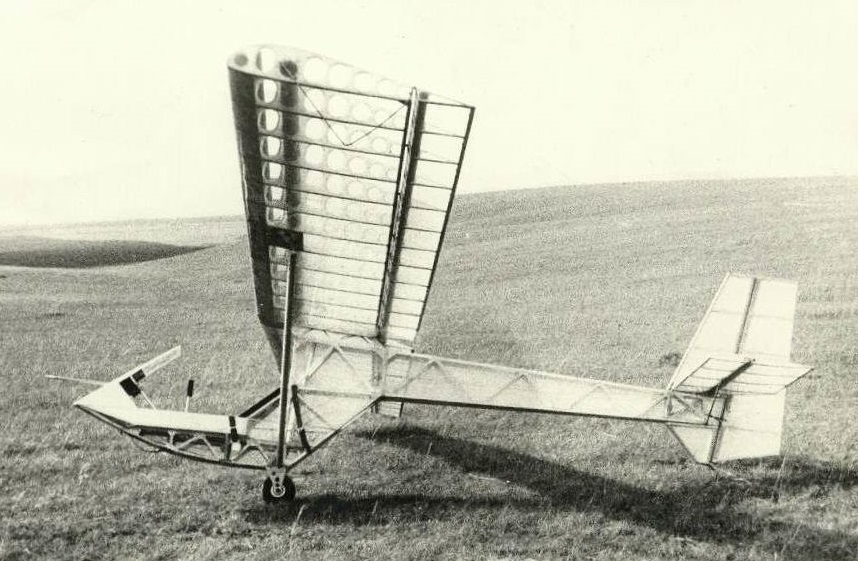
The ANB-M Part103 Sailplane is a full metal primary glider with plans for homebuild.

On May 1, 1983 the glider was ready and tested. The ANB-M “Transparent” in Crimea at the All-Union Review Competition of SLA-84 was awarded the 1st prize.

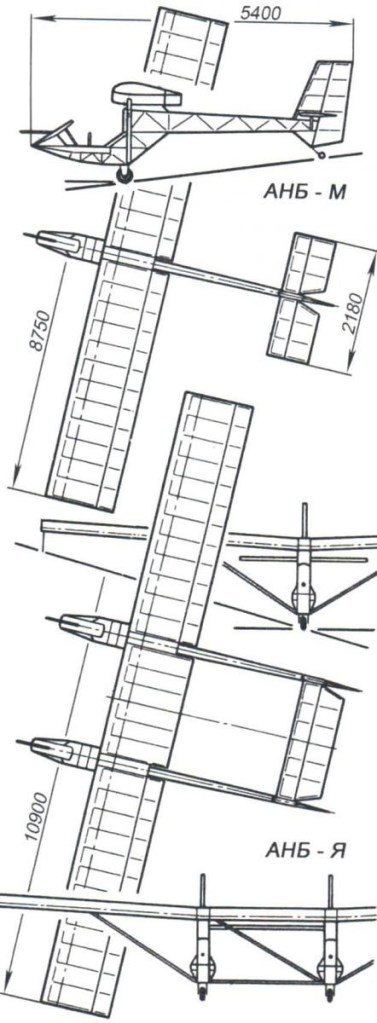
The ANB-I – a modular multi-purpose double glider – was created on the basis of two ANB-M as a result of a simple refinement – two fuselages are fixed parallel at a distance of 2.2 m from each other (the idea was submitted by the designer of gliders V. Janusov).

It turned out a rather exotic design, jokingly called “Snake Gorynych.” The wing span thus became 11 m, and weight – 135 kg.

Gallery

ANB-M
Wing area: 10.5 sq.m
Empty weight: 70 kg
Take-off weight: 145 kg
Seats: 1

ANB-I
Wing span: 11 m
Weight: 135 kg