Assd Enterprises Polecat / Firebird Ent Polecat

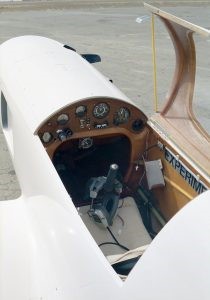
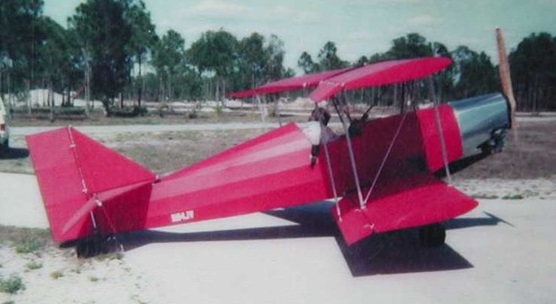
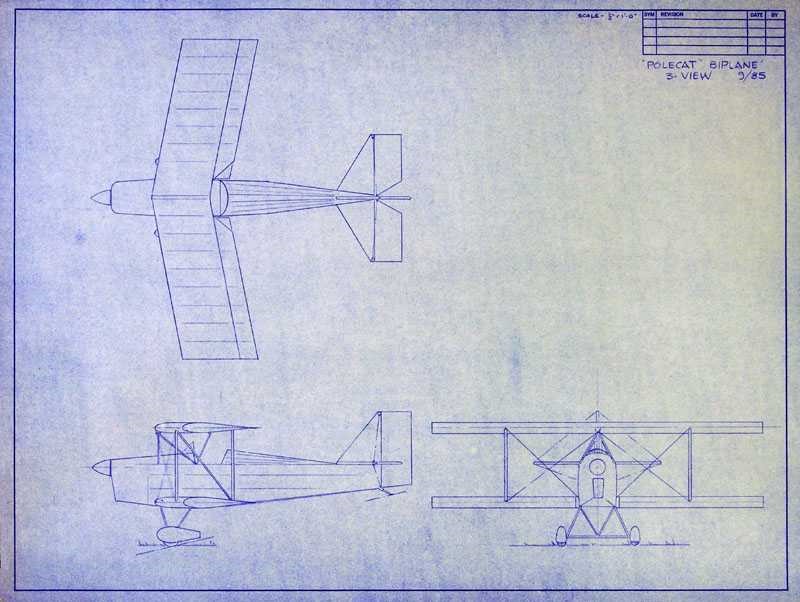
From North Fort Myers, FL, United States, an all-metal, fabric covered single seat aerobatic biplane first flown in September 1984 (Registration N84JV). Intermediate level aerobatic capabilities. Four full span ailerons on swept symmetrical wings (NACA 0012 airfoil) with no stagger and no dihedral. Wing incidence is 0° top and bottom. No aileron differential motion.

Fuselage is welded 4130 tubing, fixed tail surfaces are welded aluminum tubing with formed aluminum ribs, control surfaces are aluminum tube spars with formed ribs and trailing edges. Wings are aluminum tube spars with press-formed aluminum ribs all bonded with aluminum castings at the structural attach points. All control surfaces feature ball bearing hinges. Aileron and elevator controls are pushrod operated, the rudder is cable operated.
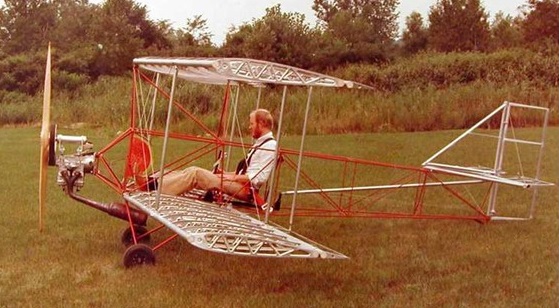
All flying and landing wires are fixed length wire rope with swagged fittings. Tension is provided by the interplane struts which feature left and right hand threads allowing them to be length adjusted to tension the wires. This design allows for easy disassembly and reassembly and rigging for trailer transport between airshows.

Various engines including Rotax 532 and Kawasaki 750 Turbo running a 100″ diameter prop through an integral 5:1 gearbox. Fuel tank is wedge-shaped (like a section of a watermelon) welded aluminum with a flop tube for inverted flight. Rigid main landing gear, no brakes, tailskid (later with swiveling/locking tailwheel and brakes). BRS eqiupped.
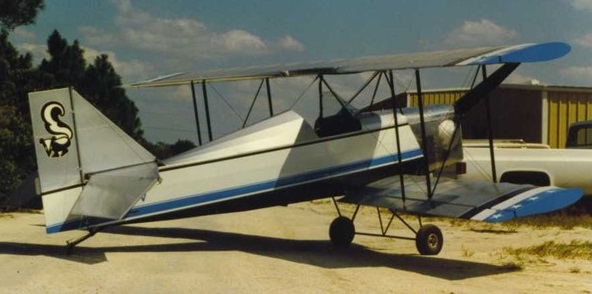
Engine: Rotax 582
Wing Span: 18 feet
Empty Wt: 278 lb for first flight, 425 lb with larger engines and mods
Gross Wt: 525 lb with Rotax, later 700 lb
Top Speed: 80mph (uncowled Rotax 532)
Stall Speed : ~40mph
Roll Rate: 180°/sec @ 80mph
Fuel: originally 3 USgallons, later 6 USgallons
Endurance: Approximately 30 minutes
Structure: ± 6g (Limit)
750 Turbo Kaw

ASAP

Brent Holomis owned a Birdman Chinook WT2S two-seat ultralight and when Birdman Enterprises went out of business in late 1987 it left Chinook owners without a source of parts. ASAP was founded by Holomis in 1988, initially the company was to provide Chinook parts, but Holomis proceeded to redesign the Chinook with assistance from Dr David Marsden at the University of Alberta, who had been involved in the first Chinook design. In 1989 ASAP unveiled the improved ASAP Chinook Plus 2. With the acquisition of Canadian Ultralight Manufacturing in St Paul, Alberta who had manufactured the earlier Chinook WT11 and WT2S, the Chinook Plus 2 was placed into production.
In 1992 Spectrum Aircraft of Surrey, British Columbia, the manufacturer of the Spectrum Beaver aircraft line, went out of business and the following year ASAP began making parts for the existing RX-28, RX-35 and RX-550 Beaver fleet. In 1996, after a similar development program to the Chinook Plus 2, ASAP introduced an improved two-seat Beaver, designated the RX-550 Plus. In 2000 ASAP introduced the Beaver SS (single seat) to replace the RX-28 and RX-35 single seat Beavers that had gone out of production with Spectrum’s 1992 demise.
ASAP at one time owned GSC Propellers who made a line of wooden blade, aluminum hub, ground adjustable propellers for the ultralight aircraft market. Founded in 1984 GSC Propellers initially operated from the ASAP Vernon facility. The company was sold in 2000 and, while still located in Vernon, changed its name to GSC Systems in 2004.
In the late 1990s ASAP decided to develop a line of aluminum-framed powered parachutes. These were developed and are manufactured in-house at ASAP, but marketed by a separate division, Summit Powered Parachutes International. The models presently consist of the two place Summit 2 and the single-seat Summit SS.
ASAP also designed two welded steel tube-frame powered parachute models especially for the US market. These are manufactured by ASAP and marketed by another corporate division, Steel Breeze Powered Parachutes. This division offered two models, the Steel Breeze Two Place and the United States ultralight category FAR 103 Ultralight Vehicles compliant 103 Mini Steel Breeze.
The corporate division, http://www.ppccanopies.com sells powered parachute and powered paraglider canopies, while http://www.ulparts.com provides engines and ultralight parts. ASAP itself provides parts for the legacy Birdman Chinook and Spectrum Beaver aircraft fleets.
1995-8: Box 995, Vernon, BC, V1T 6N2 Canada.

ARV Super 2 / ASL Hagfors Aero AB Opus 280

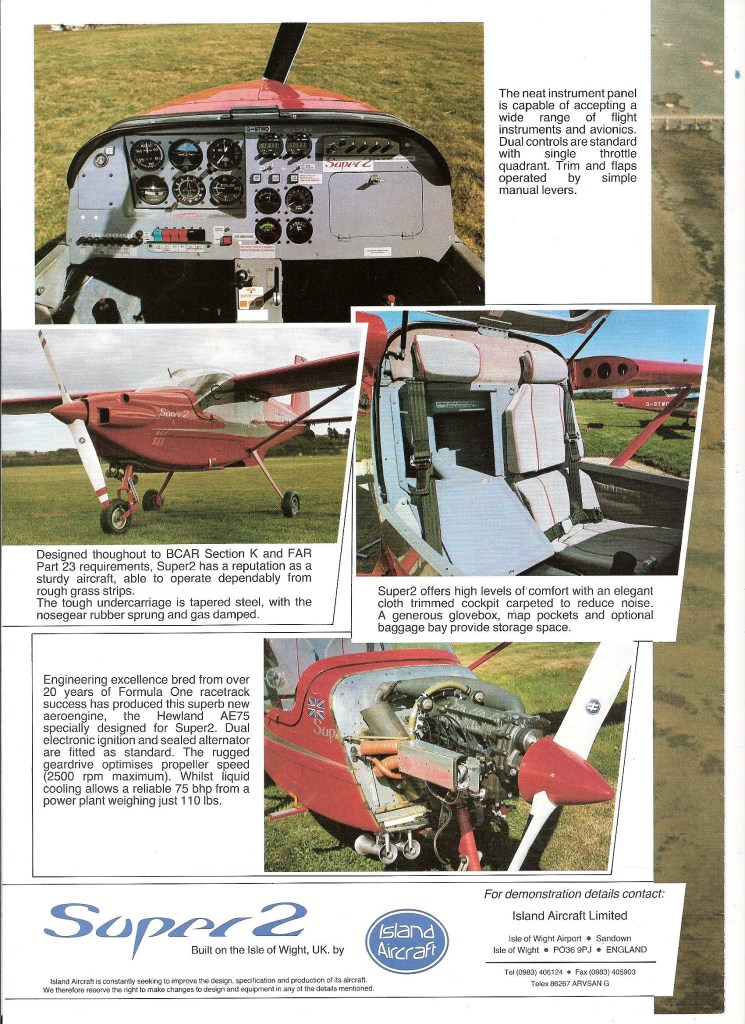
Richard Nobles design team aimed for an aircraft that was inexpensive to fly and buy; have two seats; should have an all-metal airframe; and be available as either factory assembled or as a simply assembled kit. The engine, custom-designed by Mike Hewland, is an inverted, inline three cylinder, 77 hp, water-cooled engine weighs in at 120 lbs with a 14 lb radiator located under the fuselage behind the cabin. It featured electronic ignition. The aircraft has been approved to United States FAR Part 23 requirements.
The engine burns a two stroke mixture on a 40-1 ratio although testing has provided satisfactory performance throughout a range of 20-1 to 95-1. Fuel burn is around three gallons an hour, either an avgas or mogas mix with oil.
The prototype, G OARV, made its first flight on 1lth March 1985 and was followed into the air by the second aircraft on 12th November. The fourth (004) was delivered in kit form to L.Wensley of Lincoln.
The Super 2 was later developed into the Swedish, certificated, Opus 280 by ASL Hagfors.
The Super 2 later became the Island Aircraft ARV-1 Super 2, then the Aviation Scotland ARV-1 Super2.
Highlander Aircraft Corp offered Highlander two-seat monoplane in kit form circa 1997.

Back of an original sales brochure showing G-POOL – courtesy Martin Southwell

ASL Hagfors Aero AB of Sweden marketed a certificated version of the ARV Super 2 Highlander, as the Opus 280.

ARV Super 2
Engine: Hewland AE75, 77 hp
Length: 18.045 ft / 5.5 m
Height: 7.546 ft / 2.3 m
Wingspan: 28.543 ft / 8.7 m
Wing area: 92.57 sq.ft / 8.6 sq.m
Max take off weight: 1102.5 lb / 500.0 kg
Weight empty: 674.7 lb / 306.0 kg
Max. weight carried: 427.8 lb / 194.0 kg
Max. speed: 103 kt / 190 km/h
Landing speed: 48 kt / 88 km/h
Cruising speed: 86 kt / 160 km/h
Initial climb rate: 590.55 ft/min / 3.00 m/s
Service ceiling: 13123 ft / 4000 m
Wing load: 11.89 lb/sq.ft / 58.0 kg/sq.m
Range: 367 nm / 680 km
Crew: 2

Engine: MWAE AE100R (100hp 2 rotor Wankel).
Max speed: 98 kts.
Cruise: 84 kts.

Highlander Aircraft Highlander
Engine: Rotax 912, 80 hp.
Speed max: 145 mph.
Cruise: 125 mph.
Range: 530 sm.
Stall: 50 mph.
ROC: 800 fpm.
Take-off dist: 600 ft.
Landing dist: 700 ft.
Service ceiling: 10,000 ft.
Fuel cap: 20 USG.
Weight empty: 715 lbs.
Gross: 1165 lbs.
Height: 10 ft.
Length: 18 ft.
Wing span: 29.5 ft.
Wing area: 92.5 sq.ft.
Seats: 2.
Landing gear: nose wheel.

Arrow 1000

The Arrow 1000 is a four-cylinder, horizontally opposed, two-stroke, single- or dual-ignition, aircraft engine that was designed for float-equipped ultralight aircraft by Arrow SNC of Italy.
The Arrow family of engines are modular in design and share the same pistons, cylinders and gearboxes assembled around different crankcase designs, giving one-, two- or four-cylinder engines.
The 1000 is a conventional four-cylinder engine that weighs 145 lb (66 kg). The engine features single or optional dual ignition, reed valve induction, free air cooling, tuned exhaust system, slide venturi-type Bing carburetors, fuel pump, Nikasil cylinder coatings. The engine was offered with a gearbox reduction system that included a one-way clutch. Starting is electric starter with no provision for a recoil starter.
The 1000 produces 100 hp (75 kW), runs on premium unleaded auto fuel and has a recommended time between overhaul of 300 hours.
The tuned exhaust supplied with the engine has been criticized as “cumbersome” and needing modification to fit most aircraft.
Arrow engines are no longer in production.

Specifications:

Arrow 1000
Type: Four-cylinder, horizontally opposed two-stroke aircraft engine
Displacement: 1000 cc (61.02 cu in)
Dry weight: 145 lb (66 kg)
Valvetrain: reed valve
Oil system: premixed oil and fuel
Cooling system: air-cooled
Reduction gear: gearbox
Power output: 100 hp (75 kW)

Arrow 500

The Arrow 500 is a twin-cylinder, horizontally opposed, two-stroke, single or dual ignition, aircraft engine that was designed for ultralight aircraft by Arrow SNC of Italy.
The Arrow family of engines are modular in design and share the same pistons, cylinders and gearboxes assembled around different crankcase designs, giving one-, two- or four-cylinder engines.
The 500 is a conventional twin-cylinder engine that weighs 88 lb (40 kg). The engine features single or optional dual ignition, reed valve induction, free air cooling, tuned exhaust system, a single slide venturi-type Bing carburetor, fuel pump, Nikasil cylinder coatings. The engine was offered with a gearbox reduction system that included a one way clutch. Starting is electric starter with no provision for a recoil starter.
The 500 produces 65 hp (48 kW), runs on premium unleaded auto fuel and has a recommended time between overhaul of 400 hours.
The tuned exhaust supplied with the engine has been criticized as “cumbersome” and needing modification to fit most aircraft.
Arrow engines are no longer in production.

Specifications:

Arrow 500
Type: Twin-cylinder, horizontally opposed two-stroke aircraft engine
Displacement: 500 cc (30.51 cu in)
Dry weight: 88 lb (40 kg)
Valvetrain: reed valve
Oil system: premixed oil and fuel
Cooling system: air-cooled
Reduction gear: gearbox
Power output: 65 hp (48 kW)

Arrow 250

The Arrow 250 is a family of single-cylinder, two-stroke, single- or dual-ignition aircraft engines that were designed for ultralight aircraft by Arrow SNC of Italy.

The Arrow family of engines are modular in design and share the same pistons, cylinders and gearboxes assembled around different crankcase designs, giving one-, two- or four-cylinder engines.

The 250 is a conventional single-cylinder engine that weighs only 13 lb (6 kg). The engine features single- or optional dual-ignition, reed valve induction, free air cooling, tuned exhaust system, a slide venturi-type Bing carburetor, fuel pump, Nikasil cylinder coatings. The engine was offered with a gearbox reduction system that included a one-way clutch. Starting is electric starter with no provision for a recoil starter.

The tuned exhaust supplied with the engine has been criticized as “cumbersome” and needing modification to fit most aircraft.

Arrow engines are no longer in production.

Variants:

250
Gasoline aircraft engine, 34 hp (25 kW). Out of production.

270 AC
Gasoline aircraft engine, 35 hp (26 kW) at 6800 rpm, weight 13.2 lb (6.0 kg) with carburetor, alternator, fuel pump and starter. Out of production.

Specifications:

Arrow 250
Type: Single-cylinder, two-stroke aircraft engine
Displacement: 250 cc (15.26 cu in)
Dry weight: 13.2 lb (6 kg)
Valvetrain: reed valve
Oil system: premixed oil and fuel
Cooling system: air-cooled
Reduction gear: gearbox
Power output: 34 hp (25 kW)

Arnold AR-5

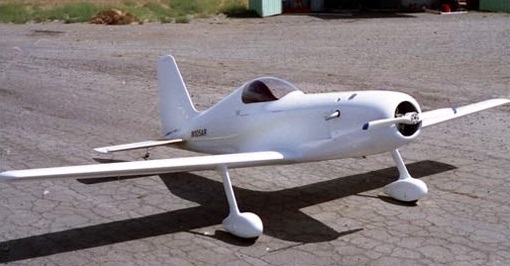
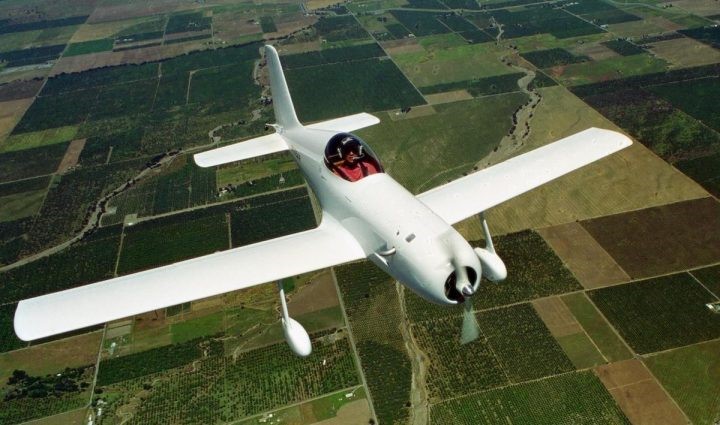
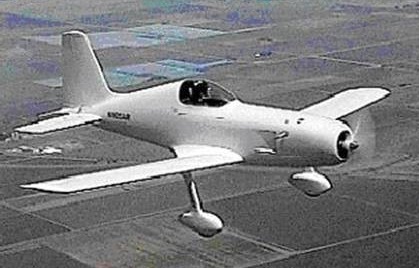
Mike Arnold’s AR-5 has inspired a generation of aerospace engineers by being the first powered aircraft with a flat plate drag of less than 1 square foot. The AR-5 had smashed the ‘impossible’ mark with a flat plate drag area equivalent to just 0.88 square feet.

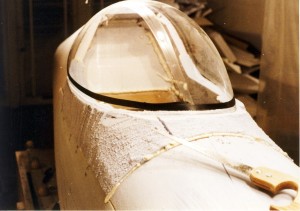
The AR-5 was foam shaped, sanded, glassed, then sanded construction.

In 1992, the AR-5 set a c-1a/0 record of 213mph on 65HP.

When he was ready, Arnold shared his ‘mystery ship’ with a number of pilots from leading aviation magazines. They all agreed that the little speedster was also a sweet-handling machine, with beautifully harmonised controls and plenty of room for the pilot.

Arnold had originally planned to sell plans for the AR-5 but, while he was satisfied with the design, he decided to wait and see how the gathering storm of product liability suits would play out.

Instead, Arnold fell back on his first craft, producing a series of movies about his plane and selling video copies to homebuilders and aviation enthusiasts. The full set of films is:

  • Why It Goes So Fast
  • How It’s Made
  • Moldless, Low-Drag Wheel Pants
  • The AR-5 In Action
  • Making Fibreglass Molds
  • Making A Molded Fuselage – Shaping The AR-6

There is no CGI or even a pretty diagram in any of them. Each documentary offers an engaging story as well as plenty of information.

Arnold had an engine failure (broke something internal) and the AR5 had a forced landing. The plane came to a stop with the gear legs bent aft and the airplane was sitting nose down on the cowling. That wrecked the main gear and smacked the engine and firewall on the ground. In the case of other pilot-builders, some have decided to retire the bird rather than risk an in-flight structural failure.

According to his video a soldered connection in the throttle linkage gave way and that was the reason for the engine failure. According to the video the gear mounts were undamaged and the engine mount bent absorbing the impact (no damage to primary structure that he had found). As of the recording date of the video he was planning on returning it to flight, but hadn’t finished or maybe hadn’t even started yet. It was retired.

The AR-5 is currently on permanent display at the Hiller Aviation Museum in San Carlos, California.

AR-5
Engine: 65hp Rotax 582
Span: 21 ft 0 in
Wing area: 56.2sq.ft.
Length: 14.5′
Height: 36″
Empty weight: 488 lb
Seats: 1
Fuselage width: 23″

Arno Chereau Aeronautique J 300

The J300 has a welded steel tube construction for the fuselage and dural foam laminate for the wings. In 1998 the constructor was offering a kit complete with two-stroke engine, at less than 100,000F.

Engine: Rotax 912, 79 hp
Wing span: 10.20 m
Wing area: 19 sq.m
MAUW: 450 kg
Empty weight: 174 kg
Fuel capacity: 2 x 63 lt
Max speed: 205 kph
Cruise speed: 140 kph
Minimum speed: 60 kph
Climb rate: 5 m/s
Fuel consumption: 8.90 lt/hr
Seats: 2
Price (1998): 240,000 Fhc
Kit price (1998): 79,000 Fhc

ArmourKraft Stolite

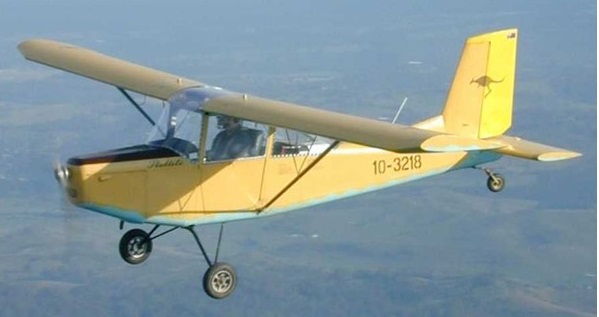
Stollite Mk1 single seat with R503

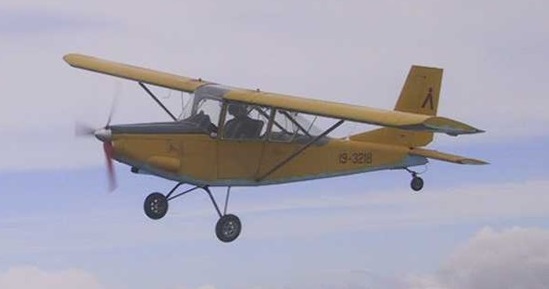
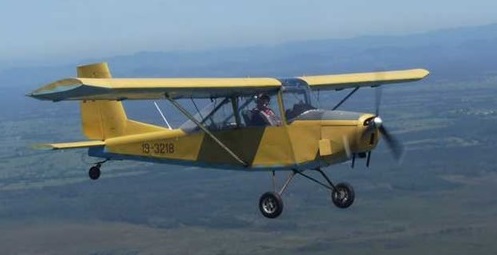
The ArmourKraft Stolite was a project designed by Arthur Armour to be built by his apprentice while he was building something else. It took three years to build, working two nights a week after work. The wings are from the ArmourKraft Super Cricket.

Design to fit Australian 95:10 class, MTOW 300kg (661lb), single seat, it was powered by a Rotax 503, registered 10-3218, and first flew in 1999 at The Oaks, NSW, Australia.

After a minor incident, aircraft was rebuilt in the next ‘class’ allowing more weight and two seats, and was fitted with a Rotax 582, and registered 19-3218.

Stollite Mk2, two seat with R582

Eventually the 582 failed, so an old Rotax 912 was fitted.

Stollite Mk3 now with Rotax 912

The 912 was required for another project and removed, to be replaced with a modified BMW R100 bike engine.