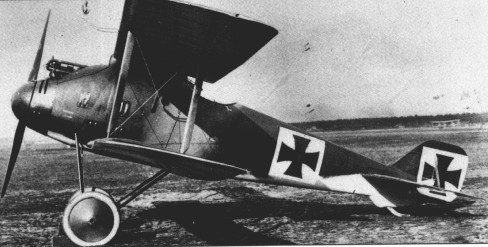
As a result of the success of the Roland C.II two-seater, Roland began building a single-seat fighter on the same lines. The resulting D.I first flew in July 1916, and after refinement became the D.II.
A single bay biplane, the two-spar wings, with fabric covering, had ailerons on the top wing only. The plywood covered wooden semi-monocoque fuselage with integral fin. The control surface were fabric covered steel tube.
The D II, which retained the same 119-kW (160-hp) Mercedes DIII engine but featured a number of drag-reducing revisions as well as a modified empennage. Armament wa on the top of the forward fuselage.
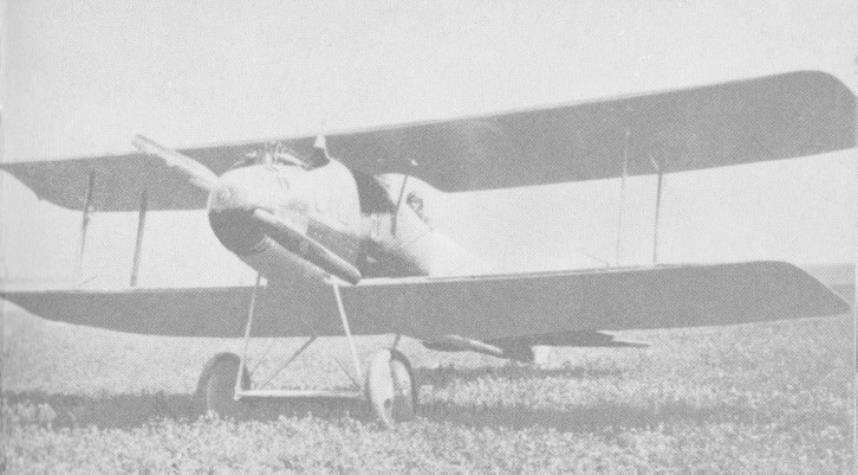
The D II began to enter service early in 1917, and was complemented by the D lIa with a more powerful 180 hp Argus engine.
D.IIa
They were flown mainly on the quieter sectors of the Western Front and did not normally equip completely any squadrons. The D II and D la were not popular in service, pilots complaining about lack of vision and heavy controls.
About 300 were built.
D.II Engine: Mercedes DIII, 119-kW (160-hp).
D.IIa Engine: Argus As.III, 180 hp Wing span: 29 ft 2.5 in Wing area: 236.8 sq.ft Length: 22 ft 9 in Height: 9 ft 8 in Empty weight: 1400 lb MTOW: 1753 lb Max speed: 112 mph at SL Endurance: 2 hr Armament: 2 x Spandau
The D I was in essence the C II two-seater scaled down as a single-seat fighter. The type was nicknamed Haifisch (shark) for its deep fuselage with the slightly swept upper wing attached directly to it. The D I first flew in July 1916, and was produced in small numbers. The D II began to enter service early in 1917, and was complemented by the D.Ia with a more powerful engine. The D II and D la were not popular in service, pilots complaining about lack of vision and heavy controls.
D.I Engine: Mercedes DIII, 119-kW (160-hp).
D.Ia Span: 8.94m (29ft 4in) Length: 6.93m (22ft 9in) Powerplant: l x Argus As.lll, 134kW (180 hp) Armament: 2 x 7.92-mm (0.312-in) LMG 08/15 mg. Max T/O weight: 795 kg (1,753 lb). Max speed: 112.5 mph. Operational endurance: 2 hr.
Luftfarhzeug GmbH was founded by Krupp from the Flugmaschine Wright GmbH (originally Motorluftschiff Studiengesellschaft, 1906). PreFirst World War manufacturer of Parseval airships at Adlershof, subsequently adopted Roland as trade name. Built Albatros B and C types under license at Charlottenberg until their own Roland C.ll of 1915. Built a series of 12 fighter designs, of which only the D.II was built in quantity during First World War. Produced the V-19 Stralsund, the first aircraft designed for carriage by submarines. After the war converted and built civil aircraft until 1925, including singie-engined landplanes and seaplanes for civil airlines. Operated a number of shorthaul routes around the Baltic. Went into liquidation 1928.
In 1915 Marcel Besson designed his first flying-boat, the development work and later production being carried out in the aircraft factory of Georges Levallois, a financier (Hydravions Georges Levallois et Levy). During First World War flying-boats and bombers were produced for the French Navy by Levy-Besson, the latter setting up in his own name after the war. Twelve Levy-Lepen HB-2 reconnaissance flying-boats were operated in France by the U.S. Navy, and three were taken to U.S.A.. Levy-Biche marine aircraft were built for French Navy to 1927, when production was taken over by Levasseur.
Levasseur completed his first aircraft in 1911. Specialized subsequently in marine aircraft, largely for the French Navy. The Levasseur PL-8 was built specially for a transatlantic flight from Paris to New York, in 1927, but was lost at sea. Company had ceased operations by mid-1930s.
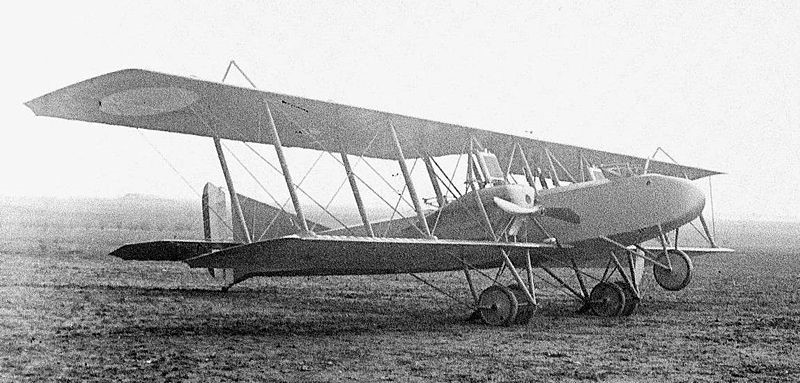
In early 1916 the contemporary reconnaissance aircraft of the Aéronautique Militaire, such as the Caudron G.6, Morane-Saulnier T and Salmson-Moineau SM.1 were proving to be less than sparkling in operations and testing. To provide a suitable replacement The STAé, its Director Colonel Dorand and Établissements Letord, formulated the A3 specification and co-operated in the design of the only respondent, the Letord Let.1.
In 1916, the Letord “Let”, in prototype form, recorded its first flight and this three-man, twin-engined platform was developed along the lines extended-range reconnaissance. To cover the distances required of the type, a multi-engine arrangement was used and this fitted to a relatively large airframe.
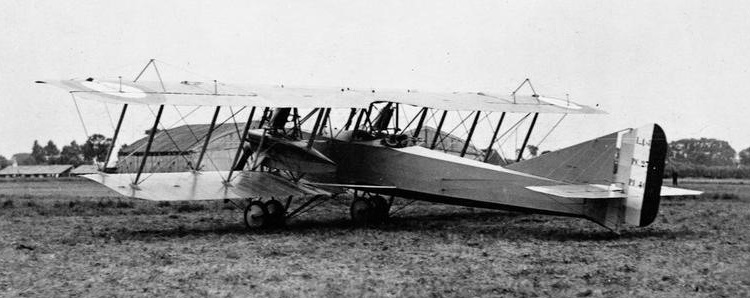
The aircraft relied on a traditional biplane wing arrangement for lift and control and the crew required to man its various systems numbered three. “Negative wing stagger” was present in the over-under wing arrangement where the lower planes were set well-forward of the upper sections, making the parallel struts angle rearwards.
Power was from 2 x engines of various makes and models throughout the service life of the aircraft and each was charged with driving two-bladed propellers. The engines were held outboard of the fuselage and atop the lower wing assembly. Each of the three crewmen sat in separate open-air cockpits so communication between them was limited. The undercarriage showcased double-wheeled main legs and a tail skid though a nose leg was usually added to prevent “nose-over” accidents when ground-running (common to larger aircraft of the war). The tail unit was marked by a single vertical fin and low-mounted horizontal planes.
Design of this aircraft was attributed to Emile Dorand.
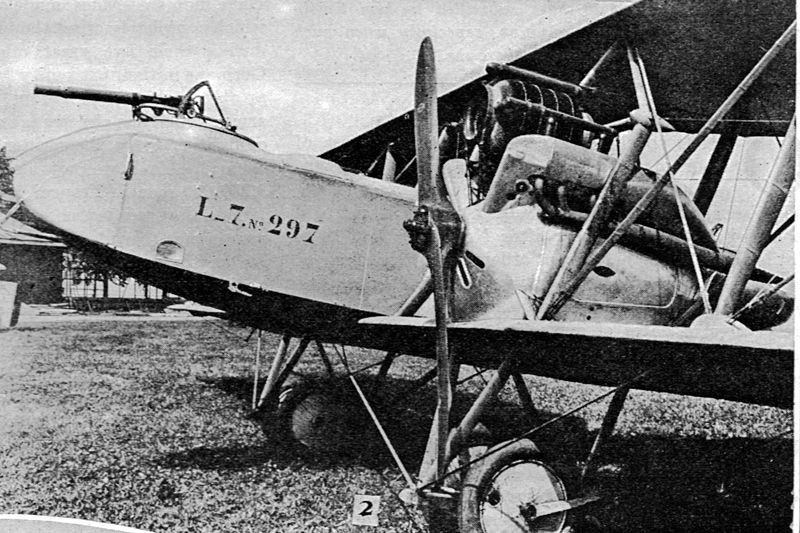
The Letord A3 reconnaissance bomber family, the Let.1 to Let.7, were essentially similar biplanes with, variously unequal span or equal span wings, with prominent and characteristic negative stagger on their wings, powered by two tractor engines in nacelles mounted short struts or directly on the lower wings and had a fixed tailskid undercarriage. Some aircraft were equipped with a strut-mounted nosewheel to protect the aircraft and its crew from “nosing-over” accidents while landing. The pilot sat in an open cockpit under the upper wing trailing edge, with a gunner in an open position immediately aft, and a third crew-member in an open position in the nose where he could act as gunner, observer, and bomb-aimer.
Let.4
Aircraft were completed, variously, with equal span 4-bay wings or unequal span 3-bay wings with longer span upper wings braced by an A-frame king-post and wires. All the Letord reconnaissance bombers shared similar plywood covered wooden structure fuselages and wooden structure wings and conventional tail-unit.
Of the 250-300 built, the Letord Let.5 was probably the most numerous of a family of 3-seat reconnaissance bombers, designed and built in France from 1916, originally to an A3 (reconnaissance aircraft 3-seat) specification from the STAé (Service Technique d’Aéronautique).
Let.7
The Letord reconnaissance bombers saw widespread service throughout the Aéronautique Militaire, from mid-1917, with 121 operational on the Western Front by November 1917. Most were no longer in front-line use by the Armistice in November 1918.
Variants:
A Letord Let.1
Let.1 A.3 initial reconnaissance version three bay wing. Engines: two 150 hp (110 kW) Hispano-Suiza 8A
Let.2 A.3 reconnaissance aircraft similar to Let.1 three bay wing. Engines: two 200 hp (150 kW) Hispano-Suiza 8Ba
Let.3 Bn.3 night bomber four bay wing. Engines: two 200 hp (150 kW) Hispano-Suiza 8Ba
Let.4 A.3 reconnaissance aircraft also used as a bomber three bay wing. Engines: two 160 hp (120 kW) Lorraine-Dietrich 8A
Let.5 A.3 reconnaissance aircraft three bay wing and missing the nosewheel. Engines: two 240 hp (180 kW) Lorraine-Dietrich 8B Propeller: 2-bladed wooden fixed-pitch Wingspan: 18.06 m (59 ft 3 in) Wing area: 62.3 sq.m (671 sq ft) Length: 11.17 m (36 ft 8 in) Height: 3.66 m (12 ft 0 in) Empty weight: 1,660 kg (3,660 lb) Gross weight: 2,445 kg (5,390 lb) Maximum speed: 170 km/h (110 mph, 92 kn) at 2,000 m (6,600 ft) Maximum speed: 152 km/h (94 mph; 82 kn) at 3,000 m (9,800 ft) Range: 455 km (283 mi, 246 nmi) Endurance: 3 hours Service ceiling: 4,900 m (16,100 ft) Time to altitude: 2,000 m (6,600 ft) in 10 minutes Time to altitude: 4,000 m (13,000 ft) in 20 minutes Armament: Up to 4 7.70 mm (0.303 in) Lewis machine-guns on single or double T.O.3 flexible mounts. Bombload: 130–150 kg (290–330 lb) Crew: 3
Let.6 Ca.3 fighter based on the Let.3 four bay wing. Engines: two 220 hp (160 kW) Hispano-Suiza 8Be Armament: 37 mm (1.5 in) cannon
Let.7 Bn.3 night bomber four bay wing of increased span. Engines: two 275 hp (205 kW) Lorraine-Dietrich 8B engines
Établissements Letord – Société d’Aviation Letord – 1921-1922
Beginning in 1909, Emile-Louis Letord began construction of aircraft out of a facility in Meudon near Paris, France. Ultimately the company was commissioned to build aircraft from other manufacturers (including Dorand and Nieuport) until the concern headed development of their own three-seat biplane – the Letord Let.1. The series encompassed the Let.1 up to the Let.7 and some 1,500 were eventually ordered by the French Air Force for service in World War 1 (1914-1918) but only about 300 were realized.
This company built bombers to designs of the Section Technique de I’Aeronautique, 1916-1918, as the Establissements Letord at Chalais-Meudon. The last of these aircraft to be developed was intended as a night bomber. It was in the same class as the Handley Page bombers, with a wingspan of 25.91m. In 1923 Letord built an experimental aircraft for the government, which was evolved by Becherau, designer of the prewar Deperdussins. In 1925 part of the works was let to Villiers, which built racing aircraft and the small Albert biplane produced under license of Tellier-Duhamel.
 All Aero