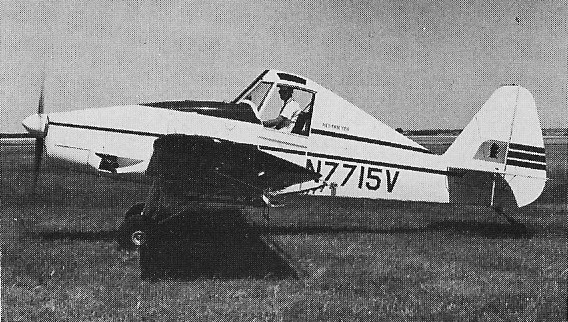
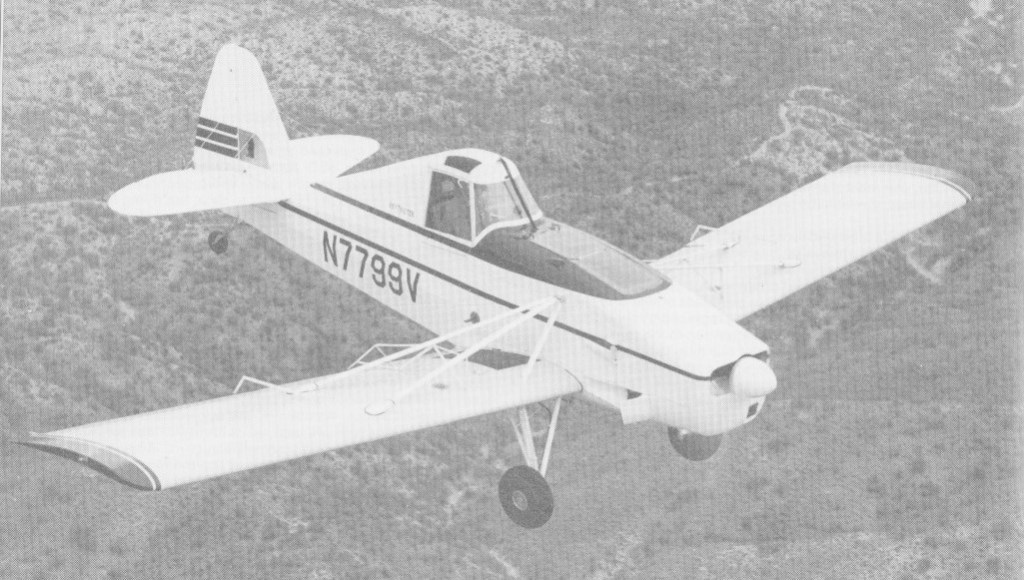
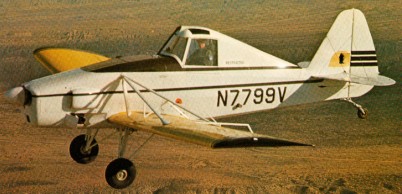
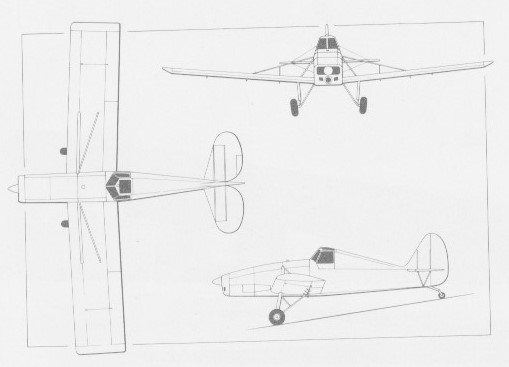
The Streak two-seat all-metal monoplane was developed by the Aero-Flight Aircraft Corporation of California in three versions which were similar apart from fuel capacities and engines.
Dec 60
Designed by James Nagamatsu (ex-Curtiss Co), the cost was $3,995. Two were built, including NX92846. NX92846 was repowered at Long Beach in Oct 1947 with 125hp Continental C-125 as AFA-2, and c.1949 as AFA-3 with 165hp Continental C-125.
Aero Flight Streak 85 NX92846
Project abandoned after failing to arouse interest in a saturated post-war market.
1946: Aero-Flight Aircraft Corp (pres: J K Nagamatsu), Buffalo NY. USA
1947: Long Beach CA. USA
In late 1940s built Streak two-seat monoplane and derivatives. Metal construction and slotted flaps were features. Three models built were all fast, though low powered.
Aero Engine Services Ltd. was established at Hamilton, New Zealand, in 1954 by TEAL engineer, Alf Coleman, and until 1966 did engine repair and overhaul. The Cable Price Corporation, which introduced the FU24 to New Zealand, originally had a 57 per cent holding in AESL, but the company later became solely owned by James Aviation and Alf Coleman. Early 1967 acquired rights for Victa Airtourer (produced as AESL Airtourer) and later the Aircruiser, which was developed into the CT4 military trainer. Amalgamated 1 April 1973 with Air Parts (NZ) Ltd. to form New Zealand Aerospace Industries Ltd.
Registered as a company at Santander, Spain, to manufacture, overhaul, and repair aircraft. As an experiment in 1954 built a Jodel lightplane; under name Popuplane made license-built versions of Jodel D.112 and D.119, and under new management made a refined version of the Aero- Difusion Jodel D.1190S which was called the Compostela.
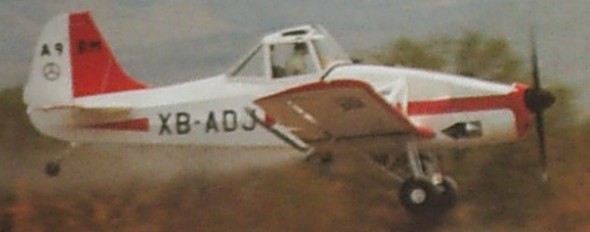
With an agreement between Industrias Unidas SA of Mexico and Rockwell International, Aeronautica Agricola Mexicana SA (AAMSA) was formed in 1971 to take over from Rockwell manufacture of the Aero Commander Quail Commander and Sparrow Commander agricultural aircraft. They had identical airframes but differed mainly by engine fit. The Sparrow Commander was powered by a 235 hp (175 kW) Lycoming O-540-B2B5 engine, while the Quail was fitted with the more powerful IO-540 engine. Both the Sparrow Commander and Quail Commander were available with liquid spray or dust disperdsal gear, or with a quick change combination dust or spray unit. Production of both types ended in the USA in 1970.
Sparrow Commander
Construction of the Sparrow Commander continued in Mexico, as the AAMSA Sparrow. Only very small numbers had been built by 1975, when production was terminated. Only spares were manufactured in Mexico by AAMSA.
Manufacture then switched to the Quail Commander in 1971, designated A9B-M Quail. 101 A9B were built in Mexico, and by January 1982 26 A9B-M had been built.
Quail Commander
The Quail was a braced low-wing monoplane of composite construction. Its wings were based on wooden spars, with metal leading-edge skins and the remainder of the structure fabric covered; fuselage and tail unit were steel tube structures with fabric covering. The wings are Clark Y airfoil. The non-retractable tailwheel had shock absorbtion. The engine had a fixed pitch or optional variable-pitch propeller. The Quail had an enclosed cabin with a steel-tube overturn structure, cable cutters on the landing gear and windscreen, a cable deflector between the canopy and the tail fin, and proivision for avionics and night flying equipment. A 22.5 cu.ft (0.64 cu.m) glassfibre/polyester chemical hopper was fitted as standard with a capacity of 170 USG (643 lt) of liquid or 1200 lb (545 kg) of dry powder chemicals.
The Quail was manufactured in component form at the Industrias Unidas industrial complex at Pasteje in Mexico for assembly and marketing by its associated Aircraft Parts and Development Corp. in Laredo, Texas. By 1978 43 Quails had been built.
Quail Commander
Sparrow Commander Engine: Lycoming O-540-B2B5, 235 hp (175 kW) Wingspan: 34 ft 9 in / 10.59 m Length: 23 ft 6 in / 7.16 m Empty weight: 1600 lb / 726 kg Max payload: 1400 lb / 635 kg MTOW (Agricultural): 3400 lb / 1542 kg Max cruise 75% / 3000 lb / 1260 kg: 91 kt / 105 mph / 169 kph Max ROC SL (Agricultural): 650 fpm / 198 m/min Service ceiling (Agricultural): 14,000 ft / 4265 m Range max cruise (Agricultural): 260 nm / 300 mi / 483 km Seats: 1 Hopper capacity: 22.5 cu.ft / 0.64 cu.m / 170 USGal / 643 lt
NA Rockwell Quail Commander Engine: Lycoming IO-540-G1C5, 290 hp. Wing span: 34 ft 9 in / 10.59 m Length: 23 ft 6 in / 7.16 m Height: 7 ft 7 in / 2.31 m Max TO weight: 3600 lb / 1633 kg Max level speed: 120 mph / 193 kph Hopper capacity: 210 USG / 795 lt Ag payload: 1600 lb /726 kg
AAMSA A9B-M Quail Engine: Avco Lycoming IO-540-K1A5, 300 hp. Wing span: 34 ft 9 in / 15.76m Length: 24 ft 0 in / 10.89m Height: 7 ft 8 in / 3.48 m Wing area: 182 sq.ft / 16.91 sq.m Empty weight: 1800 lb / 816 kg MTOW: 3800 lb / 1724 kg Payload: 1600 lb / 725 kg Max level speed: 120 mph / 193 kph / 104 kt Normal operating speed: 90-100 mph / 145-161 kph ROC: 850 fpm / 259 m/min Service ceiling: 16,000 ft / 4875 m Range 50%: 300 sm / 483 km / 260 nm Hopper capacity: 28.5 cu.ft / 0.81 cu.m / 210 USG / 795 lt
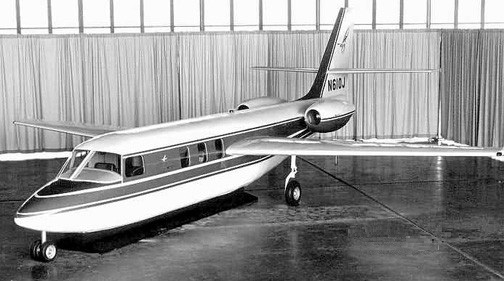
In 1960 the first production Jet Commander flew (GE CJ610 engines) and was sold to the Japanese newspaper chain Ashai. When North American and Rockwell merged in 1967, the Justice Department insisted that the new firm divest itself of Rockwell’s rights to the Jet Commander. The Government felt that common ownership of two bizjet designs the Commander and North American’s existing Sabreliner – would give North American Rockwell a dominance on the market. For a variety of reasons (the Sabreliner’s origin as a military project was mentioned most frequently), the Government decreed that the Commander must go. The entire project, including tooling, was bought by Israeli Aircraft Industries. The Aero Commander introduced Model 1121, was modified to become the Israel Aircraft Industries 1123 and in 1976 was offered by IAI with Garrett turbofan engines as the 1124 Westwind and its successor, the Westwind 1.
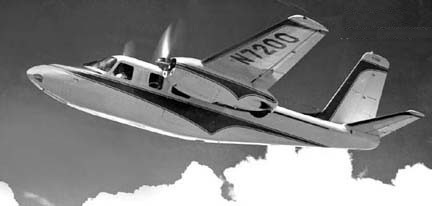
In 1958 the first pressurised Aero Commander was produced as the 720 Alti-Cruiser. An improved 680-E as the world’s first certificated, pressurized, non-airline business plane.
With extended wing, refrigerated air conditioning, Lear autopilot, they sold for $183,750.
With a pressurisation differential of only 2.3 psi and a loss of 300 lbs of payload compared to the non-pressurised version, the 680E, the 720 model was a flop in the marketplace with only thirteen sold. Production of the 720 ceased in 1960.
Design changes within the 1000 enabled greater interior space without changing the exterior fuselage dimensions. Cabin length was increased 2.9 feet and the cabin floor lowered nearly four inches to give a cabin height of 4.8 feet. A heavier structure was required all round to take the higher differential and the bottom exterior fuselage skins, replacing the floor of the former pressure vessel, were strengthened. Two aspects highlighted by the changes are the requirement to keep the rails extending the passenger steps clean and the now curved rear pressure bulkhead. The cleanliness of the rails prevents any damage to the seals and resultant loss of cabin pressure. In the 1000 the rear pressure bulkhead is curved, with the rearmost point being almost 3 feet further aft; the additional area accommodating the flushing toilet, small (100 lb maximum) baggage area and refreshment centre.
695A / 1000 Engines: 2 x AiResearch TPE 331-10-501K, 820 SHP. MTOW: 11,200 lb Press diff: 6.7 psi. Max SL alt: 15,900 ft
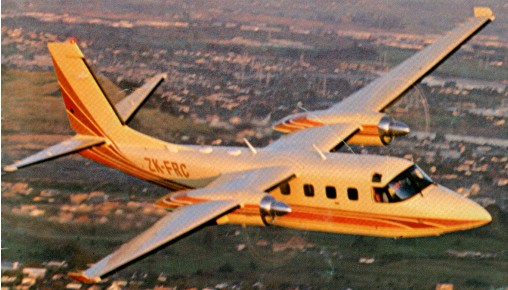
The Turbo Commander first appeared in 1965 as a pressurized version of the Grand Commander. Power was supplied by twin 605-shp AiResearch turboprop engines, each driving a three-blade constant-speed reversible-pitch propeller. This model became known as the Turbo Hawk and was built until 1971 when it was replaced by the Turbo Commander 681B, another pressurized version similar to the Shrike Commander, with 717-shp powerplants. The 690 Turbo Commander first flew on 3 March 1969. The North American Rock¬well Turbo Commander 690 was certificated at a gross weight of 10,250lb/4,650kg, in 1972, a payload improvement of 340lb, 155kg. Announcing the increase, the manufacturer stated that the 690, fully equipped, can carry seven people and full fuel tanks giving a range of 1,790 statute miles.
Turbo Commander 681B
In 1964 Aero Commander offered to fit oversize panoramic cabin windows to their Grand Commander at an extra cost of $6000.
The Turbo Commander cabin can be pressurized to 5.2 psi and the operational ceiling is 31,000 feet. Interior temperature is controlled by a high-volume climate system, and heated windshields provide maximum visibility in all weather conditions. The Turbo Commander is also certified for flight into known-icing conditions, and all deicing equipment is standard. While the 690A is just minutes slower that most business jets on a 900- to 1,000-mile business trip, fuel consumption is about 50% less.
The combination of reversible props, tough landing gear, high-wing, and 14-inch prop clearance are custom-tailored for short, rough landing strips. Engines that are flat-rated from 840 shp, to a nominal 700 shp help the 690A climb directly to the best cruise altitude without lengthy step climbing.
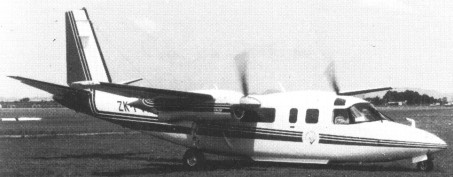
Aero Commander 681B N9004N
The 690B was offered in the Executive I and Executive II models. Many features that are usually considered optional are standard equipment in the Executive I, including avionics and cabin accommodations. The Executive II was for owners who wanted to select their own avionics and interior appointments.
After hit¬ting a high of 50 airplanes in 1974, produc¬tion waned, and production was reduced by 1978. Rockwell offered the Shrike in an Esquire version. It was a deluxe model that fea¬tured opulent interiors. The only options in an Esquire II are Rajay turbocharging and air conditioning. Complete deicing, a super plush interior, prop synchro¬nizer, everything from the radar in the nose to the DeVore Tel Tail lighting of the vertical fin is standard equipment. Price, 1978: $329,500.
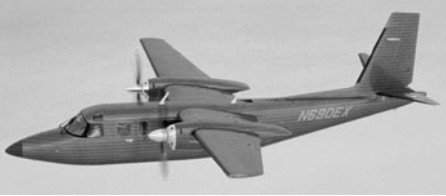
690EX
Turbo Hawk Engine: 2 x AiResearch turboprop 605-shp Gross weight: 9,400 lb Prop: 3-blade constant-speed reversible-pitch Empty weight: 5,783 lb Fuel capacity: 286-337 USG Top speed: 290 mph Cruise speed: 280 mph Stall speed: 94 mph Initial climb rate: 2,025 fpm Ceiling: 25,000 ft Range: 1,094 sm Takeoff dist (50ft): 1,975 ft Landing dist (50ft): 1,200 ft Seats: 8-10
681B Engines: 2 x AiResearch TPE 331-43BL 605-shp Wingspan: 44 ft 0.75 in / 13.43 m Length: 42 ft 11.74 in / 13.10 m Empty weight: 5,647 lb / 2561 kg MTOW: 9,400 lb / 4265 kg Fuel capacity: 286-337USG Top speed: 290 mph Max cruise speed: 278 mph / 241 kt / 447 kph Stall speed: 94 mph Initial climb rate: 2,007 fpm / 612 m/min Service ceiling: 25,600 ft 7800 m Range std fuel 21,000ft/6400m 221kt/254mph/409kph: 1,062 sm / 922 nm / 1709 km Range max fuel 21,000ft/6400m 221kt/254mph/409kph: 1,315 sm / 1141 nm / 2116 km Takeoff dist (50′): 2,016 ft Landing distance (50′): 1,200 ft Seats: 8-9 Baggage capacity: 500 lb / 227 kg
690A Engines: 2 x Garrett, 700shp TBO: 3000hr Max cruise: 285mph Econ cruise: 250mph Stall: 77mph Fuel cap: 2573lb Service ceiling: 33,000ft SE service ceiling: 19,700ft ROC: 2849fpm SE ROC: 893fpm Min field length: 1666ft Payload with full fuel: 1252lb Max range: 1767sm Pressurisation diff: 5.2psi High speed range: 1234sm Max payload: 1573lb Range max payload: 748sm Seats: 9. Gross wt: 10,300lb Equipped empty wt: 6475lb Useful load: 3285lb
690B Engines: 2 x Garrett/AiResearch TPE 331 5 251K, 700 shp. TBO: 3,000 hrs Props: constant speed, three blade, reversible. Length: 44 ft. 4 in Height: 14 ft 11 in Wingspan: 46 ft 8 in Wing area: 266 sq ft Wing loading: 38.82 lb/sq.ft Power loading: 7.37 lb/shp Empty wt: 6,840 lb Max TO weight: 10,250 lb Useful load: 3,535 lb Payload with full fuel: 962 lb Max ramp wt: 10,375 lb Usable fuel cap: 384 USG/2,573 lb Max landing wt: 9,675 lb Max rate of climb: 2,821 fpm. SE ROC: 878 fpm. Operational ceiling: 31,000 ft SE service ceiling: 19,600 ft Stalling speed, clean: 82 kts SE climb gradient 115 kts (Vy): 460 fpm Max cruise at 18,000 ft: 286 kts Duration at max cruise: 4.37 hrs Stalling speed, full flaps: 77 kt Long range cruise 31,000 ft: 250 kts. Top speed: 30 mph Duration at long range cruise: 6.55 hrs. Pressurization differential: 5.2 psi 10,000 ft. cabin at: 27,000 ft Seats: 7-10 Takeoff distance (50ft): 1,666 ft Landing distance (50ft): 2,084 ft
Shrike Engine: 2 x Lycoming IO-540-E1B5, 290 hp. Seats: 7 Wing loading: 26.47 lb/sq.ft Pwr loading: 11.63 lb/hp Gross wt: 6750 lb Empty wt: 6735 lb Equipped useful load: 1769 lb Payload max fuel: 854 lb Range max fuel/cruise: 671nm/3.8hr Ceiling: 19,400 ft Range max fuel /range: 813nm/5.1hr 55% cruise: 161 kt Vmc: 65 kt Stall: 59-68 kt 1.3 Vso: 77 kt ROC: 1340 fpm SE ROC: 266 fpm @ 94 kt SE ceiling: 6,500 ft Min field length: 1915 ft Fuel cap: 915 lb
Esquire II Engines: 2 x Lycoming IO 540 E1B5, 290 hp Propeller: three blade, constant speed, 80 in. dia. TBO: 1,400 hrs Length: 36 ft. 10 in Height: 14 ft. 6 in Wingspan: 49 ft. 6 in Wing area: 255 sq.ft Wing loading: 26.47 lb/sq.ft Power loading: 11.63 lb/hp Seats: 6 Empty weight: 5,136 lb Useful load: 1,614 lb Payload with full fuel: 628 lb Gross weight: 6,750 lb Usable fuel capacity: 156 USG/936 lb Maximum speed: 187 kts Service ceiling: 19,400 ft Maximum rate of climb: 1,340 fpm Single engine ROC: 266 fpm SE service ceiling: 6,500 ft Duration at max cruise: 4.8 hrs Stalling speed, clean: 68 kt Stalling speed, full flaps: 59 kt SE climb gradient at 93 knots (Vy): 171 ft/nm. Max cruise, 75% power at 9,000 ft: 176 kts
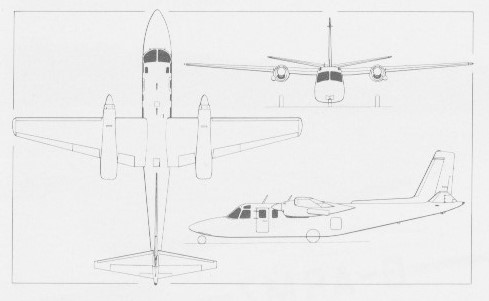
690 Turbo Commander Engines: 2 x 700hp TPE-331-5-251K