Aero Vodochody XE-II / HC-2 Heli-Baby / HC-102 Heli-Baby / HC-3

HC.2

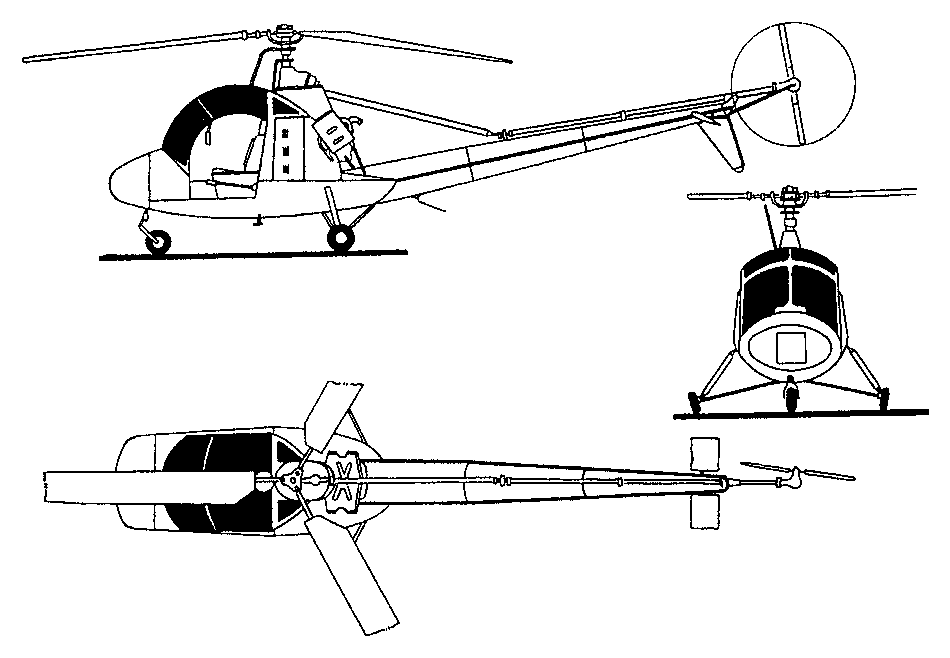
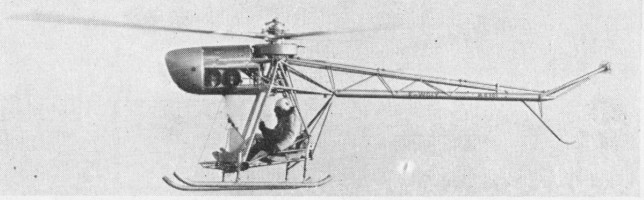
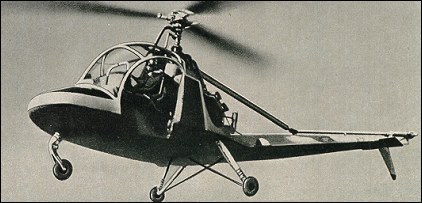
The XE-II was developed into the prototype HC-2, HC-3, and HC-102 Heli-Baby two-seat general-purpose helicopter. With an all-metal fuselage/boom, fixed tricycle undercarriage and 80hp Praga DH engine driving a three-blade rotor, the prototype HC-2 flew on 3 March 1954, and an order for 200 HC-2 helicopters was announced while still flying in prototype form. It is not clear how many examples were finally delivered, but the HC-2 of 1958 served with the Czech Air Force for some years.

The HC-2 prototype is a two-seat light general-purpose helicopter, with a three-blade main rotor and two-blade anti-torque tail rotor. The main rotor blades are of wooden construction with a steel insert in leading-edge for mass balance and plywood covering armoured with fiberglass of NACA 23015 aerofoil section. The blades are fully articulated in flapping and drag planes with a single adjustable friction damper for all three drag hinges. The blades are mounted on tubular steel spars incorporating tension-torsion bars with cyclic pitch change actuated by control stick. The collective pitch lever is synchronised with engine throttle. Override settings of throttle are by means of twist-grip on pitch control lever. The individually-flapping tail rotor blades of laminated wood with fiberglass covering have the pitch controlled by rudder pedals. Additional horizontal tail surfaces are used during transition from vertical to horizontal flight. The fuselage is an all-metal semi-monocoque structure, with a non-stressed cabin enclosure. The landing gear is a fixed tricycle type, with castoring nose-wheel capable of swivelling through 360°, and oleo-pneumatic shock-absorbers on all three 260x85mm wheels. A tail-skid is fitted to avoid damage to rotor.
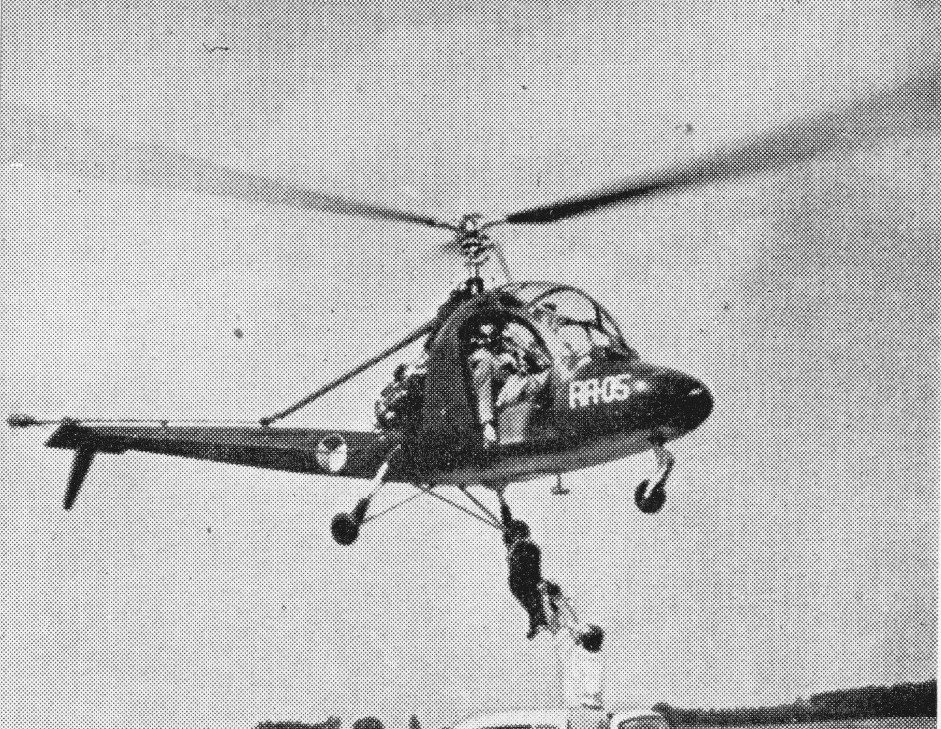
HC-2

Powered by an 83hp Praga DH four-cylinder horizontally-opposed fan-cooled engine mounted aft of the rotor pylon, with the crankshaft centre-line inclined at 45°. Drive from engine is taken through a centrifugal clutch to the main gearbox with a free-wheel in the main gearbox for autorotation. The tail rotor is driven off the main gearbox through a universal joint and shafting. The engine / main rotor r.p.m. ratio is approximately 10 : 1, and engine / tail rotor r.p.m. ratio approximately 3 : 2. Normal fuel capacity is 40 litres.

Seating is side-by-side for two in a cabin with Plexiglas canopy. Controlled by dual overhead cyclic control sticks and collective pitch levers on the left side of each seat. Starboard controls quickly removable. No doors.

HC.3

The HC.3 was an enlarged four-seater based on the HC-2 but with a four-leg undercarriage, englarged cabin section and an M-108H engine mounted above and behind the cabin. Three prototypes were tested (OK-15 to OK-17) but the type did not reach production.
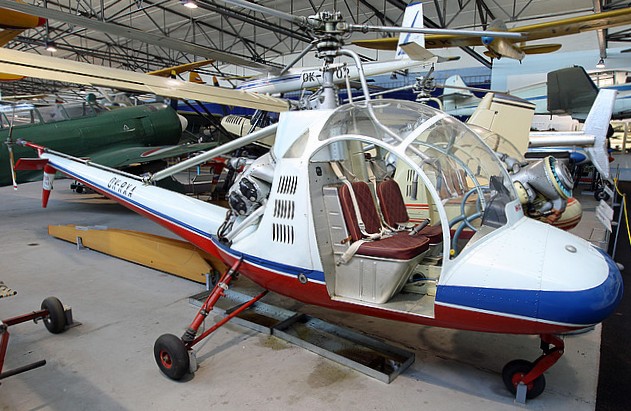
HC.102

HC-2
Engine: 1 x Praga DH, 80 hp / 60kW
Main rotor diameter: 8.8m
Length: 10.50m
Height: 2.3m
Take-off weight: 580kg
Empty weight: 370kg
Max speed: 126km/h
Cruising speed: 100km/h
Ceiling: 3030m
Range: 150km

HC-3
Engine: 1 x Praga DH, 83hp
Fuel capacity: 40 litres
Oil capacity: 8 litres.
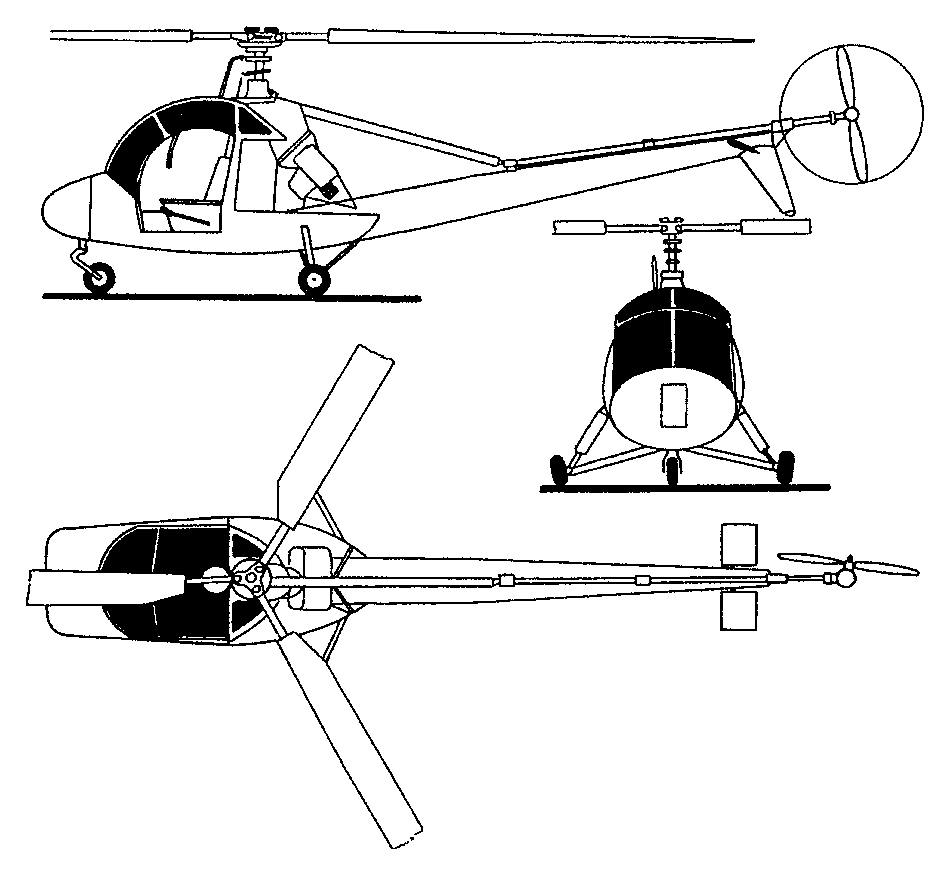
HC.2
HC.102

Aero Vodochody Narodni Podnik

Aero Vodochody Ltd
After World War 2 the Czech aviation industry was nationalised under central control although the Aero 140 was sold under the Aero name.

Aero Vodochody Narodni Podnik Article

Aero Vodochody Narodni Podnik was established on July 1, 1953, perpetuating the old Czech name Aero.
Achieved technical distinction and international success during 1963-1974, when the major product (for several countries) was the Delfin jet trainer (first flown April 1959; more than 3,000 built). This was succeeded in production in late 1972 by the L-39 Albatros jet trainer and light attack aircraft (first flown November 1968), following its selection as standard jet trainer of all Warsaw Pact countries except Poland; the L-39 as part of training system, comprising also special simulator, ejection training simulator and mobile automatic test equipment.
Aero Vodochody received the Red Banner award of the Ministry of Engineering and UVOS seven times.
Renamed Aero Vodochody Ltd.
In May 1997 the Board selected a consortium made up of Boeing (90%), the former McDonnell Douglas, and CSA Czech Airlines (10%) to take a major stake in the company as strategic investors. Product range then comprised the L-39 Albatros, L-59, L-139 Albatros 2000 (using US engine and avionics) and L159 ALCA jet trainers and light combat aircraft, and the Ae 270 Ibis transport as a partner with AIDC in Ibis Aerospace.
The L159 did not sell and in 2004 the Czech government bought the firm back for a nominal sum.

Aerotechnik Entwicklung Und Apparatebau WG.22

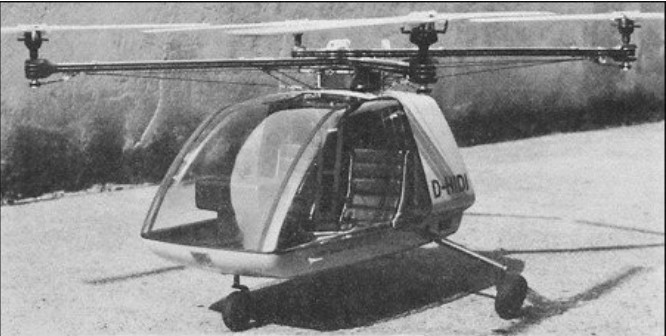
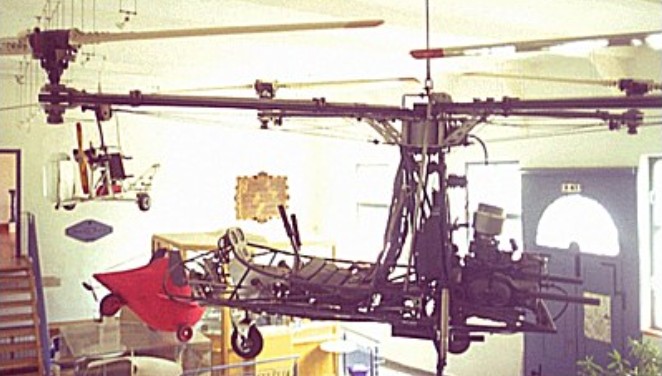
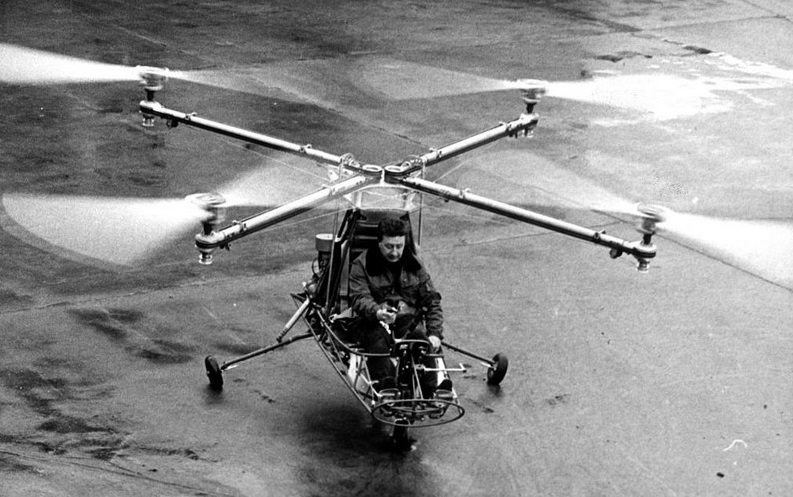
Following successful testing of the single-seat WGM 21 prototypes, Aerotochnik developed a side-by-side two-seat version, the 1975 WGM 22, with an extensively-glazed and fully-enclosed cabin.

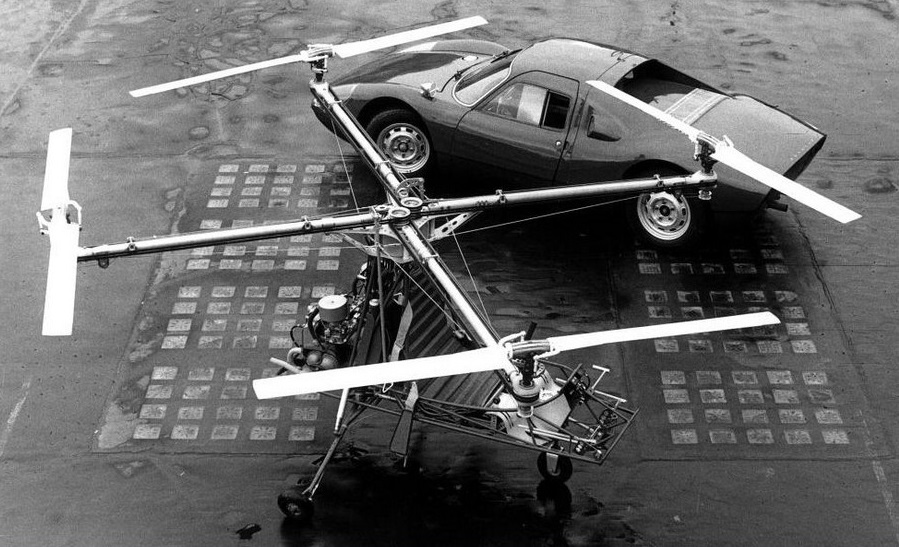
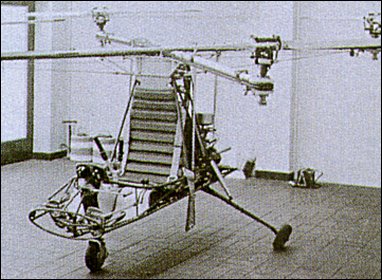
The configuration of the WGM 21 and WGM 22 differs essentially from other and more familiar forms of helicopter in having four two-blade rotors, each mounted at the extremity of one of a pair of diametrically-opposed rotor support arms on top of the main rotor column. This configuration allows the entire output of the engine to be transmitted directly to the main rotors, and eliminates the need for tail control surfaces or a tail rotor. The support arms can be folded enabling the helicopter to be stored in a small area.

It was estimated that the WGM 22, shown in mockup form in the accompanying photograph, should have a max speed of about 200km/h and a range of 800km.

Aerotecnica AC-14 / EC-XZ-4

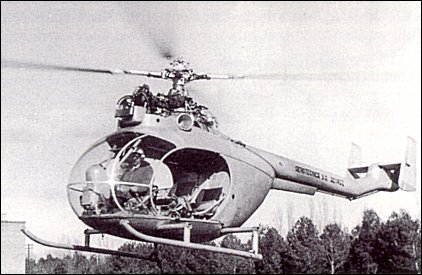
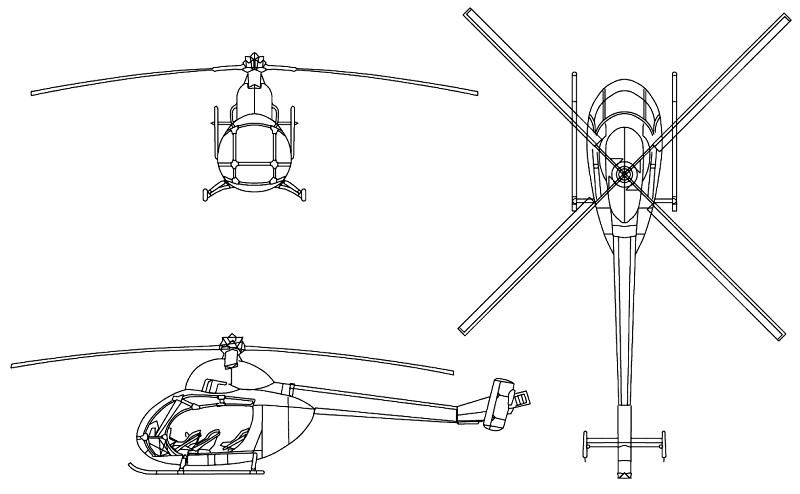
An improved version of the AC-13 was designed, known as the AC-14. A larger version of the AC-13, powered by a Turbomeca Artouste II shaft turbine and with accommodation for five.
The prototype AC.14 used part of the structure of one of the AC.13s but had a lengthened cabin section with a rear seating area and a larger 400shp Turbomeca Artouste IIB turboshaft engine. The engine is mounted above the cabin, which is extensively sound-proofed. Residual thrust is used to increase forward speed, and anti-torque control by gas deflection in helicopter flight and by vertical rudders in gyrodyne flight (high speed cruising).
The single, four-blade rotor has double-articulated blades with an area each 0.84sq.m, and total disc area of 72.35sq.m.
The landing gear of of skid type with a 2.0m track.
The enclosed cabin seats a pilot at the front and four passengers in two side-by-side pairs behind. Entrance doors are on each side of cabin.
An initial series of six was completed in Madrid by ENHASA and the first flew on July 16, 1957.
Having provided funds for the Aerotecnica helicopter project, the Spanish Government ordered ten examples. These were delivered to the Spanish Air Force, with the designation EC-XZ-4, where they served for a relatively short period before being retired.

Aerotecnica AC-14
Engine: 1 x Turbomeca Artouste IIB shaft-turbine, 400hp.
Oil capacity: 9.4 lt
Main rotor diameter: 9.60m
Overall length: 11.22m
Fuselage length: 8.25m
Height: 3.10m
Weight empty: 700kg
Weight loaded: 1300kg
Max speed: 180km/h
Cruising speed: 150km/h
Best rate of climb SL: 300m/min
HIGE: 2700m
Service ceiling: 6350m
Range: 260km
Fuel capacity: 74 lt ag version
Fuel capacity: 244 lt passenger version.

Aerotecnica AC-13A / Nord 1750 Norelfe

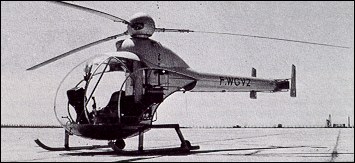
Jean Cantinieau had been working on a three-seat turbine-powered helicopter, the designs for which he had sold to Societe Nationale de Constructions Aeronautiques du Nord (S.N.C.A.N.). Very similiar to the AC.12, SNCAN built two prototypes as the Nord N.1750 Norelfe with a large bubble canopy and a Turbomeca Artouste I turbine mounted above and behind the cockpit.

The three-blade rotor was positioned directly above the engine and had a rotorhead enclosed in a large spherical fairing. The tail rotor was replaced by a ducted exhaust gas controlled by the pilot through pedals.

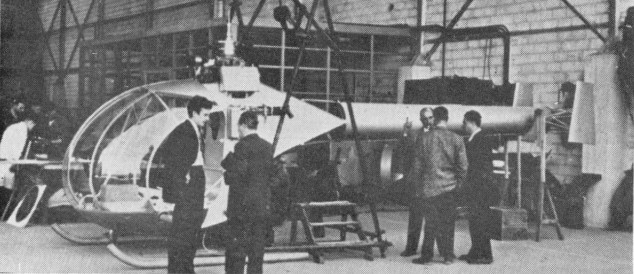
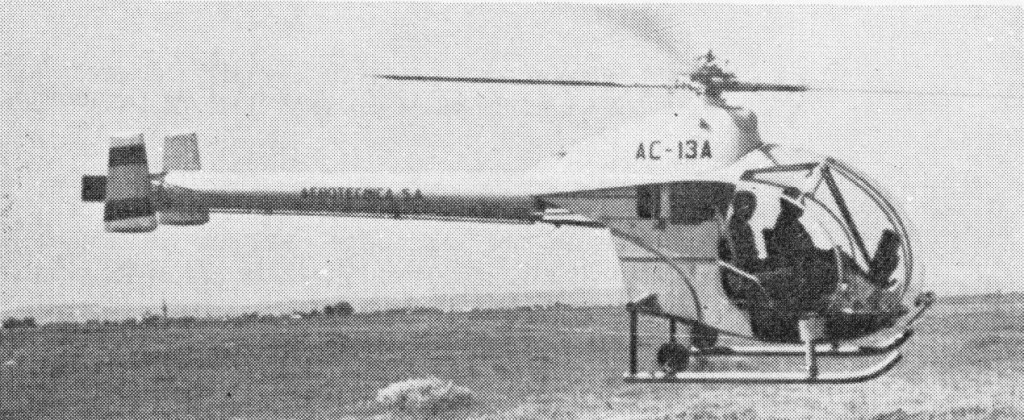
The first Noreife prototype, F-WGVZ, was flown on 28 December 1954 but SNCAN sold both the aircraft and the rights to Aerotecnica who designated them AC.13A. After further testing in Spain, Aerotecnica moved to a larger five-seat version known as the AC.14.

The two prototypes were acquired by the Spanish Government.

Aerotecnica AC-12 / XZ-1

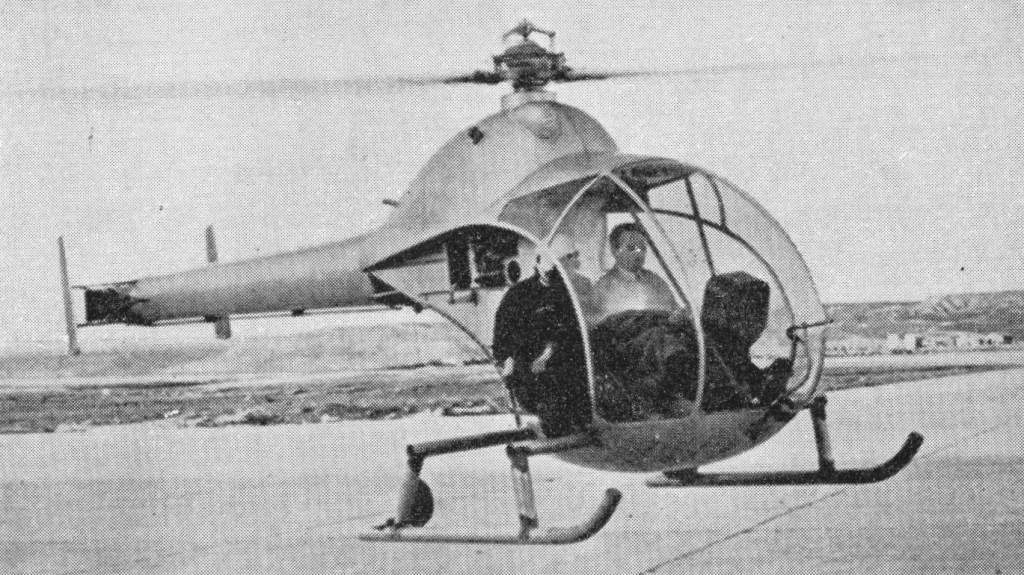
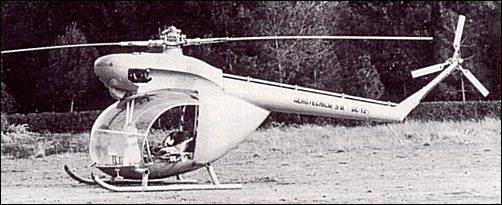
From the Matra-Cantinieau MC-101 / AC-11 Aerotecnica developed the AC-12 and AC-13, the former powered by a 150hp Lycoming O-320 engine and the latter by a Turbomeca Artouste I gas turbine.

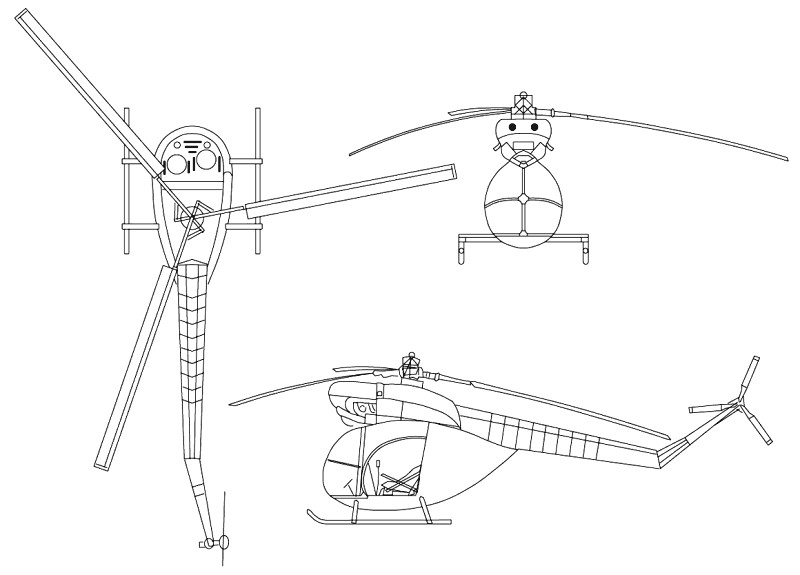
A twin seat single-rotor helicopter, the AC-12 has a full all-metal monocoque fuselage with a large overhead ‘spine’ encompassing the boom and engine mounted above the cabin. Three-blade rotor with double-articulated blades. Each blade has a solid machined duralumin spar which forms the leading-edge, duralumin ribs and trailing-edge. Space between ribs is filled with a plastic foamed resin compound named Klogecell, with a final overall covering of Fiberglas. Floating hub, with cyclic and collective-pitch changes made through a “spider.” Rotor blade area each 0.71sq.m. Rotor disc area 57sq.m. Three-blade anti-torque rotor of similar construction to main rotor. Anti-torque rotor blade area 0.0927sq.m. Anti-torque rotor disc area 2.26sq.m.

The main rotor is driven direct from the engine gear-box (7.28 : 1 ratio) and clutch through a universal joint. The anti-torque rotor is driven through a gear-box (1.4 : 1 ratio) and cardan shaft.

Enclosed cabin seating two side-by-side with dual controls. Entrance door on each side of cabin. Landing gear is skid type. Track of skids 2.0m

Two prototypes were built with Spanish Government funding in Madrid by AISA, with a transmission and reduction gear designed on motor-car principles and built by the ENHASA airscrew company. One 168hp Lycoming O-360-B2A fan-cooled engine mounted above the cabin with direct drive through the gear-box to the main rotor. Fuel tank under seats with capacity of 60 litres. Oil capacity 9 litres. The first of these flew on July 20, 1956.

A production order for 12 was received from the Spanish Government with a military designation of XZ-1 where they served for a relatively short period before being retired.

Aerotecnica AC-12
Engine: Lycoming O-360-B2A, 170hp
Main rotor diameter: 8.50m
Overall length: 8.30m
Fuselage length: 7.35m
Height: 2.75m
Fuselage width: 1.22m
Weight empty: 490kg
Weight loaded: 770kg
Max speed: 140km/h
Cruising speed: 110km/h
Rate of climb SL: 258m/min
Hovering ceiling IGE: 1650m
Hovering OGE: 800m
Service ceiling: 3100m
Cruising range: 170km

Aerotecnica AC-11 / Matra-Cantinieau MC-101

Cantinieau moved on to a two-seater, the MC.101, which retained the general layout of the C.100 but with a much cleaned-up structure and a 105hp Hirth engine. Two examples of the MC.101 were built by Matra (F-WGIX and F-WGIY), the first of which was flown by Gerard Henry at Buc on 11 November 1952. It was shortly after this that Cantinieau gained the interest of the Marquis del Merito, a Spanish industrialist, who had established Aerotecnica SA as an aerial photography and crop spraying business based at Cuatro Vientos near Madrid.
Aerotecnica S.A. began building helicopters by hiring French engineer Jean Cantinieau and acquiring the Matra-Cantinieau MC-101 light helicopter built by the French Societe Matra in 1952. This helicopter was given the designation AC-11 (Aerotecnica-Cantinieau-11). It became evident that the aircraft was underpowered in Madrid’s hot and high conditions and a 150hp Lycoming was installed – in which form it became the Model AC.12.
From the AC-11 have been developed the AC-12 and AC-13.

Engine: 105 h.p. Hirth
Rotor diameter: 26 ft. 4 in
Rotors: 3-blade main; 3-blade tail
Fuselage length: 22 ft
Loaded weight: 1760 lb.
Ceiling; 9,840 ft.
Typical range: 250 miles at 96 m.p.h. with ful1 load.
Seats: 2

Aerotecnica Sa

Marquis del Merito, a Spanish industrialist, established Aerotecnica SA as an aerial photography and crop spraying business based at Cuatro Vientos near Madrid.
Aerotechnica sa began to develop and build helicopters of French (Jean Cantinieau) design, and also was licensed for Matra-Cantinieau production. Two prototypes of AC-12 built in Madrid by mid-1950s (first one flown July 1956) and a few delivered to Spanish Air Force. Type was unorthodox in layout and featured transmission and reduction gear on automobile principles. AC-14 development flew July 1957, but Aerotecnica organization dissolved in 1962.
Aerotecnica also started construction of a prototype of the much larger AC.21 which was a 12/14 passenger machine with twin Turbomeca Turmo III turbines and a massive ducted-air tailboom. A turbine version of the AC.12 was planned and they also started working on the AC.15 development of the AC.14 with a 260hp Lycoming O-435-V engine. In 1962 the Spanish Government withdrew further financial support and Aerotecnica went into liquidation.
Following the collapse of Aerotecnica, Jean Cantinieau returned to France where he joined Matra.