Anatoly Cohn, APCO’s owner and founder, started in hang gliding, designing and building gliders from 1976 with Agur Gliders until 1982 when he founded APCO.
Sea Palace Beach
P.O.B 1035 Bat-Yam 59110
Israel
Anatoly Cohn, APCO’s owner and founder, started in hang gliding, designing and building gliders from 1976 with Agur Gliders until 1982 when he founded APCO.
Sea Palace Beach
P.O.B 1035 Bat-Yam 59110
Israel
In 1961 Máximo Tedesco founded the aircraft company AGROCOPTEROS LTDA. and began the design and production of autogyros for air spraying.
1997: Apartado Aeros 1789, Cali, Columbia.
A licenced distributor for a number of light fixed- and rotary-wing kit aircraft since the 1970s, Agrocopteros assembled and modified many for agricultural roles.
Tedesco developed ten aircraft: Autogiro, Scamp B development of the Aerosport Scamp Biplane, Canard Gold-wing, Zenith 4 seats, Zenith Aerobatic, MXP-740 Savannah version of the Zenair CH-701 and MXP-640 Amigo version of the Zenair CH-601 in assembled and kit forms, MXP-650 Amigo S, MXP-750 Air-spraying and MXP-100 Aventura.
In 1998 Agrocopetros Ltda was dissolved.
In 1998 Máximo Tedesco with his son Filippo, formed Tecnologías Aeronauticas S.A. were he acted as Technical Director and Chief of Projects.
In 2001 Máximo Tedesco began the MXP-800 FANTASY for the European market, an all metal two place high wing airplane that incorporates the technical characteristics of weight and performance contained in the new Common European Air Regulations for Light Aircraft.
The Aeroandinas S.A. company has retaken all of the strengths of the previous two companies. Here, Tedesco designed and developed the all new high performance airplane MXP-1000 TAYRONA, for the North American and European markets and complying with the new international LSA Rule.
Societa Aeroplani Livio Agostini was founded by Livio Agostini and Adriano Mantelli in 1945 by designer Capt Adriano Mantelli and Livio Agostini to produce an ultralight aircraft developed by Mantelli during the war. Products were marketed as Alaparma.
Founded 1945 to develop A.M.6 twin-boom aircraft with engine of pusher configuration, first built 1942. To this formula made ultralight A.M.8, also A.M.10 two-seater. A.M.75 Baldo was one of same series, all designed by Adriano Mantelli.
October 1974 saw the flight of Glider I, designed and built by AFRDC in Manila, Philippines.
May 1975 saw the flight of Glider II.
February 1976 saw the flight of Glider III.
South Africa
Formed 1967 to build developed version of Italian Partenavia P.64B, designated RSA 200. Production was suspended pending new arrangements for manufacturing facilities.
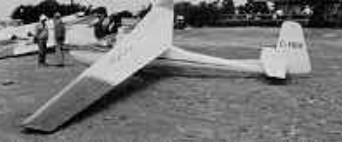
Designed by Alberto and Piero Morelli the M-100 was developed in the late 1950’s. The all-wood and fabric airframe has a semi-monocoque fuselage and wings with beech main spars and partial plywood skinning. It is stressed for normal aerobatics but not inverted maneuvers. Glidepath control is by a system of rotating disc segments opening on both upper and lower wing surfaces. The wing span was later increased to 15.0 m.
In its M-100 form it first flew in 1957, winning an Italian Aero Club competition for the best design of a single-seat sailplane.
The M-100 version served Italian clubs for a time as their standard trainer. It was followed by the M-100S
which featured a 15m (49ft 2.5in) span wing to meet Standard class requirements, and which first flew in prototype form in January 1960.
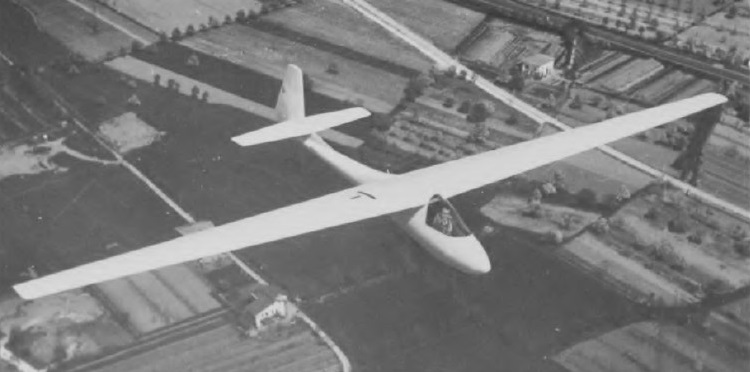
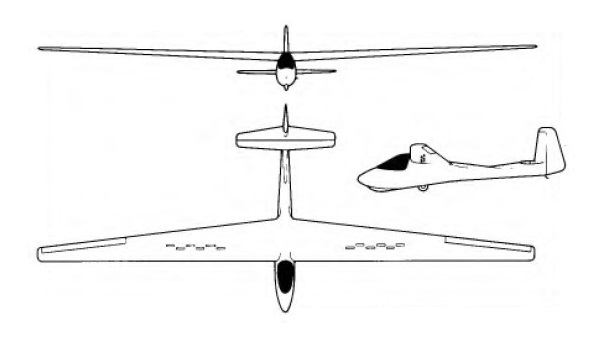
The M-100S is fully aerobatic (except for inverted flight) and is of conventional all-wood construction; the wing span is of beech and the wing is covered with plywood and fabric, with a leading edge torsion box. The slotted ailerons are fabric-covered and the air brakes consist of three pairs of light alloy rotating plates above and below each wing. Rudder and elevators are fabric covered, while the landing gear consists of a rubber-sprung nose-skid and a non-retractable mono-wheel with a disc brake; there is also a tailskid. Oxygen and radio equipment are stowed behind the pilot’s seat.
Production took place in Italy by Centro di Volo de Torino (Turin Gliding Center) (CVT) and, under license. Production of the M-100S was undertaken in Italy by Aeromere, which built 41, by Avionautica Rio S. p. A., which started production in June 1963, and by the French licensees CARMAM (Cooperative d’Approvisionnement et de Reparation de Material Aeronautique de Moulins), who built the type as the M-100S Mesange (Tomtit), beginning deliveries in June 1963.
Several improved features were introduced by CARMAM from aircraft No 23 onward, including light alloy air brakes instead of plastic ones, a new metal-framed one piece canopy of Italian manufacture hinged sideways and a wooden seat for the pilot.
Air transport certified, altogether about 180 of the M-100S were produced both in Italy and by CARMAM at Moulins-Avernes.
M-100
Wing span: 14m / 45ft 11in
M-100S
Wing span: 15m / 49 ft 2.5 in
Wing Load: 24.05 kg/sq.m / 4.9lb/sq.ft
Wing area: 13.1sq.m / 141sq.ft
Airfoil: NACA 63-618/615 mod.
Length: 6.56 m / 21 ft 6in
Height: 5ft 5in
Empty Weight: 200kg / 441lb
L/DMax: 32 @ 77 kph. /42 kt / 50 mph
Gross Weight: 315kg / 694lb
Water ballast: None
MinSink: 0.65 m/s / 2.15 fps / 1.27 kt at 41.6 mph / 36 kt / 67 km/h
Max speed: 137 mph / 124 kt / 230 km/h (in smooth air)
Max rough air speed: 75.5 kt / 140 km/h
Stalling speed: 27.5 kt / 51 km/h
Seats: 1
Aspect ratio: 17.1
Structure: wood/fabric wings and tail, wood fuselage.
Number built: 180
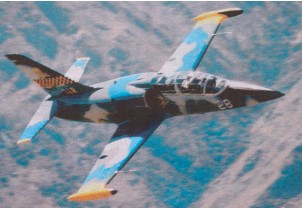
The Albatros, first flown on November 4, 1968, is the L 29’s successor as the standard trainer of all Warsaw Pact countries except Poland, and was in production in a light attack version, mainly for export. Designed three years after the L-29, the L-39 went through a series of prototype and development models before seeing production begin in 1972. The L-39 was designed with simplified and a more modular approach to engineering allowing the L-39 to be produced more efficiently and quicker than the L-28. The base powerplant allowed for a thrust upgrade when compared to the L-29 and avionics coupled with reinforced subsystems put the L-39 ahead.
Aero Vodochody L-39 Albatros Article
A tandem seater, with the instructor in the raised rear ejection seat, it is powered by the 1720 kg (3792 ¬lb) thrust Walter Titan, the Czech built Ivchenko Al 25TL turbofan also used in the Yak 40 STOL trijet. The name Albatros is used only for L 39 aircraft in service with the Czech air force, to which deliveries began in April 1974.
The basic aircraft is equipped with a camera gun and electrically controlled gunsight, but has no internal gun. Gun pods, bombs, rockets and missiles can be carried on two or four wing pylons along with a centerline-mounted 23mm GSh-23L twin-barrel cannon for close quarters work.
With production of 2,600 by 1990 it proved to be a very successful aircraft, with more than 2,900 built by 2005 with about 300 in civilian ownership around the world.
The aircraft is fully aerobatic stressed for +8G and 4G and can climb at the rate of about 3500 feet per minute.
Export numbers for the L-39 Albatross were roughly the same as the L-29. Thailand went on to purchase an export model designated with L-39 ZA/ART that featured Israeli-produced Elbit avionics. The most numerous in terms of production was the L-39 “C” model, which helped drive total production total past 3,000.
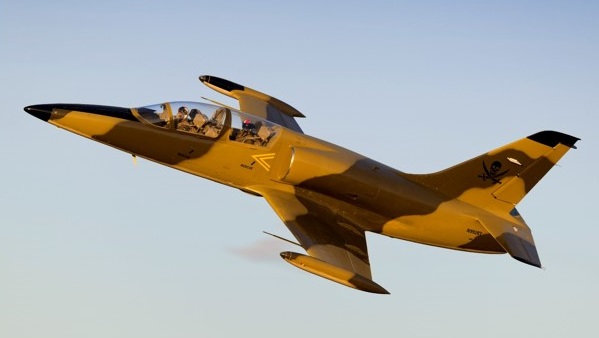
Earlier variants of the aircraft are the L.39ZO weapons trainer, the L.39ZA ground attack and reconnaissance aircraft, which has an under-fuselage gun pod and four wing hardpoints, and the L.39V target tug.
The L.39MS version of the Albatros was rolled out in mid-1986, but later designated the L-59.
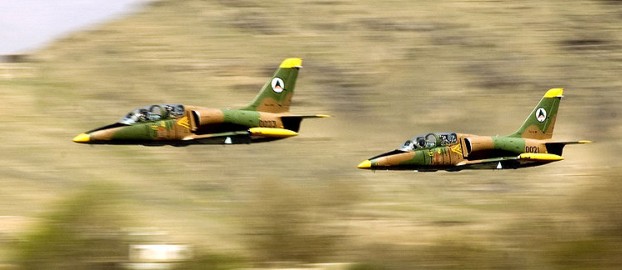
Aero L 39 Albatros
Engine: Ivtshenko AI 25 TL turbofan, 3,792 lb / 16873 N
Wingspan: 31.037 ft / 9.46 m
Length: 40.42 ft / 12.32 m
Height: 15.486 ft 4.72 m
Wing area: 202.363 sqft / 18.8 sqm
Aspect ratio: 4.4
Area of elevons: 18.299 sqft / 1.7 sqm
Area of flaps: 28.848 sqft / 2.68 sq.m
Empty weight: 7,340 lb
MTOW: 11,618 lb
Max. speed: 405 kts / 750 km/h
Landing speed: 92 kts / 170 km/h
TO distance: 1476 ft / 450 m
Landing dist: 2034 ft / 620 m
Initial climb rate: 4330.71 ft/min / 22.00 m/s
Service ceiling: 37730 ft / 11500 m
Wing load: 49.41 lb/sq.ft / 241.00 kg/sq.m
Range: 589 nm / 1090 km
Crew: 2
Armament: 1100kg ext. 4 pods., 23mm MK
L.39A
Engine: 1 x Walter Titan, 1720 kg / 3792 lb thrust.
Span: 9.4 m / 31 ft 0.5 in
Length: 12.25 m / 40 ft 5 in
Gross weight: 4535 kg / 9998 lb
Max speed: 750 km/h / 466 mph
L-39C
Engine: 3,800 lbs thrust turbofan.
Max wt: 4500 kg.
Speed: M 0.8 / 500mph / 600kph / 490 KIAS
Ceiling: 36,000 ft.
G-Limits: +8 / -4
Payload: 550 lb per pylon (2)
Endurance: 1.5+
L.39Z
Engine: 1 x Ivchenko AI-25TL, 16.9 kN.
Span: 9.5 m.
Length: 12.1 m.
Wing area: 18.8 sq.m
Empty wt: 3650 kg.
MTOW: 5600 kg.
Warload: 1100 kg.
Max speed: 755 kph.
Initial ROC: 1260 m / min.
Ceiling: 11,000 m.
T/O run: 480 m.
Ldg run: 600 m.
Fuel internal: 1255 lt.
Range: 1750 km.
Combat radius: 600 km.
Armament: 1 x 23 mm.
Hardpoints: 4.
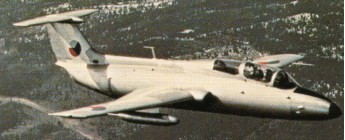
The Czech designed and produced Aero L-29 Delfin (translating to “Dolphin”; NATO designation of “Maya”) series was a highly utilized Cold War jet trainer aircraft for the Soviet Union and its satellite states. The twin-seat aircraft was capable of speeds over 400 miles per hour and a ceiling of over 36,000 feet.
Aero Vodochody L-29 Delfin Article
Early design studies for a two-seat jet trainer were conducted by K Tomas and Z Rubic in 1955. The L-29 features a T tail and can operate from grass, waterlogged, and dirt strips.
The single engine L-29 was built from two XL-29-designated prototypes – one fitted with a British Bristol Siddeley Viper turbojet engine and another fitted with an indigenous 1,960 lb thrust M 701c 500 turbojet, first flown on 5 April 1959. The XL-29 powered by an M 701 turbojet flew for the first time on April 5, 1960.
Further development saw a three-way competitive fly-off occur against the Yak-30 design and the PZL Mielec TS-11 Iskra with the L-29 coming out ahead (Poland would go on to utilize the TS-11 trainer however). Placed in production in 1963, it subsequently became a standard trainer with many Warsaw Pact and other countries.

The last of over 3,600 rolled off the production line in 1974. Almost all production was of the basic aircraft variant (codename Maya), although two other variants did appear.
The Soviet Union alone took over 2,000 Delfins, while significant numbers also served in Czechoslovakia, East Germany, and Hungary. In these countries the Delfin was used in all-through training from ab iniito to advanced stages.
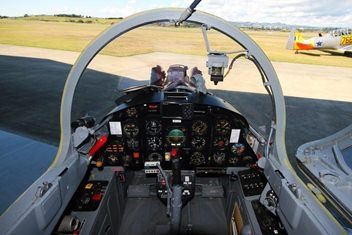
Small numbers of a single seat L-29A Delfin Akrobats were built for aerobatics while a prototype L-29R dedicated attack aircraft was also built.
With two available underwing hardpoints, a light attack strike aircraft was designed that could carry gun pods, drop bombs and rockets. Specialized aerobatic performers were also devised from the existing base L-29 airframe. 3665 were built until production ceased in 1974, superceded by the L-39. NATO name Maya.
Aero L-29 Delfin (Dolphin) / Maya
Engine: 1 x Motorlet M 701c 500 turbojet, 1,960lbs / 870 kgp thrust.
Length: 35ft 5.5 in (10.81m)
Wingspan: 33ft 9.5in (10.29m)
Height: 10.17ft (3.10m)
Wing area: 213.125 sq.ft (19.8 sq.m)
Empty wt: 5071 lb (2 360 kg)
Loaded weight: 6,834 lb (3100 kg)
Maximum Take-Off Weight: 7,804lbs (3,540kg)
Wing loading: 36.7 lb/sq.ft / 179.0 kg/sq.m
Maximum Speed: 407mph (655kmh; 354kts) at 16,400ft (5 000 m)
Cruise speed: 339 mph (545 kph)
Maximum Range: 398miles (640km)
Rate-of-Climb: 2,755ft/min (840m/min)
Service Ceiling: 36,089ft (11,000m)
Accommodation: 2
Hardpoints: 2
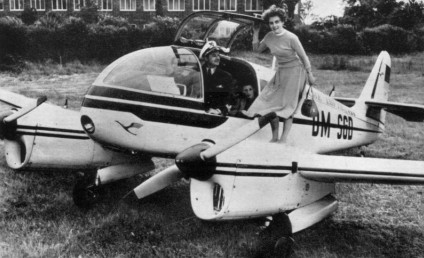
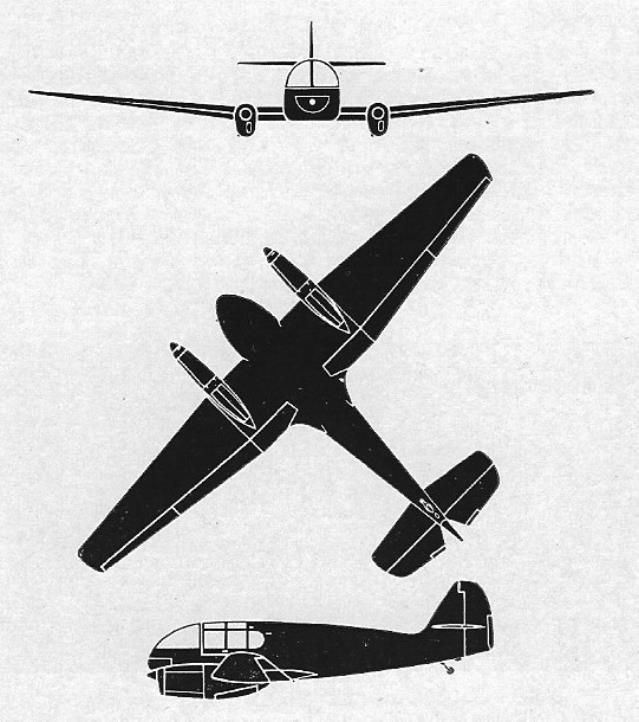
Development began 1946 and was accomplished by the technical designers Jiři Bouzek, Ondřej Němec and František Vik. The design bears a superficial resemblance, viewed nose-on, to the German Siebel Si 204 which, among other German aircraft like the Messerschmitt Bf 109, were produced in Czechoslovakia while under German occupation. The prototype (registered OK-BCA) flew for the first time on 21 July 1947 and the second, registered OK-CDA, one year later. Flight testing ran without incidents and the type was released for series production in 1948. The model number of “45” was not a continuation of Aero’s pre-war numeration scheme, but a reference to the 4/5 seats in the aircraft.
The Aero 45 had a sleek, teardrop-shaped fuselage, with a rounded, extensively-glazed nose affording excellent visibility. It had a low wing on which the engine nacelles were mounted, and a conventional tail. The main undercarriage was retractable but the tailwheel was fixed.
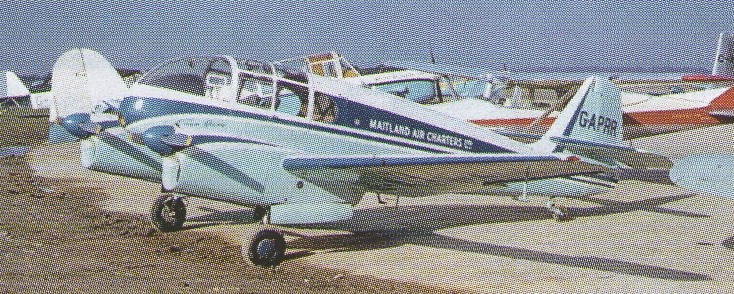
Ae-45 prototypes were widely advertised abroad. In August 1949 Jan Anderle won the Norton Griffiths Race in Great Britain (Ae-45 registration OK-DCL). They also set several international records. As a result, apart from Eastern Bloc countries, the plane was also bought by Italy and Switzerland.
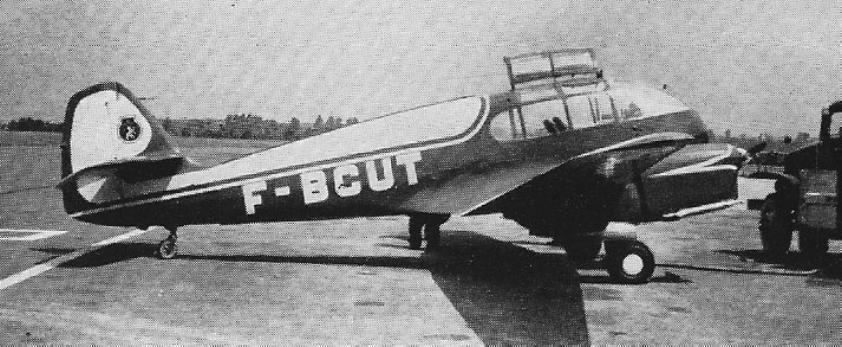
On 10–11 August 1958 Dr. Pier Paolo Brielli flew an Italian Ae-45 3000 kilometers from South America to Dakar across the southern Atlantic (as the first Czechoslovak-built aircraft). In 1981 Jon Svensen flew Ae-45S (390 sold) from Europe to the USA.
This type was used in Czechoslovakia and was exported to the People’s Republic of China, East Germany, France, Hungary, Italy, Poland, Romania, Soviet Union and Switzerland. Hungary was a major customer, where the aircraft was known as the Kócsag (Hungarian: “Egret”).
Aero Vodochody produced the aircraft in 1947–1951, after which the Let Kunovice rolled out these planes until 1961. In 1958 the Ae-45S became the first Czechoslovak plane to cross the Atlantic Ocean. It was the first product of the nation’s postwar aviation industry and proved a great success, with many of the 590 produced being exported.
Among operators were Interflug (4), Hungarian Police and Hungarian Air Ambulance Service, LOT Polish Airlines operated three Ae-45 in 1952–1957, Polish Air Ambulance Service operated Ae-45 and Ae-145, Aeroflot, Aeroclub Ajdovščina, Vietnam Civil Aviation Department – later as Vietnam Civil Aviation (now Vietnam Airlines), East German Air Force, Hungarian Air Force, Romanian Air Force, and Czechoslovakian National Security Guard. The Czechoslovak Air Force operated aircraft under designation K-75, for liaison purpose, and the Indian Air Force operated a single aircraft gifted by the Czech government
In the People’s Republic of China the People’s Liberation Army Air Force operated license-built Suingari-1 variant. The Vietnam People’s Air Force operated three Ae-45 from 1956 (acquired from China).
Variants:
Aero 45
irst production version built in Aero factory.
200 built between 1948 and 1951.
Aero 45S “Super Aero”
Improved variant produced by Let in Kunovice factory, among others with better navigational equipment.
228 aircraft built between 1954 and 1959.
Aero 145
Version with engines changed to supercharged Motorlet (Walter) M332
Produced later as Avia M332s.
This version was developed and built by Let
162 aircraft built between 1959 and 1961.
Engines: 2 × Avia M 332-III, 100 kW (140 hp) each
Propellers: 2-bladed Type V410, electrically-operated metal 4-position variable-pitch
Propeller diameter: 1.9 m (6 ft 3 in)
Wingspan: 12.25 m (40 ft 2 in)
Wing area: 17.1 sq.m (184 sq ft)
Airfoil: Aero No.58-64
Length: 7.77 m (25 ft 6 in)
Height: 2.3 m (7 ft 7 in)
Empty weight: 960 kg (2,116 lb)
Gross weight: 1,500 kg (3,307 lb)
Max takeoff weight: 1,600 kg (3,527 lb) (full fuel)
Fuel capacity: 324 l (86 US gal; 71 imp gal)
Maximum speed: 282 km/h (175 mph, 152 kn) at 1,600 kg (3,500 lb) AUW
Cruise speed: 250 km/h (160 mph, 130 kn) at 1,600 kg (3,500 lb) AUW
Range: 1,700 km (1,100 mi, 920 nmi)
Service ceiling: 5,900 m (19,400 ft)
Service ceiling one engine out: 2,200 kg (4,900 lb)
Rate of climb: 5 m/s (980 ft/min)
Wing loading: 87.8 kg/sq.m (18.0 lb/sq ft)
Power/mass: 9.5 kg/kW (15.7 lb/hp)
Take-off run to 15 m (49 ft): 460 m (1,510 ft)
Crew: 1
Capacity: 3-4 pax
Sungari-1
Chinese unlicensed copy of the Aero Ae 45S, produced from 1958.
Glider, Czech Republic
Length: 24.934 ft / 7.6 m
Wingspan: 59.055 ft / 18.0 m
Wing area: 73.839 sqft / 16.15 sq.m
MTOW: 837.9 lb / 380.0 kg
Weight empty: 639.5 lb / 290.0 kg
Max. speed: 119 kts / 220 km/h
Landing speed: 35 kts / 64 km/h
Wing load: 4.92 lb/sq.ft / 24.0 kg/sq.m
Glide ratio: 34.0
Crew: 1

