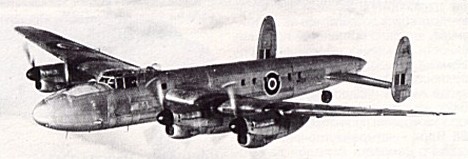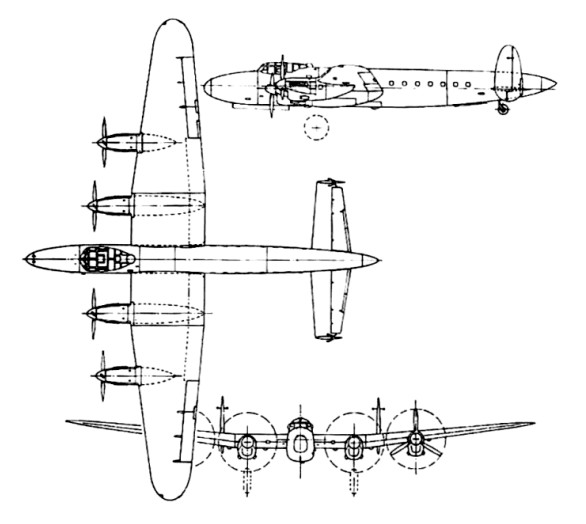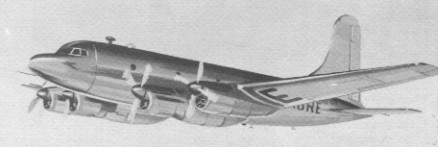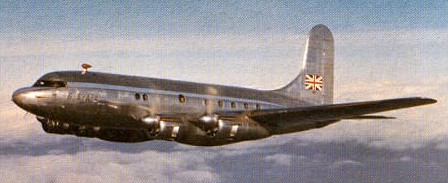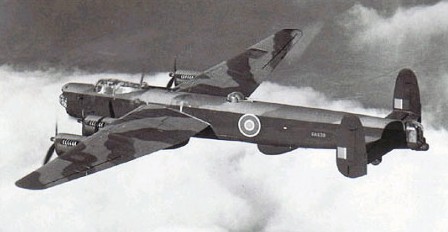
Avro 694 Lincoln

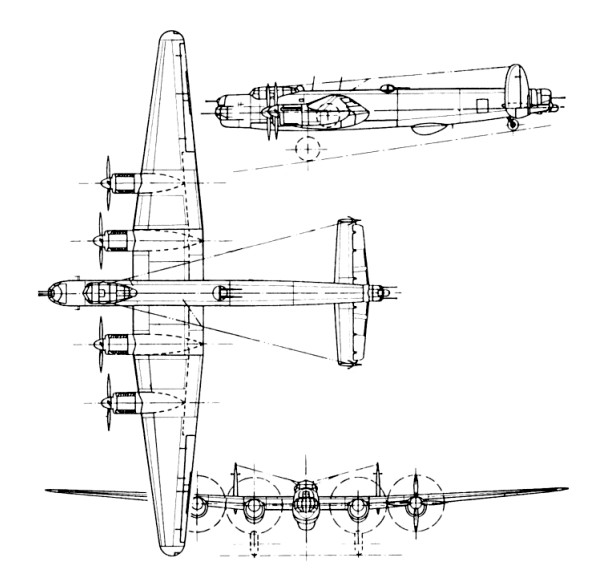
Originally known as the Lancaster Mk.IV, the Avro 694 Lincoln had a slightly longer fuselage, extended-span wings, a revised nose, better defensive firepower and the two-stage Merlins previously used in the high¬speed Lancaster Mk VI.

Avro 694 Lincoln Article

The Lincoln conformed to Specification B.14/43 and the first prototype flew on 9 June 1944.
Normally powered by four Rolls-Royce Merlin 85 engines with annular radiators, the Lincoln was armed with twin 12.7mm Browning machine-guns in a Boulton-Paul Type F nose turret; two 20mm Hispano Mk 4 or Mk 5 cannon in a Bristol B-17 Mk II dorsal turret; twin 12.7mm machine-guns in a Boulton Paul Type D rear turret and up to 6,350kg of bombs.

The war ended just as No. 57 Sqn, the first recipient, was equipping, and the Lincoln became the RAF’s standard post-war heavy bomber.

Avro built 168 production aircraft, plus 79 from Metropolitan-Vickers and 281 from Armstrong Whitworth. Six were also built in Canada and 54 with nose extensions in Australia by the Government Aircraft Factory at Fishermen’s Bend, NSW.
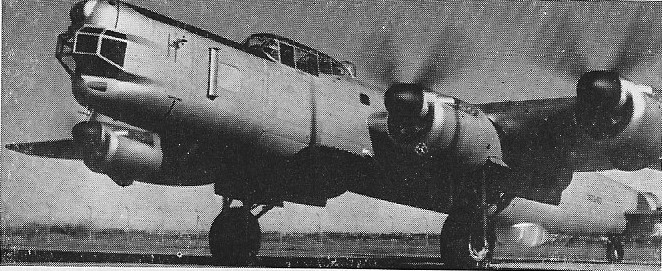
Lincoln B.30

The Lincoln B.30 is an Australian-built version for the RAAF. The first five B .30s were assembled largely from imported British components, the first flying on 17 March 1946, but a further eighty-eight were completely built in Australia, a number being fitted with a lengthened nose to accommodate two additional crew members and search radar. This increases fuselage length by 6 ft. The B.30 has four Commonwealth-built Merlin 102 engines.
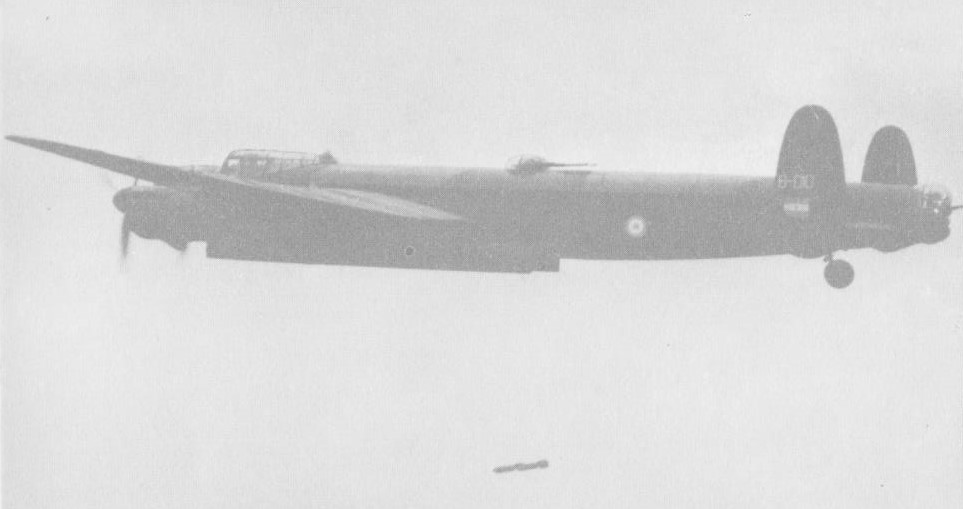
Argentine Air Force Lincoln B.1

Thirty Lincolns were also diverted to the Argentine Air Force. Several versions of the bomber were produced during the production runs: Lincoln B.I with Merlin 85 engines; B.2 with Merlin 68A engines; Lincoln Mk 3 intended to be the ASR version but became the Shackleton; Lincoln B.4 with Merlin 85; Lincoln B.15 built in Canada; and Lincoln B.30 Australian version with Merlin 85 or 102 engines.
The bomber eventually equipped 20 RAF squadrons. No 97 Squadron and others were detached to Singapore in 1950 for anti-terrorist raids and to Kenya in 1954. One was converted for the bulk uplift of fuel oil and made 45 civil flights during the Berlin Airlift.

On 12 March 1953 at 14.30 hrs Soviet MiGs shot down an Avro Lincoln bomber training aircraft belonging to the RAF. According to the RAF the aircraft was within the bounds of the Hamburg-Berlin Air Corridor, just across the Soviet border, at a hight of 10,000 ft. The Soviet version of the incident stated that the Lincoln was beyond the boundaries and had penetrated 75 miles / 120 km into East Germany. Instructions to land given by the MiG fighters were replied to with machine-gun fire after which the Soviet fighters had opened fire.
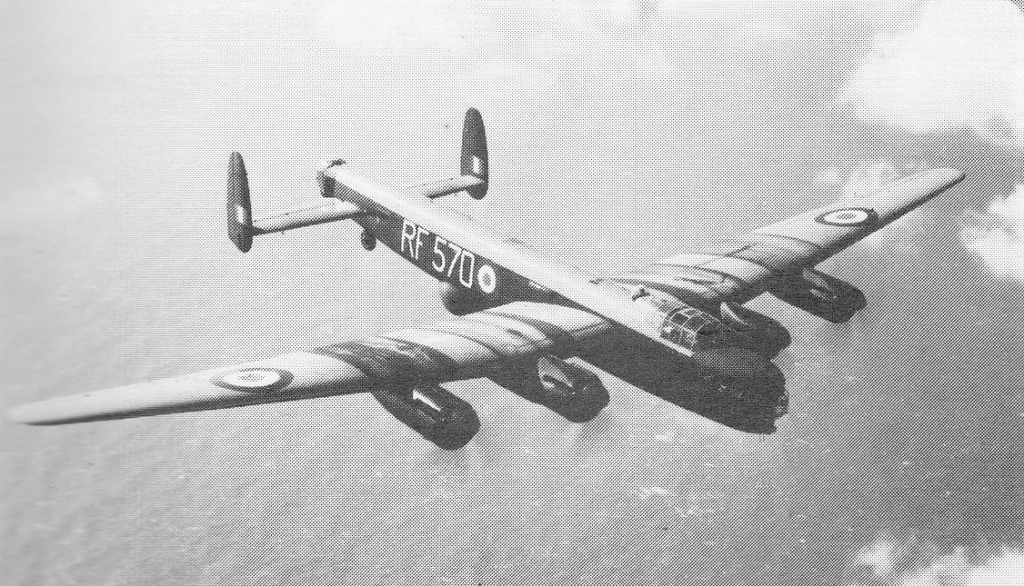
ELINT Lincoln of No.192 Squadron RAF

The RAF Lincoln crashed a short distance from the West German border and six out of the seven crew members lost their lives. According to London, the aircraft, which was based at the Central Gunnery School at Leconfield, carried no ammunition, as it was on a ‘routine training flight’. From British articles at the time it could be deduced that the Lincoln crew had purposely provoked an incident in order to disclose listening posts on the ground and to gauge the reactions by aircraft of the Soviet air defences. In those days special ELINT Lincolns of the RAF, belonging to No.192 Squadron and the Central Signals Establishment at Watton, Norfolk, gatered electronic information.

Before withdrawal in 1963 one detached flight operated in Aden.
The Lincoln proved to be last piston-engined bomber to serve with the RAF.
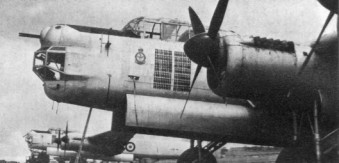
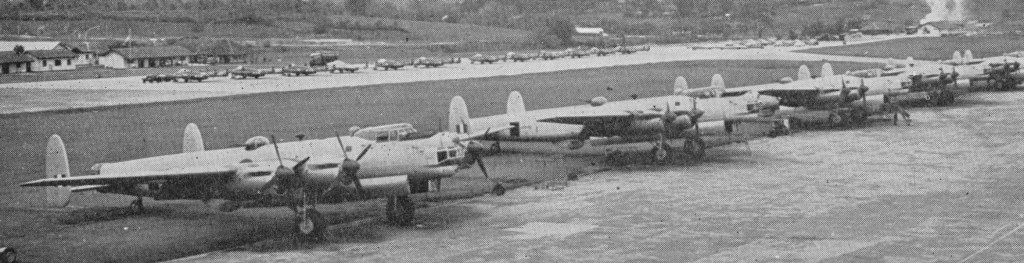
RAAF Lincoln B.30

After seven years of operations in Malaya, the No1 Sqn RAAF returned to Australia in mid-1958, taking their Lincoln B.30s with them.

Gallery

Lincoln
Engines: 4 x Rolls-Royce “Merlin 85”, 1305kW
Take-off weight: 34020 kg / 75002 lb
Empty weight: 19690 kg / 43409 lb
Wingspan: 36.58 m / 120 ft 0 in
Length: 23.86 m / 78 ft 3 in
Height: 5.27 m / 17 ft 3 in
Wing area: 132.01 sq.m / 1420.94 sq ft
Max. speed: 475 km/h / 295 mph
Cruise speed: 345 km/h / 214 mph
Range w/max.payload: 2366 km / 1470 miles
Armament: 6 x 12.7mm machine-guns, 6350kg of bombs
Crew: 7

Avro 694 Lincoln B Mk. I
Engine: 4 x Rolls Royce Merlin 85, 1756 hp (1305 kW)
Length: 78 ft 3.5 in / 23.86 m
Height: 17 ft 3.5 in / 5.27 m
Wingspan: 120 ft 0 in / 36.58 m
Wing area: 1420.956 sq.ft / 132.01 sq.m
Max take off weight: 75014.1 lb / 34020.0 kg
Weight empty: 36792.6 lb / 16686.0 kg
Fuel capacity: 2950 Imp.Gal
Max. speed: 256 kts / 475 km/h / 295 mph at 4570 m (15,000 ft)
Cruising speed: 187 kts / 346 km/h
Service ceiling: 30495 ft / 9295 m
Cruising altitude: 20013 ft / 6100 m
Wing load: 52.89 lb/sq.ft / 258.0 kg/sq.m
Range: 2546 nm / 4715 km
Range (max. weight): 1278 nm / 2366 km
Crew: 7
Armament: nose and tail turrets each with two 12.7 mm (0.5 in) guns, dorsal turret with two 12.7 mm (0.5 in) or two 20 mm guns, and occasionally also one 12.7 mm (0.5 in) ventral hand aimed gun; bombload up to 6350 kg (14,000 lb)

Lincoln B.30
Engines: four Commonwealth-built Merlin 102
Wingspan: 120 ft
Length: 84 ft 3.5 in
Height: 17 ft 3.6 in
Loaded weight: 82,000 lb
Max speed: 290 mph
Cruise: 230 mph
Range: 3500 mi
Avro 691 Lancastrian

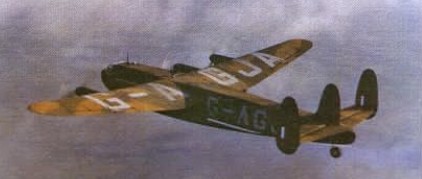
The first conversions of the Lancaster bomber to the high-speed long-range transport Lancastrian, were made by Victory Aircraft Ltd in Canada. Trans-Canada Air Lines operated these conversions on behalf of the Canadian government on transatlantic mail and passenger services between Montreal and Prestwick. The Canadian Lancastrians were fitted with Packard-built Rolls-Royce Merlin engines and accommodated ten passengers.

Production of the Lancastrian was later undertaken by Avro and deliveries were made to the RAF, BOAC and British South American Airways Corporation.

Gallery

Variants:
Lancastrian C.I
A nine-seat version, 23 produced for the RAF but all but two were subsequently operated by BOAC.

Lancastrian C.2
Similar to the C.I, 38 produced for the RAF.

Lancastrian 3
Initially for BSAAC, 13 passengers (18 eventually delivered, most for BOAC)

Lancastrian C.4
For RAF, eight delivered.

Lancastrian 1/C.2
Engines: 4 x Rolls-Royce Merlin T.24/2
Take-off weight: 29480 kg / 64993 lb
Empty weight: 13800 kg / 30424 lb
Wingspan: 31.09 m / 102 ft 0 in
Length: 23.42 m / 77 ft 10 in
Height: 5.94 m / 20 ft 6 in
Wing area: 120.49 sq.m / 1296.94 sq ft
Max. speed: 500 km/h / 311 mph
Cruise speed: 370 km/h / 230 mph
Ceiling: 9140 m / 30000 ft
Range w/max.fuel: 6680 km / 4151 miles

Engines: 4 x Rolls Royce Merlin XX, 1262 hp
Length: 76.772 ft / 23.4 m
Height: 19.357 ft / 5.9 m
Wingspan: 102.034 ft / 31.1 m
Wing area: 1297.062 sq.ft / 120.5 sq.m
Max take off weight: 65069.6 lb / 29510.0 kg
Weight empty: 30457.7 lb / 13813.0 kg
Max. speed: 268 kts / 496 km/h
Cruising speed: 246 kts / 456 km/h
Initial climb rate: 748.03 ft/min / 3.8 m/s
Service ceiling: 23015 ft / 7015 m
Cruising altitude: 17520 ft / 5340 m
Wing load: 50.23 lb/sq.ft / 245.0 kg/sq.m
Maximum range: 3585 nm / 6640 km
Range: 3084 nm / 5712 km
Crew: 5
Payload: 9 pax

Avro 688 Tudor / 689 Tudor           

Tudor

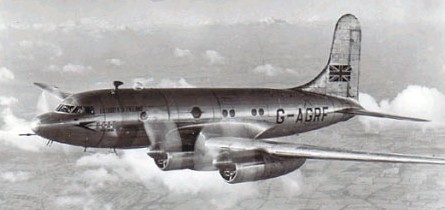
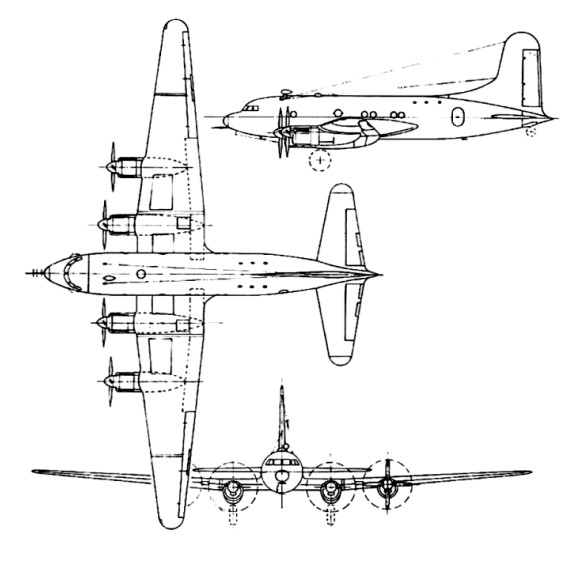
The original Type 688 Tudor was designed in 1943 to Specification 29/43 as a commercial conversion of the Lancaster for use over the North Atlantic as a quick replacement for the bomber-transports then being used.
As planned, the Tudor was to be a modification of the Lancaster IV (later the Lincoln) with a pressurised fuselage to carry a load of 1,705kg over 6,400km. Following the issue of the specification to Avro in March 1944 two prototypes were ordered and production contracts for BOAC (14 aircraft, plus six later) followed later in 1944 and in 1945.

When the prototype first flew on 14 June 1945 there were problems in pitch stability that required major modifications to the tail surfaces, and BOAC insisted on a further 357 modifications.

By time the first version of the Tudor was available in its production form, the BOAC requirements had altered. This, and the aircraft’s shorter than planned range, meant that the Tudor was no longer required as a passenger-carrying transport.

Although the plane received an airworthiness certificate in November 1946, BOAC recognised that it was no competitor for the Constellation already being operated across the north Atlantic by TWA and Pan Am, and BOAC cancelled its order.

Avro did sell six to British South American Airways, but before BSAA had commenced operations in 1947, the prototype Tudor 2 – designed for shorter-haul operations with more passengers – crashed, killing both test pilot and designer. Six months later, in January 1948, BSAA’s Star Tiger took off from the Azores for Bermuda and was never heard from again. The Tudor’s passenger certificate was later withdrawn after a second mysterious crash in January 1949.

The Tudor 8, powered by RR Nenes, first flew at Woodford on 6 September 1948 and flew to Boscombe Down. The Tudor 8 has the Mk.4 medium-length fuselage and structurally has been adapted to accommodate two Nenes in a single nacelle on each wing. The engines have separate tail pipes.

Aviation Traders proposed modifications for the Tudors of three types: the replacement or strengthening of any part of the equipment that could have contributed to the unexplained crashes; the effective lightening of the aircraft (by nearly a ton) by the removal of all sorts of unnecessary brackets and fittings; and the installation of up-to-date passenger facilities. Probably the most important of these many modifications was the bringing of the original Merlin 621 engines up to 623 specifications, to give increased take-off power, and the replacement of the entire landing gear with new Shackleton undercarriages. The proving flight for the first AT Tudor was on 14 February 1954. Laker could not get a War Office contract to carry troops, and was forced to devote his entire fleet of five, modified by fitting large freight doors, under the name Super Trader, to freight flights. After two fatal crashes in 1959 it was clear that the aircraft should be withdrawn.

The Tudor I was designed for only 12 passengers, but later models could carry 80. In total only 11 of the longer, wider Tudor 2, 5 and 11 models were built.

Tudor versions:
Avro 688 Tudor 1
Powered by four Rolls-Royce Merlin 102, 621 or 623 engines. Original short-fuselage Tudor for the Atlantic route, seating 12-24 passengers. First flown 14 June 1945

Avro 689 Tudor 2
Four Rolls-Royce Merlin 102 or 621 engines. The original long-fuselage version for BOAC South African and Australian routes. Accommodation for up to 60 passengers. Thirty production aircraft ordered in November 1944 and a further 49 in April 1945, plus six to be built in Australia. Order reduced to 50 in 1946 and 18 in 1948. Final 18 were to consist of two Mk 2s for development work, six Mk 5s for BSAAC – and ten modified to freighters for BOAC.

Avro 688 Tudor 3
Two additional Mk I airframes converted by Armstrong Whitworth for use as VIP transports by ministers.

Avro 688 Tudor 4
Four Rolls-Royce Merlin 621 or 623 engines. A modification of the Tudor 1 to meet BSAAC requirements. Fuselage lengthened by 1.83m and accommodation for 32 passengers. Four aircraft originally ordered. Augmented by conversion of BOAC Mk Is.

Avro 688 Tudor 4B
Two Tudor Is of BOAC contract modified to have lengthened fuselage of the Mk 4 for use by BSAAC, but retaining the flight engineer’s station as on Mk I. Accommodation for 28 passengers.

Type 689 Tudor 5
Four Rolls-Royce Merlin 621 engines. A modification of the Tudor 2, of which six were completed, five for BSAAC. Accommodation for 44 day or 36 night passengers. BSAAC aircraft delivered without passenger seats and used on Berlin Airlift. Sixth airframe converted to have four Bristol Hercules 120 engines.

Gallery

Avro 688 Tudor
Engine : 4 x Rolls Royce Merlin 100, 1613 hp
Length: 79.396 ft / 24.2 m
Height : 21.982 ft / 6.7 m
Wingspan : 120.079 ft / 36.6 m
Wing area : 1420.848 sq.ft / 132.0 sq.m
Max take off weight : 76072.5 lb / 34500.0 kg
Max. speed : 299 kt / 554 km/h
Cruising speed : 259 kt / 480 km/h
Initial climb rate : 984.25 ft/min / 5.0 m/s
Service ceiling : 31529 ft / 9610 m
Cruising altitude : 22507 ft / 6860 m
Wing load : 53.51 lb/sq.ft / 261.0 kg/sq.m
Maximum range : 4240 nm / 7852 km
Range : 4028 nm / 7460 km
Range (max. weight) : 3542 nm / 6560 km
Crew : 5
Armament : 12-24pax

Avro 689 Tudor 2
Engines: 4 x Rolls-Royce Merlin 621, 1320kW / 1,770 hp
Take-off weight: 36280 kg / 79984 lb
Empty weight: 21000 kg / 46297 lb
Wingspan: 36.58 m / 120 ft 0 in
Length: 32.18 m / 106 ft 7 in
Height: 7.39 m / 24 ft 3 in
Wing area: 132.01 sq.m / 1420.94 sq ft
Max. speed: 475 km/h / 295 mph
Cruise speed: 378 km/h / 235 mph
Ceiling: 7790 m / 25550 ft
Range: 3750 km / 2330 miles

Tudor 4B
Engines: 4 x Rolls-Royce Merlin 523, 1810 hp
Wingspan: 120 ft
Length: 85 ft 6 in
Height: 24 ft 3 in
Loaded weight: 82,000 lb
Max speed: 340 mph
Cruise: 305 mph
Range: 2800 mi

AT Tudor / Super Trader
Engines: 4 x Merlin 623.

Avro 685 York

Developed from the Lancaster bomber, the original prototype first flew in July 1942 using the wings, engines, landing gear and tail from the Lancaster. A new all-metal square-section large capacity fuselage was introduced.

Avro 685 York Article

The first prototype was converted to the one-off Mk 2 York, with Bristol Hercules radial engines; and the third prototype “Ascalon” became Churchill’s wartime transport.

Production by Avro during 1945-48 included 208 for the RAF Transport Command, and civil Yorks were built for BOAC (25), British South American Airways (12), Flota Aerea Mercante Argentina (5) and Skyways (3). One additional York was built by Victory Aircraft, Canada.

RAF and BOAC Yorks were withdrawn from service in 1957. Surplus Yorks were used by airlines in the Near East, South Africa and Canada and by the French Navy.

Gallery

Engines: 4 x Rolls-Royce Merlin XX, 954kW
Take-off weight: 31115 kg / 68597 lb
Empty weight: 19069 kg / 42040 lb
Wingspan: 31.09 m / 102 ft 0 in
Length: 23.93 m / 79 ft 6 in
Height: 5.44 m / 18 ft 10 in
Wing area: 120.42 sq.m / 1296.19 sq ft
Max. speed: 480 km/h / 298 mph
Cruise speed: 338 km/h / 210 mph
Ceiling: 7010 m / 23000 ft
Range: 4345 km / 2700 miles

Avro 685 York C Mk 1
Length : 78.511 ft / 23.93 m
Height : 17.848 ft / 5.44 m
Wingspan : 102.001 ft / 31.09 m
Wing area : 1296.954 sq.ft / 120.49 sq.m
Max take off weight : 68608.6 lb / 31115.0 kg
Weight empty : 42047.1 lb / 19069.0 kg
Max. speed : 259 kts / 480 km/h
Cruising speed : 183 kts / 338 km/h
Service ceiling : 22999 ft / 7010 m
Wing load : 52.89 lb/sq.ft / 258.0 kg/sq.m
Range : 2346 nm / 4345 km
Engine : 4 x Rolls Royce Merlin XX, 1262 hp
Crew : 4
Payload : 12-56pax / 4536kg

Engines: Rolls-Royce Merlin 24, 1620 hp
Wingspan: 102 ft
Length: 76 ft 10 in
Height: 17 ft 10 in
Empty weight: 39,458 lb
Loaded weight: 71,000 lb
Max speed: 306 mph at 10,800 ft
Cruise: 203 mph at SL
ROC: 1500 fpm

Avro IV Triplane / Bellamy Avro IV Triplane

Three Avro IV Triplane (one static) were built in 1964 by the Hampshire Aero Club for the film “Those Magnificent Men in Their Flying machines”. Of all-wood construction and powered by a Cirrus II engine, they were designed by R.Hilbourne. The construction of the triplane followed A.V. Roe’s specifications and was the only replica that utilised wing-warping successfully. With a more powerful 90 hp Cirrus II replacing the 35 hp Green engine that was in the original design.

The first was flown on 9 May 1964. One passed to the Shuttleworth Trust after the film, who kept it airworthy at Old Warden as BAPC.1.

Replica

Replica:
Bianchi Avro IV Triplane

Engine: 1 x 35hp Green
Wingspan upper: 9.75 m / 32 ft 0 in
Wingspan middle: 9.75 m / 32 ft 0 in
Wingspan lower: 6.0 m / 20 ft 0 in
Length: 10.3 m / 34 ft 0 in
Height: 3.3 m / 11 ft 2 in
Wing area: 27.31 sq.m / 293.96 sq ft
Empty weight: 158 kg / 350 lb
Take-off weight: 295 kg / 650 lb
Max speed: 64 kph / 40 mph

Avro / A.V.Roe

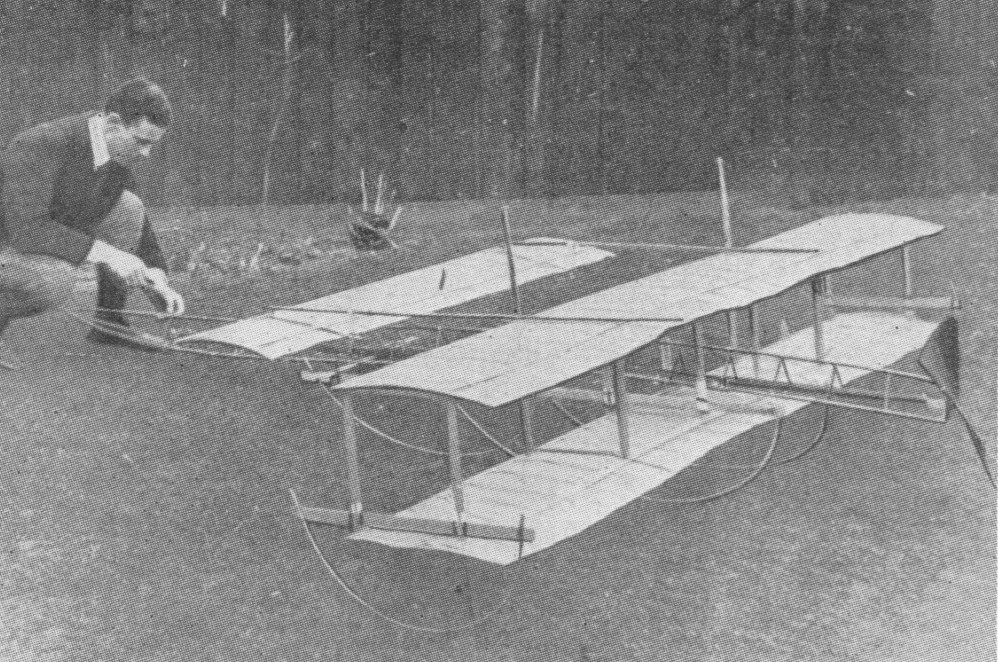
When the Daily Mail organised a model-flying contest at Alexander Palace, London, in March 1907, young A.V. Roe won first prize. His 8 ft tail first model flew more than 100 feet.

Avro Article

Alliott Verdon Roe, after a varied career in surveying, tree-planting, fishing, post-office management and marine engineering began aircraft design in 1906. Spurred by winning £75 in a model aircraft contest held in London in 1907. Roe built a full-size biplane, which made some tentative hops from the motor racing circuit at Brooklands in 1908.

Moving to an abandoned railway arch on Lea Marshes in Essex, he built the Roe I Triplane which weighed less than 91 kg (200 lb) and was covered in brown wrapping paper. He called it the Bull’s-Eye Avroplane after the brand-name of men’s trouser braces whose manufacturer had supported him. In July 1909 the Roe I Triplane made the first official powered flights in Britain by an all-British aircraft.
Alliott Roe subsequently developed three other triplane designs, one of which he flew (and crashed three times) at the great Boston-Harvard Aviation Meeting of 1910.

A.V. Roe and Company was established at Brownsfield Mill, Great Ancoats Street, Manchester, by Alliott Verdon Roe and his brother Humphrey Verdon Roe on 1 January 1910. Humphrey’s contribution was chiefly financial and organizational; funding it from the earnings of the family webbing business and acting as Managing Director until he joined the RFC in 1917.

In the summer of 1910 A. V. Roe and Company declared its willingness to build aeroplanes to other people’s designs and the first such aircraft was a Farman-type biplane for a Bolton business man. The Farman-type evidently did not meet with much success as 18 months later, at the end of 1912, the engine and airframe were advertised for sale in new condition for £45 and £60 respectively. Bolts, fittings and bracing wires were also supplied to Miss Lilian Bland who built and flew the Mayfly biplane of her own design at Carnamony, Belfast. Each of these aircraft was fitted with one of the few examples of the 20 h.p. two cylinder, horizontally opposed, air cooled Avro engines. These were never given an Avro designation.

A.V.Roe carried out numerous experiments with all kinds of plane sections with varying cambers, etc. These were sold off in November 1911 at peppercorn prices for gliders.

The first Avro aircraft to be produced in any quantity was the Avro E or Avro 500, first flown in March 1912, of which 18 were manufactured, most for the newly-formed RFC. The company also built the world’s first aircraft with enclosed crew accommodation in 1912, the monoplane Type F and the biplane Avro Type G in 1912, neither progressing beyond the prototype stage. The Type 500 was developed into the Avro 504, first flown in September 1913. A small number were bought by the War Office before the outbreak of the First World War and the type saw some front line service in the early months of the war, but is best known as a training aircraft, serving in this role until 1933. Production lasted 20 years and totalled 8,340 at several factories: Hamble, Failsworth, Miles Platting and Newton Heath.

By 1913 the company had become registered as A.V.Roe & Co. Ltd.

After the boom in orders during the First World War, the lack of new work in peacetime caused severe financial problems and in August 1920, 68.5% of the company’s shares were acquired by nearby Crossley Motors who had an urgent need for more factory space for automotive vehicle body building.

In 1924, the Company left Alexandra Park Aerodrome in south Manchester where test flying had taken place during the period since 1918 and the site was taken over by a mixture of recreation and housing development. A rural site to the south of the growing city was found at New Hall Farm, Woodford in Cheshire, which continued to serve aviation builders BAE Systems until March 2011.

Cierva Autogiro production started in Britain at A. V. Roe’s Hamble factory in 1926.

In 1928 Crossley Motors sold AVRO to Armstrong Siddeley Holdings Ltd. In 1928, A.V.Roe resigned from the company he had founded and formed the Saunders-Roe company that after World War II developed several radical designs for combat jets, and, eventually, a range of powerful hovercraft.

In 1928 Avro acquired a license to build the Fokker F.VIIB/3M as the Avro 618 Ten: it carried eight passengers and two crew, and orders included five for Australian National Airways. Rivaling the success of the 504 was the twin-engined Anson trainer and coastal patrol monoplane, flown as the Avro 652 civil transport for Imperial Airways in 1935.

In 1935, Avro became a subsidiary of Hawker Siddeley.

More than 10,000 Ansons were built in Britain and Canada between 1935 and 1952. The twin-engined Manchester bomber of 1939, with the unproven Rolls-Royce Vulture engines, was not a success, but led to the superb four-engined Lancaster, of which 7,374 were built during Second World War. The York transport derivative mated the same wings and tail, plus a central fin, with an entirely new fuselage seating 12 passengers. The Lincoln bomber was built as a replacement for the Lancaster, entering RAF service soon after VJ-day.

Over 7,000 Lancasters were built and of the total, nearly half were built at Avro’s Woodford and Chadderton (Manchester) sites, with some 700 Lancasters built at the Avro “shadow” factory next to Leeds Bradford Airport (formerly Yeadon Aerodrome), northwest Leeds. This factory employed 17,500 workers at a time when the population of Yeadon was just 10,000. The old taxiway from the factory to the runway is still evident.

Although only ⅓ of Lancasters hit their target, the Lancasters were at the time Britain’s best bombers.

The civilian Lancastrian and maritime reconnaissance Shackleton were derived from the Lancaster design. Avro’s postwar Tudor transport was not a success. With the same wings and engines as the Lincoln, it achieved only a short (34 completed) production run following a first flight in June 1945 and the cancellation of an order from BOAC.

The company’s last piston-engined aircraft was the Shackleton four-engined maritime reconnaissance aircraft. Following production of four Avro 707 delta research aircraft, the company produced the four-jet delta-wing Vulcan bomber, which began to enter RAF service in 1956. The Vulcan saw service as a conventional bomber during the British campaign to recapture the Falkland Islands in 1982. Vulcan XH558 flew again after several years of refurbishment, and several are prized as museum exhibits. Avro’s last design before being restyled the Avro Whitworth Division of Hawker Siddeley Aviation, in 1963, was the Avro 748 twin-turboprop transport (first flown in 1960). The Royal Flight bought a few and a variant with a rear-loading ramp and a “kneeling” main undercarriage was sold to the RAF and several members of the Commonwealth as the Andover.

When the company was absorbed into Hawker Siddeley Aviation with Folland, Gloster, Armstrong Whitworth, and de Havilland in July 1963, the Avro name ceased to be used. The brand still had a strong heritage appeal, and the marketing name “Avro RJ” (regional jet) was used by British Aerospace for production of the RJ-85 and RJ-100 models of the BAe 146 from 1994 to 2001. This aircraft type is sometimes also loosely called the “Avro 146”.
The BAe ATP (Advanced Turbo Prop) design evolved from the Avro 748. At 39 years, the Shackleton held the distinction of being the aircraft with the longest period of active RAF service, until overtaken by the English Electric Canberra in 1998.

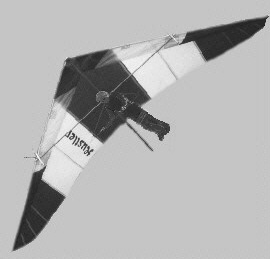
Avon Kites Swift

Swift

Made in 1976, the Swift was been designed by John Glover and features a folding cross boom to facilitate quick rigging, also a separate back-up wing wire system. The Swift glider was offered in two sizes to suit pilot weights of 9 – 12 st. and 11 – 15 st. and can be quickly converted for seated or prone.

Swift (Medium)
Sail area of 236 sq ft
Boom 19 ft 4in
Keel 14 ft 9 in
Nose angle 102 deg
Billow 2.5 deg
Aspect ratio 3.9

Avon Kites Hustler

Made in 1977, the Hustler was regarded as a delight to fly because of the immediate feeling of smoothness and stability. Its response to control inputs was positive and excessive movement was not required even for extreme manoeuvres.

Radial tips stabilize the machine throughout its entire flight envelope. Hands-off stall and dive flight tests have shown quick and positive recovery. The 1977 Hustler was priced at £450.00 inc VAT and bag.

Hustler (small)
Leading edge: 19 ft 4in
Keel: 10ft 2.5in
Sail area: 172 sq ft
Nose angle: 107 deg
Billow: 0.3 deg
Aspect ratio: 5.65

AVI Avi 205

Prototype

Conceived as a multi-purpose aircraft equally suited for the roles of four-seat tourer, agricultural aircraft, ambulance, school trainer and glider tug, the AVI 205 flew for the first time in September 1960, development having been initiated in October 1958. The prototype was powered by a 205 hp Continental E-185-9 engine, but the production model was to have a 225 hp Continental E-225-8 engine driving a metal variable pitch propeller, and modified undercarriage.

For liquid spraying or dusting operations a jettisonable tank or hopper was to be attached beneath the fuselage.
The AVI 205 is of all-metal construction with fabric covering.

Prototype
Engine: 205 hp Continental E-185-9
Span: 37 ft 5.25 in
Wing area: 215.278 sq.ft
Length: 26 ft 3 in
Height: 7 ft 2.75 in
Max speed: 139 mph at SL
Cruise 75%: 112 mph
Max range: 652 miles
Empty weight: 1433 lb
MAUW: 2645 lb

Production model
Engine: 225 hp Continental E-225-8
Propeller: metal variable pitch
Span: 37 ft 5.25 in
Wing area: 215.278 sq.ft
Length: 26 ft 11 in
Height: 7 ft 2.75 in
Max speed: 151 mph at SL
Cruise 75%: 132 mph
Max range: 756 miles
Empty weight: 1620 lb
MAUW: 2790 lb

Prototype