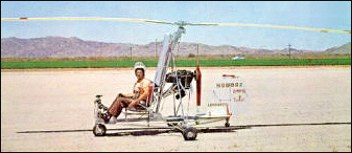
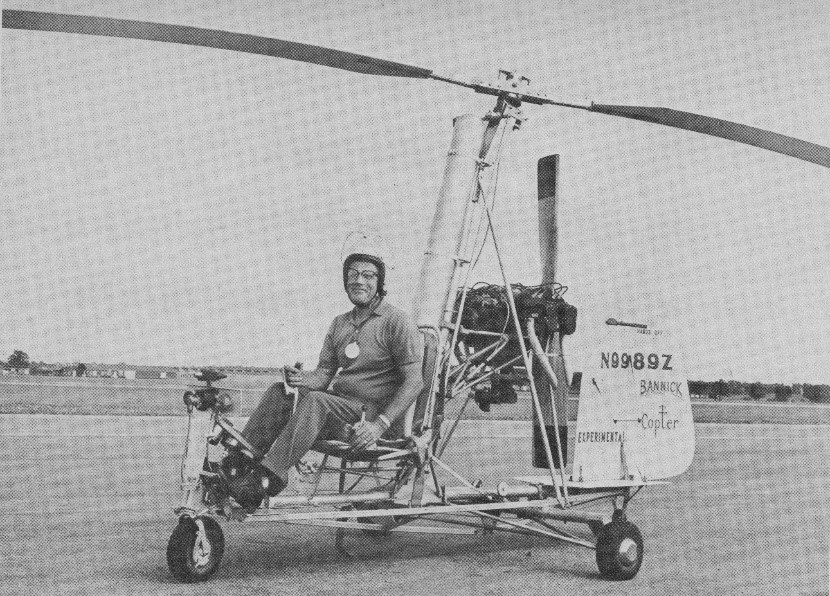
Lester J. Bannick developed the Bannick Model T Copter (N9989Z) in 1964. An open-frame gyrocopter, similar to the Bensen Gyrocopter with a wooden rotor and a pusher 65hp Lycoming engine, it was marketed in the form of plans ($25) for home construction, at about $600.
The only welding is in the motor mount, only machining is in the rotor head, the remainder of construction is with hand tools.
Bannick then completed the prototype of the Bannick Model C Copter which flew in 1967. It used the rotor system of the Model T with a streamlined glass-fibre fuselage incorporating a large tail fin and a 135hp Lycoming engine. It is believed that the Model C was eventually abandoned.
Bannick Model T Copter Engine: Lycoming, 135 hp Rotor dia: 25 ft Length: 7 ft 4 in Empty weight: 350 lb MTOW: 800 lb Top speed: 129km/h Cruise: 80 mph Take-off speed: 26 mph Range: 100 mi
Balloon Works has been in the balloon business in North Carolina, USA, since 1972. 1972 Rhine Aerodrome-RFD 2 Statesville North Carolina 28667 USA
1982: Balloon Works, Rhyne Aerodrome RFD 2 Statesville, North Carolina 28677, USA Balloon Works manufactures balloons that carry from two to six passengers and cost between $11,495 and $14,595 in 1982. Standard equipment includes a triangular carriage and basket, two tanks, a burner (plus backup), FAA required instruments and 12 colors to choose from.
Circa 1964 mechanic Marion Baker utilised free flight models in the development of his MB-I Delta Kitten homebuilt experimental aircraft.
A tailless, Lippisch-like delta of all-metal construction and tricycle gear, the MB-1 was winner of EAA Design Trophy in 1961. The one built was registered N57A and cost $2,000 to build.
Those who flew the plane found it gentle and orthodox in response.
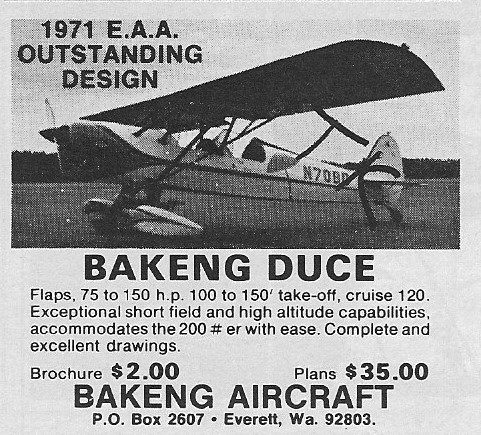
The Bakeng Deuce is a two-place parasol design utilizing a steel tube fuselage. The structure is faired with plywood and aluminum formers which support spruce stingers. Wings are of basic wooden construction with solid spruce spars.
First flown on 2 April 1970, this homebuilt received the ‘Outstanding New Design” and “Design improvement’ awards from the EAA in 1971. The V-strut braced wing utilizes both metal and spruce construction and is covered with fabric. The fuselage is also fabric-covered but is built from steel tubes. The landing gear is the conventional tailwheel type, and the two seats are arranged in tandem fashion. Bakeng has also designed a biplane version of the Duce, called the Double Duce. Both horizontally opposed and radial engines can be used, from 85-150 hp. Baking Deuce Airplane Factory purchased the rights to the Bakeng Duce in March of 1999. The name was changed to “Deuce” to separate those aircraft built before and after. The new Deuce incorporates the design of the old Duce with improvements based on analyzing the aircraft and listening to builders who have built and flown them for the past thirty years.
Dec 1973
Design Improvements are changes only to enhance integrity, reliability, ease of construction or function. These changes include: Beef up fuselage behind the landing gear legs. Complete redesign and relocation of the rudder pedals, cables and toe brakes. Complete redesign of the elevator control (pushrods instead of pulleys). Completely new lift strut attachments (individual, like old Pipers). Different tail mount structure New attachments for turtle deck Entirely new rudder design and mount (now removable). New method of attaching cross wire bracing in front of front cockpit. Removal of all elevator pulleys and cables. Larger fuel tanks Comfortable, factory-built bucket seats CAD drawings of the original plans have been completed.
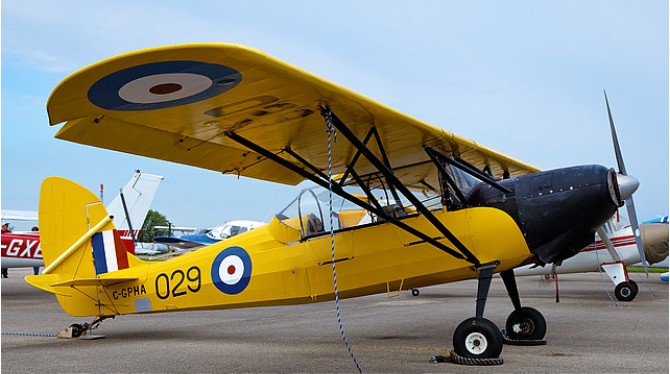
The Bagimer I (also referred to as Alouette) was a two-seat homebuilt aircraft developed by Badez, Giraud and Mercier and was basically a Piper J-3/L-4H with modifications to the landing gear, wings and tail surfaces and a 75 hp Minié 4.DC.32 engine replacing the original 65 hp Continental A65. The first aircraft was built by the developers and registered F-WFAR (c/n 01) it first flew in September 1949, being reregistered F-PFAR after it received its CofA.
F-PFOK with club member Guy Thion in the cockpit
The Bagimer II was the same aircraft after it had been re-engined with the original 65 hp Continental A65. A second very similar aircraft was then constructed by members of the Aéro-club de Pithiviers, initially registered F-WFOK, later F-PFOK. Reportedly a third example, a Bagimer II, was also built in France.
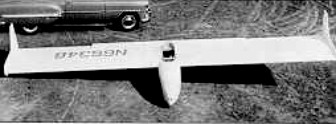
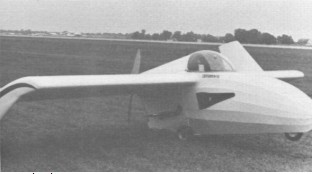
The Flying Plank was developed in 1954 by Al Backstrom, assisted by Phil Easley and Jack Powell. The prototype EPB-1 was used for drag reduction tests at the Mississippi State College, using a modified Abrial reflex airfoil.
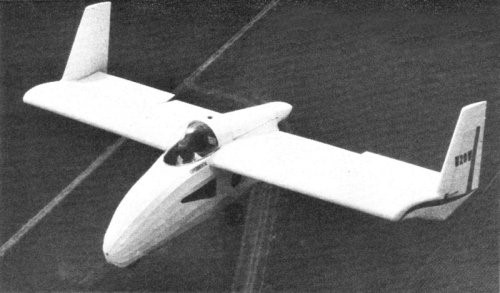
Plans for the -1A development were sold and a number built, most with twin wingtip rudders, but some were completed with a central fin and rudder at the end of a lengthened fuselage (EPB1-C) to improve performance and control. Span have varied up to 9.30 m / 30.5 ft. A self-launching model was developed later.
Motorised
Except for the fiberglass nose cap for the fuselage, standard wood structure was used throughout, and construction time for an experience woodworker was in the neighborhood of 600 hours. More than 150 sets of plans were sold.
Central fin
Construction of the powered Plank was begun in 1972, most of the work being done by Van White, a director of the EAA (Experimental Aircraft Association). It was intended originally to fit a Sachs Wanzel or OMC snowmobile Wankel engine, but as neither became available, a fan-cooled single-ignition Kiekhaefer Aeromarine 440 was installed, driving a two-bladed pusher propeller via belts.
WPB-1 Powered Plank
The original tandem-wheel/outrigger undercarriage was replaced by a more robust tricycle unit in 1976.
An improved version, the “Super Plank”, was under development in 1973. At least two of them were built, including N20WB, by Larry Linville and Dennis Harmon. Backstrom also built a motor glider light aircraft called WPB-1 Powered Plank in early 1970s.
The Backstrom WPB-1 is on display at the Airpower Museum in Blakesburg, IA. And the Vintage Sailplane Association has plans.