Max Brugger, CH-1724 Zenauva, Switzerland.
Built the Colibri MB-1 in 1965.
Max Brugger, CH-1724 Zenauva, Switzerland.
Built the Colibri MB-1 in 1965.
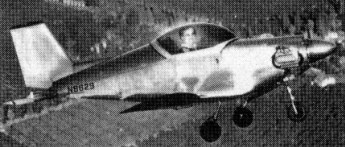
El Bandido was designed by Clarence Brueggemann, of Norfolk, Neb. First flight was made during May 1970. Its cantilevered low wing uses the Clark- Y airfoil. Its modified 45-hp VW engine drives a two-bladed Thoyer metal prop.
Engine VW 1600cc, 45 hp.
Gross weight 630 lbs
Empty weight 380 lbs.
Fuel capacity 8 USgal.
Wingspan 18 ft.
Length 13ft
Vmax 120 mph.
Cruise speed 110 mph.
Climb rate 700 fpm.
Takeoff run 200ft
anding roll 300ft
Ceiling 11,000 ft.
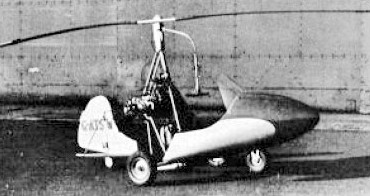
The Brookland Mosquito was a British amateur-built single-seater ultra-light gyroplane first flown in 1962. The Mosquito was powered by a Ernie Brooks-converted Volkswagen four-cylinder horizontally-opposed air-cooled engine providing a top speed of 137km/h, and in a second version 161km/h, and a range of 225km.
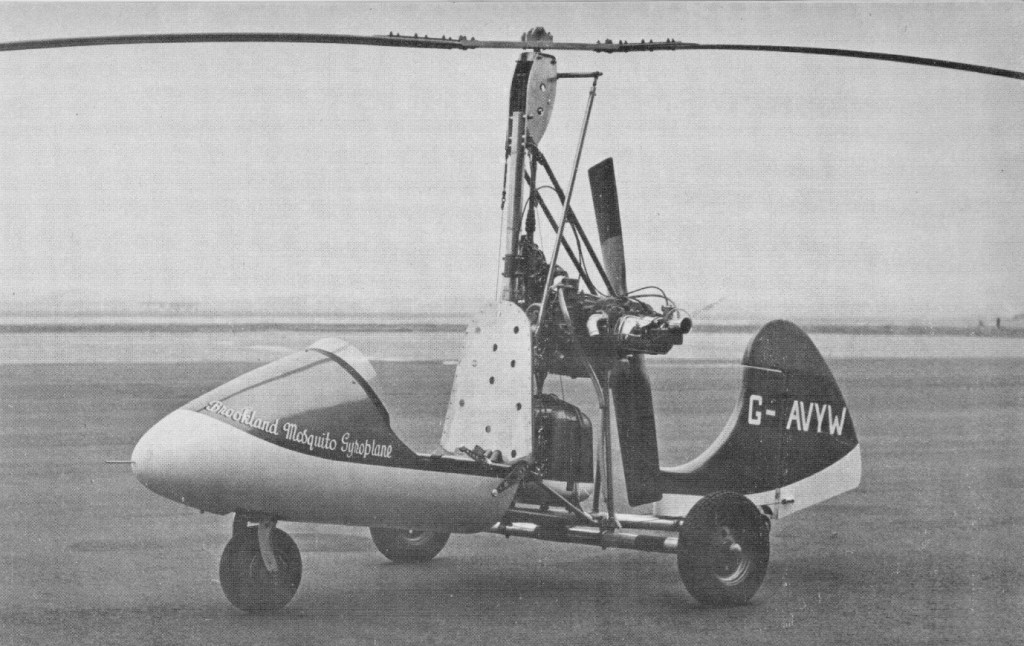
Versions:
Mosquito Mk.1 Hornet
Mosquito Mk.2
Mosquito Mk.3
Engine: VW 1200cc, 70 hp at 3750 rpm
Rotor diameter: 22 ft
Fuselage length: 12 ft
Height: 6 ft
Weight: 310 lb
Top speed: 80 mph
Cruise: 65 mph
ROC: 750 fpm
The Kasper Bekas, which first flew in 1968, was a development of an earlier, 1959, design of Stefan Brochocki, the BKB-1.
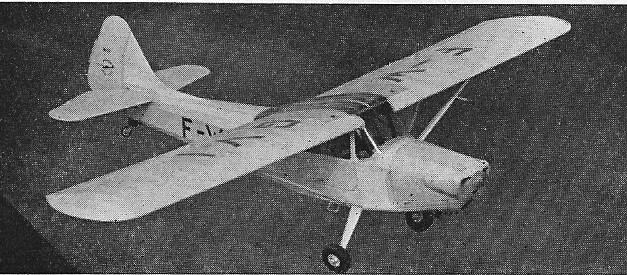
The Brochet MB.120 two-seater light touring monoplane has the airframe of the three-seat MB.100 remodelled as a two-seater, lighter wings, the landing flaps of the MB.80 and a 90 hp Continental C90 engine.
Flown for the first time on 5 April 1954, the MB.120 has a steel-tube fuselage and a spring-steel cantilever undercarriage. The cabin seats two side-by-side and dual controls can be fitted.
Two prototypes were built.
Engine: 90 hp Continental C90
Wingspan: 34 ft 11 in
Length: 21 ft 3.75 in
Height: 6 ft 6.75 in
Empty weight: 1113 lb
Loaded weight: 1686 lb
Max speed: 121 mph
Cruise: 105.6 mph
Ceiling: 16,404 ft
Range: 497 mi
Seats: 2
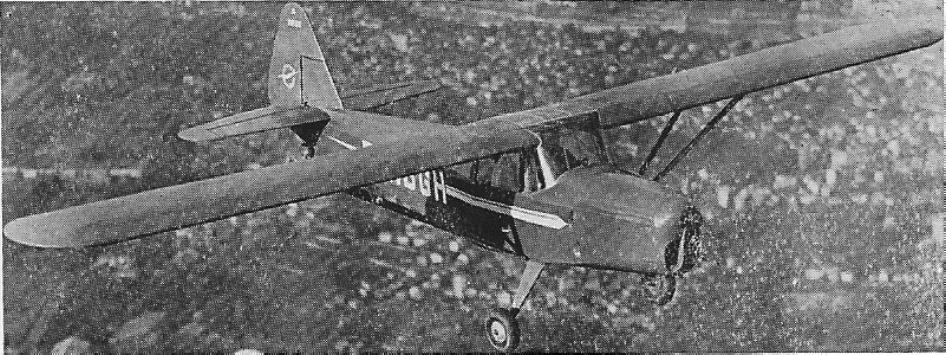
The M.B.100 three seat cabin monoplane was developed from the earlier M.B.70 and M.B.80. The M.B.101 is identical to the M.B.100 apart from the addition of an air filter and tropical finish to suit it for service in North Africa.
An initial order for eight M.B.100s and twelve M.B.101s was placed by the French Service de l’Aviation Legere Sportive which were distributed to flying clubs in France and Norg Africa.
Engine: Hirth H.M.504A-2, 100 hp
Wing span: 34 ft 11 in
Wing area: 153 sq.ft
Length: 21 ft 4 in
Height: 6 ft 7 in
Empty weight: 1023 lb
Loaded weight: 1716 lb
Max speed: 112 mph
Cruise: 102 mph
ROC: 590 fpm
Service ceiling: 11,480 ft
Range: 375 mi
Seats: 3
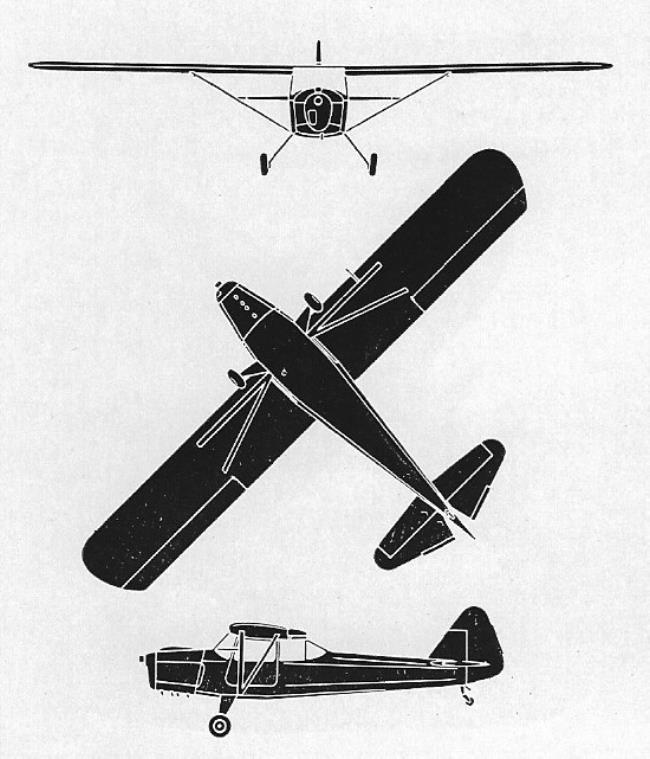
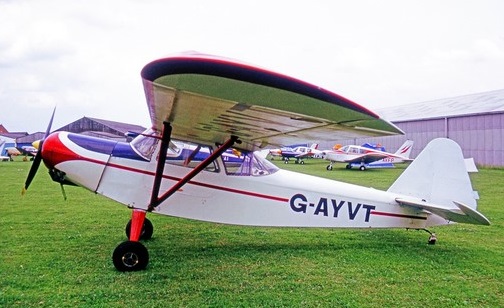
The MB.80 was a derivative of the Brochet MB.71, using essentially the same wood airframe, but with a redesigned wider fuselage, balanced control surfaces, and revised, spring steel undercarriage.
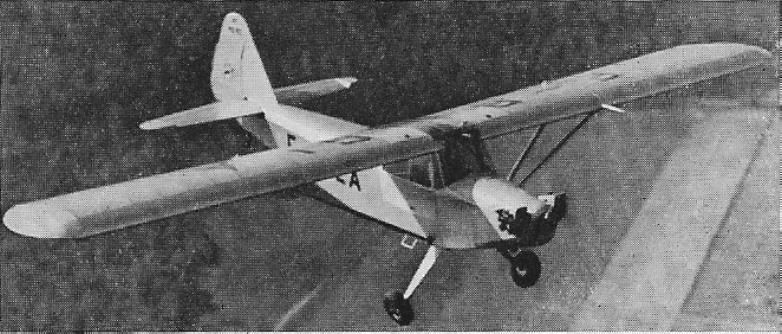
The MB.80 No.1 F-BGLA first flew on 4 October 1951 (or 15 November) with André Deschamps at controls. The Certificat de Navigabilite was obtained on 6 June 1952.
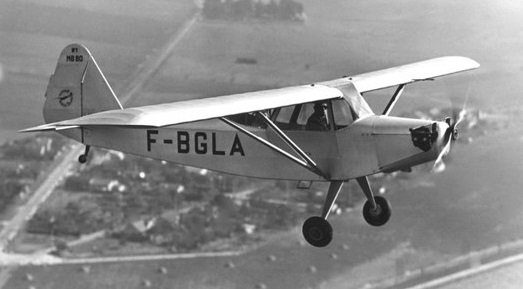
The Service de l’Aviation Légère et Sportive purchased ten examples for distribution to French aeroclubs. Most examples were operated in France, but one example was later sold privately to the United Kingdom.
MB.80
Engine: Minie 4DC-32B, 56 kW (75 hp
Wingspan: 10.45 m (34 ft 3 in)
Wing area: 14.2 m2 (153 ft2)
Length: 6.58 m (21 ft 7 in)
Height: 2.55 m (8 ft 4 in)
Empty weight: 385 kg (849 lb)
Gross weight: 615 kg (1,356 lb)
Maximum speed: 158 km/h (99 mph)
Range: 500 km (310 miles)
Rate of climb: 3.5 m/s (690 ft/min)
Crew: One pilot
Capacity: 1 passenger
10 built
MB.81
Engine: Hirth HM 500B-2
1 built
MB.83
Engine: Continental C90
1 converted from MB.80
MB.84
Engine: Continental A65
1 converted from MB.80 F-BGLI
In the early 1950s Avions Maurice Brochet designed and built lightweight sporting aircraft. In addition to production versions, some were intended also for amateur construction. These included the M.B.70, M.B.71, M.B.80, M.B.100, and M.B.101.
In the late 1970s there was only one balloon in Czechoslovakia and this was an import that was based in Prague. A group of local balloon enthusiasts met in Brno and determined that they would build their own balloon. Ales Kubiček was a founding member of what became the Brno Aviatik group and he took the lead in designing and building the club’s first balloon. In 1983, after a process of trial and error the first Czech hot-air balloon flew as part of the Aviatik club. The club prospered and further successes followed.
A four place, high wing, single engine design that first flew in May 1966.

