The Burgoyne-Stirling Dicer was a low-wing monoplane built in 1948, probably at Knowle, UK.
The Dicer flew with the officially un-sanctioned registration G-AECN, which had previously been allocated to an unfinished Pou de Ciel c/n DCB.1 of D.C. Burgoyne pre-war.
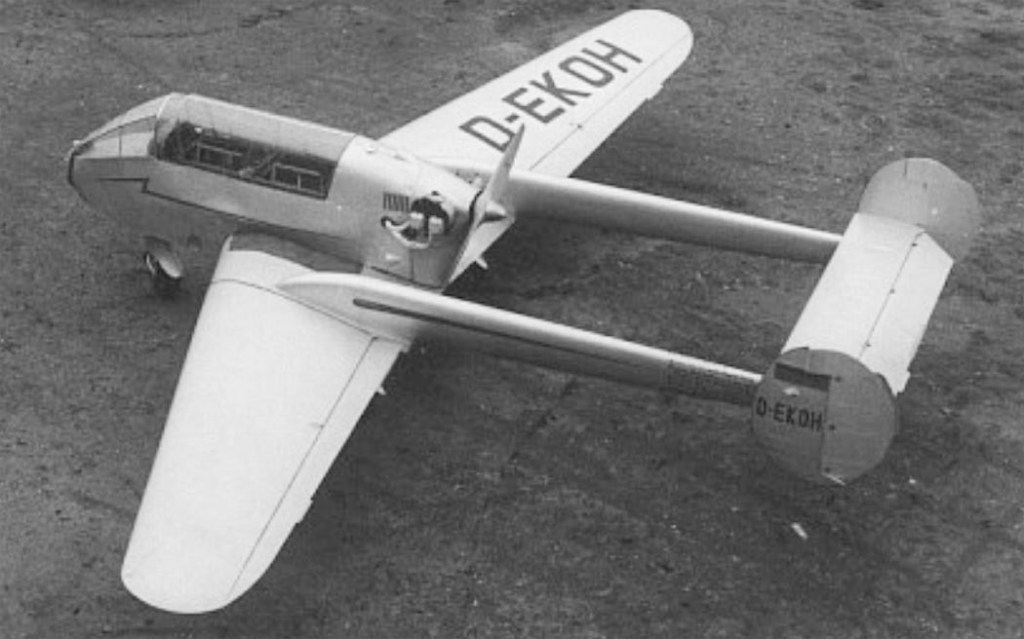
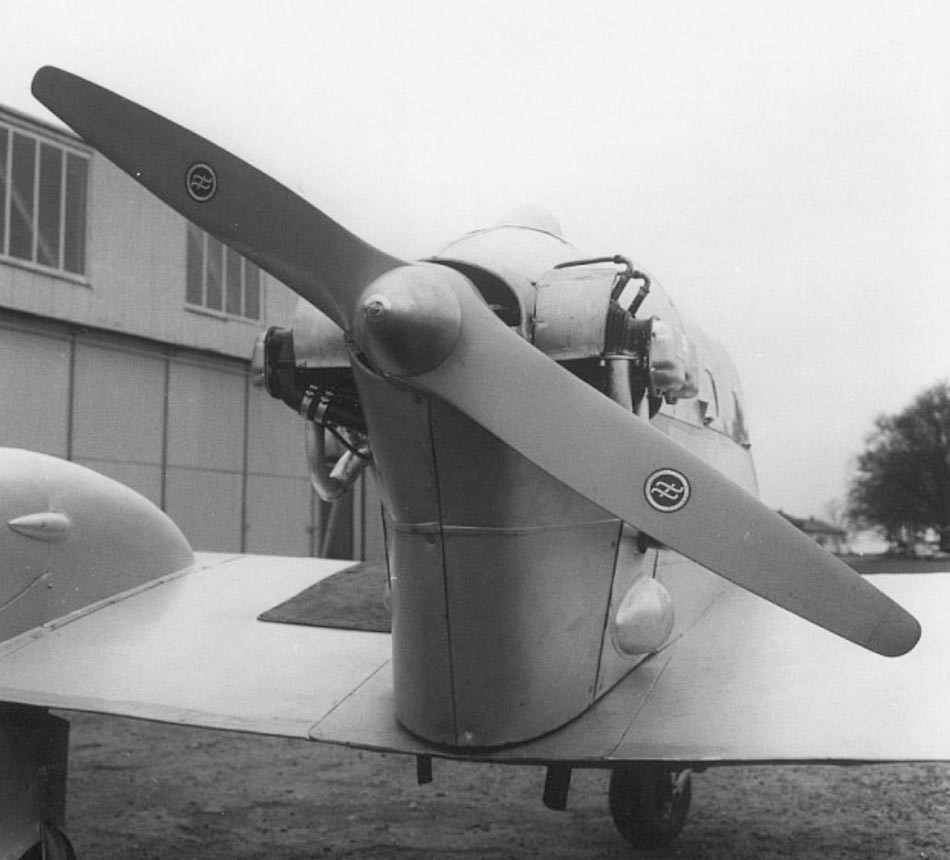
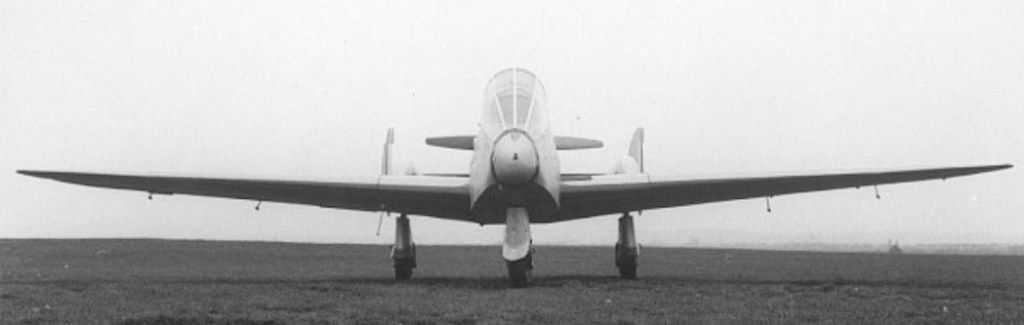
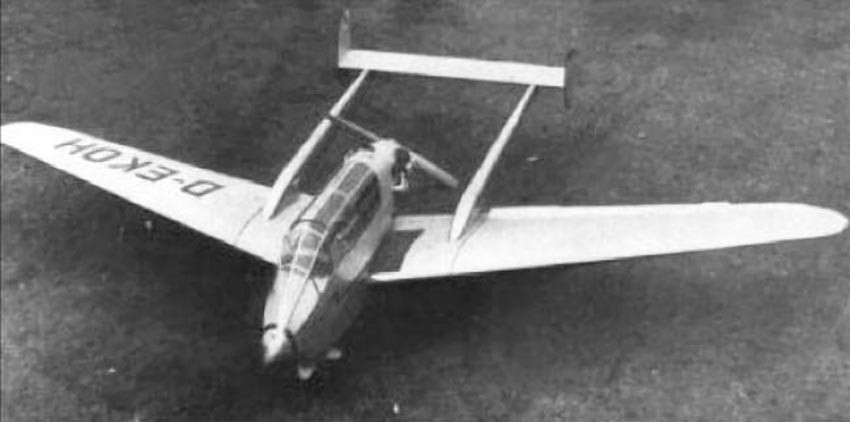
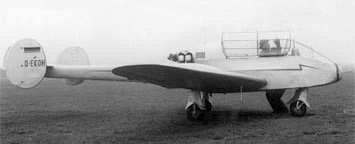
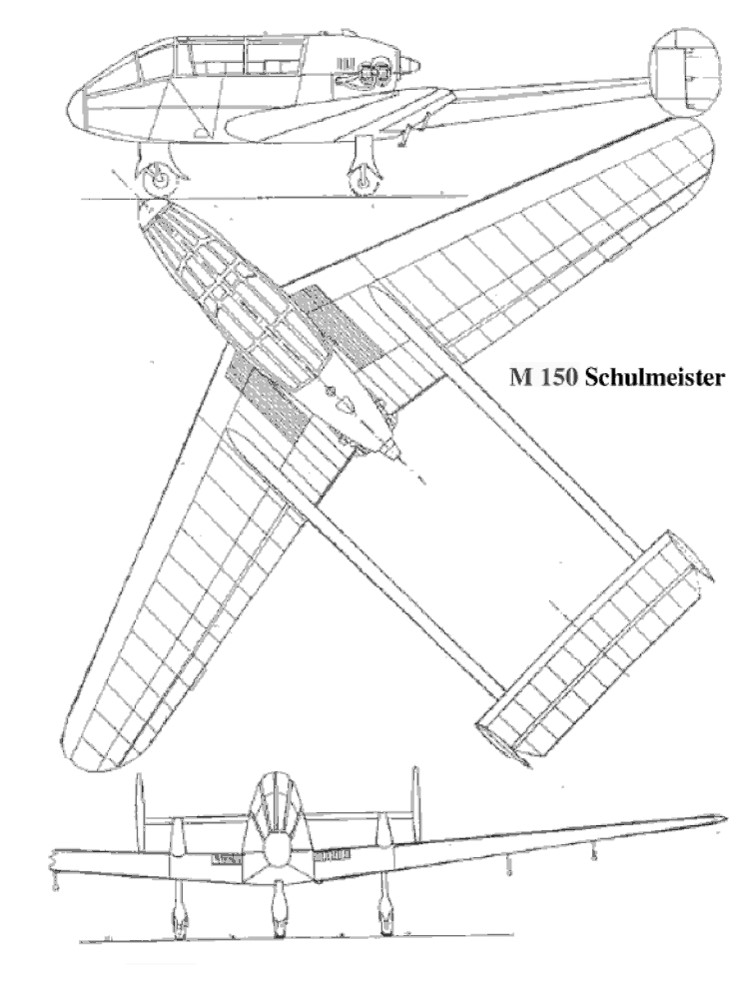
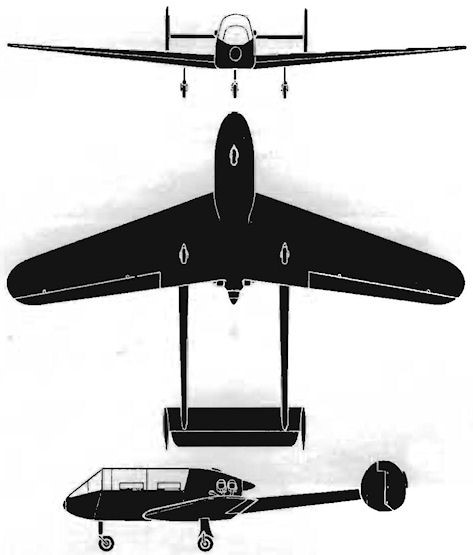
Developed from the A-15 (WN-16) aircraft, designed by the former Wiener-Neustadt company, the M-150 Schulmeister (Schoolmaster) is a two-seat, low-wing type, powered by a 65 hp Continental C90 incorporating a pusher propeller.
In the early 1950s, the German company Burgfalke Segelflugzeugbau became interested in the aircraft. Maidl modernized the project to meet new requirements resulting in 1956, with the M-150 Schulmeister.
The M-150 is capable of simple aerobatics, and the makers claim that it is almost impossible to spin even under extreme flight conditions. Construction is of mixed wood and steel, the main structural members being of steel. The wing and tail units are mostly of wood, with the leading edge and undersides ply covered, and the upper surfaces fabric covered. Fuselage is of a tubular structure and fabric covered.
The prototype aircraft first flew on September 14, 1957. Having received the civil registration D-EKOH in the same year, the aircraft was tested, but could not interest potential customers.
M-150 Engine: Continental C90, 90 hp Wingspan: 9.84 m Wing area: 13.50 sq.m Length: 7.27 m Height: 1.80 m Empty weight: 350 kg Maximum takeoff weight: 590 kg Maximum speed: 165 km/h Cruise speed: 145 km/h Practical range: 500 km Practical ceiling: 4200 m Crew: 2
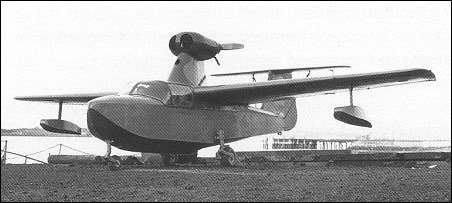
In 1946 Kenneth L. Bunyard designed a lightweight amphibian Flying Boat. The BAX-3 was a three seat, all wood construction aircraft with a cantilever wing and was powered a 130 hp Franklin 5A pusher unit.
During the early 1970s, RAF pilot Jeffery Siers designed and personally built the first Barracuda. When completed, he took it to Oshkosh 1976 where it won Best New Design. While building it, Siers would finish a set of plans and material list, and send them to Bill and Marilyn Buethe would would then build the component and send back suggestions for improvement. In January 1981, Bill Buethe and his Barracuda flew. Bill and Marilyn bought the airplane rights from the designer, Jeff Siers and under the name Buethe Enterprises, they sell plans, information kits, canopies, cowlings, and engine mounts. Plans were selling for US$200. A 200 mph two-seater, the Barracuda, made entirely of spruce and plywood, is a fast, high performance, side by side two place with retractable, tricycle gear. Rated for limited acrobatics, it has a 200 MPH cruise speed and 2,100 FPM rate of climb with a Lycoming O540 Engine. Power may vary from 200 to 300 horsepower. A stall speed of 62 makes landing easy. The comfortable 40 inch wide cockpit, with the sound deadening properties of wood, makes it a wonderful cross-country tourer. The structure is elegant and simple, like a model airplane, with no complex jigging.
Engine: Lycoming IO-540, 250 hp Wing span: 24 ft 9 in Wing area: 120 sq.ft Length; 21 ft 6 in Max ramp weight; 2300 lb MTOW: 2300 lb Max landing weight: 2300 lb Empty weight: 1500 lb Useful load; 800 lb Wing loading: 19.17 lb/sq.ft Power loading: 9.2 lb/hp Fuel capacity; 44 USG Cruise, max pwr 7000ft: 200 mph Stall clean: 64 mph Stall flaps down: 62 mph ROC: 2000 fpm Service ceiling: 18,000 ft Takeoff roll: 800 ft Landing roll; 1000 ft Landing gear; tri retractable Seats: 2 Wheels/tires: 5.00×5 or 6.00×6
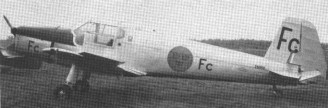
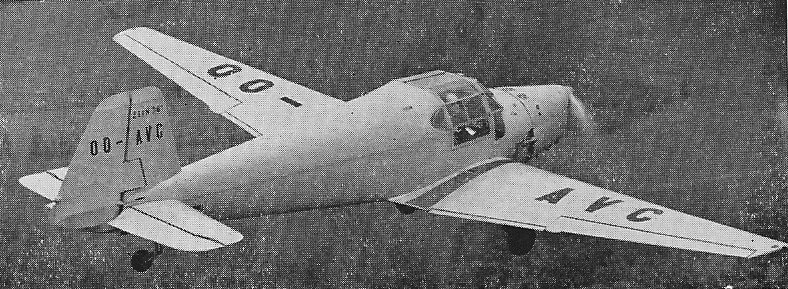
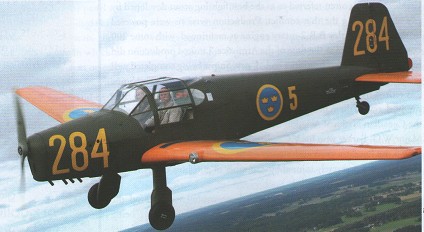
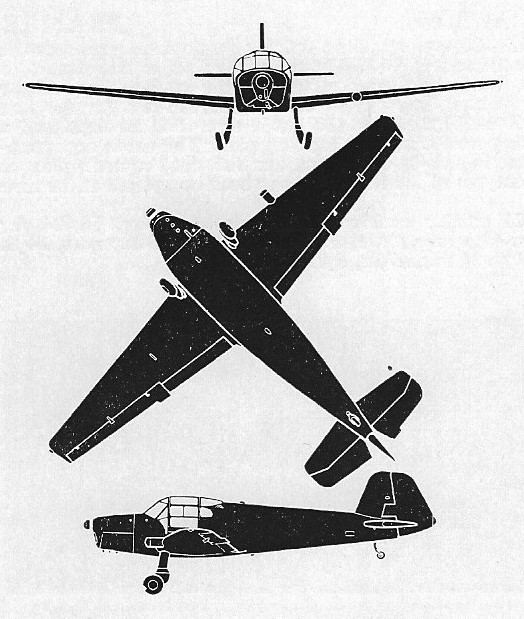
The Bu 181 low-wing monoplane trainer was a development of the Bu 180 Student with enclosed side-by-side accommodation for the crew of two and typical mixed construction (ply/fabric-covered wooden flying surfaces, aluminium alloy covered steel tube forward fuselage and wooden monocoque rear fuselage) with fixed tailwheel landing gear.
The production version for the Luftwaffe was the Bu 181A of which several thousand were built in Germany. Production was transferred to Fokker in Holland (who produced nearly 1000) and Zlin in Czechoslovakia. More production was undertaken in Holland (708) and Sweden by Hägglunds & Söner (125 Sk 25s) during 1944-46 for the Flygvapnet.
Post-war production was launched in Czechoslovakia as the C.6 and CC.106 (105 hp Minor 4-III) and, in civil form as the Zlin 381.
Zlin 381
Under Czech license, the Bu 181 was built Egypt as the ‘Republic of Egypt’, and one civil machine was designated Gomhouria Mk.2.
The final war-time development was the Bu 181D with a number of detail improvements over the Bu 181A. In addition to its designed role, the Bu 181 was used as a communications aeroplane and, in small numbers, as a tug for light training gliders.
Heliopolis Air Works in Egypt was formed 1950 to manufacture a local version of the German Bücker Bu 181D Bestmann as the Gomhouria trainer for Egypt, Jordan, Libya, Saudi Arabia, Somalia and the Sudan.
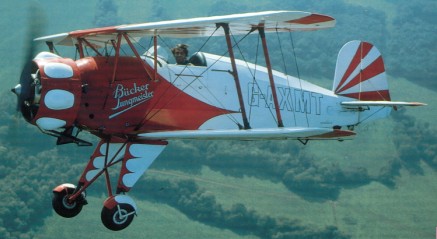
The success of the Jungmann led Bucker to open a second factory where a single-seat derivative could be produced in parallel with the original two-seater. The single-seater was the Jungmeister (young champion) advanced trainer, essentially a scaled-down Jungmann. First introduced in 1935, quickly developed an international reputation for its outstanding aerobatic capabilities.
The initial Bu 133A had the 101-kW (135-hp) Hirth HM 6 inline but better performance than the higher-powered Bu 131. Quantity production was undertaken for the Luftwaffe, though precise details are lacking. The Bu 133B export version was produced to the extent of some 100 aircraft by Dornier in Switzerland and CASA in Spain with the 119-kW (160-hp) Hirth HM 506 inline. The definitive version, however, was the Bu 133C with a radial engine: this had excellent agility and performance, and was used as a fighter lead-in trainer as well as for advanced flying training. This model too was built in Switzerland and Spain.
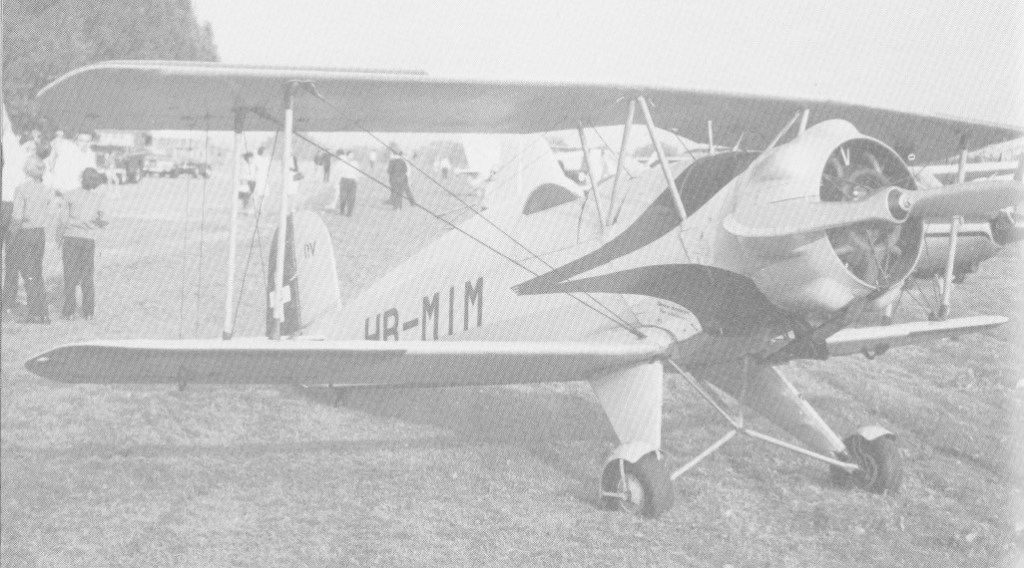
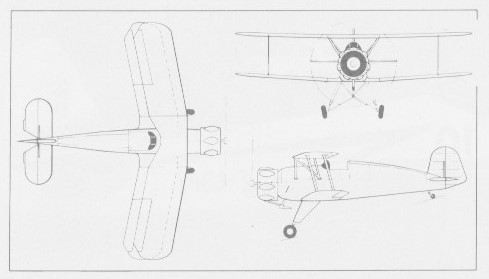
Bu 133C Jungmeister
The Bu 133 was built be Construcciones Aeronauticas S.A. in Spain for the Spanish Air Force under the designation ES-1, and 47 were built in Switzerland by the former Dornier-Werke for the Swiss Air Force.
In 1968, the Aero Technik Canary in Munich, Germany, began production of the BU-133 D-1, also called the Jungmeister. Its engine is a remanufactured Siemens-Halske Sh-14A4; however, due to this engine’s limited availability and demand for more power, a new version, the BU-133F, was built by Wolf Hirth GmbH with a 220 hp Franklin engine.
The Bu-133D-1 is basically as the Bu-133C but engine, optimised for constant inverted flight, Goodyear tyres, wheels and brakes, and US instruments.
Bucker Prado Sl offered kits to build the former German Jungmann two-seat aerobatic biplane using original Bucker/CASA Bu 131 jigs, plus Jungmeister single-seat aerobatic biplane.
Bu 133A Engine: Hirth HM 6 inline, 101-kW (135-hp)
Bu 133B Engine: Hirth HM 506 inline, 119-kW (160-hp)
Bu 133C Jungmeister Engine: l x Siemens Sh 14A-4, 119kW (160hp) Span: 6.6m (21 ft 7.75in) Length: 6m (l9ft 8.25 in) Empty weight: 420 kg / 925 lb Max T/O weight: 585 kg (1,290 lb) Max speed: 134 mph / 116 kt / 215 kph at sea level Max cruise: 108 kt / 124 mph / 200 kph Climb to 3300 ft / 1000m: 2 min 50 sec Service ceiling: 19,685 ft / 6000 m Operational range: 311 mi / 269 nm / 500 km Optional fuel: 8.6 ImpGal / 39 lt
Bu 133 D-1 Engine: Siemens Sh-14A-4 Bramo, 158 hp Length: 19.751 ft / 6.02 m Height: 7.71 ft / 2.35 m Wingspan: 21.654 ft / 6.6 m Wing area: 129.168 sq.ft / 12.0 sq.m Max take off weight: 1411.2 lb / 640.0 kg Weight empty: 992.3 lb / 450.0 kg Max. weight carried: 419.0 lb / 190.0 kg Max. speed: 113 kts / 210 km/h Initial climb rate: 1082.68 ft/min / 5.5 m/s Service ceiling: 12467 ft / 3800 m Wing load: 10.87 lb/sq.ft / 53.00 kg/sq.m Range: 205 nm / 380 km Endurance: 2 h Crew: 1
The first Bryan Autoplane model was designed and constructed by Leland Bryan in 1953, but two improved models were built in 1957 and 1970. All three prototypes could fold their wings.
Development of the Colibri MB-1 led to the MB.2 A wood and fabric construction, single seat, stressed for aerobatics: +11 and -6G. Suitable power is the VW1600.