Convair 990 Coronado

CV 990 Coronado

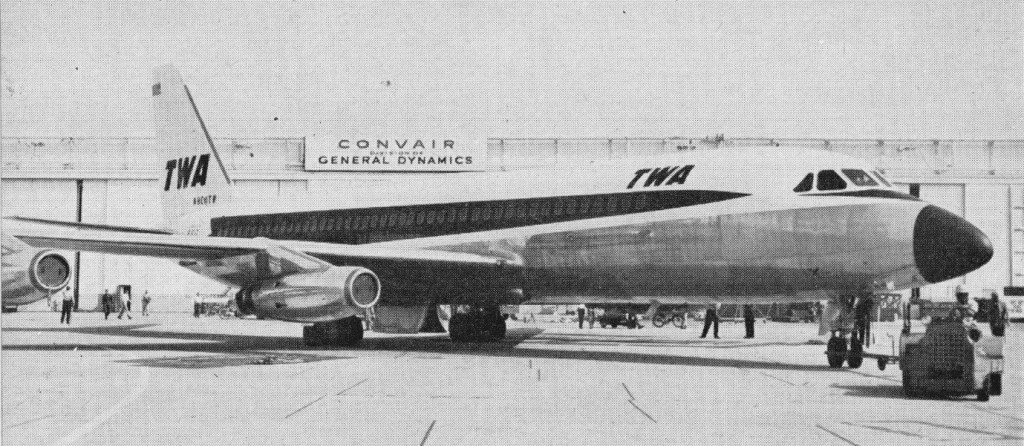
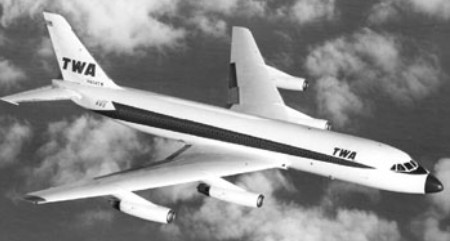
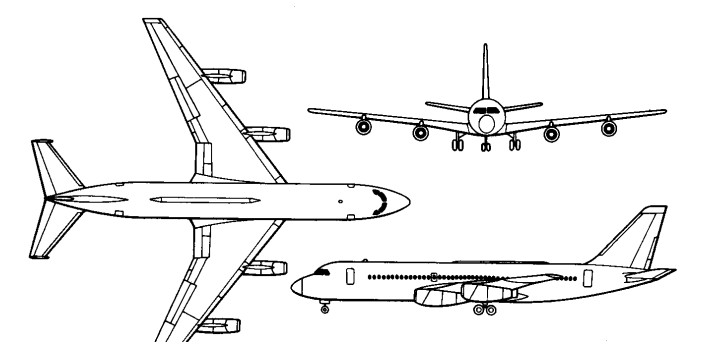
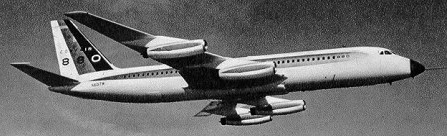
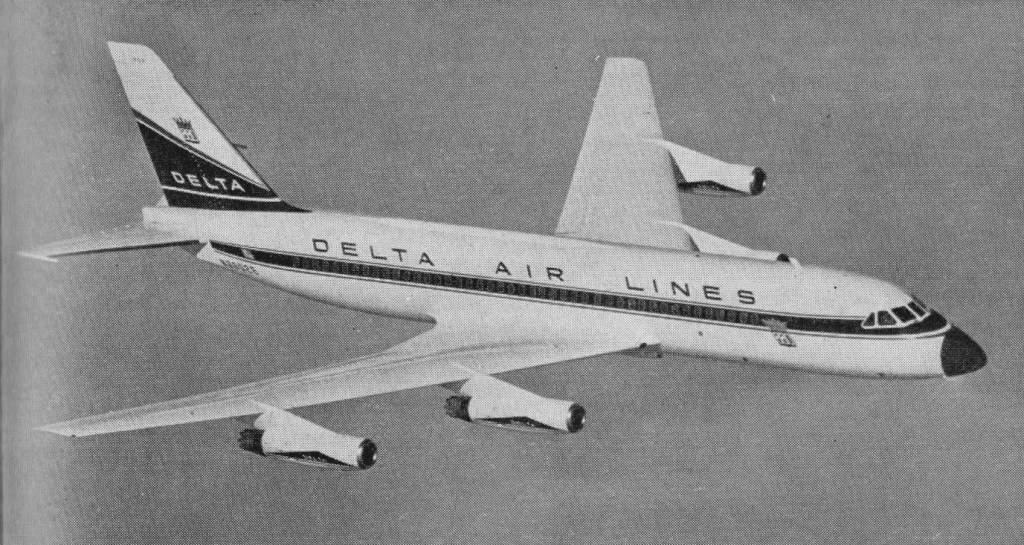
Development of the Convair 990 began when the company lost a vital United Airlines order for 30 aircraft. To attract American Airlines, Convair designed an aircraft with transcontinental range and higher speed and on 30 July 1958 Convair announced the Model 30. This was a natural growth version of the 880 and used a turbofan of 16,050 lb. Originally known simply as the Convair 880M, the new aircraft was much more than a ‘slight modification’ contrary to what the General Dynamics’ board was told. The new variant used a redesigned engine (the CJ 805 23), with a rear mounted fan and a higher bypass ratio. This required a new engine nacelle, while the need to reduce drag led to the addition of Whitcomb bodies on the wing trailing edge to ‘area rule’ the aircraft. The new aircraft also included a new proportional anti skid system, a modified undercarriage and a hydraulically powered rudder. The rest of the aircraft was strengthened to accommodate much more fuel, and the fuselage was stretched 10 ft to house 106 passengers (foreign customers later fitted in over 140) and the tailplane was increased in area.
Howard Hughes initially refused to allow Convair to give the new aircraft a designator ‘higher’ than 880, so the new aircraft was instead initially known as the Convair 600. Convair guaranteed a speed of 550kts (1021 km/h) (agreeing to financial penalties if it failed to deliver) and charged American only $100m for its 25 aircraft (later reduced to 20), taking $22.8m of the money in the form of 25 over valued DC 7s (worth $10m at most). Swissair converted its order for five 880s to an order for seven 990s. The Convair 990 originally failed to meet its guaranteed performance and the prices to American and Swissair were reduced. The airlines initially operated their aircraft without making progress or engine payments while Convair sorted out the problems. The problems were solved in the Convair 990A, but Convair’s chance to dominate the jetliner market vanished when Boeing re engined its 707s with Pratt & Whitney’s new JT3D turbofan, which could be produced by conversion of existing JT3C engines. Thus the fan engined 990 lost its unique selling point. Swissair and American began scheduled revenue services during March 1962. Other Convair 990 operators included Aerolineas Peruanas, Garuda, SAS, Thai International Airways and VARIG.
Models built for Swissair and VARIG differed slightly from standard 990s. Powered by CJ 805 23B engines, they carried slightly more fuel and had higher operating weights. They were officially known as Coronados, a name later used to describe all Convair 990s.
The announcement of the new jet was accompanied by a launch order for 20 from American Air¬lines. The aircraft was renamed Convair 990. The first off the production line flew on 24 January 1961, and by this time the programme was in deep trouble. Drag was well overestimate, and it took two years of extremely costly modifications to get near the guaranteed performance.
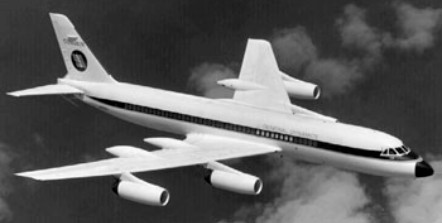
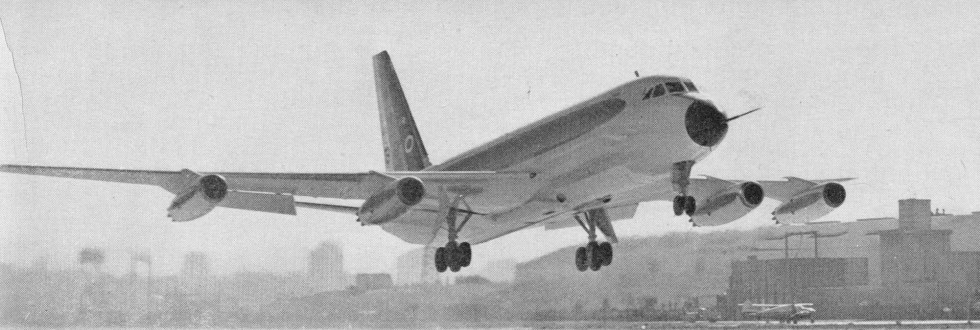
In addition to four large anti¬shock bodies above the trailing edge (sometimes called Küche¬mann carrots, these also served as fuel tanks) Kruger flaps were added under the wing and a com¬plex series of extensions, bumps and fairings added to the engine pods and pylons. The aircraft’s long range came about by using the four wing pods as fuel tanks. The 24-foot-long pods, known as “antishock bodies,” reduce the intensity of shock waves generated when an airplane reaches the speed of sound. In essence, they control the air flowing over the wing and therefore reduce drag. Payload, at 26,440 lb, was widely considered inadequate. The cabin was criti¬cised, as were the lack of customer options, and in the end, in addition to the launch order, only 17 aircraft were sold. American accepted the first (unmodified) 990 on 8 January 1963, and fully modified 990As en¬tered service late that year.
Lebanese International Airways and MEA operated Coronados during the late 1960s and early 1970s. LIA went into liquidation after its two Coronados were destroyed on the ground by Israeli commandos in 1968, while MEA phased out its aircraft in favour of Boeing 707s and 720s in 1972.
Following their retirement from major airlines, many Coronados found employment with travel clubs and minor airlines. Modern Air Transport obtained eight Convair 990s between January 4, 1967 and January 1971 and operated these primarily on charter work. These were often unorthodox, including polar flights landing at McMurdo Sound (the first commercial jets to do so) and even a unique 1970 Father’s Day ‘Get Away from Mama’ Busenvogel (Bosom flight) from Berlin to Paris and back, in which the stewardesses wore uniforms with transparent bodices. The company fitted new slim line seats which allowed capacity to increase to 149, without reducing leg room.
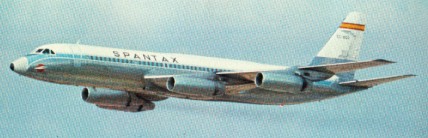
The last major operator of the Coronado was the Spanish charter airline Spantax. Spantax delib¬erately collected used examples and retired the last of 14 aircraft in March 1987. One Spantax 990 survived a mid air collision with a DC 9 over France. Ten of the surviving airframes were scrapped at Palma between 1991 and 1993, but one was retained for preservation.
In 1988 an ex Ports of Call 990 was sold to Ciskei International Airways, but this flew only a single pre inaugural flight when it could not acquire the necessary permits. The aircraft was eventually ferried to EI Paso in 1991.
NASA had been a long term operator of the Coronado, using a succession of three aircraft for atmospheric, astronomical, meteorological and solar experiments and support duties. The final aircraft was reactivated in 1980 for three years, then again in 1988 for use as a landing systems research aircraft, testing the Space Shuttle undercarriage to expand the vehicle’s landing envelope and to allow increased use of the landing site at the Kennedy Space Center Every time a Shuttle landed at Edwards, it required a piggy back ride back to Kennedy atop a Boeing 747, costing $1m per time, all because Kennedy might have been just outside the Shuttle’s crosswind limits. The tests encompassed 155 test flights ending in August 1995. Two CV 990s remained in store at Mojave.

Gallery

990 Coronado
Engines: 4 x General Electric turbofan, 16,050 lb.
Cruising speed 494kts (917km/h) at 35,000ft (10,668m).
Range 7,741km (4,172nm).
Weight empty 54,686kg (120,560 lb).
Gross weight 115,668kg (255,000 lb).
Payload: 26,440 lbs.
Span 36.5m (120ft 0in).
Length 42.49m (139ft 5in).
Wing area 209sq.m (2,250 sq.ft).
Pax cap: 104-140.

990A
Engine : 4 x General Electric CJ-805-23B, 71613 N / 7300 kp
Wing span: 120 ft 0 in (36.58 m).
Length: 139 ft 5 in (42.5 m).
Height: 39 ft 6 in (12.04 m).
Max TO wt: 244,200 lb (110,765 kg).
Max level speed: 540 kts / 625 mph (1006 kph).
Service ceiling : 41011 ft / 12500 m
Range : 2646 nm / 4900 km
Crew : 9+116
Convair 880

In 1955 Convair went ahead with the Model 22 Skylark, seating 80-108 passengers over sectors up to about 2,500 miles. It was announced in September 1956. During construction the aircraft was renamed Golden Arrow, and it was proposed to anodise the external skins gold. Then, because it was to cruise at 600 mph, the type became the Convair 600, and finally this was changed to Convair 880, because 600 mph is 880ft per second. The aircraft grew slightly in weight, the 880M weighing 193,000lb with 11,650-lb thrust CJ805-3B engines. Designed at the request of Howard Hughes, the owner of TWA, the first 880 made its maiden flight on January 27, 1959 and was technically a very advanced aircraft. Powered by four 49.8kN (11,2001b) st CJ 805 3s it had a boldly swept (35 degrees) wing and was a very fast aircraft indeed, justifying the much hyped claim that it was ‘the fastest airliner in the world’.

Convair 880 Article

At the time of the first flight, 78 Convair 880 variants were on order.

The second aircraft off the line flew on 31 March 1959.

The FAA certified the 880 for airline use on 1 May 1960, and 15 days later Delta Airlines put the liner into commercial service.

It was built in two versions: the 880 Model 22 basic model with 49.8kN General Electric CJ-805-3 turbojet engines, flown for the first time on 27 January 1959; and the 880 Model 22-M with 51.8kN CJ-805-3B turbojets, power-boosted rudder and four leading-edge slats. The first 880 Model 22-M flew on 3 October 1960.
The first aircraft completed to full airline standards (number 7) actually broke a transcontinental speed record on delivery from San Diego to Miami. TWAs aircraft were stored while the airline’s ownership was hotly disputed and Delta gained the honour of initiating the first services on 16 May 1960.

TWA became the largest operator of the type, with deliveries beginning two days after Howard Hughes relinquished control of the airline, on December 30, 1960. Subsequently, Convair 880s were also delivered to Northeast Airlines, though a massive, once nearly firm order from United, was lost to Boeing.

TWA was taking delivery of 20 Convair 990 during 1960 and 1961.

Some 17 Convair 880Ms were built, these having four leading edge slats on each wing, a larger fin and powered rudder, a retractable tailskid, provision for pre loaded baggage containers and a 7,094 lit (1,560 Imp gal) centre section tank. The aircraft also had a strengthened undercarriage and CJ 805 313 engines.

The oil crisis of the early 1970s made the Convair 880 particularly uneconomical to operate and Delta retired its aircraft at the end of 1973, followed by TWA in June 1974. New operators included LANICA in Nicaragua, a number of travel clubs and even Elvis Presley, whose aircraft, named Lisa Marie after his daughter, and callsign Hound Dog One is now part of the Graceland museum. Airtrust Singapore operated three Convair 880Ms until 1979, latterly operating services for Air Malta. Another aircraft was sold to the Ciskei Government.

A number of Convair 880s were briefly used as freighters. Monarch Aviation converted about seven with a cargo door and more without the door. American Jet Industries (later part of Gulfstream American) worked closely with Convair to convert some 20 Model 880s as Airlifters, but the company completed only two aircraft and the remainder were stored at Mojave, many with unused cargo doors installed. Attempts to market the aircraft in the mid 1980s foundered because they were not hush kitted. General Air Services converted one more Convair as a freighter. The last freighter flying was probably retired (in about 1986) in Haiti.

The last aircraft in regular service was the US Navy’s sole UC 880, ‘Old Smokey’, equipped as a tanker, and for missile test control and telemetry. This was retired at the NATC, Patuxent River, in September 1993 and in 1995 was used for ground based tests simulating high-altitude bomb explosions. Some 15 aircraft remained in storage at Mojave in 1998.
Total sales were 65.

Gallery

880 Model 22
Engines: 4 x General Electric CJ805-3 turbojet, 5080 kg / 49.8kN / 11,200 lb thrust.
Max level speed: 615 mph (990 kph).
Cruising speed 482kts (895km/h) at 35,000ft (10,668m).
Range 6,518km (3,513nm).
Weight empty 42,185kg (93,000 lb).
Gross weight 87,772kg (193,500 lb).
Span 36.5m (120ft 0m).
Length 39.4 m (129ft 4in).
Height: 36 ft 0 in (10.97 m).
Wing area 185.8sq.m (2,000 sq.ft).

880 Model 22-M
Engines: 4 x General Electric CJ805-3B turbojet, 5285 kg / 51.8kN / 11,650-lb thrust.
MTOW: 87410 kg / 184,500 lb.
Empty wt. 88,615 lb
Top speed 615 mph.
Cruise 501 mph.
Stall 121 mph.
Initial climb rate 3,565 fpm.
Range 3,995 miles.
Ceiling 41,000 ft.
Takeoff run 8,050 ft.
Landing roll 6,150 ft.
Pax cap: 110.
Crew: 5.
Max fuel cap: 47445 lt / 12,534 USG

Convair XFY-1 Pogo

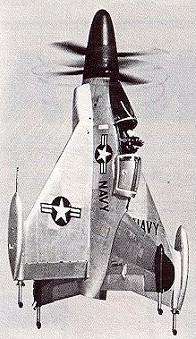
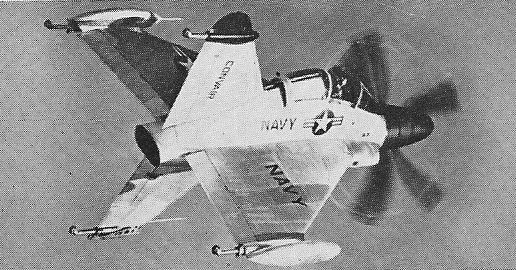
From 1949 the US Navy actively pursued a policy of VTOL research. The results were two prototypes, the Lockheed XFV-1 and the Convair XFY-1 Pogo. Both aircraft were of the ‘tail-sitter’ concept and powered by the 5500-shp (4101-kW) Allison T40-A-6 turboprop driving large contra-rotating propeller units. These provided more thrust than the weight of the aircraft, making possible VTOL operation.

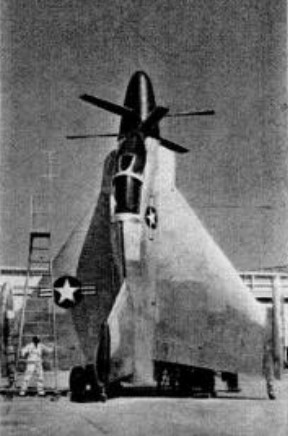
The XFY-1 was a swept delta design with large dorsal and ventral fins, all four surfaces of this cruciform arrangement carrying castoring wheels to support the aeroplane vertically on the ground. This arrangement of flying surfaces made it impossible to fit the XFY-1 with the same type of conventional landing gear as the XFV-1, so Convair received the only example of the T40 turboprop cleared for VTOL operation.

The pilot is seated in a gimbal-mounted seat which tilts forward 45 degrees when the aircraft is in the vertical position, returning to normal when horizontal flight is attained.

The Pogo made its first free VTOL flight on 1 August 1954 and in October made its first transition from free vertical to horizontal flight and back. The flight test programme was very successful in overall terms, but like that of the XFV-1 confirmed that exceptional piloting was necessary for such a tail-sitter type.

The aircraft had little castoring wheels on their fins on which they stood, towering nearly 12.2 m (40 ft) above the ground, and wingtip weapon pods.

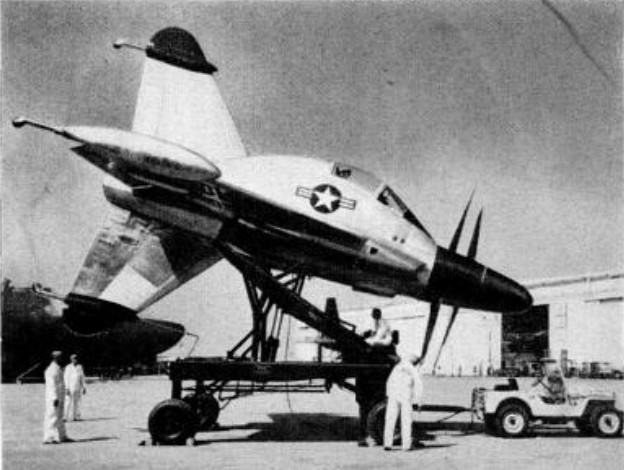
The Pogo was equipped with a custom fitted clamshell ‘hangar’ which locked around tile aircraft and made it independent of airfield facilities so that it could be stationed anywhere.

Extensive tethered tests from a special rig were followed by a first vertical take-off and landing on 1 August 1954. Testing continued with a series of similar vertical flights before the first complete transition from vertical to horizontal flight and vice versa was accomplished on 2 November 1954. Although some 40 flight hours were accumulated by two prototypes of this experimental fighter, its development was abandoned.
The aircraft did not get beyond preliminary testing.

Gallery

Engine: 1 x Allison YT40-A-6 turboprop, 4362kW / 5500 shp
Wingspan: 8.43 m / 27 ft 8 in
Length: 10.66 m / 34 ft 12 in
Height horizontal: 30 ft 9in
Wing area: 32.98 sq.m / 354.99 sq ft
Max take-off weight: 7371 kg / 16250 lb
Empty weight: 5345 kg / 11784 lb
Loaded weight: 10,000-11,000 lb
Max. speed: 982 km/h / 610 mph
Ceiling: 13320 m / 43700 ft
Armament: 4 x 20mm cannon (proposed) or 46 x 70mm rockets

Convair 7 / XF-92A

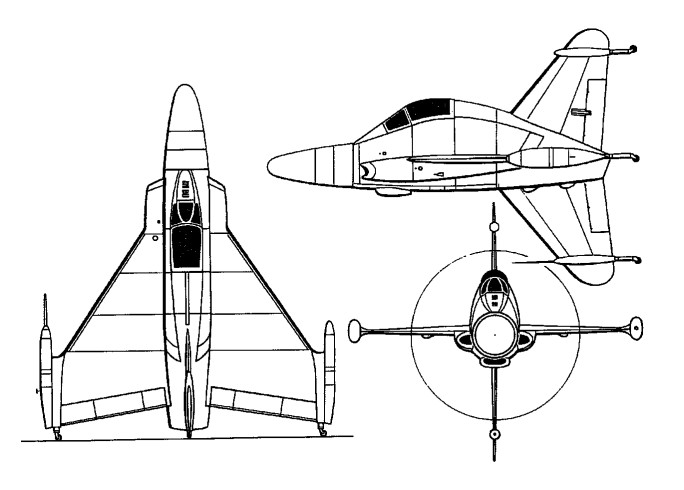
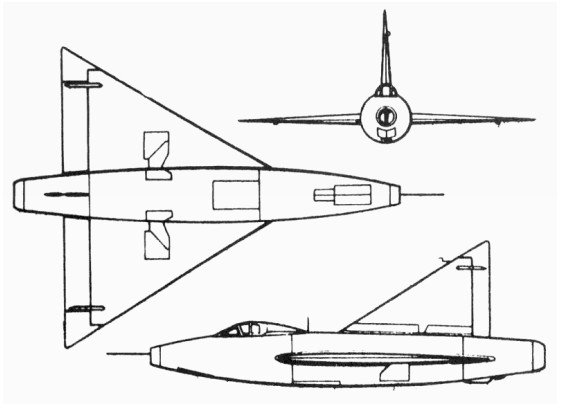
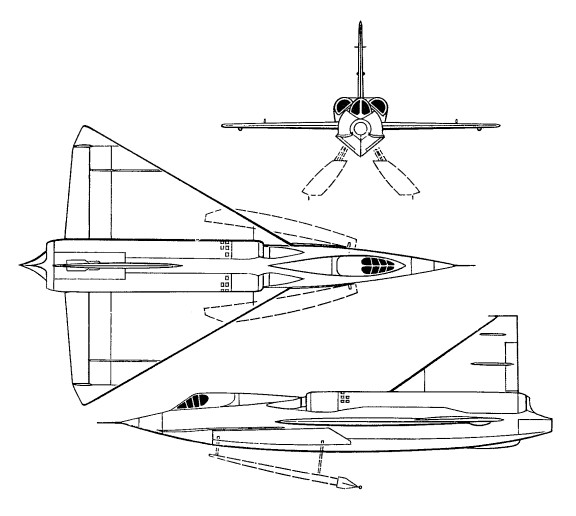
The Convair Model 7 submission was ordered in prototype form as the XF-92 to be powered by a 1600-lb (726-kg) thrust Westinghouse 130 turbojet supplemented for take-off and combat by a 6000-lb (2722-kg) thrust Reaction Motors LR-11 liquid-propellant rocket. This was a tailless delta type with mixed powerplant, and its wing was designed with the aid of Dr Alexander Lippisch. This would have been a very fast point-defence interceptor with exceedingly limited range and duration.

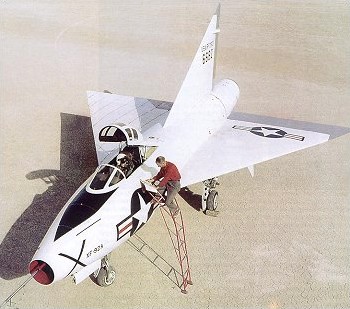
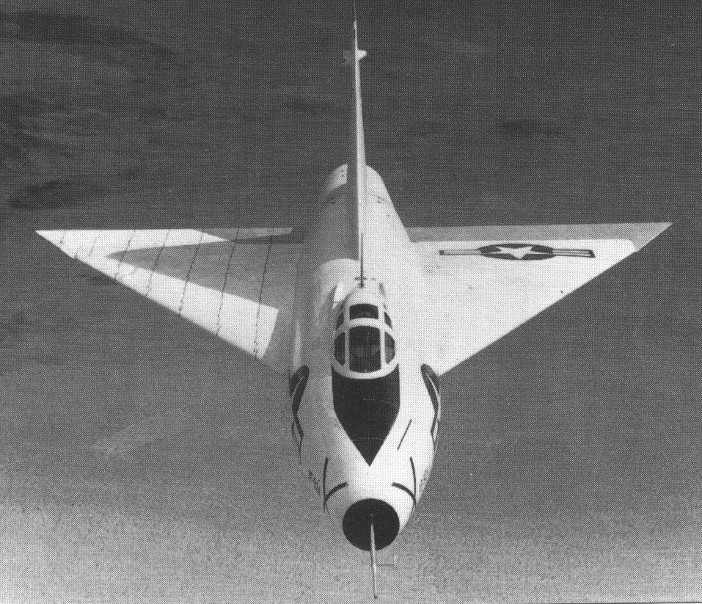
Validation of the basic design’s 60 degree swept delta wing (complete with full-span elevons for pitch and roll control) was entrusted to a smaller-scale aeroplane, the Model 7-002, which used components from five other aircraft and was powered by an Allison J33-A-23 turbojet. The Model 7-002 was generally successful, and development of the XF-92 proceeded without undue problems. In June 1949 the XF-92 was cancelled, but the Model 7-002 was kept in development as the XF-92A high-speed research aeroplane. Re-engined with the 6800-lb (3084-kg) J33-A-29 afterburning turbojet, the XF-92A eventually reached a speed of Mach 0.95 at 40,000-ft (12,190-rn). Meanwhile the LTSAF was completing the competition for the fire-control system originally specified for the XF-92, and this was later installed in the modestly supersonic F-102 Delta Dagger interceptor that was evolved as the Convair Model 8 on the aerodynamic basis of the XF-92A with the advanced Pratt & Whitney J57 afterburning turbojet.

The Convair made its first flight on 8 June 1948. This was a simple airplane with latticed canopy cover, nose air inlet, and through-flow arrangement for its 2358kg thrust Allison J33-A-23 turbojet. Its delta wing was swept 60 degrees. When the fully-fledged rocket-powered XF-92 design was cancelled because of its obviously limited military application, the model 7002 was redesignated XF-92A.

The XF-92A originally flew without afterburning. During continuing tests at Edwards AFB it was re-engined and its fuselage lengthened to provide reheat for the new 3402kg afterburning thrust Allison J33-A-29. At the same time, the natural-metal XF-92A was painted gloss white.

Always a research aircraft rather than a fighter, the XF-92A was turned over to NACA for tests before its flight career ended in 1953.

Since it had been intended only as a flying mock-up for the cancelled machine, the XF-92A was never a candidate for a production order, though it performed valuable, if unintended, service as a testbed for the company’s F-102 interceptor.

XF-92A
Engine: 1 x 3402kg afterburning thrust Allison J33-A-29 turbojet
Max take-off weight: 6800 kg / 14992 lb
Wingspan: 9.5 m / 31 ft 2 in
Length: 12.9 m / 42 ft 4 in
Wing area: 39.0 sq.m / 419.79 sq ft
Max. speed: 1000 km/h / 621 mph
Crew: 1

Convair 600 / 640

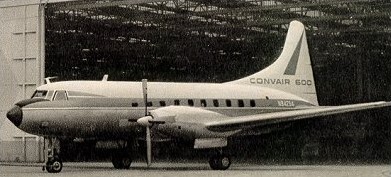
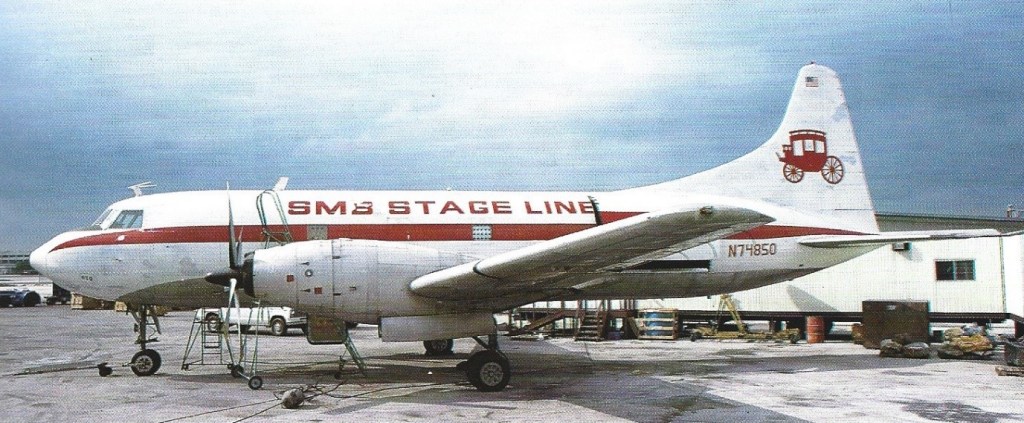
The prototype Convair 600 (a converted 240D) was powered by Rolls-Royce Dart R.Da 10 turboprops, and first flew on 12 May 1965.

N74850 1948 Convair 240-0 converted to 600 with RR Dart 542-4

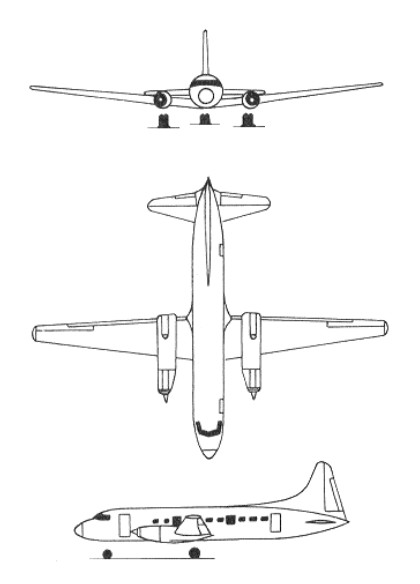
About 240 aircraft were modified from Convair 240 (Convair 600) and Convair 340 / Convair 440 (Convair 640) with the Rolls-Royce turbo-props installed.

Engines: Rolls Royce Dart 10 Mk 542 4 turboprops, 2,750 shp.
Length: 74 ft 8 in.
Wingspan: 91 ft 9 in.
Speed: 309 mph.
Ceiling: 24,600 ft.
Range: 1,230 mls.

Convair 640
Engines: 2 x Rolls-Royce RDa. 10/1 Dart turbo-prop, 2256kW
Max take-off weight: 25855 kg / 57001 lb
Empty weight: 13733 kg / 30276 lb
Wingspan: 32.11 m / 105 ft 4 in
Length: 24.84 m / 81 ft 6 in
Height: 8.59 m / 28 ft 2 in
Wing area: 85.47 sq.m / 919.99 sq ft
Cruise speed: 465 km/h / 289 mph
Ceiling: 6000 m / 19700 ft
Range w/max.fuel: 3138 km / 1950 miles
Range w/max.payload: 1979 km / 1230 miles
Crew: 2-3
Passengers: 49-56

Convair 580 / CV5800

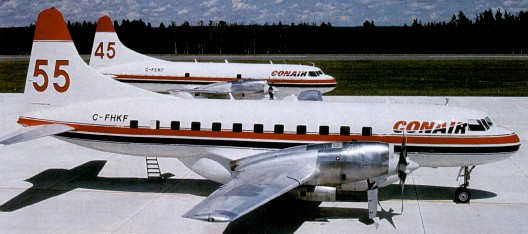
The Convair 580 is a turbine powered development of the Convair 340/440. Standard Pratt and Whitney R2800 piston engine (2,000hp) Convairs were converted to take a pair of Allison 501-D turboprop engines developing 2796kW (3750ehp) and driving four-bladed propellers. Development work was carried out by PacAero Engineering Corp, the extra power allowed a gross weight increase to 53,200 lb. for take off following some structural modification including an enlarged horizontal and vertical tailplane. The conversion line was opened at Pacific Airmotive Corp. Burbank, California, following certification in 1960. The last 580 was delivered in July 1969 after 170 aircraft had been converted. In all-passenger configuration it could carry 39 passengers.

Kelowna Flightcraft R&D Ltd., Allison Gas Turbine and General Dynamics teamed to launch the Convair 5800 Program. The Convair Model 340, 440, and 580 Airplanes were converted with a fourteen foot, three inch stretch to provide increased capacity. The 5800 is powered by the Allison 501-D22G (Series III) Propjet Engine, de-rated to 4300 TSHP.

CV5800

The CV5800 featured a reconditioned airframe with a projected life in excess of 100,000 hours, modern, all new lightweight electrical wiring, all new flight control system cables, dual point underwing pressure refuelling, roller floor system, and passenger, cargo, or Combi models with approved Class E cabin.

All have Honeywell EFIS Flight Decks. The passenger model 5800 has 78 seats, and wide body interior with overhead bins. The cargo versions have a 120 inch cargo door and pallets and containers are compatible with DC-9 and B-727 aircraft. There is a 9-G Tie-down system.

Convair CV5800 ex/C-131F, cn277

Gallery

CV580
Engines: 2 x Allison 501-D turboprop, 2796kW (3750ehp).
MAUW: 53,200 lb.

CV5800
Engines: 2 x Allison 501-D22G
Propellers: Hamilton Standard 54H60-164
Cruise speed: 325 mph
Range with 21,000 lb payload: 750 statute miles
Range with20,000 lb payload: 900 statute miles

Convair 106 Skycoach / Stinson 106 Skycoach

The Convair Model 106 Skycoach was an experimental four-seat light aircraft, designed and built by the Stinson Division of Convair. The Model 106 was a four seat cabin aircraft with a pusher engine, fixed spatted tricycle undercarriage and twin tail booms flanking the propeller. The three passengers and pilot sat in a cabin in the fuselage nacelle, which also housed the pusher 230 hp (170 kW) Franklin 6A8-225-B8 six-cylinder horizontally-opposed piston engine, driving a cooling fan and pusher propeller.

First flown in April 1946 (pilot: Bill Martin), flight testing was carried out at San Diego, but performance was found to be unexceptional. With a maximum speed of only 142 mph (123 kn; 229 km/h) the Model 106 was outclassed and Convair abandoned development, scrapping the sole prototype, (regn. NX40004, msn. 1), in 1947.

Model 106 Skycoach
Engine: 1 × Franklin 6A8-225-B8, 230 hp (170 kW)
Maximum speed: 142 mph (229 km/h; 123 kn)
Crew: 1
Capacity: 3 passengers

Convair R3Y Tradewind

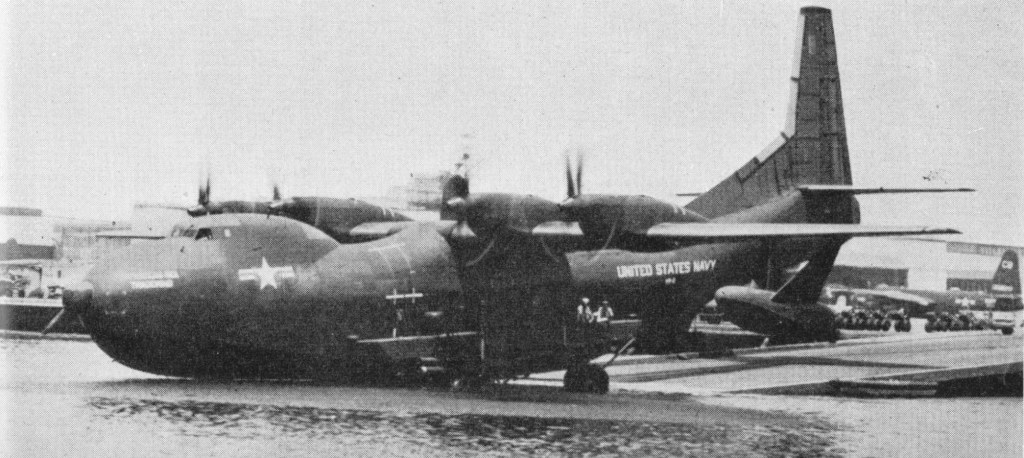
Shortly after Reuben Fleet sold his interest in Consolidated Aircraft Corporation in March 1943 and the company was reorganised as Consolidated Vultee (Convair), the US Navy expressed interest in a new long-range multi-role flying-boat.

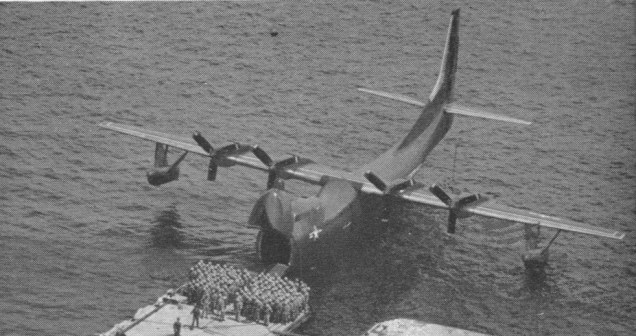
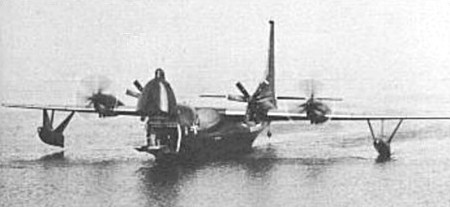
Convair’s proposal was for an aircraft powered by four turboprop engines, was the subject of a contract for two prototypes, awarded on 27 May 1946. Designated XP5Y-1, the new aircraft featured a slim fuselage for an aircraft of this class with a length-to-beam ratio of 10 to 1. it was powered by four Allison T40-A4 turboprops, each driving two contra-rotating, reversable propellers through a common gearbox. The type’s main role was anti-submarine warfare, and it was to have been fitted with advanced radar, ECM and MAD equipment in addition to carrying a heavy load of bombs, mines, rockets and torpedoes. The first aircraft was flown from San Diego on 18 April 1950, and in August the type set a turboprop endurance record of 8 hours 6 minutes. August was an eventful month for the XP5Y-1 as the US Navy decided to discontinue its development for maritime patrol, but to persevere with the basic design for use as a passenger and cargo aircraft.

Convair R3Y-1 Tradewind

Work continued, despite the loss of an XP5Y-1 in a non-fatal crash off San Diego in 15 July 1953 and the first R3Y-1 Tradewind flew on 25 February 1954. Major changes included the deletion of all armament and of tailplane dihedral, the addition of a 3.05m wide port-side cargo hatch aft of the wing and the provision of redesigned engine nacelles to accept the improved T40-A-10 engines. Cabin sound-proofing and air-conditioning were installed and pressurised accommodation provided for up to 103 passengers or, in medevac configuration, for 72 stretcher cases and 12 attendants; cargo payload was 24.4 tonnes (24 tons).
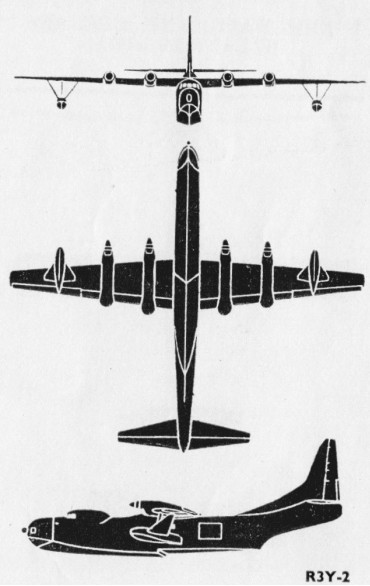
The R3Y-1 was a straight transport version, the R3Y-2 was the assault transport version with the hinged nose. It could also refuel jets in flight using two or four wing pods. The R3Y-2 had a nose loading door and integral hydraulic ramps. The opening door blocked the pilots’ forward view during beach operations.
The R3Y-1 ‘s performance was demonstrated on 24 February 1955 when one of the five aircraft built flew coast-to-coast at an average speed of 649km/h on delivery to the Navy Test Center at Patuxent River, Maryland. Similarly, on 18 October a 6 hour 45 minute record flight at an average 579km/h was accomplished between Honolulu and NAS Alameda, California. US Navy transport squadron VR-2 received the first of its mixed fleet of R3Y-1 and R3Y-2 flying-boats on 31 March 1956, but financial considerations and continuing problems with the engine/propeller combination, culminating in two in-flight separations of propellers and gearbox from an engine (on 10 May 1957 and on 2 January 1958), led to a curtailment of Tradewind operations. Squadron strength was first cut to two R3Y-1s and two R3Y-2s and the unit was finally disbanded on 16 April 1958.

R3Y-2

R3Y
Engines: 4 x Allison T40-A-10 turboprops, 4362kW, 5500 shp
Max take-off weight: 74843-79379 kg / 165001 – 175002 lb
Payload: 21750kg / 47951 lb
Wingspan: 44.42 m / 145 ft 9 in
Length: 42.57 m / 139 ft 8 in
Height: 13.67 m / 44 ft 10 in
Max. speed: 580 km/h / 360 mph
Cruise speed: 480 km/h / 298 mph
Range w/max.fuel: 6437 km / 4000 miles
Crew: 5
Passenger Capacity: 80 or 24 ton.

R3Y-1
Engines: 4x 5,500 h.p. Allison T40-A-4 coupled turboprops.
Wingspan: 145 ft
Length: 142 ft. 6 in
Loaded weight: 160,000 lb
Max. speed: 392 mph
Range: 4,500 miles at 300 mph
Accommodation: 103 troops, 92 stretchers and 12 attendants or 24 tons of cargo.

Convair XF2Y Sea Dart

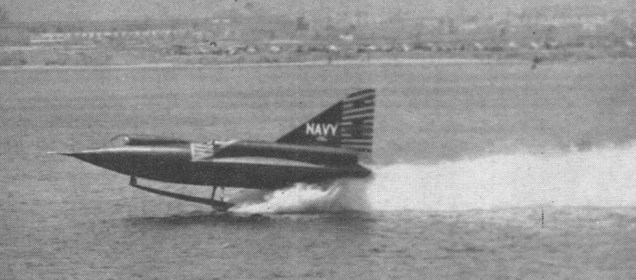
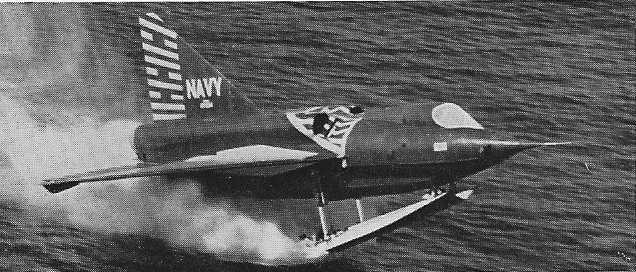
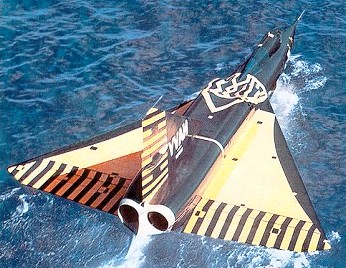
Convair was selected to produce a waterplane interceptor, and the result was XF2Y Sea Dart. The company was instructed to investigate the ‘blended hull’ concept, in which the hull rode so low in the water that the wings provided part of the required buoyancy until the aeroplane had accelerated sufficiently to rise onto a planing bottom, while the National Advisory Committee for Aeronautics (from 1958 the National Aeronautics and Space Administration) investigated the hydro-ski concept. When extended, the hydro-skis lifted the accelerating aeroplane onto the surface of the water, where the skis planed and so allowed the aeroplane to reach take-off speed; and when retracted they formed the lower surface of the fuselage without creating any drag.

Convair XF2Y Sea Dart Article

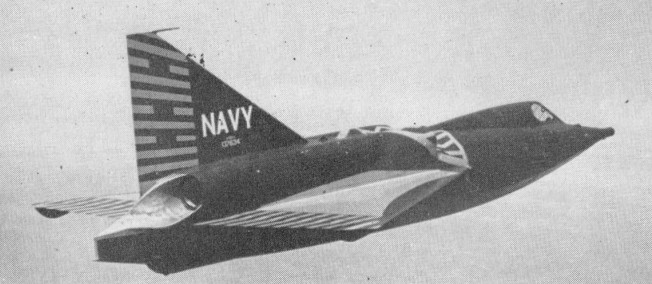
The inlets for its two 3400-lb (1542-kg) thrust Westinghouse J34-WF-32 turbojets located in the dorsal position where they would be shielded from spray.

YF2Y-1

The concept embodied in the Convair Model 2-2 proposal was sufficiently interesting for the US Navy to award a contract for a prototype XF2Y-1 on 19 January 1951, followed by an order for 12 production F2Y-1 fighters on 28 August 1952; to this was added subsequently four YF2Y-1 pre-production aircraft.

First flown on 9 April 1953, the prototype offered performance much below expectations and this factor, coupled with serious vibration problems with the hydro-skis, led to the XF2Y-1 and the production F2Y-1s being cancelled.

During test runs there was considerable vibration and pounding from the two hydro-skis and these were replaced by a single V-shaped ski. More power was needed than the 1542kg thrust provided by each of the Westinghouse J34-WE-32 turbojets installed in the prototype and the first YF2Y-1. This latter aircraft was re-engined with two J46-WE-2s, the rear fuselage being modified to accommodate the engine afterburners and the same powerplant was installed in the remaining three YF2Y-1s. On 3 August 1954 the YF2Y-1 exceeded a speed of Mach 1 in a shallow dive, the first seaplane to become supersonic, but only two of these aircraft were used in a limited test programme that was terminated finally during 1956.

Gallery

YF2Y Sea Dart
Engines: 2 x Westinghouse J46-WE-32, 2722kg
Wingspan: 10.26 m / 33 ft 8 in
Length: 16.03 m / 52 ft 7 in
Height: 6.32 m / 20 ft 9 in
Wing area: 52.30 sq.m / 562.95 sq ft
Max take-off weight: 7495 kg / 16524 lb
Empty weight: 5739 kg / 12652 lb
Max. speed: 1118 km/h / 695 mph
Ceiling: 16705 m / 54800 ft
Range: 826 km / 513 miles
Crew: 1

YF2Y-1
Engines: 2 x Westinghouse J46-WE-8 turbojets, 4,800 lb. thrust
Wingspan: 30 ft. 6 in
Length: 41 ft. 2 in
Loaded weight: approx. 22,000 lb.
Armament: 4×20 mm. cannon
Crew: 1.

Convair B-46

XB-46

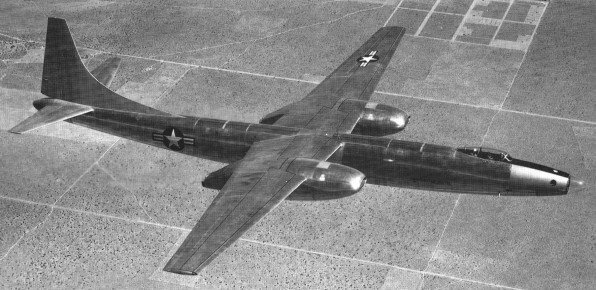
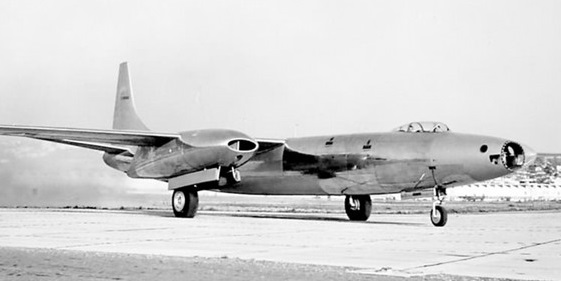
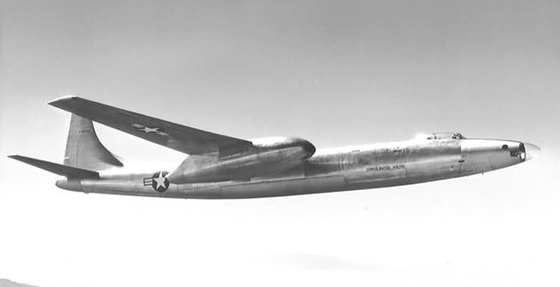
By December 1944 proposals had been received from Boeing, Convair, Martin and North American for medium axial turbojet-powered bomber for tactical- and operational-level use. Convair gained a contract for three XB-46 prototypes from the US Army Air Force.

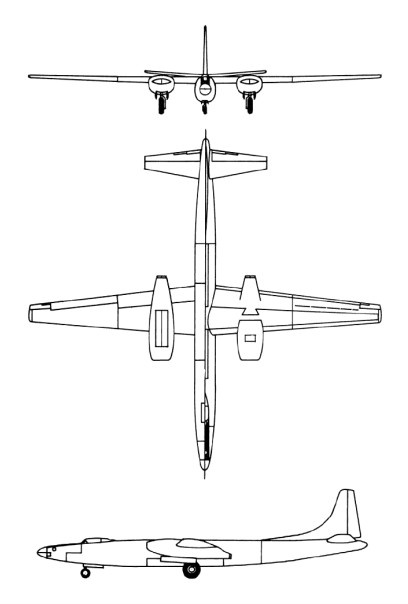
Of all-metal construction, the XB-46 was of high-wing cantilever monoplane configuration, had a slim oval-section fuselage, conventional tail unit, retractable tricycle landing gear and was designed to accommodate a crew of three. Power was provided by four General Electric TG 180 turbojet engines, these being mounted in pairs.

First flown on 2 April 1947, the XB-46 was handed over to the newly-formed US Air Force in late 1947, attaining an average speed of 858km/h during its delivery flight to Wright Field at Daytona, Ohio. Despite this performance the XB-46 remained a one-off prototype, cancelled in 1947, the USAF ordering the Boeing B-47 Stratojet into production.

Engines: 4 x turbo-jet General Electric TG-180(J35), 1814kW
Empty weight: 21782 kg / 48021 lb
Wingspan: 34.44 m / 112 ft 12 in
Length: 32.24 m / 105 ft 9 in
Height: 8.53 m / 27 ft 12 in
Wing area: 102.1 sq.m / 1098.99 sq ft
Max take-off weight: 41278 kg / 91003 lb
Max. speed: 813 km/h / 505 mph
Cruise speed: 700 km/h / 435 mph
Ceiling: 13105 m / 43000 ft
Range: 4820 km / 2995 miles
Bomb load: 9000kg
Crew: 3