Glaser-Dirks DG-100 / DG 101 / Elan DG 100 / DG 101

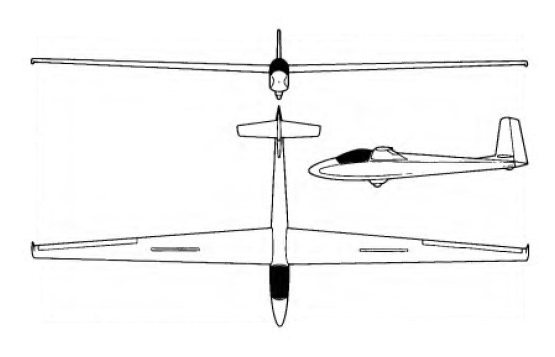
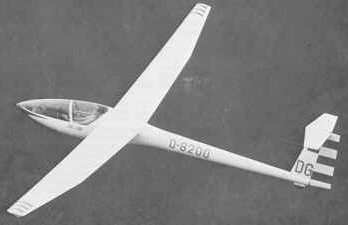
The DG-100 Standard Class single-seater is a modified and lighter weight development of the Akaflieg Darmstadt D-38 glass-reinforced plastic sailplane, which first flew in February 1973. The Akaflieg Darmstadt D-38 was designed by Wilhelm Dirks before forming Glaser-Dirks Flugzeugbau GmbH.

The DG-100 has Schemmpp-Hirth type top-surface airbrakes, an all-flying T-tail and water ballast. Options offered included both retractable and fixed landing gear, and a fixed stabilizer. It displayed better performance and handling qualities than expected and so its designer, Dipl-lng Wilhelm Dirks, sought the necessary backing to develop a production version. With Gerhard Glaser he founded the Glaser-Dirks Flugzeugbau GmbH and the DG-100, design of which had begun in August 1973, first flew in prototype form on 10 May 1974.

The DG-100 itself is basically very similar to the D-38 but with a lighter plastic foam supporting the glassfibre skin instead of the balsa wood used in the D-38, and the letter’s rounded nose has been replaced by a more pointed nose of better aerodynamic shape. The DG-100 Club version for club flying is available with either an all-moving tailplane or conventional tailplane like the DG-100G’s and a fixed monowheel. The DG-100G, first flown on 11 June 1976, is generally similar to the DG-100 except that its tailplane and elevators are similar to those of the later DG-200. The cantilever shoulder wings each have a glassfibre roving main spar and are of glassfibre/Conticell/foam sandwich construction, as are the ailerons and the tailplane. Instead of flaps, there are Schempp-Hirth duralumin air brakes on the upper wing surfaces; these are considered to be cheaper to make and lighter than flaps, as well as being simpler to operate for landing. Up to 220lb of water ballast can be carried in two wing tanks, and this can be jettisoned in flight. The semi-monocoque fuselage is an all glassfibre structure, as are the fin and rudder.
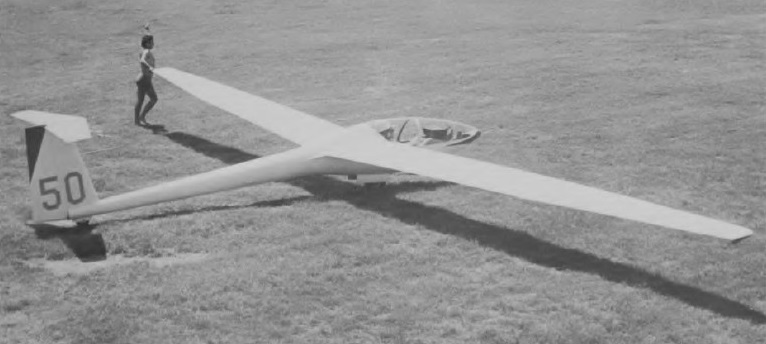
The prototype DG-100 had an all moving tailplane with a large anti-servo tab, and production aircraft have a similar tailplane with a full-span trimmable anti-Flettner tab. The manually-retractable monowheel has a drum brake, and there is a tailwheel. The pilot sits in a semi-reclining position under a two-piece cockpit canopy, the rear section of which is hinged to open upwards and backwards, the adjustable headrest being attached to the canopy hinge.

Production of the DG-100 series was transferred to the Yugoslav firm Elan, who have been building the DG-100 under licence since the autumn of 1978. A total of 102 DG-100s had been delivered by the beginning of 1978, plus a further 15 examples of the DG-100G.

After more than 100 were built it was succeeded by the DG-101, offering a front-hinged canopy, automatic trim and a cockpit of improved impact-resistant design. The DG-100 Club is an unballasted, fixed gear version with a gross weight of 385 kg / 849 lb.

Production versions were the DG-101, DG-101G and DG-101G Club, which have the forward opening
one-piece canopy of the DG-202.
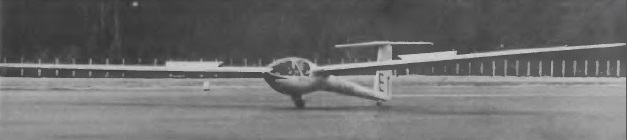
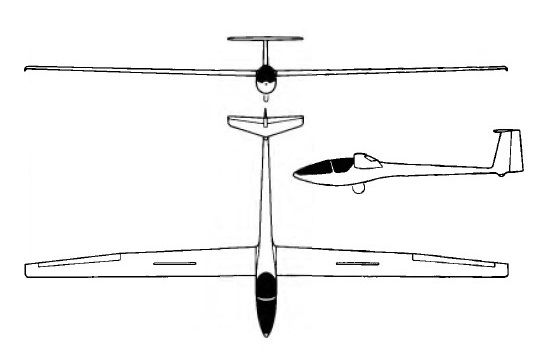
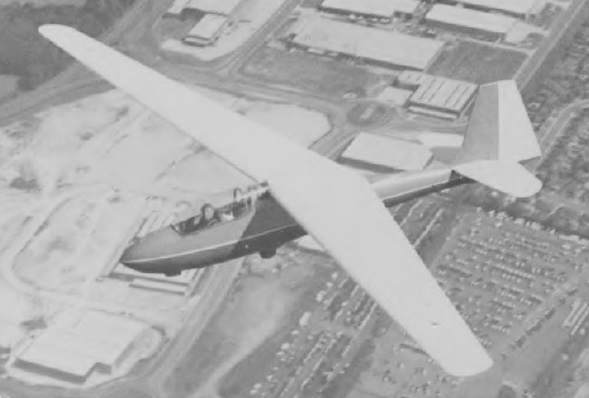
DG-100
Wing span: 15m / 49 ft 2.5 in
Wing area: 11 sq.m / 118.4 sq.ft
Length: 7.0 m / 22 ft 11.25 in
Height: 1.4m / 4 ft 7 in
Empty Weight: 230 kg / 507 lb
Payload: 188 kg / 415 lb
Gross Weight: 418 kg / 922 lb
Wing Load: 38.0 kg/sq.m / 8.78 lb/sq ft
Water Ballast: 100kg / 220lb
Airfoil: Wortmann FX-61-184/60-126
Aspect ratio: 20.5
MinSink: 0.58 m/s / 1.94 fps / 1.13 kt @ 40kt / 46 mph / 74 km/h
No. of Seats: 1
L/DMax: 36 @ 91 kph / 49 kt / 56 mph
Max speed: 140 kts / 161 mph / 260 km/h (smooth air)
Max speed: 140 kt / 260 km/h (rough air)
Stall speed: 32 kts / 60 km/h
Max aero-tow speed: 102.5 mph
Glide ratio: 39-1 @ 57 kts / 65 mph / 105 km/h
Structure: fibreglass
Glaser-Dirks / DG Flugzeugbau

Glaser-Dirks Flugzeugbau GmbH
DG Flugzeugbau

Gerhard Glaser, owner of a civil engineering business, and Diplom Ingenieur Wilhelm Dirks, founded the Glaser-Dirks Flugzeugbau GmbH company. In 1972, they built their first glider, the DG-100. Glaser-Dirks produced 105 DG-100 and another 222 units have been produced later at the Elan factory. In 1977 the 15-meter class sailplane DG-200 entered the market. In 1978 the DG-200 was updated with 17-meter wingtip extensions. The DG-200/17 is one of the most sought-after gliders on the secondhand market. By 1980 Glaser-Dirks pushed into carbon fiber construction with the DG-200/17C motorglider. The DG-400 followed the next year and quickly became one of the best-selling motorgliders of all time. In 1983, version DG-300 Club Elan was designed to replace the DG-100 in the production line, and the fully aerobatic version DG-300 Elan Acro contributed to its popularity. The DG-300 is still in production; up until today 484 DG-300s have been delivered. In 1987 the two-seat DG-500 made its first flight, and the motorized DG-500M followed only 4 weeks later. Next came the 15m class sailplane DG-600. In 1989 a motorized self-launching version, the DG-600M followed. The latest product family is the DG-800, which was optimized for 18m span with wing flaps and equipped with modern wing sections designed by L.M. Boermans from the TU Delft. In May 1993, the self-launching version DG-800A and the pure sailplane DG-800S made their maiden flights.
In 2003 Glaser-Dirks Flugzeubau changed their name to DG Flugzeubau GmbH.
March 96 brought news of the company’s crash. Wolff and Glaser sold the remaining company capital, in a completely empty and deserted production hall. Gerhard Wolff joined the company as a partner.
Rolladen-Schneider has had to go into receivership, and DG Flugzeugbau did not take over the liabilities in 2003, but only the rights to build the gliders and use the brand name.
The Wolfgang Dallach Company collapsed and on 1 August 2008 DG Aircraft GmbH took over support of the Dallach “Fascination”, “Evolution”, “Sunwheel” and all derivatives.
Wolfgang Dallach was working for DG Aircraft as a freelancer since 2006.

Gippsland Aeronautics / GippsAero Pty Ltd

Gippsland Aeronautics was established by George Morgan and Peter Furlong in Gippsland, Australia, in 1984.

Approved manufacture and maintenance facility established in 1971. Also developed and offers piston-engined GA-200 Fatman single/two-seat agricultural aircraft with an 800-liter hopper (first flown March 1991) and the AGTrainer as dual-control training model, plus latest GA-8 Airvan piston-engined 8/9-seat general-purpose utility monoplane suited to operations from unprepared and short airstrips (first flown March 1995).
Latrobe Valley, Australia.
The name changed to GippsAero Pty Ltd as of 6 May 2010.

Mr Mahindra, vice-chairman and managing director of the $7 billion conglomerate that bears his family’s name, aspired to turn the group’s aerospace arm into an Indian version of the Brazilian Embraer. The Mahindra brand is better known for its tractors and utility vehicles, and building a regional jet is a complex and time consuming business that usually starts with the production of much smaller turbo prop aircraft. To speed up the process Mahindra agreed to pay about $40 million for a controlling stake in two small Australian aviation companies, Gippsland Aeronautics and Melbourne-based component maker Aerostaff Australia.

Gippsland Aeronautics, based in Victoria’s Latrobe Valley and maker of the popular 8-seat GA8 Skyvan utility plane, planed to beef up its range with an updated 18-seat version of the controversial Australian-made Nomad twin turbo-prop. It bought the rights to the Nomad’s type certification in 2008.

The company was bought back by the founding family in 2023.

The company employed up to 180 local people to send one GA8 Airvan out the factory door every two weeks in 2025.

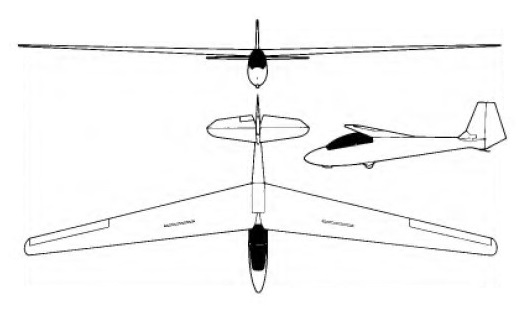
Ginn-Lesnlak Kestrel

This two-seater semi aerobatic sailplane with its distinctive forward wing sweep was designed in 1956 by Mr Lesniak, who began construction of a prototype with Mr Vie Ginn at the Dunstable Gliding Club’s workshops at Dunstable, UK.

After a time the project was abandoned and after several years the uncompleted Kestrel prototype was saved
from destruction by Mr Ron Dodd, a chartered engineer who had worked at the RAE Farnborough, and Mr Jeff Butt. They reactivated the project, with Mr Dodd recalculating, modifying and improving the design, and they completed the Kestrel prototype, which eventually made its first flight on 19 July 1969 at Enstone as c/n 1 BGA.1571.

It is of conventional wood and fabric construction, the two-part wings incorporating large Schempp-Hirth air brakes and Frise ailerons, and there are metal-bonded reinforcements at the wing roots. The all-wood fuselage has plywood/balsa sandwich reinforcement from the tip of the nose to just aft of the cockpit. Landing gear consists of a fixed monowheel and a tailskid, with a skid block mounted under the nose to protect it. The pilots sit in tandem in a roomy cockpit under a two-piece canopy, the sideways-hinged forward section being a complete Skylark 4 canopy which also secures the transparent detachable rear half.

Span: 59 ft 0.5 in / 18.0 m
Length: 24 ft 8.25 in / 7.54 m
Wing area: 243 sq ft / 22.57 sq.m
Aspect ratio: 14.3
Wing section: Gottingen 549/M12
Empty weight: 680 lb / 308 kg
Max weight: 1,100 lb / 499 kg
Water ballast: None
Max wing loading: 4.55 lb/sq ft / 22.21 kg/sq.m
Max speed: 98 mph / 85 kt / 158 km/h
Stalling speed: 32.5 kt / 60 km/h
Max rough air speed: 71.5 kt / 133 km/h
Min sinking speed: 2.2 ft/sec / 0.67 m/sec at 50 mph / 43 kt / 80 km/h
Best glide ratio: 28:1

Geronimo Conversions Corp

USA
Successor to Vecto Instrument Corp and Vecto Aircraft Engineering Division, having acquired the assets of both companies on their owner’s death in 1965. Based at San Antonio, Texas, Geronimo carried out Vecto-designed conversions on the Piper Apache, fitting bigger engines and improving the aircraft’s internal and external appearance. Company name changed to Seguin Aviation in late 1960s.

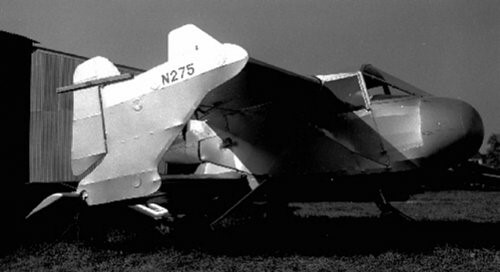
Geraci Jeep-O-Plane / Alliance X

This 2-seat homebuilt was a design of Mr. Al Geraci and developed in co-operation with Mr. William J. Simonini and was completed in 1956.

The aircraft was sometimes referred to as Alliance X and it featured a pusher engine installation (one 90hp Continental C90) and staggered wings approximately 8 ft span, with large interconnecting end plates. The one-of-a-kind aircraft was registered N275.

The aircraft, named Jeep-O-Plane, made one flight only and further work was then halted.

GEPAS Compact

Designed and built by B. de Lagarde of GEPAS – Groupe d’Etudes Pour I’Aviation Sportive – the Compact is a homebuilt single-seater of conventional modern appearance and glassfibre construction, and the prototype was due to make its first flight in May 1978. This cantilever mid wing monoplane is built of glassfibre and epoxy resin, with a non-retractable monowheel and flaps that also act as air brakes. The tailplane is low-set and the pilot sits under a one piece flush fitting cockpit canopy.

Span: 42 ft 0 in
Length: 19 ft 8.25 in
Wing area: 102.3 sqft
Aspect ratio: 17.2
Max weight :586 lb
Best glide ratio: 31:1

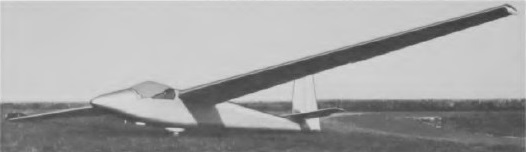
GEP TCV-03 Trucavaysse / TCV-04

The TCV-03 is a Standard Class single-seater designed by Dr Pierre Vaysse, head of the sailplane amateur construction department of the Federation Francaise de Vol a Voile – FFVV, and it was built by the Groupe d’Etudes Georges Payre – GEP.

The Trucavaysse started as a redesigned version of the Breguet 905 Fauvette to make it suitable for amateur construction, but with a new, more slender fuselage and a conventional tail instead of the Fauvette’s V-tail, it evolved into a new type bearing little resemblance to the Breguet design; other changes include recovered wings with an improved control system and reinforced trailing edges, and the removal of the landing skid.

Design work began in October 1968 and prototype construction started in the following February, the prototype, which was actually built by the Aero Club de Norois, making its first flight on 14 July 1973.

The single spar cantilever shoulder wings have plywood/Klegecel sandwich leading edges and slotted wooden ailerons; there are DFS metal airbrakes on both upper and lower surfaces but no flaps. The wooden fuselage is plywood-covered, and the wooden tail unit has a low set one-piece all-moving tailplane with anti-tabs. There is a fixed monowheel and a tailskid utilising rubber shock absorbers.

The type is sold in kit form for amateur or club construction, and several have been built by amateur constructors.

Under development in 1977, the TCV-04 is basically a modified TCV-03 fuselage and tail unit, with a longer one-piece cockpit canopy and small dorsal fin, married to the wings of a Siren C-30 Edelweiss mounted in the shoulder position, thus following Dr Vaysse’s design philosophy of utilising components of existing designs.

TCV-03
Span: 15.0 m / 49 ft 2.5 in
Length: 6.7 m / 21 ft 11.75 in
Height: 1.8 m / 5 ft 11 in
Wing area: 11.25 sq.m / 121.1 sqft
Wing section: NACA 63-420/513
Aspect ratio: 20.0
Empty weight: 192 kg / 423 lb
Max weight: 302 kg / 665 lb
Water ballast: None
Max wing loading: 26.9 kg/sq.m / 5.51 lb/sq ft
Max speed: 130 mph / 113 kt / 210 km/h (in smooth air)
Max rough air speed: 81 kt / 150 km/h
Stalling speed: 27 kt / 50 km/h
Min sinking speed: 0.8 m/sec / 2.62 ft/sec at 37.5 mph / 32.5 kt / 60 km/h
Best glide ratio: 28:1 at 50 mph / 43 kt / 80 km/h

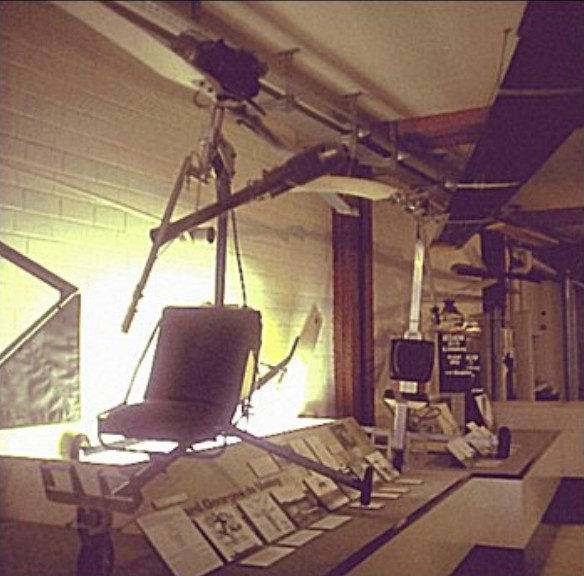
Georges G 1 Papillon

A 1965 simple light construction of Ing. Gerard Georges de Vastey, which specialty was the propulsion system. The rotor was driven by a self developed mini jet engine which was mounted directly to the rotor blades with some 35hp of power. Small but sufficient.

Length: 11.811 ft / 3.6 m
Height: 6.89 ft / 2.1 m
Rotor diameter: 19.685 ft / 6.0 m
Max take off weight: 374.9 lb / 170.0 kg
Crew: 1

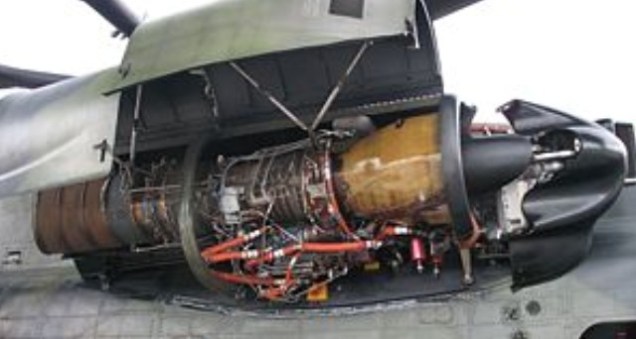
General Electric T64

The General Electric T64 is a free-turbine turboshaft engine that was developed for use on helicopters. GE introduced the engine in 1964. The original engine design included technical innovations such as corrosion resistant and high-temperature coatings. The engine features a high pressure ratio, yielding low specific fuel consumption.

Later versions of the engine produce from 3,925 to 4,750 shp (2,927 to 3,542 kW).

The engine was designed to accommodate different gearboxes, or shaft drive for helicopter or turboprop fixed-wing applications. The engine could be operated between 100 degrees upward and 45 degrees downward for STOL or Helicopter applications.

MTU Aero Engines has a 30% share in the program, producing the engine’s high-pressure turbine, high-pressure compressor, combustion chamber and gearbox.

Versions:

T64-GE-1
3,080 hp (2,296.76 kW)
T64-GE-2
Turbo-shaft : 2,810 hp (2,095.42 kW) at 5,200 output rpm
T64-GE-4
Turbo-prop, reduction gearbox below centre-line, airscrew brake and bolt-on control unit : 2,850 hp (2,125.24 kW) at 1,160 propeller rpm.
T64-GE-6
Turbo-shaft : 2,850 hp (2,125.24 kW) at 13,600 engine rpm.
T64-GE-7
3,925 hp (2,926.87 kW)
T64-GE-8
Turbo-prop, reduction gearbox above centre-line, airscrew brake and bolt-on control unit : 2,850 hp (2,125.24 kW) at 1,160 propeller rpm.
T64-GE-10
2,970 hp (2,214.73 kW)
T64-GE-16
3,485 hp (2,598.76 kW)
T64-GE-100
4,330 hp (3,228.88 kW)
T64-GE-412
3,695 hp (2,755.36 kW)
T64-GE-413
3,925 hp (2,926.87 kW)
T64-GE-415
4,380 hp (3,266.17 kW)
T64-GE-416
4,380 hp (3,266.17 kW)
T64-GE-419
4,750 hp (3,542.07 kW)
T64-GE-423
3,925 hp (2,926.87 kW)
CT64-820-1
2,850 hp (2,125.24 kW)
CT64-820-3
3,130 hp (2,334.04 kW)
CT64-820-4
3,130 hp (2,334.04 kW)
T64/P4D
3,400 hp (2,535.38 kW)

Applications:
Aeritalia G.222
de Havilland Canada DHC-5 Buffalo
Lockheed AH-56 Cheyenne
Kawasaki P-2J
LTV XC-142
ShinMaywa US-1
Sikorsky CH-53 Sea Stallion
Sikorsky CH-53E Super Stallion
Sikorsky HH-53/MH-53

Specifications:
T64-GE-100
Type: Turboshaft
Length: 79 in (2,007 mm)
Diameter: 20 in (508 mm)
Dry weight: 720 lb (327 kg)
Compressor: Axial, 14 stage high pressure compressor
Combustors: Annular
Turbine: Axial, 2 stage high pressure turbine, 2 stage low pressure turbine
Fuel type: Aviation kerosene
Oil system: Pressure spray / splash
Maximum power output: 4,330 hp (3,228.88 kW)
Overall pressure ratio: 14.9:1
Turbine inlet temperature: 1,180 °F (638 °C)(-1), 1,325 °F (718 °C)(-413), 1,410 °F (770 °C)(-415)
Specific fuel consumption: 0.48 lb/hp-hr (0.292 kg/kW-hr)
Power-to-weight ratio: 6.014 hp/lb (9.887 kW/kg)