A development of the 10m straight wing LO-100 aerobatic glider, the LO-150 features a two- piece, plywood covered, single spar wing and uses flaps for glidepath control. Designed by Alfred Vogt, the fuselage is a wooden monocoque with a cantilever tail. Early models had a skid and jettisonable dolly instead of a fixed main wheel. A.J. Smith won the 1961 Nationals in a LO-150 and Harold Jensen flew another 700 km/ 435 miles to win the 1962 Barringer Trophy.
Wing span: 15 m / 49.2 ft Wing area: 10.9 sq.m /117 sq.ft Aspect ratio: 20.6 Airfoil: Clark Y Empty Weight: 100 kg / 441 lb Payload: 110 kg / 242 lb Gross Weight: 310 kg / 683 lb Wing Load: 28.44 kg/sq.m /5.8 lb/sq.ft L/DMax: 34 105 kph / 57 kt / 65 mph MinSink: 0.68 m/s / 2.2 fps / 1.24 kt No. Built: 15 Seats: 1
Wolf Hirth GmbH, a prewar manufacturer of sailplanes, made wooden subassemblies for Messerschmitt projects during the Second World War, including a high-speed glider-trainer for Me 163 Komet pilots, and components for the Me 321 and Me 323 Gigants. The re-established company, owned largely by Messerschmitt-Bölkow-Blohm, built Arnold Wagner’s Acrostar competition aerobatic aircraft in small numbers, and supported the Bolkow Bo 107, 207, 208, and 209 lightplanes.
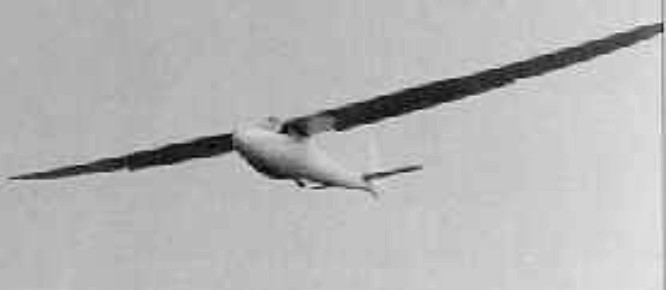
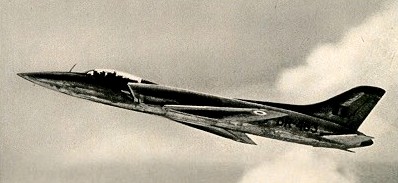
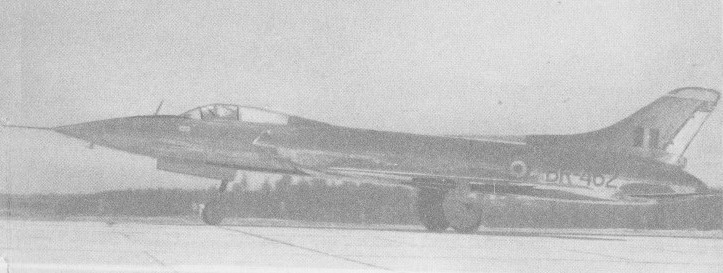
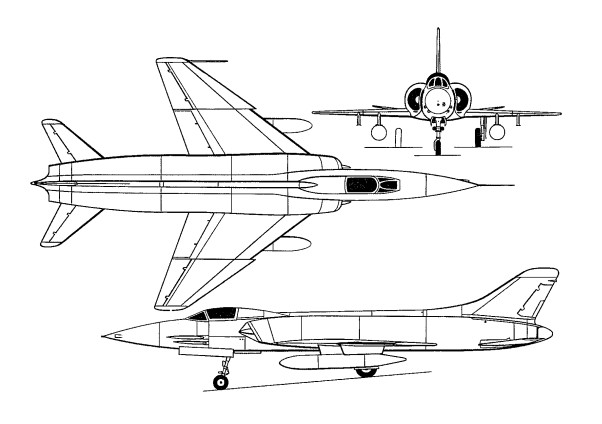
Designed by a team led by Kurt Tank, HAL produced the HF 24 Marut for the Indian Air Force as a single seat ground attack fighter with subsonic performance. Work on the project began in 1955, to meet an Indian Air Force requirement, and first flight tests of the aerodynamic envelope were made in March 1959 with a full scale wooden glider.
The prototype first flew on June 17, 1961 powered by two 4850 lb thrust Bristol Siddeley Orpheus 703 turbojets. The prototype has room for a second pilot, with dual controls, in the rear of the cockpit, but this space was to be normally occupied by armament, fuel, cameras or electronic equipment.
First prototype
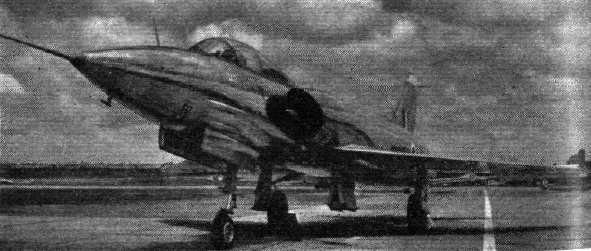
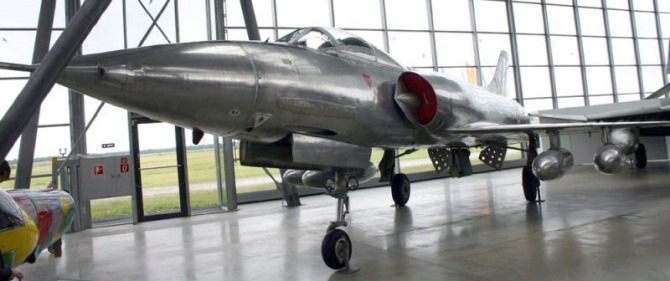
The airframe has sharply swept low wings, sweptback tail surfaces, and one-piece all-moving tailplane low-set on the fuselage. The fuselage is area-ruled and semi-circular engine intakes, with central shock body are on each side of the cockpit. The tricycle undercarriage has single wheels on each unit. The main units retract inward and nose-wheel retracts forward.
Hindustan HF-24 1st prototype
Production of 129 (plus 18 two-seat HF-24 Mk 1Ts two seat operational trainers) ended in 1977. Power for each production aircraft is provided by two 4,850 lb thrust Rolls Royce Bristol Orpheus 703 turbojet engines and armament comprises four 30 mm Aden cannon and 50 68 mm air to air rockets carried in a retractable pack in the lower fuselage. Underwing stations can carry the usual selection of bombs, rockets, napalm tanks, and drop tanks.
HF-24 Marut preserved at the Oberschleissheim museum near Munich.
Marut Mk.1 Engine: 2 x HAL/Rolls-Royce Orpheus Mk 703, 21.6kN Max take-off weight: 10908 kg / 24048 lb Empty weight: 6195 kg / 13658 lb Wingspan: 9.0 m / 29 ft 6 in Length: 15.87 m / 52 ft 1 in Height: 3.6 m / 11 ft 10 in Wing area: 28.0 sq.m / 301.39 sq ft Max speed: 1070 km/h / 665 mph Cruising speed: 486 kts / 900 km/h Ceiling: 12000 m / 39350 ft Range: 800 km / 497 miles Crew: 1 Armament: 4 x 30mm Aden cannon /120rds, 50 x 68mm missiles / 1816kg ext Hardpoints: 4
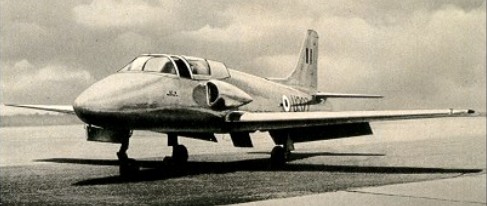
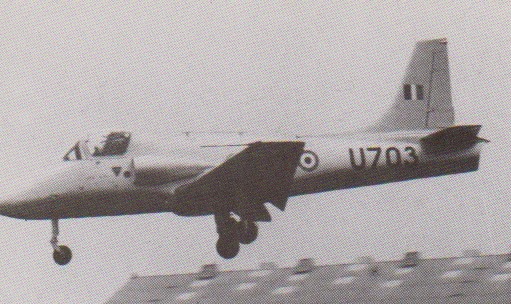
Hindustan Aeronautics Ltd. (HAL) constructed the Viper powered HJT 16 Kiran two seat jet trainer for the Indian Navy. The prototype HJT-16 flew on 4 September 1964. Deliveries began in 1968, and the Kiran I was superceeded by the IA with two weapons pylons for armament training.
The prototype (U738) of the Hindus¬tan Aeronautics HAL Kiran Mk II armament training and counter–insurgency aircraft was flown for the first time on 30 July 1976. The Kiran II side-by-side basic trainer/light attack aircraft differs from the Viper powered Kiran land IA in being fitted with a derated Orpheus 701-01 turbojet. The Kiran II has four underwing hardpoints and upgraded avionics. Deliveries began in 1984. By mid-1985 16 had been delivered, and the production rate was 18 per year.
By 1989 a total of 251 aircraft were built including 51 improved “Kiran II”s.
HJT-16 Kiran I/IA Engine: 1 x Rolls-Royce Viper Mk 11, 11.11kN Max take-off weight: 4235 kg / 9337 lb Empty weight: 2560 kg / 5644 lb Wingspan: 10.7 m / 35 ft 1 in Length: 10.6 m / 34 ft 9 in Height: 3.63 m / 11 ft 11 in Wing area: 19.0 sq.m / 204.51 sq ft Max. speed: 695 km/h / 432 mph Cruise speed: 9145 km/h / 5683 mph Armament: 2 x 227kg bombs or 14 x 68mm unguided missiles Crew: 2
HJT-16 Kiran II Engine: 1 x R-R Orpheus 701. Installed thrust: 18.68 kN. Span: 10.7 m. Length: 10.6 m. Wing area: 19 sq.m. Empty wt: 2995 kg. MTOW: 5000 kg. Warload: 1000 kg. Max speed: 672 kph. Initial ROC: 1600 m / min. Ceiling: 12,000 m. T/O run (to 15m): 730 m. Ldg run (from 15m): 1440 m. Fuel internal: 1345 lt. Range: 735 km. Armament: 2 x 7.62 mm. Hardpoints: 4
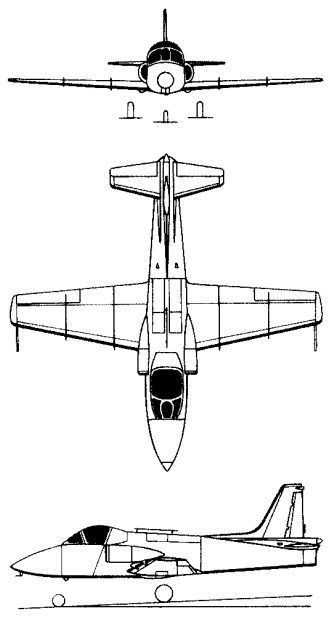
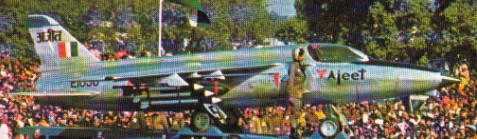
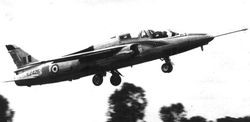
The Indian Air Force issued a requirement for an improved Gnat in 1972 as an interceptor and also have a secondary ground-attack role. The aircraft was given the name “Ajeet”, Sanskrit for “Invincible” or “Unconquered” and was to be manufactured by HAL. It was to have more hardpoints, wet wings and a Martin-Baker ejection seat. Hindustan Aeronau¬tics developed the Ajeet lightweight jet fighter from the Folland/ Hawker Siddeley Gnat which HAL license-produced.
The prototype Ajeet first flew in March 1975 and the first production aircraft (E1956) followed in September 1976.
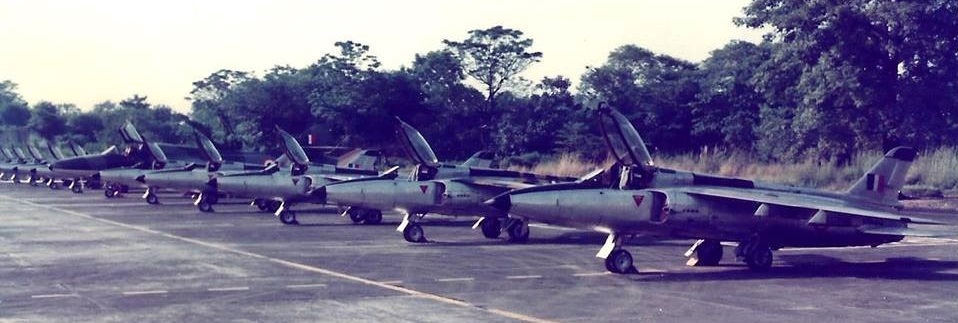
Ajeets of No.22 Squadron with a Hunter T.66 two-seater
The Ajeet aircraft was comparable to the Gnat in handling, albeit on the heavier side. A clean Gnat (without drop tanks) was significantly more agile and manoeuvrable than a clean Ajeet. The trainer on the other hand was even heavier. In the few 1vs1 sorties against the fighter, it was noticed that the trainer lost out while manoeuvring in the vertical plane. Another issue that one had to be careful of was while opening throttle and seeking full power as the engine took a long time to achieve 100%.
The main changes from the Gnat are improved navigation and communications systems and the use of new wing fuel tanks which replace the previous underwing tanks. The last feature allows an increased warload to be carried, although drop tanks can still be carried underwing on two of the four stations for longer range.
Armament comprises two 30 mm Aden cannon and rockets or bombs. Maximum speed with the 4,500 lb thrust Rolls Royce Orpheus 701 01 turbojet remains subsonic at Mach 0.96.
Deliveries began to the Indian Air Force in 1976. Of the total of 79 aircraft ordered for the Indian Air Force about one third had been delivered by early 1980 and operated between 1977 and 1991.
For nearly 30 years of its operational service in India the Gnat/ Ajeet did not have a type trainer. Pilots in India, after dual checks in the Hawker Hunter, were required to do the first solo on the Gnat directly. The dual checks were given on a Hunter trainer by simulating a Gnat approach (much shallower) by lowering flaps to only 15 degrees and not full flaps down. Once cleared after the mandatory dual checks, the pilots were shown the various attitudes of nose up and take off, strapped in the cockpit and two airmen sitting on the tail plane under the flight commander’s supervision. The cockpit was very cosy and seated at 20 degrees incline of the ejection seat. A taxi run with a full throttle roll on the runway got the pilot ready for his first solo in the Gnat.
The development of the HAL Ajeet trainer started in the late 70s. A proposal within a time frame of 54 months at an estimated cost of Rs.4.16 crores, put up by Hindustan Aeronautics Limited (HAL) in June 1975, was approved by the Government in February 1976. Government sanctioned in April 1980, procurement of 12 trainer aircraft from the HAL at a cost of Rs. 1 crore each. The aircraft were to be delivered at the rate of six each during 1982-83 and 1983-84.
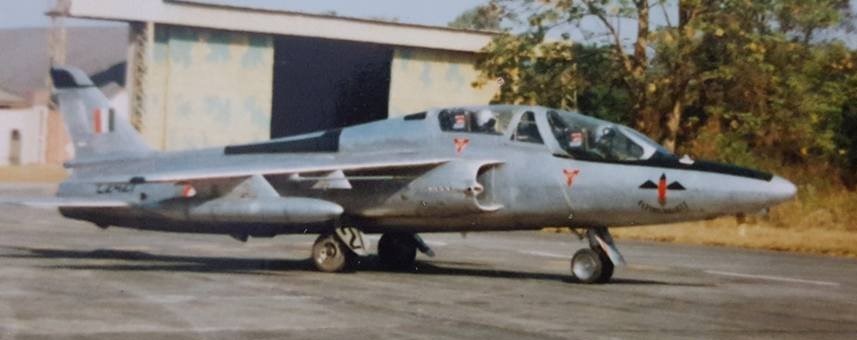
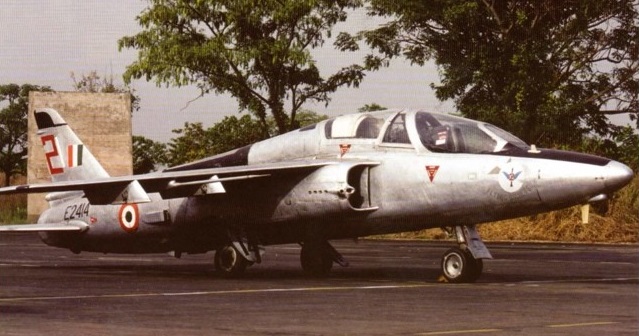
Developed from the single-seat Ajeet lightweight fighter, the prototype trainer version flew on September 20, 1982. The Ajeet trainer, had a lengthened fuselage (1.4 meters longer than the Ajeet fighter) with two seats mounted in tandem and two internal fuel tanks on the spine removed to accommodate the extra seat. The 30 mm cannon and four stores pylons were retained, although the cannon could be removed and replaced with additional fuel tanks (increase capacity by 273 Litres). The engine remained the same Orpheus 701. However, the trainer had an inferior Power/ weight ratio as compared to the fighter version and handled sluggishly.
first prototype Ajeet Trainer E2426
In December 1982 Sqn Ldr DK Powar was flying the first prototype of the Ajeet Trainer (E2426), the 14th sortie the aircraft had undertaken. The unfortunate accident was probably due to differences in pre-flight inspection procedures of HAL and IAF ground crew, leading to the oxygen not being switched on. At higher altitudes, hypoxia set in, leading to disorientation and complete loss of consciousness and fatal crash. A second prototype flew in September 1983.
The program was put in abeyance, but over the next two years, the IAF had a re-think and it was revived in late 1984. However, in 1986, when IAF agreed on the withdrawal of the Ajeet Aircraft, the order for the trainer was in limbo again.
The first Ajeet Trainer induction at Sulur BRD. The aircraft was handed over to Wg Cdr Ranjith Tathgur of No.18 Squadron “Flying Bullets”
The order for full production of Ajeet Trainers having been withdrawn, two prototypes with HAL were inducted into the IAF finally in late 1987 (and early 1988) and were handed over to 18 sqn then based at Bagdogra. Two aircraft bearing serial numbers E2427 and E2414 were handed over to the squadron. The first aircraft delivered was a production aircraft while the other a prototype modified to production standard. These two were the only aircraft built (other than the one that crashed).
Their usage fell far short of the initial projected hours. The utilisation rate achieved by these trainer aircraft was poor as it ranged from 0.15 to 5.30 hours per month during January 1988 to May 1990. One cause of the low utilization could have been the limited utility of the aircraft as laid out in the syllabus. The aircraft was supposed to provide three dual check sorties with each having a laid down profile. It did not have the required instrumentation and lights for night flying as the Ajeet itself was day operational only. Further, with the Ajeet in winding down mode, the squadron pilot and aircraft strength was depleted.
When the Ajeets were finally phased out in March 1991, apparently the Ajeet Trainers were still serviceable and were flown to the BRD in Sulur. In all, the two Ajeet Trainers served the IAF for only three and a half years across two squadrons.
In December 1988, right after 18 sqn had wound up, the two trainers were ferried from Bagdogra to Kalaikunda.
Two Ajeet Trainers were the last aircraft in the 33-year successful legacy of the Gnat fighter and its variants that served the IAF until the early 90s. The Ajeet Trainers served the IAF for only three and a half years across two squadrons and flew little, remaining a footnote in the annals of Indian aviation history.
Engine: 4,500 lb thrust Rolls Royce Orpheus 701 01 turbojet Maximum speed: Mach 0.96 / 716 mph / 1,152 km/h Wing span: 22 ft 1 in (6.73 m)
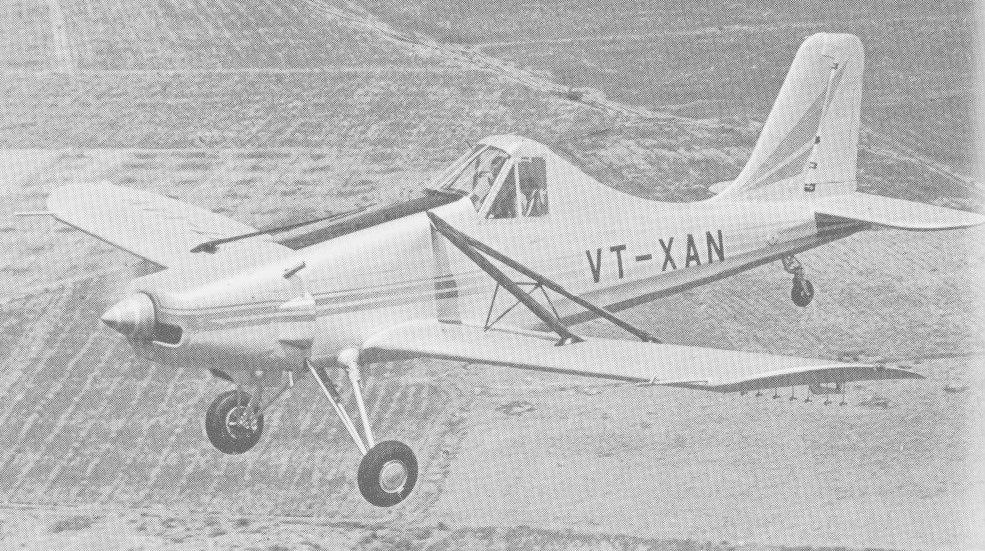
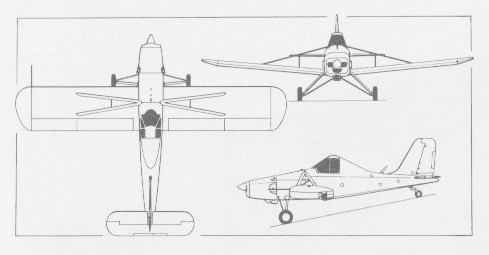
The HA-31 Mk.I Basant (Spring) first flew in 1972. The Mk.II production aircraft was much modified from the prototype.
The Indian Directorate of Agricultural Avia¬tion in New Delhi, having to 1981 purchased 24 HA 31 Basant agricultural aircraft, has con¬firmed the purchase of eight more. Of a total of 39 Basants built, five were purchased by the Haryana government.
HA-31 Mk.II Engine: Lycoming IO-720-C1B, 400 hp Wingspan: 39 ft 5.5 in / 12.00 m Length: 29 ft 6.25 in / 9.00 m Empty weight: 2645 lb / 1200 kg MTOW: 5000 lb / 2270 kg Max cruise75% 8000 ft / 2625m: 100 kt / 115 mph / 185 kph Max ROC SL: 750 fpm / 228 m/min Service ceiling: 12,500 ft / 3800 m Range max fuel: 348 nm / 400 mi /645 km Seats: 1 Payload Normal cat: 1333 lb / 605 kg Payload Restricted cat: 2000 lb / 907 kg
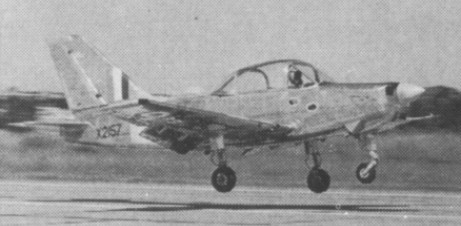
In India, on 6 January 1977, Hindustan Aeronautics flew the first of two prototype HPT 32 basic trainer (X2157). Of all metal construction, the two/three seat basic trainer was suitable for a range of ab initio training and was developed to meet an Indian air force requirement. The Indian Air Force had ordered 40, which were scheduled for delivery in 1985 6.
Known as the Deepak in Indian Air Force service, 134 were built for Indian Air Force and eight for Navy to replace HT-2s.
A private-venture development of the HPT-32, the turboprop HTT-34 side-by-side trainer first flew on June 17, 1984. The HTT-34 has an Allison 250-B17D engine in place of the original Lycoming AEIO-540 piston unit, but is virtually unchanged aft of the firewall.
HPT-32 Engine: 1 x Lycoming AEIO-540, 195 kW. Span: 9.5 m. Length: 7.7 m. Wing area: 15 sq.m. Empty wt: 890 kg. MTOW: 1250 kg. Warload: 255 kg. Max speed: 265 kph. Initial ROC: 335 m / min. Ceiling: 5500 m. T/O run (to 15m): 545 m. Ldg run (from 15m): 487 m. Fuel internal: 220 lt. Range/Endurance: 740 km / 4 hr.
Powered by a 190 hp Continental, the four seat Krishak is a multi-purpose development of the Pushpak. The HAOP-27 Krishak being manufactured as a liaison aircraft for the Indian Air Force and Army, the first flown in 1965.
Hindustan began a programme to provide powerplants for as many as possible of the aircraft they design. The PE-90H was developed in 41 months, using readily-available materials.
Max take-off r.p.m. were fixed at 2,600 to avoid the need for reduction gearing, and a compression ratio of 6.7 was chosen to permit the use of 73 octane fuel, which is the most easily-obtainable grade in India. About 95 percent of the PE-90H could be manufactured in India in 1961 and it is hoped eventually to produce locally the remaining components, such as magnetos and carburettors. The prototype has a bore of 4in, stroke of 3in and swept volume of 3.15 litres (192.23 cu.in), but these were to be increased on the Mk2 version, which was intended as the future power plant of the Hindustan Pushpak lightplane.
Length: 32in Height: 21 in Width: 31 in Dry weight: 180 lb Rating: 90 hp at 2,600 rpm
The Indian government had agreed to license-manufacture the Folland Gnat jet fighter in place of the Venom. There was some sort of delay in delivery of the tooling and jigging for this new plane and this provoked a production crisis as the very large work force ended up with nothing to do. When Venom production discontinued, management panicked to find alternative work, hence the “PUSHPAK” project.
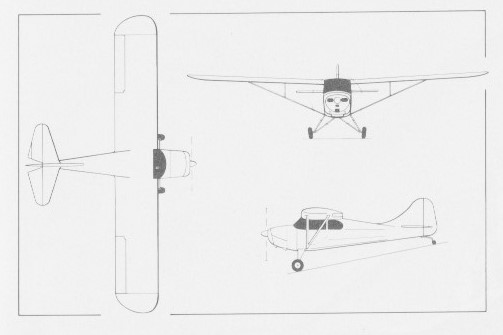
Aeronca sold the Super Chief Model 11 type certificate to E. J. Trytek of Syracuse, NY. Though Mr Trytek did not manufacture any airplanes, but he did license Hindustan Aircraft of India to build the Chief as the HUL-26 ‘Pushpak’.
About three years before, the small Bangalore Flying Club had an Aeronca Super Chief single engine high-wing monoplane aircraft that they were using for training purposes. A young Indian student pilot was flying the thing and he overshot the grass field on landing and headed for a gate girded by two gate posts. The gate was open and he headed for it to go out on to the road.
Unfortunately he was wider than the gate opening so he hit the starboard wing tip and sheared off about two feet, starting the plane spinning so that it then hit the port wing tip and sheared off approximately the same amount. The aircraft continued spinning and hit the rudder on the post and badly distorted it in turn. The aircraft spun to a stop in the road outside and the student pilot nipped out smartly and disappeared down the road in a cloud of dust, never to be seen again. He was acting on the assumption that he would have to pay for all the damage!
The aircraft was taken back to a small hangar and the wings were removed and it was stored there awaiting repair. After a long period of time they ordered a set of new wooden main spars for the mainplane. Eventually these did arrive but somewhere along the line, lifting hooks had been used which had damaged the wood and the spars couldn’t be used. So the thing sat there in its dormancy and another Aeronca was purchased to continue the flying training.
H.A.L. were aware that this plane was lying there and so, after a management meeting, they sent a truck out to bring it back to H.A.L. where it was quickly dismantled into its smallest constituent parts and spread out over the manufacturing area. On 7 August 1958 they were told to reproduce all the parts. The fuselage was made out of Renolds steel tubing but, since this was not available, they used household conduit which looked like Renolds tubing but was not seam-welded and didn’t have the strength of Renolds.
The plywood panels were fitted in place and they had a fuselage. The original Aeronca engine was used from the damaged Aeronca and was fitted with a new propeller. That was no problem. But there were problems obtaining other original equipment for example, the flying control surfaces were operated by Morse sprockets and roller chain which were also not available. They therefore used ordinary bicycle sprockets and chain plus the usual cables. The control surfaces again were made from household conduit tubing.
The metal ribs were re-manufactured from copies and it was reassembled and fabric covered. The mainplanes were manufactured in the same way and the original wood spars that had been damaged by the hooks had some splice-work carried out on them and reinforcements and the damaged main spars were used. The ribs were copied, fabric covered of course. The original Aeronca had a very deep molded front wind screen. The original windscreen was removed, a light film of oil applied on the inside and then plaster of Paris and straw were dropped onto it to make a very quick mold and this was then sent to the perspex division where they produced an exact copy of the windscreen. Another good example of this procedure was the manufacture of the aluminium brake pedals. The original pedals had ribs which over the course of time had become worn down somewhat. These were sent into the pattern shop and when they came out, they had the same worn markings that were on the old pedals!
The aircraft was completely assembled and then did one flight only on 28 September 1958, a very shallow take-off, a very limited turn around the airfield, one landing, and it never flew again. This event was notified up the ladder to Air Force Headquarters in New Delhi. The Farnborough Air Show was due to start in a few weeks after this. At the Farnborough Show the Indian Government made an announcement that Hindustan Aircraft Ltd. had designed, built and test-flown the Pushpak aircraft in six weeks! Nevertheless, the Pushpak trainer was born and was produced thereafter for use in India.
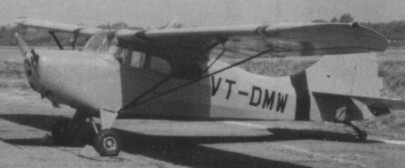
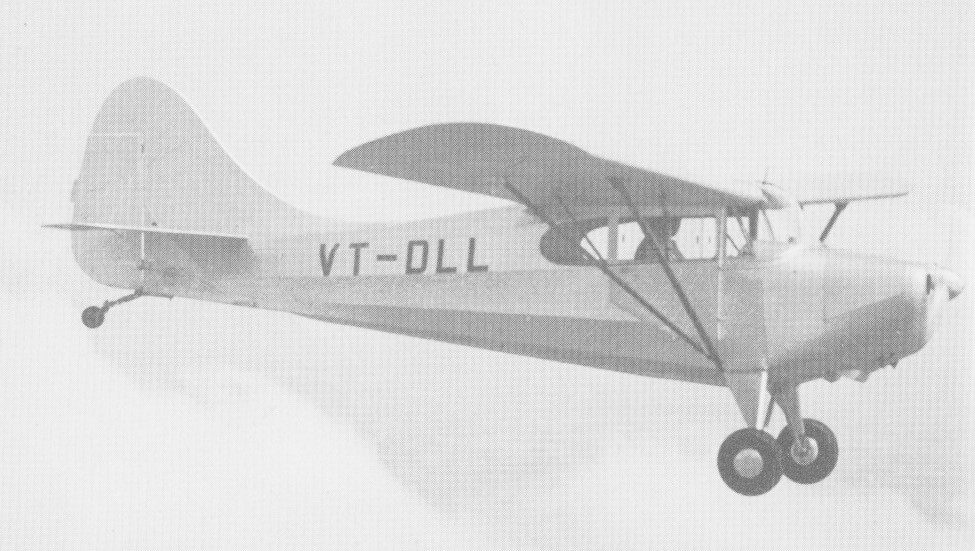
The prototype Pushpak was joined by a second and entered production in 1959, nine production models were completed in the 1960-61 financial year and more than 25 had been sold to flying clubs in India by the beginning of 1962. The prototype had wooden wings, but production Pushpaks are all metal. They were powered by a Continental C-90.
1961 Pushpak prior to delivery – VT-DLO to -DLT
154 ‘Pushpaks’ were built from 1958 to 1968.
Engine: Continental C90-8F, 90 hp Wingspan: 36 ft 0 in / 10.97 m Wing area: 175 sq.ft Length: 21 ft 0 in / 6.50 m Height: 9 ft 1 in Empty weight: 870 lb / 395 kg MTOW: 1350 lb / 613 kg Max speed: 90 mph Cruise speed: 61-74 kt / 70-85 mph / 112-136 kph Max ROC SL: 500 fpm/152 m/min Service ceiling: 14,000 ft / 4270 m Range: 217 nm / 250 mi / 400 km Seats: 2 side by side Baggage capacity: 65 lb / 29.5 kg No. built: 154



 All Aero