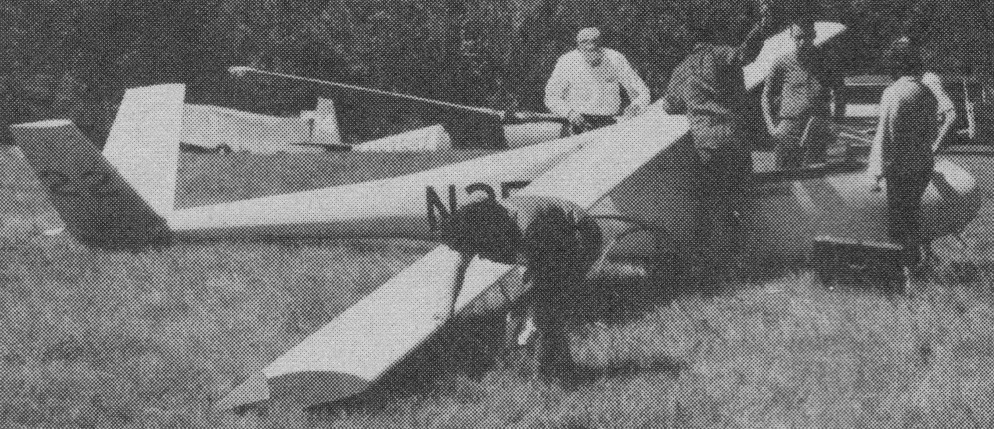
The all-metal V-tail HP-10 was flown by designer R. E. Schreder in the 1961 U.S. Nationals, winning the Stroukoff Trophy for a 57 kph/ 31 kt/ 35.5 mph 229 km/ 142 miles Goal & Return flight.
The HP-10 was modified by Steve du Pont.
Helisoar bought the production rights and produced the HP-10 in kit form. Some ships were modified with fiberglass Hoerner wingtips made available by Helisoar.
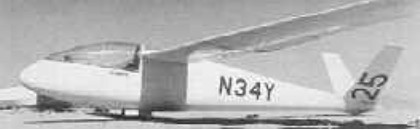
The R. E. Schreder designed all metal HP-9 was intended to fly in the Standard Class at the 1960 World Championships, but was not completed in time. It has an all-moving horizontal tail, retractable wheel, airbrakes and Fowler flaps which increase the wing area to 13.35 sq.m/ 143.7 sq.ft when extended, reducing the sink to 0.64 m/s/ 2.11 fps./ 1.25 kt. @ 76 kph/ 41 kt/ 47 mph.
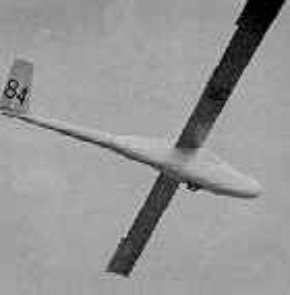
R. E. Schreder built the improved all-metal HP-8 in 1958 and won the Nationals with it in that year again in 1960. He set world records with it in all three speed categories in 1959, and two of these were raised again by the same ship flown by George Moffat. The solo example belongs to the National Soaring Museum.
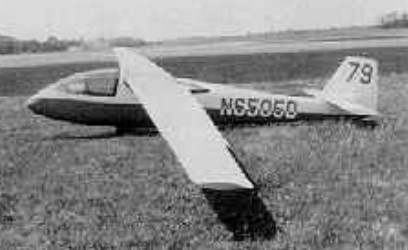
R. E. Schreder’s first sailplane, the HP (for High Performance) 7, first flew in 1957 and was destroyed in an aerotowing accident right after the 1957 U.S. Nationals.
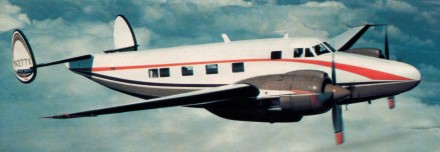
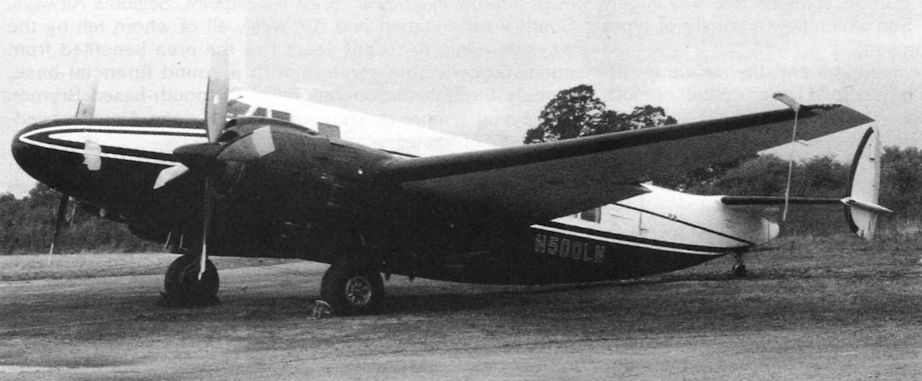
The business aviation community wanted a vehicle that was fast, far reaching, pressurized and new. Dee Howard had the answer the Howard 500. By 1959, Howard was flying his prototype of the 500, a larger aircraft that was based upon the PV 1 but had a redesigned fuselage and a 25% larger wing area. Howard’s 500 featured pressurization 6.75 psi; maximum cruising speed of 338 knots; with its 2,500 hp P&W R 2800 CB 17 engines throttled back to 1,100 hp each, the 500 could cruise for more than 8.5 hours and cover about 2,400 nm. But most importantly, the Howard 500 was constructed from new metal. At least the fuselage and the wing centre sections were new; the outboard wing panels were from surplus PV 1’s. The aircraft was granted a new aircraft certificate under the transport category regulations that existed then, on February 20, 1963.
The 10 to 14 passenger 500, with its cabin high enough to accommodate a standing six¬ foot two inch man, had water injection (officially called AD1 for anti detonation injection) and four blade, 11¬ foot diameter props; a 0.45 to one propeller drive re¬duction gear reduced the prop revolutions to less than half the engine’s speed. A two speed supercharger enabled the 34,000 pound Howard to fly up to 35,000 feet, although the maximum certificated ceiling with passengers was 25,000ft. Hydraulically operated rudder boosts lowered the minimum control speed, with one engine inoperative, from nearly 200 knots on the original Navy versions of the PV 1 Ventura to 95 knots. A yaw limiter system, which sensed the aircraft’s yaw angle and provided an electrical signal to the rudder boost system, was necessary to produce the required positive rudder force gradient with increasing yaw angles. Auto feathering assured that any loss of power below a BMEP of 75 psi with the throttle advanced beyond the 45 inch mp position would streamline the blades and eliminate the performance and Vmc penalties. The aircraft’s sole compressor for cabin pressurization was located on the left engine, and it would declutch itself automatically if the right engine failed, thus enabling the left engine to produce maximum power during single engine operations. Production continued through the mid ’60s with twenty two 500s sold.
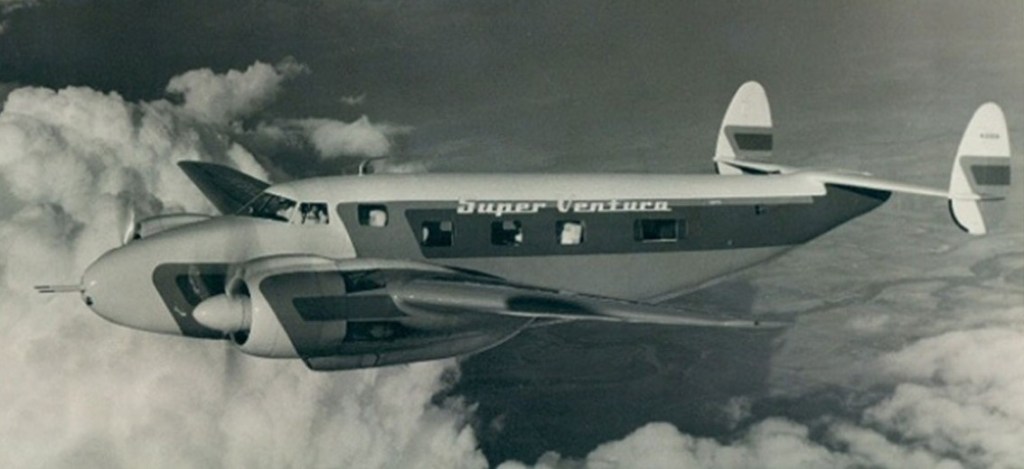
By 1954, Howard had decided that the next step for corporate aircraft (which were mostly Twin Beeches and DC 3s at the time) was faster, farther ranging machines like his modification of the Lockheed PV 1 Ventura. Howard introduced the Super Ventura, which led to development of the Howard 250, the 350, and culminated in the Howard 500.
By 1954, Howard had decided that the next step for corporate aircraft (which were mostly Twin Beeches and DC 3s at the time) was faster, farther ranging machines like his modification of the Lockheed PV 1 Ventura. Howard introduced the Super Ventura, which led to development of the Howard 250, the 350, and culminated in the Howard 500.
By 1954, Howard had decided that the next step for corporate aircraft (which were mostly Twin Beeches and DC 3s at the time) was faster, farther ranging machines like his modification of the Lockheed PV 1 Ventura. Howard introduced the Super Ventura, which led to development of the Howard 250, the 350, and culminated in the Howard 500.
In 1964 Business AirCraft Corp (successor to Howard Areo) announced sale of the first BA 400 pressurised Super Ventura. It cruised at 350 mph at 21,000 ft with a useful load of 10,100 lb. It was the only pressurised plane in production available for $550,000.
In 1947, Howard formed Howard Aero to provide maintenance and service for business aircraft. One of his customers, a wealthy Mex¬ican businessman, requested that he develop an aircraft suitable for executive transport between Mexico City and New York. The result, in 1955, was a slick and speedy conversion of the Lockheed PV 1 Ventura that would cruise at 261 knots with its pair of 2,000 hp Pratt & Whitney R 2800s. Several large corporations, including Na¬tional Distillers, purchased the aircraft, and it won fame as the Flagship of the Fleet at the Reading Air Show in the late 1950s. But the Super Ventura, as Howard’s conversion was known, was neither pressurized nor new.
In 1963 Howard combined with Alamo Aero Service, specializing in the conversion of ex-military Lockheed PV-1 Venturas and civilian Lockheed Lodestars to high-speed executive transports known as Howard 250s, 350s and 500s, according to configuration and powerplant. A three-engined version of the Beech Travel Air twin was also flown experimentally.
Howard Aero was succeeded by Business AirCraft Corp by 1964.
 All Aero