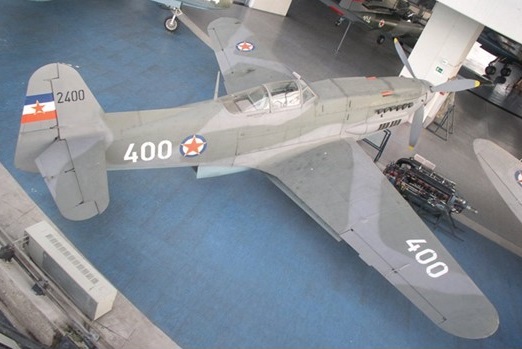
Ikarus AD S-49

The Ikarus S-49 was a Yugoslav single-seat, single-engine fighter aircraft built for the Yugoslav Air Force (Serbo-Croatian: Ratno vazduhoplovstvo i protivvazdušna obrana – RV i PVO) shortly after World War II. Following the Tito–Stalin Split in 1948, the RV i PVO was left with an aircraft inventory consisting of mostly Soviet aircraft. Unable to acquire new aircraft or spare parts for its existing fleet, the RV i PVO turned to its domestic aviation industry in order to create an indigenous design to fulfill the need for additional aircraft.

The same constructors that built the Rogozarski IK-3 before the war, engineers Kosta Sivcev, Slobodan Zrnic and Svetozar Popovic, used existing technical documentation of the IK-3 to construct a new fighter aircraft, the Ikarus S-49.
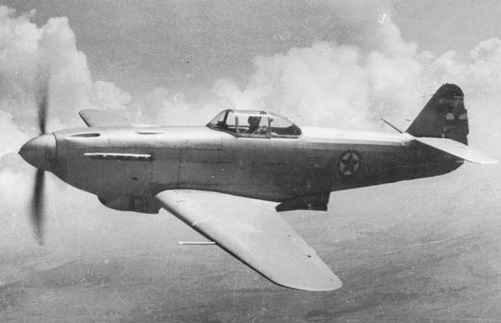
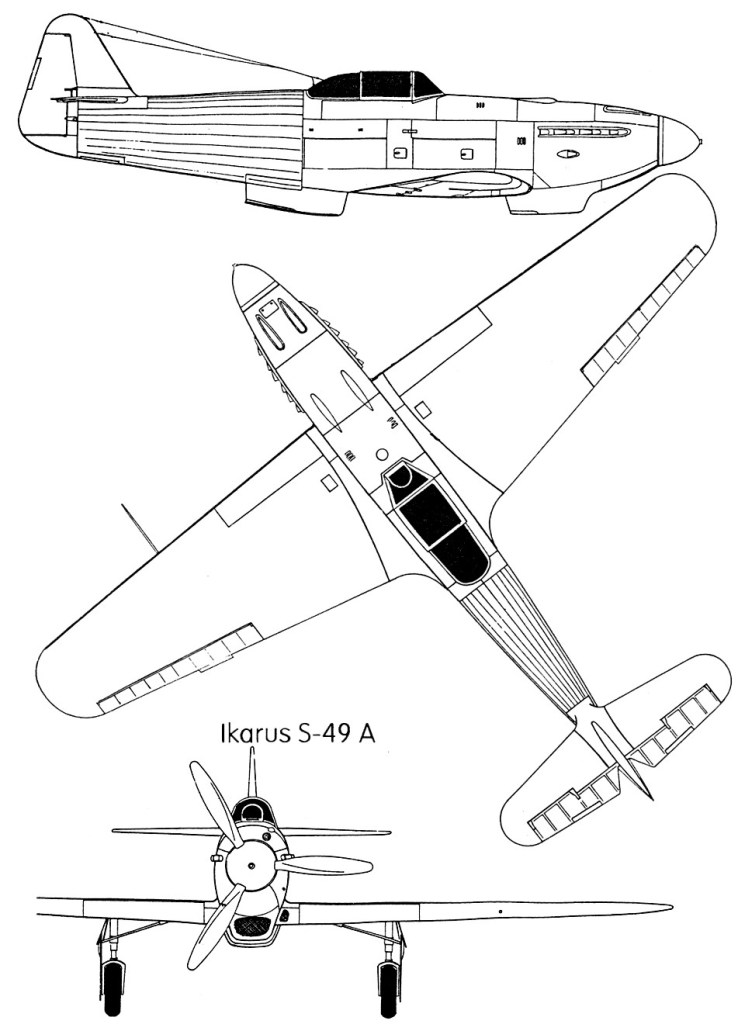
S-49A

The S-49A was of mixed construction, with Soviet built VK-105 engines which were no longer available after 1948. Therefore, it was decided to produce a new version of the aircraft powered by the similar French Hispano-Suiza 12Z-17 engine. Because of the bigger and heavier engine, the new aircraft had to be of all-metal construction with a much longer nose. While the aircraft was mainly built by Ikarus, the wings and tail were built by the SOKO factory in Mostar. The armament consisted of one 20 mm Mauser MG-151/20 autocannon produced by Germany during World War II and two 12.7 mm Colt Browning machine guns. In addition, under wing racks for two 50 kg bombs or four 127 mm HVAR missiles were provided.

The first prototype of the S-49A flew in June 1949. The first operational aircraft were delivered to combat units at the beginning of 1950.

An S-49B Ikarus had been proposed with the German DB-605 engine, but for mass production the Ikarus S-49C was chosen.

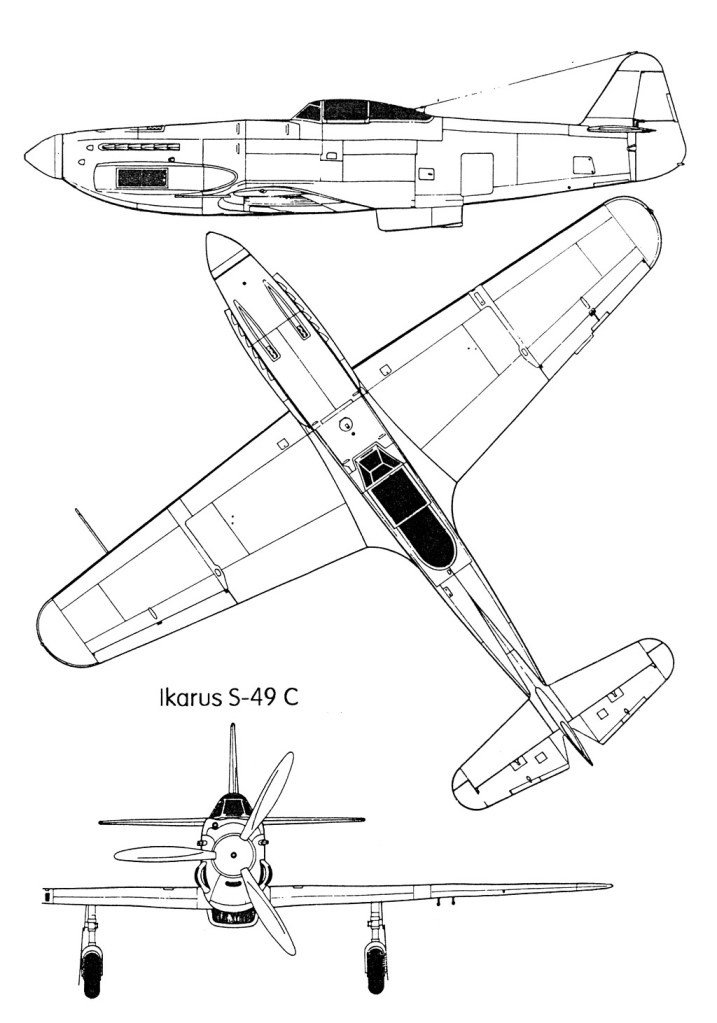
The S-49A was surpassed by the improved S-49C, featuring an all-metal construction and a more powerful engine. At the beginning of 1952, the Ikarus S-49C was introduced into the units of the Yugoslav Air Force.
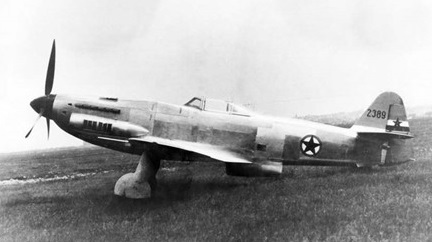
S-49C

Aircraft Order “Soko” started in 1952 with the assembly of the wing and empennage for the S-49C fighter. An all-metal version of the S-49A powered by a Hispano Suiza HS 12Z-17. Under wing mounts were fitted for rockets, MG-151 or Colt Browning M2 12.7- mm machine guns, or two 50-kg bombs.
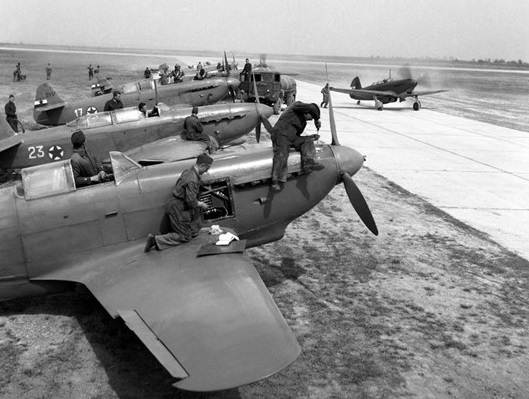
A total of 45 S-49A and 113 S-49C were produced by the Ikarus Aircraft Factory in Zemun. The last aircraft were retired from RV i PVO service in 1960/61, having been replaced by more modern jet-powered aircraft.

Gallery

Variants:
S-49A – mixed construction and Klimov M-105 engine (45 built)
S-49B – planned version powered by a Daimler-Benz engine; unbuilt.
S-49C – all-metal construction and Hispano-Suiza 12Z engine (113 built)

Operators:
Yugoslav Air Force

Ikarus S-49A – 46 aircraft (1949–1957)

117th Fighter Aviation Regiment (1950–1953)
204th Fighter Aviation Regiment (1950–1953)
107th Fighter Aviation Regiment (1953–1957)
Training Squadron of 44th Aviation Division (1953–1954)

Ikarus S-49C – 112 aircraft (1952–1961)

116th Fighter Aviation Regiment (1952–1960)
185th Fighter Aviation Regiment (1953–1956)
40th Fighter Aviation Regiment (1955–1959)
109th Fighter Aviation Regiment (1956–1960)
88th Fighter Aviation Regiment (1957–1959)
Training Squadron of 39th Aviation Division (1953–1959) S-49C

Specifications:

S-49A
Engine: Klimov VK-105PF, 1180 hp
Wingspan: 10.30 m
Length: 8.43 m
Height: 3.20 m
Wing area: 16.60 sq.m
Empty weight: 2320 kg
Normal take-off weight: 2950 kg
Maximum speed: 554 kph
Range: 690 km
Rate of climb: 1026 m / min
Ceiling: 10,000 m
Crew: 1
Armament:
1 x 20-mm motorpushka ShVAK with 120 rounds
2 x 12.7 mm UBS machine gun with 200 rounds

S-49C
Engine: 1 × Hispano-Suiza 12Z-17, 1,104 kW (1,500 hp)
Length: 9.06 m (29 ft 83in)
Wingspan: 10.30 m (33 ft 91 in)
Height: 2.90 m (9 ft 6 in)
Wing area: 16.65 m2 (179 ft2)
Empty weight: 2,818 kg (6,200 lb)
Max. takeoff weight: 3,568 kg (7,850 lb)
Maximum speed: 628 km/h (339 knots, 390 mph) at 1,525 m (5,000 ft)
Range: 690 km (373 nm, 429 mi)
Service ceiling: 10,000 m (33,000 ft)
Climb to 6,000 m (19,700 ft): 6 min 54 sec
Armament
1 × 20 mm MG-151/20 cannon
2 × .50 Colt Browning M2 machine guns with 650 rounds per gun
2 × 50 kg (110 lb) bombs or 4 × 5 in HVAR missiles
Crew: one pilot
Ikarus AD Meteor

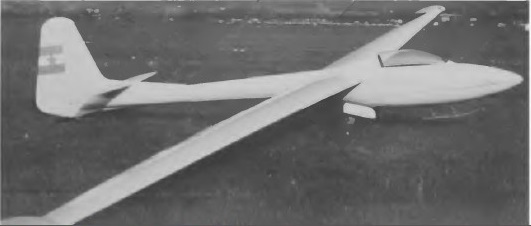
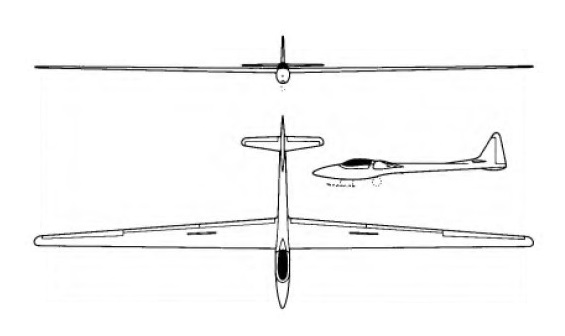
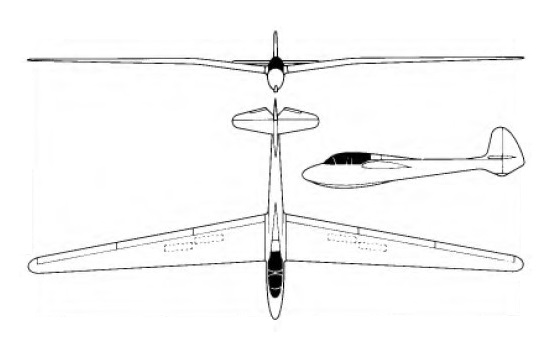
The all-metal Meteor was designed in 1954 by Boris Cijan, Stanko Obad and Miho Mazovec. The Meteor high performance single-seater with its laminar flow wing, camber-changing flaps and very slim fuselage to give minimum cross sectional area set a pattern for the high performance types of today when it first flew from Belgrade on 4 May 1956. It soon made its mark in competition flying, taking fourth or fifth place in the Open Class in the World Championships of 1956, 1958 and 1960 and for a time it held the world speed records for the 100 and 300km triangular closed circuits.

The ailerons are divided into inboard and outboard sections, of which the inner sections can be drooped in conjunction with the flaps for landing, and modified DFS-type air brakes are fitted in the wing upper surfaces. The semi-monocoque all-metal fuselage is built in two sections for ease of repair, the rear section being straight tapered with stringers and a stressed skin. The landing gear consists of a bow-shaped front skid that extends some way out from under the forward fuselage, and a retractable monowheel with brake. The pilot is seated under a detachable one-piece canopy.

Meteor 60
Span: 65ft 7.5in / 20.0 m
Length: 26ft 5in / 8.05 m
Wing area: 172.2 sqft / 16.0 sq.m
Aspect ratio: 25.0
Wing section: NACA 633 616 5
Empty weight: 829 lb / 376 kg
Max weight: 1,113 lb / 505 kg
Water ballast: None
Max wing loading: 31.5 kg/sq.m / 6.45 lb/sq ft
Max speed: 135 kt / 250 km/h / 155 mph (in smooth air)
Max rough air speed: 67.5 kt / 125 km/h
Stalling speed: 36 kt / 67 km/h
Min sinking speed: 1.77ft/sec / 0.54 m/sec
Best glide ratio: 42:1 at 56mph / 48.5 kt / 90 km/h

Ikarus AD Kosava

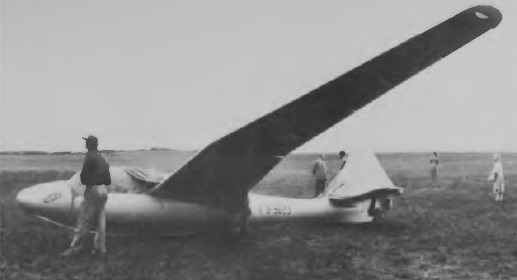
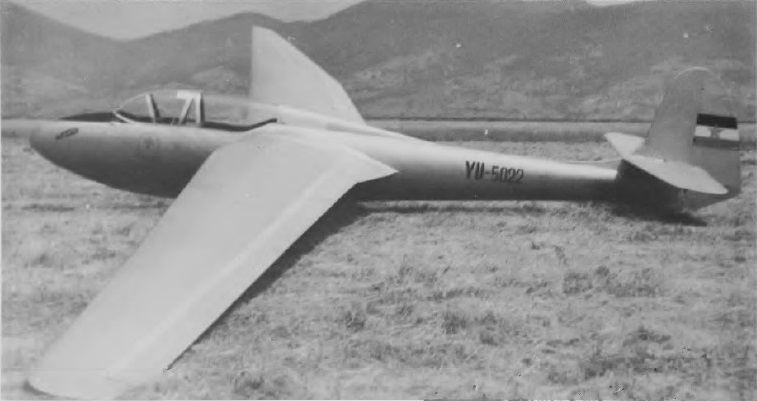
The Kosava (or North Wind) was a high performance two-seater intended to replace the DPS Kranich then in use in Yugoslav clubs; its design was commissioned by the Yugoslav Flying Sports Organisation from Milos Ilic and Adryan Kisovec, and the prototype made its first flight in March 1953. A few weeks later Bozo Komac flew it to victory in the Yugoslav National Championships, and the type went on to win many prizes in contest flying in the two-seater class, taking first place in this category in the 1954 World Championships at Camphill, Bedfordshire, and second place in the 1956 World Championships at St Yan in France.

Of conventional wood and fabric construction, the Kosava had a shoulder-mounted gull wing with a slight forward sweep at the leading edge and a more marked trailing edge sweep; the forward sweep served to maintain the cg at a suitable place when the Kosava was being flown solo. The ailerons were divided into inner and outer halves, and underwing spoilers were fitted, as well as trailing edge flaps which operated in conjunction with the ailerons, being used separately during landing. The second prototype Kosava was fitted with Schempp-Hirth air brakes. The two pilots are seated in tandem under a two-piece canopy and the landing gear consists of a single skid under the forward fuselage.

The Kosava-2 was a redesigned version intended for training from basic to advanced levels, including blind flying training, aerobatics and high altitude soaring. It features a new more streamlined fuselage with the pilots in tandem under a flush-fitting cockpit canopy divided by a centre frame; the two canopy sections are jettisonable, and there is provision for an oxygen system for the pilots. A retractable monowheel and tail bumper replaces the skid of the earlier Kosava, and the fin and rudder are swept back and the mid-set tailplane’s span increased, whereas the earlier Kosava’s tail unit, fuselage and cockpit resembled those of the DPS Kranich it was designed to replace. The Kosava-2’s wing is very similar in plan to the earlier Kosava’s, but has dihedral from the roots and is of 18m span (59 ft 0.75 in), with one piece ailerons, air brakes in the upper surfaces and no flaps.

Kosava
Wing span: 19.13 m (62 ft 9 in)
Length: 8.33 m (27 ft 4 in)
Wing area: 21.12 sq.m (227.4 sq ft)
Wing section: Gottingen 549/CAGI 731-M
Aspect ratio: 17.3
Empty weight: 336 kg (741 lb)
Max weight: 575 kg (1,268 lb)
Water ballast: None
Max wing loading: 27.2 kg/m 2 (5.57 Ib/sq ft)
Stalling speed: 29 kt (53 km/h)
Max speed: 136 mph / 119 kt / 220 km/h
Min sinking speed: 2.17 ft/sec / 0.66 m/sec at 46.5 mph / 40.5 kt / 75 km/h
Best glide ratio: 33.5:1 at 54 mph / 47 kt / 87 km/h

Ikarus AD 452-M

After World War II, the Yugoslav aviation industry was reorganized with a central institution in charge of research and prototypes, with attached a few plants of lesser importance. This centrally located industry continues the lkarus name which was that of the first Yugoslav aviation company.

The factory of Novi Sad, as other aircraft factories in the country, were completely destroyed during the German occupation. The plant in Zemun was the most quickly rebuilt and it produced the Yugoslav military aircraft.

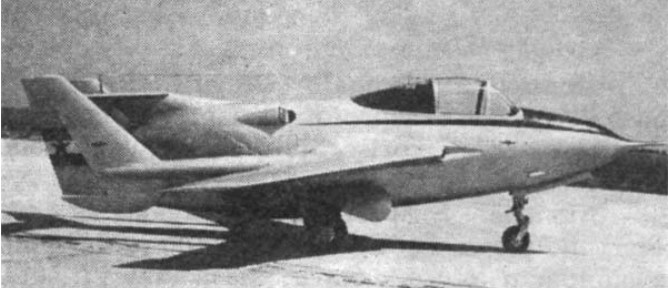
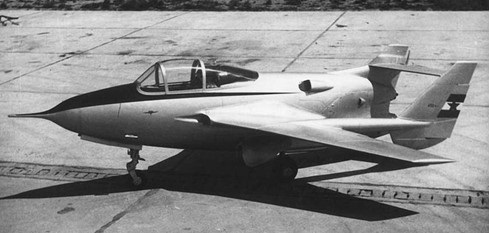
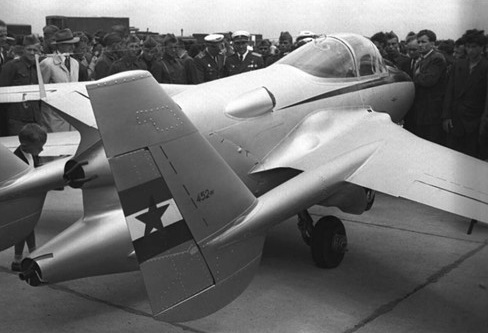
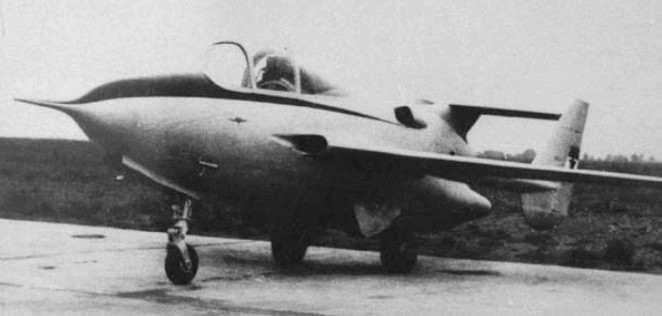
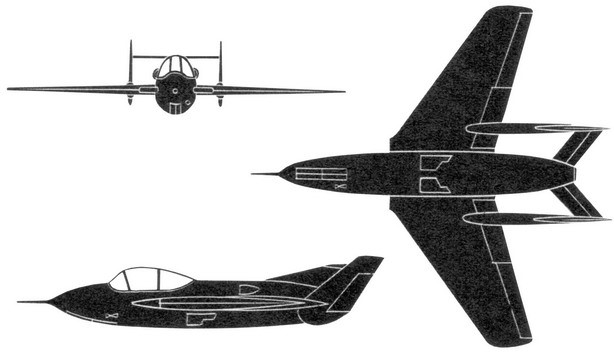
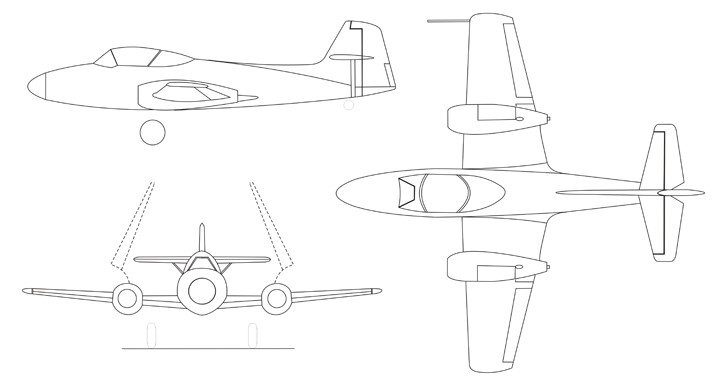
Among these, the 452M was designed by engineer Dragoljub Beslin, considered the prototype of a ground attack fast jet. The letter M (Mlazni) means jet powered. The 452M was a stubby pod-and-boom configuration with twin tails and a horizontal stabilizer at the end of the booms. The power source consists of two Turboméca Palas 056A turbojet engines arranged one above the other at the rear of the fuselage.

The top engine is fed with two side air inlets on each side of the fuselage, and the lower engine is supplied by entries in the leading edge of the wing root.

The wing is swept and supports two beams with two fins. The stabilizer joins the upper parts of both fins. The retractable tricycle undercarriage comprises two main wheels based on the fuselage and retracting into it. All undercarriage lower forward. Only intended for experimental purposes, the 452M was lightly armed with just 2 x 12.7-mm Browning machine guns.

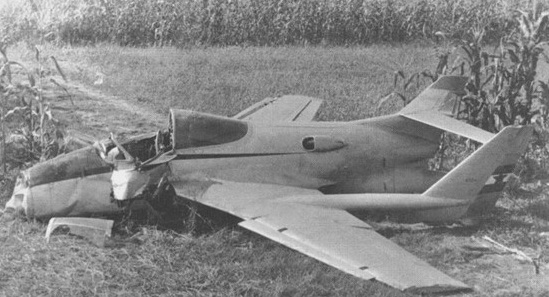
The aircraft made its first flight on 24 July 1953 which resulted in an engine failure due to a fault in the fuel line and heavy damage to the aircraft upon an emergency landing in a cornfield. The pilot survived but received a fractured skull in the incident.

Future development of the 452M to create an interceptor with a larger fuselage to accommodate a third engine to increase power and upgraded armament of 2 x 20mm cannons never got beyond the drawing board. The experimental jet was an advanced design for the time but was not selected for further development by the Yugoslav Air Force as other jet aircraft options were preferred and the project was cancelled.

452M
Engines: 2 x Turbomeca Palace 056A, 4.0 kN
Wingspan: 5.25 m (17 ft 12 in.)
Length: 5.97 m (19 ft. 7 in.)
Height: 1.77 m (5 ft. 9 in.)
Wing area: 11.20 sq.m
Empty weight: 1220 kg
Maximum take-off weight: 1680 kg
Max speed (est): 750 km.h. (466 m.p.h)
Min speed (est): 190 km.h. (118 m.p.h)
Cruising speed: 624 km / h
Range: 540 km
Ceiling: 9800 m
Endurance: 75 min.
Crew: 1

Ikarus AD S-451M Zolja

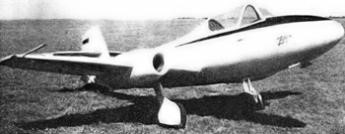
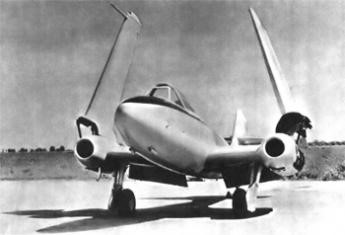
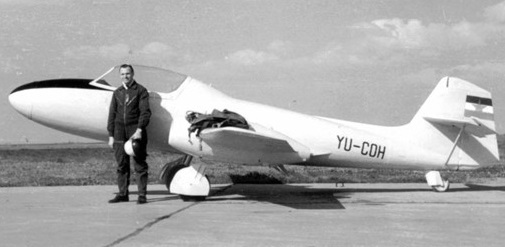
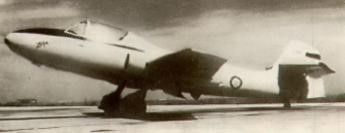
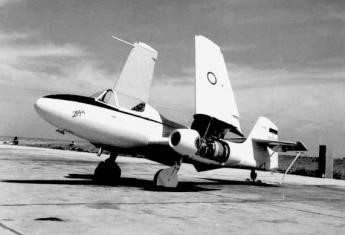
The Ikarus S-451M Zolja (“Wasp”) was an unarmed further development of the S-451M. This all metal aircraft was designed as a light attack aircraft. The letter M (Mlazni) means that the aircraft is powered by jet engines. It was a more streamlined design with a stretched fuselage, folding wings and two Palas turbojet engines installed within the wing rather than under them.

A single Zolja prototype was manufactured and made its first flight in 1954.

By 1960 the S-451M was now in civilian hands (registered as YU-COH) and on May 19th, 1960 broke the world air speed record in the I-C aircraft category, flown by pilot Ivan Črnjarić at 501 km/h (the record would remain unbeaten for 5 years).

The aircraft was retired in 1968 following damage from a ground incident.

Engines: 2 × Turbomeca Palas 056A
Length: 6.8 m (22 ft)
Wingspan: 6.70 m (21 ft 7 in)
Height: 2.3 m (7 ft 7 in)
Wing area: 8.00 m² (86 ft ²)
Loaded weight: 1202 kg (2644 lb)
Maximum speed: 439 km / h (284.5 mph)
Minimum speed: 153 km / h (94.8 mph)
Range: 392 km (233 miles)
Ceiling: 8550 m (28,045 ft)
Takeoff distance: 600 m
Landing distance: 582 m

Ikarus AD S-451MM Matica / S-451MM Stršljen

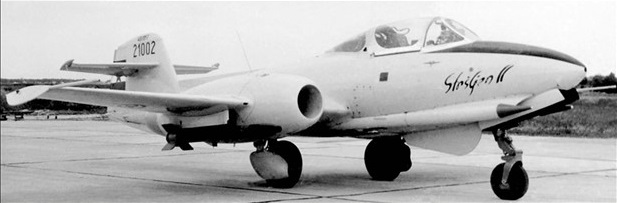
Ikarus T-451MM Stršljen II (“Hornet II”)

The J-451MM lead to development of the Ikarus T-451MM Stršljen II (“Hornet II”) single seat jet aerobatic training aircraft of which only one prototype (21002) was manufactured and this can now be seen at the Belgrade Aeronautical Museum.

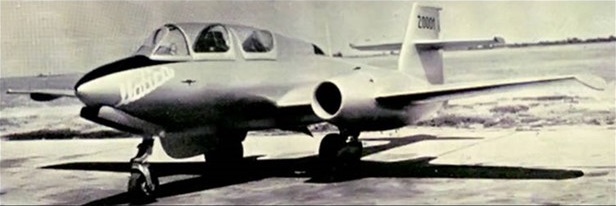
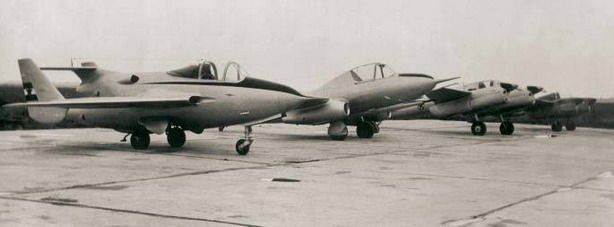
Another variant was the Ikarus S-451MM Matica (“Queen Bee”) two-seat jet training aircraft which set a world air speed record for its class of 750.34 km/h in 1957.

Ikarus S-451MM Matica two seat jet trainer

Gallery

Ikarus AD S-451M Mlazni

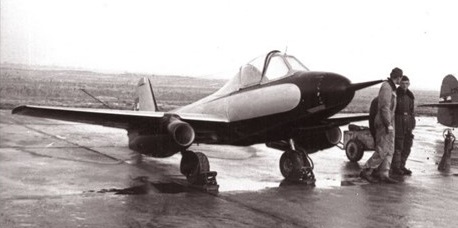
Utilising the basic airframe of the S-451, Ikarus came up with a new design to develop the first jet aircraft designed and built in Yugoslavia, the Ikarus S-451M (Mlazni or “Jet”). The Ikarus 451M was designed by Major Dragoljub Beslin. Basically they installed a conventional cockpit and added two small Turbomeca Palas 056 turbojet engines which produced a maximum speed of 453 km/h.

Ikarus S-451M at the Yugoslav Aeronautical Testing Centre in the early 1950’s

Captain Tugomir Prebeg made the first flight of this aircraft, in the morning of 25 October 1952, powered by two Turbomeca Palas jets. A single copy was built 1959.

With plans to develop a military version, a 20mm Hispano-Suiza 404A cannon and six underwing rockets was fitted to the S-451M for weapons testing.

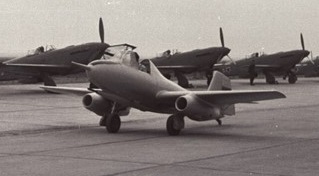
Ikarus S-451M passes a lineup of Yugoslav Air Force Yak fighters at Batajnica Air Base – May 1953

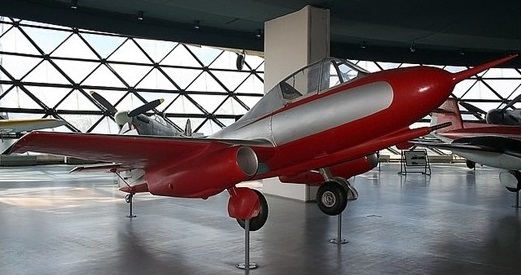
Flight tests of the prototype were conducted at the Yugoslav Aeronautical Testing Centre until 1959 when the aircraft was handed over to the Belgrade Aeronautical Museum for permanent display.

Gallery

Engines: 2 × Turbomeca Palas 056A
Length: 7.45 m (24 ft 5 in).
Wingspan: 6.78 m (22 ft 3 in).
Height: 2.32 m (7 ft 7 in).
Wing area: 8.00 m² (86 ft ²)
Empty weight: 897 kg (1977 lb)
Gross weight: 1350 kg (2980 lbs)
Range: 300 km (190 miles)
Ceiling: 8500 m (27,900 ft)

Ikarus AD

Yugoslavia
Formed at Novi Sad in 1923, Ikarus was one of the country’s largest aircraft manufacturers. Initial production centered on a number of S.M. training flying-boats, followed by a military type I.O. In 1926 the company acquired a license to build the Potez 25 biplane, and established a new factory at Zemun for its production.

Four out of five Yugoslav aircraft plants were in close proximity to each other, built in and around Belgrade: Ikarus, Rogožarski, Zmaj and Utva. The fifth one was DFA (Državna Fabrika Aviona – State Aircraft Factory) which was located in Kraljevo.

The production facilities of Ikarus were destroyed in World War Two but rebuilt in 1946 and soon nationalised by the new Tito lead Yugoslav communist government.

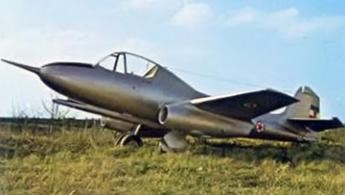
In the early 1950’s Ikarus continued to develop a number of experimental research aircraft protoypes. These included a number of early jet aircraft under the Ikarus 451 designation a number which all featured the same basic airframe of the piston engined S-451 but all served different purposes in testing and evaluation. The 451 designated jet aircraft included the first jet designed and built in Yugoslavia (S-451M), a more advanced jet design (S-451M Zolja), a close support military jet development (J-451MM Stršljen) and jet training aircraft (S-451MM / T-451MM).

Ikarus experimented with further jet designs in the early 1950’s. The Ikarus 452M and 453 aircraft were both unconventional designs that were briefly used for flight testing

Ikarus 451 experimental research aircraft at the Yugoslav Aeronautical Testing Centre in the 1950’s – Ikarus 452M, S-451M, S-451 and 232 Pionir

None of the Ikarus experimental aircraft went into wide production but they did provide a stepping stone for future aviation technology development in Yugoslavia. By the early 1960’s aircraft development ceased at Ikarus and had been taken over by Soko based in Mostar, Bosnia-Herzegovina (Ikarus manufacturing buses).

Icaro 2000

ICARO 2000, the first hang-glider factory in Europe, was founded in 1973 by Alfio Caronti & Peter Skaarup.

Alfio received his first glider from Bill Moyes, during a water-ski competition in 1969. He was the first Hang glider pilot in Europe, who took off from a mountain on the 4th November 1971. The glider used by Alfio Caronti was a kingpostless glider with square tubes.

Peter Skaarup was the technician of the factory and together they manufactured hang-gliders under the license of the Australian firm Moyes.

In 1981 Franco Garzia & Gianni Hotz, became the new owners of ICARO 2000 and continued to make Moyes hang-gliders. Their first glider was the Meteor 170.

Since 1983 ICARO has been using only tubes in Perunal (aluminium alloy 7075 for aeronautics) from the Swiss manufacturer Alumenziken.

Until 1991 ICARO sold, in Europe, more then 3,000 gliders (Moyes models like Mega II, Missile, Mars, GT, GTR and XS).

In 1992 Manfred Ruhmer becomes part of the staff and ICARO started to develop original designs with its own sailmakers and workshop with 20 employees and a 1,200+ sq m building. The development of new models was carried out by Manfred Ruhmer, one of the world’s best pilots and Franco Garzia, a former Italian champion. Since this time all ICARO hang glider models are certified by the DHV (Germany).

In 1992 the first ICARO’s original design appeared: the Brazil, followed in 1994 by the Laminar. With this wing ICARO started to reach competition results 1994 European Championship in Laragne (France): Manfred Ruhmer is 2nd 1995 World Championship in Ager (Spain): Manfred Ruhmer is 2nd. In 1995 the first prototype of kingpostless gliders appears.

In 1996 ICARO presented its first prototype of topless glider and with this wing, Manfred reached 2nd place in the European Championship in Hungary.

Since 1998 ICARO has its own landing area (more then 50.000sq m) with Club House, Camping facilities and Store of accessories for Sport Aviation: these facilities are located at Lago Maggiore (northern Italy), facing a mountain ideal for flying.

1998: Via Verdi, I-21038 Sangiano (VA), Italy.

In 1998 ICARO forms an agreement with Felix -A.I.R., by which ICARO will make keels and sails for the Atos (ICARO has made 550 so far) and obtains the option to sell the Atos in certain markets.

ICARO introduces on the paragliders’ scenery the Cyber, a new basic-intermediate wing, with the latest technology and construction methods and highest safety DHV 1. Also in 2000, on October 25th, ICARO reviewed its agreement with Felix; ICARO takes over the worldwide production and distribution of the Atos from the home base in Sangiano. Felix works exclusively on the development of the design.

After having sold more than 400 Atos in two years, a period in which ICARO took an active part in the manufacturing of sails, A-frames and keels, it was decided that henceforth A.I.R. would devote 100% to the development and technical support, whereas ICARO would become in charge of the production and distribution of the Atos.

In September 2001 Christian Ciech starts working for Icaro 2000 in the development team, and after six months comes into the scenery the new Icaro 2000’s rigid wing: the Stratos.