Ilyushin

Sergei Ilyushin

Sergei Ilyushin, was a mechanic in the Russian air force in WW1. During the early 1920s Sergei Vladimirovich llyushin (died 1977) was a student at the Zhukovskii Military Air Academy, and began glider design. Graduating from the Air Academy, Ilyushin went to TsAGI, where he was influenced by Tupolev.
From 1935 one of the most successful Soviet aircraft designers, beginning with IL-4 (DB-3) bomber developed from TsKB-26 design, of which nearly 7,000 built. Founded own OKB just before Second World War, though 1933 generally attributed as starting point for llyushin designs. Most famous wartime aircraft was IL-2 Shturmovik armoured ground-attack aircraft, a vital weapon in the defeat of the German invasion of Russia, and of which more than 36,000 were built.
Post-Second World War developed IL-12 and IL-14 transports which established Aeroflot’s civil airline network. IL- 28 bomber of 1948 (in class of British Canberra) was first Soviet jet bomber, remaining in large scale use for many years. IL-18 civil transport, which entered service with Aeroflot in 1959, was nation’s first turboprop airliner. IL- 38 anti-submarine/maritime patrol aircraft developed from IL-18 and first flown 1961. IL-20 reconnaissance, electronic intelligence, and communications relay aircraft also developed from IL-18, with IL-24 civil variant. IL-62, 114/186- seat turbofan-powered transport, which inaugurated Aeroflot’s Moscow-New York service in July 1968, was Soviet Union’s first long-range jet airliner.
IL-76T four-turbofan medium/long-range freight transport first flew 1971 and over 900 built, with in-flight refueling tanker derivative first flown 1983 as IL-78, and communications relay variant as IL-82. IL-86 wide-body transport first flew December 22,1976; 103 built before production ended. Strategic-command-post version became IL-80 Maxdome. Follow-on IL-96 wide-body airliner first flew December 1988 and remains in production. II- 98 proposed as twin-engined derivative of IL-96. IL-106 heavy military transport and IL-112 shorthaul regional airliner projected. IL-114 twin-turboprop transport first flew March 1990 and ordered with production and marketing by Uzbekistan-Russian consortium. Special electronic versions of IL-114 developed for “Open Skies” missions and Russian Federal Border Guard patrol. IL-103 4/5-seat lightplane first flown May 1994 and manufactured by MAPO “MiG”.
Current name in 1998 llyushin Aviation Complex, or Aviatsionnyi Kompleks imeni S.V. llyushina.
IKV IKV-3 Kotka

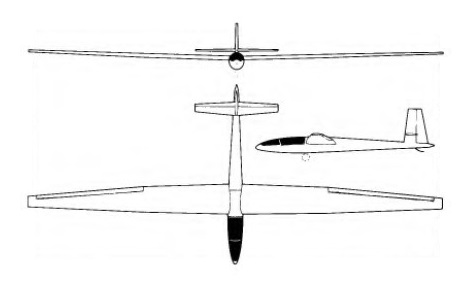
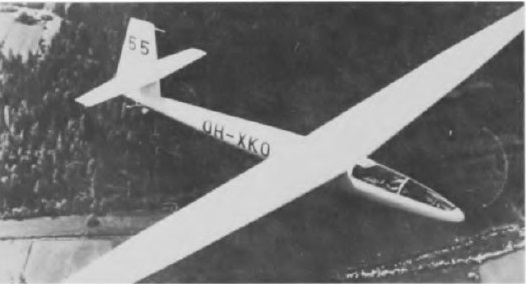
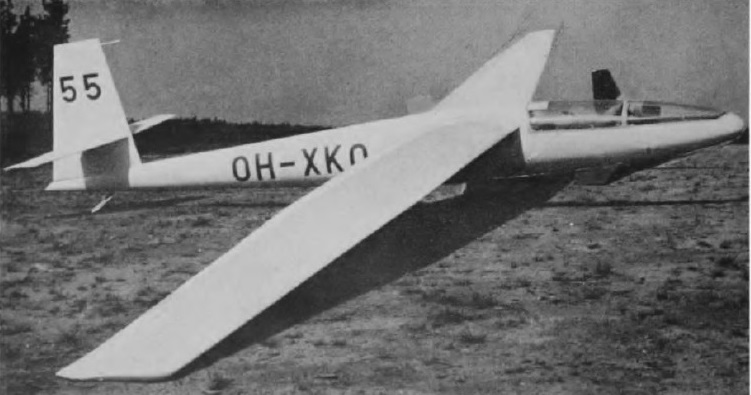
This Finnish high performance single-seater was designed by Mr Tuomo Tervo and Mr Jorma Jalkanen, whose earlier designs included the PIK-16C Vasama and Havukka sailplanes. Design work on the Kotka (or Eagle) began in December 1964 and the prototype was built by members of the Aeroclub Vasama or IKV, in association with K.K. Lehtovaara O/Y, construction starting in mid-1965; the Kotka made its first flight in May 1966; the type was later going to be put into series production by llmailukerho Vasama, but only the prototype was built.

The Kotka is of conventional wooden construction with some use made of plastic foam and glassfibre; the cantilever shoulder wing is a boxtype single-spar wooden structure from almost the leading edge to the 55% chord line and entirely plywood-skinned, with a small number of wooden or plastic foam ribs at the trailing edge, and a glassfibre leading edge. Both the plain ailerons and the flaps are of plywood covered plastic foam construction. There are two pairs of light alloy air brakes in each wing, on the upper and lower surfaces. The wooden fuselage is glassfibre-covered from the nose to the wing trailing edge, and plywood-skinned aft of the wing. Some plastic foam is employed in the wooden tail unit, the variable incidence tailplane and fin being plywood covered and the rudder and elevators fabric covered. There is a mechanically retractable monowheel with drum-type brakes and also a detachable tailwheel for ease of ground handling. The pilot is seated in a semi-reclining and adjustable seat under a long, flush-fitting cockpit canopy which, together with the tall angular fin, gives the Kotka a distinctive appearance. The instrumentation included radio, an oxygen system, a central electric control panel and a landing gear warning system being provided.

On 6 May 1968 Kotka flown by Seppo Hamalainen set up a Scandinavian goal-and-return record distance of 374 miles.

IKV-3 Kotka
Span: 18.2 m / 59 ft 8.5 in
Length: 7.75 m / 25ft 5 in
Height: 2.0 m / 6ft 6.5 in
Wing area: 17.0 sq.m / 183 sqft
Aspect ratio: 19.0
Wing section: Wortmann FX-62-K153/FX-60-126
Empty weight: 340 kg / 749 lb
Max weight: 450 kg / 992 lb
Water ballast: None
Max wing loading: 26.47 kg/sq.m / 5.42 lb/sq ft
Max speed: 155 mph / 135 kt / 250 km/h (in smooth air)
Max rough air speed: 93 kt / 172 km/h
Stalling speed: 28 kt / 52 km/h
Min sinking speed: 1.74 ft/sec / 0.53 m/sec at 43.5 mph / 37.5 kt / 70 km/h
Best glide ratio: 38:1 at 62 mph / 54 kt / 100 km/h

Ikarus AD J-451MM Stršljen

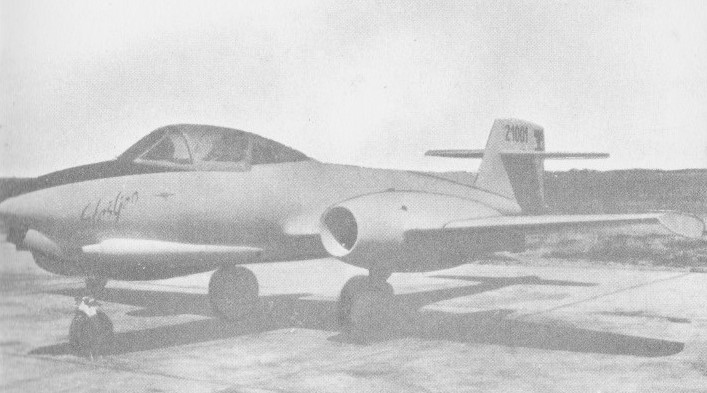
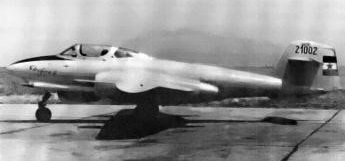
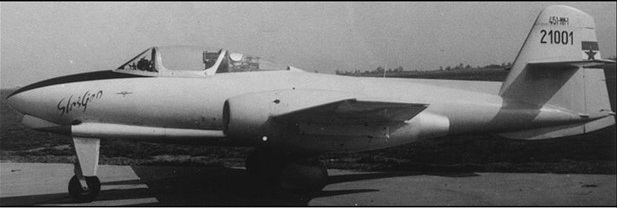
The J-451MM Stršljen is a development of the single seat 451M Zolja research aircraft, which was the first jet aircraft designed in Yugoslavia.

Ikarus J 451 MM Strsljen

The Ikarus J-451MM Stršljen (“Hornet”) was developed in 1956 as a planned close support variant of the S-451M Zolja and test flown in 1957 by the Aeronautical Testing Centre. The design featured a tricycle undercarriage as opposed to the early tail dragger designs, more powerful Turbomeca Marboré turbojet engines and armament of 2 x 20mm Hispano-Suiza 404A cannons under the fuselage along with underwing rockets.

Ikarus J-451MM Stršljen (“Hornet”)

The airframe has low-set wings without sweepback, and un-swept tail surfaces, with the tailplane mounted part-way up the fin. The ailerons, elevators and rudder are conventional. The wingtips are turned down and a stabilising fin is under the nose. The outer wings fold upward for stowage and access to the engines.

The tricycle undercarriage has single wheels on each unit. The main wheels retract inward and nosewheel retracts forward.

Two cannon are located in fairings under the fuselage and underwing attachments hold up to four air-to-ground rockets.

Engines: 2 x Turbomeca Marbore, 880 lb
Wingspan: 25 ft 10.5 in
Wing area: 121.5 sq.ft
Length: 26 ft 3 in
Height: 5 ft 6 in
Empty weight: 5370 lb
Max speed: 497 mph at SL
Service ceiling: 39,600 ft
Range: 470 mi
Armament: 2 x 20 mm Hispano cannon
Hardpoints: 4

Ikarus AD 215

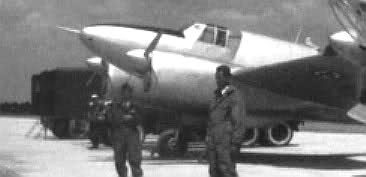
Originally designed before the World War II as a Zmaj R-1 the Ikarus 215 (Икарус 215 in Serbian) twin-engine plane, was a Yugoslav light bomber and a training aircraft. It was designed by Dusan Stankov and built at the Ikarus factory in Zemun-Belgrade.

The aircraft was of mixed construction, twin engine, with a crew of two to four. The main landing gear wheels retracted rearwards into the motor housing.

The prototype first flew in 1949. The 215 did not enter production. The prototype was used for training.

Engines: 2 × Ranger, SGV-770C-1, 387.7 kW (519.9 hp)
Propellers: 2-blade
Wingspan: 16.14 m (52 ft 11 in)
Wing area: 29.80 sq.m (320.8 sq ft)
Length: 13.35 m (43 ft 10 in)
Height: 4.03 m (13 ft 3 in)
Empty weight: 4,297 kg (9,473 lb)
Gross weight: 4,685 kg (10,329 lb)
Range: 1,120 km (696 mi; 605 nmi)
Service ceiling: 8,150 m (26,739 ft)
Crew: 2-4

Ikarus AD 453

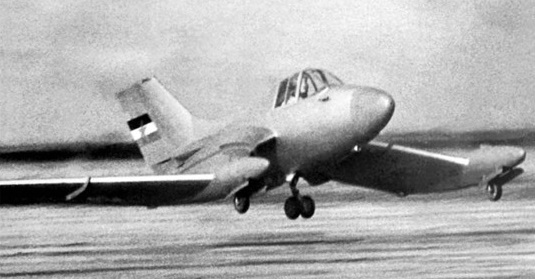
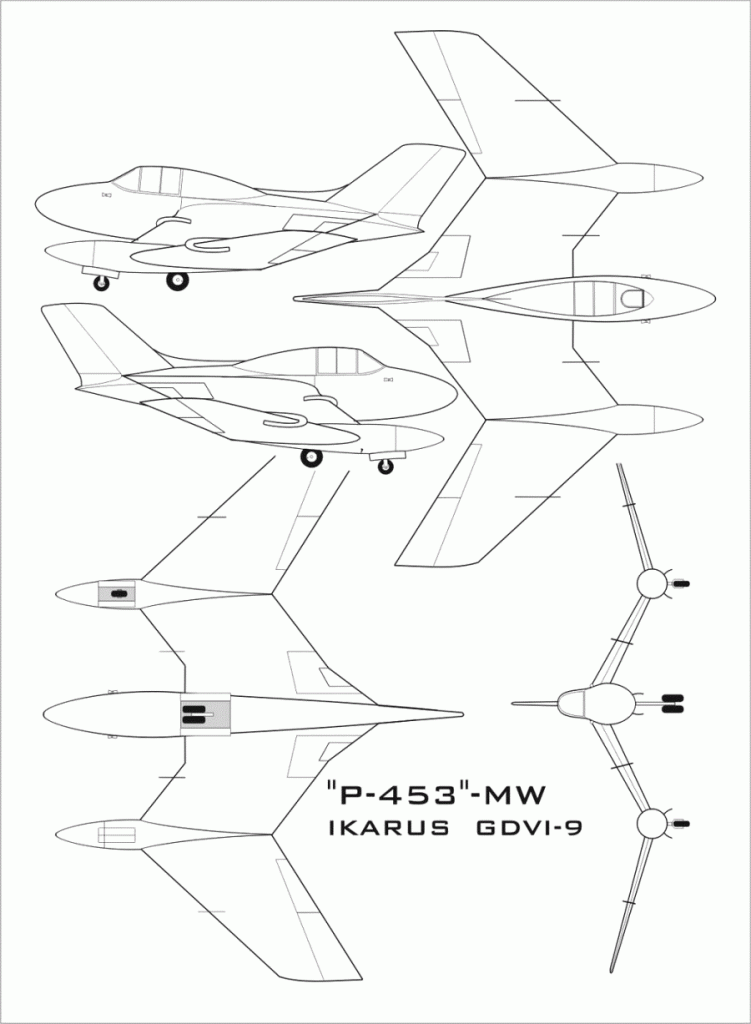
The Ikarus 453 (P-453-MW) was an aircraft designed in 1952. It featured reverse gull wings to accommodate two Turbomeca Marbore II turbojet engines in the nacelles on the wing. In 1952 the first flight was conducted without engines fitted (in glide mode) but it crashed and the project was cancelled (the pilot survived the incident).