Interceptor 400 / Prop-Jets Inc Interceptor 400A

Interceptor Corporation (established November 18,1968) acquired all rights and tooling of the Myers 200C from Aero Commander Inc. A modification of this design, called the Interceptor 400, was tested by the Interceptor Corp.
The prototype Interceptor 400 first flew June 27,1969, a turbine-engined development of the Myers 200C built as the Model 200D, equipped with an AiResearch turboprop powerplant flat-rated at 400 shp. Cruising speeds in excess of 280 mph were reported. The prototype was sold and subsequently repurchased by Interceptor Company, which acquired Type Certificate at end of 1974. The Interceptor 400 was an advanced four-seat cabin monoplane with a pressurized cabin, powered by a 665 shp Garrett-AirResearch turboprop engine.
Prop-Jets Inc was founded to continue development of Interceptor 400 turboprop- powered four-seat light aircraft, as 400A.

Interceptor 400
Engine: Garrett-AirResearch turboprop, 665 shp
Seats: 4
Cruise: 280 mph

Interceptor Co / Interceptor Corp

USA
Original company, Interceptor Corporation, established November 18,1968. First aircraft produced was Interceptor 400, a turbine-engined development of the Myers 200C built as the Model 200D by Aero Commander Inc, from whom Interceptor Corporation acquired all rights and tooling.
Prototype Interceptor 400 first flew June 27,1969. Was sold and subsequently repurchased by Interceptor Company, which acquired Type Certificate at end of 1974. The Interceptor 400 was an advanced four-seat cabin monoplane with a pressurized cabin, which was an unusual feature for this class of aircraft. It was powered by a 665 shp Garrett-AirResearch turboprop engine.

IPT IPT-1 Gafanhoto

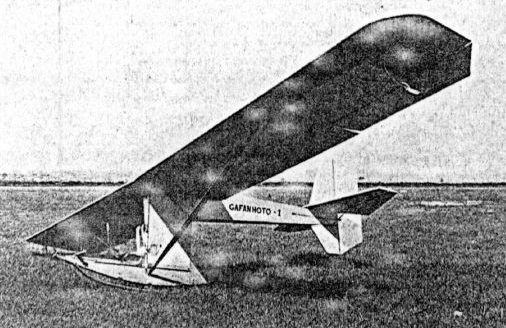
In 1948, the Divison of Aeronautics of the IPT was created, originated from the Section of Aeronautics. The IPT designed a glider for primary instruction, the Gafanhoto, which was designated IPT-1 Gafanhoto (Grasshopper). A public-domain report was published by IPT containing the required information to build the glider.

To enable budding pilots to take their first steps, the Brazilian aero clubs needed a simple beginner glider. The IPT-1 Gafanhoto was the first aircraft designed by the newly established Instituto de Pesquisas Tecnologicas in São Paulo. The plan was to construct a simple plane that could be built from interested clubs themselves and could launch pulled by a winch or by a vehicle.

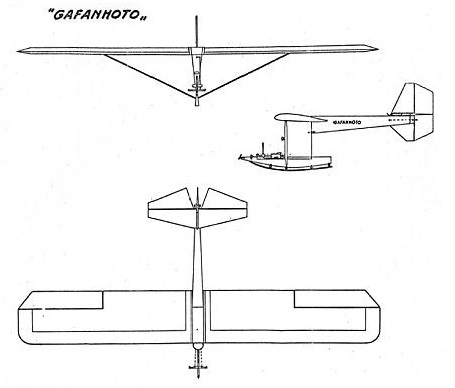
The gafanhoto was made entirely from local woods. The aircraft was a braced, braced high-wing aircraft. The fuselage, under which a single skid with rubber buffers was attached, consisted of a wooden frame and was clad with plywood. As with the SG 38 school glider, the pilot sat completely outdoors. The wings and the tail unit were a wooden structure covered with fabric. In the course of the flight tests it turned out that the wings had to be lowered, which led to the central struts being shortened by 20 cm.

First flown in 1942, the only machine built flew for several years, there was no series production.

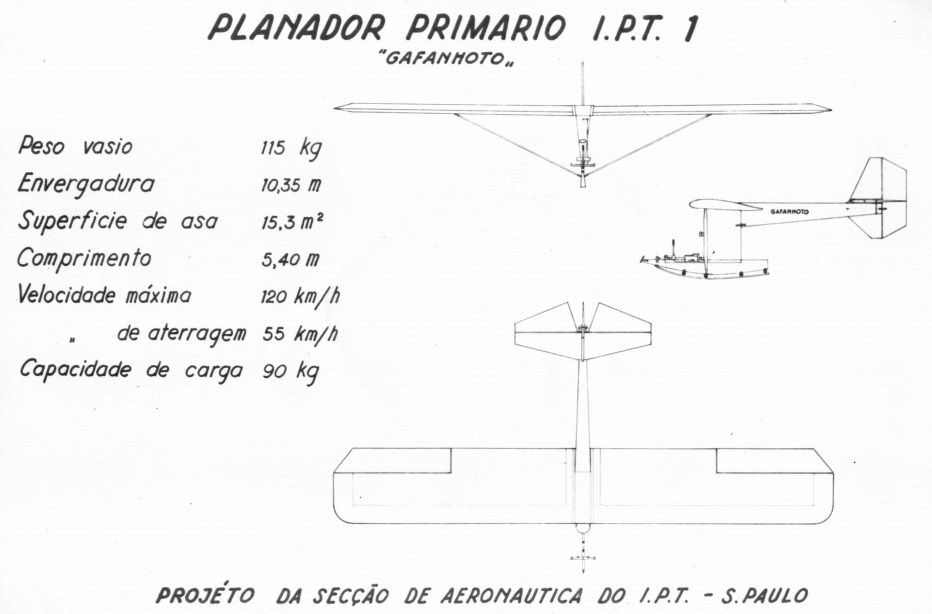
Wing span: 10.35 m
Wing area: 15.3 m²
Length: 5.40 m
Empty weight: 115 kg
Max. Takeoff weight: 205 kg
Minimum speed: 55 km / h
Top speed: 120 km / h
Seats: 1

Instituto de Pesiquas Technologicas / IPT

In 1899 in São Paulo the Strength of Material Laboratory of the Engineering Faculty Escola Politécnica was created. In the first years of its existence, the Laboratory performed tests with materials mostly employed in the civil construction. In 1926, the Laboratory evolved itself into the Laboratory for Material Testing also gaining research attributions and in turn gave later birth to the Instituto de Pesquisas Tecnológicas (IPT). The interest of IPT in aviation appeared from studies looking for application areas of wood in engineering. A report containing properties of numerous wooden elements, result of an extensive and systematic research, was published by IPT and was worldwide acknowledged. In 1938, Frederico Brotero and Orthon Hoover designed a monoplace aircraft of wooden structure. The first one of the four prototypes of the aircraft was constructed in the IPT facilities and finished in Rio Claro, a city located in the countryside in the State of São Paulo. The airplane was nicknamed Bichinho de Rio Claro (Rio Claro’s mascot) but later it gained the IPT-0 denomination.

In 1948, the Divison of Aeronautics of the IPT was created, originated from the Section of Aeronautics. The IPT designed a glider for primary instruction, the Gafanhoto, which was designated IPT-1. A public-domain report was published by IPT containing the required information to build the glider.

IPT built 17 different types of aircraft along its aeronautical activities.

Indraero Aero 110

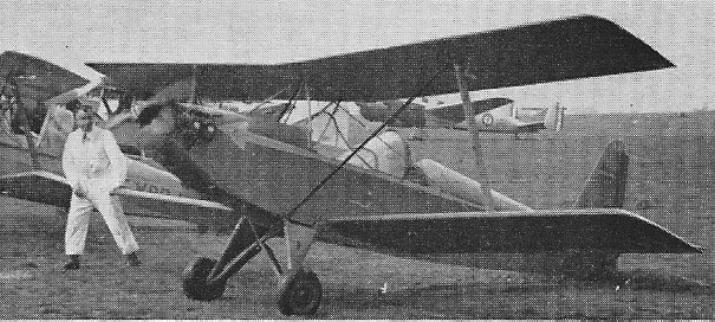
The Aero 110 fuselage has a fabric covered steel-tube framework and powered by a 45 hp Salmson 9ADB radial air-cooled engine.

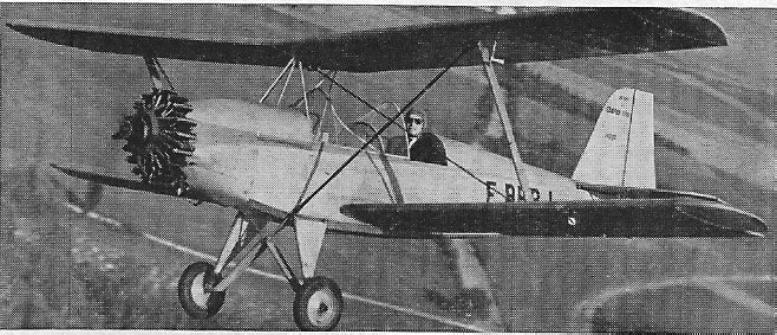
A Single-bay staggered biplane, upper and lower wings are of equal span and chord. A hinged panel in the upper wing provides access to the front cockpit. Full dual controls are fitted.

Produced by the Societe Indraero and flown for the first time on 1 May 1950, the Aero 110 was produced for the Service de l’Aviation Legre et Sportive (S.A.L.S.).

Engine: 45 hp Salmson 9ADB
Wing span: 24 ft 11 in
Length: 18 ft 4 in
Empty weight: 594 lb
Loaded weight: 1000 lb
Max speed: 81 mph
Cruise: 71.4 mph

Indraero Aero 101

Developed by the Societe Indraero and first flown in 1953, the Aero 101 was designed by MM. Chapeau and Blanchet as a light tandem two-seat training biplane for the Service de l’Aviation Legre et Sportive (S.A.L.S.), and an initial production batch of thirteen was built.

Derived from the Aero 110, it differs by being all-wood construction, a tail wheel and brakes. Powered by a 75 hp Minie 4 DC-32 engine, the tandem open cockpits are fitted with dual controls.

Engine: 75 hp Minie 4 DC-32
Wing span: 24 ft 11 in
Length: 18 ft 4 in
Max speed: 108.6 mph
Cruise: 93 mph
ROC: 630 fpm

IMPA

Argentina
Industria Metalurgica e Plastica SA, a munitions factory, opened an aircraft department in September 1941. The initiative had come from the founder, Eng. Jose Mario Sueiro, who amidst the backdrop of the Second World War, decided to enter the aviation industry.

For it he contracted Spainard Davins Alfredo Ferrer, whom he had met in Paris, and who already had experience in the French aviation industry. Ferrer designed the prototype and oversaw its construction that took place in the 4th floor of the factory. Working steadily, IMPA workers not only developed the body of the plane, but his instruments: speedometers, tachometers, compasses, etc.

A new factory opened at Quilmes Airport, Buenos Aires, in December 1944. Products included prototypes of RR-11 two-seat low-wing cabin monoplane (1942) and Chorlito light single-seat trainer (1943). Only production aircraft was the Tu-Sa (or LF-1), of which 25 were built 1943-1944.

The RR-11 IMPA “fully built in our country, with raw material and Argentine workers” as he liked to say ing. Sueiro was a “feel” for the time and his maiden flight of July 25, 1942 at the airfield of Pacheco, made headlines in major Argentine newspapers.

The event was attended by members of the company; national authorities, as the director of Military Industries, Colonel Savio and the director of Civil Aviation, Dr. Samuel Bosch; and the president of the UIA, Luis Colombo. Besides the pilot sr. Ciro Comi made the opening round.

Thus, IMPA initiated an aircraft production line continued with the prototype IMPA RR-12D-13D RR IMPA, IMPA Your Sa, IMPA Plover, the Impita, and in 1944 opened an office in the town of Quilmes dedicated to this production.

IMCO / Intermountain Manufacturing Co

Intermountain Manufacturing Company acquired at public auction the former Callair Inc., developing from the well-known Callair series of agricultural aircraft an improved model designated IMCO Callair A-9. A scaledup version, the B-1, first flew on January 15,1966. IMCO sold the Callair assets to Rockwell-Standard Corporation in December 1966 which continued production of these aircraft at Afton, Wyoming, under the banner of Aero Commander.
In 1965 Rockwell-Standard acquired Snow Aeronautical, continuing to produce agricultural aircraft at Olney as Snow Commanders (as division of Aero Commander), and acquired Intermountain Manufacturing Company (IMCO) 1966.

Ilyushin Il-80 Maxdome / Il-86

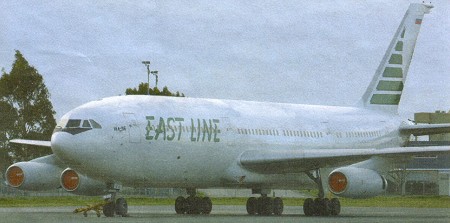
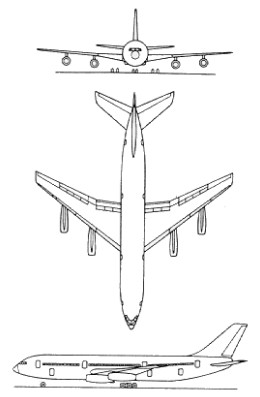
The llyushin Il-86, which has the NATO reporting name ‘Camber’, was the Soviet Union’s first wide-body civil transport. Of low/mid-wing monoplane configuration, it has a circular-section pressurised fuselage with a maximum internal width of 5.70m, and is powered by four Kuznetsov NK-86 turbofan engines pylon-mounted beneath the wings. Accommodation is provided for a crew of three or four on the flight deck, and there is seating for a maximum of 350 passengers, distributed between three cabins which are separated by wardrobes.
Access is via three lower-deck airstair-type doors which allow the aircraft to be operated without conventional airport loading/unloading bridges. The airstairs reach down to ground level and, after boarding, passengers can deposit their baggage in lower-deck stowage positions before climbing an internal fixed staircase to the passenger cabin.

Ilyushin Il-86 Article

Construction of two prototypes began in 1974 and the first (SSSR 86000) flew on 22 December 1976 piloted by a crew under the command of A. Kuziietsov. The maiden flight took it from the old Moscow Central Airport of Khodinka to the official flight test centre. The flight lasted 40 minutes.

The four NK-86 turbofans fitted to the Il-86 are rated at 28,660 lbs static thrust, and all possess combined thrust reversers/ noise attenuators.

The Il-86 first production aircraft flew in October 1977 and deliveries to Aeroflot began in September 1979.

The Il-86 entered regular service with Aeroflot at the end of 1980, after production examples had made proving flights on typical routes from Moscow. The 350-seat Il-86 made return flights three times a week between Moscow and Tashkent.

Since then between 80 and 85 have entered service out of an order for 100. Although most former Eastern Bloc airlines, and particularly CSA and LOT, were mentioned as potential export customers, no orders have materialised and the type remains peculiar to Aeroflot.

Designed to carry 350 passengers on routes of up to 3600 kilometres, the Il-86 has suffered in service due to Aeroflot’s shortage of long range equipment. To solve this predicament, 20 of the 100 ordered by the airline have had oceanic navigation equipment installed for flights to Central and South America with two or more en route stops.

Domestic operations began on 26 December 1980 followed by international services in July 1981.

103 built before production ended.

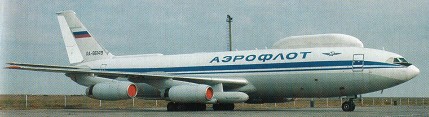
A strategic-command-post version of the IL-86 became the IL-80 Maxdome.

Four Illyushin Il-80 airborne command post flew with the 1338 Test Centr at Chkalovsky. They wore civil registration and pseudo Aeroflot colour schemes.

Gallery

Engine: 4 x Kusnezow NK 86, 127.5kN / 28,660 lbs
Length: 195.341 ft / 59.54 m
Width of hull: 19.948 ft / 6.08 m
Height: 51.87 ft / 15.81 m
Wingspan: 48.3 m / 158 ft 6 in
Wing area: 3552.12 sqft / 330.0 sqm
Height: 15.7 m / 51 ft 6 in
Max take off weight: 454230.0 lb / 206000.0 kg
Max. payload weight: 92610.0 lb / 42000.0 kg
Landing speed: 130 kts / 240 km/h
Cruising speed: 513 kts / 950 km/h
Max. speed: 950 km/h / 590 mph
Service ceiling: 10000 m / 32800 ft
Take off distance: 7546 ft / 2300 m
Landing distance: 8530 ft / 2600 m
Cruising altitude: 36089 ft / 11000 m
Wing loading: 127.92 lb/sq.ft / 624.00 kg/sq.m
Range w/max.fuel: 5250 km / 3262 miles
Range w/max.payload: 3300 km / 2051 miles
Crew: 3
Payload: 350 pax