ISF Mistral / Mistral Flugzeugbau Mistral

ISF Model 2 Mistral-C

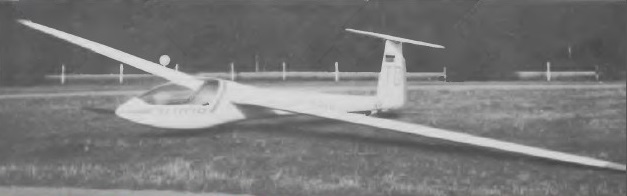
Developed from the original Mistral, which first flew in 1975, the ISF Model 2 Mistral-C single-seat Club Class sailplane is a product of the German firm Ingenieur/Buro Dipling Strauber – Frommhold GmbH & Co KG. Design work on the Mistral-C, which was intended to conform with the new FAI Club regulations, started in October 1974 and the prototype made its first flight in October 1976; 20 examples of this glassfibre T-tailed sailplane had been completed by the beginning of 1979. The type took 3rd place out of 33 contestants in the first Club class international competition held in Sweden in 1979.

The Mistral-C is a cantilever shoulder wing monoplane with 1° forward sweep at the quarterchord line; the wings and tail unit are of glassfibre reinforced plastic/foam/Conticell CC60 sandwich construction, the ailerons being of glassfibre reinforced plastic (GRP). There are Schempp-Hirth aluminium air brakes in the wing upper surfaces.
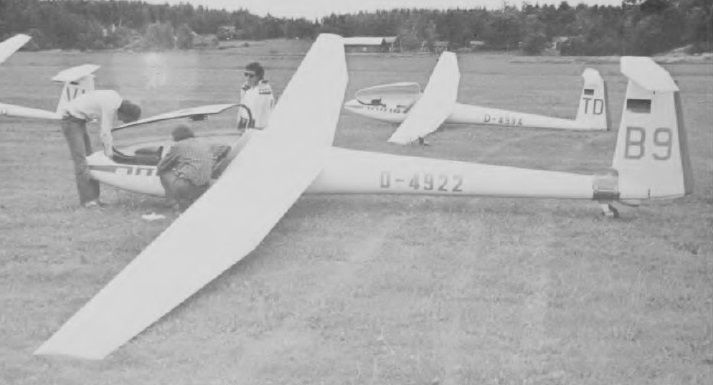
The fuselage is a GRP monocoque structure, and the landing gear consists of a non-retractable monowheel with a brake, and a tailskid. The tailplane is a fixed incidence one with spring trim, and the pilot sits under a large flush-fitting one-piece canopy that opens sideways. There is a towing hook on the centre of gravity, and a nose-mounted hook is optional.

In 1980 Mistral Flugzeugbau was formed to continue production of the Mistral-C at Hassfurt/Main; it had previously been built at Bensheim.

Mistral-C
Span: 15.0 m / 49 ft 2.5 in
Length: 6.73 m / 22 ft 1 in
Height: 1.45 m / 4 ft 9 in
Wing area: 10.9 sq.m / 116.8 sqft
Aspect ratio: 20.7
Wing section: Wortmann FX-61-163
Empty weight: 230 kg / 510 lb
Max weight: 350 kg / 77 1 lb
Water ballast: None
Max speed: 155 mph 135 kt / 250 km/h (in smooth air)
Max aero-tow speed: 105 mph
Stalling speed: 33 kt / 62 km/h
Min sinking speed: 2.17 ft/sec at 43.5 mph
Min sinking speed: 0.60 m/sec / 1.96 ft/sec at 35 kt / 65 km/h
Best glide ratio: 35: 1 at 55.5 mph
Best glide ratio: 35 at 49 kt / 90 km/h

Isaacs Spitfire

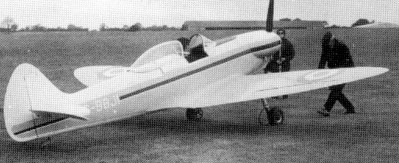
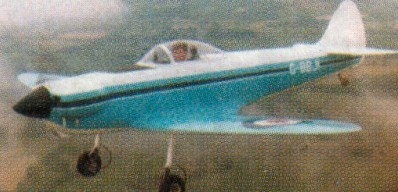
Construction of the 60% replica of the World War 2 Spitfire was begun by John Isaacs in 1969 at Southampton. Wood and fabric construction. Powered by a Rolls-Royce/Continental O-200-A engine, the prototype, c/n.2, later registered G-BBJI PFA.27-10055, first flew in early 1975.

Gallery

Engine: Continental O-200, 100 hp.
Height: 5.6 ft.
Length: 19.3 ft.
Wing span: 22.1 ft.
Wing area: 87 sq.ft.
Weight empty: 805 lbs.
Gross: 1100 lbs.
Fuel cap: 13 USG.
Speed max: 150 mph.
Cruise: 130 mph.
Range: 200 sm.
Stall: 47 mph.
ROC: 1100 fpm.
Take-off dist: 600 ft.
Landing dist: 450 ft.
Service ceiling: 15,000 ft.
Seats: 1.
Landing gear: tail wheel.

Isaacs Fury / PFA Isaac Fury

Fury II

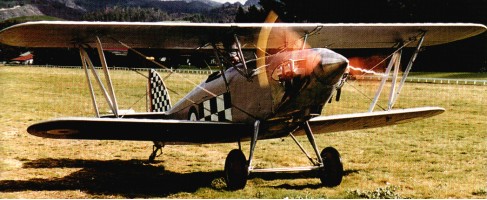
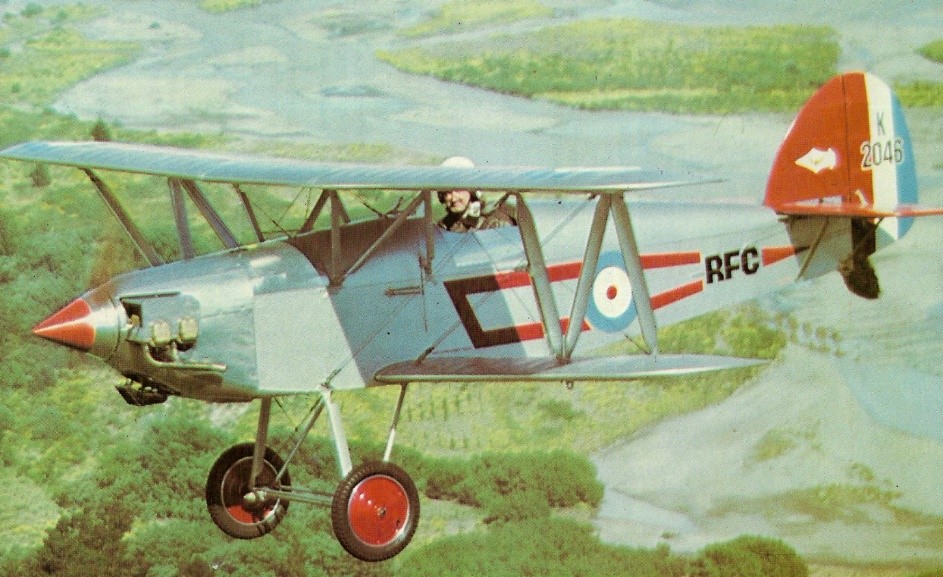
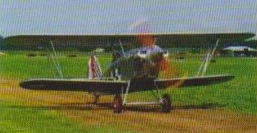
Designed by John Isaacs, the Fury is a 7/10 scale, single seat wooden replica of the famous Hawker Fury biplane of the 1930’s. The Isaacs Fury Mk 1 prototype G-ASCM first flew in 1963 powered by a 65 hp Mikron III engine. In 1967 the prototype was modified to Mk 2 standard by installing a 125 hp Lycoming O-290 engine. This aircraft is stressed to 9g for aerobatics. Normal load limits are +5 and -1G.

Fury II

The fuselage is a spruce structure of rectangular cross-section, with a curved turtlede eking and plywood covered. The wing is made up of solid spruce, warren girder ribs, internal diagonal wooden bracing and fabric covering. Ailerons are on the top wing only. No flaps are fitted. N type cabane and interplane struts support the wings which have conventional external wire bracing. The airfoil section is RAF 28. The empennage is a wooden structure utilising solid spars, girder ribs and fabric covering. The tailplane is strut braced. The fixed landing gear incorporates rubber cord shock-absorption and 3.25 x 14” wheels. A 10 Imperial gallon fuel tank is located aft of the firewall. A luggage locker is provided behind the cockpit.

It is only offered as a scratch built project with plans from John Isaacs. It is also an approved type of aircraft by the PFA in the UK.

John Isaac had sold 200 sets of plans (revised in 1994) by 1998. The plans were then marketed by the Popular Flying Association.

Gallery

Engine: Lycoming
Wing span: 6.4 m
Wing area: 11.4 sq.m
MAUW: 454 kg
Empty weight: 333 kg
Fuel capacity: 68 lt
Max speed: 185 kph
Cruise speed: 160 kph
Minimum speed: 72 kph
Climb rate: 8 m/s
Seats: 1
Fuel consumption: 25 lt/hr
Plan price (1998): $120

Engine: Lycoming 0-290, 125 hp.
Span, upper wing: 2l ft 0 in.
Lower wing: 18 ft 2 in.
Length: 19 ft 3 in.
Wing Area: 123.8 sq.ft.
Wing Loading: 8.1 lb/sq.ft.
Fuel cap: 18 USG.
MAUW: 1000 lbs.
Weight Empty: 730 lb.
Stall Speed: 38 mph.
Cruise: 100 mph.
Vne: 135 mph.
Top speed: 115 mph
Range: 200 sm.
Take-off dist: 400 ft.
Vne: 160 mph.
ROC: 1600 fpm.
Ultimate Loading: +9/-4.5g.

Engine: Lycoming 0-235-C, 115 hp.
Range 160km (100 miles).
MTOW: 1000 lbs.
Empty wt: 675 lbs.
Wing span: 21 ft.
Stall: 30 kts.
ROC: 1400 fpm.
Load limits: +9 / -4.5G.

Engine: Lycoming 0-235 C2A, 125hp.
Prop: Henry 428 72in dia/44in pitch
Cruise 85kt @2400rpm
ROC: 1500fpm
Fuel burn @ cruise: 26 lt/hr
Load: +9/-5.

IPTN / Industri Pesawat Terbang Nusantara

Indonesia
IPTN was created August 1976. Partner with CASA of Spain in the Airtech CN 235 regional transport program, plus CN 295. Developed N-250 50/68-passenger twin-turboprop -regional airliner (first flown August 1995), and has proposed the 70-passenger N-270 variant. N2130 expected to fly in the year 2002 as a 132-passenger medium-range airliner. Produces NC-212 version of CASA C-212, NBO-105 version of Eurocopter BO 105, NSA-332 version of Eurocopter Super Puma, and various Bell helicopters as NBell types. Subcontract work includes parts for Lockheed Martin F-16 fighter and Boeing 737/767 airliners.

IPE KW 1 / KW 1 Quero Quero

IPE KW/b 2 Quero Quero

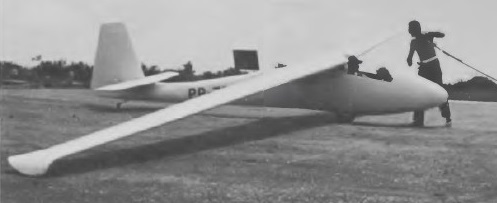
This Brazilian single-seater training glider, known in full as the IPE KW 1 b 2 Quero Quero II, is a development of the original KW 1 designed by Ing Kuno Wiedmaier and made its first flight on 1 October 1972.

The Quero Quero is a cantilever high wing monoplane with the same Wortmann wing section as the Scheibe SF-30 Club-Spatz, which it somewhat resembles, and is of wood and Brazilian pine plywood construction. There are spoilers in the wing upper and lower surfaces, and the wing tips are turned down to provide an endplate effect. Landing gear consists of a non-retractable monowheel and a tailwheel, and the pilot sits under a one-piece detachable cockpit canopy.

Certification from the Brazilian CTA in the semi-aerobatic category, with an extension for cloud flying, was awarded in December 1976 and the Quero Quero II was put into production by IPE – Industria Paranaense de Estruturas at Curitiba in the state of Parana. By 31 March 1979 IPE had completed 28 Quero Queros, consisting of one static test and three flying prototypes, a pre-series of four production aircraft, one of which was lost in a nonfatal accident, and all of a second-series batch of 20 Mk IIs, which were in service with various Brazilian clubs.

Quero Quero II
Span:49ft 2.5 in
Length: 21 ft 2.75 in
Height: 4 ft 4.75 in
Wing area :125.9 sq ft
Aspect ratio: 18.0
Empty weight: 374 lb
Max weight. 595 lb
Max speed: 93 mph (in smooth air)
Min sinking speed: 2.10 ft/sec at 38.5 mph
Best glide ratio: 28:1 at 45 mph

IPE 02 Nhapecam

The 02 tandem two-seater, known as the Nhapecam, is the second training sailplane from the Brazilian firm of IPE – Industrie Paranaense de Estruturas at Curitiba, and has been under development for some months; it made its first flight on 24 May 1979.

The 02 is a cantilever shoulder wing monoplane with a modified Scheibe SF-30 Club-Spatz wing section; it is rather larger than the Quero Quero II, with a span of 16.60m (54ft 5Vain), a longer, more pointed nose and a lengthened one-piece cockpit canopy under which the two pilots sit. There are spoilers in the wing upper and lower surfaces, and the landing gear consists of a non-retractable monowheel and a tailwheel. A powered version of the 02, the IPE 03, was under development; this has a repositioned low wing and a retractable landing gear, and probably a 60hp Limbach powerplant.

An order for at least 30 IPE 02s for the Brazilian Clubs was confirmed in 1980.

Span: 54 ft 5.5 in
Length: 25 ft 11 in
Height: 4 ft 11 in
Wing area: 170.1 sqft
Aspect ratio: 16.6
Empty weight: 551 lb
Max weight: 1,058 lb
Max speed: 124 mph (in smooth air)
Min sinking speed: 2.13 ft/sec
Best glide ratio: 30:1 at 50 mph