
A 1959 modified Auster J5G fitted with a 180hp Lycoming O-360 engine
A 1959 modified Auster J5G fitted with a 180hp Lycoming O-360 engine
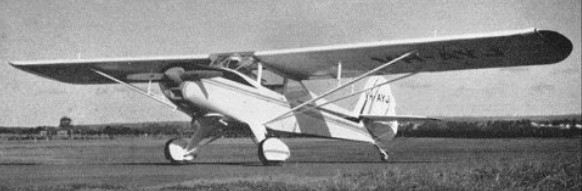
An Auster Autocrat J1 conversion with the 150hp Lycoming O-320 engine
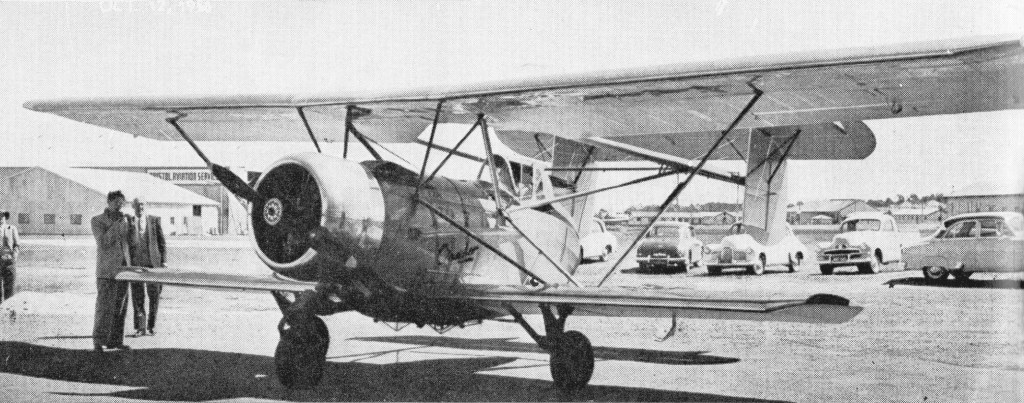
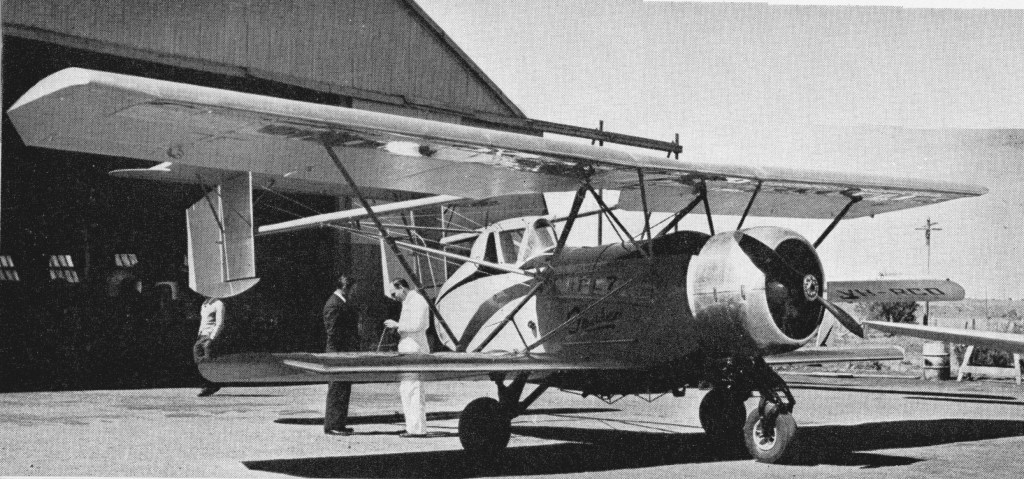
In 1955 Kingsford Smith began design of special agricultural type which materialised as the PL-7 Tanker biplane. Fuselage was mild-steel tank, tail carried on tubular booms, tricycle landing gear. Flew September 1956.
Australia
Formed in 1946 from Kingsford Smith Air Service. Undertook sales, servicing and overhaul of light and medium aircraft, and in 1955 began design of special agricultural type which materialised as PL-7 Tanker biplane. Fuselage was mild-steel tank, tail carried on tubular booms, tricycle landing gear. Flew September 1956. Later Cropmaster was entirely different low-wing monoplane, and special Auster conversions were offered. To these were added (1959/1960) E.P.9 conversion, details of which were supplied to Lancashire Aircraft. Company sold out in 1963 to Victa Ltd. of Milperra, Sydney.
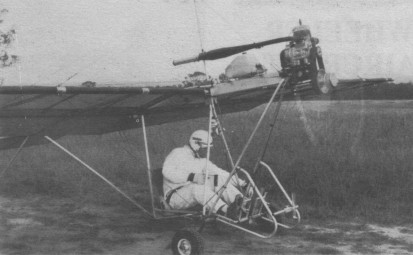
Single seat single engined high wing mono¬plane with conventional three axis control. Wing has unswept leading edge, swept for¬ward trailing edge and tapering chord; flaps fitted. Cruciform tail. Pitch control by fully flying tail; yaw control by fully flying rudder; roll control by half span ailerons; control inputs through stick for pitch/roll and pedals for yaw. Wing braced from above by kingpost and cables, from below by cables; single surface. Undercarriage has three wheels in tail dragger formation. Ground steering by differential braking; castoring tailwheel. Brakes on main wheels. Aluminium tube framework, without pod. Engine mounted at wing height driving tractor propeller.
The original Sky Rider was built purely as a one off experimental machine, but aroused so much interest amongst enthusiasts worldwide, not least because of its ‘outstanding individual achievement’ award from the EAA in 1978, that Gary decided to market the design.
Conceptually the design is a fairly straight forward high wing tube and Dacron machine, using a single surface wing (in standard form at least) and fully flying cruciform tail. The engine is hung out front with a tractor propeller, a position which allows easy fitment of a number of different power plants up to a recommended maximum of 50 hp. The most popular among Sky Rider builders are McCulloch Mc101, Robin EC25PS and Cuyuna 430.
Quite the most unusual aspect of the design is its use of flaps, which are more normally found on aircraft with much higher landing speeds, at the top end of the microlight category. Fitted to the trailing edge of the wing, the flaps give stalling speeds as low as 18mph (29kph) on the McCulloch engined version.
Ground steering arrangements are also unusual. The tailwheel is castoring rather than steerable, while the main wheels can be braked independently, allowing the aircraft to be steered effectively on the rudder.
Engine: McCulloch Mc101, 12hp.
Propeller diameter and pitch 54 x 27 inch, 1.37 x 0.69m.
Chain reduction, ratio 4.0/1.
Power per unit area 0.08hp/sq.ft, 0.9hp/sq.m.
Standard fuel capacity 1.2 US gal, 1.0 Imp gal, 4.5 litre; 3.6 US gal, 3.0 Imp gal, 13.6 litre tank optional.
Length overall 19.0 ft, 5.79 m.
Height over¬all 7.8 ft, 2.38 m.
Wing span 32.3 ft, 9.85 m.
Chord at root 5.0ft, 1.52m.
Chord at tip 4.0ft, 1.22m.
Dihedral 2 deg
Sweepback 0 deg
Elevator span 10.3 ft, 3.14 m.
Rudder height 5.0ft, 1.52 m.
Total wing area 144 sq.ft, 13.4 sq.m.
Total aileron area 17.5 sq.ft, 1.63 sq.m.
Rudder area 9.5 sq.ft, 0.88 sq.m.
Total elevator area 20.0 sq.ft, 1.86 sq.m.
Wing aspect ratio 7.1/1.
Wheel track 4.5 ft, 1.37 m.
Wheelbase 13.0 ft, 3.96 m.
Tailwheel diameter overall 4 inch, 10 cm.
Main wheels diameter overall 12 inch, 30 cm.
Empty weight 195 lb, 88kg.
Max take off weight 400 lb, 181 kg.
Payload 205 lb, 93 kg.
Max wing loading 2.78 lb/sq.ft, 13.5 kg/sq.m.
Max power loading 33.3 lb/hp, 15.1 kg/hp.
Load factors +3.0, 1.0 design limit; >+4.5, > 1.0 ultimate.
Max level speed 43 mph, 69kph.
Never ex¬ceed speed 65mph, 105kph.
Cruising speed 40 mph, 64 kph.
Stalling speed (flaps up) 25 mph, 40 kph.
Stalling speed (ground effect) 18 mph, 29 kph.
Max climb rate at sea level 150ft/min, 0.8m/s.
Min sink rate 300ft/min at 28mph, 1.5m/s at 45 kph.
Best glide ratio with power off 6/1 at 33 mph, 53 kph.
Take off distance 250 ft, 75 m.
Landing distance 160 ft, 50 m.
Service ceiling 5000 ft, 1520 m.
Range at average cruising speed 40 mile, 64 km.
Engine: Robin EC25PS, 20hp.
Belt reduction, ratio 2.5/1.
Power per unit area 0.14hp/sq.ft, 1.5 hp/sq.m.
Standard fuel capacity 1.2 US gal, 1.0 Imp gal, 4.5 litre; 3.6 US gal, 3.0 Imp gal, 13.6 litre tank optional.
Length overall 19. 0 ft, 5. 79 m.
Height over¬all 7.8 ft, 2.38 m.
Wing span 32.3 ft, 9.85 m.
Chord at root 5.0ft, 1.52m.
Chord at tip 4.0ft, 1.22m.
Dihedral 2 deg
Sweepback 0 deg
Elevator span 10.3 ft, 3.14 m.
Rudder height 5.0ft, 1.52 m.
Total wing area 144 sq.ft, 13.4 sq.m.
Total aileron area 17.5 sq.ft, 1.63 sq.m.
Rudder area 9.5 sq.ft, 0.88 sq.m.
Total elevator area 20.0 sq.ft, 1.86 sq.m.
Wing aspect ratio 7.1/1.
Wheel track 4.5 ft, 1.37 m.
Wheelbase 13.0 ft, 3.96 m.
Tailwheel diameter overall 4 inch, 10 cm.
Main wheels diameter overall 12 inch, 30 cm.
Empty weight 210 lb, 95kg.
Max take off weight 400 lb, 181 kg.
Payload 190 lb, 86 kg.
Max wing loading 2.78 lb/sq.ft, 13.5 kg/sq.m.
Max power loading 20.0 lb/hp, 9.1 kg/hp.
Load factors +3.0, 1.0 design limit; >+4.5, > 1.0 ultimate.
Max level speed 50mph, 80kph.
Never ex¬ceed speed 65mph, 105kph.
Cruising speed 45 mph, 72 kph.
Stalling speed (land flap) 21 mph, 34 kph.
Max climb rate at sea level 300ft/min, 1.5m/s.
Min sink rate 300ft/min at 28mph, 1.5m/s at 45 kph.
Best glide ratio with power off 6/1 at 33 mph, 53 kph.
Take off distance 200 ft, 60 m.
Landing distance 200 ft, 60 m.
Service ceiling 10,000 ft, 3050 m.
Range at average cruising speed 30 mile, 48 km.
Engine: Cuyuna 430, 30hp.
Power per unit area 0.21hp/sq.ft, 2.2 hp/sq.m
Standard fuel capacity 1.2 US gal, 1.0 Imp gal, 4.5 litre; 3.6 US gal, 3.0 Imp gal, 13.6 litre tank optional.
Length overall 19. 0 ft, 5. 79 m.
Height over¬all 7.8 ft, 2.38 m.
Wing span 32.3 ft, 9.85 m.
Chord at root 5.0ft, 1.52m.
Chord at tip 4.0ft, 1.22m.
Dihedral 2 deg
Sweepback 0 deg
Elevator span 10.3 ft, 3.14 m.
Rudder height 5.0ft, 1.52 m.
Total wing area 144 sq.ft, 13.4 sq.m.
Total aileron area 17.5 sq.ft, 1.63 sq.m.
Rudder area 9.5 sq.ft, 0.88 sq.m
Total elevator area 20.0 sq.ft, 1.86 sq.m.
Wing aspect ratio 7.1/1.
Wheel track 4.5 ft, 1.37 m.
Wheelbase 13.0 ft, 3.96 m.
Tailwheel diameter overall 4 inch, 10 cm.
Main wheels diameter overall 12 inch, 30 cm.
Empty weight 220 lb, 100kg.
Max take off weight 400 lb, 181 kg.
Payload 180 lb, 82 kg.
Max wing loading 2.78 lb/sq.ft, 13.5 kg/sq.m.
Max power loading 13.3 lb/hp, 6 kg/hp.
Load factors +3.0, 1.0 design limit; >+4.5, > 1.0 ultimate.
Never ex¬ceed speed 65mph, 105kph.
Cruising speed 48 mph, 77 kph.
Max climb rate at sea level 400ft/min, 2m/s.
Min sink rate 300ft/min at 28mph, 1.5m/s at 45 kph.
Best glide ratio with power off 6/1 at 33 mph, 53 kph.
Dave Kilborne was a California water skier who met Bill Bennett in 1969 and, with a little help from the Australian, began to build his own kites. These first Kilbo-kites were, like the ski kites they were patterened after, small with a 13 foot keel. After Kilborne had taught himself to fly over water, he began to consider the possibility of foot launching. After some low level practise and the construction of a larger, 16 foot kite, he was making self-launched flights over Mission Ridge near San Jose. On 6 September 1971, Dave Kilborne soared for an hour and four minutes.

The Icarus 1 was a 1971 hang glider.
The 1971 Icarus 2 was built in a powered version as the UFM Icarus II / Aeroplane ultralight.
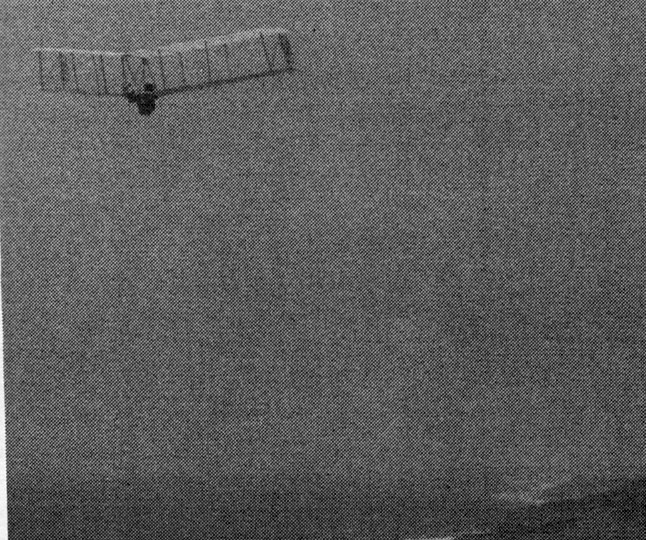
The 1973 Icarus 5 is a rigid aircraft controlled by displacement of the center of gravity in pitch and by action of the control surfaces in roll / lace (a little like a fledge except that there the pilot is seated). It could be bought in the United States as a kit.

Icarus 1
Wing span: 9.17 m
Hang glider weight: 25 kg
Icarus II
Wing span (trailing edge): 30 ft
Wing area: 192 sq ft
Aspect ratio: 5.6
Wing loading: 0.88-1.28 lb/sq.ft
Chord: 41″
Airfoil: Eiffel.07
Sweep: 15 degrees
Washout: 4.5 degrees
Weight: 55 lb
Max Pilot weight: 200
Speed range: 18 – 45 mph
Take-off airspeed: 20 mph
Landing airspeed approach: 20-25 mph
Landing airspeed, flare: 4-6 mph
Stall speed: 18 mph
Best glide speed: 20 mph
Minimum sink speed: 19 mph
Sink rate minimum: 210 ft/min
Glide ratio maximum: 8.5
Glide ratio minimum: 1.0
Design “G” load: 4
Ultimate “G” load: 6
Folded size: 16″x41″x16′
Icarus 5
Wing area: 14.9 m²
Wing span: 9.75 m
Aspect ratio: 6.4
Hang glider weight: 36 kg
Minimum pilot weight: 60 kg
Maximum pilot weight: 110 kg
Minimum speed: 16 km/h
Maximum speed: 60 km/h
Max glide ratio speed: 12 km/h
Barry Hill Palmer had a good paying aerospace job and was flying on a minimalist and inexpensive glider purely for curiosity and fun. He did not attempt to modernize or market the flexible wing hang glider; there was no attempt to publicize on the media, except for an ‘accidental’ report made by a small local newspaper. Palmer freely gave information about the wing to any person interested, including Francis Rogallo and Richard Miller, who develop the famous Bamboo Butterfly Rogallo wing hang glider, the plans of which circulated in some American magazines in the mid 1960s; Tara Kiceniuk’s followed with plans for the bamboo Batso Rogallo wing.
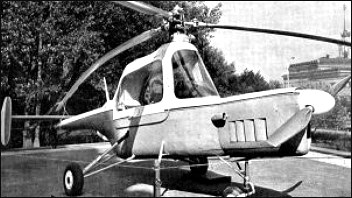
The KhAI-24 autogyro was built by the Kharkov Aviation Institute in the mid-1960s. Its fuselage resembled that of a conventional light aircraft with a tandem two-seat cabin, twin tail fins and a 115hp four-cylinder in-line inverted air-cooled M-332 engine in the nose. It was fitted with a fixed tricycle undercarriage and a three-blade main rotor. There is no indication that more than the single prototype was ever built.
Engine: M-332, 115hp
Top speed: 150km/h
Range: 250km
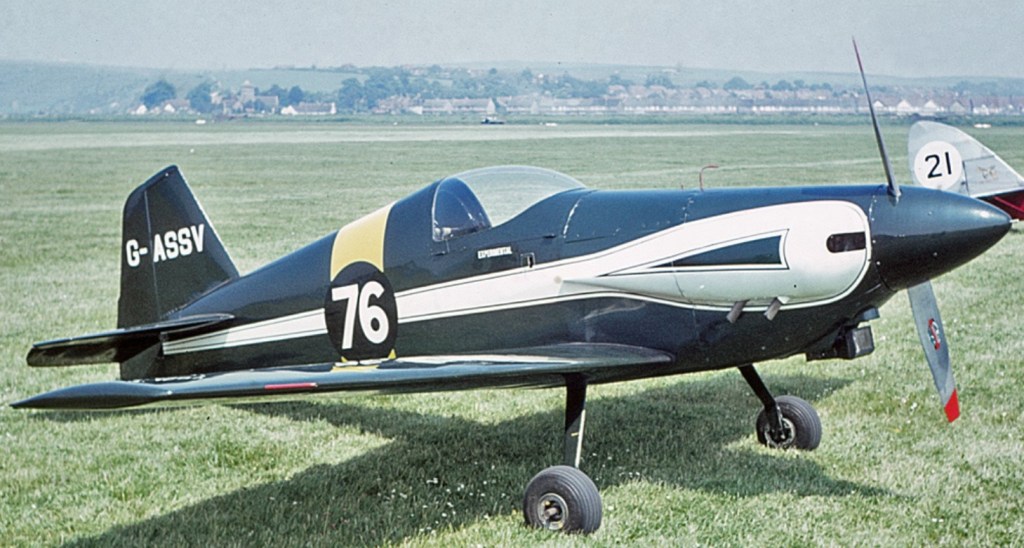
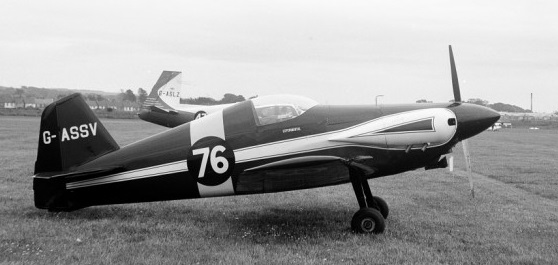
The Kensinger KF was a single seat, all metal Formula One racing aircraft designed and built by Ned Kensinger at Fort Worth in 1959 as N23S.
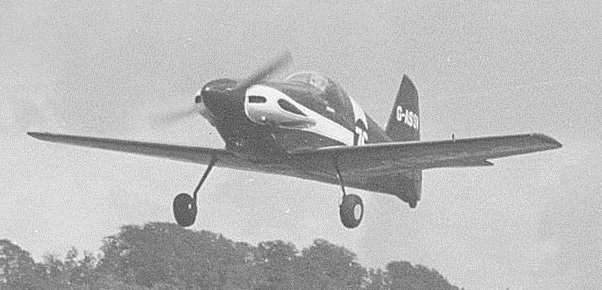
Only one was built which was later exported to the UK. In the UK, it was registered as G-ASSV c/n.2, fitted with a Continental C85-12F, later changed to a C90 engine.
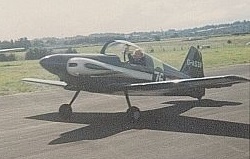
This flight test was conducted in June 1965 by test pilot J.W.C. Judge and was to test the handling of G-ASSV for the issue of the Permit to Fly. The test flight took place at Halfpenny Green Aerodrome near to the town of Wolverhampton, England and lasted for 25 minutes.
The Kensinger KF (derivative of the Midget Mustang) is a small, all metal, single seat monoplane. The aircraft is powered by a Continental C.85 engine driving a two-bladed MacCauley fixed pitch propeller. The ground clearance of the propeller is satisfactory.
The fuel system comprise of an 11.5 U.S. Gallon gravity fed main tank situated forward of the cockpit and two 4 U.S. Gallon tanks situated in each wing root. The fuel selector cock was mounted on the cockpit floor below the pilot’s right thigh and was easily reached in flight when the pilot was strapped in. The main tank was fitted with an uncalibrated float-type guage on top of the scuttle but the wing root tanks were not guaged.
The cockpit was fitted with a good quality one piece blown perspex canopy that was hinged to fold to starboard for access. A simple and effective canopy locking lever was fitted to the port cockpit wall. A Z-type harness was fitted.
The forward view on the ground was poor but an adequate view could be obtained if the nose was swung from side to side while taxying in the Spitfire manner. The steerable tailwheel (mounted in the base of the rudder) was very effective and although sensitive, one soon got the hang of it. The hydraulically operated toe brakes were effective without being fierce and ther was no tendency for the tail to lift. The toe brakes were so arranged as to require a distinct movement to operate them, making inadvertant operation unlikely. The ground ride was good on tarmac surfaces. The main undercarriage legs were of the spring steel type, the spats were not fitted for this flight.
Max. power static gave 2280 R.P.M. An effective carburettor hot air control was fitted.
On take-off flaps up, there was no undue tendency to swing, the tail rose quite readily and the aircraft was lifted off at 85 mph The flight was made from a smooth tarmac runway in light and variable wind conditions, in fact there was a slight tail wind component.
A comfortable climbing speed was 120 mph, which gave 2550 R.P.M. at full throttle. Engine cooling appeared to be most satisfactory.
The aircraft was dived to 230 mph satisfactorily although the R.P.M. tended to get rather high (in excess of 3200 R.P.M., even when well throttled back). No information on VNE or other limitations was available, although there was a red mark at 250 mph on the A.S.I. There was no evidence of control over balance or flutter.
In cruising flight the aircraft flew with a nose-down attitude and the forward view was good.
Max. level speed at 750 feet (1013 mbs.) gave 185 mph at full throttle/3100 R.P.M.
At high speeds the aircraft was slightly tail heavy, requiring a light push force and making it difficult to assess stability and stick force/g. Stick forces were however light. It is understood that it is intended to fit a Tiger Moth type elevator trimmer eventually, in the meantime it might be worth while to fit a small fixed elevator tab.
On lowering the flaps there was a slight nose down trim change. The flaps were lowered fully at up to 110 mph (again no limitations were available). The flaps, operated by a lever on the port side of the cockpit, had four positions in addition to up. It was easy to lower them to the 3rd position but there was an increased force to reach the 4th position. There was little or no difference in stalling speed or handling between 3rd and 4th positions. The following stalling speeds were achieved, power off:-
Flaps Up – Min. I.A.S. 65 mph – No buffet warning, starboard wing drop at min
Flaps 3rd or 4th position – Min. I.A.S. 63 mph – No buffet warning, starboard wing drop at min.
Lateral stability was satisfactory power on and power off. The ailerons were effective but not as crisp as on the Cosmic Wind. The rudder forces were light but satisfactory.
In the event of an engine failure I recommend that the flaps be left up and 120 mph be maintained while manoeuvring. this gives a good view and a reasonably flat glide angle. The flaps may be lowered in the final stages of the approach but care should be taken not to let the speed fall off too much power off with full flap as it would then be easy to develop a high rate of sink. The 4 divisions of flap allow them to be lowered in stages as required.
The normal powered approach was made at 100 mph with full flap, the view was good and there was ample control, speed was allowed to fall off to 85 mph at the runway threshold and the recommended wheel landing was made (with the sensitive tailwheel steering it could be easy to introduce a swerve if a three point landing was made with the rudder slightly off centre). Speed fell off rapidly after the tail was lowered (even with a slight downwind component) and little braking was necessary.
Summary
This little racing aircraft is pleasant and reasonably easy to fly. Control forces are light but appropriate to an aircraft in the ultra light category. The flaps are effective and make the aircraft much easier to land than the unflapped Cosmic Wind.
It is recommended that the aircraft will be improved by the addition of an elevator trim control as it is at present slightly tail heavy at high speeds, requiring a light push force. There is also a slight nose down trim change when the flaps are lowered.
J.W.C. Judge – 10th June 1965

It was written off on 2 July 1969.
Span: 18.06 ft
Length: 16.05 ft
 All Aero